 EN
EN
Quick Links

Home > News > Company news
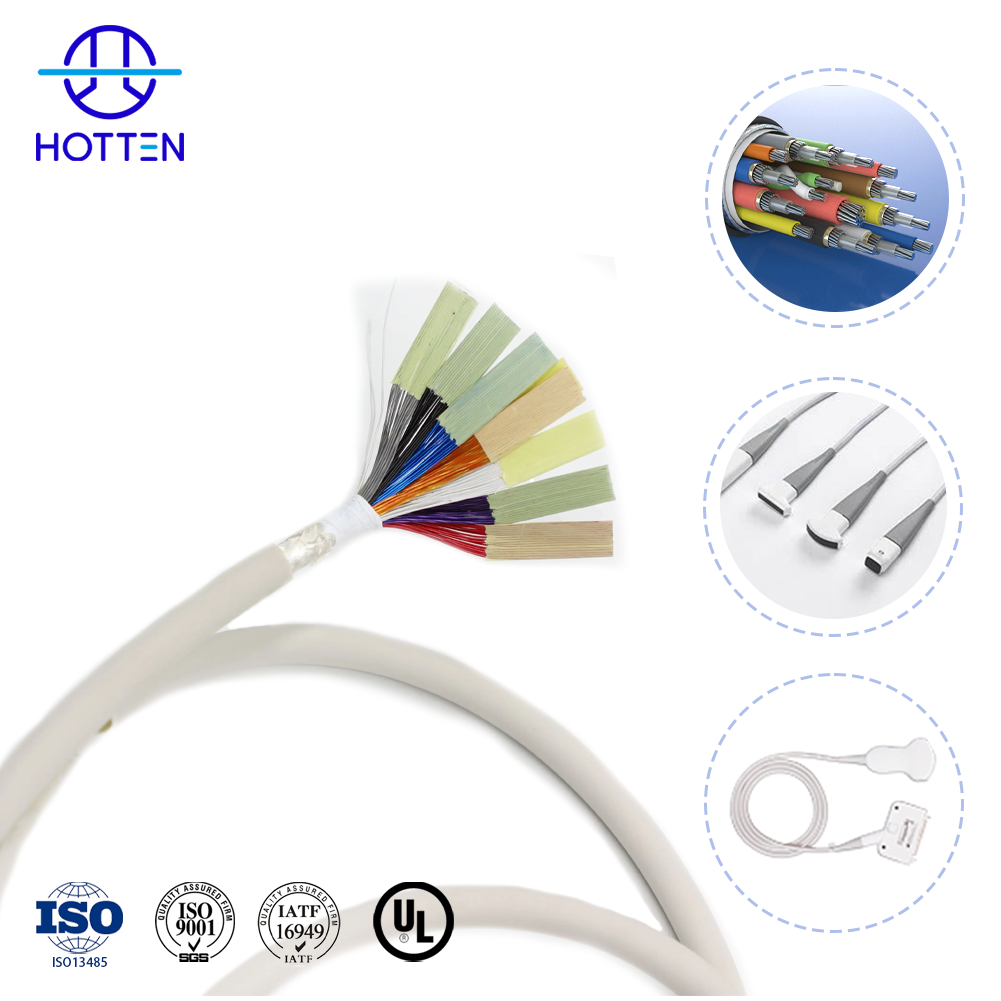
Selecting a micro coaxial cable for an ultrasound probe requires balancing signal integrity, channel density, cable dimensions, capacitance, flexibility, shielding, termination, and long-term reliability. No single specification determines whether a cable is suitable for a particular probe design.
If the probe requires a high number of signal channels within limited internal space → evaluate fine-gauge micro coaxial construction, cable OD, channel arrangement, and termination density together → then verify the electrical and mechanical performance of the complete cable assembly.
If signal consistency is the primary requirement → evaluate impedance, capacitance, attenuation, dielectric construction, and shielding together → then validate the finished cable rather than relying on one nominal specification. For related information, see The Importance of Impedance Consistency (50Ω / 75Ω) in Ultra-Fine AWG Micro Coaxial Cables.
If low capacitance and compact routing are important → evaluate conductor size, insulation structure, cable geometry, and cable length together → then select the cable architecture that meets the probe's electrical requirements. See Why Low Capacitance Is Critical in Ultrasound Probe Cable Design.
If the probe is repeatedly bent or twisted during normal use → evaluate bend radius, flex life, shielding stability, strain relief, and termination reliability together with signal performance.
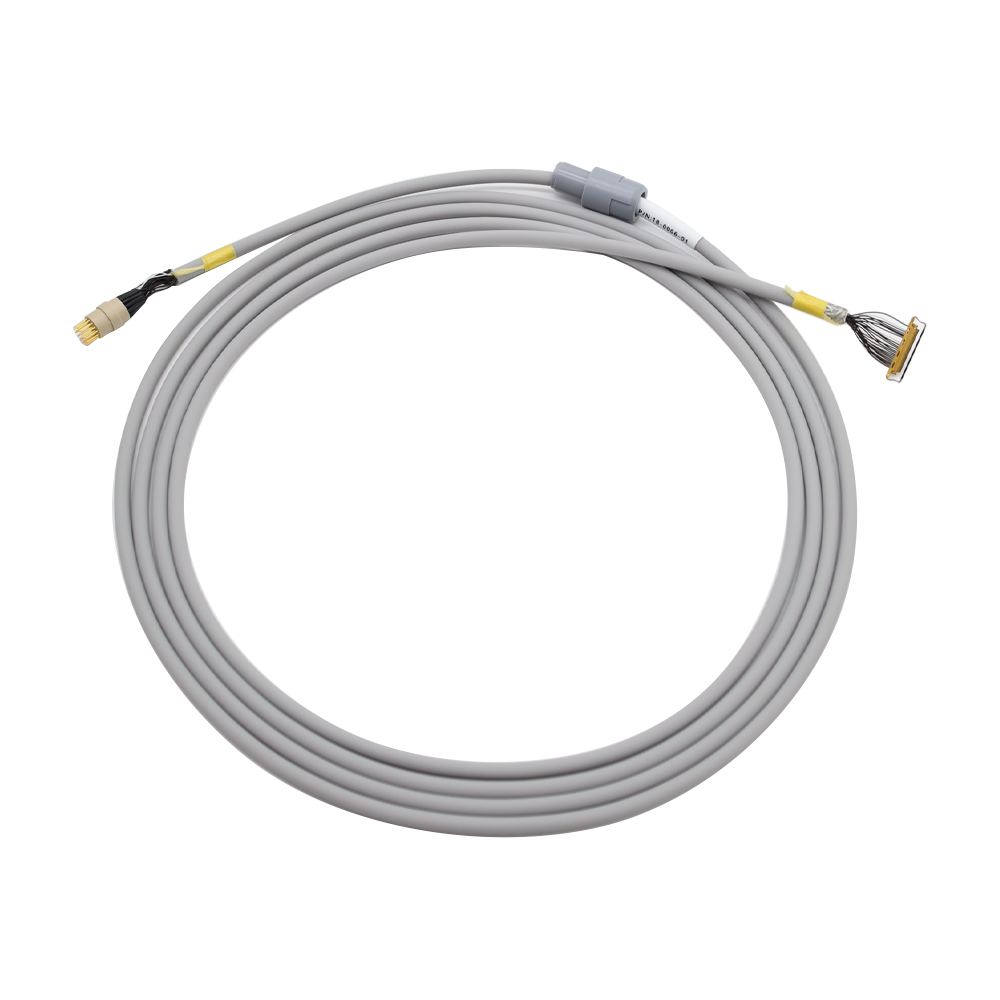
For customized ultrasound interconnects, see HOTTEN's Ultrasound Probe Cable solutions and Micro Coaxial Cable Assembly.
Ultrasound imaging systems require stable signal transmission through high-density transducer arrays, typically containing 64 to 256 channels. Because the original acoustic echo signals are extremely weak, they are highly susceptible to attenuation and external electromagnetic interference. Impedance control is one of the most critical parameters in ultrasound cable design. Proper impedance matching minimizes signal reflections and energy loss, helping maintain image quality and overall system performance.
The characteristic impedance (Z₀) of a micro coaxial cable is determined by its physical geometry and dielectric properties:
Z₀ = (138 / √εr) × log₁₀(D / d)
Where d is the outer diameter of the center conductor, D is the outer diameter of the insulation layer, and εr is the relative dielectric constant of the insulation material.
To maintain signal integrity over long transmission distances, cable conductors should exhibit low-capacitance characteristics, with a typical engineering target of approximately 50 pF/m. Precise dimensional tolerance control during the extrusion process is essential. Even micron-level deviations in insulation diameter can significantly affect impedance consistency.
In addition, comprehensive EMI shielding is required to protect weak analog signals. High-coverage spiral shielding provides robust broadband noise suppression without introducing excessive cable stiffness.
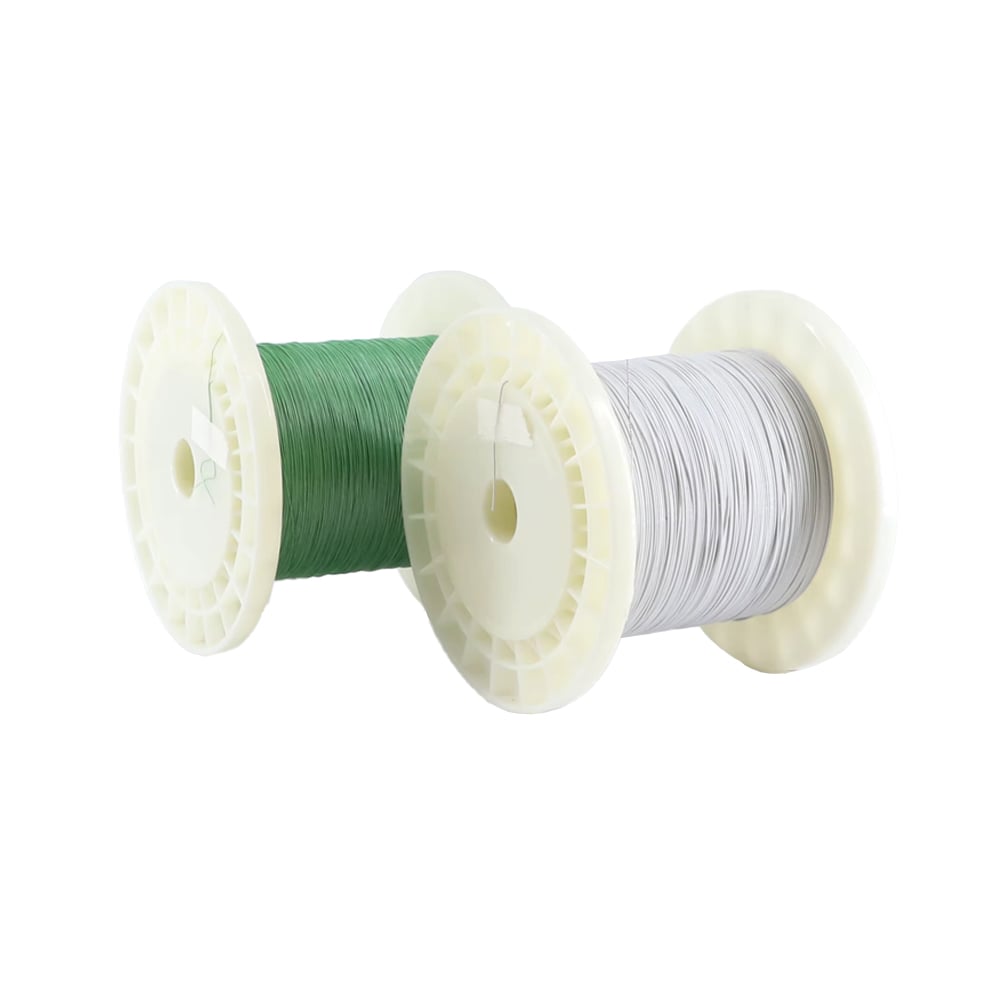
Traditional solid fluoropolymers often struggle to meet the dual requirements of compact routing and low attenuation. For ultra-fine micro coaxial cable solutions using 40 AWG to 48 AWG conductors, advanced insulation technologies are required.
Foamed Perfluoroalkoxy (PFA) insulation introduces uniformly distributed microscopic air cells within the material structure. This process lowers the effective dielectric constant, allowing engineers to reduce insulation thickness while maintaining target electrical performance, thereby minimizing overall cable bundle diameter.
Component | Standard Material | High-Performance Option | Engineering Benefit
Conductor | Solid Copper | High-Strength Copper Alloy | Improved fatigue resistance and reduced strand breakage
Insulation | Solid FEP/PFA | Foamed PFA | Lower dielectric constant and smaller overall diameter
Shielding | Braided Copper | Silver-Plated Copper Spiral Shield | Enhanced flex life and tighter bend radius capability
Micro coaxial cables are widely used in ultrasound probe assemblies because they combine excellent flexibility with superior signal transmission performance. Ultra-fine conductors such as 40–46 AWG enable high-channel-count designs while maintaining lightweight and compact cable structures, improving probe handling comfort and reducing long-term mechanical stress.
To ensure long-term reliability, micro coaxial cables must maintain stable electrical performance under repeated bending and twisting conditions. Flex-life and dynamic bending tests are commonly used to verify durability in clinical environments.
Selecting the right micro coaxial cable for an ultrasound probe should begin with the actual probe architecture and channel requirements. The cable needs to satisfy electrical, mechanical, dimensional, and interface requirements simultaneously.
If the probe requires a high number of signal channels → define the required core count and available routing space first → then evaluate conductor size, cable arrangement, shielding, insulation, and overall cable OD.
Higher channel density does not automatically mean that the smallest possible conductor should be selected. The complete cable construction must still provide the required electrical performance, mechanical reliability, and manufacturability.
For high-density ultrasound cable configurations, see HOTTEN's Ultrasound Probe Cable product category.
If signal integrity is the primary design requirement → define impedance, capacitance, attenuation, signal frequency, cable length, and shielding requirements → then select the conductor and dielectric structure.
For example, impedance should be evaluated together with cable geometry and dielectric construction. Similarly, low capacitance should be evaluated together with channel configuration and cable length rather than treated as an isolated target.
For related impedance considerations, see The Importance of Impedance Consistency (50Ω / 75Ω) in Ultra-Fine AWG Micro Coaxial Cables.
For dielectric and insulation considerations, see Comparison of Three High-Frequency Cable Foaming Technologies.
If the probe cable is frequently bent, twisted, or moved by the operator → evaluate electrical performance and mechanical life together → then validate the complete assembly under the expected movement conditions.
A cable construction that meets an electrical target but is too stiff for the probe routing path may create mechanical installation or handling problems. Conversely, a very flexible structure still needs to maintain the required electrical characteristics after repeated movement.
For conductor-size trade-offs, see How Does AWG Affect Micro Coaxial Cable Performance?.
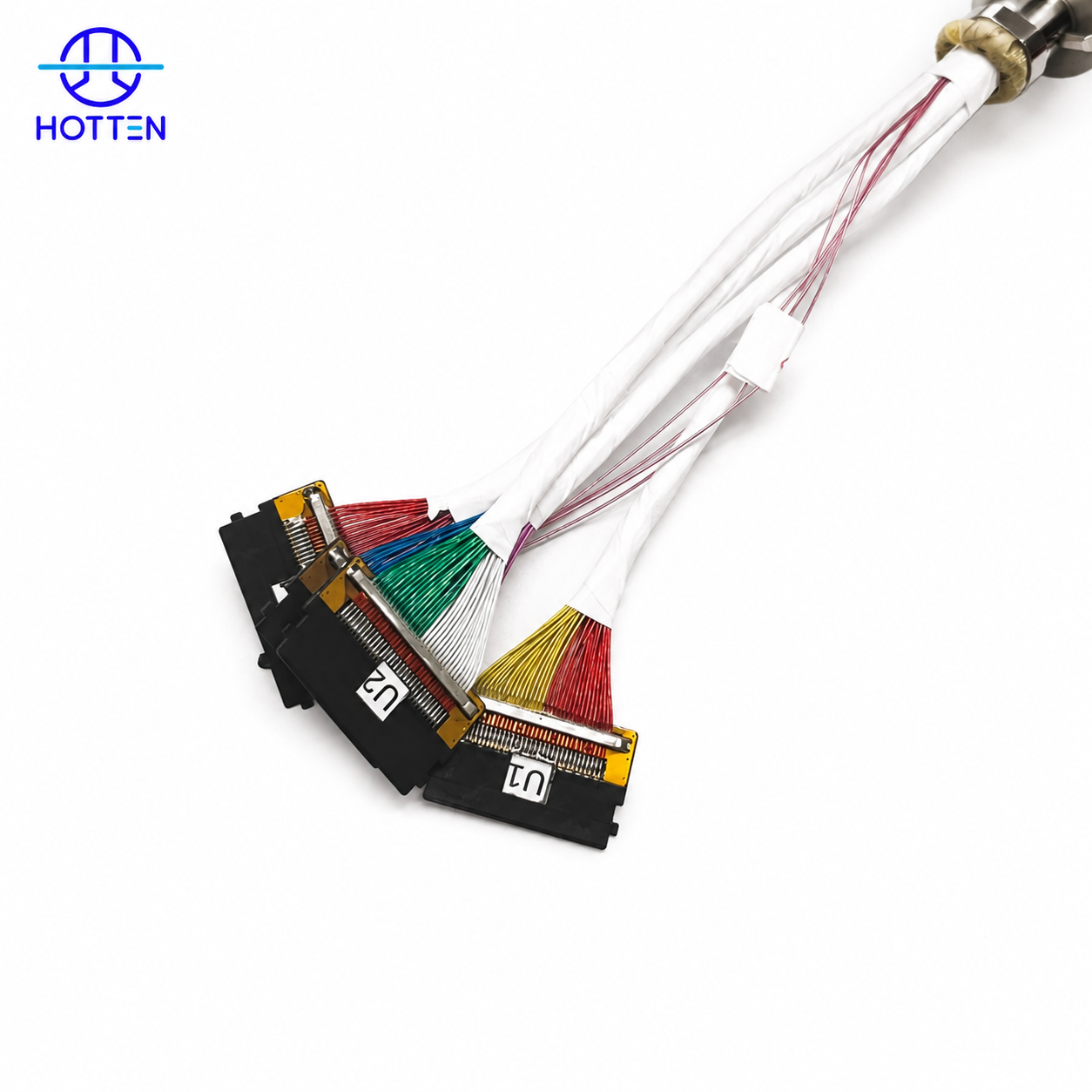
If the probe uses high-density connector or paddle-card termination → define the connector interface, pin assignment, pitch, termination method, and available assembly space at the beginning of development → then optimize the cable structure around that interface.
Termination should not be treated as a separate final-stage operation. Cable geometry, conductor spacing, shielding, and strain relief all need to remain compatible with the selected interface.
For customized high-density cable assemblies, see HOTTEN's Micro Coaxial Cable Assembly solutions.
Different ultrasound probes can require different cable priorities.
If the probe prioritizes high channel density and compact dimensions → prioritize cable OD, conductor size, channel arrangement, and termination density → then verify capacitance, impedance, shielding, and flexibility.
If the probe prioritizes low capacitance and signal consistency → prioritize dielectric structure, conductor geometry, cable length, and dimensional control → then validate the finished cable's electrical characteristics.
If the probe prioritizes repeated bending and long service life → prioritize flexible construction, bend radius, flex cycles, shielding stability, and strain relief → then confirm that electrical performance remains within specification after mechanical testing.
Before requesting a quotation or prototype, an OEM engineering or procurement team should define:
| Requirement | Parameters to Confirm |
|---|---|
| Channel Configuration | Core count, channel arrangement |
| Conductor | AWG, conductor material |
| Electrical | Impedance, capacitance, attenuation, frequency |
| Dimensions | Cable OD, pitch, available routing space |
| Shielding | Shielding structure and required coverage |
| Mechanical | Bend radius, flex cycles, torsion |
| Interface | Connector PN, pitch, pinout, termination |
| Cable Length | Required length and routing path |
| Environment | Temperature, moisture, sterilization or other requirements |
| Validation | Electrical, mechanical, dimensional testing |
| Production | Prototype quantity, annual volume, required quality system |
For high-density low-capacitance ultrasound applications, HOTTEN's 128 Core Low Capacitance Medical Ultrasound Cable Assembly provides a product example.
For higher-channel-count configurations, see the 195 Core 44AWG/36AWG Medical Ultrasound Cable Assembly.
For broader medical-device applications, see HOTTEN's Medical Equipment solutions.
A practical ultrasound micro-coaxial cable selection process can be summarized as:
Probe architecture → channel count → available space → electrical requirements → conductor / dielectric structure → shielding → mechanical requirements → connector / termination → validation → production
The objective is not to choose the smallest or lowest-capacitance cable by default. The objective is to select a cable architecture that can meet the required electrical, mechanical, dimensional, interface, and manufacturing requirements of the complete ultrasound probe.
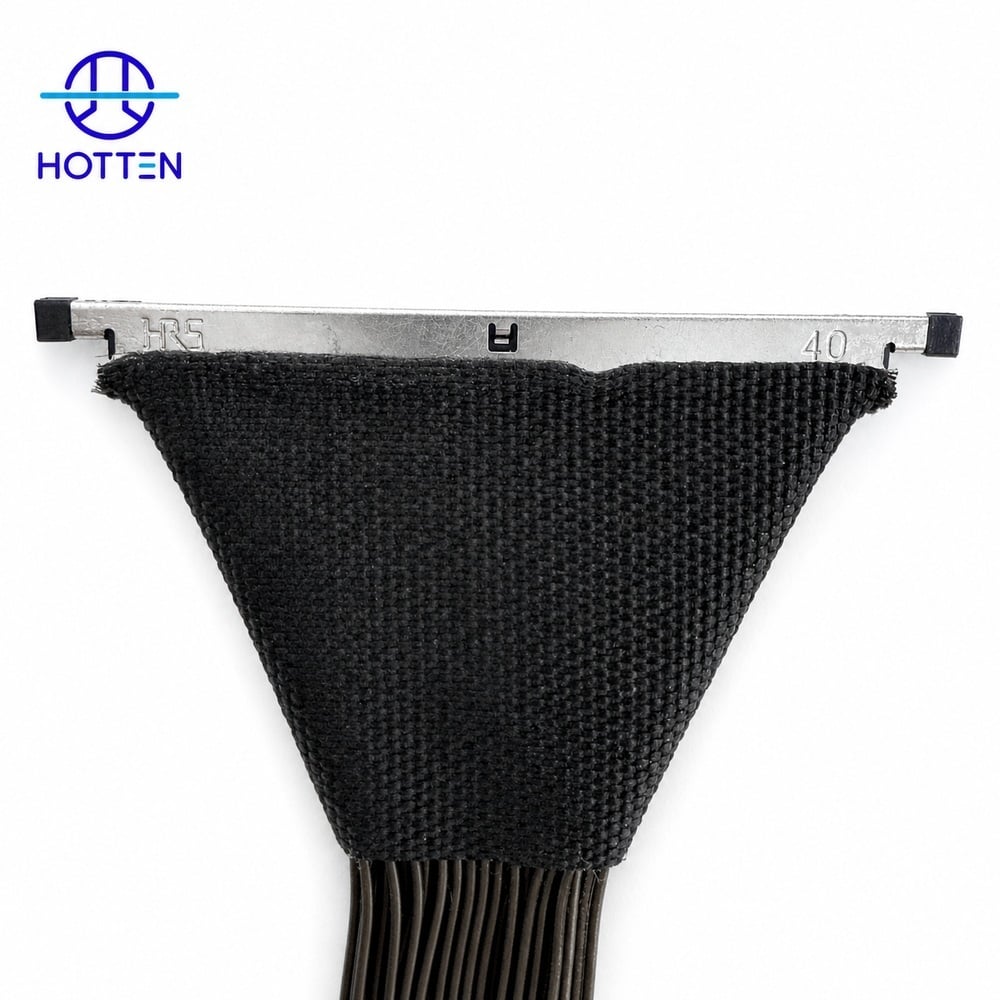
Integrating up to 256 channels of 44–46 AWG micro coaxial cables into medical cable assemblies requires extremely precise termination processes. Manufacturing methods typically include direct paddle card soldering or ultra-fine board-to-board connectors with pitches as small as 0.3 mm.
Any physical mismatch at the termination interface can introduce localized capacitance spikes and impedance discontinuities. Therefore, connector pin layouts should incorporate dedicated ground structures between signal pins to maintain impedance consistency.
High-density cable assembly requires fully automated laser stripping equipment and precision micro-soldering under high-magnification visual inspection to prevent damage to delicate conductors. Precise tension control during multi-core cabling is equally important to ensure uniform stress distribution across all channels.
Manufacturing facilities should operate under a certified ISO 13485 medical quality management system and perform 100% capacitance testing to verify impedance consistency across every channel.
Selecting the right micro coaxial cable for ultrasound probe applications requires balancing low-dielectric materials, optimized cable geometry, and highly flexible mechanical structures. OEM manufacturers should work with experienced custom cable assembly suppliers capable of OEM/ODM development to optimize impedance control and multi-channel termination performance. Early engineering collaboration helps ensure compliance with ISO 13485 medical standards while delivering superior signal integrity.
 Hot News
2026-09-17
2026-09-04
2025-12-17
2025-12-11
2025-12-05