 EN
EN
Quick Links

Home > News > Company news
In high‑speed and high‑frequency signal transmission, “50Ω / 75Ω impedance consistency” is a topic that engineers can never avoid. Especially when using extremely fine micro coaxial cables such as 38–50 AWG, even a seemingly tiny deviation of 0.01 mm can be “magnified” at the GHz level, causing significant signal reflections and performance degradation.
Impedance consistency is important in ultra-fine micro coaxial cables because high-frequency signals can be affected by changes in conductor geometry, dielectric dimensions, shielding structure, cable dimensions, and connector transitions. When these parameters vary along the transmission path, impedance discontinuities can increase signal reflections and affect overall signal integrity.
If a micro coaxial cable is used for high-speed or high-frequency transmission → impedance should be controlled across the complete cable structure → because conductor size, dielectric geometry, shielding, and termination all contribute to the transmission path.
This becomes particularly relevant as cable dimensions decrease. In a compact micro-coaxial structure, conductor diameter, dielectric thickness, concentricity, and shielding geometry occupy a very small dimensional envelope, so manufacturing consistency becomes part of the electrical design.
For related information on conductor-size selection and its relationship with cable dimensions, see How Does AWG Affect Micro Coaxial Cable Performance?.
The dielectric structure is also closely related to impedance behavior. Different insulation and foaming technologies can change dielectric characteristics and therefore need to be considered together with cable geometry. See Comparison of Three High-Frequency Cable Foaming Technologies.
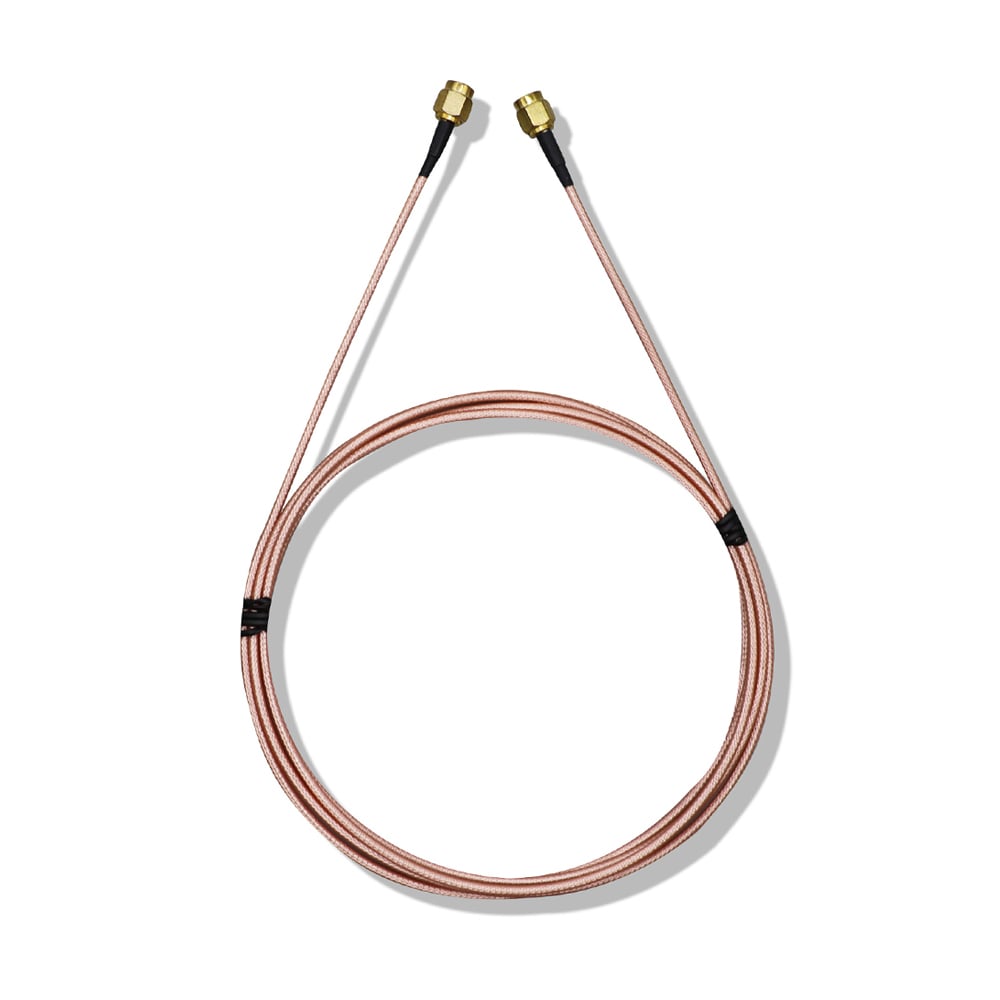
For OEM applications requiring controlled high-frequency cable structures, see HOTTEN's Micro Coaxial Cable and Micro Coaxial Cable Assembly solutions.
This article explains the fundamentals of high‑frequency transmission and impedance, combined with the geometric characteristics of micro coaxial structures, to clarify why micro cables are extremely sensitive to dimensional tolerances. It also introduces Hotten’s engineering capabilities in controlling impedance consistency.
| Factor | Impact on Impedance Consistency | Manufacturing Control Method |
|---|---|---|
| Conductor Diameter | Small dimensional changes can alter characteristic impedance and affect signal reflection | Precision conductor drawing and diameter control |
| Dielectric Thickness | Changes in insulation thickness affect electromagnetic field distribution | Stable extrusion process and material control |
| Conductor Centering | Offset between conductor and shield creates impedance variation | Automated alignment and process inspection |
| Shield Structure | Shield geometry affects impedance stability and EMI performance | Controlled shielding coverage and structure consistency |
| Cable Diameter | Ultra-fine cable structures require tighter dimensional tolerance | Online diameter monitoring and quality inspection |
| Connector Termination | Poor termination can create impedance discontinuity | Controlled assembly process and electrical testing |
1. Fundamental Concepts of High‑Frequency Transmission and Impedance
In low‑frequency or power applications, we often focus on conductor cross‑section, resistance, voltage drop, and temperature rise.
However, in **high‑frequency signal transmission**, one of the most critical electrical parameters becomes **Characteristic Impedance (Z₀)**.
What is Characteristic Impedance?
Characteristic impedance is an inherent property of a transmission line determined by conductor structure, insulation material, and geometric dimensions. For coaxial cables, two common standards are:
• **50Ω** – used in RF, microwave, and high‑speed digital signals
• **75Ω** – used in video and imaging transmission
At high frequencies, if the source, cable, connector, and load impedances do not match, **reflections occur at discontinuities**, causing:
• Increased return loss
• Increased insertion loss
• Eye‑diagram closure and higher BER
• Image noise, ghosting, or snow‑like artifacts
Therefore, when operating in the **GHz range**, impedance stability becomes crucial.
2. Geometric Relationship Between Micro‑Coax Structure and Impedance
For coaxial structures, characteristic impedance is primarily determined by:
• Inner conductor diameter (d)
• Insulation inner/outer diameter (for micro‑coax often outer D)
• Dielectric constant (εr)
• Shielding coverage and structure
In simplified terms:
**Z₀ depends strongly on the D/d ratio and εr**.
With material unchanged:
• Thicker inner conductor / thinner dielectric → Z₀ decreases
• Thinner inner conductor / thicker dielectric → Z₀ increases
Since micro‑coax outer diameters often range from **0.08–0.30 mm**, any small dimensional change will significantly affect the D/d ratio and thus impedance.
Foamed insulation (Foamed PFA/PTFE) further increases sensitivity due to lower εr and its effect on electromagnetic field distribution.
3. Why Does a 0.01 mm Deviation Get Amplified at GHz Frequencies?
Although 0.01 mm appears tiny, for 0.08–0.30 mm micro‑coax, it represents a large relative offset:
• At 0.30 mm OD → 0.01 mm ≈ 5%
• At 0.08 mm OD → 0.01 mm ≈ 20%
Impedance response is not linear—small dimensional changes create a **magnified effect**:
• If insulation OD increases (D↑), then D/d increases → Z₀ increases.
• For a 50Ω cable, such deviations can result in **2%–10% impedance deviation**.
At low frequencies, problems may not be obvious.
But in the **GHz range**, even slight impedance discontinuity leads to:
• Higher reflection coefficient
• Increased return loss
• Higher insertion loss
If multiple discontinuities occur along a cable due to OD fluctuations, these reflections accumulate—causing high BER, eye‑diagram closure, or image interference.
Thus, ultra‑fine micro coaxial cables must control OD tolerance within **±0.005 mm** or tighter.
4. Manufacturing Challenges in Achieving Dimensional & Impedance Consistency
Achieving good impedance consistency in 38–50 AWG micro‑coax requires more than correct design—it demands extremely high‑precision manufacturing.
4.1 Ultra‑Fine Conductor Drawing & Roundness
The thinner the conductor, the lower its mechanical strength. During drawing and stranding:
• Stretching, bending, and ovality occur easily
• AWG accuracy and roundness directly affect D/d ratio
4.2 Insulation Extrusion — OD & Concentricity Control
Micro‑coax insulation extrusion requires:
• OD control such as 0.08 mm ±0.003 mm
• Concentricity above 90%
• Stable foaming ratio for foamed dielectric
Any fluctuation in OD immediately causes impedance fluctuation.
4.3 Shielding Structure
Micro‑coax uses ultra‑fine shielding wires:
• Shield wire diameter
• Coverage density and compactness
These affect electromagnetic field distribution around the core, influencing impedance.
4.4 Batch Consistency & Online Testing
Ensuring consistent impedance requires:
• Stable equipment & standardized process parameters
• Inline or sampling OD monitoring
• TDR, return loss, and insertion loss testing
Only the combination of **design + process + testing** guarantees real impedance consistency.
For an OEM project, impedance should not be treated as an isolated cable specification. The complete transmission path includes the conductor, dielectric, shielding, cable geometry, connector interface, termination, and routing conditions. Engineers should therefore evaluate these factors together when defining a 50Ω or 75Ω micro coaxial cable requirement.
If the available cable OD is extremely limited → evaluate conductor diameter, dielectric thickness, concentricity, and shielding structure together → then verify the resulting impedance on the finished cable.
A smaller cable structure can provide valuable routing space, but reducing dimensions also leaves less tolerance for geometric variation. This is why dimensional control should be considered part of the impedance-control strategy rather than treated only as a mechanical specification.
For related ultra-fine cable design challenges, see Why Ultra-Fine High-Frequency Coaxial Cable Design Is So Difficult.
If the design requires controlled impedance at high frequency → evaluate dielectric material and thickness together with conductor geometry → then validate the final cable against the required impedance target.
The insulation structure influences the electromagnetic field around the conductor. Therefore, changing the dielectric material, foaming structure, or insulation dimensions can affect the final electrical characteristics even when the conductor remains unchanged.
For a comparison of insulation approaches used in high-frequency cable construction, see Comparison of Three High-Frequency Cable Foaming Technologies.
If EMI protection is important → evaluate shielding coverage, shield geometry, and cable dimensions together with impedance → then validate both electrical performance and mechanical behavior.
Shielding is part of the overall coaxial geometry. Increasing shielding density or changing shield construction can influence the cable structure, stiffness, OD, and electromagnetic field distribution.
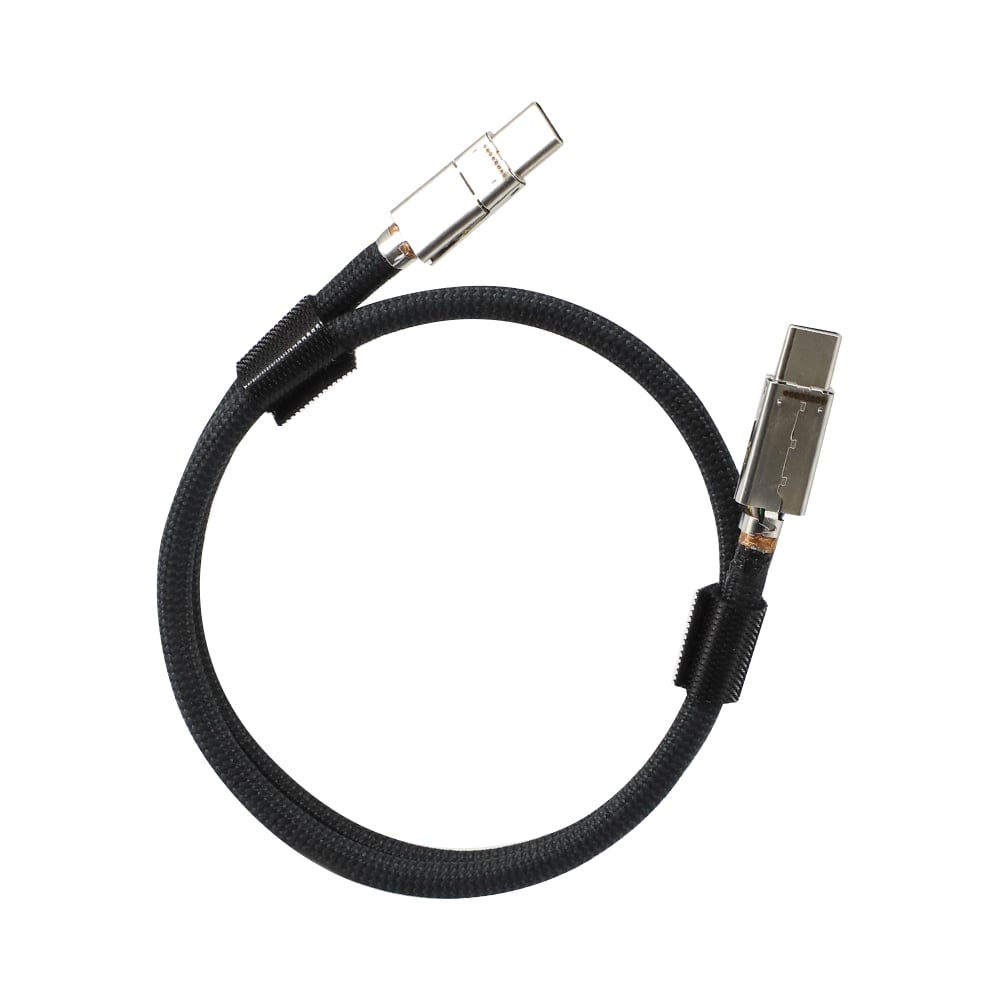
For compact cable assemblies requiring controlled electrical characteristics and customized termination, see HOTTEN's Micro Coaxial Cable Assembly.
If the cable connects to a high-speed PCB, sensor, camera, or other precision interface → evaluate the connector and termination geometry together with the cable → because an impedance-controlled cable can still experience discontinuities at the interface.
The RFQ should therefore include the connector manufacturer and part number, pinout, termination method, cable length, and interface geometry whenever available.
This is particularly important for compact applications such as medical imaging, industrial cameras, UAV vision systems, and other high-density electronic systems.
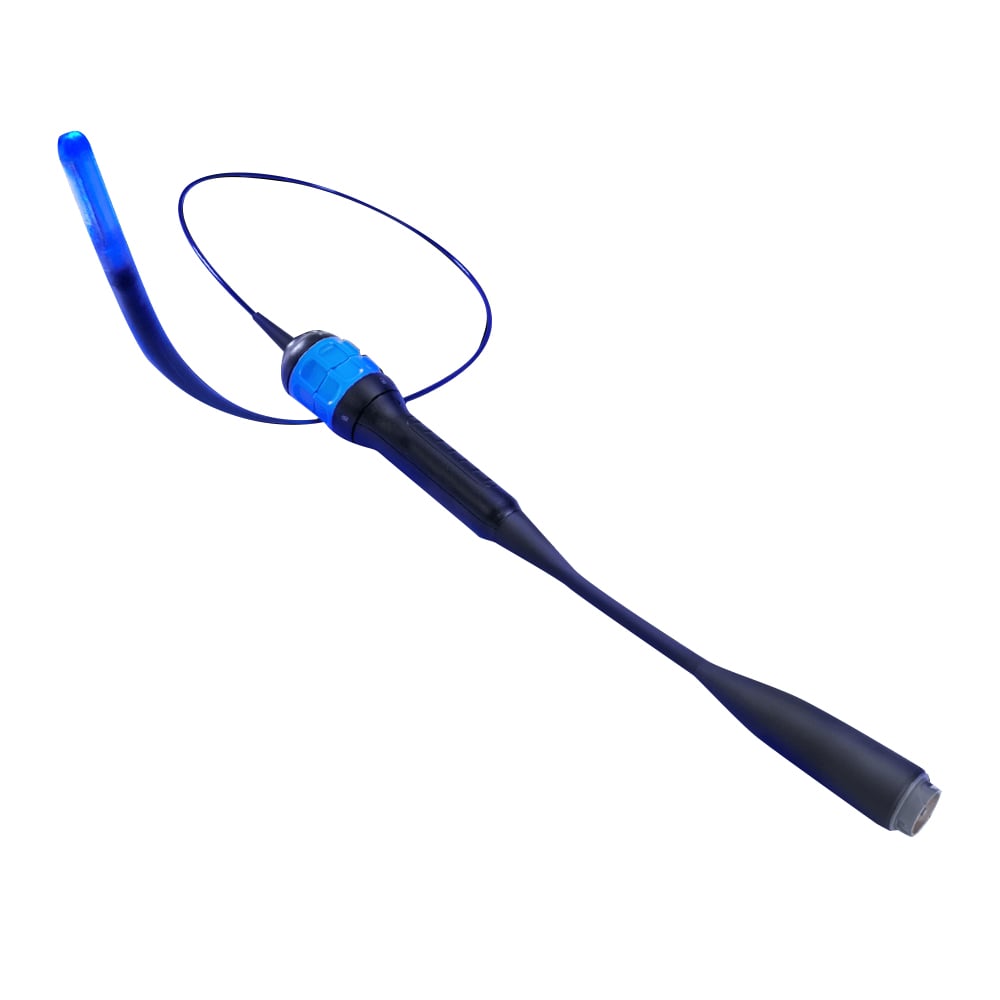
For medical imaging applications, see HOTTEN's Ultrasound Probe Cable solutions.
For UAV and moving electronic systems, see UAV & Robotics.
Before approving a custom 50Ω or 75Ω micro coaxial cable design, an OEM engineering team should confirm:
| Requirement | Parameters to Confirm |
|---|---|
| Electrical Target | 50Ω / 75Ω or application-specific impedance |
| Conductor | AWG, diameter, material, roundness |
| Dielectric | Material, thickness, dielectric characteristics |
| Geometry | Cable OD, concentricity, dimensional tolerance |
| Shielding | Structure, coverage, shield dimensions |
| Cable Length | Required transmission length |
| Interface | Connector PN, pitch, pinout, termination |
| Testing | Impedance, TDR, return loss, insertion loss |
| Mechanical | Bend radius, flex cycles, routing conditions |
| Production | Dimensional consistency, batch consistency, validation method |
The final objective is not simply to achieve a nominal impedance value on a prototype. The cable structure should be capable of maintaining the required electrical characteristics consistently across production.
The importance of each parameter can change according to the final application.
If the cable is used for medical ultrasound or endoscopic imaging → prioritize impedance consistency together with capacitance, attenuation, shielding, flexibility, and channel density → then validate the complete medical cable assembly.
See How to Select Micro Coaxial Cable for Ultrasound Probe Applications and Technical Analysis of Reliable Signal Transmission Using Micro Coaxial Cable Assemblies in Miniature Endoscopic Imaging Systems.
If the cable is used for UAV cameras, gimbals, or robotics → prioritize impedance consistency together with compact OD, shielding, flexibility, and dynamic routing requirements → then validate the cable under the expected mechanical conditions.
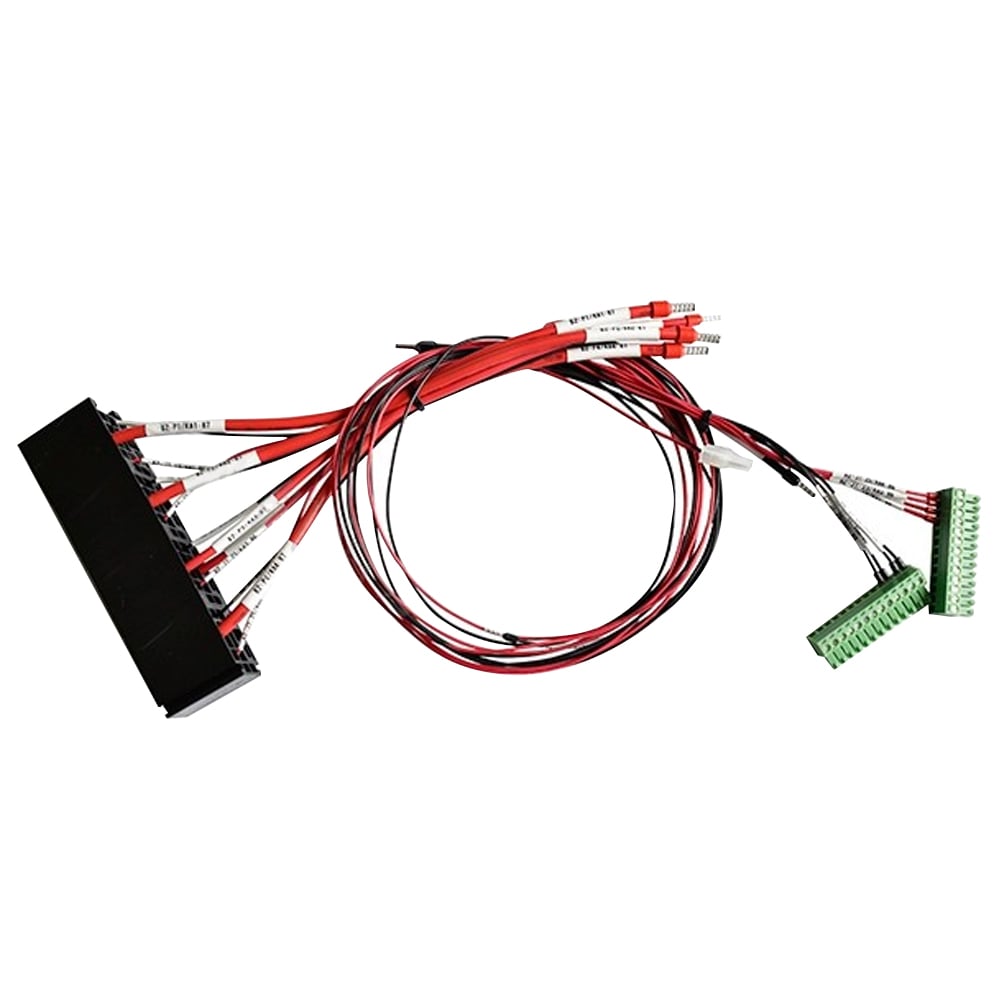
See HOTTEN's Gimbal Camera Wire Harness and Robotics Wire Harness solutions.
If the cable is used in RF or other high-frequency systems → prioritize impedance, attenuation, shielding, connector performance, and cable length → then evaluate the complete transmission path.
See HOTTEN's High Frequency & RF Systems solutions.
The practical engineering principle is therefore:
Application requirement → impedance target → cable geometry → dielectric → shielding → connector → testing → production validation
5. Hotten Cable’s Engineering Capability in Micro‑Coax Impedance Control
Hotten Cable specializes in high‑frequency micro‑coax products and has long‑term expertise in impedance consistency.
For **38–50 AWG micro‑coax**, we provide:
• Electrical & geometric design for 50Ω / 75Ω
• High‑frequency extrusion of PFA / PTFE / Foamed PFA
• Micron‑level OD precision & high concentricity
• Multiple shielding structures (single braid, double braid, foil + braid)
• GHz‑level impedance, IL/RL testing and evaluation
A: Impedance consistency is critical because it helps prevent signal reflection, transmission loss and distortion during high-frequency signal transmission. Stable impedance ensures better signal integrity in demanding electronic systems.
A: The most common impedance values are 50Ω and 75Ω. 50Ω cables are widely used in RF communication, wireless systems and test equipment, while 75Ω cables are commonly used for video and low-loss signal transmission applications.
A: In ultra-fine coaxial cables, extremely small dimensional changes can influence the conductor-to-shield relationship and dielectric geometry, causing impedance variation and affecting high-frequency transmission performance.
A: Impedance variation can result from conductor diameter changes, dielectric thickness variation, conductor misalignment, shielding structure differences and inconsistent manufacturing processes.
A: Manufacturers control impedance through precision material selection, dimensional control, extrusion process stability, conductor alignment, shielding control and electrical testing.
A: At GHz frequencies, even small impedance mismatches can cause signal reflection and insertion loss, reducing transmission efficiency and affecting system reliability.
Through tight control of conductor size, insulation OD, dielectric material, and shielding, we maintain excellent impedance stability—ideal for:
• UAV video transmission
• Industrial cameras
• Medical ultrasound
• Endoscopes
• Any GHz‑level high‑bandwidth small‑space application
For customers needing **high bandwidth, low loss, and stable high‑definition signal transmission in compact devices**, a micro‑coax cable with controlled dimensions and impedance consistency means better performance, faster development, and lower system risk.
 Hot News
2026-09-17
2026-09-04
2025-12-17
2025-12-11
2025-12-05