 EN
EN
Quick Links

Home > News > Company news
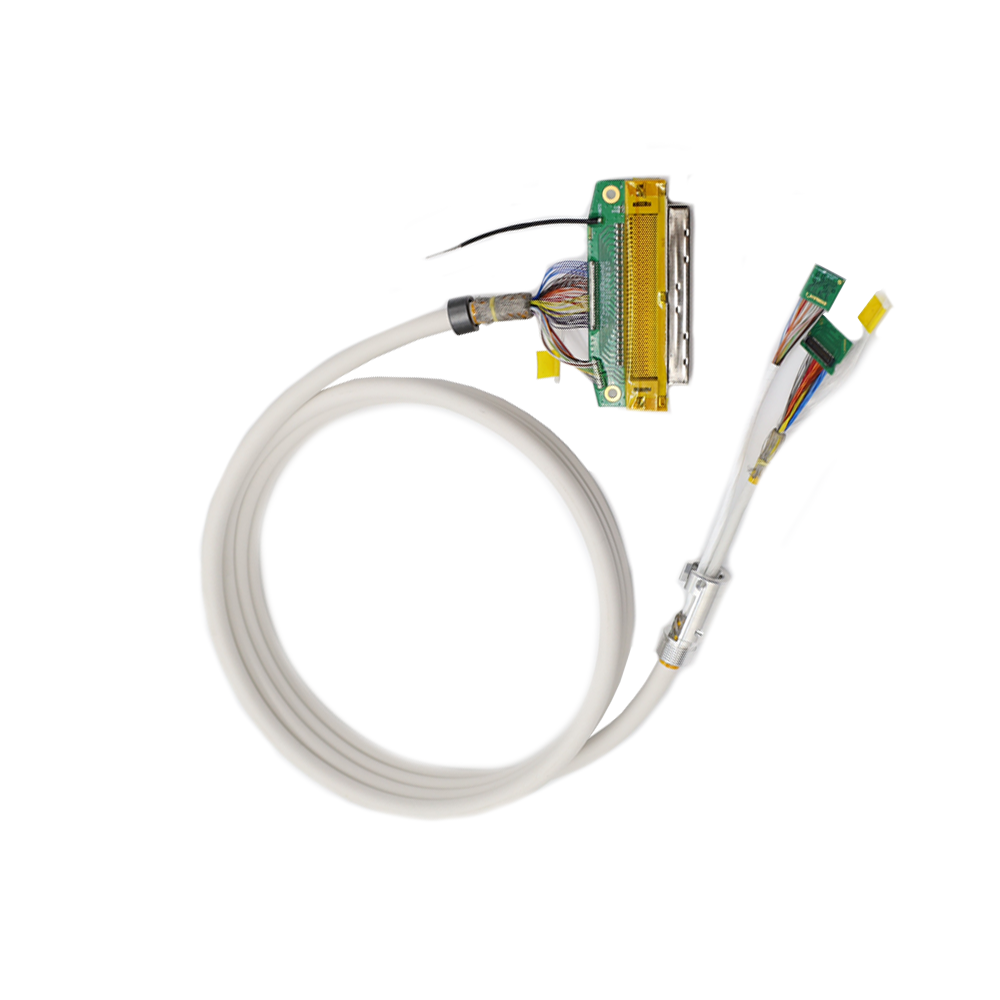
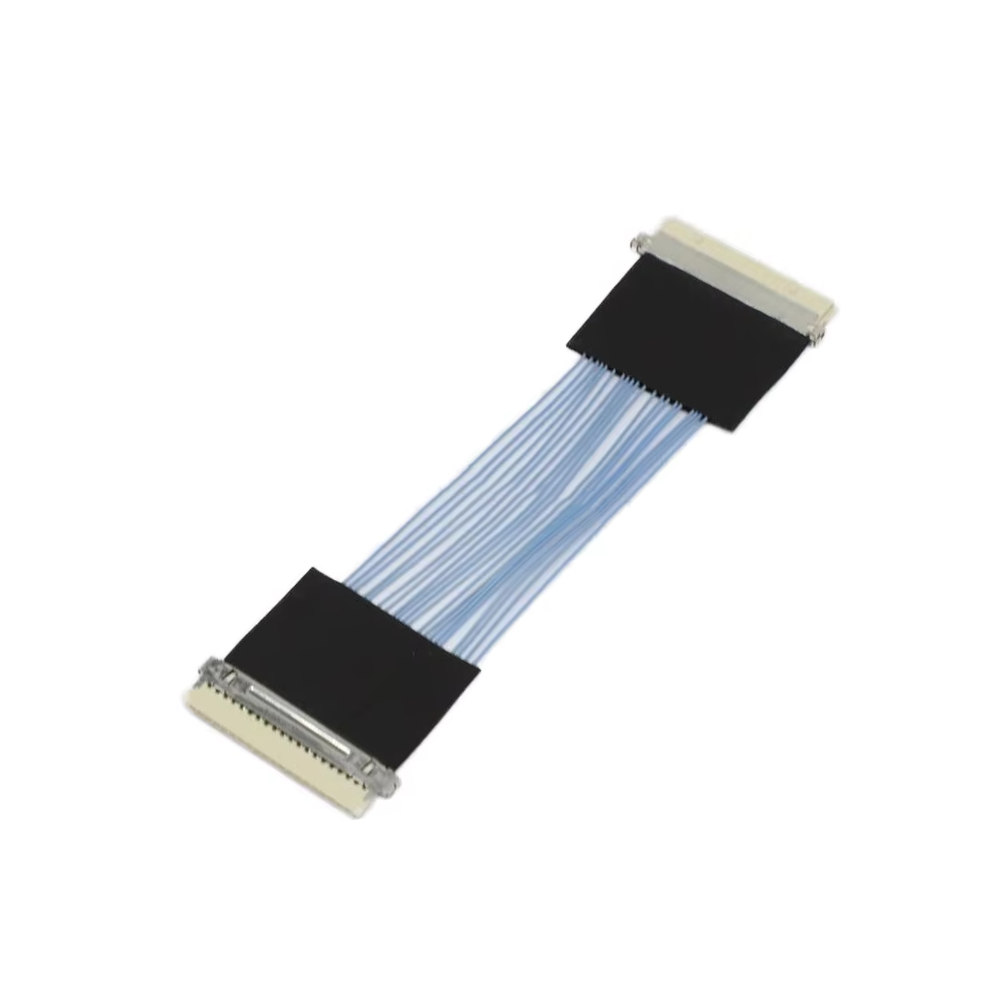
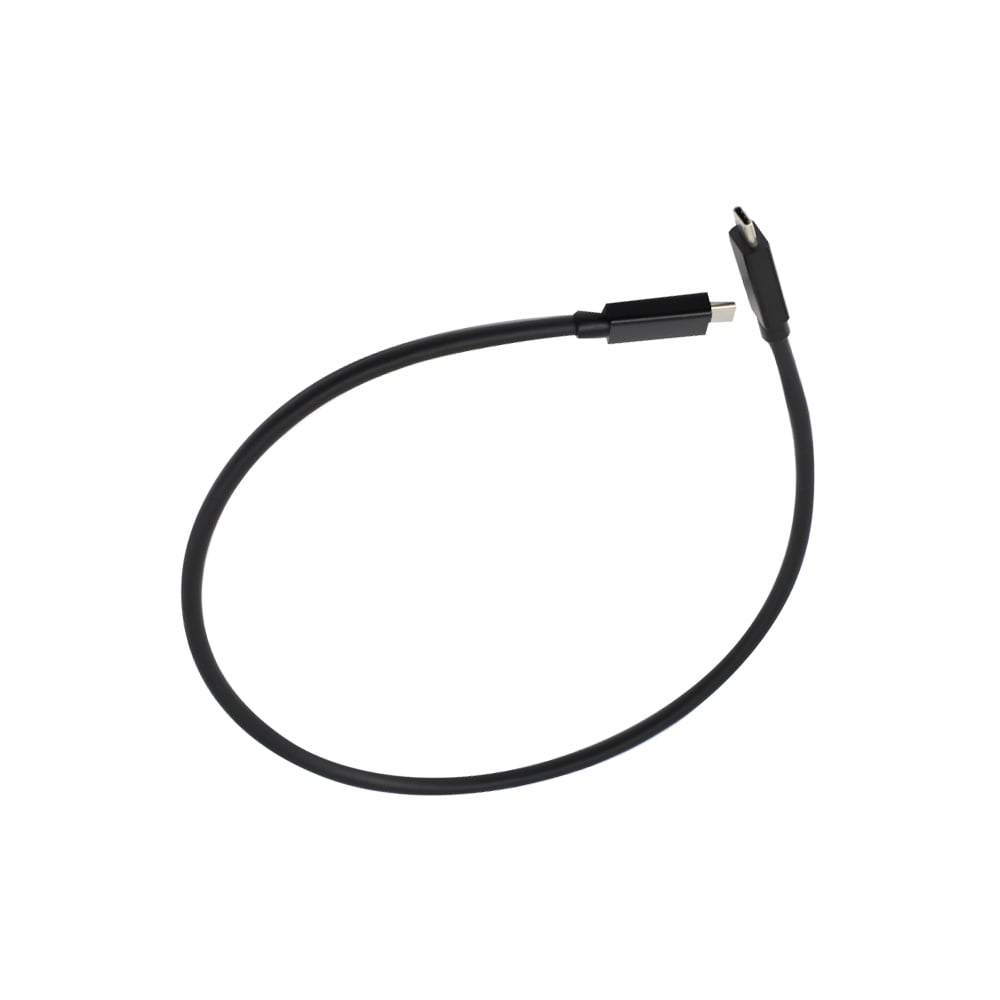
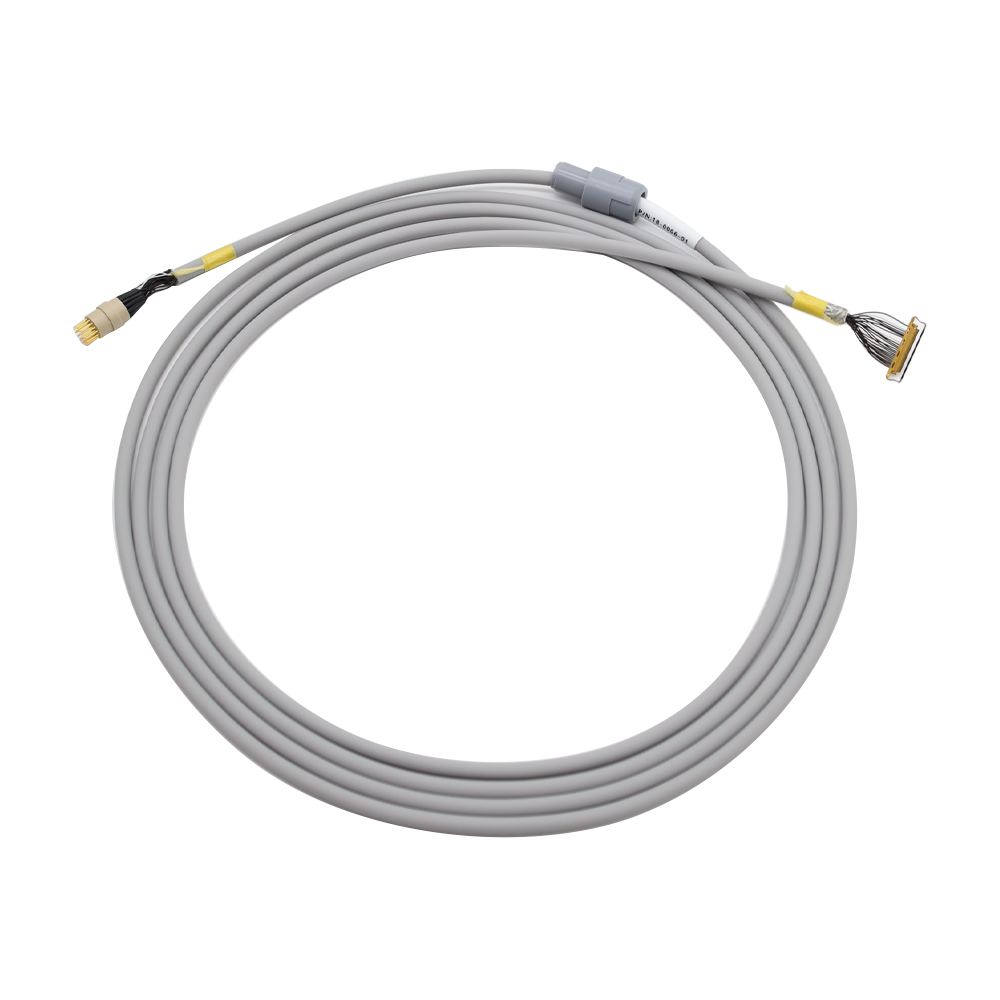
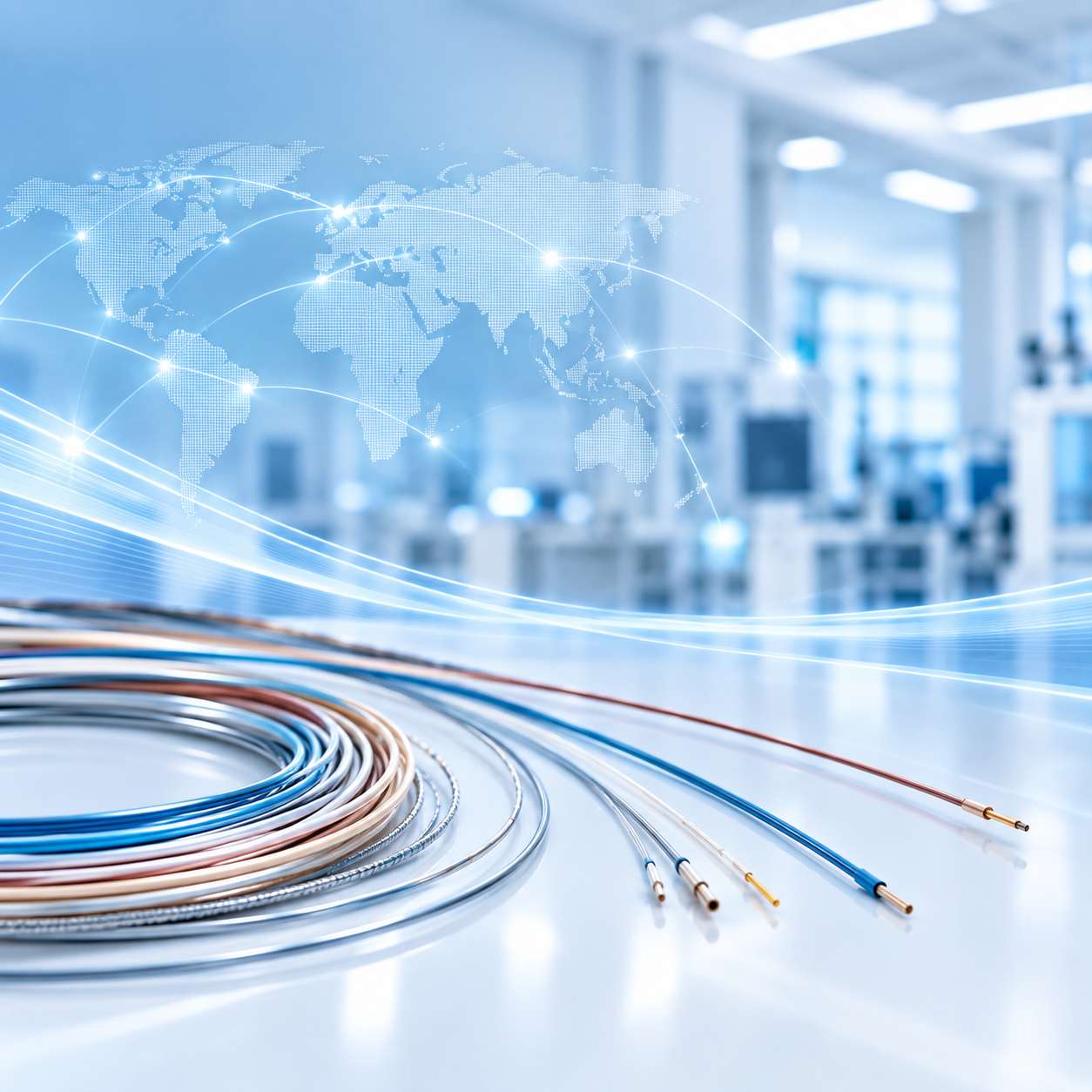
As medical equipment, miniature camera modules, wearable sensors, and ultra-small robots continue moving toward smaller, lighter, and smarter designs, traditional cables can no longer meet the requirements for size, flexibility, and signal integrity. In this context, 52AWG micro coaxial cable has become a new focal point in the industry. It is not merely a “thinner wire,” but a core interconnect technology for next‑generation miniaturized electronics.
Many people assume that 52AWG coaxial cable is simply a “thinner version” of micro coax. In reality, every 1‑AWG reduction represents an exponential leap in manufacturing difficulty, cost, and technical threshold. From conductor processing, insulation extrusion, and shielding structure, to harness termination and mass‑production consistency, 52AWG belongs to a true “extreme‑level” specification.
 When Is 52AWG Micro Coaxial Cable Worth Using Instead of 50AWG or Larger AWG Sizes?
52AWG micro coaxial cable is mainly worth evaluating when available routing space, cable diameter, cable weight, or wiring density is more restrictive than the mechanical and manufacturing margin of a larger conductor size.
A higher AWG number means a smaller nominal conductor diameter. Standard AWG references list approximately 0.0199 mm for 52AWG and 0.0251 mm for 50AWG bare wire.
However, selecting 52AWG should not be based on conductor diameter alone. The complete cable still has to satisfy requirements for impedance, attenuation, capacitance, shielding, flexibility, termination, and production consistency.
If → Then → Why
If the available installation space is extremely limited → Then evaluate 52AWG micro coaxial cable → Why: the smaller conductor can support a more compact cable structure when the complete cable design permits it.
If 50AWG already fits comfortably and the system does not require additional size reduction → Then compare whether 50AWG provides a larger engineering margin → Why: moving to a smaller conductor can introduce additional mechanical and manufacturing constraints.
If the cable carries high-frequency signals → Then evaluate conductor size together with dielectric geometry, shielding, impedance, attenuation, and cable length → Why: conductor AWG alone does not determine high-frequency transmission performance.
If the cable must be manufactured in volume → Then evaluate dimensional, electrical, and termination consistency before finalizing 52AWG → Why: ultra-fine constructions require tighter process control.
For compact high-density interconnects, see HOTTEN's Micro Coaxial Cable.
For applications requiring ultra-fine individual conductors, see Thin Electronic Wire.
| Cable Specification | Advantages | Limitations | Typical Applications |
|---|---|---|---|
| 52AWG Micro Coaxial Cable | Extremely small diameter, maximum space saving, excellent flexibility for ultra-miniaturized devices | Highest manufacturing difficulty, stricter process control and higher customization requirements | Minimally invasive medical devices, miniature cameras, wearable electronics, micro-robots |
| 50AWG Micro Coaxial Cable | Balance between ultra-small size, signal integrity and manufacturing feasibility | Slightly larger diameter compared with 52AWG | Medical endoscopes, UAV cameras, high-resolution imaging systems |
| 46-48AWG Micro Coaxial Cable | Better mechanical strength and easier mass production while maintaining miniaturization | Requires more installation space than 50/52AWG | AR/VR devices, robotics, consumer electronics |
| Standard Micro Coaxial Cable | Mature manufacturing process and reliable electrical performance | Limited performance in extreme space-constrained applications | General electronic devices and cable assemblies |
1. What Is a 52AWG Micro Coaxial Cable and Why Is It Considered an Extreme Specification?
52AWG refers to a single conductor diameter of approximately 0.024 mm—three to four times thinner than a strand of human hair. After adding insulation, shield wrapping, and outer protection, the finished cable OD can be controlled around 0.13 mm. Such extreme dimensions make 52AWG one of the closest specifications to the current manufacturing limits.
2. The Technical Value of 52AWG: More Than Just “Thinner”
1) Ultra‑small OD for extreme space‑limited routing
2) Stable high‑frequency signal transmission
3) Exceptional flexibility and bending life
4) Lightweight design for more comfortable wearable devices
3. Why Does the Manufacturing Difficulty Increase Exponentially?
1) Ultra‑fine conductor processing becomes significantly more challenging
2) Insulation extrusion demands extremely high precision
3) Shielding wire winding becomes more complex and sensitive
4) Harness termination almost entirely relies on microscopic workstations
4. Typical Application Fields of 52AWG Micro Coaxial Cables
1) Minimally invasive medical devices
2) Miniature camera modules
3) Wearable electronics
4) Micro‑robots and flexible robotic arms
5. How to Evaluate a Supplier’s Capability?
- Whether they have micro‑coax extrusion production lines
- Whether they can perform TDR / SI testing
- Whether they have industry project experience
- Whether they can provide complete harness solutions
- Whether they have fatigue‑testing capability
52AWG can be attractive for highly miniaturized systems, but engineers should treat it as a system-level cable design decision, not simply the smallest available wire option.
The first question should be:
How much smaller does the cable actually need to become?
A smaller conductor can contribute to a smaller cable architecture, but the final cable diameter depends on much more than conductor AWG.
Important variables include:
If → the current cable cannot pass through the available routing path
Then → evaluate whether moving from 50AWG to 52AWG can provide meaningful dimensional improvement
Why → ultra-miniaturized equipment often has very limited internal routing space.
If → the current cable already satisfies the installation envelope
Then → compare the dimensional benefit against the additional design and manufacturing constraints
Why → reducing AWG size only makes sense when it solves an actual system-level problem.
HOTTEN's micro-coaxial solutions are positioned for compact, high-density applications where cable dimensions and routing space are important design considerations.
AWG primarily describes conductor size. It does not by itself define the high-frequency performance of the complete micro coaxial cable.
Engineers should also evaluate:
| Parameter | Engineering Consideration |
|---|---|
| Conductor size | Influences conductor geometry and resistance |
| Dielectric | Influences impedance and dielectric loss |
| Shielding | Influences EMI performance and return path |
| Characteristic impedance | Important for controlled high-frequency transmission |
| Attenuation | Determines signal loss over the specified frequency and length |
| Capacitance | Relevant to certain high-speed and medical applications |
| Cable length | Affects total transmission loss |
| Connector | Can introduce an additional transition in the signal path |
If → the project requires controlled high-frequency transmission
Then → specify the complete electrical performance rather than only “52AWG”
Why → a very small conductor cannot compensate for poorly controlled impedance or cable geometry.
HOTTEN's existing micro-coaxial product portfolio includes compact 40AWG and 42AWG assemblies as well as other application-specific constructions, illustrating that AWG is selected according to the complete application rather than as an isolated performance ranking.
For more information on the relationship between AWG and cable performance, see How Does AWG Affect Micro Coaxial Cable Performance?.
Moving toward 52AWG means working with an extremely small conductor.
That can make mechanical design more sensitive to:
If → the cable only needs compact static routing
Then → a 52AWG construction may be easier to justify
Why → the mechanical demand can be lower than in continuously moving applications.
If → the cable is repeatedly bent or moved
Then → evaluate conductor construction, insulation, shielding, bending radius, and flex-life requirements together
Why → reducing conductor size does not automatically improve dynamic mechanical performance.
This is particularly important for gimbal, robotic, and other dynamic systems. HOTTEN's UAV and robotics cable solutions specifically address cable diameter, conductor construction, shielding, flexibility, routing, and connector configuration together.
For dynamic applications, see How to Balance Mechanical and Electrical Performance in Ultra-Fine Coaxial Cables.
One of the most important practical questions is not whether a 52AWG conductor can be manufactured.
It is whether the 52AWG cable can be reliably terminated into the required connector or cable assembly.
The final design may need to consider:
If → the connector has sufficient space and the termination process has been validated
Then → a finer conductor can be integrated into the assembly
Why → the cable and connector form one interconnect system.
If → the connector or termination process becomes the limiting factor
Then → a slightly larger AWG may provide a more practical manufacturing window
Why → the thinnest conductor is not useful if the finished assembly cannot be produced consistently.
For customized micro-coaxial assemblies, HOTTEN states that cable length, connector configuration, cable structure and other assembly parameters can be customized according to application requirements.
The right question is not:
“Is 52AWG better?”
A better engineering question is:
“What problem does 52AWG solve that 50AWG, 48AWG, or 46AWG cannot solve within the available system envelope?”
| Requirement | 46AWG | 48AWG | 50AWG | 52AWG |
|---|---|---|---|---|
| Compact conductor size | Good | Smaller | Very small | Extremely small |
| Routing-space advantage | Application-dependent | Higher | Higher | Highest potential |
| Manufacturing margin | Generally larger | Moderate | More demanding | More demanding |
| Mechanical robustness | Application-dependent | Application-dependent | Application-dependent | Requires careful evaluation |
| Ultra-high-density routing | Possible | Suitable | Strong candidate | Strong candidate |
| Need for process validation | Required | Required | Important | Especially important |
This table should be understood as an engineering comparison framework, not a universal performance ranking.
If → the main problem is extreme routing density
Then → move toward 50AWG or 52AWG for evaluation
Why → smaller conductor structures can support greater miniaturization.
If → the system has more available space but significant dynamic mechanical requirements
Then → compare 46AWG or 48AWG constructions as well
Why → the additional dimensional margin may provide useful mechanical and production flexibility.
Medical imaging systems can require high-density signal routing within compact probe or imaging assemblies.
If → the medical device requires very small routing space and multiple signal channels
Then → evaluate ultra-fine micro coaxial constructions
Why → cable diameter and signal density can become major integration constraints.
HOTTEN's Medical Field product portfolio includes ultrasound, endoscope, ICE, IVUS and other medical cable categories.
For the application-level cluster, see Medical Field.
Compact AI hardware and imaging systems may combine high-speed signal transmission with highly constrained internal layouts.
If → the system requires dense camera or display interconnects in a small enclosure
Then → evaluate micro-coaxial cable architecture
Why → high-density signal routing becomes an important mechanical integration problem.
UAVs and robotic imaging systems can place simultaneous constraints on space, weight, flexibility and signal transmission. HOTTEN's current UAV & Robotics solutions explicitly cover gimbal cameras, robotic imaging, compact construction, flexible routing and micro-coaxial cable applications.
If → the equipment combines limited space with repeated movement
Then → evaluate 52AWG only after mechanical and termination requirements are validated
Why → miniaturization and dynamic reliability must be designed together.
See UAV & Robotics.
A 52AWG RFQ should contain enough information for the supplier to evaluate the complete cable construction, rather than simply specifying an AWG number.
| RFQ Item | Recommended Information |
|---|---|
| Conductor | Material and construction |
| AWG | 52AWG or required range |
| Cable type | Micro coaxial / coaxial / custom assembly |
| Impedance | 50Ω / 75Ω / other |
| Frequency | Operating frequency range |
| Attenuation | Required maximum value |
| Capacitance | Required value or range |
| Cable OD | Maximum allowable diameter |
| Shielding | Required shielding structure |
| Insulation | Material and thickness requirements |
| Flexibility | Static or dynamic application |
| Bend requirement | Minimum bend radius / flex-life requirement |
| Length | Finished cable length |
| Connector | Part number / interface / pinout |
| Assembly | Required termination configuration |
| Testing | Electrical and mechanical validation requirements |
| Quantity | Prototype / pilot / mass production |
If → the RFQ only states “52AWG micro coaxial cable”
Then → request additional electrical, mechanical and assembly specifications
Why → different cable constructions can use the same nominal AWG while producing different finished performance.
A useful engineering decision sequence is:
Space Constraint → Required Cable OD → Signal Requirement → Frequency → Impedance → Mechanical Requirement → Termination → Manufacturing Capability → Validation
For example:
Extremely small routing space
→ determine the maximum allowable cable OD
→ evaluate 46AWG / 48AWG / 50AWG / 52AWG
→ check impedance and attenuation
→ check flexibility and bend requirements
→ validate connector termination
→ test prototype samples
→ evaluate production consistency
→ then determine whether 52AWG should move into mass production.
This approach keeps the selection process focused on the device requirement, rather than assuming that the smallest conductor is automatically the preferred solution.
For the AWG and miniaturization cluster, this article can naturally connect to:
How Does AWG Affect Micro Coaxial Cable Performance?
50AWG Micro Coaxial Cable Manufacturing Challenges: It’s Not Just Making the Cable Thinner
How to Balance Mechanical and Electrical Performance in Ultra-Fine Coaxial Cables
Why Ultra-Fine High-Frequency Coaxial Cable Design Is So Difficult
A: A 52AWG micro coaxial cable is an ultra-fine coaxial cable designed for extreme miniaturization applications. It features a very small conductor size and compact outer diameter while maintaining high-frequency signal transmission capability.
A: Engineers choose 52AWG micro coaxial cables when space is extremely limited and products require lightweight design, high flexibility and reliable signal transmission.
A: Manufacturing 52AWG micro coaxial cables requires extremely precise conductor processing, insulation extrusion, shielding control and microscopic harness termination processes to maintain consistent electrical and mechanical performance.
A: Not always. A smaller cable diameter provides space advantages, but engineers must also consider signal integrity, impedance stability, mechanical durability, bending cycles and manufacturing reliability.
A: 52AWG micro coaxial cables are suitable for ultra-miniaturized applications such as minimally invasive medical devices, miniature camera modules, wearable electronics and micro robotic systems.
A: Companies should evaluate manufacturing capability, ultra-fine cable experience, electrical testing ability, harness assembly capability, quality consistency and experience with similar high-precision applications.
6. Key Parameters to Consider in Engineering Design & Procurement
Characteristic impedance, OD tolerance, dielectric material, attenuation curve, minimum bending radius, and environmental compliance.
Conclusion
52AWG micro coaxial cable is not simply a “thinner specification,” but an extreme‑level interconnect technology designed for future ultra‑miniaturized devices. Its advantages in size, flexibility, and signal integrity make it a core component in medical devices, miniature cameras, smart wearables, and robotics. When selecting a 52AWG micro coax solution, engineers should focus on the supplier’s process capability, harness‑assembly expertise, and long‑term production stability.
Hotten Cable is actively developing in this direction, continuously building process know‑how and harness‑assembly experience for 52AWG micro coaxial cables to support customers’ next‑generation ultra‑miniaturized product designs.
 Hot News
2026-09-17
2026-09-04
2025-12-17
2025-12-11
2025-12-05