 EN
EN
Quick Links

Home > News > Company news
Low-Temperature Superconducting Coaxial Cables (LTS Coaxial Cables) are indispensable “neural fibers” in ultra-low-temperature physics experiments and cutting-edge technologies such as quantum computing.
To better understand these cables, we can examine them from three perspectives: their structure, their working principles, and the fundamental challenges they are designed to solve.
1. Core Structure: Why Is It Called “Coaxial”?
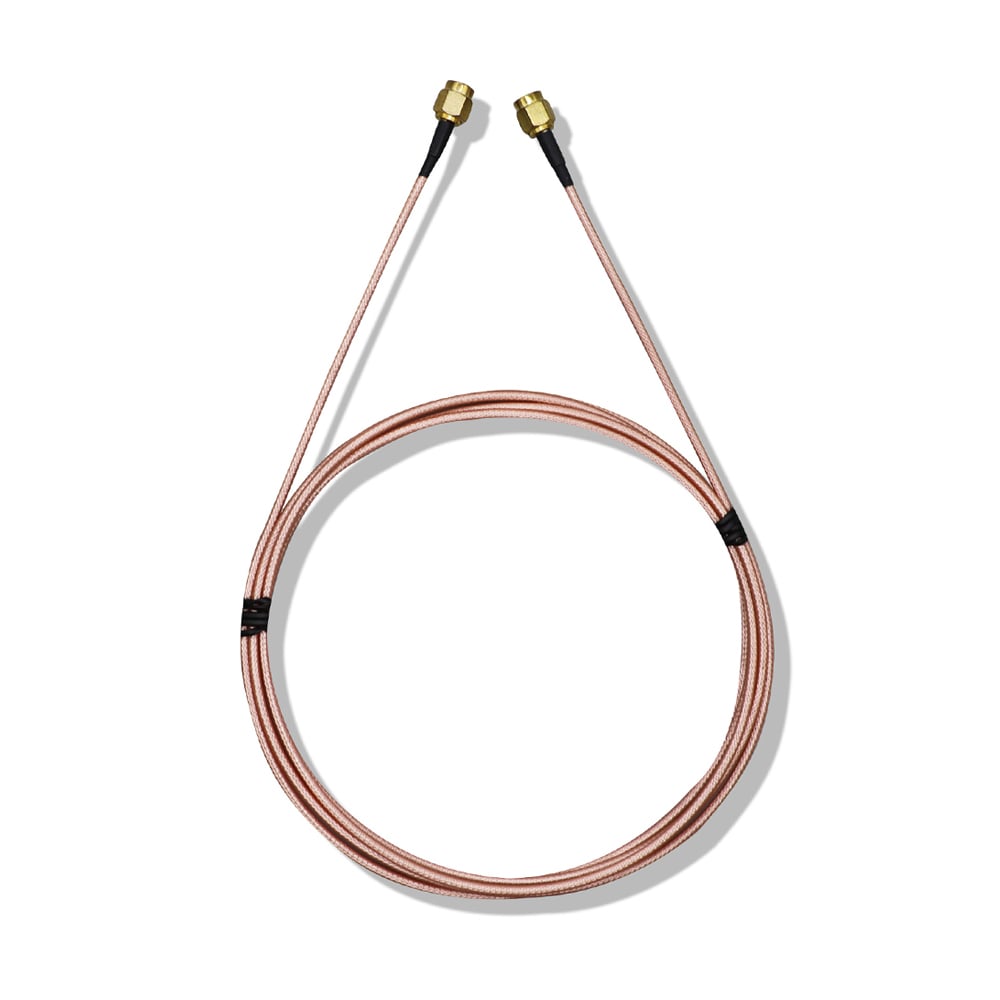
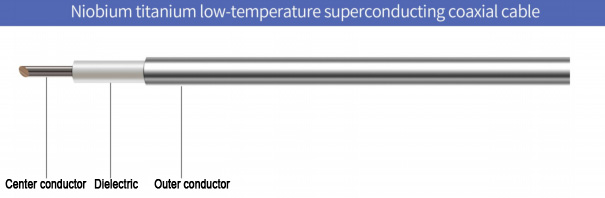
Structurally, low-temperature superconducting coaxial cables adopt a coaxial configuration similar to conventional household coaxial TV cables. However, the materials and operating conditions are fundamentally different.
Inner and outer conductors: These are typically made of low-temperature superconducting materials such as NbTi (Niobium-Titanium).
Insulation layer (dielectric): Located between the inner and outer conductors, the dielectric is usually a material with extremely low dielectric loss, such as PTFE (Teflon).
Operating environment: The cable must operate at extremely low temperatures—usually below 4.2 K (the temperature of liquid helium). Under these conditions, the superconducting material enters a zero-resistance state.
This coaxial structure ensures stable transmission of high-frequency signals with minimal loss under cryogenic conditions.
| Cable Type | Advantages | Limitations | Typical Applications |
|---|---|---|---|
| Low-Temperature Superconducting Coaxial Cable | Extremely low electrical resistance at cryogenic temperatures, low signal loss and suitable for quantum measurement systems | Requires complex cooling systems and specialized materials | Quantum computing, superconducting detectors, cryogenic research equipment |
| Cryogenic Semi-Rigid Coaxial Cable | Low thermal conductivity, stable RF performance and reliable mechanical structure at low temperatures | Limited flexibility compared with standard flexible cables | Microwave measurement systems, cryogenic instrumentation |
| Standard Coaxial Cable | Mature technology, cost-effective and widely available | Higher thermal conduction and performance degradation in extreme low-temperature environments | General RF applications |
| Flexible Micro Coaxial Cable | Small diameter, lightweight and flexible for compact electronic devices | Not designed for extreme cryogenic superconducting environments | Medical electronics, wearable devices, precision electronics |
2. Why Use Superconducting Materials for Cables?
In precision experiments such as quantum chip control, microwave signals must be transmitted from a room-temperature environment down to an ultra-low-temperature stage (for example, 20 mK). If conventional copper cables are used, two critical problems arise.
Signal attenuation (signal loss): Ordinary metals have electrical resistance. During high-frequency signal transmission, energy is converted into heat, causing signal amplitude to decay and potentially leading to signal distortion or loss.
Thermal conduction (heat leakage challenge): Copper is not only a good electrical conductor but also an excellent thermal conductor. Heat from the room-temperature side can easily flow along the cable into the cryogenic region, placing a heavy thermal load on the refrigeration system and potentially causing system instability.
The “magic” of low-temperature superconducting cables lies in their zero electrical resistance and low thermal conductivity, allowing microwave signals to be transmitted with almost no loss while effectively protecting the ultra-low-temperature environment.
3. Application Scenarios
Quantum Computing: These cables deliver microwave control and readout signals precisely to superconducting qubits, minimizing decoherence caused by thermal noise.
High Magnetic Field Physics: In particle accelerators and MRI systems, superconducting coaxial cables ensure reliable high-frequency signal transmission under strong magnetic fields.
Space Exploration: In satellites and infrared detection systems requiring cryogenic cooling, these cables help maintain extremely high sensitivity while reducing thermal load.
4. Low-Temperature Superconductors (LTS) vs. High-Temperature Superconductors (HTS)
Low-Temperature Superconducting Coaxial Cable (LTS): Materials include NbTi and Nb3Sn, operating below 10 K using liquid helium, primarily for signal transmission and precision measurement.
High-Temperature Superconducting Power Cable (HTS): Materials include YBCO and BSCCO, operating at 65–77 K using liquid nitrogen, primarily for high-current power transmission.
Conclusion
Low-temperature superconducting coaxial cables can be regarded as zero-loss micro-scale information highways. They ensure near-lossless microwave signal transmission while suppressing heat leakage in ultra-low-temperature systems.
With long-term experience in high-frequency and precision cable technologies, Hotten continues to refine conductor materials, dielectric structures, and overall cable stability, providing reliable low-temperature and high-frequency signal transmission solutions for advanced research and high-end applications.
A: Low-temperature superconducting coaxial cables are specialized cables designed to operate in cryogenic environments where superconducting materials can provide extremely low electrical resistance and highly reliable signal transmission.
A: Quantum computing systems require precise signal transmission under extremely low temperatures. Superconducting coaxial cables help minimize signal loss and heat transfer while maintaining stable connections between room-temperature electronics and cryogenic components.
A: These cables are typically used in cryogenic environments ranging from several kelvin to extremely low temperatures depending on the superconducting material and system requirements.
A: Cryogenic coaxial cables use materials and structures designed for low thermal conductivity, reducing heat leakage from warmer areas into ultra-low-temperature systems.
A: Common applications include quantum computing systems, superconducting detectors, cryogenic measurement equipment, and advanced physics research platforms.
A: Yes. Cryogenic coaxial cables can be customized based on requirements such as operating temperature, impedance, frequency range, thermal performance, conductor materials and connector configurations.
 Hot News
2026-09-17
2026-09-04
2025-12-17
2025-12-11
2025-12-05