 EN
EN
Quick Links

Home > News > Company news
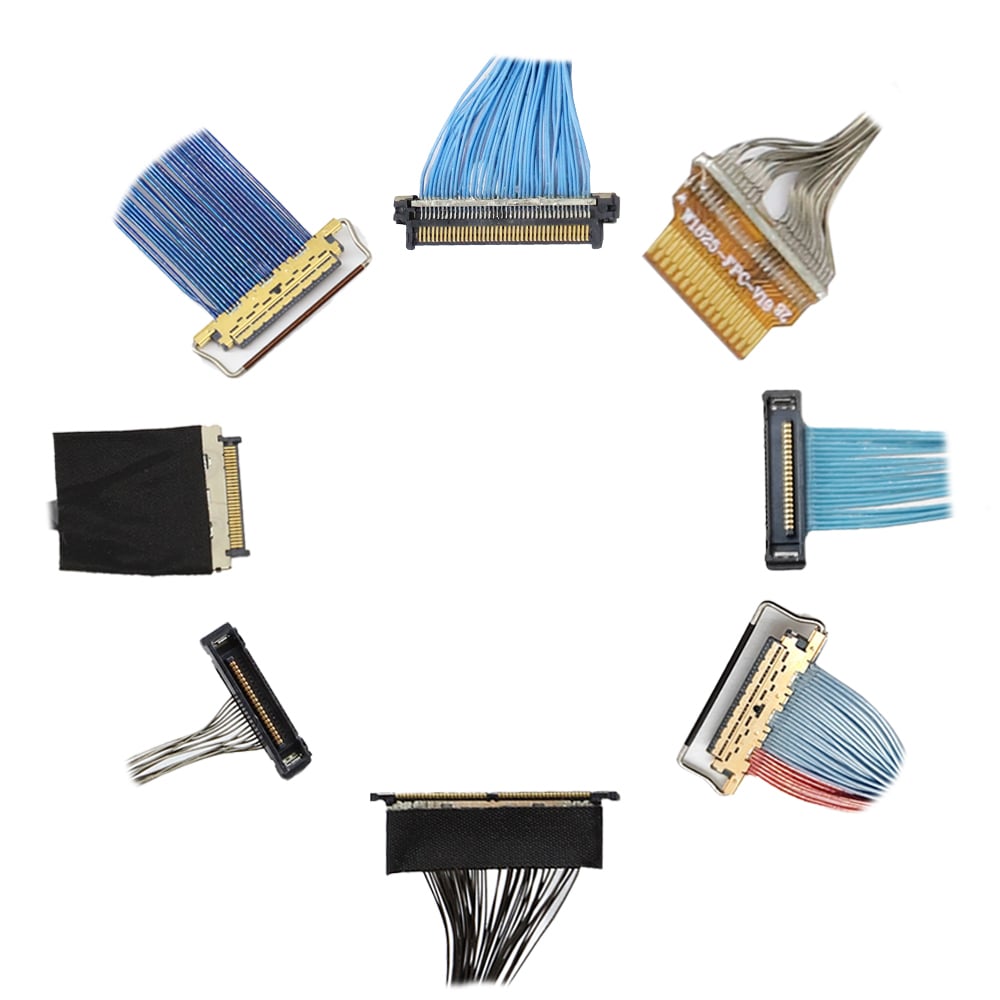
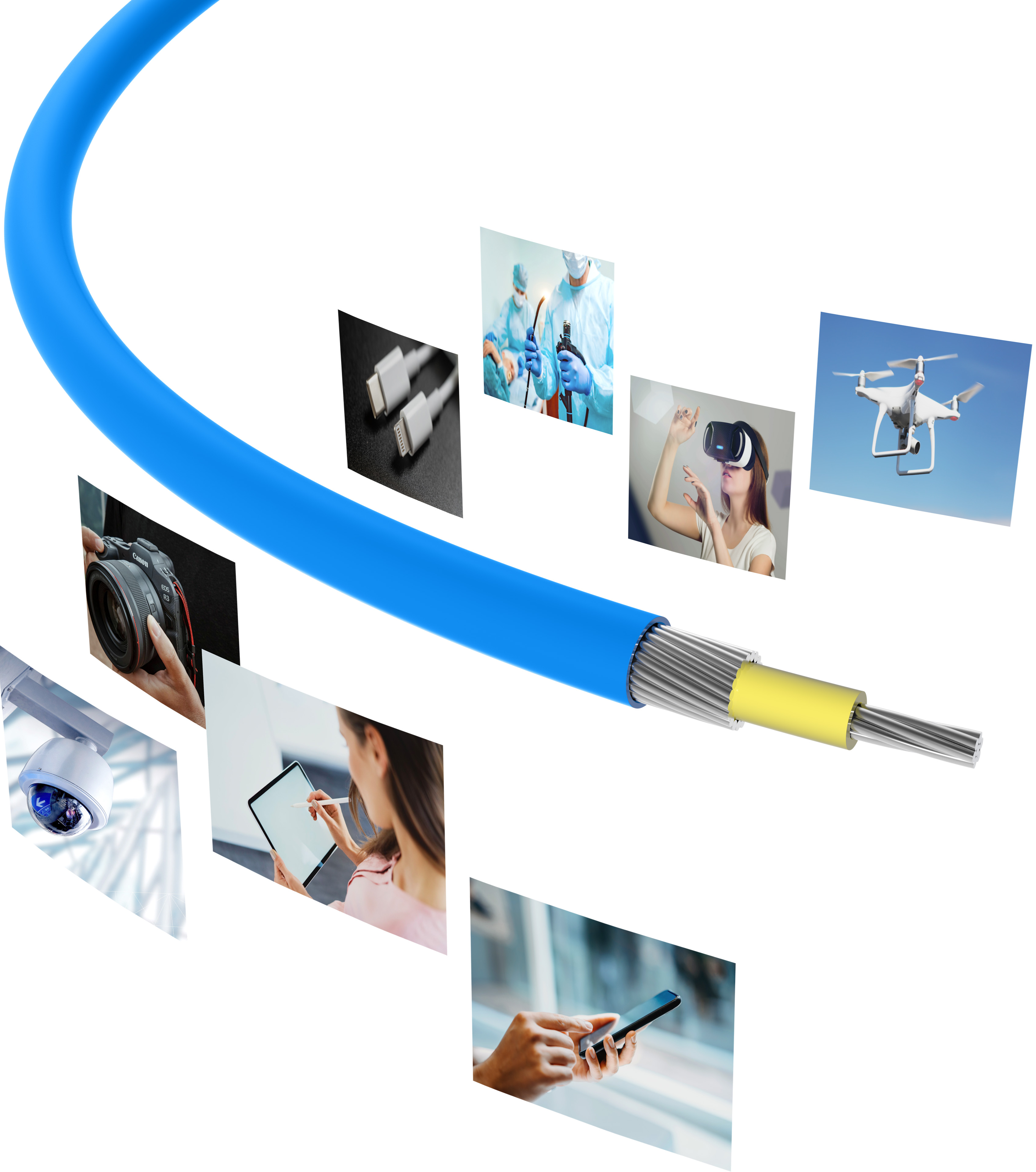
As electronic devices continue to move toward miniaturization and higher levels of integration, ultra-fine coaxial cables are widely used in applications such as UAV imaging systems, medical imaging equipment, industrial cameras, and precision sensors. In these applications, cables are not only required to transmit high-frequency signals, but also to adapt to limited space, complex routing paths, and a certain degree of dynamic bending.
As a result, the trade-off between mechanical performance and electrical performance has become an unavoidable core issue in the design and selection of ultra-fine coaxial cables.
 ?
?
The key to balancing mechanical and electrical performance in an ultra-fine coaxial cable is to treat the cable as a complete interconnect system, rather than optimizing conductor size, flexibility, shielding, or impedance separately.
A smaller cable may improve routing density and flexibility, but it can also reduce mechanical margin and make conductor processing, shielding, termination, and dimensional control more demanding. On the other hand, increasing mechanical robustness may require additional material, larger dimensions, or a different cable construction.
The practical objective is therefore:
Required Signal Performance + Required Mechanical Performance + Available Space + Manufacturing Capability
If → the device has extremely limited routing space
Then → evaluate a smaller-diameter micro coaxial structure
Why → compact construction can support higher-density routing.
If → the cable experiences repeated bending or movement
Then → evaluate conductor construction, insulation, shielding, bend performance, and termination together
Why → electrical performance must remain stable while the cable is mechanically stressed.
If → the application requires controlled high-frequency transmission
Then → evaluate impedance, attenuation, capacitance, shielding, and cable geometry together
Why → electrical performance depends on the complete coaxial structure rather than conductor AWG alone.
If → the design is moving toward ultra-fine AWG sizes
Then → confirm prototype and mass-production capability before finalizing the design
Why → smaller structures can reduce manufacturing margin and increase sensitivity to dimensional variation.
For compact high-density signal transmission, see HOTTEN's Micro Coaxial Cable.
For complete customized interconnects, see Micro Coaxial Cable Assembly.
1. Why Do Ultra-Fine Coaxial Cables Have Higher Mechanical Requirements?
Compared with conventional coaxial cables, ultra-fine coaxial cables are typically used in much more demanding environments. On one hand, the internal space of the equipment is highly constrained, requiring cables to be routed within extremely limited areas. On the other hand, in applications such as gimbals, probes, or moving structures, the cables are often subjected to repeated, small-amplitude bending and torsional movements.
In such applications, mechanical performance is no longer simply about whether a cable is easy to bend. Instead, it is directly reflected in whether the cable can be assembled smoothly during production, whether conductor breakage occurs during long-term use, and whether electrical performance remains stable under continuous motion.
Therefore, flexibility, bending life, and structural stability are usually the first performance indicators considered when evaluating ultra-fine coaxial cables.
2. How Does Improving Mechanical Performance Affect Electrical Performance?
From an engineering perspective, improving mechanical performance often requires adjustments in materials or structure, and these changes frequently have a direct impact on electrical performance.
When flexibility is prioritized, the following design approaches are commonly adopted:
1) Reducing the conductor gauge
2) Lowering shielding density or using finer shielding wires
3) Reducing insulation thickness
However, these measures can lead to a decline in electrical performance.
As the conductor cross-section decreases, DC resistance increases accordingly. Under high-frequency conditions, skin effect becomes more pronounced, further amplifying signal loss.
Reducing shielding density or using finer shielding wires can improve overall flexibility, but may weaken electromagnetic shielding effectiveness, resulting in reduced immunity to interference—especially in complex electromagnetic environments.
Finally, thinner insulation makes impedance control more sensitive, placing higher demands on geometric consistency and dimensional accuracy.
When bending durability is prioritized, alloy conductors may be used to increase yield strength, and the outer diameters of insulation and jacket are often minimized as much as possible.
3. What Happens to Structural Design When Electrical Performance Is Prioritized?
When an application places higher demands on signal quality—such as high-resolution image transmission or high-speed data links—the design focus typically shifts toward electrical performance.
In these cases, engineering design tends to favor the use of conductors with higher conductivity, increased shielding coverage to stabilize electromagnetic field distribution, and stricter control of geometric structure to ensure impedance consistency.
These measures help reduce high-frequency loss and improve signal integrity, but they also make the cable overall stiffer, reducing its mechanical adaptability. As a result, such designs are more suitable for relatively static or controlled-motion applications.
4. Engineering Logic Behind the Trade-Off
In practical engineering applications, there is no ideal solution that simultaneously maximizes both mechanical and electrical performance for ultra-fine coaxial cables. A more realistic approach is to define priorities based on actual operating conditions.
In dynamic and space-constrained applications, mechanical reliability often takes precedence over extreme electrical specifications. In high-frequency, high-resolution, or high-speed data applications, electrical performance becomes the primary concern. In most real-world projects, the engineering goal is to find a stable, manufacturable balance between the two.
This is also why ultra-fine coaxial cables with seemingly similar specifications can exhibit significantly different performance in different projects.
 How Should Engineers Balance Electrical and Mechanical Requirements in an Ultra-Fine Coaxial Cable?
For OEM engineers, the difficult part is usually not defining one ideal specification. The difficulty is that improving one parameter can affect several others.
A practical engineering evaluation should therefore follow:
Electrical Requirement → Mechanical Requirement → Cable Geometry → Material → Termination → Application → Manufacturing Validation
Before selecting the smallest possible conductor, define what the cable actually needs to transmit.
Important electrical parameters can include:
| Parameter | Engineering Question |
|---|---|
| Characteristic impedance | Is the system designed for 50Ω, 75Ω, or another impedance? |
| Attenuation | What is the maximum acceptable signal loss? |
| Operating frequency | What frequency range must the cable support? |
| Capacitance | Is cable capacitance a critical system parameter? |
| Crosstalk | How much coupling between channels is acceptable? |
| Shielding | What level of EMI control is required? |
| Signal type | RF, high-speed differential, imaging, control, or other? |
| Cable length | How does the required length affect total transmission loss? |
If → the cable carries a high-frequency or high-speed signal
Then → define electrical targets before deciding the conductor size
Why → a smaller conductor does not automatically provide better signal integrity.
For controlled-impedance applications, see RF Cable.
For the relationship between conductor size and cable behavior, see How Does AWG Affect Micro Coaxial Cable Performance?.
After the electrical requirement is clear, define what the cable must physically withstand.
Typical mechanical considerations include:
If → the cable remains stationary after installation
Then → prioritize dimensional fit and electrical performance while validating basic mechanical robustness
Why → dynamic flex-life may not be the dominant requirement.
If → the cable moves continuously
Then → treat flexibility and flex-life as primary design constraints
Why → the electrical structure must continue to perform during mechanical movement.
This is particularly relevant to UAV gimbals and robotic systems, where HOTTEN currently describes requirements such as repeated movement, vibration, limited installation space, lightweight construction and flexible routing.
See UAV & Robotics.
Ultra-fine coaxial cable design is a combination of several dimensions.
Reducing conductor size may help with miniaturization, but the final cable OD is also affected by:
If → the current cable cannot fit within the available routing envelope
Then → evaluate conductor size and complete cable architecture together
Why → reducing only the conductor diameter may not provide enough reduction in final cable size.
If → cable OD is already within the device requirement
Then → avoid reducing the structure further unless the smaller design solves a real system problem
Why → additional miniaturization can consume mechanical and manufacturing margin.
HOTTEN's current micro coaxial camera assembly products similarly specify conductor size, shielding, impedance, connector and cable length as a combined customized structure.
A cable that must bend repeatedly cannot be designed in exactly the same way as a static RF jumper.
Mechanical movement can interact with:
If → flexibility is increased by changing the cable structure
Then → revalidate electrical characteristics after mechanical testing
Why → mechanical deformation can potentially change the geometry of the transmission structure.
If → electrical geometry is highly optimized for a specific impedance
Then → evaluate whether the resulting construction still provides sufficient flexibility
Why → a transmission line is also a physical structure that must maintain its geometry during use.
This is especially important for applications such as gimbal cameras, robotic vision systems and moving medical equipment.
Shielding is often discussed as an electrical requirement, but in an ultra-fine cable it also affects the physical construction.
Engineers may need to balance:
Shielding Requirement ↔ Cable OD ↔ Flexibility ↔ Weight ↔ Manufacturability
If → EMI control is critical
Then → use an appropriate shielding construction and validate coverage and electrical performance
Why → reducing shielding solely to achieve a smaller OD may create an unacceptable system trade-off.
If → cable weight and flexibility are highly constrained
Then → compare shielding structures against the actual EMI requirement
Why → the optimum structure depends on the application rather than on maximum shielding alone.
HOTTEN's UAV and robotics solutions currently describe shielding, conductor construction, cable diameter, flexibility and routing as combined customization parameters.
An ultra-fine cable may perform well as a standalone cable but still become difficult to integrate into the finished assembly.
Engineers should evaluate:
| Termination Factor | Why It Matters |
|---|---|
| Connector pitch | Determines available termination space |
| Contact size | Limits practical conductor integration |
| Pin count | Influences assembly density |
| Stripping process | Can affect fine conductor handling |
| Shield termination | Must maintain electrical continuity |
| Cable exit direction | Influences routing |
| Strain relief | Helps protect the termination area |
| Assembly repeatability | Important for volume production |
If → the cable can be manufactured but cannot be terminated consistently
Then → the overall cable design is not yet practical
Why → the finished product is the cable assembly, not the bare cable.
HOTTEN's current micro-coaxial assembly offering includes customized connector, cable length, impedance, shielding and termination configurations.
See Micro Coaxial Cable Assembly.
There is no single mechanical/electrical balance that applies to every ultra-fine coaxial cable.
Medical imaging cable assemblies may combine:
If → the medical device requires dense signal transmission inside a compact probe
Then → evaluate multi-core micro coaxial structures
Why → channel density and available routing space can become major design constraints.
HOTTEN's medical portfolio currently includes ultrasound probe cables, endoscope cables, ICE, IVUS and medical cable assemblies.
See Medical Field and Medical Cable Assembly.
If → the cable is installed in a moving gimbal or UAV system
Then → balance low weight, small OD, flexibility, signal transmission and vibration resistance
Why → several mechanical constraints can exist simultaneously.
See UAV & Robotics.
If → a camera or vision module requires high-density internal signal routing
Then → evaluate micro coaxial cable assemblies
Why → compact cable structures can support dense high-speed signal connections where PCB or conventional cable routing is constrained.
HOTTEN currently positions micro coaxial assemblies for camera and imaging systems requiring compact dimensions, flexible routing, shielding and high-speed signal transmission.
A cable that works in a small prototype batch is not automatically ready for production.
During engineering validation, evaluate:
If → prototype samples meet the electrical and mechanical requirements
Then → continue into process validation and production consistency testing
Why → mass production introduces variation that a small prototype sample may not reveal.
For medical OEM projects especially, HOTTEN currently describes support from prototype development and engineering validation through mass production.
A practical RFQ should describe both electrical and mechanical requirements.
| Category | Information to Provide |
|---|---|
| Cable type | Micro coaxial / multi-core micro coaxial |
| AWG | Required conductor size or acceptable range |
| Impedance | 50Ω / 75Ω / other |
| Frequency | Operating frequency range |
| Attenuation | Maximum acceptable loss |
| Capacitance | Required value or range |
| Cable OD | Maximum allowable diameter |
| Shielding | Individual / overall / specified structure |
| Flexibility | Static / dynamic |
| Bend requirement | Minimum bend radius or flex-life target |
| Weight | Maximum allowable cable or assembly weight |
| Length | Finished length |
| Connector | Part number / interface |
| Pin configuration | Required channel arrangement |
| Environment | Temperature, vibration, chemicals, sterilization, etc. |
| Testing | Electrical / mechanical / dimensional requirements |
| Quantity | Prototype / pilot / mass production |
If → the RFQ only specifies AWG and cable length
Then → request the missing electrical and mechanical requirements before quotation
Why → the supplier cannot reliably select the complete cable construction from conductor size alone.
A useful way to approach ultra-fine coaxial cable development is:
Application → Signal Requirement → Frequency → Impedance → Cable OD → Flexibility → Shielding → Connector → Manufacturing Process → Validation
For example:
High-density medical imaging application
→ define number of signal channels
→ define frequency and impedance
→ define maximum cable OD
→ evaluate conductor size
→ select dielectric and shielding structure
→ evaluate flexibility and bend requirements
→ select connector and termination
→ build prototype
→ test electrical + mechanical performance
→ validate production consistency.
For a UAV gimbal application, the sequence may place mechanical requirements earlier:
Movement → Flex-Life → Weight → OD → Signal Requirement → Shielding → Connector → Validation
The point is not to maximize every parameter simultaneously. The objective is to define the required performance window for the actual application and develop a cable structure that can meet that window consistently.
For the same ultra-fine cable engineering cluster, connect this article to:
How Does AWG Affect Micro Coaxial Cable Performance?
50AWG Micro Coaxial Cable Manufacturing Challenges: It’s Not Just Making the Cable Thinner
52AWG Micro Coaxial Cable: The Ultimate Size Choice for Ultra-Miniaturized Devices?
The Importance of Impedance Consistency (50Ω / 75Ω) in Ultra-Fine AWG Micro Coaxial Cables
| Design Factor | Electrical Performance Impact | Mechanical Performance Impact | Engineering Consideration |
|---|---|---|---|
| Smaller Conductor Diameter | May increase attenuation and resistance at high frequencies | Improves flexibility and reduces cable size | Optimize conductor material and structure to maintain signal integrity |
| Thicker Shielding Layer | Improves EMI protection and reduces crosstalk | Increases stiffness and bending resistance | Balance shielding coverage with flexibility requirements |
| Thicker Dielectric Layer | Helps maintain impedance stability and reduce signal loss | Increases cable diameter and reduces flexibility | Control dielectric material and thickness precisely |
| Softer Jacket Material | Limited direct electrical influence | Improves bending performance and durability | Select materials based on application environment and flex cycles |
Conclusion
For ultra-fine coaxial cables, mechanical and electrical performance are not independent parameters, but a set of interrelated engineering factors that must be optimized together. Truly reliable solutions are built on a clear understanding of application requirements, combined with careful control over material selection, structural design, and manufacturing processes.
Hotten has long focused on the development and manufacturing of ultra-fine coaxial and high-frequency cables, covering a wide range of fine gauges from 36 to 52 AWG. Through accumulated experience in material selection, structural design, production stability, and consistency management, Hotten is able to balance mechanical reliability and electrical performance at a system level, providing cable solutions that are closely aligned with real engineering needs.
As high-frequency and miniaturized applications continue to evolve, only cable designs that simultaneously address assemblability, long-term stability, and signal integrity can truly support the transition from prototype development to reliable mass production. This is the direction in which Hotten continues to refine its ultra-fine coaxial cable technologies.
A: Ultra-fine coaxial cables must deliver high-speed signal transmission while maintaining flexibility, durability and compact dimensions. Improving one performance aspect can often affect another, so balanced engineering design is essential.
A: Reducing cable diameter can improve space efficiency and flexibility, but it may also increase conductor resistance, attenuation and manufacturing sensitivity. Precise structural control is required to maintain signal integrity.
A: Strong shielding improves EMI protection and reduces signal interference, but excessive shielding can increase cable stiffness. Optimized shielding structures help achieve both electrical reliability and mechanical flexibility.
A: Flexibility depends on conductor structure, shielding design, dielectric materials, jacket properties and overall cable construction. Each element must be optimized according to the application requirements.
A: Yes. Properly designed ultra-fine coaxial cables are widely used in applications requiring repeated movement, such as robotic systems, medical imaging equipment, UAV systems and precision cameras.
A: Yes. Cable structures can be customized based on requirements including conductor size, impedance, shielding configuration, flexibility, bending cycles, connector compatibility and operating environment.
 Hot News
2026-09-17
2026-09-04
2025-12-17
2025-12-11
2025-12-05