 EN
EN
Quick Links

Home > News > Company news
High-frequency signals generally refer to electrical signals above 1 MHz. In modern applications, many scenarios now operate well into the GHz range. For example, 5G RF signals can exceed 60 GHz, and PCIe protocols commonly used in high-speed servers also reach extremely high transmission frequencies. As the operating frequency continues to increase, the requirements for cable materials, electrical characteristics, and structural design become significantly more stringent. This makes high-frequency transmission one of the most sensitive application scenarios for conductor performance.
In these applications, commonly used high-frequency cables include:
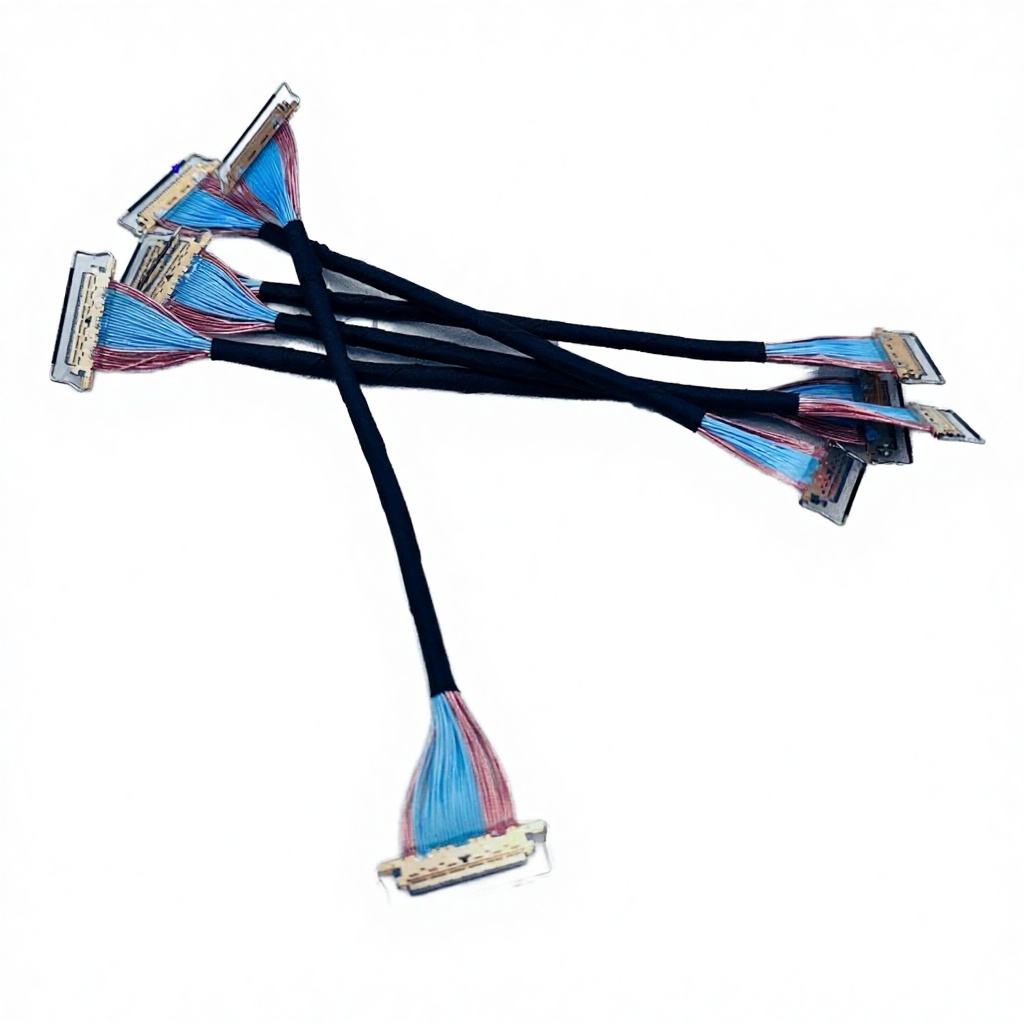
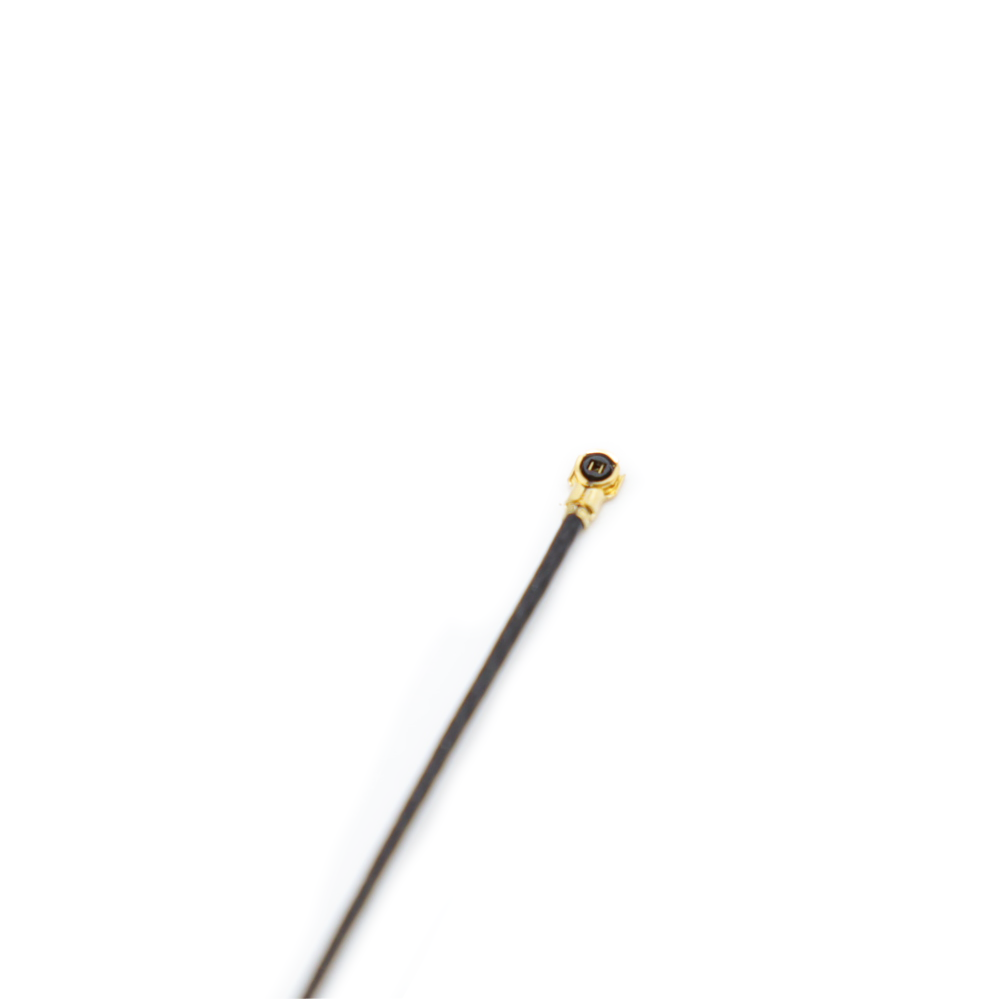
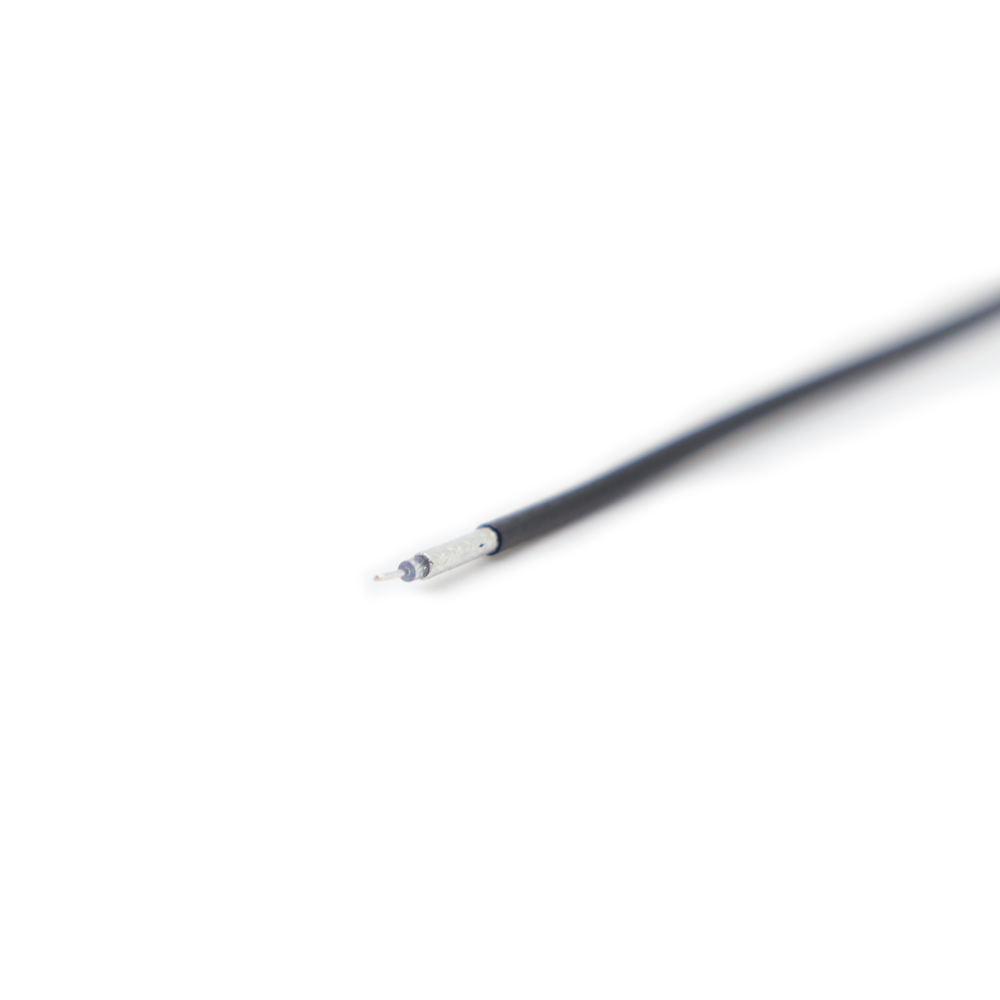
● Micro-coaxial cables (38–46 AWG)
● RF coaxial cables (20–36 AWG)
● High-frequency high-speed differential pairs (LVDS / USB / HDMI / PCIe)
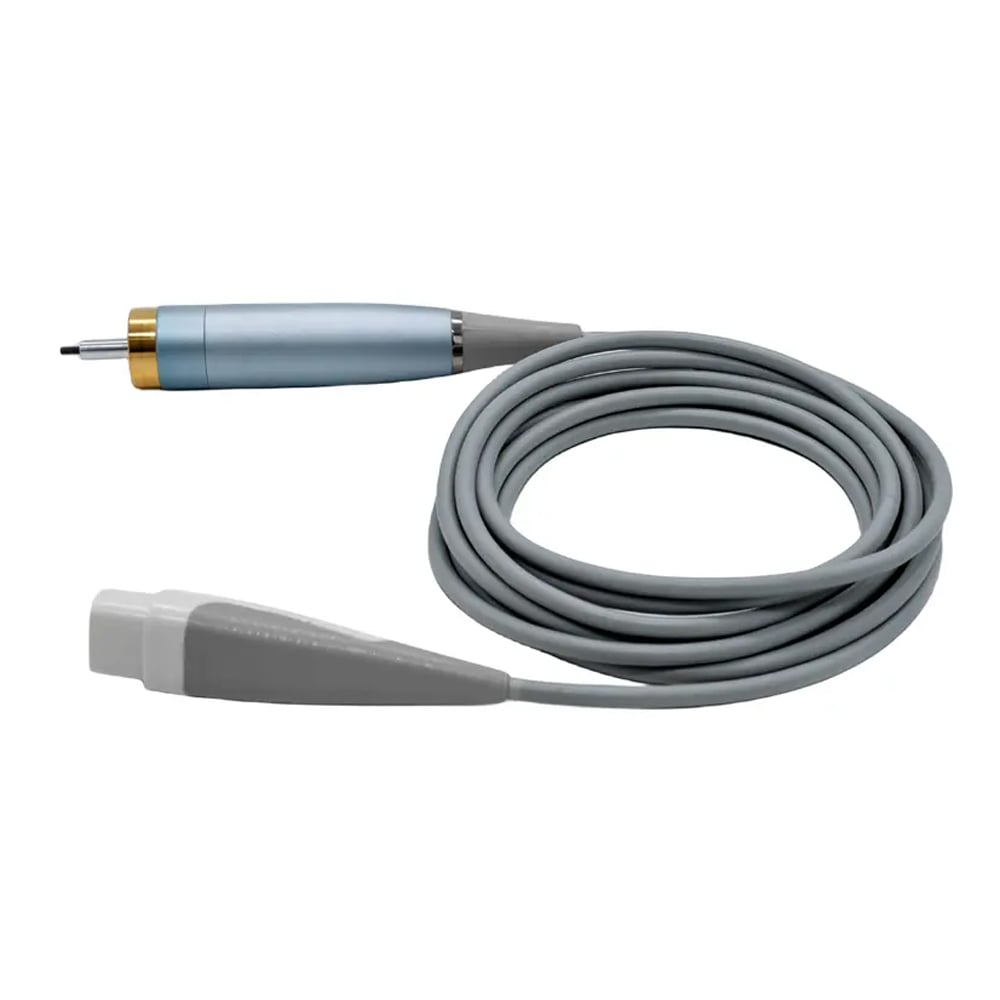
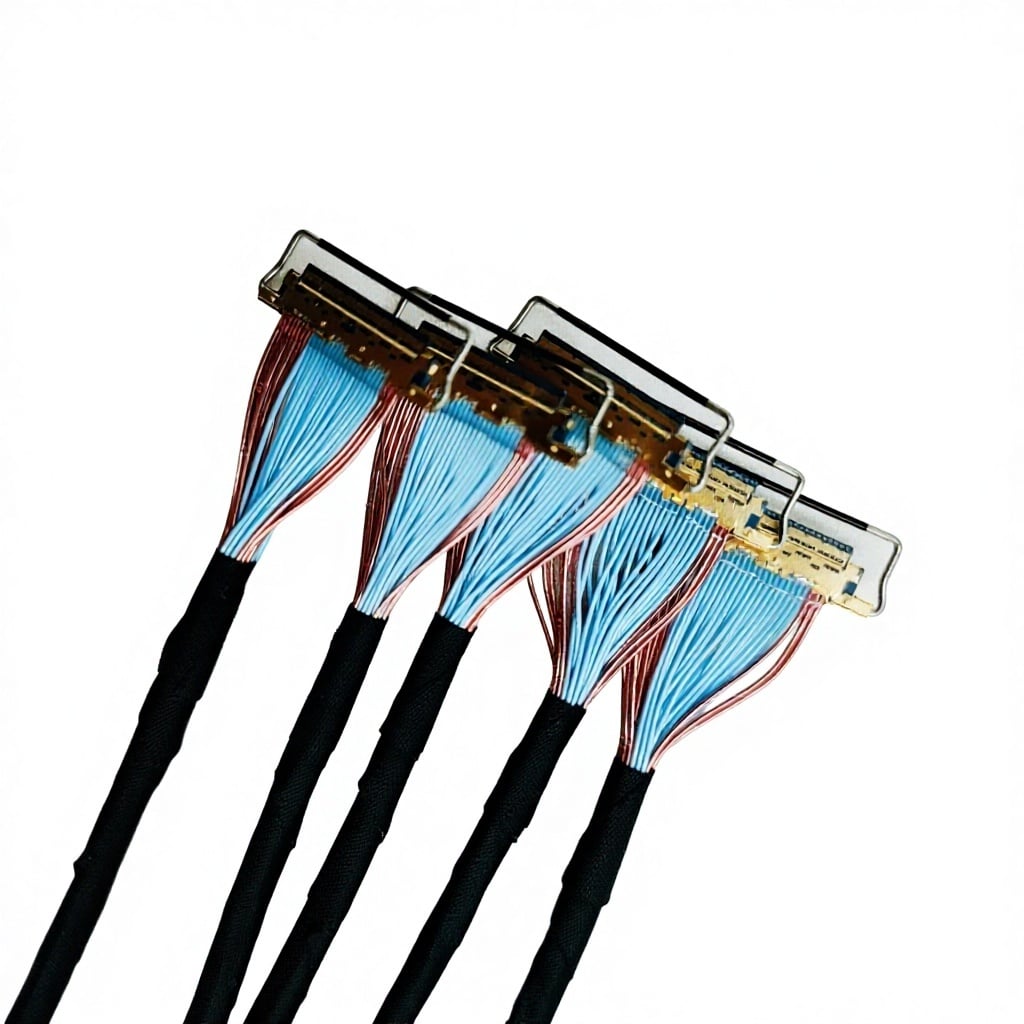
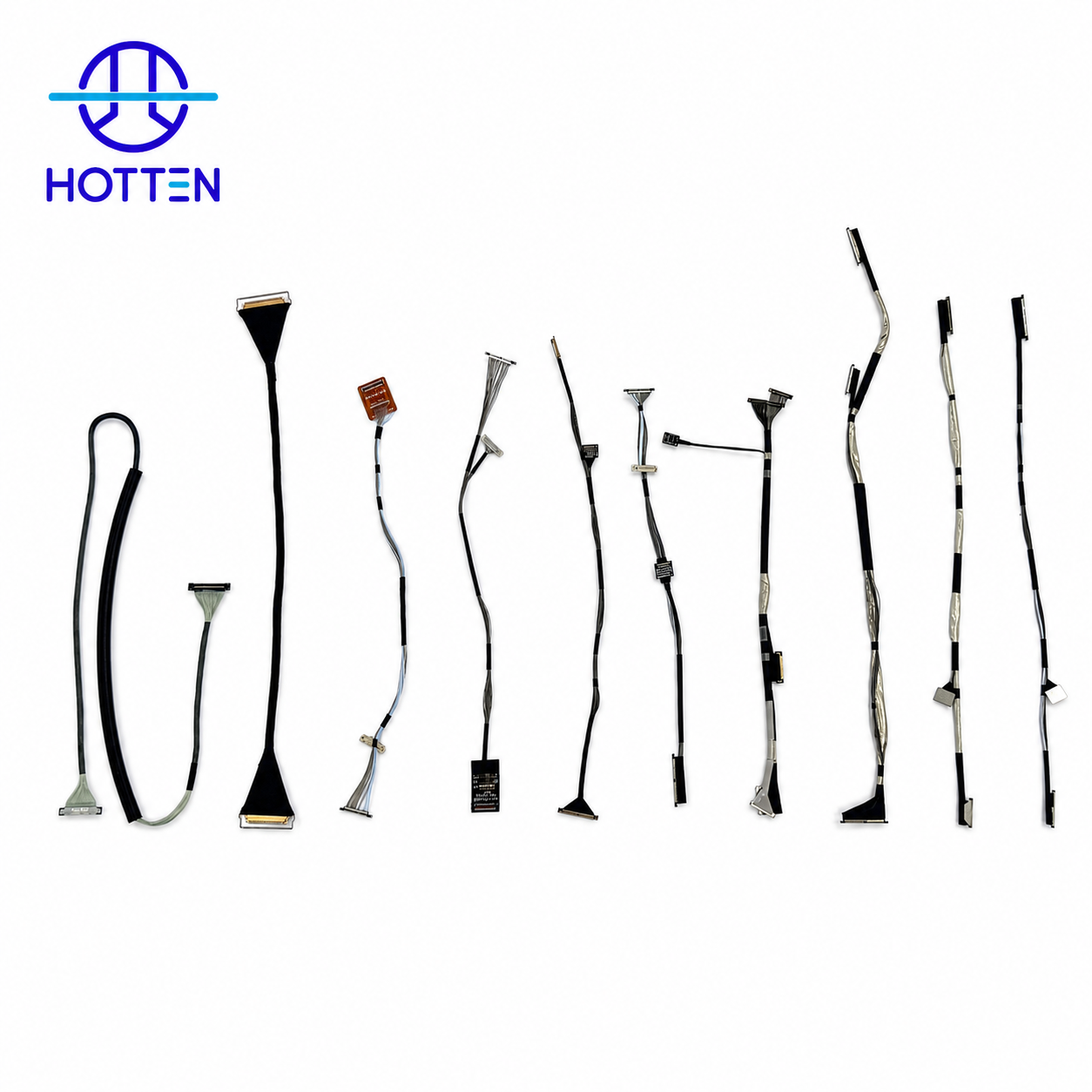
These cables are widely used in equipment requiring high-speed data and high-definition image transmission, such as server racks, UAV video transmission links, industrial cameras, imaging modules, and medical ultrasound systems. Because these applications require high signal integrity, large bandwidth, and strong anti-interference performance, the selection of cable materials and precision of structural control directly determine the final transmission quality.
Silver-plated conductors are used in some high-frequency cables because RF current increasingly concentrates near the conductor surface as frequency increases. Silver has higher electrical conductivity than copper, so a silver-plated surface can help reduce conductor-related loss under suitable high-frequency conditions.
However, conductor plating is only one part of cable performance. Engineers also need to evaluate conductor size, insulation material, characteristic impedance, shielding structure, cable length, operating frequency, and connector design as a complete transmission system.
If → Then → Why
If the cable operates at relatively high frequencies and conductor loss becomes an important design factor → Then consider silver-plated conductor structures → Why: the conductive surface becomes increasingly important because of the skin effect.
If the application requires controlled 50Ω or 75Ω impedance → Then evaluate the conductor together with dielectric dimensions and shielding → Why: conductor material alone does not determine characteristic impedance.
If the cable must be extremely small → Then evaluate silver-plated micro-coaxial structures together with OD, shielding, flexibility, and manufacturing tolerance → Why: miniaturization changes the relationship between electrical and mechanical parameters.
For compact high-frequency interconnects, see HOTTEN's Micro Coaxial Cable solutions.
For RF applications requiring controlled impedance and high-frequency transmission, see RF Cable.
 Conductor Material Comparison for High-Frequency Cables
| Conductor Type | Advantages | Limitations | Typical Applications |
|---|---|---|---|
| Silver-Plated Copper Conductor | Excellent surface conductivity, reduced high-frequency loss, good oxidation resistance and reliable RF performance | Higher material cost compared with bare copper | Micro coaxial cables, RF cables, medical imaging cables, UAV video transmission |
| Bare Copper Conductor | Good conductivity and cost-effective | Higher surface oxidation risk and higher high-frequency loss compared with silver plating | General electronic cables |
| Tin-Plated Copper Conductor | Good corrosion resistance and solderability | Lower conductivity than silver plating, less suitable for high-frequency applications | General wiring, low-frequency electronic cables |
| Nickel-Plated Copper Conductor | Good mechanical protection and corrosion resistance | Higher electrical resistance affects high-frequency performance | Special industrial application |
The key factors affecting high-frequency signal transmission mainly come from the conductor, insulation, and shielding. Among them, conductor materials vary significantly in electrical conductivity—silver has the highest conductivity, followed by copper, with aluminum and alloys being lower. The surface structure, smoothness, and roughness of the conductor also have a substantial impact on high-frequency loss. For insulation materials, the lower the dielectric constant (Dk) and dissipation factor (Df), the better the cable can reduce signal attenuation. In addition, shielding structures (such as single-wrap, double-braid, or foil + braid) and dimensional consistency of the cable diameter further influence impedance control and EMI resistance. Together, these factors determine the overall transmission quality of high-frequency cables.
In high-frequency environments, one important physical phenomenon greatly affects signal performance — the skin effect.
What is the skin effect?
As the signal frequency increases, the distribution of current inside the conductor changes. Effective current becomes more concentrated on the outer surface of the conductor rather than flowing through its entire cross-section. This means that the resistance of the conductor surface determines the magnitude of high-frequency loss. The higher the frequency, the more the current “only flows on the surface,” making the surface material and its conductivity the most critical factors for high-frequency performance.
Because of the skin effect, high-frequency current primarily flows along the outer layer of the conductor. Silver, being the most conductive metal (106% IACS), becomes the most efficient conductor plating material for improving high-frequency performance. By plating a layer of silver onto a copper conductor (typically above 0.3 μm depending on application), the effective surface resistance can be significantly reduced, allowing high-frequency signals to pass with lower loss and greater stability. As a result, copper conductors with silver plating have become the most widely adopted and cost-effective solution in high-frequency cable design—an outcome supported by theory, test data, and practical manufacturing economics.

Test results from the industry demonstrate that silver-plated copper conductors exhibit significantly lower insertion loss at high frequencies compared with bare copper, tin-plated copper, or nickel-plated copper. The benefits brought by silver plating include reducing high-frequency attenuation by 10–20%, improving long-distance transmission stability, enhancing image clarity with lower noise, minimizing EMI radiation, and delivering better resistance to temperature-induced resistance changes. Silver plating also offers superior oxidation resistance. These advantages are particularly noticeable in imaging-related applications such as UAV video links, industrial cameras, endoscopes, and medical imaging systems, where high-frequency attenuation directly affects image quality. In such cases, silver plating provides clear and measurable performance improvements.
Among the many cable manufacturers using silver-plated copper conductors, Hotten Cable—based in Suzhou, Jiangsu—is a well-established company with comprehensive design and manufacturing capabilities in the high-frequency cable field. Hotten supports the production of ultra-fine 40–50 AWG signal transmission cables and offers low-dielectric, high-frequency insulation extrusion processes including PFA, PTFE, and foamed PFA. These advanced design and manufacturing capabilities ensure excellent product stability. Hotten's coaxial cables are widely used in medical ultrasound equipment, UAV video transmission systems, industrial endoscopes, camera modules, and various other applications that require high-frequency stability. Furthermore, Hotten provides complete cable and cable-assembly solutions covering conductor design, insulation, shielding, and structural configuration—allowing customers to obtain the optimal material combination and structural design for their specific high-frequency transmission needs.
Choosing a silver-plated conductor should not be treated as a simple material upgrade. For OEM engineers, the more useful question is whether the conductor structure provides a measurable benefit for the specific frequency range, cable geometry, and application.
The importance of conductor surface conductivity increases as frequency rises because of the skin effect.
If → the operating frequency is relatively low and conductor loss is not a major limitation
Then → copper or another suitable conductor structure may satisfy the electrical requirement
Why → the incremental benefit from a high-conductivity plated surface may not justify a more specialized construction.
If → the cable operates at microwave or other high-frequency ranges
Then → evaluate conductor surface material together with attenuation and insertion loss
Why → more of the RF current is concentrated near the conductor surface at higher frequencies.
The skin-effect relationship is also why silver-plated conductors are commonly found in high-frequency coaxial cable constructions.
Silver plating does not automatically make every high-frequency cable a low-loss cable.
Engineers should evaluate:
| Parameter | Why It Matters |
|---|---|
| Conductor material | Influences conductor resistance and RF loss |
| Conductor diameter | Affects resistance and cable geometry |
| Plating structure | Determines the effective conductive surface |
| Dielectric material | Influences dielectric loss and impedance |
| Dielectric diameter | Affects characteristic impedance |
| Shield structure | Influences return path and EMI performance |
| Cable length | Directly affects total insertion loss |
| Operating frequency | Changes the relative contribution of conductor loss |
If → the conductor is optimized but the dielectric or impedance structure is poorly controlled
Then → the overall transmission performance may still be unsatisfactory
Why → RF cable loss and signal integrity depend on multiple coupled parameters rather than conductor material alone.
For this reason, silver-plated conductors should be evaluated as part of the complete RF Cable structure.
The selection should be application-driven rather than simply based on material specifications.
| Consideration | Standard Copper | Silver-Plated Copper |
|---|---|---|
| Electrical conductivity | High | Higher surface conductivity |
| High-frequency surface conduction | Suitable | Can be advantageous |
| Material complexity | Relatively simple | More specialized |
| Application focus | General electrical transmission | High-frequency / RF applications |
| Miniature RF application | Application-dependent | Can be considered |
| Cost consideration | Typically simpler | May require additional material/process control |
If → the cable is mainly used for general electrical transmission
Then → standard copper may be sufficient
Why → the engineering requirement may not justify a specialized plated construction.
If → RF attenuation and high-frequency conductor loss are important design constraints
Then → evaluate silver-plated copper
Why → its higher surface conductivity can be useful when RF current is concentrated near the conductor surface.
One common engineering mistake is to discuss only the center conductor.
A coaxial cable contains both a signal conductor and a return/shielding structure. The shielding material and construction also influence RF performance.
For example, silver-plated copper may be used not only for the center conductor but also for shielding structures in certain high-frequency cable designs.
HOTTEN's RF cable products include configurations using silver-plated copper conductors and silver-plated copper shielding, depending on the cable specification.
If → the application requires strong EMI control and high-frequency transmission
Then → evaluate conductor and shielding material together
Why → the RF transmission path includes both the signal conductor and return/shield structure.
This is particularly important when developing compact RF and micro-coaxial cables.
When cable dimensions become extremely small, conductor selection cannot be separated from mechanical design.
Engineers may need to balance:
If → the cable must fit into a highly space-constrained device
Then → consider a micro-coaxial construction rather than simply reducing the conductor size of a conventional cable
Why → the coaxial structure can integrate signal transmission and shielding within a compact geometry.
HOTTEN provides Micro Coaxial Cable solutions for compact and high-density electronic applications, including RF and high-frequency applications.
Silver plating should be selected according to the actual engineering requirements.
If → frequency, attenuation, size, and RF performance are tightly constrained
Then → silver-plated conductor construction may be worth evaluating
Why → conductor surface properties become increasingly relevant at high frequency.
If → the application has relatively low frequency, short cable length, and large performance margin
Then → another conductor construction may be sufficient
Why → the benefit of silver plating depends on the complete electrical design.
This distinction is important for OEM procurement because the objective is not to select the most sophisticated material, but to select a cable construction that satisfies the required electrical and mechanical performance.
A procurement request should provide more information than simply:
"Silver-plated RF cable"
A useful RFQ should define the complete cable requirement.
| RFQ Parameter | Recommended Information |
|---|---|
| Cable type | Coaxial / Micro Coaxial / Cable Assembly |
| Conductor | Copper / Silver-Plated Copper / Other |
| Conductor size | AWG or diameter |
| Operating frequency | Required frequency range |
| Impedance | 50Ω / 75Ω / Other |
| Attenuation | Maximum allowable value |
| Cable length | Required length |
| Insulation | PTFE / FEP / PFA / Other |
| Shielding | Material and construction |
| Cable OD | Maximum allowable diameter |
| Flexibility | Static / Dynamic / Bend requirement |
| Connector | Part number or mating interface |
| Quantity | Prototype / Pilot / Mass Production |
| Testing | Attenuation / VSWR / Impedance / Continuity / Other |
For compact RF assemblies, connector integration should also be specified rather than treated as a separate final-stage issue. HOTTEN's current micro RF cable assemblies support customized cable length, connector, impedance, cable structure and termination.
A practical selection sequence can be:
Application → Frequency → Cable Length → Loss Requirement → Impedance → Cable Geometry → Conductor Material → Shielding → Connector → Validation
For example:
High-frequency RF system
→ determine operating frequency
→ define acceptable attenuation
→ define 50Ω/75Ω impedance
→ determine allowable cable OD
→ compare copper and silver-plated conductor structures
→ evaluate shielding
→ validate the complete cable assembly.
This approach prevents conductor material from being evaluated in isolation.
For systems where stable impedance, shielding, compact dimensions and high-frequency transmission must be considered together, HOTTEN's High Frequency & RF Systems solution is the relevant application-level page.
For engineers comparing conductor material with other RF design parameters, this article can naturally connect to:
How Does AWG Affect Micro Coaxial Cable Performance?
The Importance of Impedance Consistency (50Ω / 75Ω) in Ultra-Fine AWG Micro Coaxial Cables
How to Balance Mechanical and Electrical Performance in Ultra-Fine Coaxial Cables
A: Silver-plated conductors are used because high-frequency current mainly flows near the conductor surface due to the skin effect. Silver provides excellent surface conductivity, helping reduce transmission loss and improve signal stability.
A: Silver plating reduces conductor surface resistance, which helps lower attenuation, improve high-frequency signal integrity and maintain stable transmission performance in GHz applications.
A: Copper provides excellent conductivity and mechanical properties, but silver plating improves the surface performance where high-frequency current primarily travels, offering a cost-effective balance between performance and material cost.
A: No. Silver-plated conductors are also used in micro coaxial cables, medical imaging cables, UAV systems, industrial cameras and other applications requiring stable high-frequency signal transmission.
A: Cable performance depends on conductor material, insulation dielectric properties, shielding structure, impedance consistency, dimensional accuracy and manufacturing process control.
A: Yes. Cable manufacturers can customize conductor size, plating thickness, insulation materials, shielding structures and cable configurations according to frequency range, flexibility and application requirements.
 Hot News
2026-09-17
2026-09-04
2025-12-17
2025-12-11
2025-12-05