 EN
EN
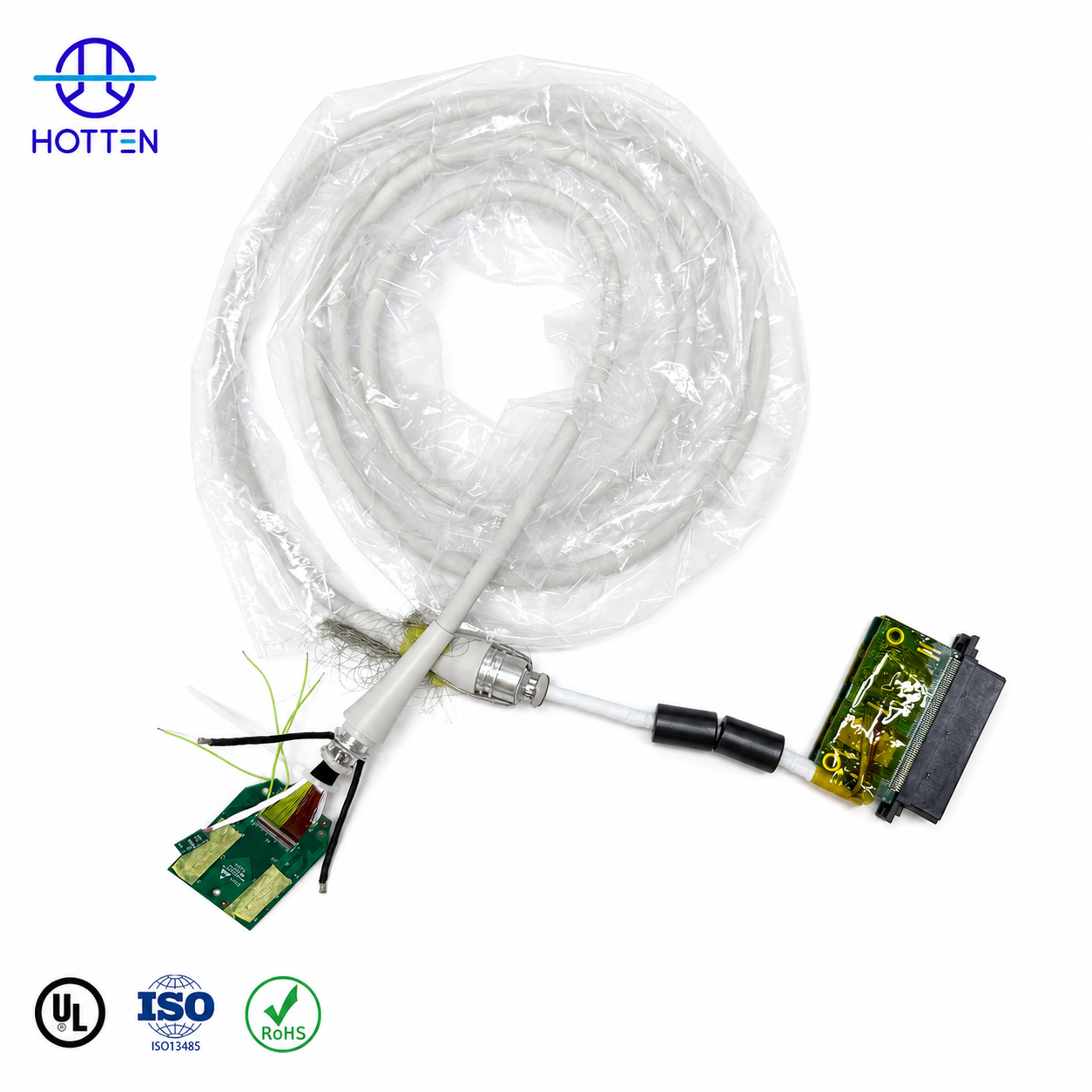
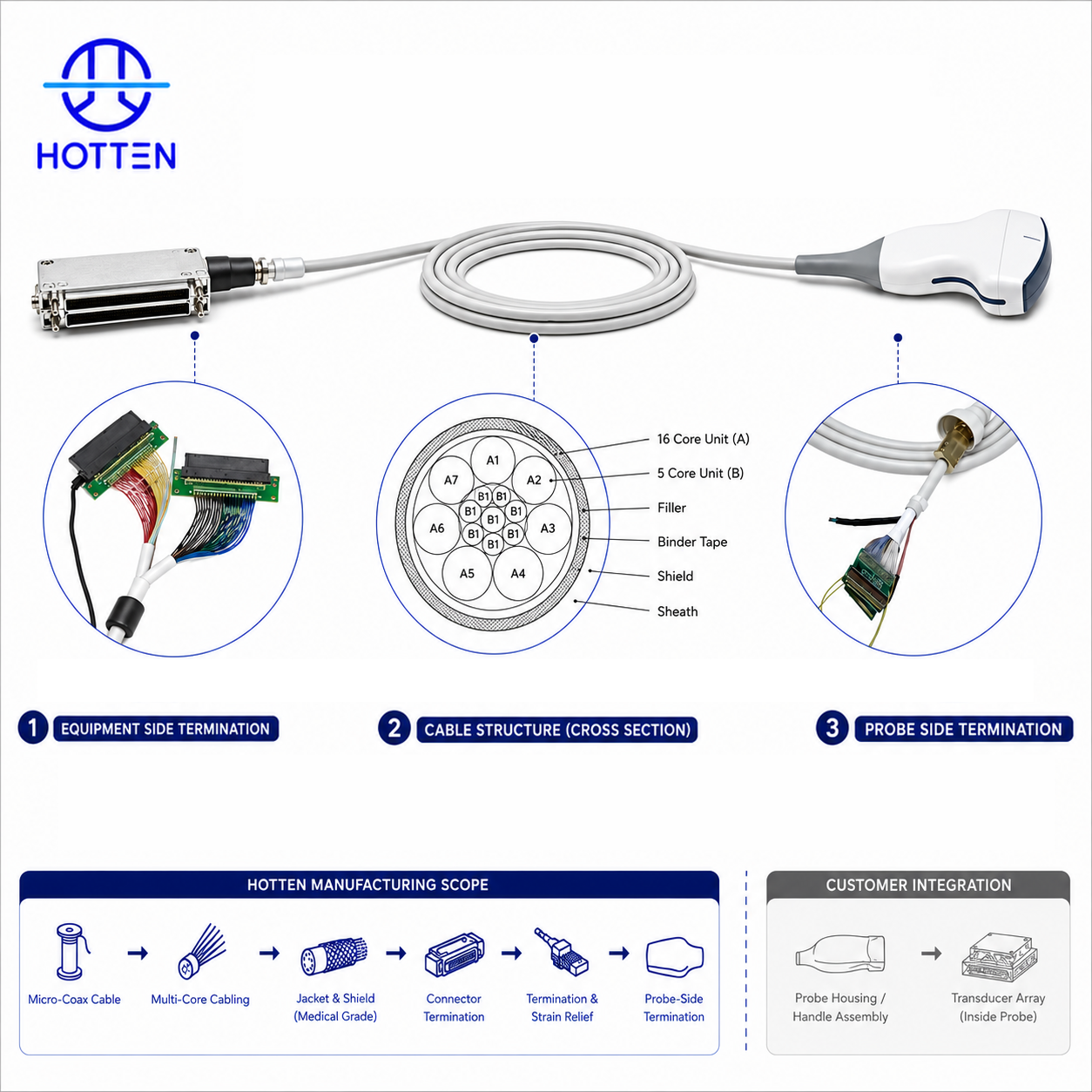
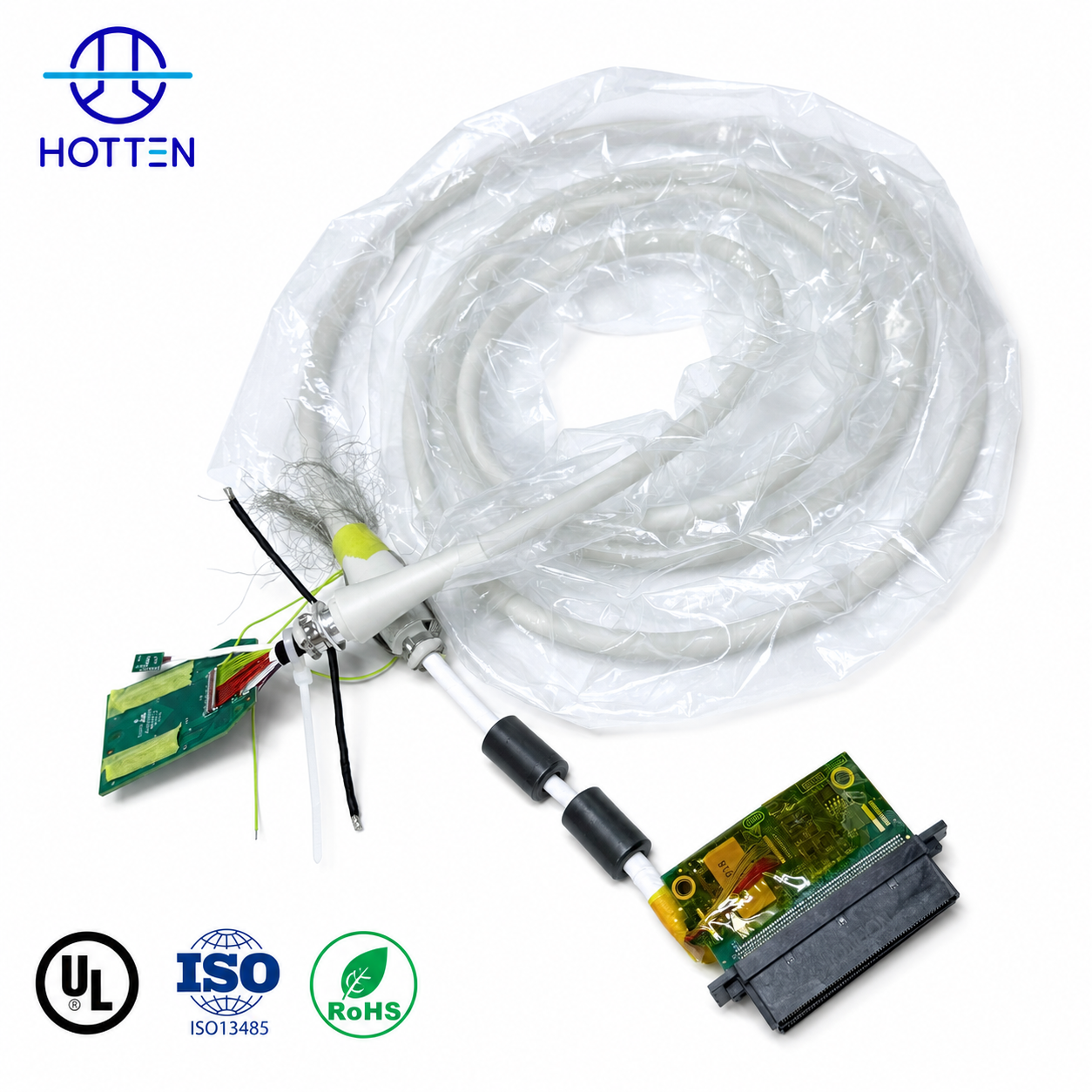
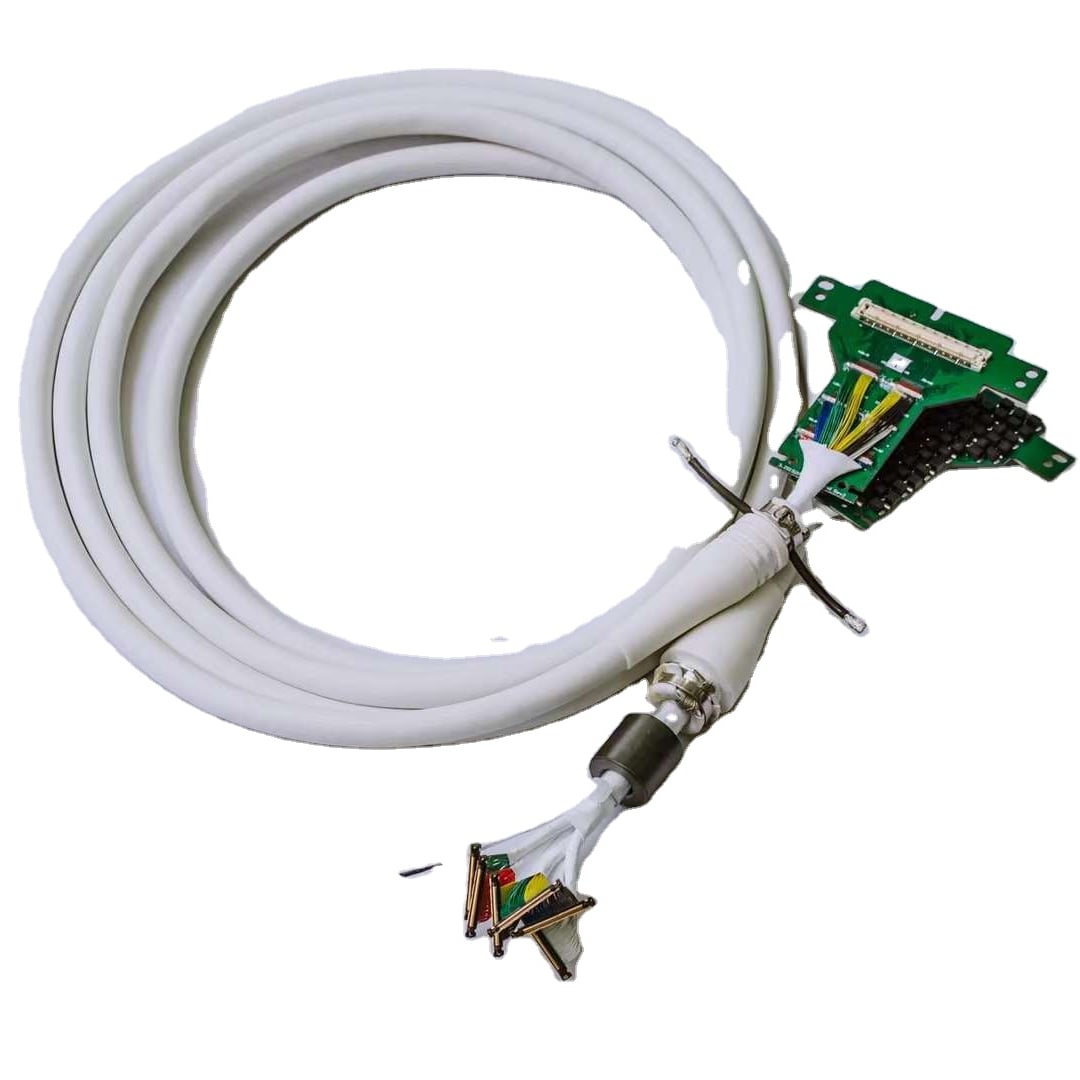
128 Core Low Capacitance Medical Ultrasound Cable Assembly
| Item | Specification |
|---|---|
| Product Type | Medical Ultrasound Cable Assembly |
| Cable Type | High-Density Low Capacitance Cable |
| Core Count | 128 Cores |
| Electrical Characteristic | Low Capacitance |
| Application | Medical Ultrasound / Medical Imaging |
| Typical Device | Ultrasound Probe / Imaging Equipment |
| Cable Structure | High-Density Multi-Core Configuration |
| Conductor | Fine Copper Conductor |
| Insulation | Customized According to Application |
| Shielding | Customized According to Cable Design |
| Capacitance | Low Capacitance / Customized |
| Characteristic Impedance | Customized According to Application |
| Connector Type | Customized |
| Connector Brand | Customized According to Project |
| Pin Assignment | Customized |
| Cable Length | Customized |
| Cable Diameter | Customized According to Design |
| Channel Configuration | Customized |
| Bending Requirement | Customized According to Probe Design |
| Operating Temperature | Customized According to Application |
| Voltage Rating | Customized According to Cable Design |
| Compliance | RoHS / REACH |
| Management System | ISO 9001 / ISO 13485 |
| Sample | Available |
| MOQ | Customized According to Project |
| Manufacturing Type | OEM / ODM |
| Customization | Cable, Electrical Characteristics, Connector, Length, Pin Assignment and Structure |
- Overview
- Recommended Products
128-core high-density cable configuration
Low-capacitance cable design
Designed for ultrasound probes and medical imaging systems
High channel density in a compact cable structure
Suitable for signal-sensitive medical imaging applications
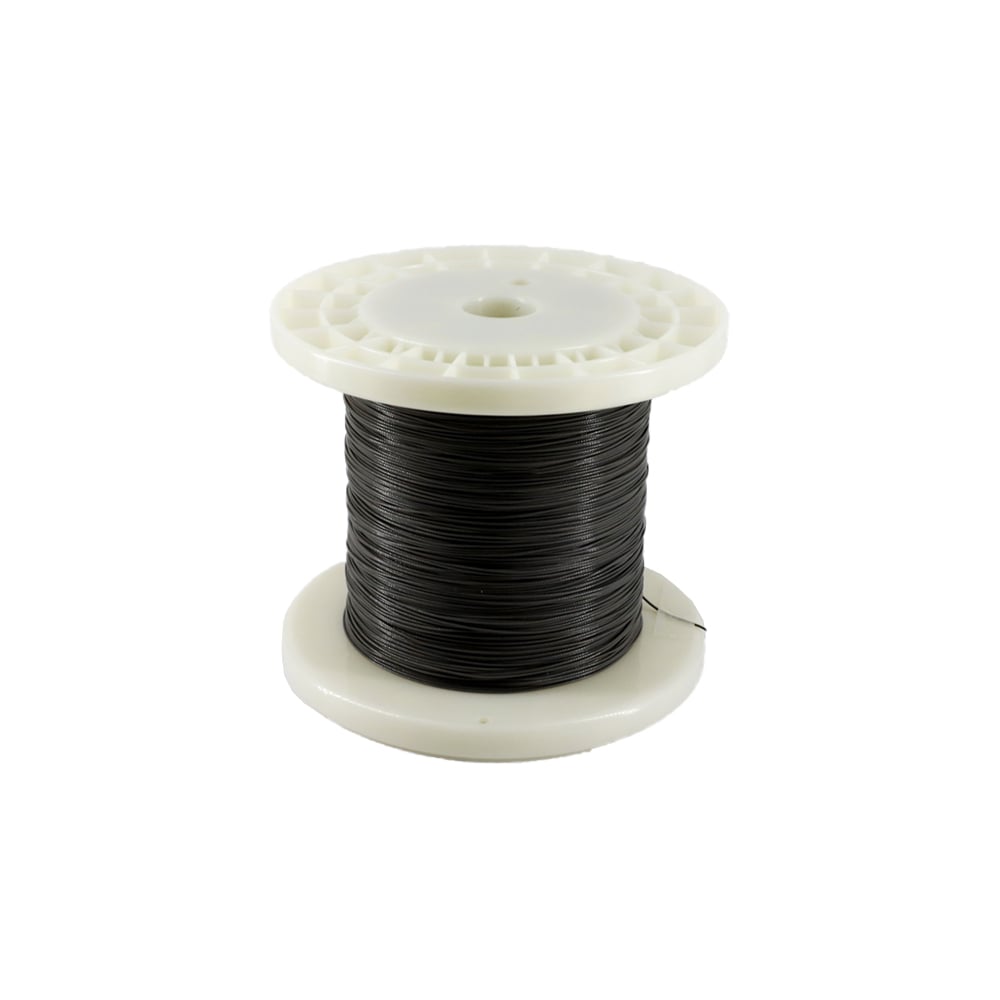
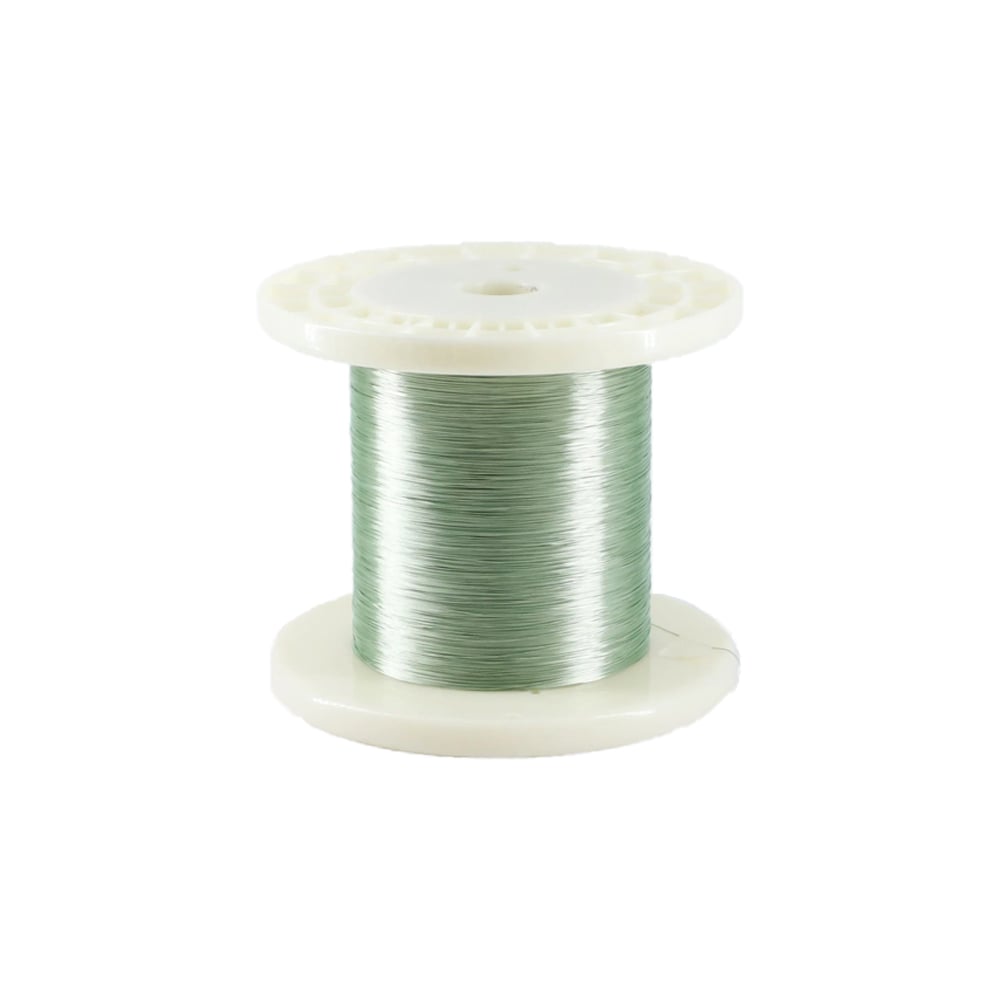
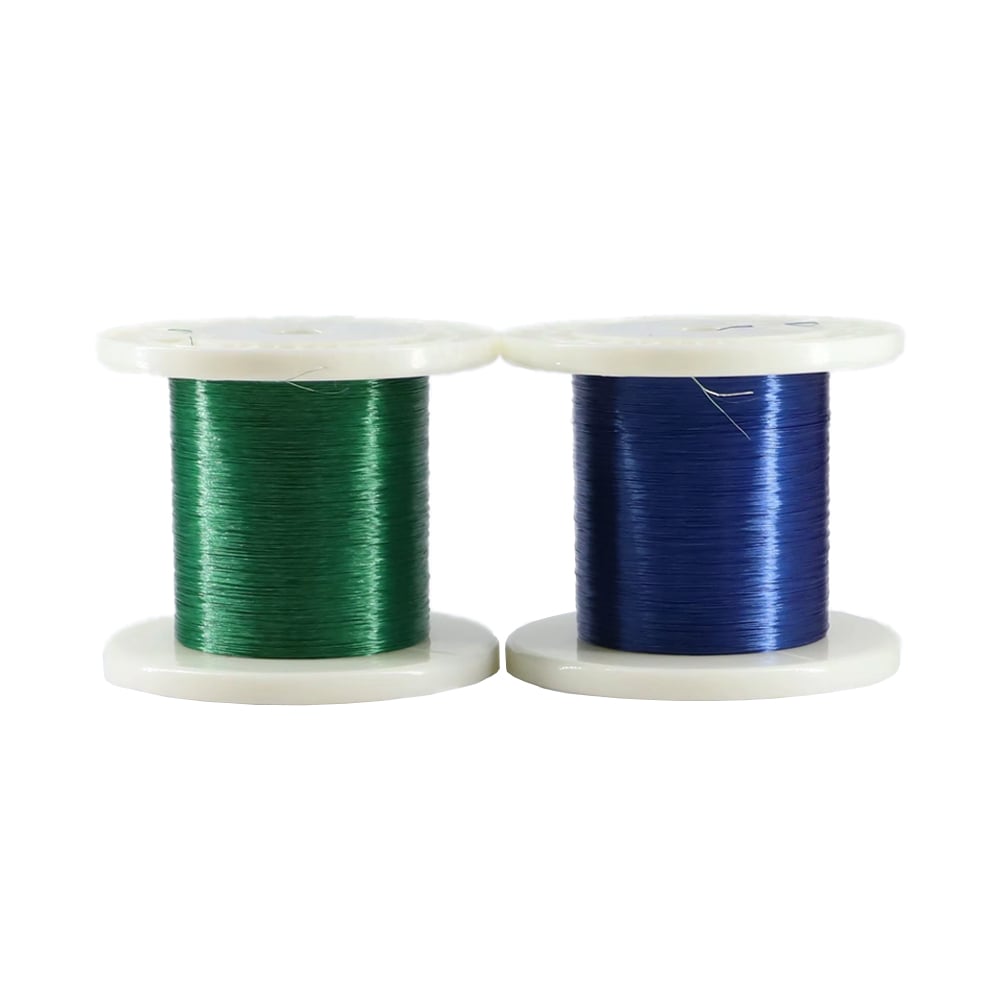
Fine-wire construction available according to project requirements
Flexible cable routing for compact probe assemblies
Customized connector and pin assignment
Customized cable length and overall construction
OEM and ODM medical cable assembly support
Diagnostic Ultrasound Probes
Medical Ultrasound Systems
Medical Imaging Equipment
High-Channel Ultrasound Probes
Portable Ultrasound Equipment
Ultrasound Imaging Modules
Medical Diagnostic Devices
High-Density Imaging Probes
Customized Medical Imaging Systems
Core count
Low-capacitance cable construction
Cable length
Cable diameter
Wire configuration
Connector type
Connector manufacturer
Pin assignment
Shielding structure
Insulation material
Protective structure
Probe-side configuration
Equipment-side configuration
Electrical characteristics
Experience with high-density medical cable assemblies
Capability for fine-wire and compact cable construction
Ability to meet specified electrical characteristics
Connector and pin-assignment customization
Prototype and sample development
Engineering support during product development
Quality management and applicable compliance requirements
Capability to move from prototype to volume production
Communication and support for custom OEM projects
Cable drawing
Probe drawing or application information
Core count
Capacitance requirement
Connector model
Pin assignment
Cable length
Cable diameter requirement
Electrical requirements
Estimated quantity
Product Overview
The 128 Core Low Capacitance Medical Ultrasound Cable Assembly is a high-density cable solution designed for ultrasound probes, medical imaging systems and other applications where signal transmission performance and cable capacitance are important.
The cable uses a high-density 128-core configuration while maintaining a compact cable structure. Its low-capacitance design is intended for applications where minimizing the electrical loading of the cable is important for overall system performance.
This type of cable is particularly suitable for high-channel-count ultrasound and medical imaging applications where cable construction must balance channel density, electrical characteristics, flexibility and physical dimensions.
HOTTEN supports customized cable assemblies according to customer drawings, probe designs, connector requirements, cable length and electrical specifications.
Key Features
Typical Applications
The 128 Core Low Capacitance Medical Ultrasound Cable Assembly is suitable for applications including:
Technical Specifications
| Item | Specification |
|---|---|
| Product Type | Medical Ultrasound Cable Assembly |
| Cable Type | High-Density Low Capacitance Cable |
| Core Count | 128 Cores |
| Electrical Characteristic | Low Capacitance |
| Application | Medical Ultrasound / Medical Imaging |
| Typical Device | Ultrasound Probe / Imaging Equipment |
| Cable Structure | High-Density Multi-Core Configuration |
| Conductor | Fine Copper Conductor |
| Insulation | Customized According to Application |
| Shielding | Customized According to Cable Design |
| Capacitance | Low Capacitance / Customized |
| Characteristic Impedance | Customized According to Application |
| Connector Type | Customized |
| Connector Brand | Customized According to Project |
| Pin Assignment | Customized |
| Cable Length | Customized |
| Cable Diameter | Customized According to Design |
| Channel Configuration | Customized |
| Bending Requirement | Customized According to Probe Design |
| Operating Temperature | Customized According to Application |
| Voltage Rating | Customized According to Cable Design |
| Compliance | RoHS / REACH |
| Management System | ISO 9001 / ISO 13485 |
| Sample | Available |
| MOQ | Customized According to Project |
| Manufacturing Type | OEM / ODM |
| Customization | Cable, Electrical Characteristics, Connector, Length, Pin Assignment and Structure |
Customization & OEM Capability
HOTTEN supports customized low-capacitance medical ultrasound cable assemblies according to customer drawings, samples and electrical requirements.
Available customization options include:
For ultrasound probe projects, customers can provide a cable drawing, probe specification, connector part number, pin assignment, sample or electrical requirements.
HOTTEN can evaluate the cable structure according to the customer's available mechanical and electrical information and develop a customized cable assembly.

 Manufacturing & Engineering Support
HOTTEN specializes in fine-wire, micro coaxial and high-density medical cable assemblies.
For ultrasound applications, cable electrical characteristics can directly affect system performance. Cable capacitance, conductor configuration, shielding, cable length and channel density therefore need to be considered together during cable development.
The 128-core low-capacitance configuration is designed for projects where a large number of signal channels must be integrated while maintaining controlled electrical characteristics.
HOTTEN supports the development process from:
Sample → Prototype → Engineering Validation → Mass Production
The cable assembly can be developed according to the customer's probe structure, signal requirements, installation space and production requirements.
Why Choose HOTTEN
High-Density Medical Cable Expertise
HOTTEN provides customized cable assemblies for medical imaging applications requiring a high number of signal channels within a compact cable structure.
Low-Capacitance Cable Solutions
For signal-sensitive ultrasound applications, cable capacitance can be an important design consideration. HOTTEN can develop cable structures according to specified electrical requirements.
128-Core Configuration
The 128-core configuration provides a high channel density solution for ultrasound probes and medical imaging equipment.
Customized Electrical Characteristics
Customers can specify electrical requirements such as capacitance, impedance and other cable characteristics according to the system design.
Flexible Cable Configuration
Core count, cable length, cable diameter, connector configuration, pin assignment and shielding can be customized according to the project.
Prototype to Mass Production
HOTTEN supports customized medical cable projects from initial samples and prototypes through engineering validation and volume production.
Quality & Compliance
HOTTEN operates under ISO 9001 and ISO 13485 management systems and supports applicable product compliance requirements including RoHS and REACH.
Engineering & Procurement Considerations for 128-Core Ultrasound Cables
Selecting a high-density medical ultrasound cable involves more than choosing the required number of cores. Cable capacitance, conductor configuration, cable diameter, shielding, flexibility, connector configuration and probe structure may all need to be considered together.
For custom ultrasound cable projects, HOTTEN works with customers to evaluate these electrical and mechanical requirements and develop cable assemblies according to the specific probe and imaging system.
1. Why does core count matter in a medical ultrasound cable?
Core count is closely related to the number of electrical channels that need to be connected between the ultrasound probe and the imaging system. A higher channel count can support more complex probe configurations, but it also increases the challenges of fitting conductors, insulation, shielding and protective structures into a compact cable.
For this reason, core count should be considered together with cable diameter, electrical characteristics, flexibility and the available installation space. A 128-core configuration provides a high-density solution for applications where multiple signal channels must be integrated into a compact ultrasound cable assembly.
2. How does cable capacitance affect ultrasound cable design?
Cable capacitance is an important electrical characteristic in signal-sensitive ultrasound applications. The cable forms part of the electrical signal path between the probe and the imaging equipment, so its electrical characteristics need to be considered together with the requirements of the overall system.
Capacitance can be influenced by factors such as conductor arrangement, insulation structure, cable geometry and cable length. Therefore, a low-capacitance ultrasound cable should not be evaluated only by its nominal capacitance value. The cable structure should also be developed according to the required electrical performance, physical dimensions and probe design.
3. How should engineers choose between a 128-core and 195-core ultrasound cable?
The appropriate core count depends on the architecture and channel requirements of the ultrasound probe rather than simply choosing the higher number of cores.
A 128-core cable can be suitable for probe and imaging applications requiring high channel density while maintaining a relatively compact cable structure. A 195-core configuration may be considered when the system requires a higher number of signal channels or a different high-density cable architecture.
When comparing different core counts, engineers should evaluate channel requirements together with capacitance, conductor size, cable diameter, flexibility, shielding, connector configuration and available installation space.
4. What specifications should engineers define before developing a custom ultrasound cable?
A custom ultrasound cable should be defined from both electrical and mechanical requirements. Important information may include core count, conductor size, capacitance requirements, cable diameter, cable length, shielding structure, connector type, pin assignment and bending requirements.
For probe development projects, additional information such as a cable drawing, probe drawing, connector part number, electrical specification or existing cable sample can help the cable manufacturer evaluate the required construction more accurately.
If some specifications are not yet finalized, HOTTEN can review the available project information and discuss the cable structure with the customer during the engineering development stage.
5. How do cable diameter and flexibility affect ultrasound probe design?
Ultrasound probe cables often need to fit within limited mechanical spaces and follow defined routing paths. Cable diameter and flexibility therefore need to be considered together with the internal structure of the probe.
A high-density cable must accommodate multiple conductors and other cable structures while maintaining the required physical dimensions and flexibility. Excessive cable size may create routing or packaging challenges, while insufficient mechanical flexibility may affect cable handling and installation.
For this reason, cable diameter, conductor arrangement, shielding, insulation and protective structure should be evaluated as part of the complete cable design rather than independently.
6. What should buyers evaluate when sourcing a custom ultrasound cable assembly?
When sourcing a custom medical ultrasound cable, buyers should evaluate more than unit price. The supplier should be able to understand the electrical, mechanical and assembly requirements of the application and translate them into a manufacturable cable structure.
Key evaluation factors may include:
For projects with complex ultrasound probe requirements, providing the supplier with drawings, samples and electrical specifications at an early stage can help reduce development uncertainty and improve the efficiency of the quotation and engineering process.
Frequently Asked Questions
What is a low-capacitance ultrasound cable?
A low-capacitance ultrasound cable is designed to reduce the electrical capacitance associated with the cable. This can be important in signal-sensitive ultrasound and medical imaging applications where cable electrical characteristics need to be controlled.
Why is low capacitance important for ultrasound cables?
Ultrasound systems transmit and receive electrical signals through the probe cable. Cable capacitance can affect the electrical behavior of the signal path, so controlling capacitance can be an important part of the overall cable design.
What does 128 core mean?
A 128-core cable contains 128 individual conductors or signal channels within the cable assembly, providing a high-density connection between the ultrasound probe and imaging equipment.
Can the core count be customized?
Yes. HOTTEN can evaluate different core counts and cable configurations according to the customer's probe and system requirements.
Can the capacitance be customized?
Yes. The cable structure can be developed according to the customer's specified capacitance or electrical requirements.
Can the connector be customized?
Yes. Customers can specify the connector model and manufacturer. HOTTEN can evaluate the connector configuration according to the project.
Can the cable length be customized?
Yes. Cable length can be manufactured according to the customer's probe dimensions, equipment configuration and routing requirements.
Can the pin assignment be customized?
Yes. HOTTEN can manufacture the cable according to the customer's electrical schematic, pin assignment table or cable drawing.
Can you provide samples before mass production?
Yes. HOTTEN supports customized samples and prototypes for engineering evaluation before volume production.
What information is required for a quotation?
For a faster quotation, customers can provide:
If some specifications are not available, HOTTEN can evaluate the project based on the information provided.
Request a Custom Low-Capacitance Ultrasound Cable Assembly
If you are looking for a 128-core low-capacitance medical ultrasound cable assembly, please send us your cable drawing, probe requirements, connector information, required capacitance, cable length and estimated quantity.
HOTTEN can evaluate your requirements and provide a customized high-density medical cable assembly solution for prototype development or volume production.
Request a Quote | Contact HOTTEN