 EN
EN
Quick Links

RF coaxial cable assemblies serve as critical signal pathways in 5G and other high-frequency systems, carrying signals between antennas, transceivers, sensors, and processors. These precision-engineered assemblies must maintain signal integrity across frequencies ranging from hundreds of megahertz to tens of gigahertz; Unlike ordinary electrical wires, RF coaxial assemblies must control electrical characteristics that directly affect high-frequency signal transmission. Without proper control of impedance and signal loss, even advanced electronic equipment can experience dropped connections, data corruption, or degraded image quality. We continue to invest in research and development to better understand how geometry, materials, and manufacturing processes work together to ensure the reliability, consistency, and electrical performance of every RF cable assembly we produce. Our solutions are designed to support stable system performance and clean signal transmission across applications ranging from drone wire harnesses to medical RF ablation cables. Below, we outline four fundamental approaches used to control impedance and minimize signal loss.
The RF performance of a coaxial cable assembly depends on the complete signal path, not only on the coaxial cable itself.
For a finished assembly, engineers need to consider cable geometry, dielectric properties, shielding, connector interfaces, termination geometry, cable length, and final electrical testing together.
A cable can meet its nominal impedance and attenuation requirements as a standalone cable, but the finished assembly may show different RF behavior after connectors and terminations are added.
If → the cable meets its impedance requirement before assembly
Then → verify the impedance and signal-loss performance again after connector termination
Why → the connector transition and termination region become part of the RF transmission path.
If → insertion loss is higher than expected
Then → separate cable attenuation from connector, termination, and transition losses
Why → total assembly loss is determined by the complete signal path rather than by the cable core alone.
If → return loss or VSWR changes significantly after assembly
Then → investigate impedance discontinuities at the cable-to-connector transition
Why → mismatch at an interface can cause signal reflection even when the cable itself remains within specification.
If → the assembly operates across a wide frequency range
Then → define the test bandwidth and acceptance criteria before production validation
Why → RF performance must be evaluated across the frequencies that matter to the actual system.
For engineered RF cable solutions, see RF Cable.
For finished cable assemblies, see RF Coaxial Cable Assembly.
Precision Geometric Design to Lock in Characteristic Impedance
The characteristic impedance (Z₀) of a coaxial cable is primarily determined by the conductor geometry and the dielectric material between the conductors. For a given dielectric, the ratio between the outer-conductor diameter and inner-conductor diameter has a major influence on impedance. To maintain this value (usually 50 Ω or 75 Ω), Tight dimensional control is required to maintain the specified impedance and minimize variations along the cable length of the cable. This level of precision is achieved through advanced extrusion tooling that maintains dielectric-wall tolerances within ±0.02 mm, together with laser gauging systems that provide real-time feedback during production. Foamed PE (εᵣ ≈ 1.5) or FEP (εᵣ ≈ 2.1) dielectrics are used on our RF Cables and AR/VR Cables which provide can provide relatively stable dielectric properties over the specified operating range, helping maintain consistent impedance under changing operating conditions. Each cable is tested with TDR (Time-Domain Reflectometry) to detect and reject micro-discontinuities that may lead to jitter in sensitive applications such as gimbal camera control links.
Mitigating Signal Loss Through Advanced Material Selection
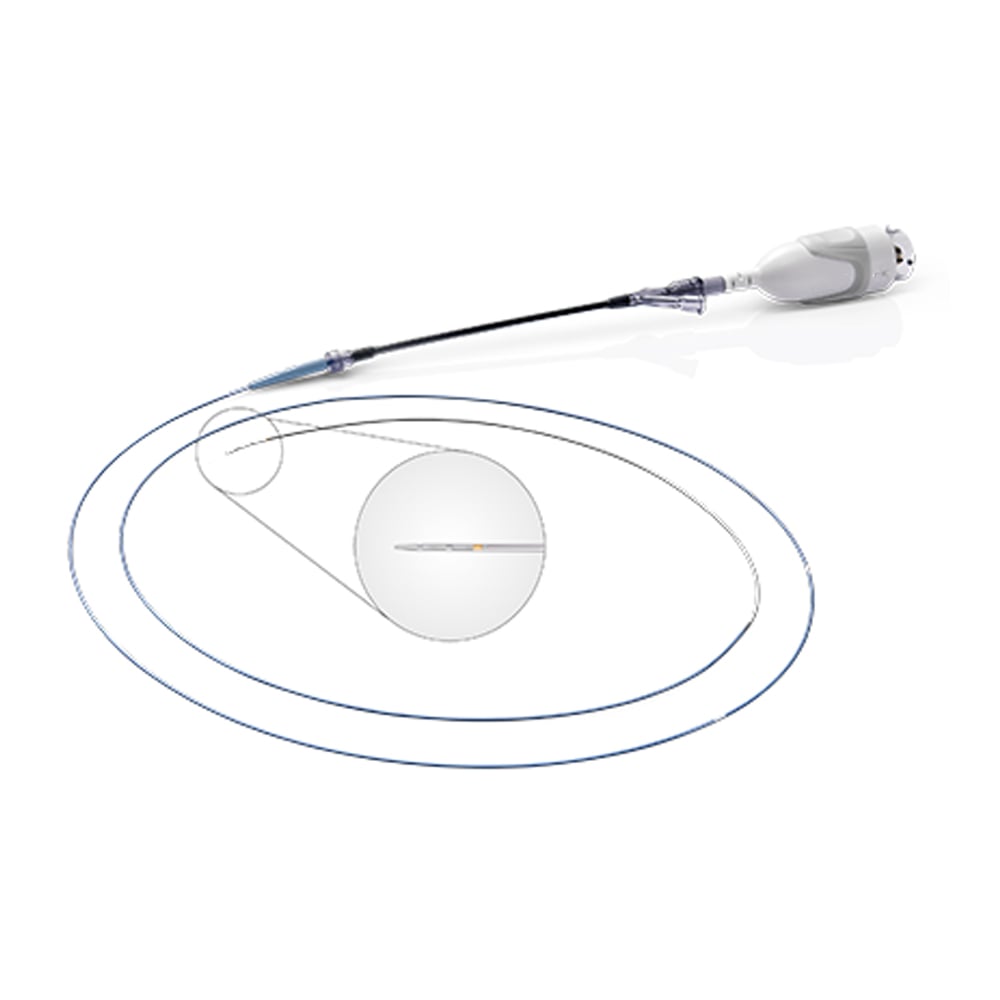
Signal loss in an RF coaxial assembly generally includes conductor loss, dielectric loss, and radiation loss. At high frequencies, the skin effect causes current to concentrate near the surface of the conductor, increasing effective AC resistance as frequency rises. Hotten uses silver-plated copper conductors to reduce surface resistance and help minimize conductor loss at high frequencies. To reduce dielectric loss, we use low-loss materials such as microporous PTFE and foamed FEP with low dielectric loss characteristics ,dielectric loss is primarily associated with molecular polarization and energy dissipation within the insulating material. Our IVUS and ICE cable assemblies are designed for intravascular imaging applications operating in the 20–60 MHz range. Their attenuation performance is evaluated according to the specified frequency and application requirements. Moreover, low-loss dielectric materials that help reduce dielectric heating during high-power operation when high power is delivered to the cable, helping maintain stable impedance characteristics during prolonged operation.
For OEM projects, evaluating a coaxial cable assembly requires more than confirming a nominal impedance such as 50Ω or 75Ω.
A practical validation framework should consider:
Impedance → Insertion Loss → Return Loss → Connector Transition → Shielding → Cable Length → Environment → Production Consistency
The objective is not simply to prove that one sample works.
The objective is to determine whether the complete assembly can repeatedly meet the RF requirements of the application.
One of the first engineering questions should be:
Are the measured RF characteristics coming from the cable itself, or from the assembled interfaces?
A finished RF assembly contains multiple potential sources of electrical variation:
| Signal Path Component | Typical Engineering Concern |
|---|---|
| Coaxial conductor | Conductor loss / dimensional variation |
| Dielectric | Dielectric loss / dimensional stability |
| Shield | Shield continuity / coupling |
| Cable-to-connector transition | Impedance discontinuity |
| Connector | Return loss / insertion loss |
| Termination | Geometry / contact consistency |
| Cable length | Total attenuation / phase |
| Bending condition | Mechanical influence on RF behavior |
If → the raw cable passes its RF requirements but the finished assembly does not
Then → focus the investigation on termination, connector interface and assembly geometry
Why → assembly-level performance can differ from cable-level performance.
This distinction is especially important when an OEM is qualifying a new connector or a new termination process.
RF cable assemblies are commonly evaluated using parameters such as insertion loss and return loss, but they describe different aspects of signal integrity.
| Parameter | Engineering Question |
|---|---|
| Insertion Loss | How much signal is lost through the assembly? |
| Return Loss | How much signal is reflected because of impedance mismatch? |
| VSWR | How severe is the impedance mismatch? |
| Impedance | Is the transmission structure maintained within the required range? |
| Phase | Is signal phase sufficiently stable for the application? |
| Shielding | Is electromagnetic coupling adequately controlled? |
If → insertion loss is within the required limit but return loss is poor
Then → investigate impedance mismatch rather than simply changing the conductor material
Why → low insertion loss does not automatically mean that the complete RF transition is well matched.
If → return loss is acceptable but total insertion loss is too high
Then → investigate conductor loss, dielectric loss, cable length, connector loss and other transmission losses
Why → reflection performance and transmission loss are related but not identical engineering problems.
In a finished assembly, the transition between cable and connector deserves particular attention.
The intended structure is:
Inner Conductor
→ Dielectric
→ Shield
→ Connector Interface
The geometry must remain sufficiently controlled through the transition.
Relevant parameters may include:
If → the connector interface introduces an abrupt geometry change
Then → verify the transition with appropriate RF measurements
Why → a local discontinuity can introduce reflections even when the cable itself is dimensionally stable.
If → two connector types are used with the same cable construction
Then → validate each cable-and-connector combination independently
Why → connector interfaces are not electrically interchangeable simply because the nominal impedance is the same.
Cable length is not only a mechanical dimension.
For RF applications, increasing cable length can also increase total attenuation and affect phase characteristics.
| Requirement | Why It Matters |
|---|---|
| Nominal length | Defines the signal path |
| Length tolerance | Affects repeatability |
| Bend condition | Can influence the transmission structure |
| Minimum bend radius | Protects cable geometry |
| Connector position | Controls installation consistency |
| Finished assembly dimension | Ensures system integration |
If → two assemblies use the same cable construction but substantially different finished lengths
Then → evaluate their RF performance separately
Why → attenuation and phase characteristics can depend on the total signal path.
If → the OEM has a strict system-level loss budget
Then → include cable length and connector losses in the assembly-level RF specification
Why → evaluating the cable without the actual finished length may not represent system conditions.
Both TDR and VNA can be useful in RF cable assembly validation, but they provide different types of information.
| Test Method | Main Purpose |
|---|---|
| TDR | Locate impedance discontinuities along the transmission path |
| VNA | Measure frequency-dependent RF characteristics such as S-parameters |
| Continuity Test | Verify electrical connection |
| Insulation Test | Verify insulation performance where applicable |
| Shield Test | Verify shield continuity / relevant shielding requirements |
If → an assembly shows an unexpected impedance discontinuity
Then → use location-sensitive measurements such as TDR to investigate where the transition occurs
Why → locating a physical discontinuity can simplify root-cause analysis.
If → the OEM needs insertion loss and return loss across a frequency band
Then → use VNA-based measurement with an appropriate calibration and test setup
Why → frequency-domain RF characteristics are required to understand how the assembly behaves across the operating band.
RF test results should not be evaluated without considering the measurement setup.
Relevant factors can include:
If → test results vary between measurements of the same assembly
Then → investigate the measurement system as well as the product
Why → connector repeatability, calibration and fixture conditions can contribute to measurement variation.
If → a new connector or test fixture is introduced
Then → establish the measurement method before comparing production results
Why → different test configurations can produce non-equivalent measurement conditions.
RF validation should not always stop at room-temperature testing.
Depending on the application, OEM engineers may need to evaluate:
| Condition | Example Engineering Question |
|---|---|
| Temperature | Does RF performance remain within specification? |
| Humidity | Does moisture affect materials or insulation? |
| Vibration | Does the connector transition remain stable? |
| Repeated Flexing | Does mechanical movement affect RF characteristics? |
| Chemical Exposure | Are materials compatible with the application? |
| Sterilization | Can the assembly maintain performance after the required process? |
If → the assembly is used in a dynamic system
Then → combine RF testing with representative flex or vibration testing
Why → mechanical stress may affect the physical transmission structure and termination.
If → the assembly is used in medical equipment
Then → define RF testing together with the application's environmental and mechanical requirements
Why → the final cable assembly has to satisfy the combined system requirements rather than one isolated electrical parameter.
For medical applications, see Medical Equipment.
For OEM development, a prototype sample answers:
Can this design meet the requirement?
Production validation needs to answer another question:
Can the manufacturing process continue to produce the same RF performance?
A practical progression is:
Prototype
→ Design Verification
→ Process Validation
→ Pilot Production
→ Production Testing
→ Lot-to-Lot Monitoring
If → prototype assemblies meet the required RF specification
Then → verify the same construction and termination process during pilot production
Why → prototype success does not automatically demonstrate manufacturing repeatability.
If → production measurements show increasing variation
Then → investigate process parameters, material lots, connector handling and measurement repeatability
Why → RF variation can originate from manufacturing processes as well as from the original design.
For a customized RF cable assembly, a useful technical package may include:
| Category | Recommended Information |
|---|---|
| Frequency Range | Operating band |
| Impedance | Nominal impedance and tolerance |
| Insertion Loss | Maximum acceptable loss |
| Return Loss | Required limit |
| VSWR | Required limit if applicable |
| Cable Length | Nominal + tolerance |
| Cable OD | Maximum allowable OD |
| Connector | Manufacturer / part number / interface |
| Termination | Solder / crimp / other process |
| Shielding | Construction and termination |
| Flexibility | Static / dynamic requirement |
| Environmental | Temperature / humidity / other conditions |
| RF Testing | TDR / VNA / other specified methods |
| Reporting | S-parameter or inspection report if required |
| Production | Prototype / pilot / mass production |
If → an RFQ only states “50Ω coaxial cable assembly”
Then → specify frequency range, loss requirements, connector type, finished length and environmental conditions
Why → nominal impedance alone does not define the complete electrical requirements of an RF assembly.
A practical OEM selection process can be structured as:
System Application
→ Operating Frequency
→ Impedance
→ Maximum Acceptable Loss
→ Cable Length
→ Cable Construction
→ Shielding
→ Connector
→ Termination
→ TDR / VNA Validation
→ Environmental Validation
→ Production Consistency
For example:
High-frequency medical system
→ define operating frequency
→ establish impedance requirement
→ define insertion-loss and return-loss limits
→ determine maximum cable length and OD
→ select conductor and dielectric
→ select shielding structure
→ define connector and termination
→ test finished assemblies
→ perform application-representative environmental validation
→ confirm production repeatability.
This approach evaluates the complete RF cable assembly, rather than selecting a cable based only on a nominal specification such as:
50Ω + low loss
Key Design Controls for Consistent RF Performance in High-Frequency Coaxial Cable
How Impedance Control Helps High-Frequency Coaxial Cable Maintain Stable Signal Transmission
Why Choose Silver-Plated Conductors for High-Frequency Signal Transmission Cables?
How Material Selection and Strain Relief Extend RF Coaxial Cable Assembly Service Life
When OEM Projects Need Low-Loss High-Frequency Coaxial Cable Assemblies
Shielding Strategies to Minimize Radiation and Coupling Loss
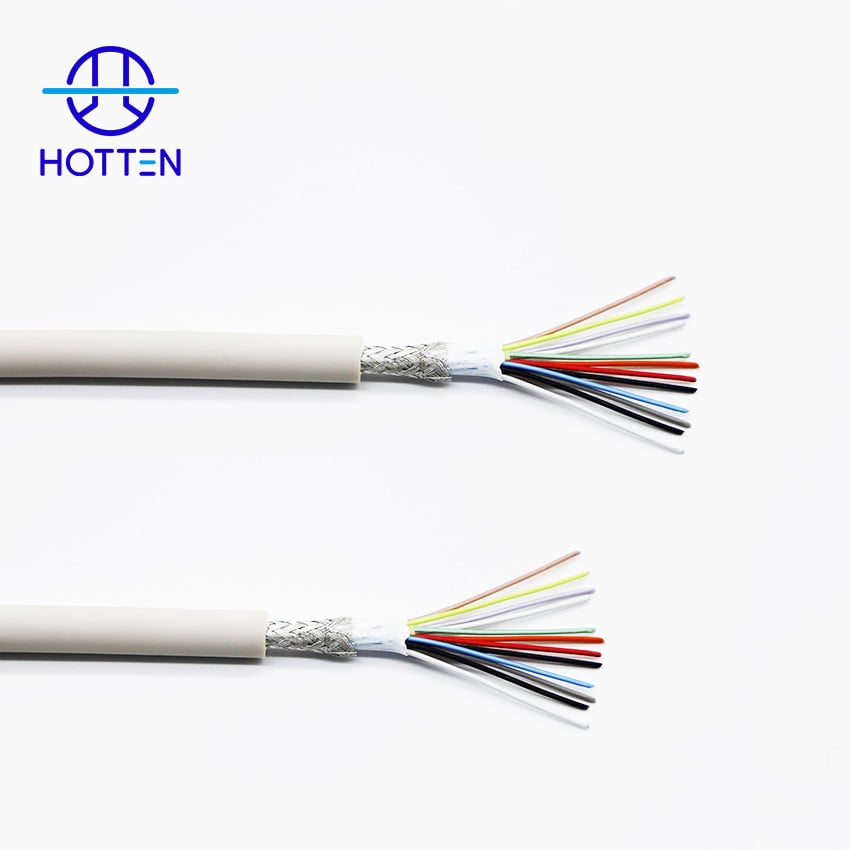
In addition to attenuation, RF systems can experience signal degradation caused by electromagnetic coupling and radiation leakage. If shielding is insufficient, a coaxial assembly may radiate energy to nearby conductors or pick up external noise, degrading signal quality. Depending on application requirements, Hotten offers several shielding configurations: Single braid (90% coverage) – consumer devices; Double braid (95% coverage) – industrial applications such as robots; Triple shielded (braid + foil + spiral) – medical applications in the vicinity of MRI and radio frequency (RF) ablation generators. Our Robotics Wire Harnesses and Drone Wire Harnesses use optimized weave angles to maintain braid flexibility while still effectively suppressing high-frequency leakage. With USB4 Wire Harnesses, foil shields are used in conjunction with drain wires to improve common-mode noise rejection and support the reliable coexistence of high-speed data transmission and power delivery in compact consumer electronics.
Termination Excellence and Assembly-Level Quality Assurance
Even when the cable itself is manufactured to specification, the connector interface can become the weakest point in the impedance path. Improper stripping, inconsistent soldering, or incorrect crimping can create impedance discontinuities and cause a significant portion of the signal power to be reflected. Through training and the use of precision stripping blades and automated crimping presses at Hotten, our assembly technicians are able to maintain consistent transition geometry and adhere to IPC/WHMA-A-620 assembly standards. At critical junctions, conductive silver epoxy or low-temperature solder may be used to provide a consistent electrical transition and help reduce insertion loss, and 100% all-band network analyzer (VNA) testing is performed to check return loss (S₁₁) and insertion loss (S₂₁) over the entire operating band. Our LVDS Wire Harnesses and EEG Lead Wires are issued with detailed S-parameter reports. These reports provide OEM engineers with documented verification that each assembly meets its specified loss requirements. From raw materials to final testing. Hotten's quality control processes help ensure that our RF coaxial assemblies deliver the level of reliability required by high-frequency systems, supporting applications such as telemedicine, autonomous navigation, and immersive entertainment.
 Hot News
2026-09-17
2026-09-04
2025-12-17
2025-12-11
2025-12-05