 EN
EN
Quick Links

The service life of an RF coaxial cable assembly depends on more than the initial electrical specification. In demanding applications, long-term performance is influenced by the interaction between conductor construction, insulation and jacket materials, shielding, strain relief, connector design, environmental exposure, and mechanical movement.
A cable may meet impedance and loss requirements when new, but repeated bending, pulling, twisting, temperature changes, chemical exposure, or connector movement can place additional stress on the cable assembly.
If → the cable is exposed to repeated bending or movement
Then → evaluate conductor construction, shielding, bend transition, and strain relief together
Why → mechanical stress is concentrated in specific areas of the assembly rather than distributed evenly.
If → the cable operates in a high-temperature, sterilization, outdoor, or chemically exposed environment
Then → select dielectric and jacket materials according to the actual environmental conditions
Why → material properties can affect mechanical durability and electrical stability over time.
If → the cable terminates directly into a connector or PCB and experiences pulling or bending near the interface
Then → design the strain-relief structure as part of the cable assembly
Why → the connector transition is one of the areas where mechanical stress can become concentrated.
If → the application requires long operating life
Then → validate both electrical performance and mechanical durability after representative environmental or flex testing
Why → initial electrical performance does not by itself demonstrate long-term reliability.
For high-frequency applications, see HOTTEN's RF Coaxial Cable Assembly.
For application-specific medical cable designs, see Medical Cable Assembly.
While calendar time is one factor that affects the service life of a coaxial cable assembly, its longevity in high-frequency applications is more directly influenced by factors such as flex cycles, temperature fluctuations, chemical exposure, and repeated connector mating. If a cable fails during operation, it may cause a drone to crash mid-flight, interrupt a robotic surgical procedure, or result in the loss of imaging data during cardiac catheterization. At Hotten Electronic Wire Technology, we know reliability is the real measure of performance. Electrical parameters such as impedance and loss determine the cable's performance on day one, but material science and mechanical strain relief determine performance for days, months, and years to come. Our RF coaxial assemblies are designed for extended service life through the selection of rugged, application-optimized materials and the engineering of robust termination protection. Below, we examine four key design strategies that help our cable assemblies maintain reliable performance across demanding consumer, industrial, and medical applications.
Conductor Metallurgy: Balancing Conductivity with Fatigue Resistance
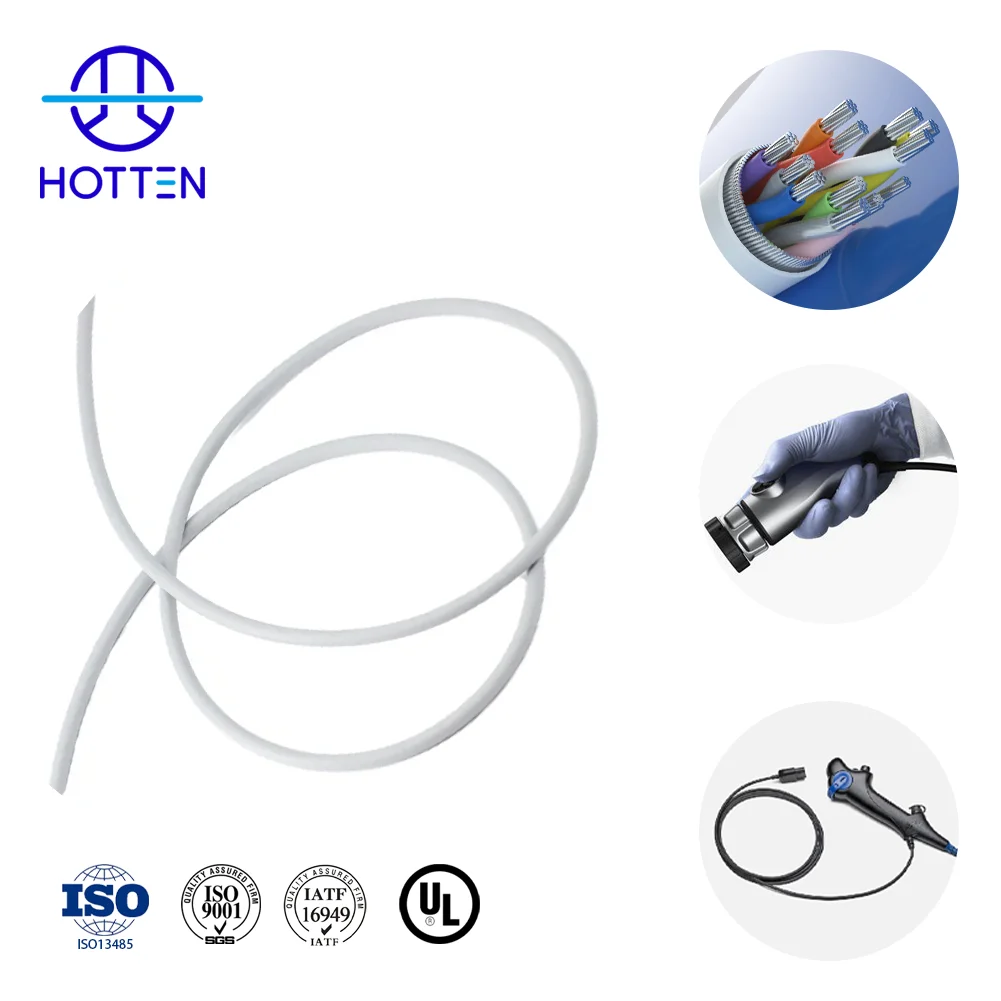
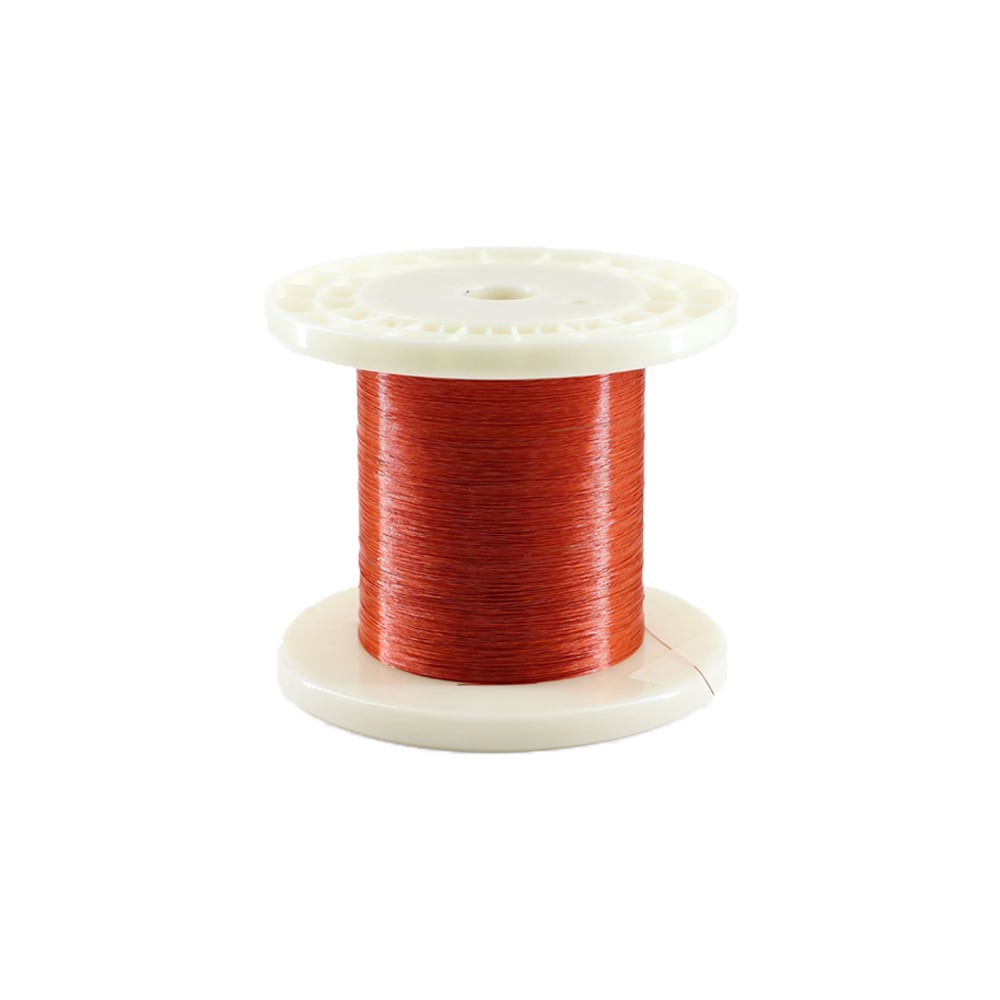
The most highly stressed component of any coaxial system is its inner conductor. Solid conductors can work-harden and crack under repeated bending, while conventional stranded conductors may experience strand breakage and increased resistance over time. Hotten addresses these challenges by selecting conductor materials and strand constructions based on the specific requirements of each application. Our Drone Wire Harnesses and Robotics Wire Harnesses use high-strand-count, silver-plated copper conductors (such as 19/38 or 37/40) that offer excellent high-frequency conductivity and superior bending endurance, which is necessary for many thousands of dynamic flex cycles. Silver plating also helps reduce high-frequency losses associated with the skin effect while minimizing friction and wear between individual strands during repeated flexing. For medical use such as Endoscope Cables and Surgical Scalpel Cables, we use ultra-fine stranded conductors with special annealing processes, These conductors offer elongation of more than 20% and are designed to withstand repeated handling, sterilization processes, and complex insertion paths while maintaining stable signal performance.
Dielectric and Jacket Materials for Environmental Resilience
The dielectric insulation and outer jacket are exposed to heat, cold, moisture, chemicals, and ultraviolet (UV) radiation. Poor material selection can lead to changes in dielectric constant, increased signal loss, or jacket cracking, which will compromise the integrity of the shield and lead to corrosion. Hotten selects materials according to application requirements, including FEP for high-temperature autoclave environments, silicone rubber for flexible cable designs where softness and repeated bending are important, and medical-grade TPU for surgical cables that require abrasion resistance. If your drones and gimbal cameras are used outdoors and are subjected to UV exposure and rain, we recommend using the which can affect dielectric properties, insulation performance, and long-term reliability. Our ICE and IVUS Cables feature expanded PTFE dielectrics with stable dielectric constant after 500+ autoclave cycles, helping maintain low attenuation and stable phase performance throughout the product's clinical service life.
Material selection and strain relief should be treated as one reliability problem.
The objective is not simply to choose the strongest material or the most elaborate strain relief structure. The objective is to match the construction to the actual operating environment, movement profile, electrical requirement, installation space, and expected service life.
 1. Start With the Actual Failure Environment
Before selecting materials, define what the cable assembly will experience during service.
Important factors may include:
| Environmental / Mechanical Factor | Questions for OEM Engineers |
|---|---|
| Temperature | What are the normal and peak temperatures? |
| Temperature cycling | Will the cable repeatedly move between hot and cold conditions? |
| Humidity | Is moisture exposure expected? |
| Chemicals | Will the cable contact cleaning agents, disinfectants, oils or other chemicals? |
| UV exposure | Is the cable used outdoors? |
| Flexing | Is the cable static or dynamically moving? |
| Torsion | Will the cable twist during operation? |
| Pulling | Can the assembly experience accidental or installation-related tensile force? |
| Vibration | Is the cable mounted in a vibrating system? |
| Sterilization | Is repeated sterilization part of the application? |
| Connector mating | Will the cable be repeatedly connected and disconnected? |
If → the cable is exposed primarily to temperature and chemicals
Then → prioritize dielectric and jacket compatibility
Why → environmental degradation can affect both insulation and mechanical integrity.
If → the cable is continuously moving
Then → prioritize conductor construction, shielding flexibility and strain relief
Why → repeated mechanical cycles create a different reliability challenge from static installation.
The conductor is part of the mechanical system as well as the electrical system.
A design may use solid, stranded, or fine-stranded conductors depending on the application.
If → the cable remains largely stationary
Then → conductor selection can place greater emphasis on electrical requirements and dimensional constraints
Why → repeated flexing is not the dominant mechanical load.
If → the cable repeatedly bends
Then → evaluate conductor construction and flexibility together
Why → repeated bending can produce mechanical fatigue in the conductor.
If → the cable is very small and requires frequent movement
Then → evaluate conductor size, strand construction, insulation and termination as one structure
Why → ultra-fine constructions can have less mechanical margin and require more careful process control.
HOTTEN's existing article specifically discusses different conductor constructions for UAV, robotics and medical cable applications, including stranded and ultra-fine stranded structures. These are presented as application-specific engineering choices rather than one universal conductor design.
For ultra-fine conductor selection, see Thin Electronic Wire.
Material selection should begin with the actual environmental requirement rather than with a generic statement such as “high reliability.”
Potential considerations include:
If → the assembly operates in a sterilization environment
Then → evaluate materials that are compatible with the sterilization method and cycle requirements
Why → repeated environmental exposure can change the mechanical or electrical properties of unsuitable materials.
If → the assembly must bend repeatedly
Then → evaluate jacket flexibility and resistance to repeated deformation
Why → a mechanically stiff outer structure can influence the overall bend behavior.
If → the cable is used outdoors
Then → evaluate UV, moisture, temperature cycling and mechanical protection
Why → environmental exposure can affect both the jacket and the underlying cable structure.
The current HOTTEN article already uses FEP, silicone rubber, medical-grade TPU and expanded PTFE as examples of materials associated with different application requirements.
For medical-oriented ultra-fine materials, see Ultra Fine Medical Cable.
One of the most important areas of the finished assembly is:
Connector → Termination → Strain Relief → Cable
The transition should be evaluated based on how the cable will actually be installed and used.
If → the cable bends immediately after the connector
Then → use a strain-relief structure that provides a controlled transition
Why → a very short bending transition can concentrate mechanical stress near the termination.
If → the cable experiences pulling or accidental snagging
Then → evaluate the strain-relief structure for the expected mechanical load
Why → tensile force can otherwise be transferred directly into the termination.
If → the cable moves repeatedly
Then → evaluate the strain-relief geometry together with the bending profile
Why → strain relief changes how bending stress is distributed near the connector.
The current HOTTEN article describes application-specific overmolded boots, anti-kink structures and multi-stage molded strain relief for different cable types.
There is no single strain-relief structure that is ideal for every cable assembly.
| Application | Typical Engineering Focus |
|---|---|
| Static internal equipment wiring | Compact transition and basic mechanical protection |
| RF test cable | Connector protection and controlled routing |
| UAV gimbal | Repeated movement, low weight and flexible transition |
| Robotics | Repeated movement, vibration and tensile loading |
| Ultrasound probe | Repeated handling, compact routing and connector protection |
| Endoscope | Tight routing, repeated bending and small OD |
| RF ablation | Mechanical protection plus medical application requirements |
If → the assembly is mainly static
Then → a compact strain-relief design may be sufficient
Why → the mechanical cycle count may be relatively limited.
If → the assembly moves repeatedly
Then → prioritize a gradual bend transition and suitable flexible materials
Why → distributing deformation can reduce localized mechanical stress.
For dynamic cable applications, see How to Balance Mechanical and Electrical Performance in Ultra-Fine Coaxial Cables.
Shielding is commonly treated as an EMI requirement, but in a dynamic cable assembly it is also a mechanical structure.
During repeated bending:
Cable Movement → Shield Deformation → Coverage / Electrical Changes
The exact behavior depends on braid construction, foil structure, material and cable geometry.
If → EMI control is critical and the cable moves repeatedly
Then → evaluate shielding performance before and after representative mechanical testing
Why → shielding should continue to perform after the cable experiences the expected movement.
If → the cable requires both small OD and high flexibility
Then → compare shielding structures according to the actual EMI requirement
Why → adding more material may affect OD, stiffness and routing.
HOTTEN's existing page describes counter-helical braiding, foil layers and other shielding approaches for different application requirements. These are useful as examples of application-specific construction, rather than universal requirements for every RF cable.
For RF transmission and shielding requirements, see RF Cable.
Materials are not purely mechanical choices.
The dielectric surrounding a conductor affects the transmission structure, while material changes caused by temperature, moisture or aging can potentially influence electrical behavior.
Relevant parameters may include:
If → the cable must maintain controlled impedance over a demanding environment
Then → evaluate dielectric material stability together with mechanical durability
Why → changes in material properties or geometry can affect the electrical characteristics.
For controlled high-frequency transmission, see How Impedance Control Helps High-Frequency Coaxial Cable Maintain Stable Signal Transmission.
The connector should not be treated as a separate component that is simply attached after cable selection.
The complete reliability path is:
Cable → Shield → Termination → Connector → Strain Relief → Equipment Interface
If → the connector is mounted in a compact or moving assembly
Then → evaluate connector orientation, cable exit direction and strain relief together
Why → mechanical movement at the equipment interface can be transferred into the cable termination.
If → the cable is frequently connected and disconnected
Then → include connector mating cycles in the reliability requirement
Why → repeated connector movement creates a different load from a permanently installed cable.
For complete customized RF interconnects, see RF Coaxial Cable Assembly.
A material datasheet alone does not demonstrate finished cable assembly reliability.
A useful validation program can combine:
| Validation Area | Example Evaluation |
|---|---|
| Electrical | Impedance, insertion loss, continuity |
| Mechanical | Flexing, bending, tensile loading |
| Environmental | Temperature / humidity / chemical exposure |
| Shielding | Shield continuity / resistance / EMI-related performance |
| Connector | Mating / retention / termination integrity |
| Dimensional | OD, strain-relief dimensions, cable length |
| Application | Device-specific movement or installation simulation |
If → the application has repeated movement
Then → test the finished assembly under representative flex conditions
Why → static inspection cannot reproduce dynamic mechanical loading.
If → the application includes sterilization or chemical exposure
Then → include representative environmental exposure before final electrical validation
Why → material changes may only become visible after environmental aging.
This approach is more useful for OEM qualification than simply testing the cable immediately after assembly.
A good RFQ should describe the conditions under which the cable needs to maintain performance.
| RFQ Requirement | What to Specify |
|---|---|
| Frequency | Operating frequency range |
| Impedance | 50Ω / 75Ω / other |
| Attenuation | Maximum acceptable value |
| Cable length | Nominal length + tolerance |
| Cable OD | Maximum allowable diameter |
| Conductor | Material and construction |
| Dielectric | Material / construction if required |
| Shielding | Required structure or performance |
| Flexibility | Static / dynamic |
| Flex cycles | Required test condition if known |
| Temperature | Operating / storage range |
| Chemicals | Exposure conditions |
| Sterilization | Method and expected cycles |
| Connector | Part number / interface |
| Strain relief | Length / geometry / material |
| Pull force | Required mechanical load if applicable |
| Testing | Electrical + mechanical + environmental |
If → the RFQ only specifies cable type, connector and length
Then → provide the expected environment and movement profile
Why → material and strain-relief selection depends heavily on how the finished cable will be used.
A practical selection sequence is:
Application → Environment → Movement → Electrical Requirement → Conductor → Dielectric/Jacket → Shielding → Strain Relief → Connector → Validation
Repeated movement
→ determine flex requirement
→ define cable OD and weight limit
→ evaluate conductor and shielding structure
→ select flexible dielectric/jacket
→ design strain relief
→ validate flex and vibration performance
→ confirm RF performance.
See UAV & Robotics.
Repeated handling / sterilization / compact routing
→ define environmental conditions
→ select suitable insulation and jacket
→ define bend requirement
→ design termination protection
→ validate after representative environmental exposure
→ confirm electrical performance.
See Medical Equipment.
Frequency + impedance + loss requirement
→ define conductor and dielectric structure
→ select shielding
→ define cable length
→ select connector
→ design strain relief
→ validate electrical and mechanical performance.
See High Frequency & RF Systems.
Why Choose Silver-Plated Conductors for High-Frequency Signal Transmission Cables?
How to Balance Mechanical and Electrical Performance in Ultra-Fine Coaxial Cables
How RF Coaxial Cable Assemblies Control Impedance and Loss for Reliable High-Frequency Signals
How Impedance Control Helps High-Frequency Coaxial Cable Maintain Stable Signal Transmission
Engineered Strain Relief at Critical Termination Points
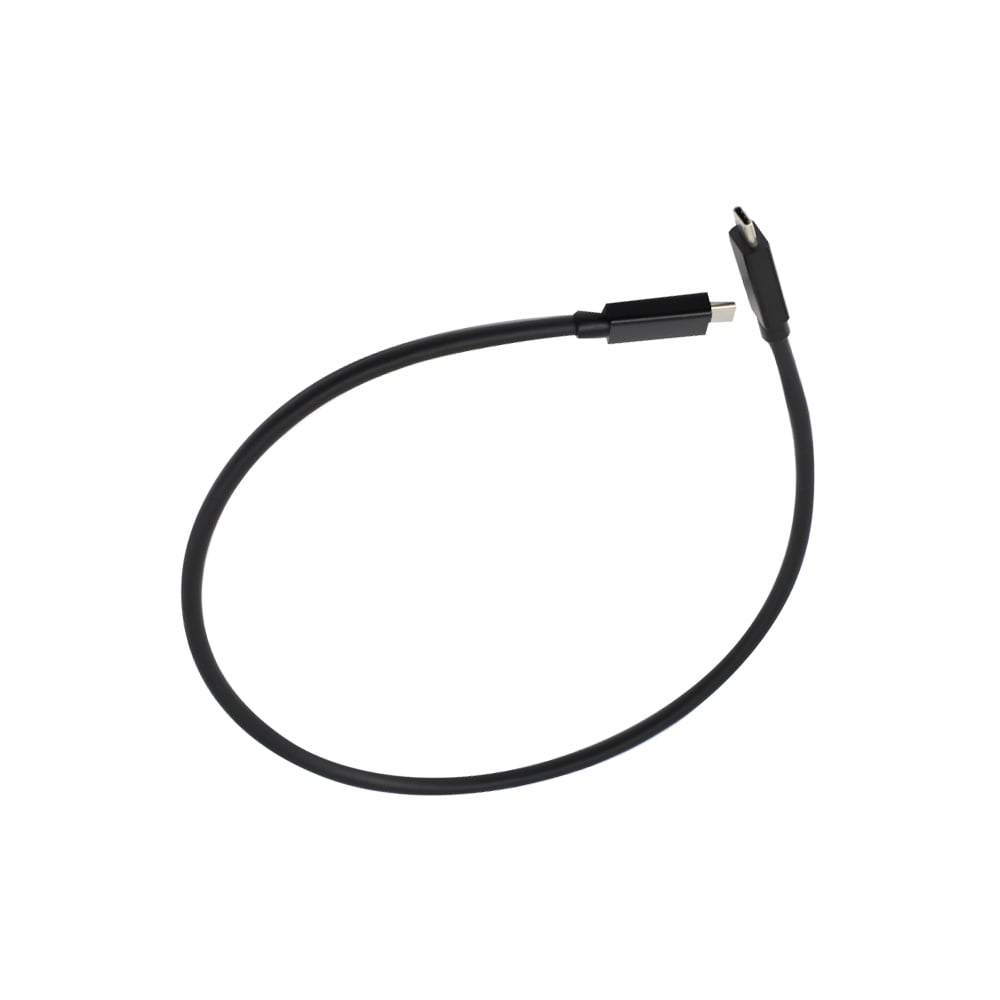
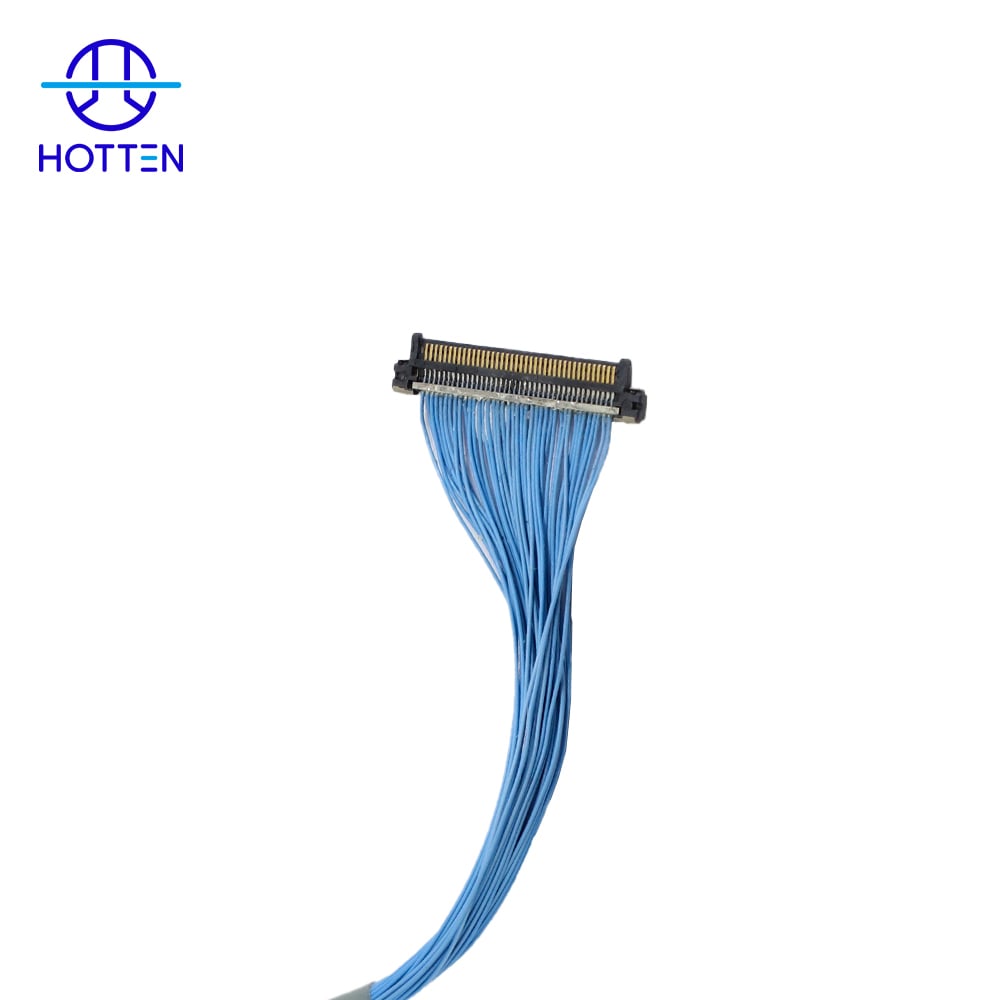
Cable assembly failures often occur near connector interfaces, where bending, pulling, and twisting stresses can become concentrated. Mechanical stresses caused by pulling, bending, and twisting can lead to conductor breakage, shield separation, and dielectric compression. Hotten develops application-specific strain-relief solutions that go beyond the protection provided by a simple heat-shrink tube. In our USB4 Wire Harnesses and LVDS Wire Harnesses, we have overmolded flexible boots containing anti-kink springs that create a longer bend transition and distribute bending stress over a wider area, helping distribute bending stress over a longer transition area and reduce stress concentration at the connector exit. Our RF Ablation Cables and Ultrasound Probe Cables have two molded-in strain reliefs: a rigid inner molded strain relief to provide a stable solder joint between the cable and the connector and an outer compliant elastomer to absorb mechanical stresses from the outside. For demanding robotic applications, cable assemblies can be reinforced with braided steel to withstand tensile forces of up to 200 N. This reinforcement helps protect the connection from damage caused by accidental snagging or repeated automated handling.
Shielding Durability: Maintaining Coverage Under Flexure
Unlike a rigid barrier, cable shielding must bend, compress, and stretch with the cable during operation. As time goes on, gaps or broken strands can form in a braided shield, affecting its EMI protection and grounding abilities. Hotten uses counter-helical braiding to maintain more stable shield coverage under multidirectional bending by winding the inner and outer braids in opposite directions. Our Robotics Wire Harnesses and Drone Cables feature tinned copper braids with 95% coverage and an optimized pick count. The design has been validated through more than 10,000 flex cycles while monitoring changes in shield resistance.. In high reliability medical cables we add an intermediate aluminum/polyester foil that helps maintain continuous shielding coverage even when the braid strands shift during flexing. Our multi-layer approach and strain-relief structures designed to prevent shield pullout ensure that our RF coaxial assemblies maintain effective EMI shielding and low ground impedance throughout their service life, helping reduce field failures and extend maintenance intervals for RF systems that require continuous operation.
 Hot News
2026-09-17
2026-09-04
2025-12-17
2025-12-11
2025-12-05