 EN
Quick Links

Home > News > Company news
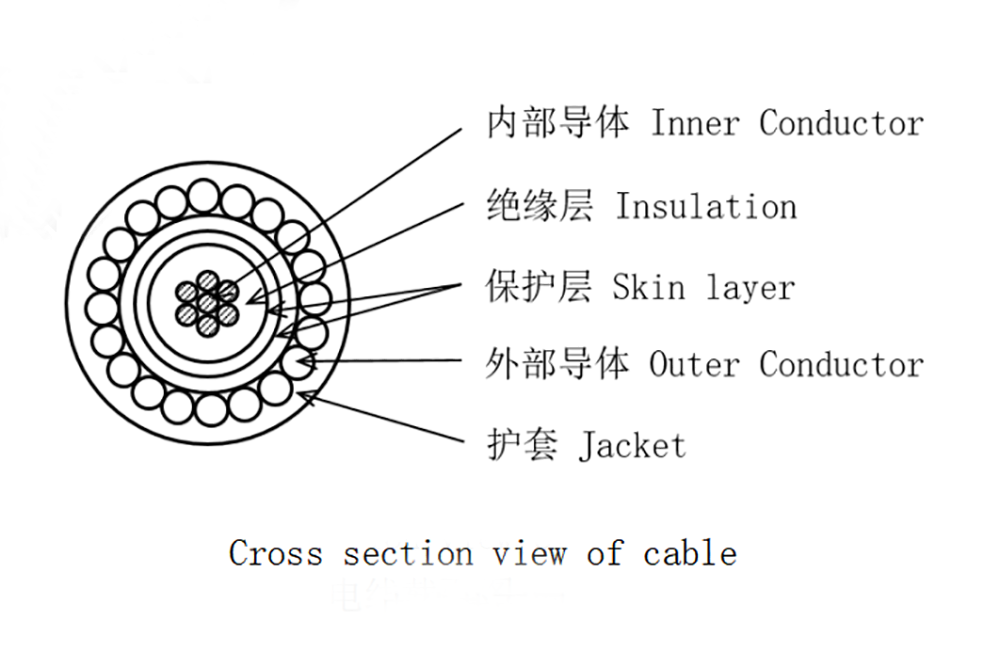
Many people assume micro coaxial cable development is simply “making the cable smaller.” In reality, ultra-fine high-frequency cable engineering is a highly delicate balance between multiple conflicting variables:
Ultra-fine high-frequency coaxial cable is difficult to design because reducing cable size changes several electrical, mechanical, and manufacturing variables at the same time. Conductor size, dielectric structure, shielding, impedance, cable OD, flexibility, connector compatibility, and production tolerances must be controlled together rather than optimized independently.
If the cable diameter is reduced → the available space for the conductor, insulation, and shielding becomes smaller → dimensional variation can have a greater influence on resistance, impedance, attenuation, mechanical behavior, and assembly compatibility.
If shielding is increased → EMI protection may improve → but cable OD and stiffness can also increase.
If the conductor becomes finer → overall cable size may decrease → but electrical resistance and mechanical sensitivity also need to be evaluated.
This is why ultra-fine cable development is a system-level engineering problem rather than simply a miniaturization exercise. The final structure should be evaluated according to the required electrical performance, mechanical behavior, routing space, connector interface, and manufacturing capability.
For more information about conductor-size selection, see How Does AWG Affect Micro Coaxial Cable Performance?. For insulation and dielectric structure, see Comparison of Three High-Frequency Cable Foaming Technologies.
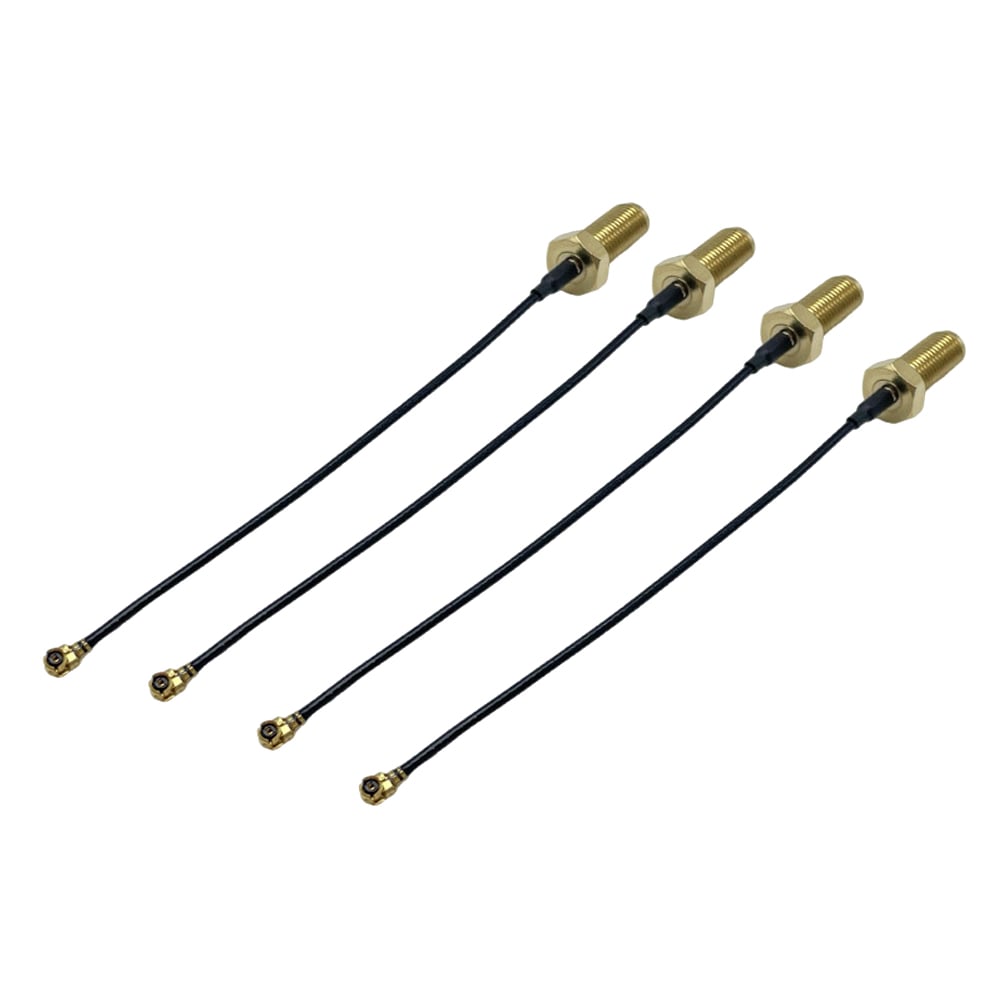
For customized cable structures, see HOTTEN's Micro Coaxial Cable and Micro Coaxial Cable Assembly solutions.
For example:
This is why many suppliers can produce standard micro coaxial cables, but very few can optimize multiple electrical and mechanical constraints simultaneously for custom high-frequency applications.
This type of ultra-fine 50Ω micro coaxial cable is commonly used in:
As electronic systems continue becoming smaller and faster, the demand for ultra-fine low-loss coaxial solutions continues to increase rapidly.
The key challenge in ultra-fine high-frequency cable development is not achieving a small diameter alone. The engineering team must determine which combination of conductor, dielectric, shielding, geometry, and termination can satisfy the required electrical and mechanical performance within the available dimensional envelope.
If minimum cable OD is the primary requirement → evaluate finer conductor constructions → then verify resistance, attenuation, mechanical strength, and termination requirements.
A smaller AWG can help create a more compact structure, but conductor size should always be evaluated together with cable length, transmission requirements, shielding, and the complete cable architecture.
For a detailed discussion of AWG-related trade-offs, see How Does AWG Affect Micro Coaxial Cable Performance?.
If the application requires controlled high-frequency impedance → control conductor geometry, dielectric dimensions, dielectric properties, and shielding structure together → then verify impedance consistency along the finished cable.
At ultra-fine dimensions, small changes in cable geometry can represent a meaningful percentage of the total structure. For high-frequency applications, this makes dimensional consistency an important part of electrical performance.
See The Importance of Impedance Consistency (50Ω / 75Ω) in Ultra-Fine AWG Micro Coaxial Cables for related impedance and dimensional considerations.
If EMI protection is important → evaluate shielding density and shielding structure → then verify the effect on cable OD, stiffness, bend performance, and routing space.
Increasing shielding is not automatically beneficial if the resulting structure becomes too stiff for the application. For moving systems such as gimbals, robotic mechanisms, or compact medical assemblies, the shielding design should be evaluated together with the required mechanical performance.
HOTTEN's Micro Coaxial Cable Assembly solutions can be adapted for applications requiring compact routing and customized termination.
If a design requires extremely tight electrical and dimensional tolerances → evaluate whether the structure can be reproduced consistently in mass production → then validate both prototype performance and production stability.
A cable that meets the target once is not necessarily suitable for volume production. Conductor drawing, insulation extrusion, shielding, cabling tension, dimensional control, and connector termination all influence repeatability.
HOTTEN's How We Optimized 46AWG Micro Coaxial Cable for Superior Flexibility provides an example of how shielding and jacket dimensions can be adjusted to improve flexibility while maintaining the required cable structure.
For a high-frequency 44AWG example involving 50Ω impedance, attenuation, OD, shielding, and connector compatibility, see How Hotten Engineered a 44AWG 50Ω Micro Coaxial Cable That Others Could Not Achieve.
For an ultra-fine high-frequency cable project, the selection sequence can be summarized as:
Application requirements → signal requirements → available cable OD → conductor and dielectric structure → shielding → connector interface → prototype validation → mass-production validation
The priorities can change according to the application.
If the application is a compact medical imaging device → prioritize miniaturization, signal integrity, flexibility, shielding, and termination reliability → then validate the complete cable assembly. See HOTTEN's Medical Equipment solutions.
If the application is a UAV or robotic system → prioritize low weight, compact routing, dynamic flex performance, shielding, and high-speed signal requirements → then validate the cable under the expected mechanical conditions. See UAV & Robotics.
If the application is a high-frequency RF or precision electronic system → prioritize impedance consistency, attenuation, shielding, cable geometry, and connector performance → then evaluate the complete transmission path. See HOTTEN's High Frequency & RF Systems solutions.
The key engineering principle is therefore not simply:
How small can the cable be?
It is:
How small can the complete cable structure become while still meeting the required electrical, mechanical, interface, and manufacturing requirements consistently?
At Hotten, we focus not only on manufacturing cable assemblies, but also on solving engineering limitations that standard market solutions cannot overcome.
Our engineering strengths include:
For demanding applications where standard solutions fail, custom engineering becomes the real competitive advantage.
If your project involves extreme size constraints, high-frequency transmission, or custom micro coaxial requirements, Hotten can help develop a tailored solution for your application.
 Hot News
2026-09-17
2026-09-04
2025-12-17
2025-12-11
2025-12-05