 EN
EN
Quick Links

Home > News > Company news
In the ultra-fine micro coaxial cable industry, many products look similar on paper. But once the application enters high-frequency transmission, ultra-small OD requirements, and connector compatibility constraints, the real engineering gap between suppliers begins to appear.
Recently, Hotten successfully developed a custom 44AWG 50Ω micro coaxial cable solution for a customer application operating at 1.25GHz high frequency transmission — a project that competing suppliers were unable to complete successfully.
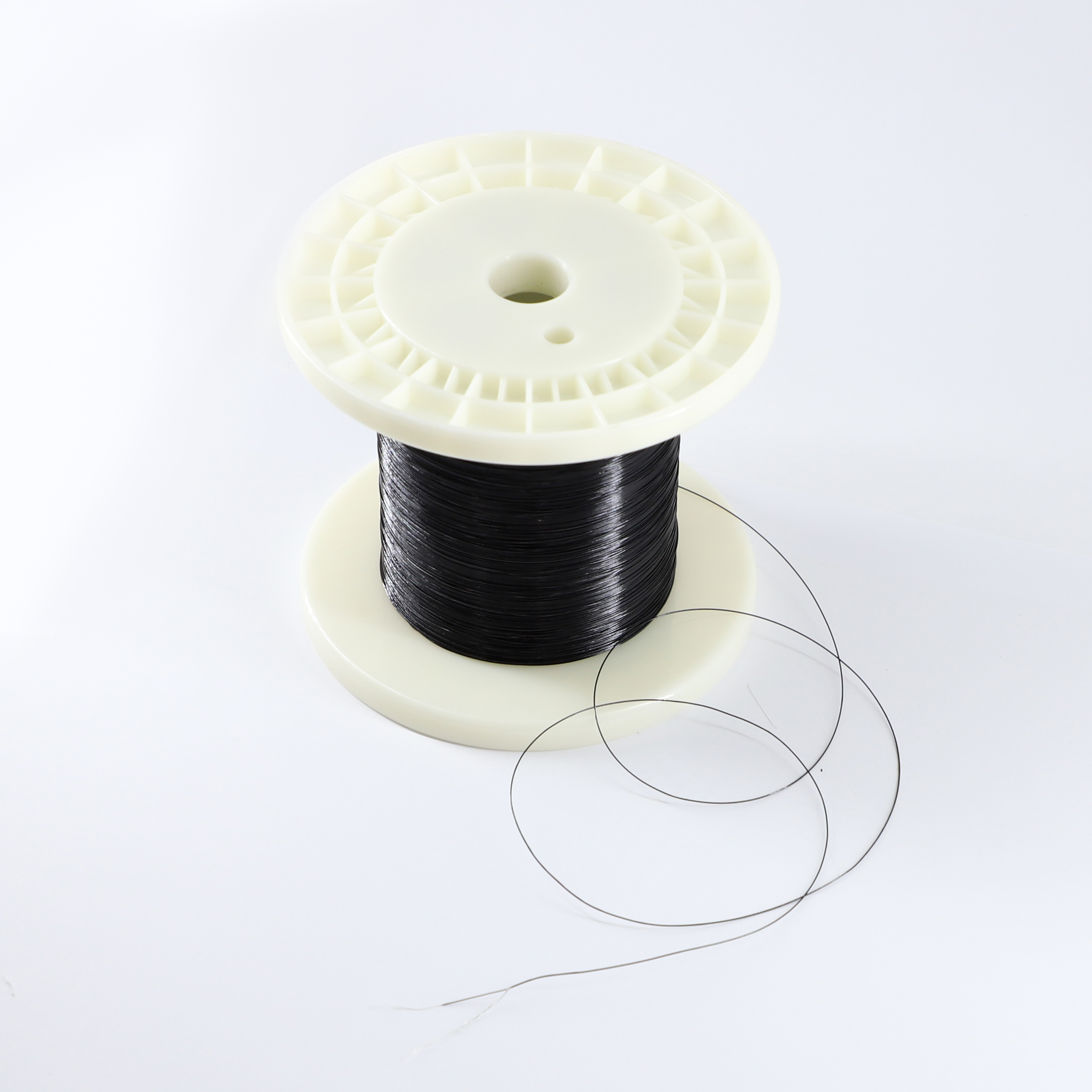
Achieving a 44AWG micro coaxial cable with 50Ω characteristic impedance, attenuation below the required level, and an overall diameter below 0.25 mm requires simultaneous control of conductor geometry, dielectric structure, shielding, cable dimensions, and connector compatibility. The challenge is not simply making the conductor smaller; it is maintaining the required electrical performance within an extremely limited physical space.
If the cable must operate at high frequency within a very small OD → optimize the conductor and shielding structure together → then verify impedance, attenuation, shielding, and dimensional consistency on the finished cable.
In this project, the initial production structure measured approximately 5.1 dB attenuation at 1.25 GHz over 0.5 m, while the target required attenuation below 5 dB. HOTTEN subsequently optimized the internal conductor structure and shielding system, including replacing tin-plated shielding with silver-plated material and reducing the shielding wire diameter from approximately 0.025 mm to 0.02 mm. The final prototype achieved approximately 4.5 dB attenuation at 1.25 GHz over 0.5 m while maintaining 50Ω impedance and an OD below 0.25 mm.
The case illustrates why AWG cannot be evaluated independently from the complete cable construction. For related conductor-size considerations, see How Does AWG Affect Micro Coaxial Cable Performance?.
For the relationship between cable geometry and high-frequency impedance, see The Importance of Impedance Consistency in Ultra-Fine AWG Micro Coaxial Cables.
For broader ultra-fine cable design challenges, see Why Ultra-Fine High-Frequency Coaxial Cable Design Is So Difficult.
For customized cable structures, see HOTTEN's Micro Coaxial Cable solutions.
This was not simply a matter of reducing cable size. The challenge required balancing:
For many manufacturers, improving one parameter often causes another to fail. Hotten’s engineering team solved all of them simultaneously.
The customer’s specification was extremely demanding:
Requirement |
Target |
Frequency |
1.25GHz |
Cable Length |
0.5 Meter |
Attenuation |
< 5dB |
Characteristic Impedance |
50Ω |
Overall Diameter (OD) |
< 0.25mm |
The OD limitation was particularly difficult because the cable also needed to match the customer’s existing connector structure. There was almost no tolerance available for increasing insulation thickness or shielding dimensions.
At the same time, high-frequency attenuation performance had to remain below 5dB — a very aggressive target for an ultra-fine 44AWG coaxial structure.
Hotten’s original mass-production version used the following structure:
Component |
Original Specification |
Inner Conductor |
7×0.022 |
Shielding Material |
Tin-plated winding |
Shield Wire Diameter |
0.0254 |
Impedance |
50Ω |
With this structure, the cable already performed close to the customer requirement. The measured attenuation value reached approximately 5.1dB at 1.25GHz over 0.5 meters.
Although technically very close, the engineering team understood that “close” is not enough in high-frequency medical, imaging, or precision electronic systems. Long-term production consistency requires sufficient engineering margin.
The remaining challenge was how to further reduce attenuation without exceeding the OD limitation.
The 44AWG project demonstrates that ultra-fine high-frequency cable development involves several interacting trade-offs. A successful design must satisfy the electrical target while remaining within the available mechanical envelope and maintaining a structure that can be reproduced consistently in production.
If the cable has a strict OD limit → evaluate the conductor structure carefully → then verify resistance and attenuation at the required operating frequency.
A finer conductor can help reduce the physical size of the cable, but conductor geometry also affects electrical resistance and high-frequency transmission performance. In this project, the internal conductor structure was optimized to improve signal transmission efficiency while maintaining the required impedance and dimensional constraints.
For related conductor-size considerations, see How Does AWG Affect Micro Coaxial Cable Performance?.
If high-frequency shielding is required within a very small cable diameter → evaluate shielding material, wire diameter, coverage, and overall cable geometry together → then validate both shielding and dimensional performance.
In the 44AWG project, the shielding system was redesigned by changing the plating material and reducing the shielding wire diameter from approximately 0.025 mm to 0.02 mm. The change helped create additional dimensional margin while supporting the high-frequency attenuation target.
For broader high-frequency cable construction considerations, see Comparison of Three High-Frequency Cable Foaming Technologies.
If the target impedance is 50Ω at high frequency → control conductor geometry, dielectric dimensions, shielding structure, and cable concentricity together → then verify impedance on the finished cable.
At ultra-fine dimensions, the cable has very little physical space available for dimensional variation. This is why impedance should be treated as a manufacturing-control requirement as well as an electrical specification.
For a more detailed explanation, see The Importance of Impedance Consistency in Ultra-Fine AWG Micro Coaxial Cables.
If the cable must fit an existing miniature connector → define the connector structure before finalizing the cable geometry → then optimize the conductor, dielectric, shielding, and OD around the interface.
The 44AWG project included connector compatibility as one of the original requirements. This demonstrates that ultra-fine cable design is not only about the cable itself; the cable and connector must function as one interconnect system.
For customized high-density assemblies, see HOTTEN's Micro Coaxial Cable Assembly.
If a prototype achieves the required attenuation and impedance → verify whether the same structure can be reproduced consistently in mass production → then validate production samples separately from the prototype.
A cable that reaches a target once is not necessarily a stable production solution. Conductor drawing, insulation extrusion, shielding tension, dimensional control, and termination processes can all influence repeatability.
For another HOTTEN ultra-fine engineering case focused on flexibility, see How We Optimized 46AWG Micro Coaxial Cable for Superior Flexibility.
For the broader challenges of ultra-fine high-frequency cable manufacturing, see Why Ultra-Fine High-Frequency Coaxial Cable Design Is So Difficult.
For a project with similar requirements, an OEM engineering or procurement team should define:
| Requirement | Parameters to Confirm |
|---|---|
| Frequency | Operating frequency |
| Electrical | Target impedance, attenuation, insertion loss |
| Conductor | AWG, material, conductor structure |
| Cable OD | Maximum allowable OD |
| Shielding | Material, wire diameter, coverage, structure |
| Dielectric | Material, insulation thickness, dielectric structure |
| Cable Length | Finished length and routing path |
| Connector | Manufacturer, part number, pitch, interface |
| Mechanical | Bend radius, flexibility, strain relief |
| Manufacturing | Dimensional tolerance, process consistency |
| Validation | Impedance, attenuation, TDR, electrical and dimensional testing |
| Production | Prototype quantity, annual volume, mass-production requirements |
Providing the connector part number, target frequency, cable length, maximum OD, impedance requirement, and attenuation target at the beginning of the RFQ can help the supplier evaluate the cable architecture more accurately.
The required balance can change according to the final application.
If the cable is used in a high-frequency RF or precision electronic system → prioritize impedance, attenuation, shielding, cable geometry, connector compatibility, and cable length → then validate the complete transmission path. See HOTTEN's High Frequency & RF Systems solutions.
If the cable is used in a compact medical imaging system → prioritize small OD, electrical consistency, shielding, flexibility, and termination reliability → then validate the complete cable assembly. See HOTTEN's Medical Equipment solutions.
If the cable is used in a UAV, camera, or robotic system → prioritize compact dimensions, weight, shielding, flexibility, and high-speed signal performance → then validate the complete assembly under the expected routing conditions. See UAV & Robotics.
For customized high-frequency micro-coaxial cable development, see HOTTEN's Micro Coaxial Cable and Micro Coaxial Cable Assembly solutions.
The engineering process can be summarized as:
Application requirement → frequency and signal target → maximum OD → conductor structure → dielectric → shielding → impedance design → connector → prototype → electrical validation → production validation
The key lesson from this project is that ultra-fine high-frequency cable development should not optimize one specification in isolation. The final structure must achieve the required impedance, attenuation, shielding, dimensions, connector compatibility, and production consistency at the same time.
To achieve the final performance target, Hotten redesigned both the conductor structure and shielding system.
The engineering team optimized the internal conductor configuration to reduce transmission loss and improve signal efficiency under high-frequency conditions.
A larger effective conductor structure helps lower conductor resistance, which directly contributes to lower attenuation performance at GHz-level frequencies.
This optimization significantly improved signal transmission efficiency while maintaining stable impedance control.
The external shielding structure underwent a more critical redesign.
The original tin-plated shielding material was replaced with silver-plated material, while the shielding wire specification was reduced from 0.025 to 0.02 single wire diameter.
This improvement delivered multiple advantages simultaneously:
Reduced High-Frequency Loss
Silver plating provides better conductivity performance under high-frequency skin effect conditions compared with conventional tin plating.
At GHz frequencies, current transmission concentrates on the conductor surface. The improved surface conductivity of silver plating directly benefits attenuation performance.
Smaller Cable OD
Reducing the shielding wire diameter from 0.025 to 0.02 helped reduce the overall cable outer diameter, allowing the final structure to remain below the customer’s strict OD 0.25mm limitation.
Improved Shielding Efficiency
Despite using thinner shielding strands, the optimized structure maintained excellent shielding effectiveness while improving flexibility and manufacturability.
This balance is extremely difficult in ultra-fine coaxial cable engineering because reducing dimensions often compromises shielding integrity.
After the structural optimization and prototype validation, Hotten successfully reduced the attenuation value to approximately 4.5dB at 1.25GHz over 0.5 meters.
The final design successfully achieved:
Most importantly, this solution solved a project challenge that other suppliers were unable to complete successfully.
 Hot News
2026-09-17
2026-09-04
2025-12-17
2025-12-11
2025-12-05