 EN
EN
Quick Links

Home > News > Company news
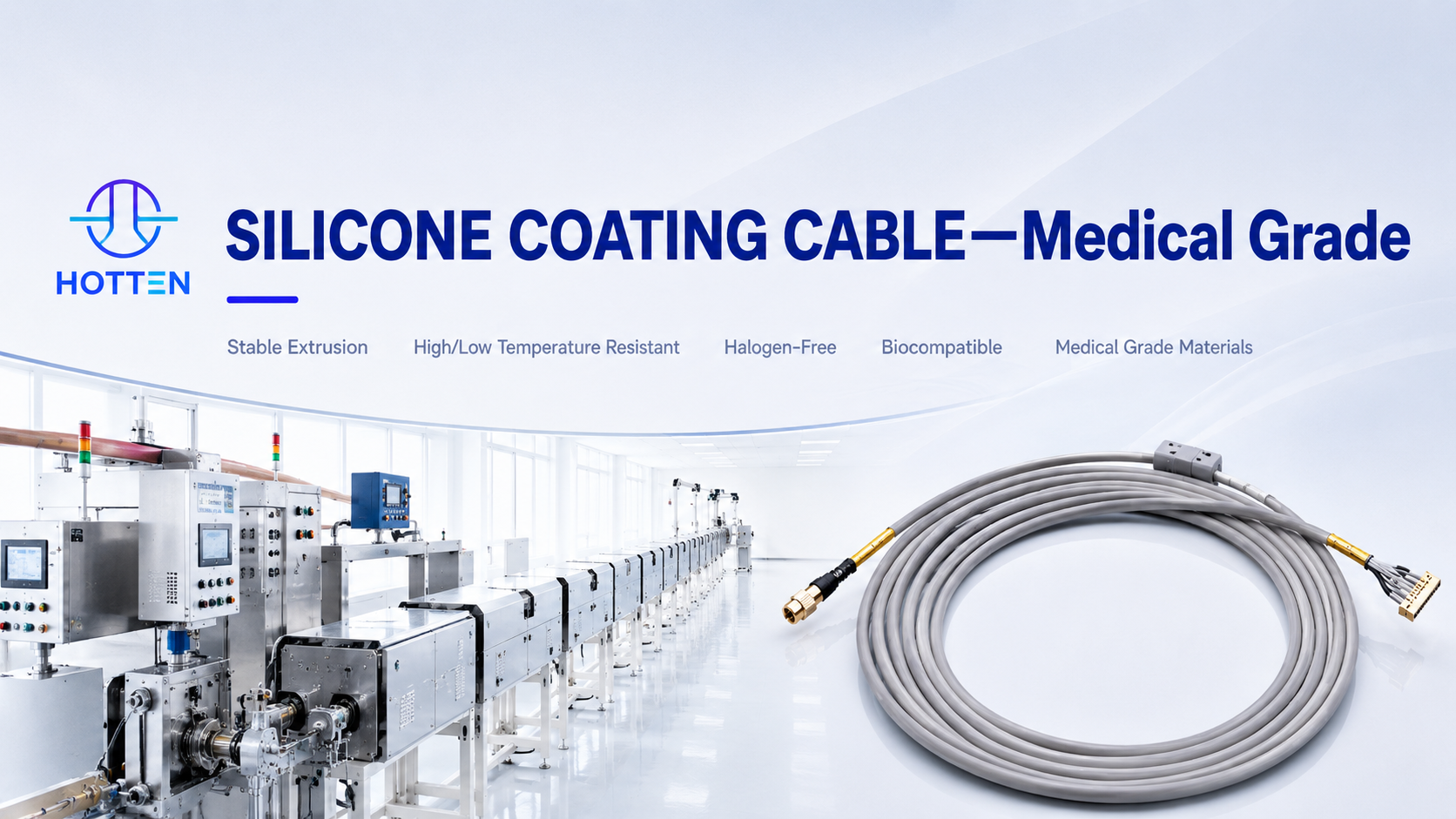
Tactile coating matters in ultrasound and other flexible medical cable assemblies because the outer surface is directly involved in operator handling, cable movement, friction, flexibility, cleaning, and long-term mechanical durability.
For an ultrasound probe cable, the coating should not be evaluated only by how soft it feels when new. The engineering target is to achieve a controlled balance between:
surface feel + flexibility + abrasion resistance + chemical resistance + dimensional consistency + manufacturing repeatability
| Coating requirement | What should be controlled | Why it matters |
|---|---|---|
| Surface feel | Softness, smoothness, friction | Affects handling and user interaction |
| Flexibility | Coating hardness and construction | Influences cable bending behavior |
| Abrasion resistance | Surface durability | Helps withstand repeated handling |
| Chemical resistance | Compatibility with cleaning agents | Supports repeated cleaning |
| Adhesion | Bonding between coating and cable surface | Reduces peeling or separation |
| Thickness | Coating thickness and uniformity | Affects OD and mechanical behavior |
| Strain relief | Transition from cable to connector | Reduces concentrated stress |
| Appearance | Surface consistency and defects | Supports finished-product quality |
| Process stability | Repeatability between batches | Important for OEM production |
If an ultrasound cable is repeatedly handled, bent, and cleaned, then the coating should be designed as part of the overall cable construction, because changing the outer surface can also change flexibility, friction, cable OD, and long-term durability.
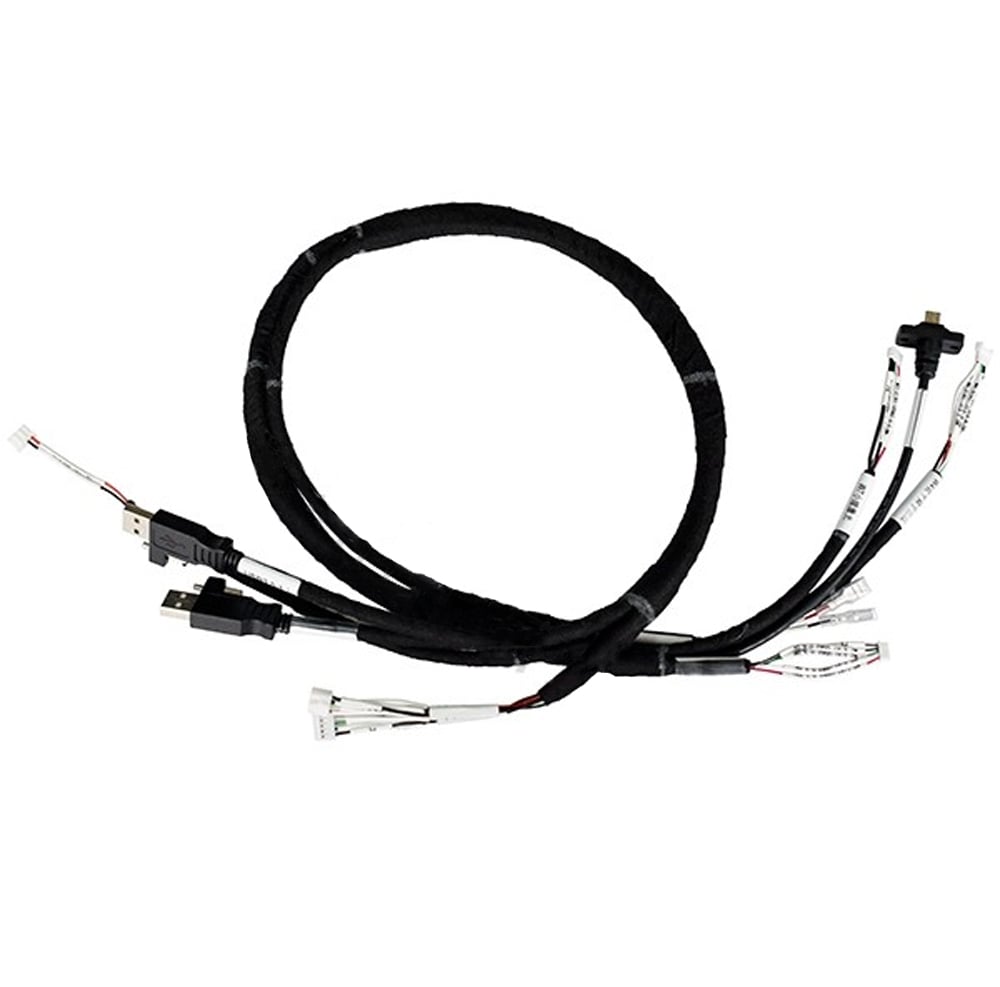
For flexible medical applications, HOTTEN provides Ultrasound Probe Cable and Medical Cable Assembly solutions.
In ultrasound probes, ultrasound diagnostic equipment, and high-end medical imaging systems, external medical cables must deliver not only reliable electrical transmission but also excellent long-term flexibility, resistance to repeated bending and pulling, comfortable handling, and compatibility with routine cleaning and disinfection. Engineers with experience in ultra-fine coaxial cables and complex medical cable assemblies understand that cable performance depends not only on the internal conductor, insulation, shielding, and structural design, but also on the surface tactile coating applied to the cable jacket. This finishing process plays a critical role in product quality and user experience.
Ultrasound cables are typically composed of numerous ultra-fine coaxial cables, signal wires, tensile reinforcement fibers, and shielding layers integrated into a sophisticated composite structure. While maintaining a tightly controlled outer diameter, the outer jacket is commonly manufactured from medical-grade silicone. Silicone offers excellent flexibility, skin compatibility, and fatigue resistance, making it ideal for external medical applications. However, untreated silicone surfaces often feel tacky or dry, attract dust easily, generate high friction during movement, and provide inconsistent tactile performance. In ultrasound probe cables that are handled continuously throughout the day, the surface feel directly influences the perceived quality of the entire imaging system and the clinician's operating experience.
The silicone cable coating used in medical ultrasound cables is neither a metallic coating nor a simple sprayed lubricant. Instead, a uniform, stable, ultra-thin liquid silicone oil film is formed on the silicone jacket surface. Within the industry, this process is commonly referred to as tactile silicone oil coating or liquid silicone oil coating. Unlike lubricious coatings designed for intravascular catheters, this technology is specifically developed for external ultrasound cables. Its objective is to create a smoother, drier, low-friction surface that resists contamination while delivering a premium tactile feel.
Only a limited number of manufacturers in China have mastered this technology sufficiently for stable mass production. The challenge lies not in applying silicone oil, but in maintaining a highly consistent coating across long cable lengths. Ultrasound cables combine relatively large outer diameters with extremely soft structures, making them susceptible to tension fluctuations, uneven coating distribution, localized gloss variation, whitening, sticky areas, dust attraction, and reel-induced surface marks during production. Poor process control at any stage can result in inconsistent tactile performance, ultimately affecting customers' perception of the quality of the finished medical device.
The success of liquid silicone oil coating depends on the precise control of multiple interacting parameters, including silicone surface condition, silicone oil viscosity, coating thickness, production line speed, leveling time, and curing stability. A mature manufacturing process requires parameter optimization according to cable diameter, silicone hardness, surface roughness, and the customer's desired tactile characteristics. Excessive coating thickness can create an oily feel, attract dust, and negatively affect appearance, whereas insufficient coating reduces tactile improvement and long-term durability. A well-controlled tactile coating process should provide a uniform, silky surface that remains smooth, dry to the touch, resistant to repeated handling, and stable after extensive bending cycles without peeling or degradation.
With extensive experience in manufacturing ultra-fine coaxial cables and complex medical cable assemblies, Hotent is capable of providing mature liquid silicone oil coating solutions for silicone-jacketed external ultrasound cables. For premium ultrasound cable systems, the internal transmission architecture determines signal integrity, while the external tactile finishing process defines the overall user experience. A truly high-end medical cable is not simply designed to function—it is engineered to deliver consistent smoothness, flexibility, durability, and professional quality with every touch, movement, and bend.
 Hot News
2026-09-17
2026-09-04
2025-12-17
2025-12-11
2025-12-05