 EN
EN
Quick Links

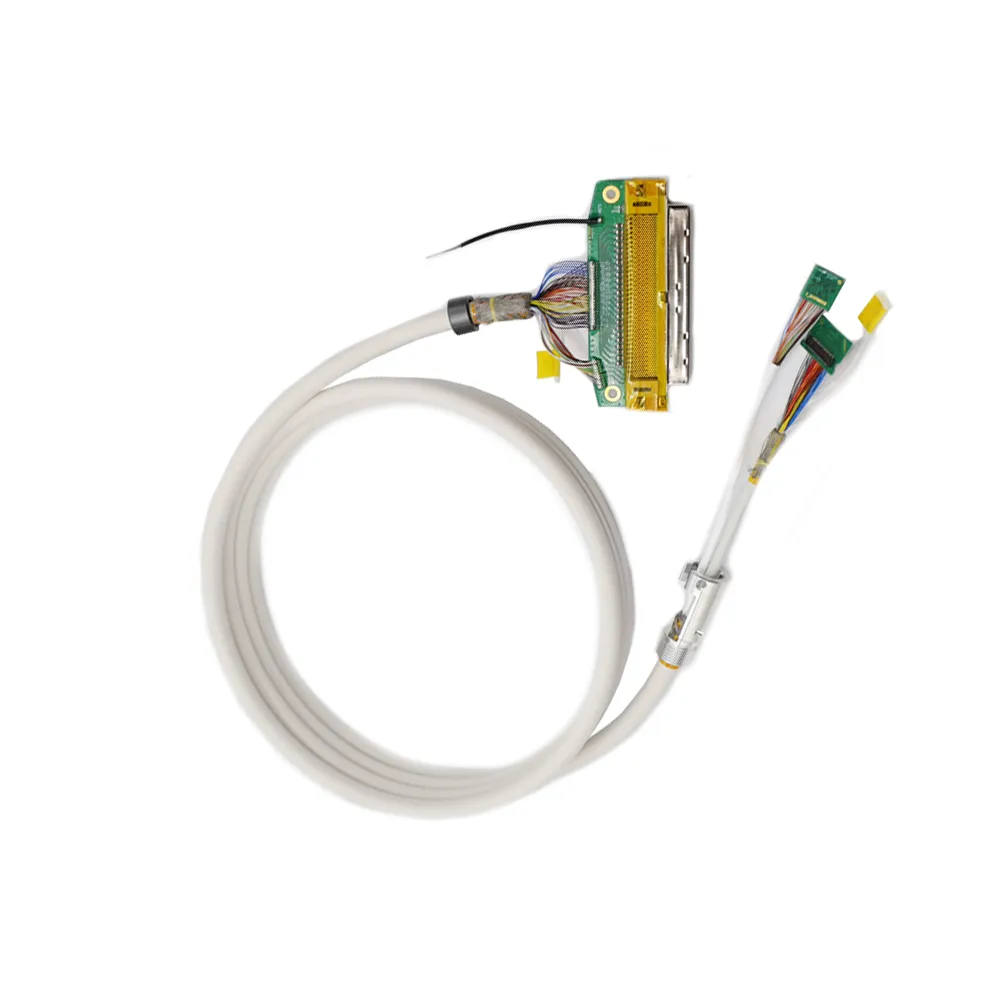
When it comes to medical diagnostics, signal integrity is critical. Electrical signals acquired from diagnostic procedures, such as EEG recordings from scalp electrodes or intracardiac echocardiography (ICE) measurements, must maintain high integrity. Signal degradation caused by noise can obscure critical information, leading to misdiagnosis, unnecessary alarms, or repeated procedures. These issues are often caused by cable-generated noise resulting from triboelectric effects, piezoelectric effects, electromagnetic coupling, and ground loops. At Hotten we are experts in producing high quality cable assemblies, which when used in a medical application, reduce these noise artifacts through the use of specialist materials and structures to enable signals of the highest fidelity. We have summarized four key design approaches to achieve exceptional noise suppression performance:
Noise in a medical cable assembly can come from several different mechanisms, including triboelectric effects, piezoelectric effects, electromagnetic coupling, crosstalk, grounding problems and mechanical movement.
The correct noise-control strategy therefore depends on where the noise is generated and how the signal is transmitted.
If → cable movement creates unwanted baseline fluctuation or electrical artifacts
Then → investigate triboelectric and mechanically induced noise
Why → friction and deformation between cable materials can generate unwanted electrical effects.
If → the cable operates in a high-EMI environment
Then → evaluate shielding, grounding, shield termination and cable routing
Why → capacitive and inductive coupling can introduce interference into sensitive signal paths.
If → the system uses differential signaling
Then → control pair geometry, capacitance balance and electrical length
Why → common-mode rejection depends on the electrical symmetry of the two signal paths.
If → the cable is repeatedly flexed
Then → evaluate noise performance during and after representative mechanical movement
Why → mechanically induced noise can depend on the physical deformation of the cable.
If → the signal amplitude is very small
Then → evaluate cable-generated noise together with the complete signal-chain noise environment
Why → a low-noise cable should be considered as one part of the overall signal-acquisition architecture.
The current HOTTEN article identifies four main design approaches—triboelectric suppression, piezoelectric-noise mitigation, shielding against capacitive/inductive coupling, and differential transmission—as its low-noise cable strategy.
For customized Medical Cable Assembly, HOTTEN lists configurations for medical applications including ultrasound, endoscopy, ICE, IVUS, dental sensing and EEG.
The most common source of low-frequency noise in patient-connected leads is frictional movement between the conductor and insulation, which generates triboelectric noise. Static charges accumulate and discharge unpredictably, creating baseline drift that can resemble pathological waveforms during ultrasound probe manipulation or EEG lead movement. Hotten achieves this by surrounding the primary insulation layer with semi-conductive polymer layers that safely dissipate static charges before they reach the signal conductor. We use low-triboelectric PVC and polyethylene blends with controlled surface resistivity to minimize noise generation in EEG lead wires and dental sensing cables, reducing noise levels by more than 90% compared with conventional insulation materials. This will give the stability of waveforms during patient repositioning or prolonged monitoring.
These flexible cable designs incorporate advanced noise-reduction technologies. Piezoelectric noise occurs when dielectric materials generate unwanted electrical charges under mechanical stress or deformation, such as the cables of endoscopes and ultrasound probes that are flexed continuously. Hotten's selection of materials used for critical signal bearing lines are non-piezoelectric amorphous polymers like e-PTFE and FEP. When they are mechanically deformed, these materials have a relatively small number of charges generated; this enables them to preserve the integrity of the low-amplitude signals. Furthermore, we use stress alleviation layers and optimized conductor that ensure the stress is evenly distributed over the bending area, and not due to the pressure of the conductor that would produce the piezoelectric phenomenon. This design ensures consistent performance without signal artifacts throughout the cable’s flex life.
Single-shield cable solutions may not provide sufficient isolation in high-EMI environments, such as operating rooms with electrosurgical equipment, MRI fringe fields, and motorized medical systems. These radiate significant EMI at a wide range of frequencies. A combination of high coverage foil shields (rejection of capacitive coupling) and dense braided shields (attenuation of inductive coupling) is used by Hotten. For our ICE cables and IVUS harnesses the signal conductor, semi-conductive layer, foil shield and braid shield are combined to create a three-layered structure. The architecture achieves a transfer impedance of less than 2 mΩ/m at 10 MHz and reduces common-mode noise injection by more than 40 dB. To avoid ground loops, special attention is given to grounding design, enabling improved noise rejection at higher frequencies.
For an OEM medical device project, “low noise” should not be treated as a single cable specification.
A practical engineering approach is:
Noise Source → Signal Type → Cable Structure → Material → Shielding / Grounding → Mechanical Conditions → Testing → Acceptance Criteria
The objective is to identify the relevant noise mechanisms and then select measurable design controls.
Different cable applications may be affected by different sources of noise.
| Noise Mechanism | Typical Engineering Question |
|---|---|
| Triboelectric | Does friction between materials generate charge during movement? |
| Piezoelectric | Can mechanical deformation generate unwanted electrical output? |
| Capacitive Coupling | Can external electric fields couple into the signal path? |
| Inductive Coupling | Can changing magnetic fields induce unwanted voltage? |
| Crosstalk | Can adjacent channels couple into each other? |
| Ground Loop | Can grounding differences create unwanted current paths? |
| Mechanical Stress | Can bending or pressure change signal behavior? |
If → the noise appears when the cable is moved
Then → investigate triboelectric, piezoelectric and mechanically induced effects
Why → movement can directly interact with the materials and geometry of the cable.
If → the noise appears primarily when nearby equipment is energized
Then → investigate EMI coupling and grounding
Why → the interference may originate outside the cable itself.
This distinction matters because changing the insulation material will not necessarily solve an EMI problem, just as adding another shield may not solve triboelectric noise.
A low-noise design depends partly on how the signal is transmitted.
Common structures may include:
If → the application uses a sensitive single-ended signal
Then → evaluate shielding, grounding and cable-generated noise carefully
Why → there may be fewer opportunities for common-mode rejection within the signal architecture.
If → the application uses differential transmission
Then → control pair geometry and electrical balance as part of the cable design
Why → common-mode rejection depends on maintaining sufficiently similar electrical characteristics between the two paths.
The current HOTTEN article specifically describes twisted-pair differential configurations and capacitance matching for LVDS and medical differential assemblies.
For low-noise medical cables, material selection can affect both electrical behavior and mechanically induced noise.
Relevant material considerations include:
| Material Property | Engineering Relevance |
|---|---|
| Triboelectric Behavior | Noise generated through friction |
| Piezoelectric Behavior | Noise generated through deformation |
| Dielectric Properties | Signal transmission characteristics |
| Moisture Resistance | Environmental stability |
| Flexibility | Mechanical movement |
| Surface Properties | Friction and handling behavior |
| Temperature Stability | Performance under environmental change |
| Chemical Compatibility | Cleaning / disinfection / sterilization requirements |
If → the cable is repeatedly handled or flexed
Then → consider low-triboelectric and low-piezoelectric material structures
Why → mechanical interaction between the materials and the cable can become a source of electrical artifacts.
The current HOTTEN article identifies low-triboelectric PVC and polyethylene blends for some low-noise medical applications, and ePTFE and FEP as materials used in critical signal-bearing flexible cable designs.
Shielding is often discussed simply as:
Add a shield.
For low-noise medical applications, the engineering question is more specific:
What type of interference needs to be rejected, and how should the shield be terminated?
Potential design variables include:
If → electric-field coupling is a concern
Then → evaluate high-coverage shielding structures
Why → electric-field coupling and magnetic-field coupling can behave differently.
If → magnetic or inductive coupling is also important
Then → evaluate shielding structure and coverage together with grounding and cable routing
Why → a single shielding layer may not address every interference mechanism.
The current HOTTEN article describes combined foil and braid shielding for certain ICE and IVUS cable structures and notes that grounding design is also considered to avoid ground-loop-related noise.
Shielding and grounding should not be treated as completely separate subjects.
The complete path may involve:
Signal Conductor
→ Insulation
→ Shield
→ Shield Termination
→ Ground / Return Structure
If → the shield is correctly constructed but poorly terminated
Then → investigate the complete shield return path
Why → shield continuity at the cable level does not necessarily guarantee correct system-level noise performance.
If → the medical device contains multiple ground domains
Then → review grounding architecture together with cable shielding
Why → unintended current paths can introduce ground-loop-related interference.
This is particularly relevant for systems containing sensitive analog measurements alongside other electronic subsystems.
A cable that produces low noise while stationary may not produce the same result while moving.
Potential test conditions include:
If → noise appears only during movement
Then → perform dynamic measurements while reproducing the actual motion
Why → static measurements cannot capture mechanically generated artifacts.
If → the cable is integrated into an ultrasound probe or endoscope
Then → reproduce representative probe movement or cable routing during testing
Why → the mechanical environment is part of the noise-generation mechanism.
The current HOTTEN article specifically associates piezoelectric and triboelectric effects with flexible cables used in ultrasound probes, endoscopes and patient-connected leads.
For dynamically used medical cable assemblies, mechanical endurance and low-noise performance should not necessarily be evaluated as isolated properties.
A useful sequence is:
Initial Noise Baseline
→ Flex Testing
→ Intermediate Noise Measurement
→ Final Electrical Test
→ Mechanical Inspection
If → electrical noise increases after repeated bending
Then → investigate conductor movement, insulation interaction, shielding deformation and termination stress
Why → the mechanical structure may have changed even if continuity remains intact.
If → the cable passes flex-life testing but noise performance changes significantly
Then → review the acceptance criteria for both mechanical survival and signal fidelity
Why → “no open circuit” does not necessarily mean that the cable still performs as required for a sensitive diagnostic signal.
This provides a direct connection to:
How Flex-Life Testing Helps Medical Cable Assemblies Maintain Performance After Repeated Bending
For differential medical cable assemblies, common-mode rejection depends on more than simply twisting two wires together.
OEM engineers may need to consider:
If → the two signal paths have significantly different electrical characteristics
Then → investigate capacitance balance, geometry and termination symmetry
Why → mismatch can reduce the ability of the receiver to reject common-mode interference.
The current HOTTEN article states that its LVDS and medical differential assemblies control capacitance matching and maintain paired-conductor geometry, with a stated capacitance-matching specification of up to 2% in those designs.
For HOTTEN's differential and high-density cable structures, this can be connected to:
and the broader:
There is no single “low-noise cable” design that should automatically be applied to every medical system.
If → the cable carries very low-level biopotential signals
Then → pay particular attention to cable-generated noise, shielding, grounding and mechanically induced artifacts
Why → the signal level may make cable-generated interference an important part of the overall noise environment.
See EEG Lead Wire.
If → the cable is integrated into an ultrasound probe
Then → consider low-noise behavior together with channel density, capacitance, shielding, flexibility and signal integrity
Why → ultrasound probe cables can combine many signal channels with mechanical movement.
If → the cable is used in a catheter-based imaging system
Then → evaluate low-noise design together with compact geometry, high-frequency transmission, shielding and application-specific mechanical requirements
Why → space constraints and sensitive signal paths can interact with the cable design.
HOTTEN's current product structure includes dedicated ICE and IVUS cable categories.
If → the cable is used for low-level sensing
Then → evaluate material-generated noise, shielding and signal transmission architecture together
Why → mechanically induced and electromagnetic noise can both affect small diagnostic signals.
The current HOTTEN article specifically identifies dental sensing cables among its low-noise cable applications.
A useful RFQ should define the signal environment, expected noise conditions and measurable acceptance criteria.
| Category | Recommended Information |
|---|---|
| Application | EEG / Ultrasound / ICE / IVUS / Dental / Other |
| Signal Type | Single-ended / Differential / Coaxial |
| Signal Level | Typical / minimum if relevant |
| Frequency | Operating frequency / bandwidth |
| Channel Count | Number of signal paths |
| Impedance | Nominal value if controlled |
| Capacitance | Target / maximum / matching requirement |
| Noise | Maximum allowable noise / noise metric |
| Shielding | Individual / overall / multilayer |
| Grounding | Shield / return architecture |
| Conductor | Material / size / construction |
| Dielectric | Material / structure |
| Flexibility | Static / dynamic |
| Motion | Bend / twist / probe movement |
| Cable OD | Maximum allowable dimension |
| Connector | Part number / interface |
| Termination | Solder / crimp / other |
| Environment | Temperature / humidity / cleaning / sterilization |
| Testing | Static + dynamic noise / electrical / mechanical |
| Production | Prototype / pilot / mass production |
If → the RFQ only says “low-noise medical cable”
Then → define the noise source, operating conditions, signal type and measurement method
Why → “low noise” is not a single measurable specification without a defined test condition and acceptance criterion.
During supplier evaluation, useful questions include:
| Supplier Question | What It Evaluates |
|---|---|
| What noise mechanisms were considered? | Engineering analysis |
| Which materials are used to reduce cable-generated noise? | Material selection |
| How is shielding constructed? | EMI design |
| How is shielding terminated? | Grounding / continuity |
| Is the cable tested while moving? | Dynamic performance |
| What electrical parameters are monitored? | Signal validation |
| How is differential balance controlled? | Common-mode rejection |
| How is flex performance validated? | Mechanical reliability |
| Are failure modes documented? | Engineering feedback |
| How are production units controlled? | Process repeatability |
| What test data is provided? | Validation transparency |
The current HOTTEN article already describes material-based noise suppression, shielding structures, differential configurations and application-specific cable designs; the new section turns those technical features into an OEM evaluation framework.
A useful engineering sequence is:
Signal Type
→ Signal Level / Sensitivity
→ Identify Noise Sources
→ Cable Architecture
→ Material Selection
→ Shielding
→ Grounding
→ Differential / Coaxial Structure
→ Mechanical Requirements
→ Connector / Termination
→ Static Noise Test
→ Dynamic Noise Test
→ Environmental Validation
→ Production Verification
For an EEG lead:
Low-Level Biopotential Signal
→ identify cable-generated noise risks
→ select suitable insulation structure
→ define shielding and grounding
→ define cable movement conditions
→ establish baseline noise
→ perform dynamic movement testing
→ verify signal integrity
→ validate production consistency.
For an ultrasound probe:
Multi-Channel Imaging
→ determine channel count
→ define capacitance / signal requirements
→ establish shielding structure
→ select flexible materials
→ define probe movement
→ perform electrical baseline testing
→ perform flex testing with noise monitoring
→ verify finished cable assembly.
For an ICE or IVUS assembly:
Catheter-Based Imaging
→ define space constraints
→ establish frequency and signal requirements
→ determine impedance
→ select compact coaxial structure
→ define shielding
→ control grounding and termination
→ validate RF / noise performance
→ validate mechanical conditions.
The key principle is:
Low-noise cable design should start with the noise mechanism and actual signal environment, then translate those requirements into material, geometry, shielding, grounding, mechanical and testing controls.
How Micro Coaxial Cable Design Ensures Signal Integrity in Medical Devices
Design Factors in Medical Cable Assemblies That Protect Signal Integrity in Clinical Devices
How Flex-Life Testing Helps Medical Cable Assemblies Maintain Performance After Repeated Bending
What Is Cable Impedance and Why Does It Matter in High Frequency Cable Assemblies?
How RF Coaxial Cable Assemblies Control Impedance and Loss for Reliable High-Frequency Signals
How to Select the Right Foaming Technology for Micro Coaxial Cable Insulation?
How High-Frequency Coaxial Cable Supports Cleaner Signals in Advanced Imaging Probes
Differential transmission, using two conductors carrying signals with equal amplitude and opposite polarity, is widely used in diagnostic applications such as RF ablation feedback lines and dental sensing cables. Any noise that is common in both lines (common-mode noise) is canceled out at the differential receiver. These differential pairs are specifically designed by Hotten to achieve high common-mode rejection ratios (CMRR) with minimal signal skew. On all of our LVDS cable assemblies and medical differential assemblies (to 2% on capacitance match), we provide control of the capacitance match of the paired conductors, as well as ensuring that the geometry of the paired conductors does not change along the length of the cable. This level of precision enables rejection ratios exceeding 80 dB at 1 MHz, significantly reducing interference from line-frequency hum and switching noise, while they are present in single-ended designs.
Low-noise medical cable assemblies are essential for maintaining signal accuracy in advanced diagnostic systems. In Hotten’s low-noise cable engineering designs, the goal is to transmit diagnostic signals to processing units with maximum accuracy, and the built-in triboelectric suppression, the piezoelectric mitigation, advanced shielding and differential design accomplishes this objective. Our 10,000 m² production facility, 40+ production units, and more than 300 new medical cable specifications developed annually enable us to provide reliable cable assemblies that help clinicians achieve more accurate diagnosis and monitoring. After all, a microvolt of clarity in the diagnosis of patients is important.
 Hot News
2026-09-17
2026-09-04
2025-12-17
2025-12-11
2025-12-05