 EN
EN
Quick Links

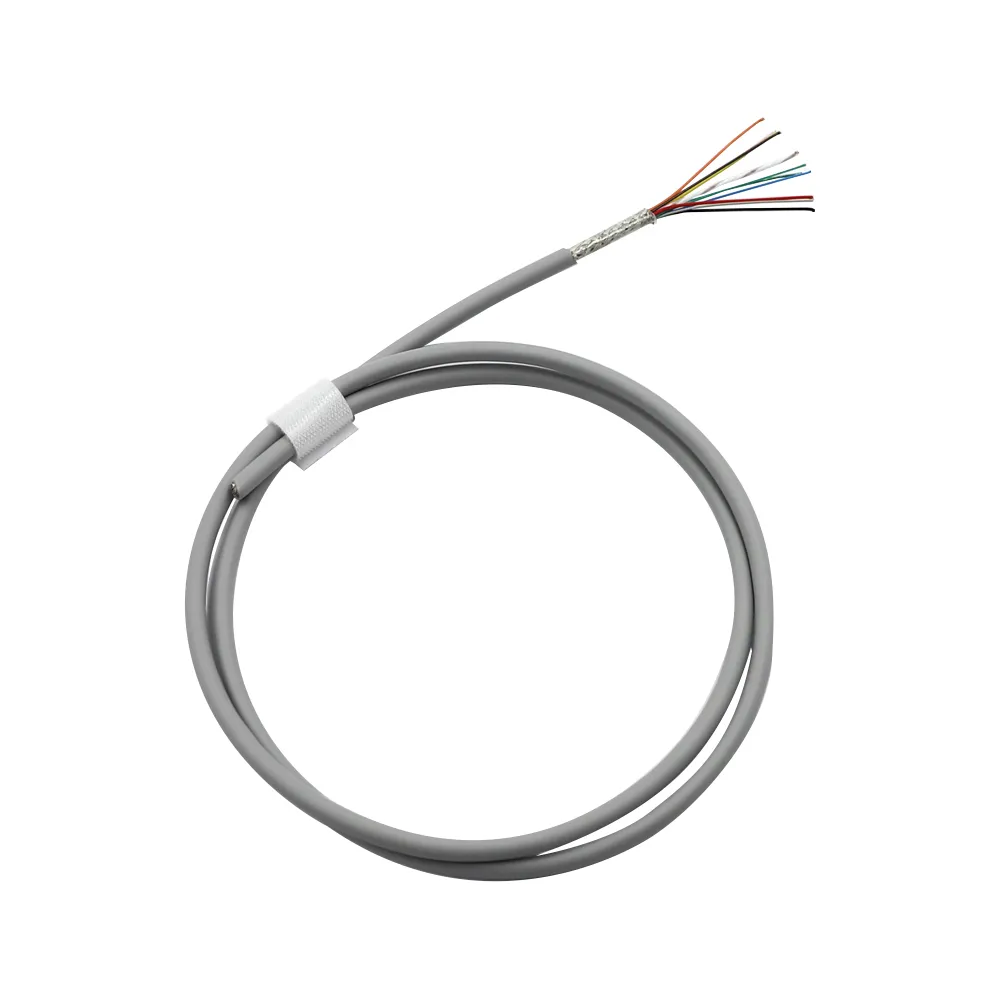
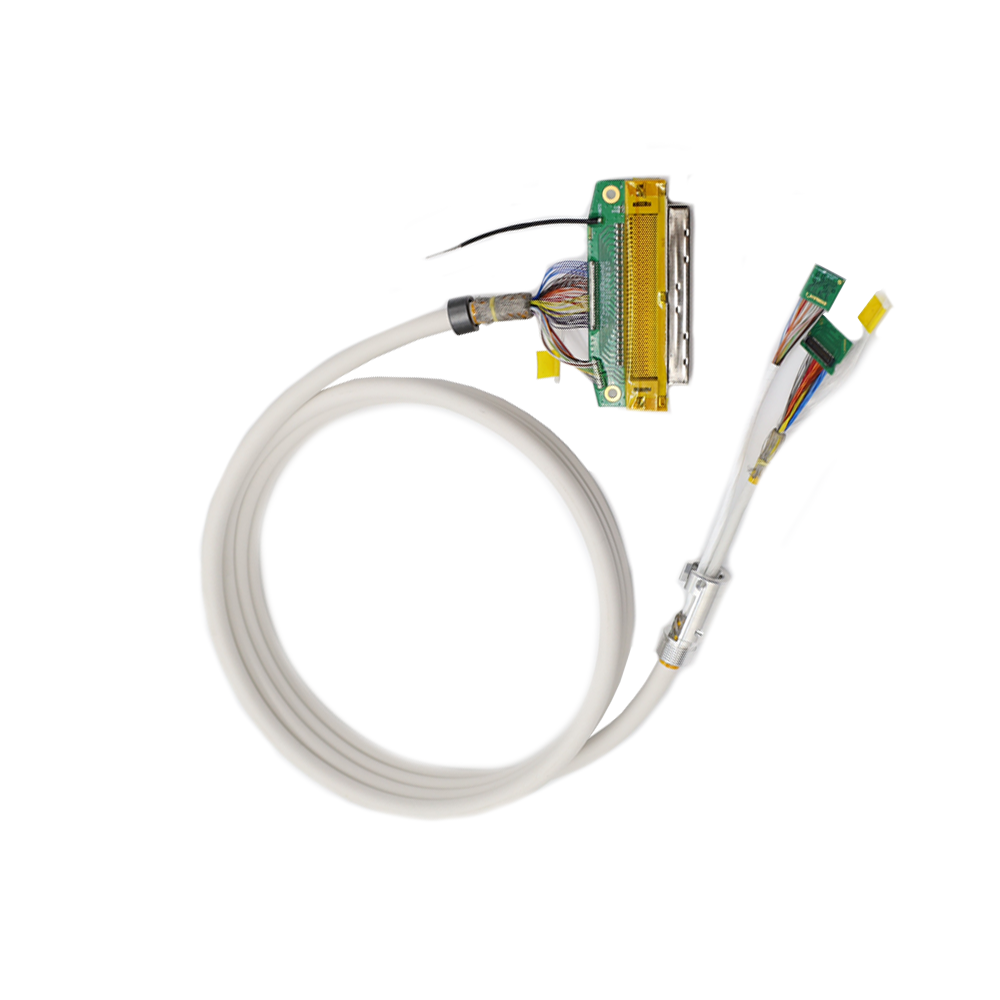
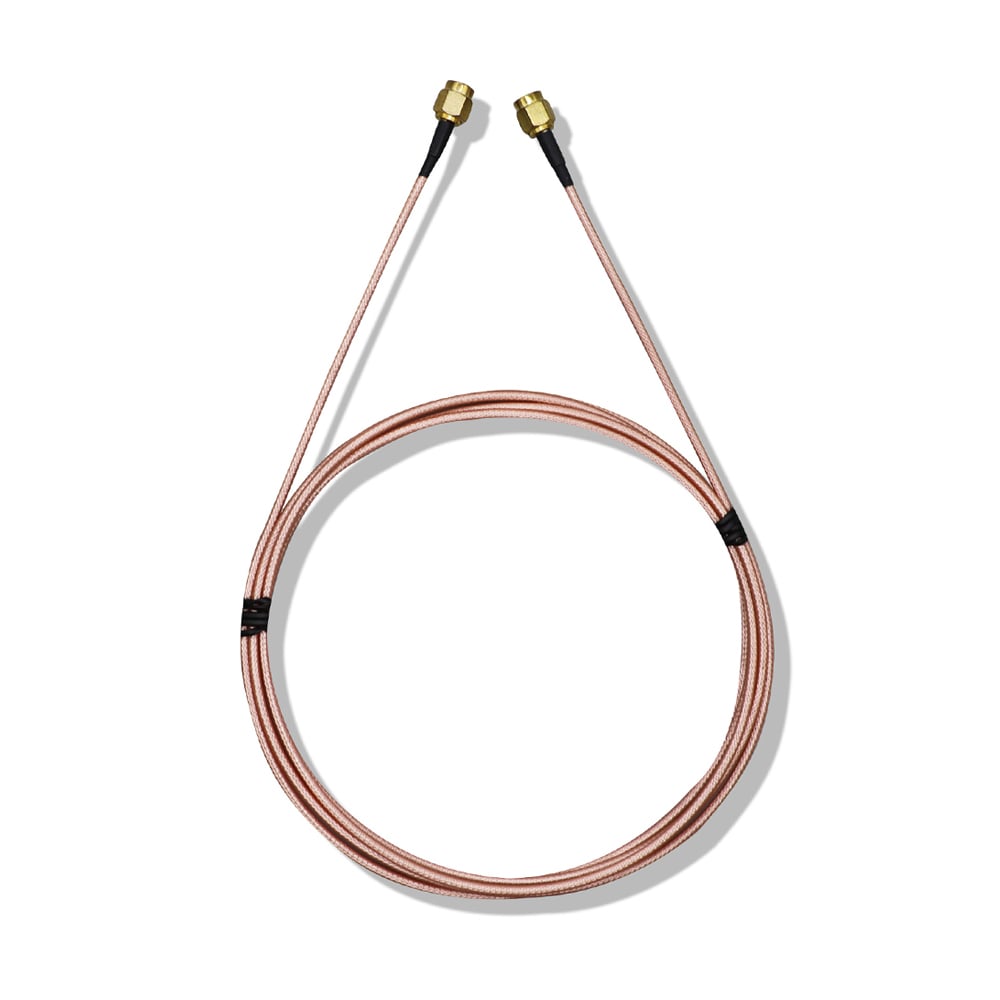
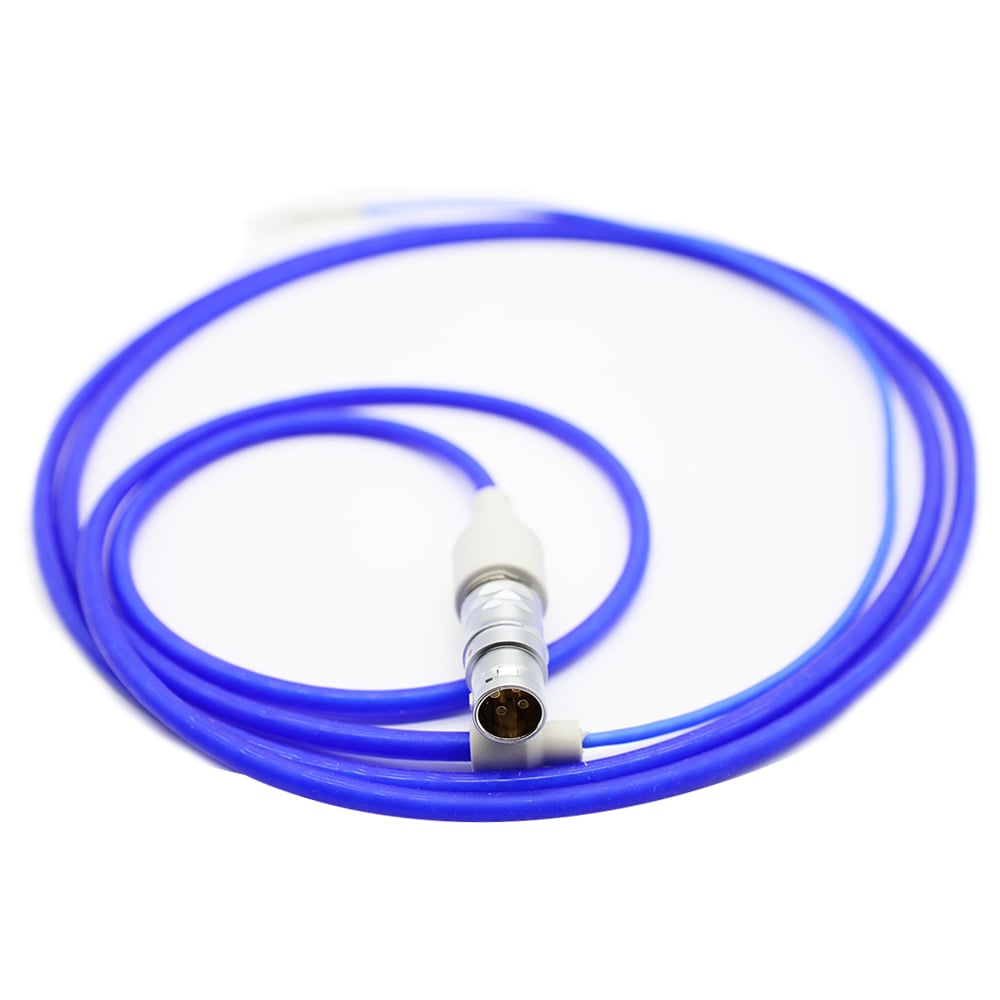
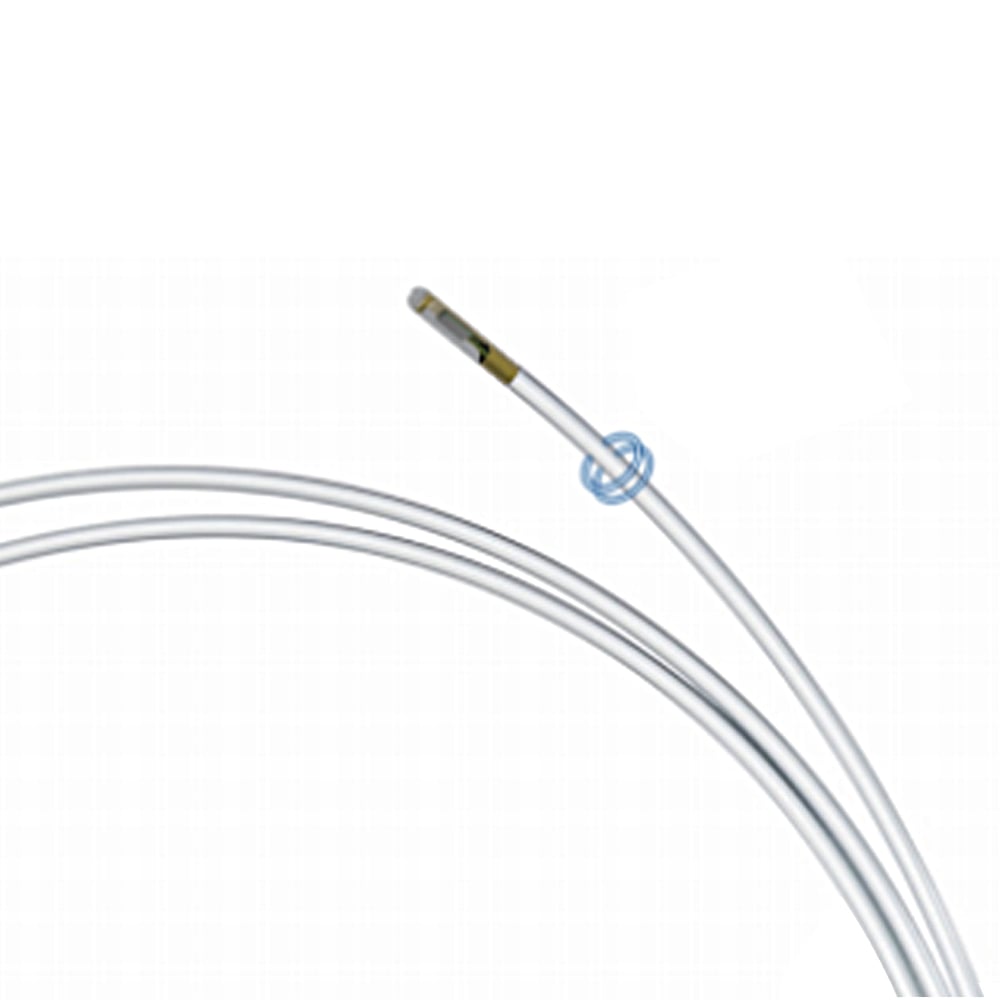
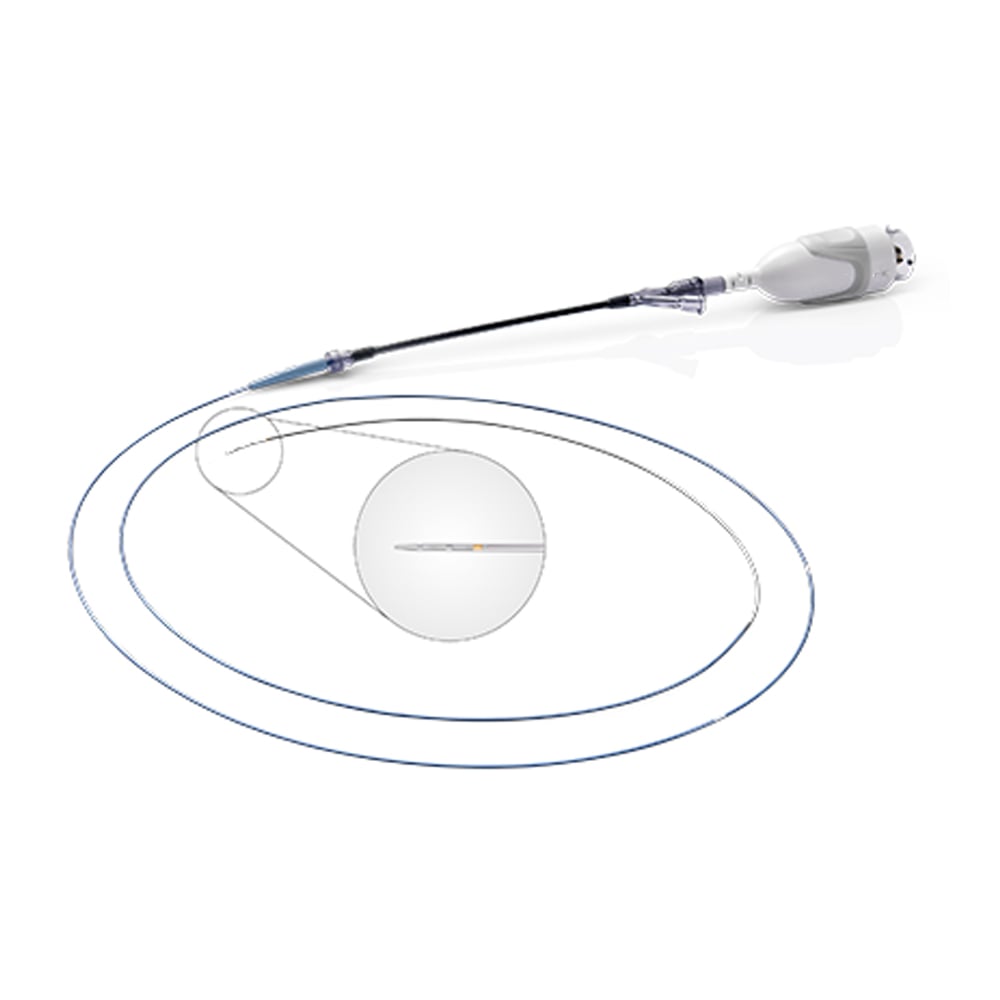
Transmitting these highly complex signals—including those used in IVUS ultrasound imaging, ICE intracardiac imaging, and high-definition (HD) endoscopy systems — requires highly sensitive analog signal transmission from the probe transducer to the imaging processor. Most of these signals operate above 5 MHz, with some exceeding 50 MHz, enabling the high-resolution imaging required to identify potential abnormalities and support accurate diagnosis and intervention. However, high-frequency signal transmission is susceptible to attenuation, impedance mismatch, phase distortion, and electromagnetic interference, all of which can reduce image clarity. At Hotten, we manufacture high-frequency coaxial cable assemblies for advanced imaging probes. The following four core technologies enable reliable signal transmission and support high-quality diagnostic imaging.
Advanced imaging probes place several demanding requirements on the cable at the same time.
The cable may need to transmit weak or high-frequency signals through a compact, shielded and mechanically constrained path while maintaining controlled impedance, low attenuation, stable phase characteristics and reliable environmental performance.
The cable therefore needs to be designed as part of the complete imaging signal path.
If → the probe transmits weak high-frequency signals over a limited physical distance
Then → evaluate conductor loss, dielectric loss and total cable attenuation
Why → even relatively small transmission losses can affect the available signal at the receiving electronics.
If → the imaging system uses controlled-impedance signal paths
Then → control conductor/dielectric geometry and the cable-to-connector transition
Why → impedance discontinuities can introduce reflections into the signal path.
If → multiple channels must operate together for phased-array or multi-element imaging
Then → evaluate phase matching, electrical-length consistency and channel-to-channel construction
Why → differences between signal paths can affect the timing relationship between channels.
If → the probe operates in a high electromagnetic-noise environment
Then → evaluate individual and overall shielding, shield termination and grounding structure
Why → external interference and channel coupling can degrade sensitive imaging signals.
If → the probe or cable is repeatedly moved during normal operation
Then → evaluate RF performance together with flexibility and mechanical durability
Why → mechanical movement can alter the physical signal structure or stress the termination area.
The current HOTTEN article specifically addresses these four areas—dielectric loss, impedance matching, phase stability and shielding—for IVUS, ICE and endoscopic imaging systems.
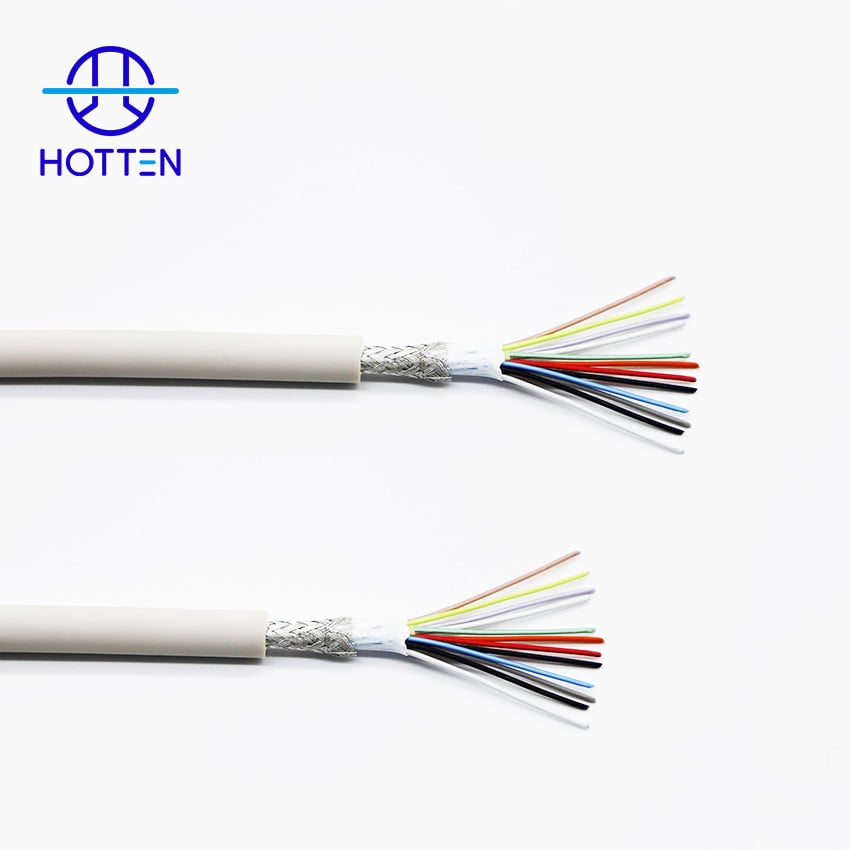
For customized High-Frequency Coaxial Cable, HOTTEN can develop cable structures around application-specific signal and mechanical requirements.
For finished assemblies, see RF Coaxial Cable Assembly.
Signal attenuation of coaxial cable depends on the frequency due to the skin effect and loss of signal in the dielectric of the cable. Low-level return signals from deep tissue can experience more than 1.5 dB/m of signal loss when transmitted through conventional cables at 20 MHz. Advanced low-loss dielectric materials, such as expanded PTFE (e-PTFE) and microporous polyethylene with a dissipation factor below 0.0005 at 10 MHz, are used by Hotten. These materials help maintain weak reflected signals above the noise floor in IVUS and ultrasound probe cables while achieving an insertion loss below 0.3 dB/m at 30 MHz. The permittivity is very stable even in the e-PTFE's porous microstructure, thus avoiding attenuation drift during the course of a long scanning session. This directly contributes to improved image resolution and enhanced tissue penetration.
Discontinuities in characteristic impedance at cable splices, connector interfaces, or due to manufacturing variations can introduce image artifacts, including ghosting and range sidelobes. Every component is verified using Hotten’s patented closed-loop extrusion control and time-domain reflectometry (TDR) systems, which will achieve an impedance tolerance of less than 2% (when used in medical imaging, it is considered 50 ohm nominal cable). Our attention is also focused on the interface of the cable to the internal flex circuit of the probe for our ICE catheter cables and endoscope imaging harnesses—as we custom design the transition boards to match the impedance of the cable, instead of a sharp transition. The continuity in impedance eliminates ring down artifacts that could be confused with disease. All measurements show a VSWR of < 1.2:1 for the entire band.
The relative phase alignment of multiple signal paths within phased-array or multi-element imaging probes is critical for accurate beamforming. With a varying geometry and/or material of the cable between channels, the reconstructed image will be misregistered and/or blurred because of the differences in the timing of arrival of the signal. Hotten achieves phase stability through three key approaches: (1) High dielectric constant uniformity within each production batch; (2) High-precision signal path length matching of signal path (e.g. tolerances within ±1 mm) for multi-coaxial bundles; (3) A dense braid shield provides uniform capacitance, even when flexed. We also do thermal equalization on our robotics wire harnesses for automated imaging systems in order to remove internal stresses that may lead to phase drift. This provides coherent beamforming, with phase errors of less than 2° at 10 MHz.
For an OEM imaging project, selecting a high-frequency coaxial cable should begin with the imaging architecture and signal requirements, not simply with a request for “low-loss coaxial cable.”
A useful engineering sequence is:
Imaging Requirement → Frequency → Signal Level → Attenuation → Impedance → Phase / Channel Matching → Shielding → Mechanical Constraints → Connector Transition → Validation
The exact priorities depend on the imaging system.
Different imaging systems can impose very different electrical requirements.
Typical engineering inputs include:
| Parameter | Engineering Question |
|---|---|
| Imaging Technology | IVUS / ICE / Ultrasound / Endoscopy / Other |
| Frequency | What is the operating frequency range? |
| Signal Type | RF / Analog / High-Speed / Mixed |
| Signal Amplitude | How sensitive is the receiving path? |
| Channel Count | How many signal paths are required? |
| Impedance | What nominal impedance is required? |
| Attenuation | What maximum cable loss can the system tolerate? |
| Capacitance | Is cable capacitance a system constraint? |
| Phase | Is channel-to-channel phase matching important? |
| Cable Length | What is the required signal path length? |
If → the system uses multiple imaging channels
Then → define channel-to-channel electrical requirements before selecting the cable construction
Why → the cable must preserve consistency between signal paths, not only meet the specification of one individual coaxial channel.
A cable is not simply “low loss” in absolute terms.
Attenuation can depend on:
If → the imaging system operates across a defined frequency band
Then → evaluate attenuation across that band rather than at one frequency only
Why → a single attenuation value may not represent the cable's behavior throughout the operating range.
If → the receiving signal is very weak
Then → evaluate the complete loss budget from the probe to the receiving electronics
Why → cable loss is only one part of the total system transmission path.
The current HOTTEN article specifically links dielectric selection to attenuation performance in high-frequency imaging applications and discusses low-loss dielectric materials such as ePTFE.
The dielectric influences more than insulation.
Relevant properties may include:
If → attenuation is a major system limitation
Then → evaluate lower-loss dielectric structures
Why → dielectric losses contribute to total high-frequency transmission loss.
If → the same cable must also tolerate repeated bending
Then → evaluate dielectric structure together with mechanical flexibility
Why → electrical optimization and mechanical optimization can create competing requirements.
For micro and ultra-fine coaxial structures, this connects naturally to:
How to Select the Right Foaming Technology for Micro Coaxial Cable Insulation?
and:
How Micro Coaxial Cable Design Ensures Signal Integrity in Medical Devices
The nominal impedance of the cable is only one part of the design.
The actual signal path may be:
Probe Element
→ Cable
→ Termination
→ Connector
→ Flex Circuit / PCB
→ Imaging Electronics
If → the cable has the specified impedance but the connector transition is not controlled
Then → evaluate the complete transition
Why → local impedance discontinuities can create signal reflections.
If → the cable connects to an internal flexible circuit or transition board
Then → design the interface around the cable's controlled transmission structure
Why → a large geometry change at the transition can create a localized mismatch.
This is especially relevant to the current HOTTEN article because it already states that transition boards can be customized to avoid an abrupt transition between the cable and internal flex circuitry.
The related technical foundation is:
What Is Cable Impedance and Why Does It Matter in High Frequency Cable Assemblies?
For multi-element and phased-array systems, signal paths may need to remain closely matched.
Relevant variables can include:
If → multiple channels are combined for beamforming or image reconstruction
Then → evaluate the electrical length and phase consistency between channels
Why → differences between signal paths can change signal arrival timing.
If → the cable contains many individually shielded coaxial channels
Then → control cable construction consistently across channels
Why → small differences in geometry or material can create channel-to-channel variation.
The current HOTTEN article specifically discusses signal-path length matching and dielectric consistency for phase stability.
For advanced imaging probes, shielding can be considered from two perspectives:
External Noise Rejection
and
Internal Channel Isolation
Relevant considerations include:
| Shielding Function | Engineering Question |
|---|---|
| External EMI Protection | What external interference sources are present? |
| Channel Isolation | Is crosstalk between channels a concern? |
| Shield Coverage | What shielding effectiveness is required? |
| Shield Continuity | Can the shielding path remain continuous? |
| Ground Return | How should the shield / return be connected? |
| Flexibility | Will shielding construction withstand repeated movement? |
| Termination | How is the shield connected at each interface? |
If → multiple sensitive channels are tightly packed
Then → evaluate individual-channel shielding as well as overall shielding
Why → channel-to-channel coupling may need to be controlled separately from external EMI.
If → the probe is used near other RF or electrosurgical equipment
Then → evaluate the complete shielding and grounding architecture
Why → the external electromagnetic environment may impose additional interference-control requirements.
The existing HOTTEN article describes multi-layer shielding and a stranded ground return structure for certain IVUS and ICE applications.
Advanced imaging probes often have limited internal space.
This creates a design trade-off among:
Channel Count
vs.
Cable OD
vs.
Shielding
vs.
Flexibility
vs.
Electrical Performance
If → channel count increases without increasing available space
Then → evaluate a higher-density cable architecture
Why → conventional cable constructions may not fit the available routing envelope.
If → the cable OD must be reduced
Then → evaluate conductor size, dielectric structure, shielding and channel arrangement together
Why → reducing one dimension may increase electrical loss or reduce mechanical robustness.
HOTTEN's current ultrasound cable portfolio includes customized high-density and micro coaxial constructions, including configurations with different channel counts, conductor sizes and jacket materials.
A high-frequency imaging cable may need to move repeatedly during operation.
Potential mechanical effects include:
If → the cable is repeatedly bent during probe operation
Then → compare relevant RF measurements before and after representative flex testing
Why → electrical performance should remain within the application's acceptance criteria after mechanical stress.
If → failures are concentrated near the connector
Then → investigate strain relief, termination geometry and local bend radius
Why → the connector transition can experience higher local mechanical stress.
This connects directly to:
How Flex-Life Testing Helps Medical Cable Assemblies Maintain Performance After Repeated Bending
The cable should be designed around the actual imaging system.
If → the cable is used inside an intravascular imaging system
Then → prioritize compact structure, signal integrity, shielding, electrical consistency and the mechanical constraints of the catheter system
Why → the cable operates inside a highly space-constrained imaging architecture.
HOTTEN currently lists customized IVUS cable solutions for intravascular imaging applications, including ultra-thin cable structures and configurable conductor, insulation and shielding materials.
See IVUS Cable.
If → the cable is used in an intracardiac imaging system
Then → consider high-frequency transmission, impedance transition, compact routing and application-specific mechanical requirements
Why → the cable is part of a compact catheter-based imaging system.
If → the cable connects a high-channel-count ultrasound probe to imaging electronics
Then → consider channel count, capacitance, impedance, shielding, cable OD and flexibility together
Why → ultrasound probe cables often combine dense signal routing with strict mechanical constraints.
HOTTEN currently offers ultrasound probe cable configurations with high channel counts and micro coaxial structures, including 132-channel low-capacitance configurations.
If → the cable is integrated into a miniature endoscopic imaging system
Then → evaluate cable OD, flexibility, attenuation, shielding, termination and connector space together
Why → the available routing space is limited while the cable may experience repeated movement.
A useful RFQ should define both the electrical performance and the physical integration requirements.
| Category | Recommended Information |
|---|---|
| Imaging System | IVUS / ICE / Ultrasound / Endoscopy |
| Frequency | Operating range |
| Signal Type | RF / Analog / Other |
| Channel Count | Number of signal paths |
| Impedance | Nominal value and tolerance |
| Attenuation | Maximum acceptable loss |
| Return Loss | Required limit if applicable |
| Phase | Channel matching requirement if applicable |
| Capacitance | Target / maximum |
| Cable Length | Nominal + tolerance |
| Cable OD | Maximum allowable dimension |
| Conductor | AWG / material / construction |
| Dielectric | Material / structure |
| Shielding | Individual / overall / multilayer |
| Flexibility | Static / dynamic |
| Bend Radius | Minimum required |
| Connector | Manufacturer / part number |
| Termination | Solder / crimp / custom |
| Environment | Temperature / humidity / sterilization |
| Testing | RF + mechanical + environmental |
| Production | Prototype / pilot / mass production |
If → the RFQ only states “high-frequency coaxial cable”
Then → add frequency, impedance, attenuation, cable length, connector, OD and environmental requirements
Why → otherwise different cable constructions may all satisfy the same general description while producing different system-level results.
A useful engineering sequence is:
Imaging Requirement
→ Frequency / Bandwidth
→ Signal Level
→ Channel Count
→ Impedance / Capacitance
→ Attenuation
→ Phase Matching
→ Shielding
→ Cable OD
→ Flexibility
→ Connector / Transition
→ Prototype Testing
→ Mechanical / Environmental Validation
→ Production Verification
For an advanced ultrasound probe:
High Channel Count
→ define frequency range
→ determine acceptable attenuation
→ establish impedance and capacitance requirements
→ determine available routing space
→ select conductor and dielectric construction
→ define shielding architecture
→ establish channel matching requirements
→ define connector / flex-circuit transition
→ validate the finished assembly
→ perform representative mechanical testing
→ verify production consistency.
For an IVUS system:
Miniature Catheter
→ define available cable envelope
→ establish electrical requirements
→ define signal path length
→ select ultra-fine cable construction
→ control shielding and return structure
→ define termination
→ perform electrical validation
→ perform application-specific mechanical validation.
How Micro Coaxial Cable Design Ensures Signal Integrity in Medical Devices
Design Factors in Medical Cable Assemblies That Protect Signal Integrity in Clinical Devices
How Flex-Life Testing Helps Medical Cable Assemblies Maintain Performance After Repeated Bending
What Is Cable Impedance and Why Does It Matter in High Frequency Cable Assemblies?
How RF Coaxial Cable Assemblies Control Impedance and Loss for Reliable High-Frequency Signals
How to Select the Right Foaming Technology for Micro Coaxial Cable Insulation?
Why Low Capacitance Is Critical in Ultrasound Probe Cable Design
How Low-Noise Medical Cable Assemblies Support More Accurate Diagnostic Signals
In a few instances imaging probes are employed together with other radiative technologies including electrosurgical systems and the well-known device causing noise in poorly-shielded coaxial cables, the fluoroscopes. Other causes of noise could be generated internally as in, for example, the effects produced in cables due to movements being picked up. By using a three-layer shielding design, Hotten protects your device with a combination of a semiconductive layer inner (retaining triboelectric charges), a highly braided silver-plated copper shield (95% shielding effectiveness, reducing magnetic interference from external sources) and an outer shield foil (100% shielding of electrical field coupling). In order to reduce common mode currents, a stranded ground return conductor for the IVUS and ICE cable of intravascular catheters is provided. The overall result is transfer impedance of less than 3 mΩ/m at 30MHz providing for clean signals that will yield high contrast, artifact-free images.
Not only do the advanced imaging probes yield cleaner signals, they are the result of careful selection of the dielectric material, the impedance control applied and design of the phases and shields of the probes. High-frequency coaxial cable assemblies are utilized in ultrasound probes, ICE catheters, IVUS harnesses, and endoscope systems to preserve the integrity of acoustic and optical signals at the probe tip. We have developed more than 400 cable variants and operate over 40 cable production lines annually, with more than 10,000 meters of manufacturing capacity dedicated to supporting imaging systems that enable accurate clinical diagnoses and achieve excellent patient outcomes.
 Hot News
2026-09-17
2026-09-04
2025-12-17
2025-12-11
2025-12-05