 EN
EN
Quick Links

Home > News > Company news
— Viewing the Stability of HD and 8K Displays from a Signal Integrity Perspective
In the past, HDMI cables were often regarded as general-purpose connection components. In today's HD, 4K, and even 8K display environments, however, they have gradually become a critical factor influencing image quality and system stability. As resolution, refresh rate, and color depth continue to increase, the amount of data and signal frequency carried by HDMI transmission links rises significantly. Under these conditions, the electrical performance of the cable itself directly determines whether images remain clear and stable, and whether the system can operate reliably over the long term.
| Parameter | Standard HDMI Cable | High-Speed HDMI Cable |
|---|---|---|
| Bandwidth | Limited | Higher bandwidth |
| Resolution Support | HD/Full HD | 4K/8K |
| Signal Integrity | Medium | Optimized |
| EMI Protection | Basic | Enhanced shielding |
| Application | Consumer display | VR, gaming, professional display systems |
An HDMI cable can affect image stability in high-resolution display systems because the cable forms part of the high-speed transmission path. As data rate and signal frequency increase, parameters such as insertion loss, channel-to-channel timing variation, crosstalk, shielding, cable geometry, and manufacturing consistency become increasingly important.
If a display system requires high-resolution or high-refresh-rate video transmission → evaluate the cable's insertion loss, skew, crosstalk, shielding, and signal consistency together → then verify the cable under the actual transmission conditions of the system.
If the cable length increases or the transmission environment becomes more demanding → evaluate attenuation and signal integrity together with connector quality and shielding → because the complete interconnect path affects whether the signal reaches the receiver with sufficient margin.
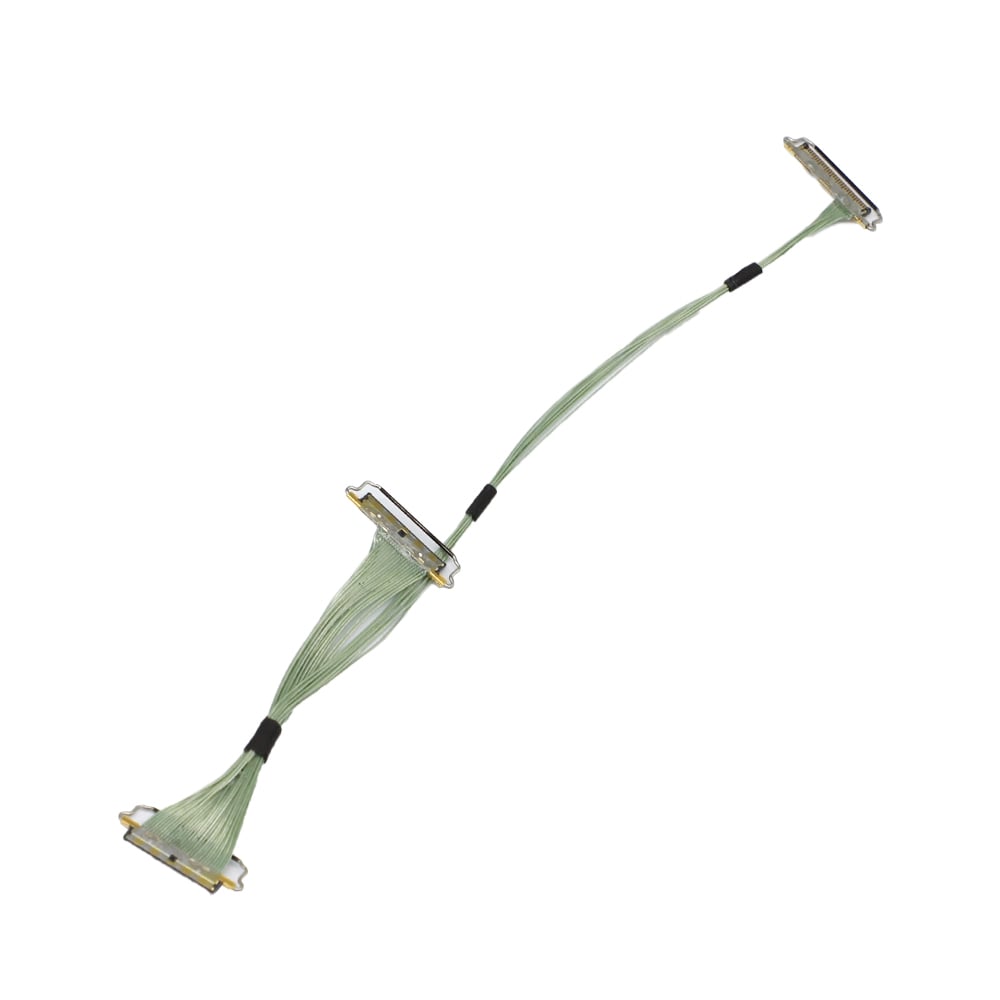
If the display system uses a compact internal connection rather than a conventional external HDMI cable → evaluate the cable architecture, connector interface, routing space, and high-speed signal requirements together. Related high-density products include HOTTEN's Display & High-Speed Cable and LVDS Wire Harness solutions.
For related high-speed cable design considerations, see The Importance of Impedance Consistency in Ultra-Fine AWG Micro Coaxial Cables.
For compact AI and vision-device applications, see HOTTEN's AI & Smart Electronics solutions.
For display, camera, and immersive-device applications, see HOTTEN's Consumer Electronics solutions.
New Requirements for HDMI Cables in HD and 8K Displays
During the Full HD era, bandwidth and signal integrity requirements for HDMI cables were relatively moderate. With the transition to 4K, 8K, and high-refresh-rate displays, a single HDMI link must now support much higher data rates and a wider frequency spectrum.
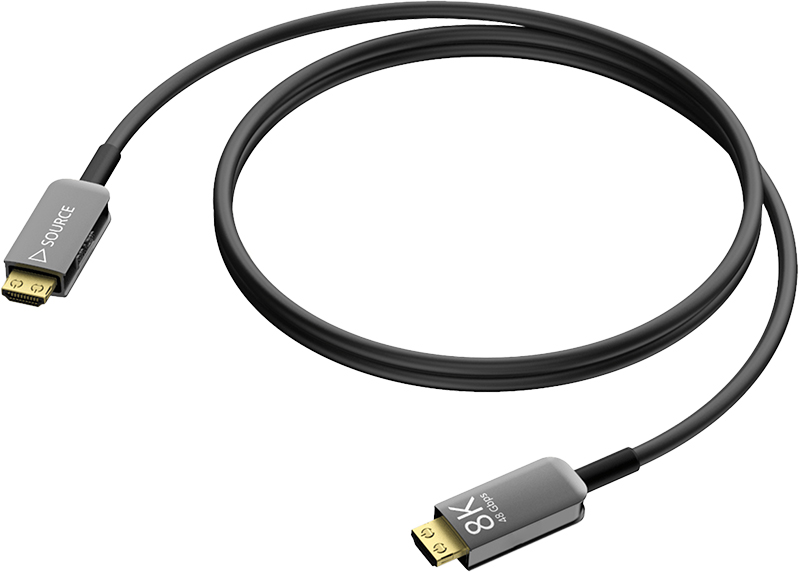
Taking HDMI 2.1 as an example, its maximum transmission rate can reach up to 48 Gbps. At such high speeds, any insertion loss, crosstalk, or timing deviation introduced by the cable itself can be amplified by the system, directly manifesting as screen flicker, snow noise, image distortion, or even complete signal loss. At this stage, HDMI cables are no longer just "connectors," but a key element ensuring stable operation of the entire display system.
Key Cable Factors That Influence Image Quality
In high-speed display applications, several cable-related factors have a direct impact on image quality.
Insertion loss determines the degree of signal attenuation during transmission. When high-frequency loss becomes excessive, signal amplitude decreases and fine image details are weakened, resulting in blurred edges, loss of detail, or unstable display performance.
Skew between multiple signal channels is another critical factor. If channel-to-channel delay differences are not properly controlled, data synchronization is disrupted, leading to image instability or intermittent display artifacts.
In addition, the integrity and stability of the shielding structure directly determine the cable's immunity to external interference. In complex electromagnetic environments, insufficient shielding coverage or inconsistency can allow external noise to couple into the signal path, ultimately appearing as snow noise, increased artifacts, or reduced image stability.
Challenges Introduced by HDMI 2.1, VR, and High Refresh Rate Applications
VR, gaming, and high-refresh-rate display applications impose even stricter requirements on real-time performance and signal synchronization. These applications typically operate continuously over extended periods, making long-term signal stability especially critical.
If fluctuations exist in cable structure design or manufacturing consistency, a cable may function normally during initial testing but gradually exhibit stability issues under sustained operation or high load. Such issues often present as intermittent flicker, signal dropouts, or black screens, significantly affecting user experience and system reliability.
For high-speed display applications, HDMI cable selection should be based on the complete transmission requirement rather than on a single headline specification. Resolution, refresh rate, cable length, routing environment, connector interface, shielding, and manufacturing consistency can all affect the final signal margin.
If the system requires 4K, 8K, high refresh rate, or other high-bandwidth video transmission → define the required video format and transmission conditions first → then evaluate the cable's electrical performance against those requirements.
The cable should be evaluated according to the actual application instead of assuming that a cable suitable for one display configuration will perform identically in another.
For related high-speed display products, see HOTTEN's Display & High-Speed Cable category.
If signal integrity is the primary concern → evaluate insertion loss, skew, crosstalk, and shielding together → then verify the complete transmission path under the required operating conditions.
Optimizing one parameter in isolation may not solve a system-level transmission problem. For example, low insertion loss alone does not describe channel-to-channel timing consistency or immunity to external interference.
For related signal-integrity considerations in high-frequency cable structures, see The Importance of Impedance Consistency in Ultra-Fine AWG Micro Coaxial Cables.
If the cable length increases or routing conditions become more demanding → evaluate attenuation, shielding, connector quality, and mechanical routing together → then validate the complete link under the intended installation conditions.
Cable geometry and routing can influence the final transmission environment. A cable that performs adequately in a short, controlled connection may require additional validation when used in a longer or more complex system.
If the HDMI cable terminates at a high-speed display interface or compact electronic module → define the connector structure and cable interface together → then evaluate insertion loss, signal continuity, shielding termination, and mechanical reliability across the complete connection.
A high-performance cable can still encounter signal discontinuities at the connector or termination region. For compact high-density interconnects, see HOTTEN's LVDS Wire Harness and Micro Coaxial Cable Assembly solutions.
If the cable operates near motors, switching power supplies, wireless modules, or other potential interference sources → evaluate shielding structure and grounding together with signal integrity → then validate the finished cable in the actual electromagnetic environment.
Shielding should therefore be treated as part of the complete transmission system rather than as an isolated material specification.
For compact high-speed and EMI-sensitive electronic systems, see HOTTEN's AI & Smart Electronics solutions.
The cable architecture can change according to the final device.
If the application is an external display connection → prioritize the required transmission performance, cable length, connector integrity, shielding, and mechanical durability.
If the application is an internal connection between a camera, display panel, processor, or control board → evaluate compact routing, cable OD, connector pitch, signal integrity, shielding, and termination together.
For internal display and camera interconnects, see HOTTEN's Display & High-Speed Cable products and LVDS Wire Harness solutions.
Before requesting a quotation or prototype, an OEM engineering or procurement team should define:
| Requirement | Parameters to Confirm |
|---|---|
| Application | Display, camera, monitor, VR, embedded system |
| Video Requirement | Resolution, refresh rate, transmission format |
| Cable Length | Finished length and routing path |
| Electrical | Insertion loss, impedance, skew, crosstalk |
| Shielding | Structure, coverage, grounding |
| Dimensions | Cable OD, available routing space |
| Connector | Manufacturer, PN, interface, pitch |
| Mechanical | Bend radius, flexing, plug cycles |
| Environment | Temperature, EMI conditions, installation environment |
| Validation | Electrical, mechanical and dimensional testing |
| Production | Prototype quantity, annual volume, process consistency |
Providing the connector part number, cable length, display interface, required video format, and routing conditions can help the supplier evaluate the complete high-speed interconnect before prototype production.
If the primary requirement is high-resolution external display transmission → prioritize signal loss, shielding, connector integrity, cable length, and durability → then validate the complete link.
If the primary requirement is compact internal display routing → prioritize cable OD, connector dimensions, signal integrity, shielding, and routing flexibility → then select the appropriate high-speed cable architecture.
If the primary requirement is high-refresh-rate or demanding real-time video transmission → prioritize insertion loss, skew, crosstalk, shielding, and manufacturing consistency → then validate the complete transmission path.
If the application is an AI camera, smart device, or compact vision system → evaluate HDMI or another appropriate high-speed interconnect according to the device architecture → then select the corresponding HOTTEN cable or assembly structure.
For AI and vision-device applications, see AI & Smart Electronics.
For consumer display and immersive-device applications, see Consumer Electronics.
A practical high-speed display cable development process can be summarized as:
Display architecture → video requirement → cable length → signal requirements → cable geometry → shielding → connector → routing conditions → prototype → electrical validation → mechanical validation → production validation
The engineering objective is not simply to select a cable that meets a nominal specification. It is to ensure that the complete display interconnect maintains sufficient signal integrity, shielding, mechanical reliability, and production consistency under the actual operating conditions of the device.
For customized high-speed display interconnects, see Display & High-Speed Cable.
For customized high-speed cable assemblies, see Cable Assembly & Wire Harness.
Why HDMI Cables Must Go Beyond “Meeting Specifications”
In practical engineering scenarios, many display issues do not stem from whether individual parameters meet specifications, but from whether those parameters remain highly consistent across the entire cable and across different production batches.
Mass production stability, long-term durability, temperature variation, repeated plugging and unplugging, and complex electromagnetic environments all place significant demands on cable materials and structural design. Variations in material durability or mechanical stability will ultimately be reflected in long-term electrical performance, including insertion loss, skew, and EMI resistance.
This is why high-resolution and 8K display applications impose engineering requirements on HDMI cables that extend well beyond basic specification compliance.
HDMI is a digital transmission technology. A properly designed cable maintains signal integrity, while insufficient bandwidth or poor shielding may cause flickering, artifacts or signal loss.
Yes. HDMI cables designed for high bandwidth applications can support higher resolutions such as 8K when matching system requirements.
High-speed HDMI cables focus on bandwidth capability, impedance control, shielding performance and manufacturing consistency.
Shielding reduces electromagnetic interference and helps maintain stable high-frequency signal transmission.
Hotten’s Engineering Practice in HDMI Cables
Building on extensive experience in high-frequency cables and multi-conductor structures, Hotten continuously optimizes HDMI cable designs with a focus on low skew, multi-channel consistency, and low-loss transmission. In terms of material selection, Hotten adopts solutions that meet stringent performance requirements and have been validated through long-term market and customer applications, receiving consistently positive feedback.
Through systematic structural design and manufacturing control, Hotten HDMI cables meet the demands of HDMI 2.1, 4K/8K displays, and VR applications while maintaining stable image performance over extended use, providing a reliable signal transmission foundation for high-resolution display systems.
 Hot News
2026-09-17
2026-09-04
2025-12-17
2025-12-11
2025-12-05