 EN
EN
Quick Links

Home > News > Company news
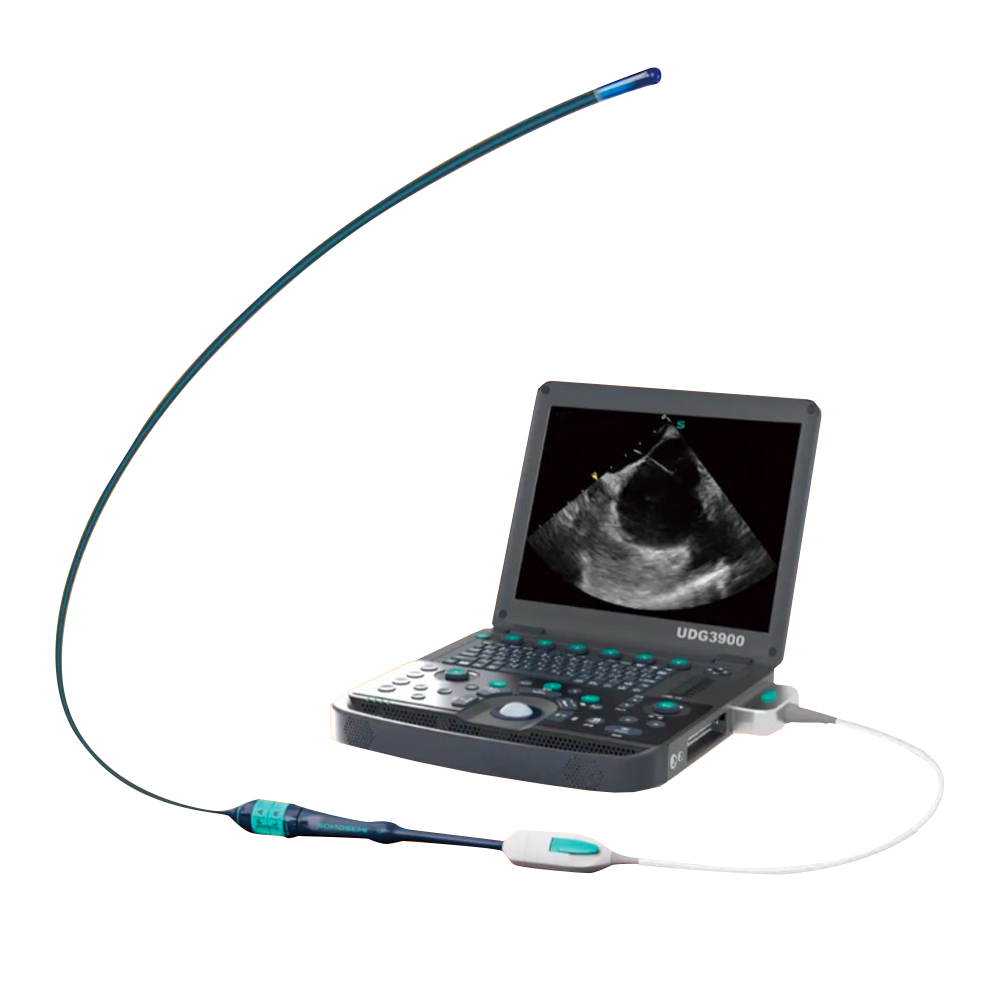
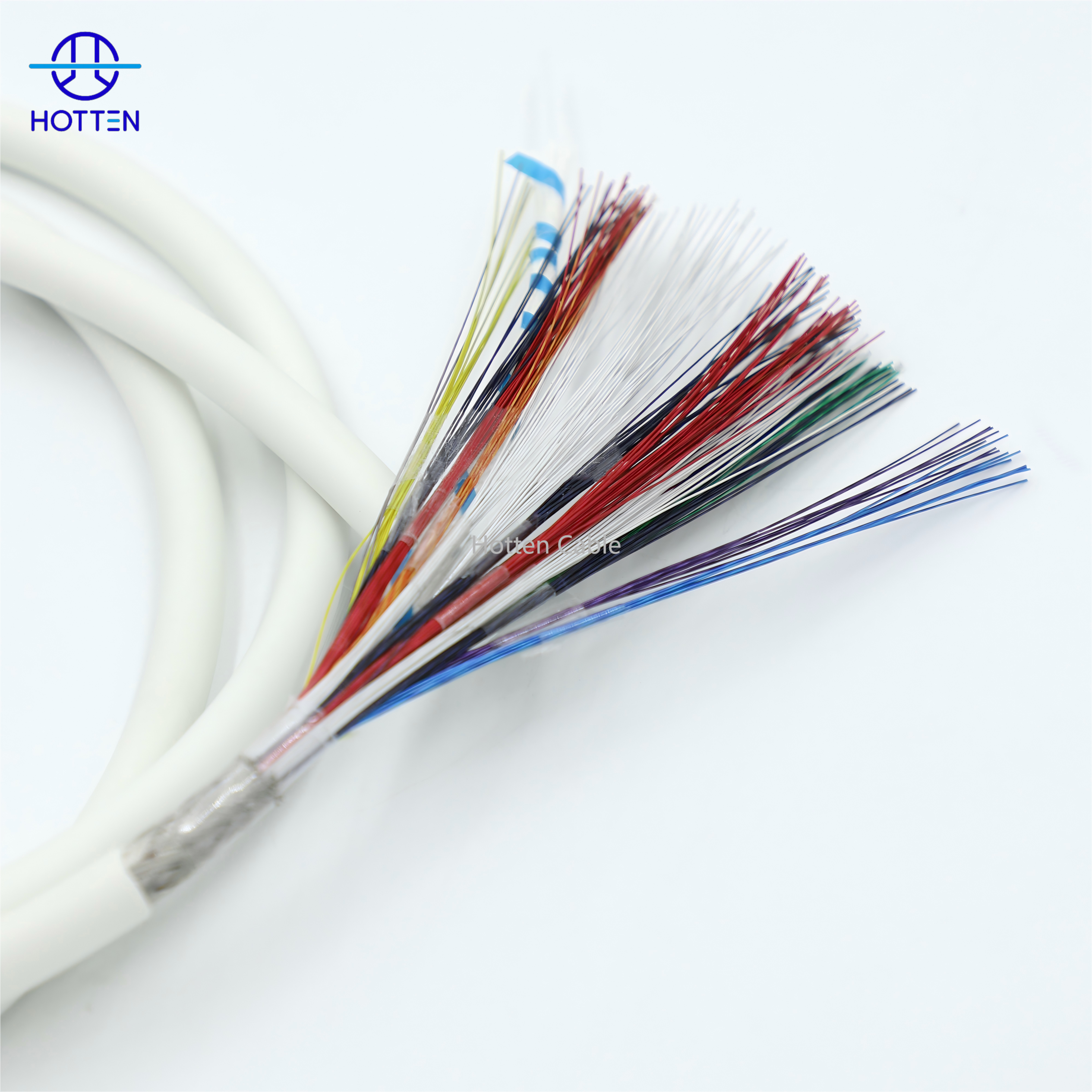
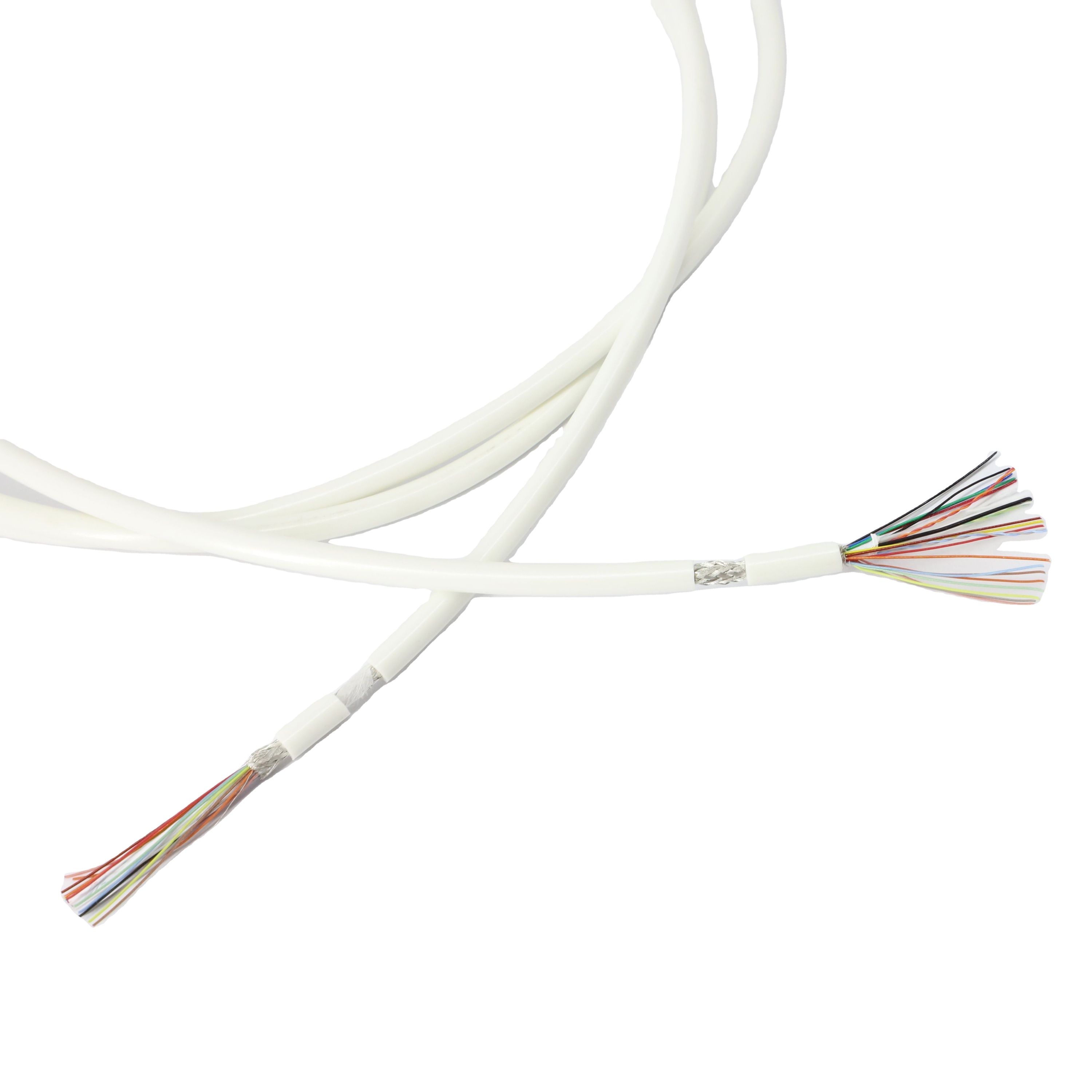
Multi-core ultra-fine coaxial cable assemblies are commonly used in intracardiac echocardiography (ICE) systems because the catheter must accommodate many sensitive signal channels within a very small and dynamically moving structure. The cable therefore needs to balance channel density, small dimensions, signal integrity, shielding, flexibility, and long-term reliability at the same time.
If an ICE catheter requires 64 or 128 signal channels within a highly constrained insertion structure → evaluate multi-core ultra-fine coaxial construction → because multiple individually shielded signal paths can be integrated into a compact cable assembly. HOTTEN's ICE Cable product category is specifically organized around intracardiac ultrasound cable applications.
If the transmitted signals are low-amplitude and high-frequency → evaluate impedance, capacitance, attenuation, shielding, and channel-to-channel consistency together → then validate the complete cable assembly rather than a single conductor. For related impedance considerations, see The Importance of Impedance Consistency in Ultra-Fine AWG Micro Coaxial Cables.
If the catheter cable is repeatedly advanced, rotated, or bent through a small routing space → evaluate bend radius, flex life, conductor fatigue, shielding stability, and termination reliability together with electrical performance.
The appropriate cable structure therefore depends on the complete ICE catheter architecture rather than AWG or channel count alone. For conductor-size considerations, see How Does AWG Affect Micro Coaxial Cable Performance?.
For broader medical-device requirements, see HOTTEN's Medical Equipment solutions.
1. What Does ICE Application Mean for the Cable?
Intracardiac Echocardiography (ICE) is a high-risk, high-precision medical imaging application. The probe must pass through blood vessels and enter the cardiac chamber, performing real-time imaging within an extremely confined space.
This imposes exceptionally high requirements on signal transmission reliability and determinism.
In ICE systems, the cable is not merely a connection component — it directly affects imaging performance.
2. The Nature of ICE Signals: Low-Amplitude, High-Frequency Analog Signals
ICE probes output extremely low-amplitude, high-frequency analog ultrasound echo signals. These signals are characterized by:
• Extreme sensitivity to noise
• Very strict requirements for impedance and capacitance consistency
• Any signal degradation directly translating into reduced imaging clarity
Any crosstalk, reflection, or parameter fluctuation introduced by the cable will be amplified by the front-end system and ultimately appear in clinical imaging results.
| Feature | Ultra-Fine Coaxial Cable | Traditional Wire | FPC |
|---|---|---|---|
| Signal shielding | Excellent | Limited | Medium |
| EMI resistance | High | Low | Medium |
| Channel density | High | Medium | High |
| Flexibility | Excellent | Medium | Limited |
| Impedance control | Stable | Difficult | Layout dependent |
| Long-term bending reliability | Excellent | Medium | Limited |
3. Why ICE Cables Must Use an Ultra-Fine Multi-Core Structure
ICE probe bodies are extremely small, with strict diameter limitations for insertion sections. Therefore, the cable must provide:
• Extremely small outer diameter
• High channel count (commonly 64 or 128 channels)
• Reliable routing within confined spaces
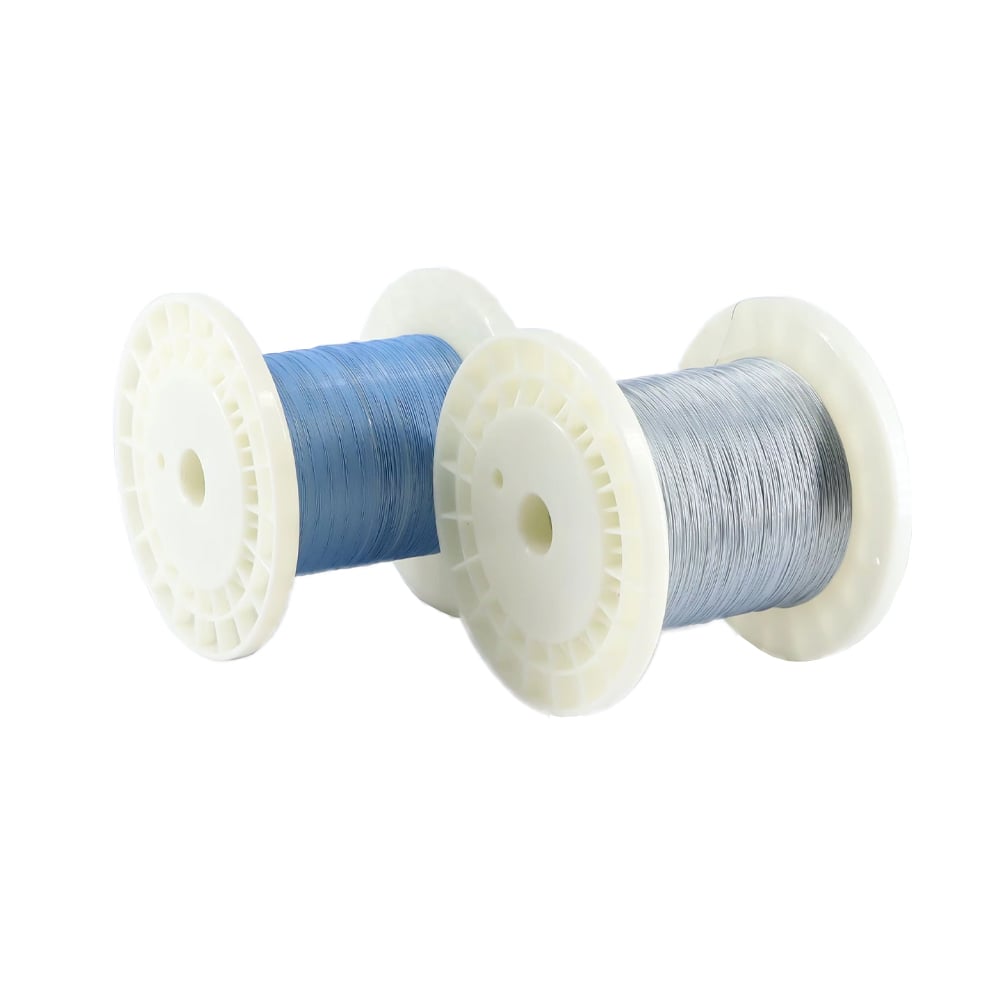
In engineering practice, ICE cables typically use ultra-fine coaxial wires in the 46–50 AWG range. These are assembled into multi-core harness structures, allowing high channel density while maintaining minimal overall diameter.
4. Coaxial Cable vs. FPC: Why ICE Prefers Coaxial Solutions
Although Flexible Printed Circuits (FPC) offer high integration advantages, they present inherent limitations in ICE applications.
Limitations of FPC:
• No individual shielding, resulting in weaker EMI resistance
• Length limitations; manufacturing beyond 1.5 meters remains extremely challenging
• Planar structure with return path dependent on layout
• High risk of crosstalk in tightly arranged multi-channel designs
• Noticeable copper fatigue under dynamic bending
• Long-term impedance stability under high-frequency analog signals is difficult to maintain
Advantages of Coaxial Cable:
• Each channel has an independent, enclosed electromagnetic environment
• Stable and predictable return path
• Easier control of inter-channel consistency
• Greater structural durability under dynamic bending conditions
• Strong EMI resistance with fully shielded structure and low attenuation
For high-frequency, low-amplitude analog signal applications involving dynamic use — such as ICE — multi-core ultra-fine coaxial cables have become the mainstream engineering solution.
5. The Real Mechanical Working Conditions of ICE Cables
During procedures, ICE probes must:
• Be inserted into blood vessels
• Be advanced, rotated, and positioned
• Withstand repeated small-radius bending inside the body
This means the cable must endure tens of thousands of dynamic bending cycles at extremely small bending radii, without conductor fatigue fracture, solder joint failure, or electrical parameter drift.
ICE cable reliability is fundamentally the long-term coupling result of both mechanical and electrical performance.
Selecting an ICE cable assembly requires balancing electrical consistency, channel density, dimensional constraints, mechanical reliability, shielding, and termination. Because the cable is integrated into a catheter system with highly constrained routing, the complete cable architecture should be evaluated rather than selecting individual parameters independently.
If the ICE system requires 64, 128, or another high channel count within a small catheter structure → define the required core count and available routing envelope first → then evaluate conductor size, cable arrangement, shielding, and cable OD.
Higher channel density increases the importance of dimensional consistency and termination density. Selecting the smallest conductor alone does not guarantee the smallest or most suitable complete assembly.
For related conductor-size trade-offs, see How Does AWG Affect Micro Coaxial Cable Performance?.
For dedicated ICE products, see HOTTEN's ICE Cable category.
If the ICE signal path is highly sensitive to electrical variation → define impedance, capacitance, attenuation, signal frequency, cable length, and channel-to-channel consistency → then determine the conductor and dielectric structure.
In a multi-core assembly, consistency across channels can be as important as the nominal performance of one individual conductor. The final validation should therefore evaluate the complete multi-channel structure.
For related impedance considerations, see The Importance of Impedance Consistency in Ultra-Fine AWG Micro Coaxial Cables.
If the application requires individually controlled signal paths and shielding within a compact dynamic structure → evaluate multi-core coaxial construction → then compare it with FPC or other interconnect architectures according to signal, routing, and mechanical requirements.
FPC can provide strong circuit integration, but the final choice should depend on the actual ICE catheter design rather than assuming that one architecture is universally suitable.
For a broader comparison of interconnect architectures, see FPC vs. FFC vs. Micro-Coaxial Cable Assembly: A Technical Comparison of High-Density Connection Solutions.
If the cable is repeatedly bent, rotated, or advanced during a procedure → evaluate conductor fatigue, shielding stability, bend radius, flex cycles, strain relief, and termination reliability together with signal performance → then validate electrical consistency after mechanical testing.
A cable that meets its electrical targets before mechanical testing is not necessarily suitable for a dynamic catheter application. The complete assembly should be evaluated under the expected movement profile.
For a related ultra-fine cable flexibility case, see How We Optimized 46AWG Micro Coaxial Cable for Superior Flexibility.
If low capacitance and stable channel characteristics are important → evaluate dielectric material, insulation thickness, conductor geometry, and cable structure together → then validate capacitance consistency across the finished assembly.
The dielectric system is part of the electrical architecture rather than simply a protective layer.
For broader dielectric considerations, see Comparison of Three High-Frequency Cable Foaming Technologies.
If many ultra-fine conductors must terminate within a very small interface → define connector type, pitch, pin assignment, termination method, and available assembly space before finalizing the cable construction → then optimize the cable around the interface.
Termination should be treated as part of the complete signal path because conductor spacing, shielding termination, strain relief, and mechanical transition can influence both reliability and electrical consistency.
For customized medical cable assemblies, see HOTTEN's Medical Cable Assembly.
Different ICE catheter designs can place different priorities on the cable.
If channel density is the dominant constraint → prioritize core count, cable OD, AWG, conductor arrangement, and termination density → then verify electrical consistency and mechanical reliability.
If signal integrity is the dominant constraint → prioritize impedance, capacitance, attenuation, shielding, and channel matching → then validate the complete multi-core transmission path.
If dynamic movement is the dominant constraint → prioritize flex life, bend radius, torsion resistance, shielding stability, and strain relief → then verify electrical performance after mechanical testing.
If connector or termination space is the dominant constraint → prioritize interface dimensions, pitch, pinout, termination method, and cable geometry → then develop the cable and termination as one assembly.
For a customized ICE cable assembly, an engineering or procurement team should provide:
| Requirement | Parameters to Confirm |
|---|---|
| Application | ICE catheter / intracardiac ultrasound |
| Channel Count | 64, 128 or required channel count |
| Conductor | AWG, material, construction |
| Electrical | Impedance, capacitance, attenuation, frequency |
| Cable Dimensions | Maximum OD, routing envelope |
| Shielding | Individual shielding, overall structure |
| Mechanical | Bend radius, flex cycles, torsion |
| Cable Length | Required length and routing path |
| Interface | Connector PN, pitch, pinout |
| Termination | Soldering / connector / sensor interface |
| Environment | Temperature, moisture, sterilization / cleaning as applicable |
| Validation | Electrical, mechanical, dimensional testing |
| Production | Prototype quantity, annual volume, repeatability |
Providing the catheter drawing, channel count, connector information, cable length, available routing space, and expected movement profile can help the supplier evaluate the complete cable architecture before prototype production.
The development process can be summarized as:
Catheter architecture → channel count → routing space → signal requirements → AWG / conductor → dielectric → shielding → connector / termination → mechanical requirements → prototype → validation → production
If the catheter requires very high channel density in a limited space → evaluate multi-core ultra-fine coaxial structures → then verify channel consistency, cable OD, shielding, and termination feasibility.
If the catheter requires sensitive high-frequency signal transmission → prioritize impedance, capacitance, attenuation, shielding, and consistency → then validate the complete multi-channel cable.
If the catheter undergoes repeated dynamic movement → prioritize mechanical reliability together with electrical performance → then perform combined mechanical and electrical validation.
For customized ICE interconnects, see HOTTEN's ICE Cable solutions.
For broader ultra-fine medical cable applications, see Micro & Ultra Fine Cable.
For the broader medical-device application category, see Medical Equipment.
6. The Engineering Core of ICE Cables: Consistency and Determinism
In ICE applications, the engineering focus is not on how extreme the performance of a single conductor can be, but rather:
• Whether ultra-fine dimensions meet clinical requirements (within 2 mm, even below 1 mm)
• Whether all channels maintain high consistency
• Whether parameters remain stable over long-term use
• Whether performance is reproducible across different production batches
Especially in 64-core or 128-core structures, even if each conductor individually meets specifications, amplified inter-channel variation can create visible imaging artifacts at the system level.
7. Hotten's Engineering Practice in ICE Cable Solutions
Hotten has long focused on the development and manufacturing of ultra-fine multi-core coaxial structures. These technical capabilities are systematically applied to ICE cable solutions.
Through continuous optimization of 42–50 AWG ultra-fine coaxial conductors, multi-core structural consistency, and dynamic bending reliability, Hotten achieves an engineering-level balance between signal integrity, channel consistency, and mechanical durability.
This enables ICE cable solutions to transition from prototype validation to stable mass production — delivering ultra-small dimensions, long mechanical life, and a well-balanced engineering solution.
ICE systems typically require miniature multi-core coaxial cable assemblies because they provide high-density signal transmission and shielding performance.
Coaxial cables provide independent shielding for each signal channel and maintain more stable electrical performance during dynamic bending.
Ultra-fine coaxial conductors such as 42AWG–50AWG are commonly used for space-limited medical applications.
Yes. Medical cable manufacturers can customize conductor count, diameter, shielding structure, connector design and jacket materials.
 Hot News
2026-09-17
2026-09-04
2025-12-17
2025-12-11
2025-12-05