 EN
EN
Quick Links

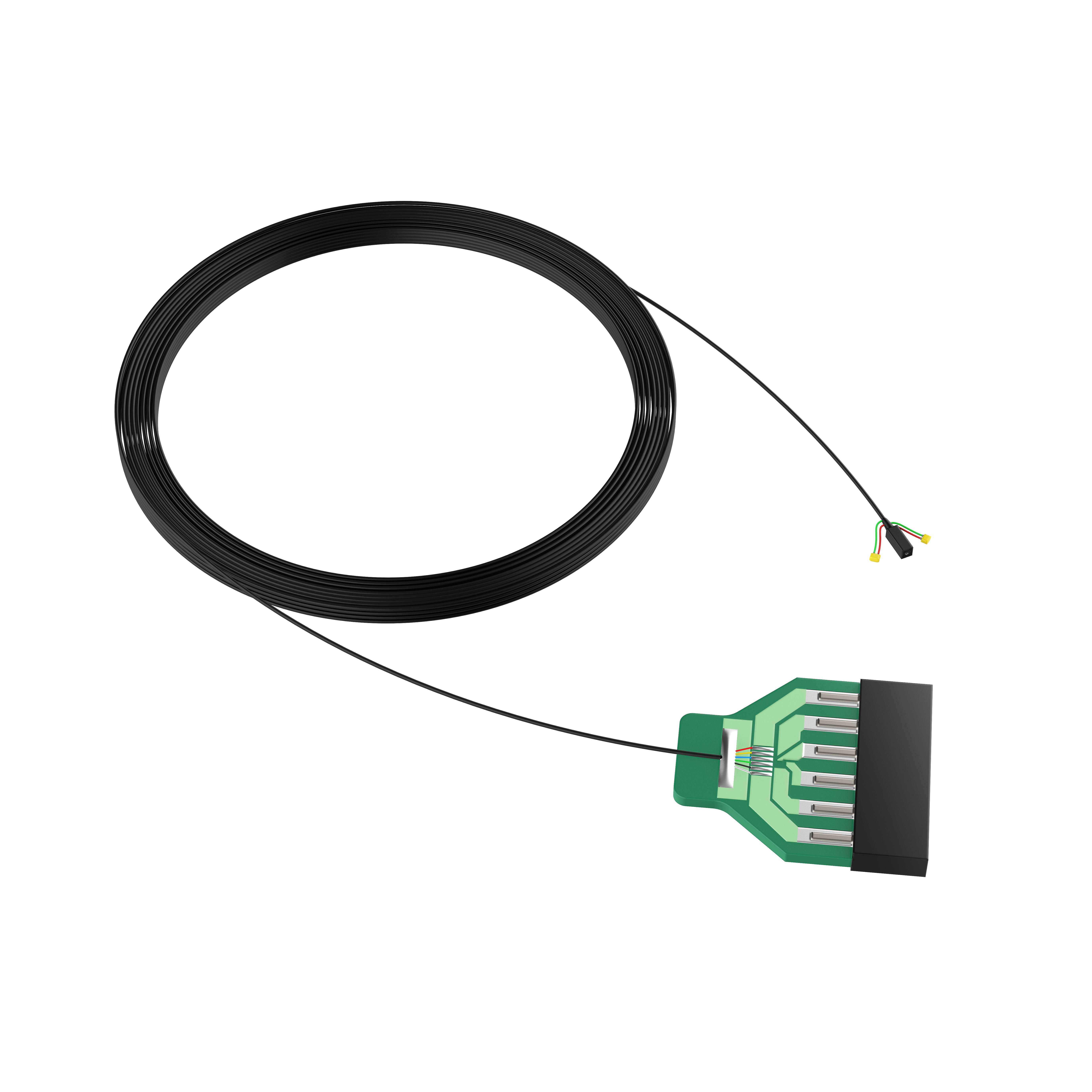
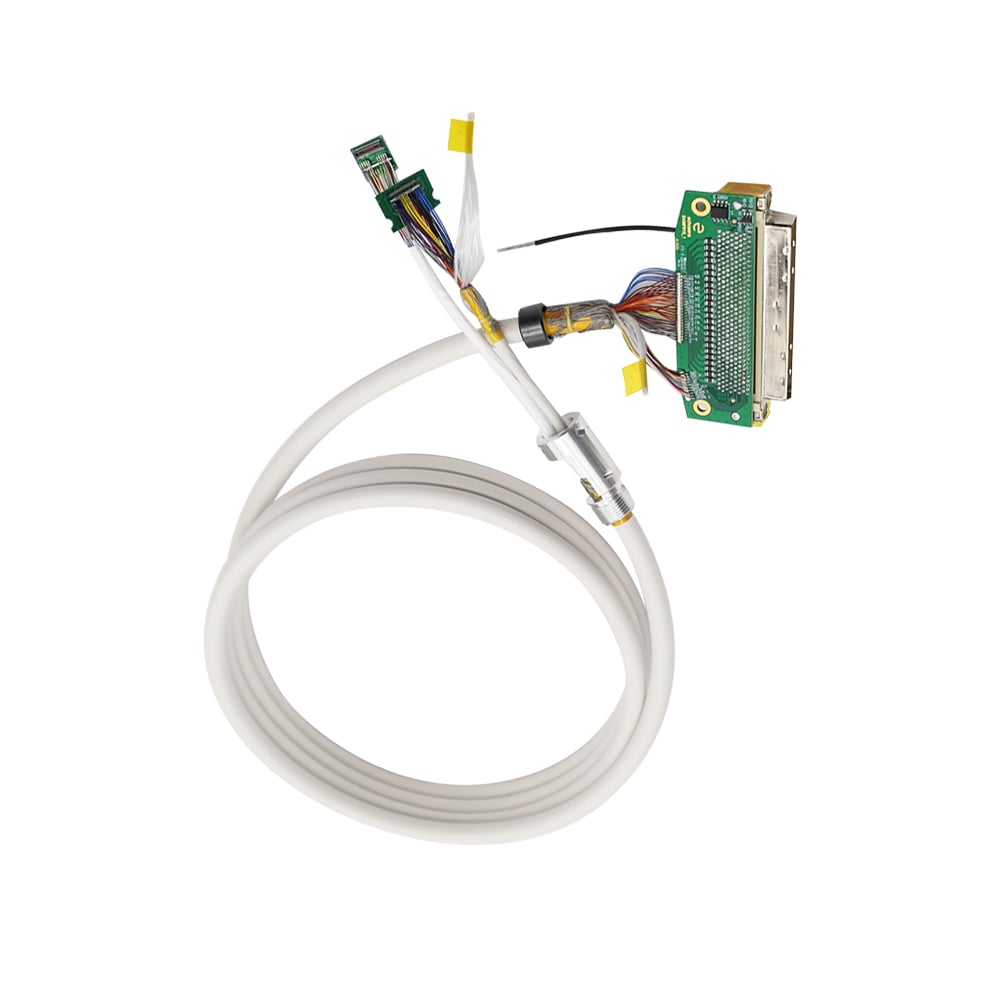
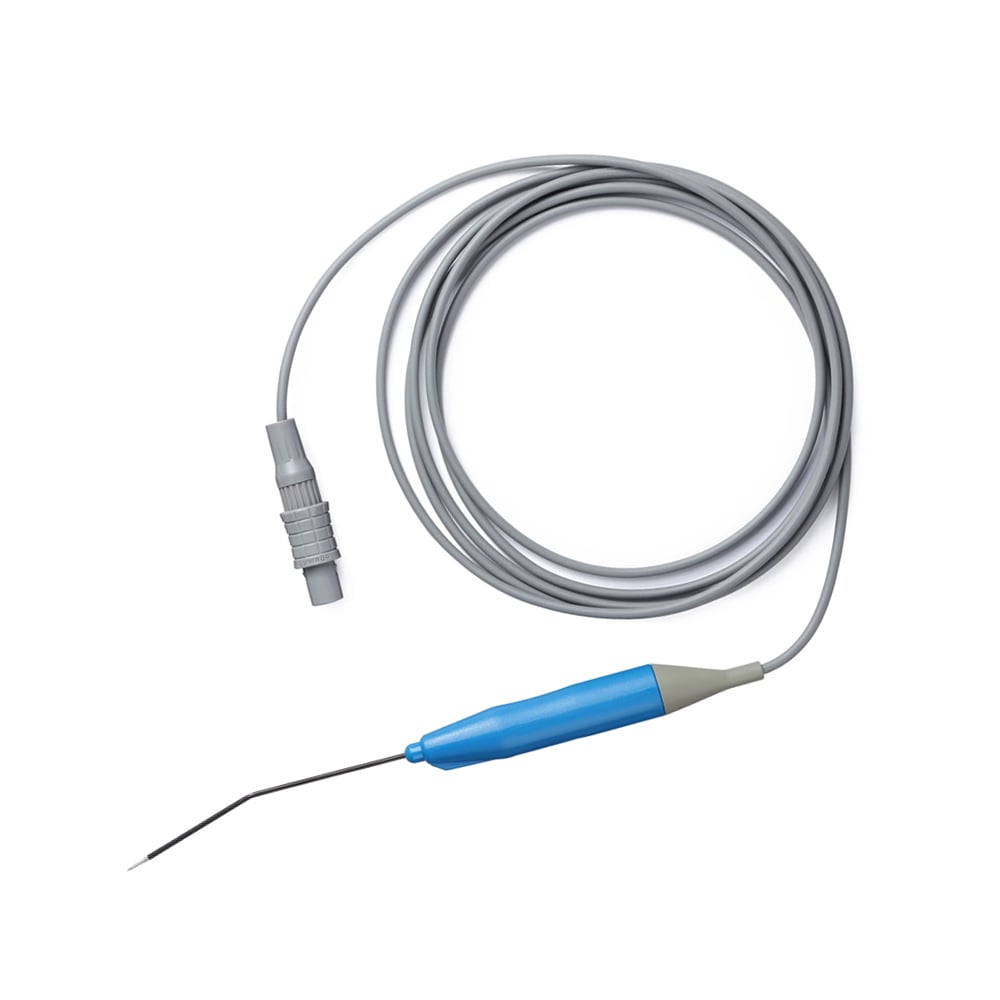
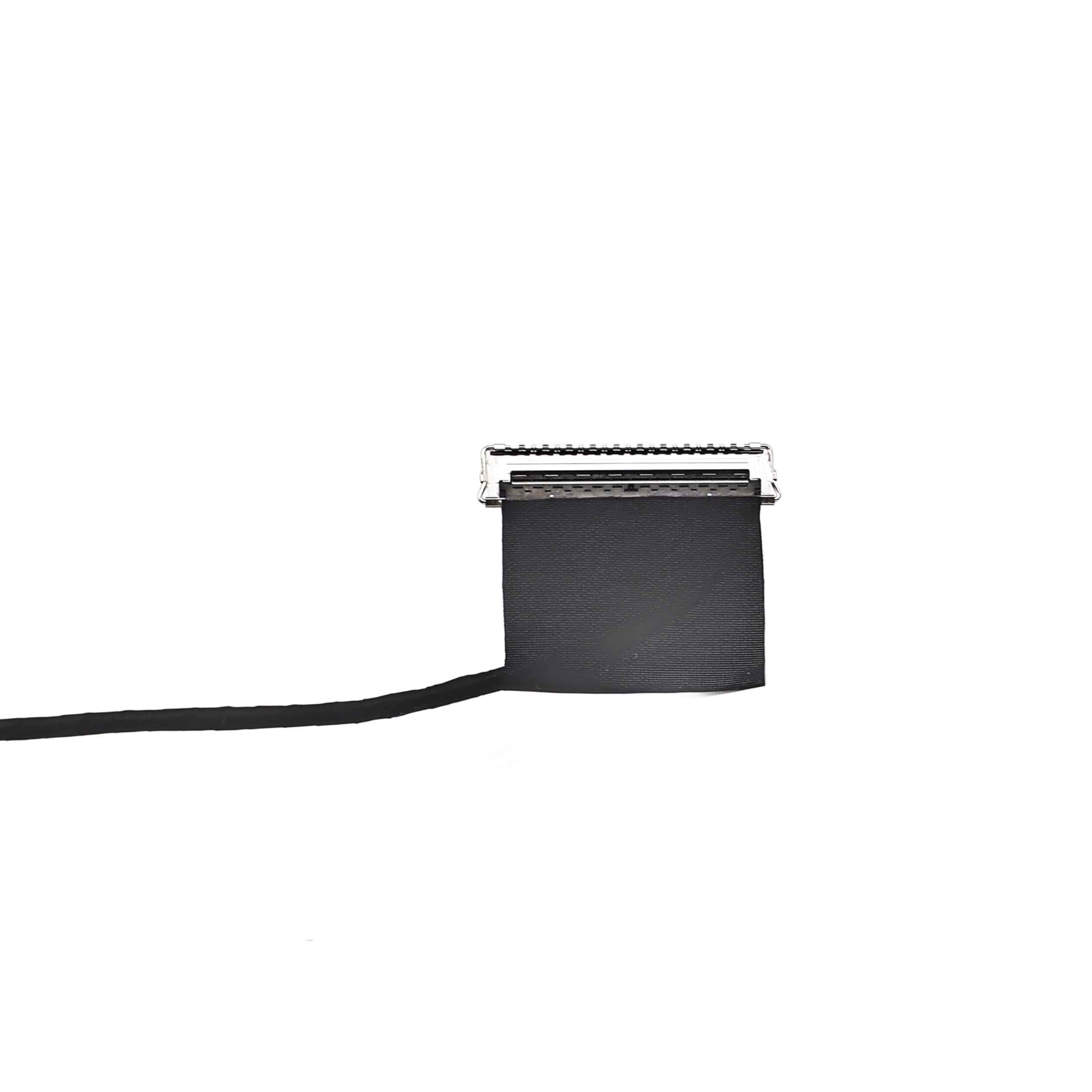
In modern healthcare, reliable transmission of high-frequency, low-amplitude signals is critical to diagnostic accuracy and therapeutic performance. Rather than being merely a passive accessory, the cable assembly plays a critical role in the signal path of ultrasound probes, RF ablation systems, and intracardiac echocardiography (ICE) catheters. A loss of signal integrity (SI) can result in image artifacts, measurement inaccuracies, or compromised treatment performance. Hotten medical cable assemblies are designed around four key principles to maintain signal performance in demanding clinical environments.
Signal integrity in a medical cable assembly depends on the complete electrical and mechanical design of the assembly, not on the cable conductor alone.
Important design factors include impedance, conductor and dielectric geometry, shielding, capacitance, connector transitions, termination, cable flexibility, material stability, and application-specific testing.
For medical equipment, these factors often interact with each other.
If → the device transmits high-frequency or low-amplitude signals
Then → control impedance, capacitance, attenuation and shielding as part of the cable assembly design
Why → sensitive signals can be affected by reflections, loss and electromagnetic interference along the transmission path.
If → the assembly contains multiple high-density signal channels
Then → evaluate channel spacing, individual shielding, overall shielding and crosstalk
Why → signal interaction can become an important design constraint when many channels are routed through a limited space.
If → the cable is repeatedly bent during normal operation
Then → evaluate conductor construction, insulation, shielding, strain relief and connector termination together
Why → mechanical movement can affect the physical structure of the signal path and the durability of the assembly.
If → the cable assembly is exposed to cleaning, sterilization, temperature or humidity conditions
Then → validate materials and electrical performance under representative environmental conditions
Why → the required performance must be maintained in the actual operating environment, not only during initial laboratory testing.
A medical cable assembly should therefore be evaluated as:
Signal Path + Mechanical Structure + Connector Interface + Environment + Validation
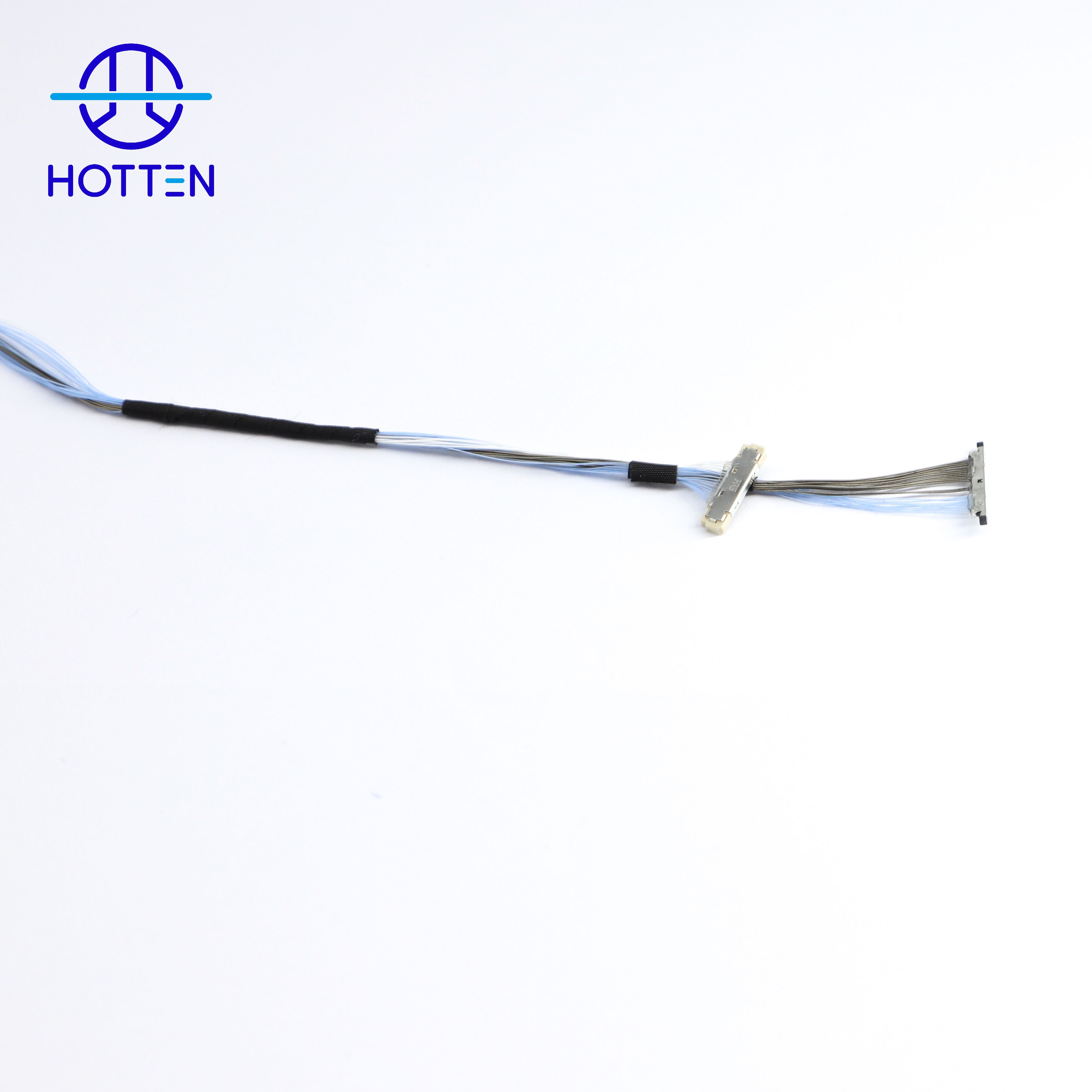
For customized Medical Cable Assembly, HOTTEN provides application-specific cable structures and assembly configurations for medical equipment.
Precision Impedance Control and Differential Pair Routing
Maintaining a consistent characteristic impedance is fundamental to signal integrity. In high-speed interfaces such as LVDS and USB4, impedance mismatches can cause signal reflections and increased return loss, making precise impedance control essential in cable assemblies. By carefully selecting extrusion materials and controlling dielectric properties, our design process maintains 90 Ω or 100 Ω differential impedance throughout the cable length. For MHz-range coaxial micro-cables used in ICE and IVUS applications, impedance can be controlled within ±5% of the specified nominal values of 50 Ω or 75 Ω. In addition, differential-pair geometry is carefully controlled to minimize skew and maintain synchronization of phase-critical signals, such as camera signals in endoscopic systems.
Advanced Shielding Architectures for EMI/EMC Immunity
Clinical environments such as operating rooms and catheterization laboratories can expose medical cables to electromagnetic interference from diathermy equipment, MRI systems, and motorized surgical robots. Proper shielding and isolation help prevent common-mode noise from interfering with low-level physiological signals by limiting unwanted coupling into patient-connected cables. Hotten uses multilayer shielding architectures to meet the requirements of different clinical applications. Aluminum/polyester foil shields, providing full coverage against electric-field interference, and tinned copper braid shields, which provide low-resistance shielding, are used in ultrasound probe cables and EEG lead wires. High-flex surgical cables for robotic applications use silver-plated copper spiral shields to maintain shielding performance during repeated flexing and torsion. A dedicated drain-wire grounding system provides a controlled path for shield currents and can improve shielding effectiveness by up to 40 dB compared with a single-shield configuration.
Material Selection for Dielectric Stability and Low Attenuation
The dielectric material is a common source of signal loss. Medical cables typically require insulation materials with low dissipation factors, stable permittivity across the operating temperature range, and appropriate biocompatibility. Low-k dielectric materials such as e-PTFE and FEP can help reduce insertion loss in high-frequency cables operating at frequencies up to 6 GHz, including RF and surgical scalpel cables. These materials also have low moisture absorption, helping maintain stable capacitance during sterilization cycles and reducing the risk of moisture-related attenuation. For applications requiring high flexibility and a small bend radius, such as dental and endoscopic devices, medically approved silicone or TPU jackets can be used to provide flexibility while incorporating low-loss materials to minimize signal impact. Each material batch is tested before production for key properties such as dielectric strength and dissipation factor to verify that material-related attenuation remains below 0.5 dB/m at the device's operating frequency.
Mechanical Robustness with Dynamic Flex Performance
Clinical devices may be subjected to thousands of flex cycles caused by probe articulation and robotic-arm movement, as well as repeated autoclave and ethylene oxide (EtO) sterilization cycles. Mechanical stress can cause conductor micro-cracking, impedance shifts, or shield damage, potentially resulting in signal-integrity degradation. To address these challenges, Hotten has developed the following three mechanical design principles: (1) Use ultra-fine tinned or silver-plated copper conductors as small as 38 AWG, together with optimized lay lengths, to distribute bending strain; (2) Use stress-relief boots and overmolded connectors to transfer tensile loads away from solder joints; (3) Conduct dynamic flex testing for more than 10,000 cycles using robotic wrist or gimbal-camera motion. For example, our gimbal assemblies use aramid-fiber strength members to absorb axial loads, while conductor stranding in our robotic harnesses is optimized to accommodate flexing without significantly affecting signal phase. Comprehensive testing verifies that insertion loss and crosstalk remain within specified clinical limits after 5,000 sterilization cycles.
For an OEM medical device project, the cable assembly should be evaluated as part of the complete device signal path and mechanical system.
A practical framework is:
Signal Requirements → Cable Structure → Impedance → Shielding → Materials → Connector & Termination → Mechanical Performance → Environmental Conditions → Testing → Production Consistency
The objective is not simply to identify a cable that works in a laboratory.
The objective is to define an assembly that can meet the required electrical and mechanical performance repeatedly in the intended medical application.
Medical cable assemblies can be used in very different systems, including ultrasound probes, endoscopes, medical imaging equipment, RF systems and surgical devices. HOTTEN's current medical solutions also separate application requirements such as ultrasound, endoscopy, imaging and surgical equipment rather than treating them as one identical cable problem.
OEM engineers should therefore define the application before selecting the cable.
| Requirement | Engineering Question |
|---|---|
| Device Type | Ultrasound, endoscopy, imaging, surgical or other? |
| Signal Type | Analog, RF, differential, sensor or mixed signals? |
| Frequency / Bandwidth | What operating frequency range is required? |
| Impedance | Is 50Ω, 75Ω, 90Ω, 100Ω or another value specified? |
| Capacitance | Is cable capacitance a system constraint? |
| Channel Count | How many individual signal paths are required? |
| Cable Length | What finished length is required? |
| Cable OD | What space is available for routing? |
| Flexibility | Static or dynamic movement? |
| Environment | Temperature, humidity, sterilization, chemicals? |
| Connector | What mating interface and pinout are required? |
| Validation | What electrical, mechanical and environmental tests are required? |
If → the OEM provides only the cable name and connector part number
Then → define the missing electrical, mechanical and environmental requirements
Why → the connector and cable type alone do not define the complete assembly performance.
A medical cable assembly normally consists of more than the cable itself.
The complete signal path can be represented as:
Device Interface
→ Connector
→ Termination
→ Cable
→ Shielding
→ Cable
→ Termination
→ Connector
→ Receiving Electronics
Each transition can introduce its own engineering constraint.
If → the cable itself meets the required electrical characteristics
Then → verify the finished assembly after connectors and terminations are added
Why → the final assembly contains additional interfaces that are not present in the raw cable.
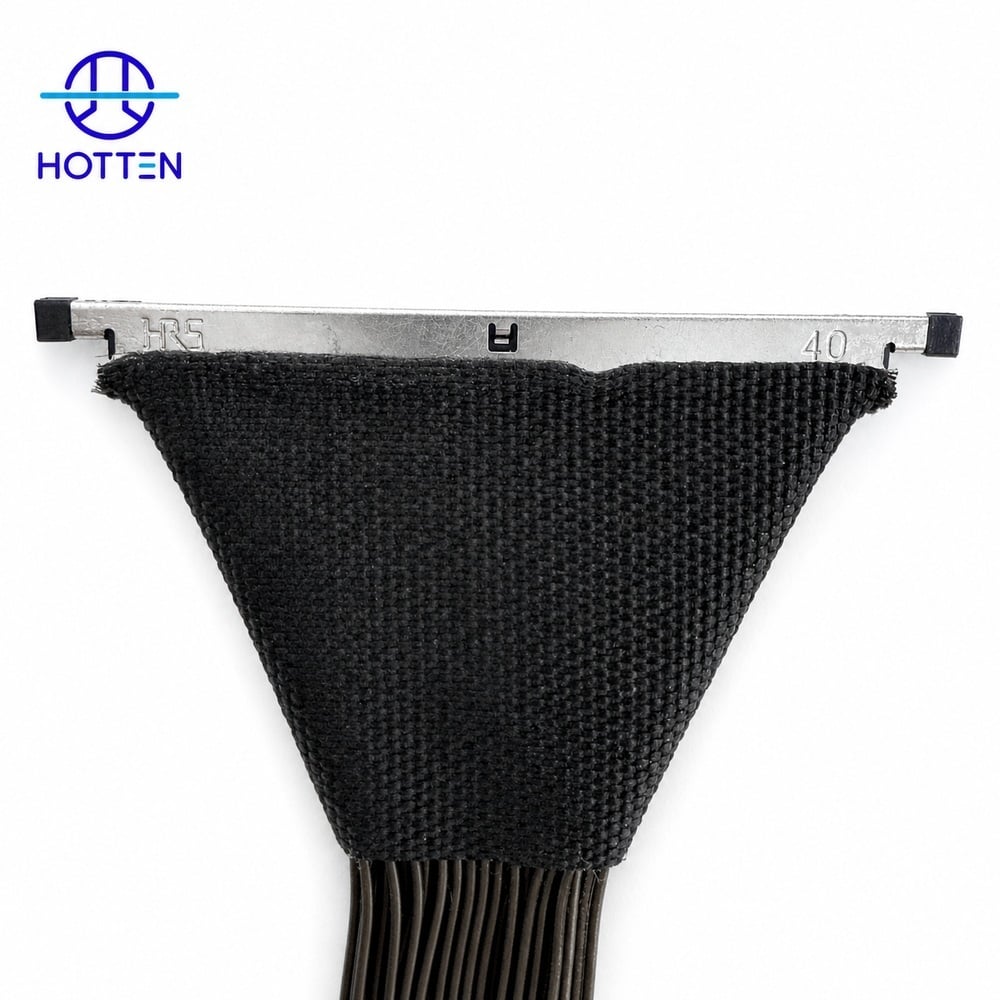
This is particularly important for high-density medical assemblies, where connector pitch, termination geometry and cable routing can become part of the design constraint.
HOTTEN's Medical Cable Assembly product category currently includes customized configurations involving connectors, cable structures and application-specific assemblies.
Not every medical cable assembly uses the same electrical structure.
Depending on the application, the design may include:
If → the system uses a controlled-impedance high-frequency signal
Then → define the required impedance and control the conductor/dielectric geometry accordingly
Why → changes in the transmission structure can introduce reflections and affect signal integrity.
If → the system uses differential signaling
Then → control pair geometry, spacing and electrical balance
Why → differential signal integrity depends on the relationship between the two conductors rather than on one conductor alone.
This distinction also prevents the article from overlapping too heavily with the first Micro-Coax article, where the main emphasis is on the design of the micro coaxial cable itself.
The first article can therefore be linked naturally here:
How Micro Coaxial Cable Design Ensures Signal Integrity in Medical Devices
Shielding should be selected according to the actual electrical environment of the medical device.
Potential sources of interference can include:
Possible shielding structures include:
| Shielding Approach | Typical Engineering Objective |
|---|---|
| Foil Shield | High-frequency interference control |
| Braid Shield | Shielding plus mechanical robustness |
| Individual Shield | Channel-to-channel isolation |
| Overall Shield | Additional system-level shielding |
| Multi-Layer Shield | Combined shielding requirements |
| Drain / Ground Structure | Controlled shield connection |
If → the device contains multiple sensitive channels in a compact structure
Then → evaluate individual shielding together with overall shielding
Why → external EMI and channel-to-channel coupling are different engineering concerns.
If → the cable must also support repeated bending
Then → evaluate shielding construction together with flex performance
Why → the shielding structure has both electrical and mechanical effects.
This connects directly to HOTTEN's current medical solution page, which lists impedance, capacitance, conductor construction, shielding, cable diameter and bending performance as configurable micro coaxial design factors.
A medical cable material should not be selected solely because it is electrically suitable.
Engineers may also need to consider:
If → low transmission loss is important
Then → evaluate dielectric properties and the complete cable construction
Why → dielectric behavior contributes to the overall electrical characteristics of the cable.
If → the cable is exposed to repeated cleaning or sterilization
Then → evaluate whether the selected insulation, jacket and termination materials maintain the required properties after the specified process
Why → environmental exposure can affect both mechanical and electrical performance.
If → the cable requires a small bend radius
Then → evaluate jacket material, conductor construction and shield structure together
Why → flexibility is determined by the complete cable architecture rather than by the jacket alone.
For many medical cable assemblies, the connector area is one of the most important mechanical and electrical interfaces.
Relevant engineering parameters may include:
If → the cable uses a high-density connector
Then → define the connector and cable termination structure together
Why → the available termination space may determine which cable construction is practical.
If → the assembly is repeatedly moved near the connector
Then → evaluate strain relief and local bend behavior
Why → mechanical stress is often concentrated around the termination region.
This also provides a direct bridge to the third selected article:
How Flex-Life Testing Helps Medical Cable Assemblies Maintain Performance After Repeated Bending
Medical devices often require compact routing while also requiring repeated movement.
This creates a design trade-off:
Smaller OD
vs.
Mechanical robustness
and:
Higher flexibility
vs.
Electrical / shielding requirements
If → the cable must fit inside a compact probe or instrument
Then → define maximum cable OD before finalizing the cable structure
Why → the mechanical envelope may determine the feasible cable architecture.
If → the cable undergoes dynamic movement
Then → define the required bend radius, movement pattern and expected flex cycles
Why → “flexible cable” is not a complete engineering specification.
HOTTEN's medical solution pages currently describe customized cable diameter, bending radius, materials, connectors, terminations and assembly configurations as part of the development process.
A medical cable assembly should be tested under conditions that represent its actual use.
| Environmental / Mechanical Condition | Engineering Question |
|---|---|
| Temperature | Does the cable maintain electrical and mechanical performance? |
| Humidity | Is material or insulation performance affected? |
| Repeated Bending | Does flexing affect continuity or signal performance? |
| Vibration | Do terminations and connectors remain stable? |
| Cleaning | Are jacket and surface materials compatible? |
| Sterilization | Does the assembly maintain the required performance after the specified process? |
| Chemical Exposure | Are materials compatible with the application? |
If → the cable is used in a reusable medical instrument
Then → define the actual cleaning, sterilization and mechanical-use profile before validation
Why → the required qualification depends on how the device is operated and maintained.
If → the cable is used in a moving imaging probe
Then → combine environmental testing with representative flex testing
Why → the critical failure mechanism may involve both mechanical stress and electrical performance.
A common mistake is to treat electrical testing and mechanical testing as completely separate activities.
For a medical cable assembly, a more useful validation sequence is:
Initial Electrical Test
→ Mechanical Test
→ Environmental Exposure
→ Final Electrical Test
→ Dimensional / Visual Inspection
This allows engineers to compare performance before and after representative stress.
If → continuity remains normal after flex testing
Then → continue to evaluate signal-related parameters
Why → continuity alone does not prove that high-frequency signal performance remains unchanged.
If → the assembly passes initial RF or impedance testing but changes after mechanical stress
Then → investigate conductor, shielding, termination and local geometry
Why → mechanical deformation may change the physical signal path without causing an immediate open circuit.
A successful prototype does not automatically prove long-term manufacturing consistency.
The development chain should be:
Prototype
→ Design Verification
→ Process Validation
→ Pilot Production
→ Production Inspection
→ Lot-to-Lot Monitoring
| Stage | Main Question |
|---|---|
| Prototype | Can the design meet the requirement? |
| Design Verification | Does the complete assembly satisfy specified performance? |
| Process Validation | Can the manufacturing process repeatedly produce the design? |
| Pilot Production | Does the process remain stable at production scale? |
| Production Inspection | Does each lot meet defined acceptance criteria? |
If → prototype samples meet the specification
Then → verify the production process and measurement method
Why → prototype performance and production repeatability are different questions.
HOTTEN's current medical solution page describes a prototype → validation → testing → production workflow, which fits naturally with this engineering sequence.
A useful RFQ should define both electrical requirements and physical integration requirements.
| Category | Recommended Information |
|---|---|
| Application | Ultrasound / Endoscopy / Imaging / Surgical / Other |
| Signal Type | Coaxial / Differential / Mixed |
| Frequency | Operating frequency or bandwidth |
| Impedance | Nominal impedance and tolerance |
| Capacitance | Target or maximum value if applicable |
| Attenuation | Required limit if applicable |
| Channel Count | Number of signal channels |
| Conductor | AWG / material / construction |
| Dielectric | Material / structure |
| Shielding | Individual / overall / multilayer |
| Cable OD | Maximum allowable dimension |
| Flexibility | Static / dynamic |
| Bend Radius | Minimum required radius |
| Connector | Part number / manufacturer |
| Pinout | Connector pin assignment |
| Termination | Solder / crimp / other |
| Length | Nominal + tolerance |
| Environment | Temperature / humidity / cleaning / sterilization |
| Testing | Electrical / mechanical / environmental |
| Production | Prototype / pilot / mass production |
If → the RFQ says only “custom medical cable assembly”
Then → add application, signal characteristics, connector information, dimensions, environmental conditions and validation requirements
Why → a complete engineering specification reduces ambiguity during DFM, quotation, prototyping and production.
A practical OEM decision sequence is:
Clinical Application
→ Signal Requirements
→ Channel Count
→ Impedance / Capacitance
→ Cable Geometry
→ Shielding
→ Material Selection
→ Cable OD / Flexibility
→ Connector & Termination
→ Environmental Requirements
→ Prototype Testing
→ Mechanical / Environmental Validation
→ Production Validation
For an ultrasound probe, for example:
High Channel Count
→ determine available probe space
→ establish cable OD
→ define impedance and capacitance requirements
→ select conductor and dielectric construction
→ define individual and overall shielding
→ determine bending requirements
→ select connector and termination structure
→ validate initial electrical performance
→ perform representative flex / environmental testing
→ confirm production consistency.
For an endoscopic system:
Small Bend Radius
→ define movement pattern
→ select flexible conductor construction
→ select suitable dielectric and jacket
→ control cable OD
→ design strain relief
→ define connector termination
→ perform dynamic flex testing
→ verify signal performance before and after testing.
This is why medical cable assembly design should be approached as a system engineering problem, rather than simply selecting a wire gauge or jacket material.
How Micro Coaxial Cable Design Ensures Signal Integrity in Medical Devices
How Flex-Life Testing Helps Medical Cable Assemblies Maintain Performance After Repeated Bending
How Impedance Control Helps High-Frequency Coaxial Cable Maintain Stable Signal Transmission
How RF Coaxial Cable Assemblies Control Impedance and Loss for Reliable High-Frequency Signals
How to Specify a Custom Cable Assembly for OEM Projects
How Custom Medical Cables Are Processed and Inspected Before Delivery
Conclusion
The key factors supporting signal integrity at Hotten are impedance control, shielding effectiveness, dielectric stability, and mechanical endurance. Every year, we introduce up to 300 new cable specifications. Our 10,000 m² precision manufacturing facility enables us to produce medical cable assemblies tailored to the electrical and mechanical requirements of their intended clinical applications. Whether it is a 30 MHz ultrasound probe cable, a multichannel ICE catheter harness, or another specialized assembly, our designs are engineered to preserve signal quality from the patient interface to the display.
 Hot News
2026-09-17
2026-09-04
2025-12-17
2025-12-11
2025-12-05