 EN
EN
Quick Links

Equipment downtime is a significant concern in the healthcare sector, where reliability is critical to continuous patient care. Critical equipment downtime is more than an operational inconvenience; it can pose risks to patient safety and continuity of care. Cable damage during equipment handling can interrupt a scan, while unstable power output from an RF (radiofrequency) ablation generator may lead to procedure delays, postponed diagnoses, and reduced staff productivity. For companies developing or sourcing medical cable assemblies, Hotten provides solutions designed to support regulatory compliance and reliable equipment performance when it matters most. The following four reliability factors can directly influence service continuity in healthcare facilities:
Reliable medical cable assemblies can help reduce equipment service interruptions by controlling the failure points most likely to affect cable performance during repeated use.
For medical equipment, cable reliability depends on more than electrical continuity. OEM engineers and procurement teams should consider flex life, connector termination, strain relief, material durability, shielding, environmental exposure, and production testing together.
A cable that passes an electrical test when new may still create service problems if repeated bending, connector stress, cleaning chemicals, sterilization, or mechanical handling gradually affects its performance.
| Reliability factor | What should be evaluated | Potential service impact |
|---|---|---|
| Flex life | Conductor construction, lay length, jacket and bend conditions | Fatigue-related failures |
| Connector termination | Crimp/solder quality, strain relief and connector retention | Intermittent connection |
| Cable materials | Jacket, insulation and shielding materials | Cracking, hardening or degradation |
| Shielding | Shield structure and termination | EMI or signal interference |
| Environmental exposure | Cleaning, temperature, humidity and sterilization conditions | Long-term material degradation |
| Electrical testing | Continuity, insulation, Hi-Pot and application-specific tests | Early detection of defects |
| Traceability | Material, process and inspection records | Faster failure analysis and corrective action |
The engineering objective is not simply to make a cable stronger. It is to ensure that the cable maintains its electrical and mechanical performance throughout the expected service conditions of the medical device.
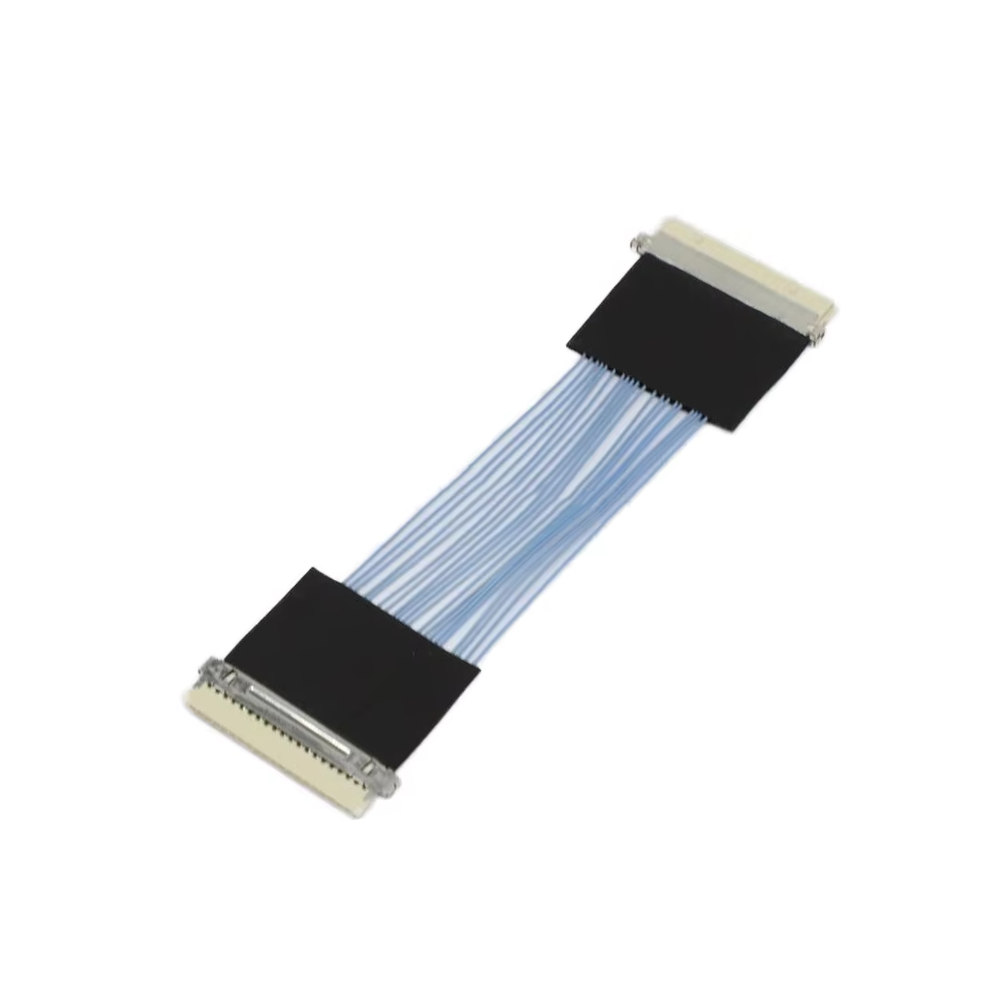
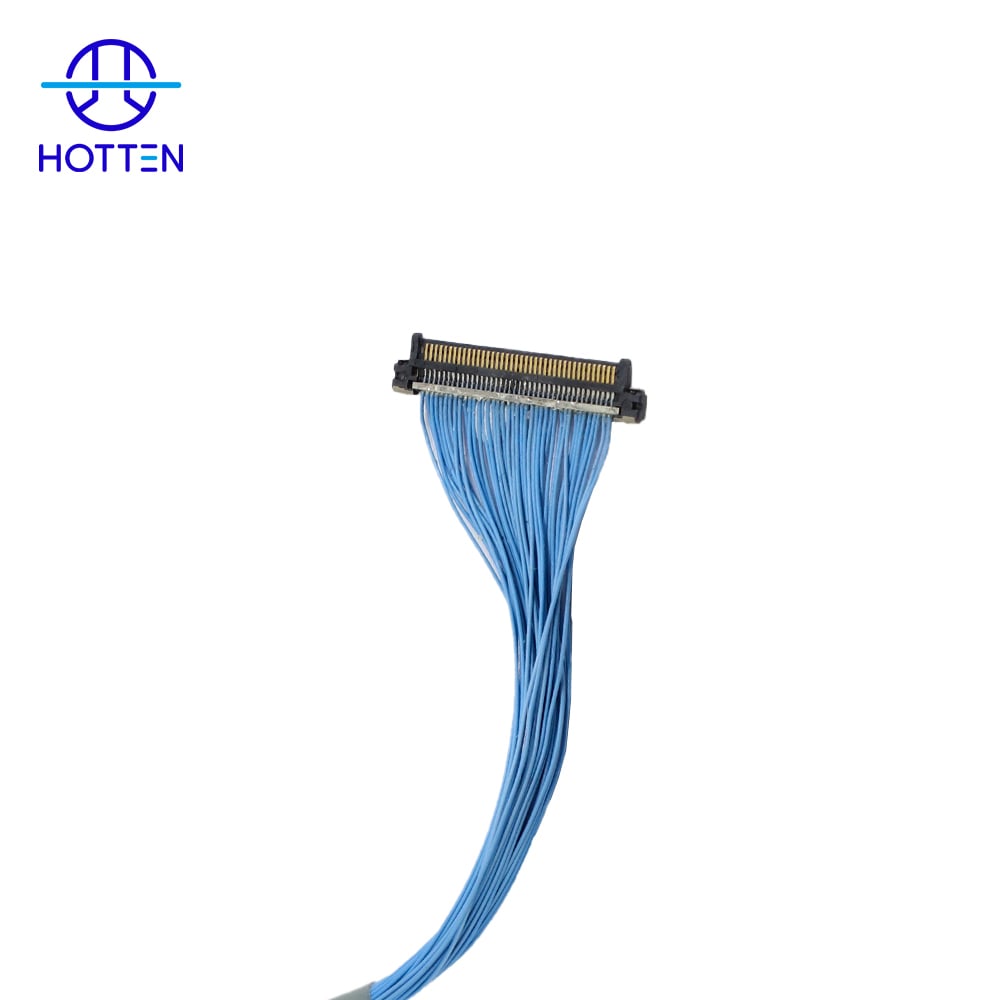
HOTTEN provides Medical Cable Assembly solutions for applications requiring compact construction, flexibility, controlled signal transmission, and application-specific testing.
Superior Flex-Life Endurance for High-Motion Applications
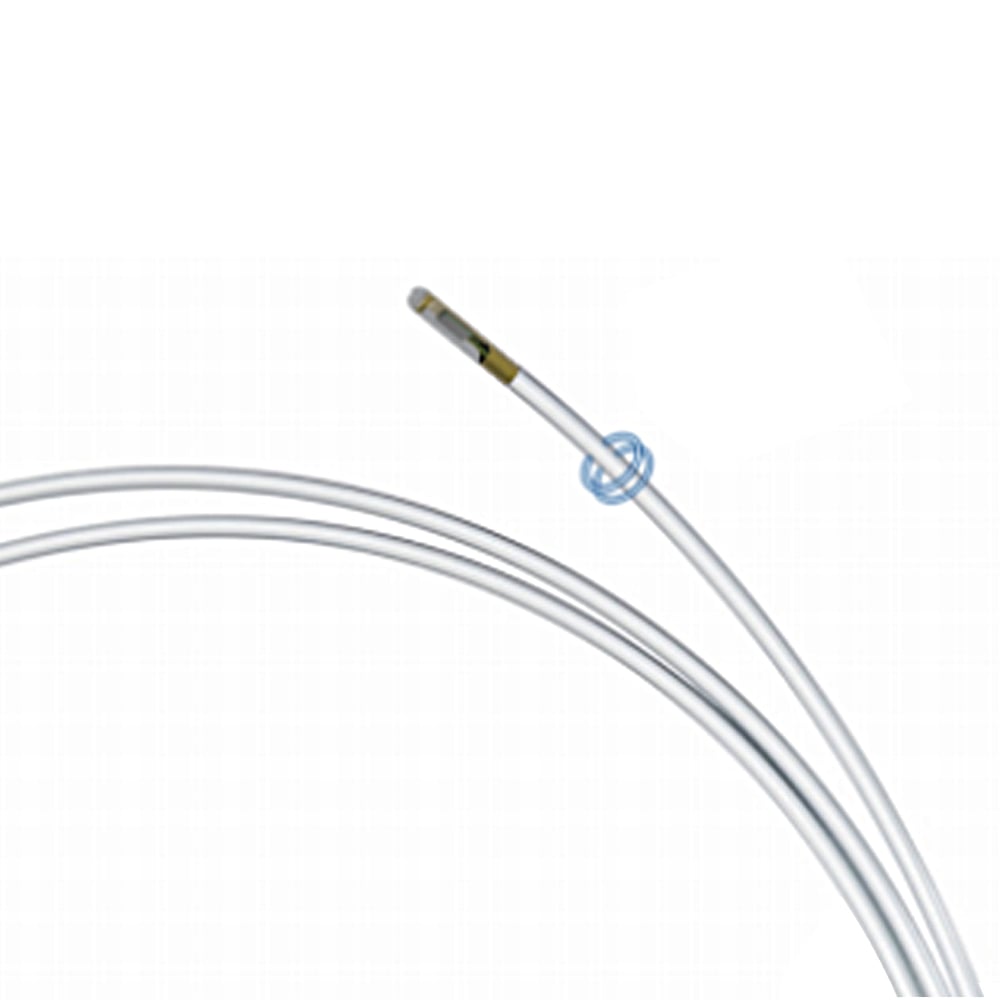
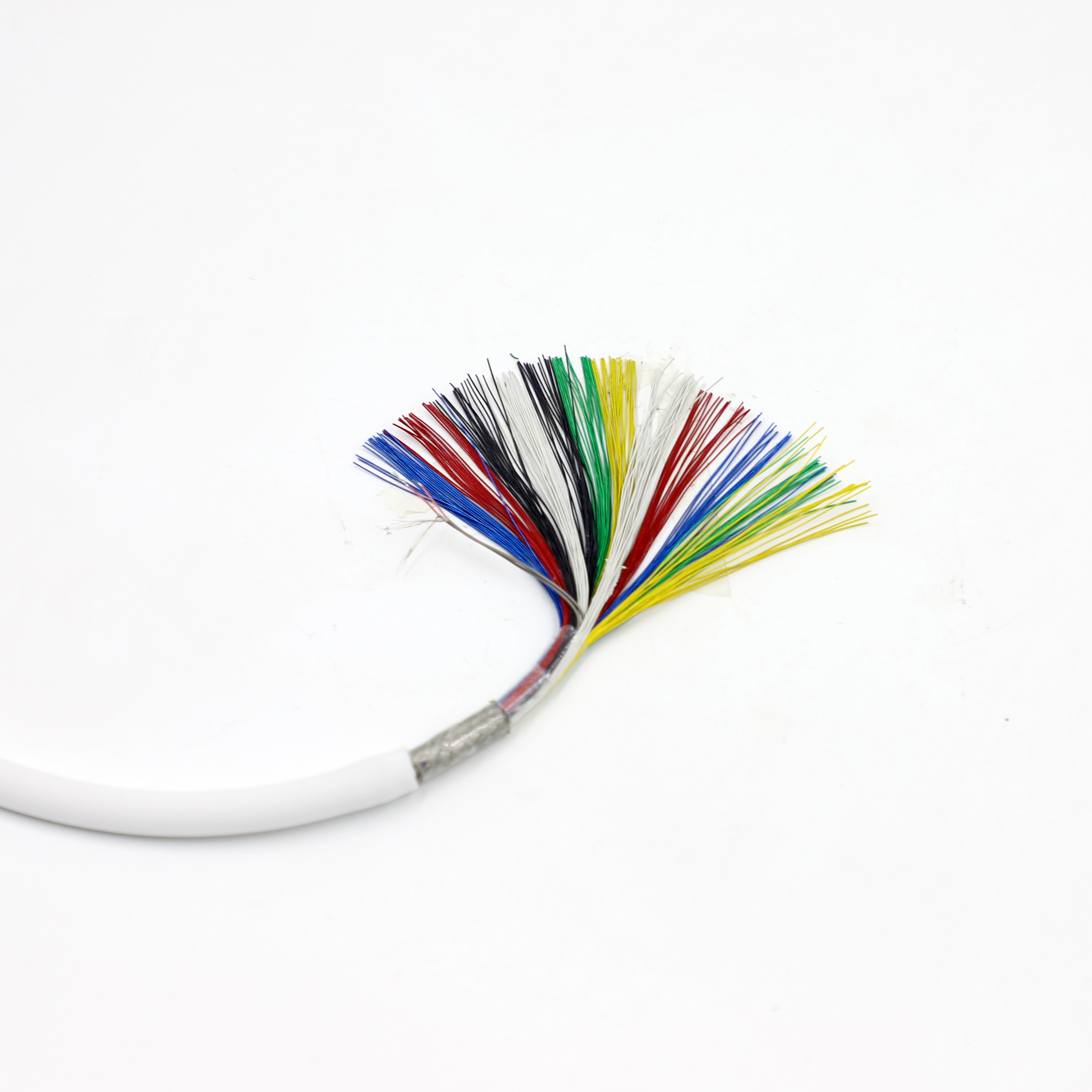
Today's medical devices are rarely stationary during clinical use. Pan-and-tilt camera cables, flexible endoscope cables, and the continuous movement of robotic arms all place demanding mechanical requirements on surgical equipment. Consumer-grade cables may typically withstand 5,000 to 10,000 flex cycles before conductor fatigue or shield damage affects their performance. By contrast, Hotten's medical cable assemblies are designed to withstand more than 50,000 flex cycles. This durability is supported by ultra-fine stranded conductors as small as 38 AWG, optimized lay lengths, and TPE or silicone jackets designed to resist stress cracking. To meet the demands of surgical environments, our robotic wire harnesses and endoscopic cables undergo torsional-fatigue testing with signal conditions representative of actual procedures. This helps identify potential signal degradation caused by micro-cracking and reduces the risk of unplanned equipment replacement during extended operations.
Stable Connector Termination and Strain Relief
Industry data indicate that a significant proportion of cable failures occur at connector interfaces, where repeated mating, unmating, mechanical stress, and misalignment can place strain on solder joints, crimps, and overmolded components. To address these failure points, Hotten connector assemblies incorporate three layers of strain-relief protection: (1) heat-shrink internal protection of the conductor-to-contact joints; (2) medical-grade polyurethane overmolded connector housings which chemically bond to the cable jacket; and (3) integrated bend-limiting collars which spread flexing forces away from the connector termination point. Color-coded strain-relief boots are also available to indicate the intended orientation of ultrasound probe cables and ICE (intracardiac echocardiography) harnesses. This design has helped reduce connector-related failures by more than 80% in reported clinical testing, helping to reduce service calls and repair time.
Wipeable and Sterilization Resistant (No Degradation)
Medical cables may be exposed daily to disinfectants such as isopropyl alcohol, bleach-containing wipes, and hydrogen peroxide vapor, as well as autoclave sterilization at 134°C. These conditions can cause cable jackets to harden, crack, or swell, potentially affecting electrical insulation and mechanical strength. Our surgical scalpel and RF ablation cables use cross-linked polyethylene (XLPE) and fluoropolymer materials that provide high chemical resistance while maintaining flexibility after more than 1,000 sterilization cycles. This helps to minimize downtime and valuable clinical time.
Medical cable reliability should be evaluated according to how the cable is used in the finished equipment.
Different devices expose cables to different stresses:
| Application condition | Typical cable stress |
|---|---|
| Ultrasound probe movement | Repeated bending and twisting |
| Endoscope operation | Tight bending and repeated articulation |
| Robotic equipment | Dynamic motion and torsion |
| Patient monitoring | Frequent handling and cleaning |
| RF ablation equipment | Electrical and thermal requirements |
| Imaging equipment | Signal integrity and repeated equipment movement |
If a cable moves continuously during normal operation, then dynamic flex and torsion should be part of the qualification plan, because a cable designed only for static installation may not maintain performance under repeated movement.
This is why cable selection should begin with the device's actual motion profile, routing path, bending radius, operating environment, and expected service life.
A flex-life specification should not be evaluated only by asking how many bending cycles a cable can survive.
The result depends on the test conditions, including:
For medical cable assemblies, the failure criterion should also be defined.
A cable may remain electrically continuous while already showing:
If the cable is used in a high-motion application, then flex testing should evaluate electrical performance before and after mechanical cycling, because mechanical endurance alone does not confirm signal integrity.
HOTTEN's Ultrasound Probe Cable and Endoscope Cable solutions can be evaluated according to the mechanical conditions of the target device.
The connector transition is often one of the most mechanically sensitive regions of a cable assembly.
Repeated movement can transfer stress into:
cable jacket → strain relief → termination area → contact/crimp/solder joint → connector housing
A robust assembly therefore needs appropriate strain relief and controlled termination.
Important engineering parameters include:
| Parameter | Engineering consideration |
|---|---|
| Strain relief | Prevent excessive bending directly at termination |
| Termination method | Match conductor and connector requirements |
| Connector retention | Maintain mechanical connection during use |
| Bend transition | Avoid concentrated stress |
| Overmolding | Protect termination where required |
| Connector orientation | Match device routing and installation |
If the cable repeatedly bends close to the connector, then the strain-relief design becomes especially important, because localized stress can cause fatigue even when the cable itself has adequate flex performance.
Medical equipment cables can be exposed to cleaning agents, disinfectants, moisture, temperature variation, and, for some applications, sterilization processes.
Material selection should therefore consider:
The correct material depends on the application rather than simply whether a material is described as “medical grade.”
If a cable will be repeatedly wiped with disinfectants, then chemical resistance and long-term jacket stability should be validated, because repeated chemical exposure can gradually change mechanical properties.
If the cable is subjected to a defined sterilization process, then the actual sterilization method, temperature, exposure time, and required cycle count should be specified before material selection, because compatibility is process-specific.
A medical cable can experience mechanical degradation without immediately showing an open or short circuit.
Depending on the cable design and application, validation may include:
| Test | Purpose |
|---|---|
| Continuity | Confirm electrical connection |
| Insulation resistance | Verify electrical isolation |
| Hi-Pot | Evaluate dielectric withstand where applicable |
| Resistance | Check conductor or contact condition |
| Impedance | Verify controlled transmission characteristics |
| TDR | Locate impedance discontinuities |
| Insertion loss | Evaluate RF/high-frequency transmission |
| Flex testing | Evaluate performance after repeated movement |
| Pull testing | Verify termination mechanical strength |
If a cable carries sensitive analog, RF, ultrasound, or other high-speed signals, then electrical performance should be checked after mechanical and environmental testing, because mechanical stress can affect signal behavior before complete electrical failure occurs.
For high-frequency medical applications, HOTTEN also provides RF Coaxial Cable Assembly solutions.
Reliability requirements are easier to control when they are defined before prototype production rather than after a cable failure occurs.
An OEM RFQ should identify:
| RFQ parameter | Recommended information |
|---|---|
| Application | Medical device and specific subsystem |
| Motion | Static, repeated bending, torsion or robotic movement |
| Flex requirement | Cycle count and test conditions |
| Bend radius | Minimum operating and test radius |
| Connector | Part number or drawing |
| Strain relief | Required geometry or performance |
| Materials | Jacket, insulation and overmold requirements |
| Cleaning | Chemicals and exposure frequency |
| Sterilization | Method and cycle requirements, where applicable |
| Electrical tests | Continuity, IR, Hi-Pot, impedance, RF tests, etc. |
| Environmental tests | Temperature, humidity, vibration or other requirements |
| Documentation | Inspection records, test reports and traceability |
| Production volume | Prototype, pilot and mass-production quantity |
If the OEM provides measurable reliability requirements, then the supplier can design and validate the cable against defined conditions, because “high reliability” alone is not a sufficiently testable engineering specification.
A prototype that passes testing does not automatically guarantee stable mass production.
OEMs should also evaluate whether the manufacturer can consistently control:
material → conductor processing → cable construction → connector termination → strain relief → inspection → electrical testing → traceability
Questions worth asking include:
If a medical cable will be used in long-term production, then manufacturing consistency and traceability should be evaluated alongside the prototype, because recurring variation can create reliability problems even when the original sample performed correctly.
HOTTEN supports medical cable projects through Medical Cable Assembly manufacturing, testing, and application-specific engineering for medical equipment and precision electronic systems.
The Factory Is Equipped With Wide-Ranging Test and Trace
Some of the most difficult service interruptions to prevent are caused by intermittent faults that may be difficult to detect, such as increased resistance in a grounding path or transient crosstalk during equipment warm-up. All Hotten medical cable assemblies undergo 100% electrical testing, including Hi-Pot (dielectric withstand), insulation resistance, continuity, and TDR (Time-Domain Reflectometry) impedance profiling, to verify electrical performance and safety. Each unit is assigned a unique serial number, enabling traceability to raw-material lots, production parameters, and test results. These tests can be complemented by swept-frequency insertion-loss testing from 1 MHz to 6 GHz, which is particularly relevant to applications such as IVUS (intravascular ultrasound) and EEG systems where signal-performance margins are critical. Together, these controls provide a stringent quality gate that helps identify early-life failures before products enter clinical service.
Conclusion
Beyond the financial impact, service interruptions can reduce staff confidence, disrupt workflows, and ultimately affect the continuity and quality of patient care. Hotten supports reliable medical cable production with a 10,000 m² manufacturing facility, more than 40 precision machines, and annual cable production exceeding 144 million meters. These manufacturing and testing controls help reduce the risk of catastrophic failures and performance drift, allowing healthcare providers to focus on what matters most: patient care.
 Hot News
2026-09-17
2026-09-04
2025-12-17
2025-12-11
2025-12-05