 EN
EN
Quick Links

Home > News > Company news
In the R&D manuals for eVTOL (Electric Vertical Take-off and Landing) aircraft and industrial-grade UAVs, the first rule is always: Weight equals Range.
As the "Low-Altitude Economy" transitions from a concept to large-scale commercialization, aircraft are becoming "smarter" than ever. From 8K gimbal cameras and LiDAR to multi-sensor fusion obstacle avoidance systems, massive streams of data must travel at high speeds within a compact fuselage. However, engineers face a brutal physical challenge: how to ensure absolute stability of high-speed signals in extreme dynamic environments without increasing the take-off weight?
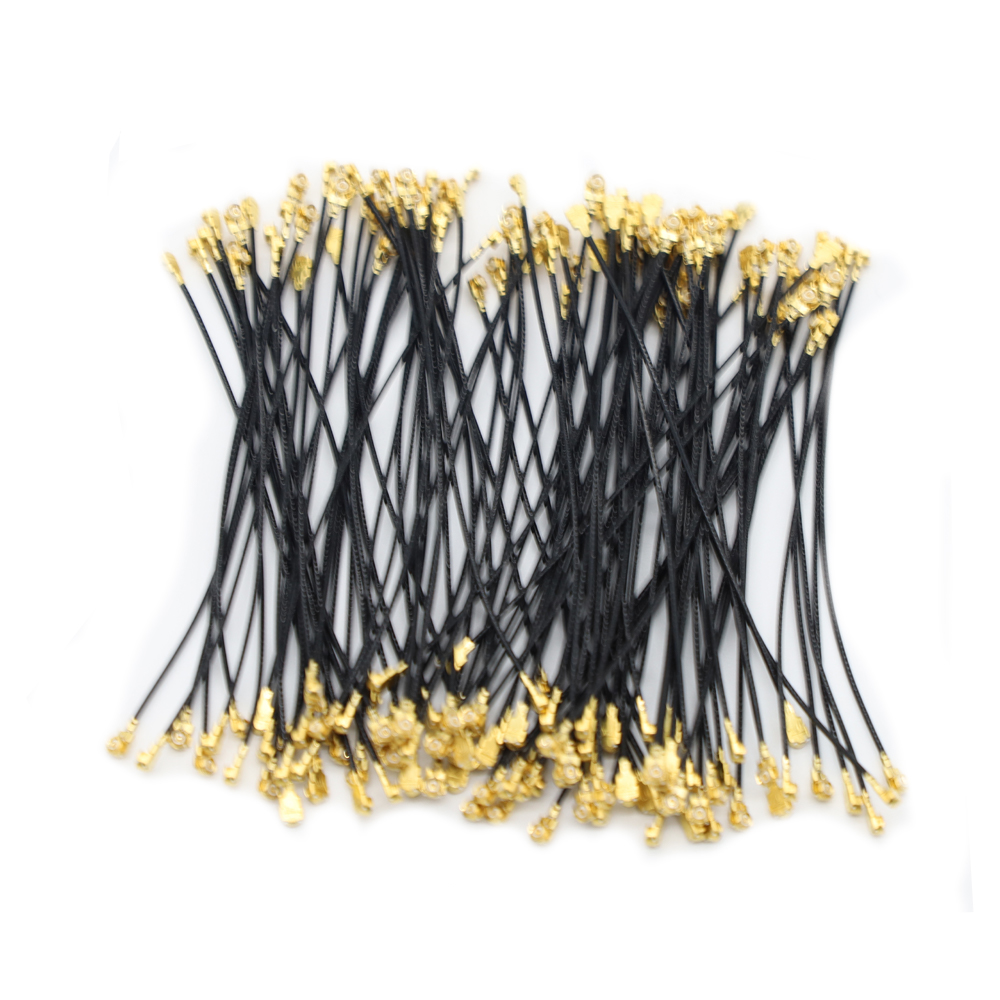
Micro-Coaxial Cables have emerged as the critical breakthrough in this "count-every-gram" competition.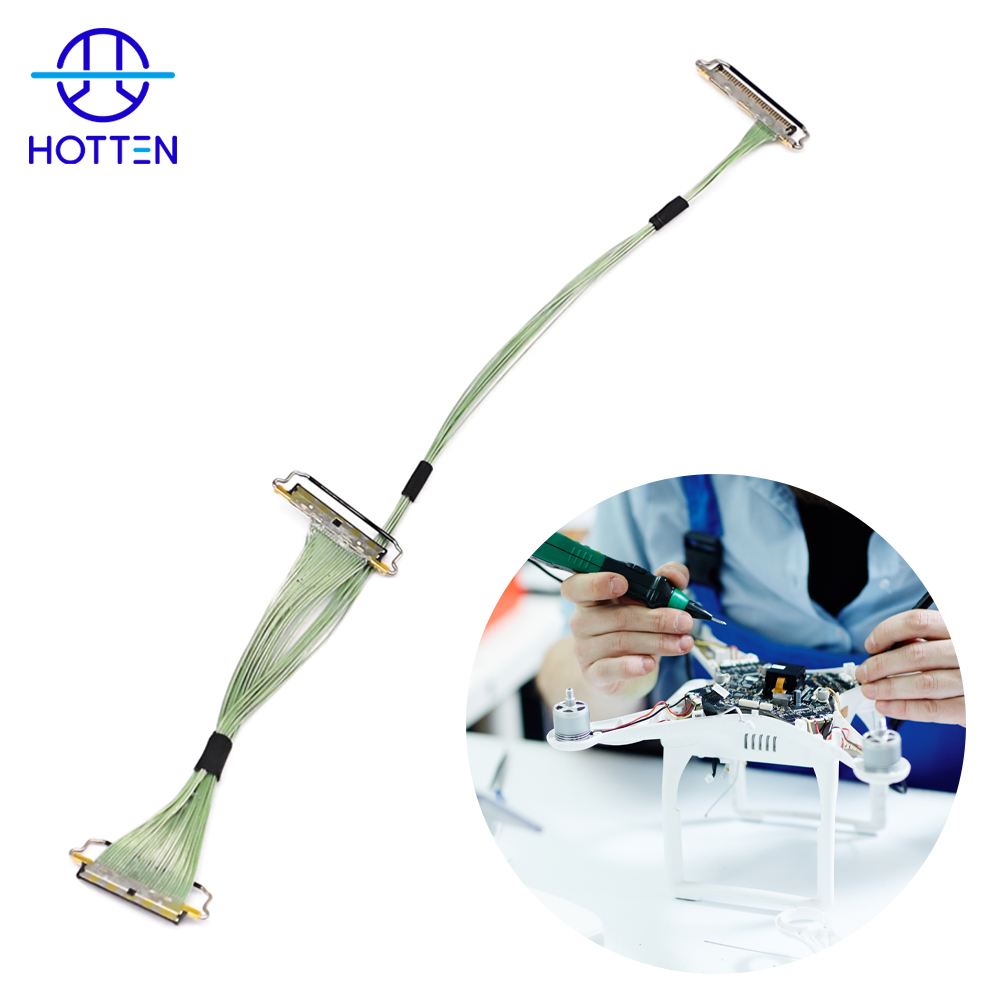
The interior of a low-altitude aircraft is an incredibly complex electromagnetic environment. Electromagnetic interference (EMI) generated by high-power motors, Electronic Speed Controllers (ESCs), and high-frequency communication modules is a "killer" of high-speed signal transmission.
Unlike traditional Flexible Printed Circuits (FPC) or unshielded wiring, micro-coaxial cables provide an independent physical shielding layer for every signal channel. Even in environments with high electromagnetic noise and motors running at full speed, they keep return loss and crosstalk at extremely low levels. For autonomous aircraft that rely on real-time data backhaul, this "electromagnetic silence" is the first line of defense for flight safety.
Flight is never static. During low-altitude operations, the airframe is subject to continuous high-frequency vibrations, while gimbal systems require uninterrupted three-axis rotation.
Traditional wiring solutions are prone to mechanical fatigue under long-term vibration, and may even develop micro-cracks that lead to signal interruption. By introducing high-strength alloy conductors and PFA (Perfluoroalkoxy) insulation processes, we provide the cable assemblies with exceptional flexibility. This allows the micro-wire harnesses to withstand hundreds of thousands of reciprocating cycles even at extremely small bending radii, making them a truly durable "onboard nervous system."
The application of micro-coaxial cables has reached every core link of the low-altitude economy:
High-Precision Vision Systems: Supports lossless image transmission for 4K/60fps and above, eliminating latency in video downlinks.
LiDAR: Ensures the integrity of long-range detection data during transmission, improving obstacle avoidance precision.
Redundant Control Links: Provides multi-channel backup solutions within limited routing spaces, enhancing the airworthiness and safety of the aircraft.
Against the backdrop of the low-altitude economy’s pursuit of extreme lightweighting, cable specifications are challenging the limits of physics.
Currently, 48AWG ultra-fine coaxial cable has become the industry benchmark. With a single cable diameter of only 0.2mm, achieving stable mass production of this specification is not only a test of precision extrusion processes but also requires a deep understanding of tension control and material science.
By adopting 48AWG micro-coaxial cables, internal routing space can be reduced by over 30%, and weight is significantly lowered. Every gram saved ultimately translates into a larger operational radius and stronger payload capacity.
Hotten has long been dedicated to this microscopic field. Leveraging our extensive experience in 42-48AWG ultra-fine wire processing and multi-core composite structures, we are collaborating with world-leading UAV research institutions to overcome connectivity challenges in the low-altitude economy. From prototype validation to stable mass production, we are committed to providing a lighter, more stable, and more efficient "onboard nervous system" for the next generation of aerial mobility.
| UAV / eVTOL Application | Cable Requirement | Why Micro-Coaxial Cable Helps |
|---|---|---|
| 4K/8K Gimbal Camera | High-speed transmission, low crosstalk, high flexibility | Maintains signal integrity in compact moving systems |
| LiDAR | Stable high-frequency signal transmission | Helps preserve detection data integrity |
| Obstacle Avoidance Sensors | Multi-channel transmission, EMI resistance | Supports reliable sensor data transmission |
| Flight Control Systems | Lightweight, flexible, vibration-resistant | Reduces routing space and mechanical stress |
| Multi-Sensor Systems | High-density wiring in limited space | Enables compact cable routing |
1. Why are micro-coaxial cables used in UAV and drone systems?
Micro-coaxial cables provide high-speed signal transmission, shielding against electromagnetic interference, and compact routing for space- and weight-sensitive UAV systems.
2. What makes micro-coaxial cables suitable for drone gimbal cameras?
Their small diameter, flexibility, shielding performance, and ability to support high-speed signal transmission make them suitable for compact multi-axis gimbal systems.
3. What AWG sizes are commonly used for ultra-compact UAV cable assemblies?
Ultra-fine specifications such as 42AWG, 44AWG, 46AWG, and 48AWG can be used depending on signal, mechanical, space, and electrical requirements.
4. Can micro-coaxial cables withstand vibration and repeated bending?
Yes. Properly designed micro-coaxial cable assemblies can be engineered for repeated bending, vibration, and dynamic movement, depending on conductor, insulation, shielding, and assembly construction.
5. Can HOTTEN customize micro-coaxial cables for UAV applications?
Yes. HOTTEN can customize conductor size, insulation material, cable diameter, impedance, core count, shielding structure, length, connectors, and cable assembly configuration according to application requirements.
 Hot News
2026-09-17
2026-09-04
2025-12-17
2025-12-11
2025-12-05