 EN
EN
Quick Links

As electronic devices become smaller and data rates continue to increase, engineers are increasingly using ultra-fine micro coaxial cables such as AWG 50. However, reducing cable size introduces new challenges in signal transmission.
In an AWG 50 micro coaxial cable, conductor dimensions, dielectric properties and geometric tolerances can all influence attenuation, impedance stability and return loss. Understanding these mechanisms is essential when designing compact medical imaging, robotics, UAV and high-speed electronic systems.
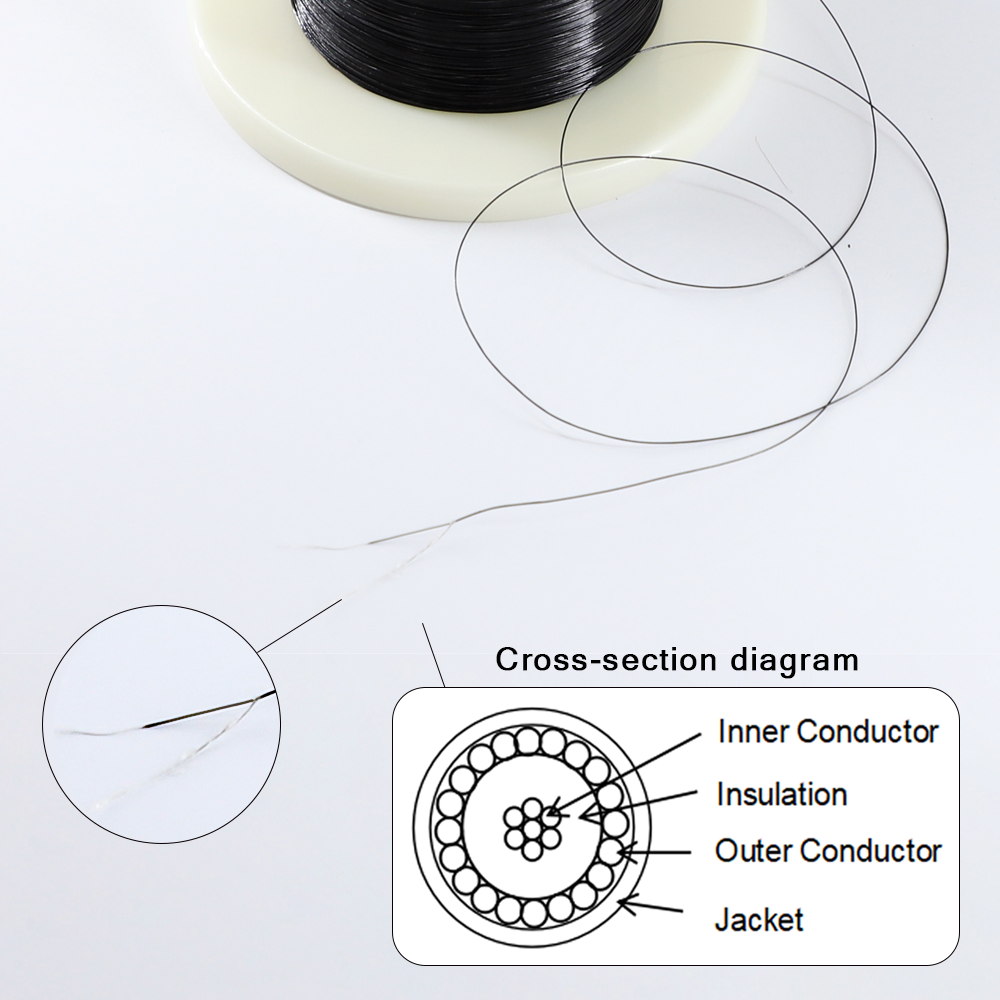
Signal loss in an AWG 50 ultra-fine micro coaxial cable is mainly influenced by conductor loss, dielectric loss, impedance discontinuities, shielding structure, cable length, and connector transitions.
As conductor and cable dimensions become smaller, electrical and manufacturing tolerances become more critical. A suitable micro coaxial cable therefore has to balance small size, low attenuation, controlled impedance, suitable dielectric properties, shielding, mechanical flexibility, and termination quality.
| Signal-loss factor | What changes | Engineering consequence |
|---|---|---|
| Conductor resistance | Smaller conductor cross-section increases resistance | Greater conductor attenuation |
| Skin effect | AC resistance becomes more significant as frequency increases | Higher high-frequency loss |
| Dielectric loss | Dielectric properties dissipate part of the signal energy | Increased attenuation |
| Geometry variation | Changes in conductor or dielectric dimensions | Impedance variation |
| Shield deformation | Changes the coaxial geometry | Possible reflection and EMI variation |
| Cable length | Longer transmission path increases accumulated loss | Lower signal margin |
| Connector transition | Local impedance discontinuity | Reflections and insertion loss |
| Termination quality | Poor connection or alignment | Additional electrical loss or instability |
If an OEM is selecting AWG 50 micro coaxial cable for a high-frequency application, then attenuation should be evaluated together with impedance, dielectric construction, shielding, cable length, and termination, because signal loss is determined by the complete interconnect rather than conductor size alone.
For custom applications, see HOTTEN's Micro Coaxial Cable, Micro Coaxial Cable Assembly, and High Frequency & RF Systems.
Conductor Loss in AWG 50 Micro Coax Cables at Low Frequencies
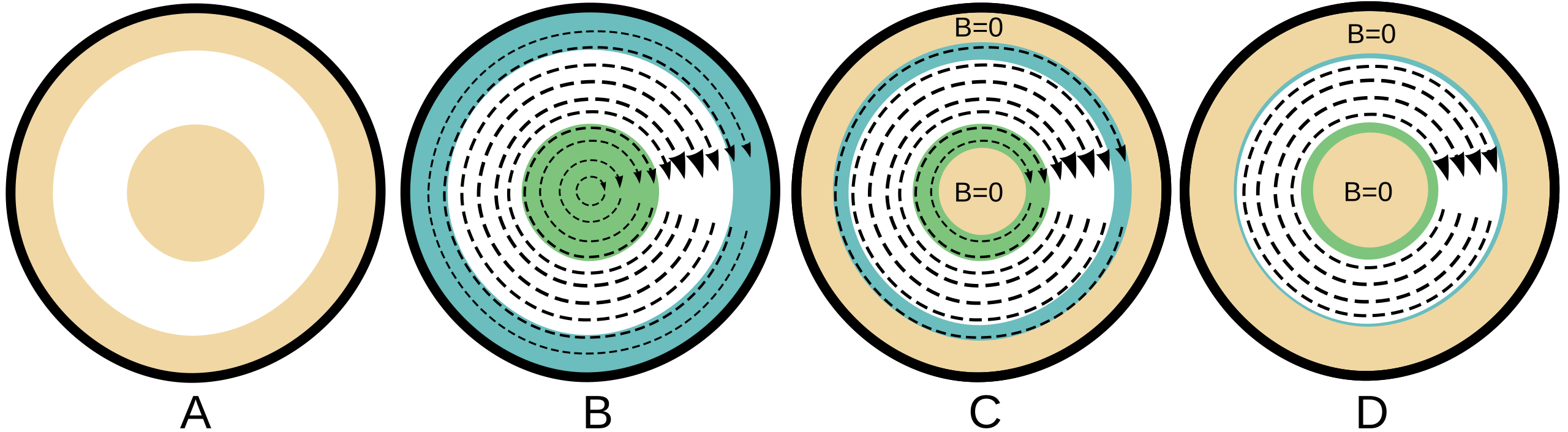
The main source of loss in any form of coaxial cable is conductor loss, caused by the skin layer impact. As signal frequency increases, current flow is confined to a thin "skin" layer at the conductor's surface. The skin depth (δ) is inversely proportional to the square root of frequency and conductor permeability. For an AWG 50 cable, the small conductor cross-section provides a serious restriction: the high-frequency resistance of such small conductors is primarily larger since the offered surface area for present flow is very little. This leads to considerable Ohmic (I²R) losses, where electric power is transformed to heat. In applications such as dense Drone Wire Harnesses or even Robotics Wire Harnesses, where cable operation could be brief, however, packages are incredibly limited, managing this conductive heating is essential to prevent performance degradation.
How Does Cable Size Affect Signal Integrity?
| Design Factor | Potential Effect |
|---|---|
| Smaller conductor | Higher conductor resistance |
| Thin dielectric | Tighter dimensional tolerance |
| Smaller cable diameter | More demanding manufacturing |
| Shield deformation | Impedance variation / EMI performance |
| Connector transition | Local impedance discontinuity |
| Higher frequency | Greater sensitivity to loss and reflections |
Dielectric Loss in AWG 50 Micro Coax Cables at High Frequencies
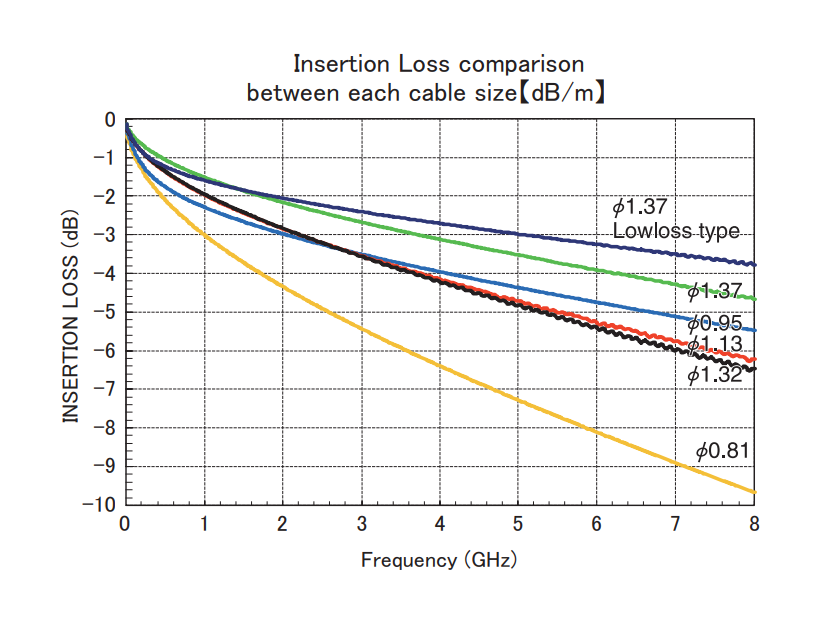
While conductor loss controls at reduced frequencies, dielectric loss ends up being progressively considerable as frequencies climb up right into the multi-gigahertz variety. This loss happens within the insulating product (dielectric) dividing the facility conductor coming from the guard. When an alternating electric field is applied, polar molecules within the dielectric material continuously realign, producing rubbing as well as heat; this is the dissipation factor (Df). Ultra-fine cables need ultra-thin dielectrics, which frequently implies material trade-offs. Choosing a dielectric along with a reduced dissipation factor (such as broadened PTFE) is non-negotiable for protecting signal stability in high-bandwidth applications like USB4 Cable Harnesses, as well as LVDS Cable Harnesses for high-resolution medical screens.
Structural Return Loss and Impedance Discontinuities in Ultra-Fine Micro Coax Cables
Signal loss is not only about attenuation, but also about signal reflections. Structural Return Loss (SRL) is triggered by minute flaws in the cable's geometry, variations in the size of the dielectric, eccentricity of the facility conductor, or even inconsistencies in the guard braid. In an AWG 50 cable, where tolerances are determined in microns, any form of discrepancy triggers a impedance discontinuity. These discontinuities trigger a part of the signal to show rear to the resource, efficiently reducing the transmitted signal power as well as triggering information mistakes or even image artifacts. This is especially crucial for ultrasound probe cables and endoscope cables, where analog RF signal integrity straight associates to picture clarity as well as diagnostic confidence.
Mitigation Through Precision Engineering and Material Science
Conquering these physical restrictions needs an alternative design method:
Advanced Materials: Utilizing high-purity, silver-plated copper conductors makes the most of surface conductivity. Utilizing low-density, low-Df dielectrics reduces polarization losses.
Precision Manufacturing: Preserving micrometer-level tolerances in extrusion as well as cabling guarantees geometric uniformity, managing resistance, and reducing SRL. This accuracy goes to the center of our RF coaxial cable as well as micro coaxial cable assembly manufacturing.
Optimized Design: Comprehending the application's frequency band enables customized styles. For example, a Gimbal Camera Wire Harness may focus on versatile, low-loss dielectrics for duplicated motion, while an RF Ablation Cable should balance very little signal loss along with high-power shipment ability.
For OEMs pressing the limits of innovation, the option of an ultra-fine coaxial cable is a balance of physics as well as efficiency. At Hotten Electronic Wire Technology, our team designs our AWG 50 micro coaxial cables not simply to satisfy dimension restrictions, but also to proactively dominate the fundamental difficulties of signal loss. Through grasping the interaction of conductor geometry, dielectric properties, as well as structural accuracy, our team provides cables that guarantee dependable, high-fidelity signal transmission for one of the most progressed clinical, customer, and commercial applications.
A: Signal loss can result from conductor resistance, dielectric loss, impedance discontinuities, shielding structures and connector transitions. The relative importance of each factor depends on the operating frequency and cable design.
A: A smaller conductor generally has higher electrical resistance, which can increase conductor attenuation. At higher frequencies, skin effect also increases the effective AC resistance of the conductor.
A: The dielectric affects both impedance and dielectric loss. A material with suitable electrical properties and a low dissipation factor can help maintain signal integrity in high-frequency applications.
A: Return loss describes the amount of signal power reflected back toward the source because of impedance mismatch. Maintaining consistent cable geometry and controlled impedance helps reduce unwanted reflections.
A: Yes. Micro coaxial cables can be customized in conductor construction, dielectric material, impedance, shielding, jacket material, cable length and connector configuration according to application requirements.
 Hot News
2026-09-17
2026-09-04
2025-12-17
2025-12-11
2025-12-05