 EN
EN
Quick Links

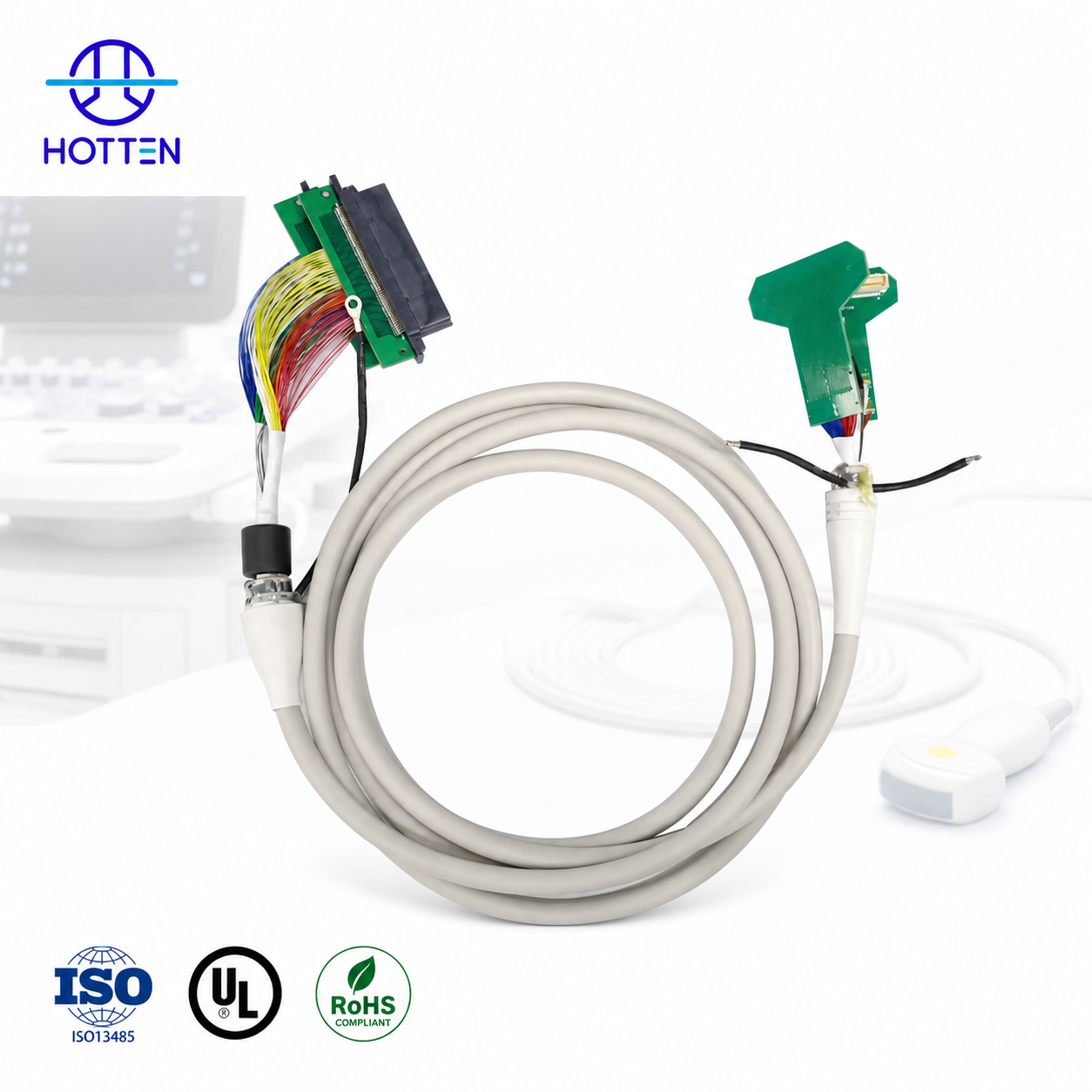
The micro coax cable assembly is the invisible superhero in the world of AR/VR, industrial drones, and healthcare-related technologies, which are rapidly changing. These small but powerful parts have the task of providing high-frequency signals at the lowest possible losses another requirement of modern electronics that cannot be compromised.
We have been working to find the ropes in this complex art at Hotten Electronic, which started in 2018, and is situated in eastern China. As an R&D-based core company with an ultra-fine coaxial cable technology, we are developing more than 300 new cable specifications every year out of our 10,000-square-meter workshop. However, what does turn the raw materials into a high performance cable assembly? It is a union of progressed machinery, high quality control and customized engineering expertise.
This is a backstage view of the way micro coax cable assemblies are made.
Micro coax cable assemblies are manufactured through a controlled sequence of fine-wire processing, insulation, coaxial construction, shielding, jacketing, precision cutting and stripping, termination, and final inspection.
The important point is that manufacturing a micro coax assembly is not simply a smaller version of conventional coaxial cable production. As the cable diameter and conductor size decrease, dimensional control, material consistency, coaxial geometry, shielding, termination accuracy, and inspection become increasingly important.
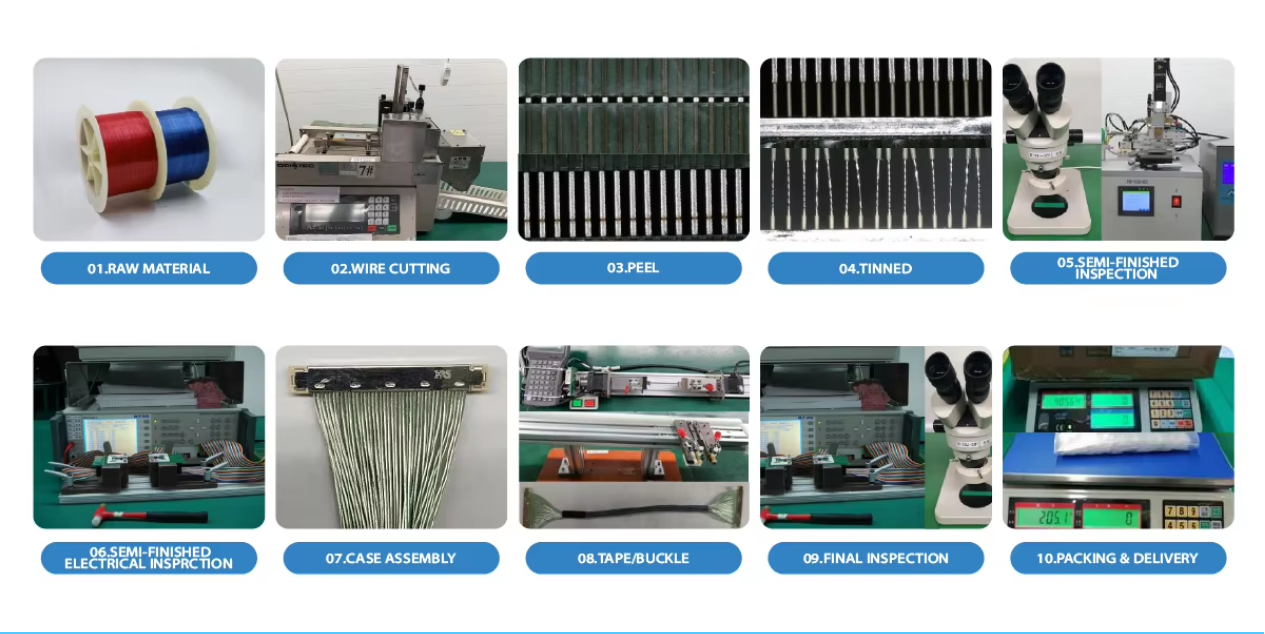
A typical manufacturing flow is:
Fine-wire preparation → Insulation → Coaxial construction → Shielding → Jacketing → Cutting & Stripping → Termination → Electrical & Mechanical Testing
| Manufacturing stage | Main engineering control | Result |
|---|---|---|
| Fine-wire preparation | Conductor size and consistency | Stable electrical and mechanical foundation |
| Insulation | Dielectric thickness and uniformity | Controlled electrical characteristics |
| Coaxial construction | Concentricity and geometry | Consistent transmission behavior |
| Shielding | Coverage and structure | EMI control and signal isolation |
| Jacketing | Thickness, material and flexibility | Mechanical and environmental protection |
| Cutting & Stripping | Controlled preparation | Protects conductor and shield |
| Termination | Alignment and contact quality | Reliable finished connection |
| Final Testing | Electrical, dimensional and mechanical checks | Finished assembly verification |
For OEM projects requiring fine-wire and micro coaxial assemblies, see HOTTEN's Micro Coaxial Cable and Micro Coaxial Cable Assembly solutions.
Step 1: Material Selection & Wire Drawing
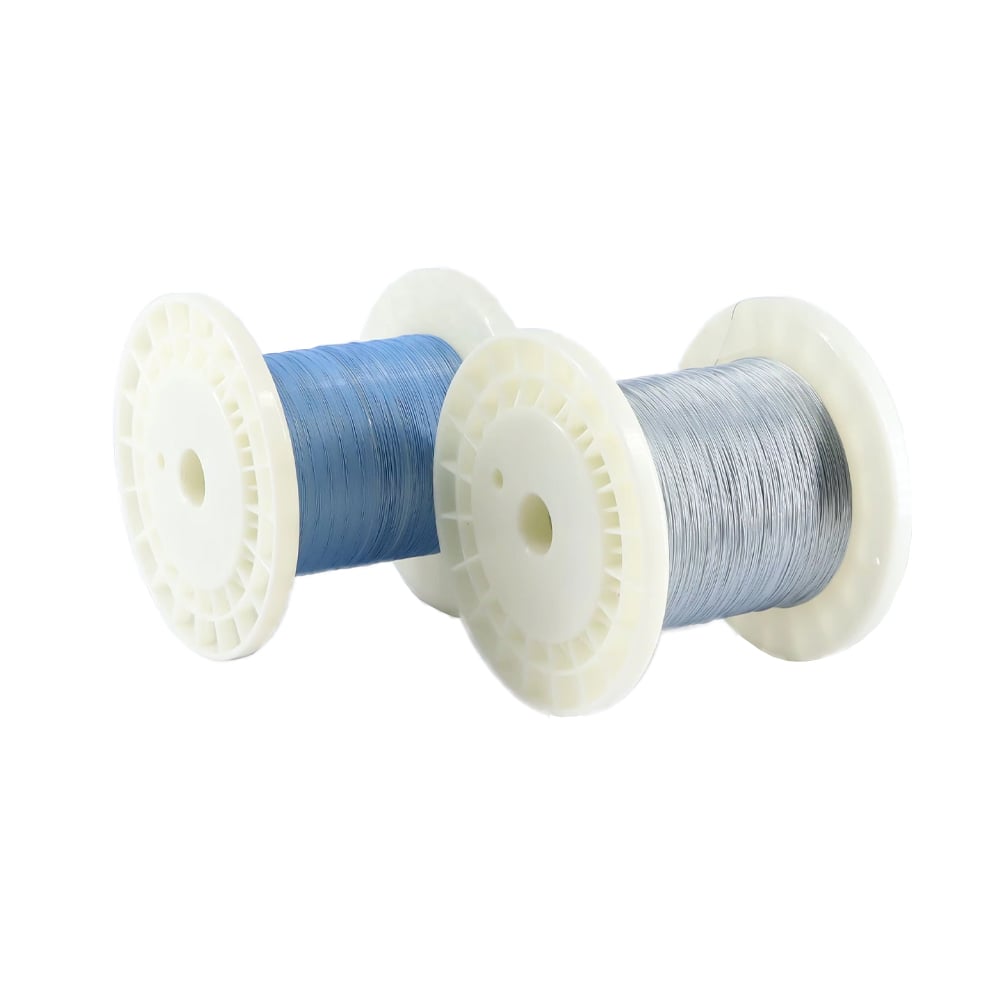
The process starts with raw materials which are normally copper or copper alloy conductors. Because micro coax cables commonly have conductor diameters on the order of microns, fineness is of primary importance. In Hotten, it begins by drawing wire and in this process, raw wire is pulled through a series of dies, so as to obtain the required thickness. Any error of 0.001mm can influence consistency of impedance. This step establishes the background to signal integrity, a bottom-line concern in our medical and industrial uses.
Step 2: Extrusion & Insulation
When the conductor is prepared, then it has to be insulated to avoid leakage of signals. That is where such materials as FEP, PFA, or ETFE are involved. The insulation layer is deposited with high precision extruders with concentricity tolerances which are within or beyond industry standards. In the case of ultra-fine coaxial cables, the homogeneity of this dielectric coating is very important- capacitance and signal velocity directly depend on it.
Step 3: Braiding & Shielding
Electromagnetic interference (EMC) is an unavoidable enemy in the era of 5G and the delivery of video in high quality. Multi-layer shielding is used in our micro coax assemblies, frequently in foil wraps coupled with braided metal meshes. It involves special braiding machineries that can work with filament with the fineness of human hair. More than 40 production machines operate 24/7 at Hotten to guarantee dense and flexible shielding coverage a balance needed when it comes to dynamic uses such as drone gimbals or surgical robots.
Step 4: Jacketing
The outer jacket protects the cable. Our choices of materials to use are polyurethane or PVC depending on the application. In the case of medical endoscopes, the jacket should be sterilizable and biocompatible. In the case of industrial drones, it should be able to withstand abrasion and high temperatures. This layer is deposited without damaging the fine internal topography by calibration of our extrusion lines. This is not extrusion as such; it is micro-engineering.
Step 5: Cutting & Stripping
One of the most sensitive stages now follows. The micro coax cables cannot be cut by use of normal blades unlike conventional wiring. The danger of scratching center conductor or interrupting the shield is excessive. We employ laser based cutting and resistance based stripping systems that cut away insulation layers with surgical precision. This is usually what makes the difference between a working connection to one that causes signal reflection.
Step 6: Termination & Connector Attachment
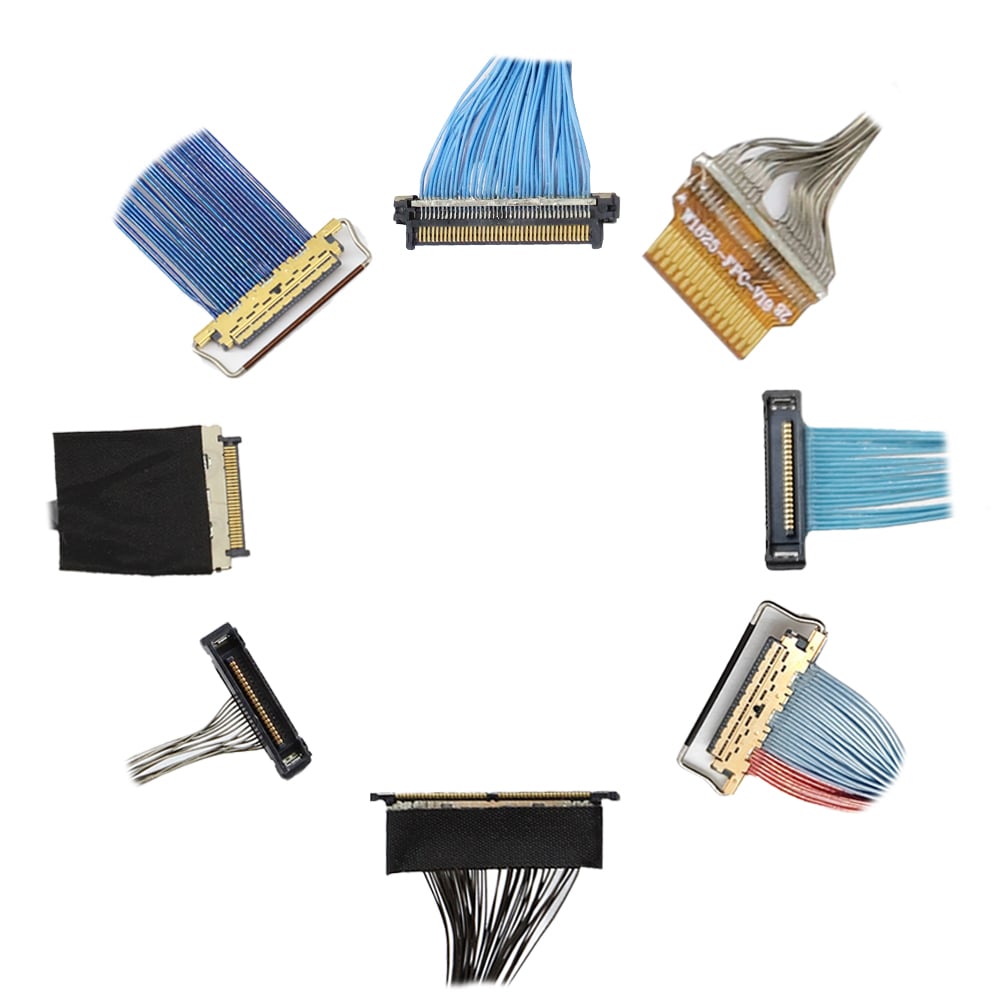
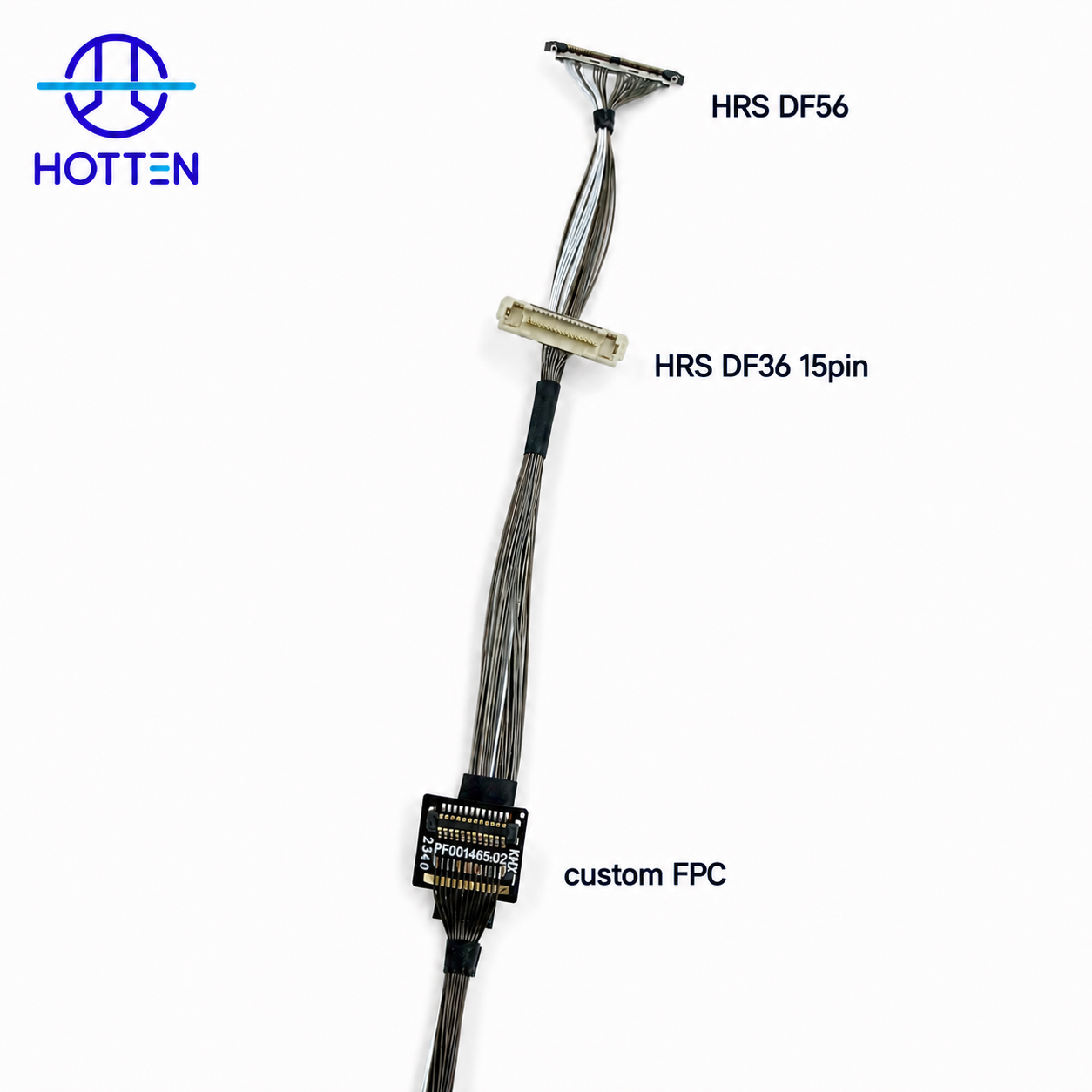
And a cable assembly is as good as its connections. We have technicians and automated machines collaborating to install micro-miniature connectors, typically I-PEX, Hirose or even custom designs. This is a process of soldering or laser welding that is done under a magnification. In the case of medical ultrasound probes, this should be done in such a way that the signal loss is zero. In the case of AR/VR headsets, it should be able to guarantee high-speed data transfer without delays.
Step 7: 100% Functional Testing
Quality is not a gateway in Hotten; it is a culture. Each of the assemblies is thoroughly tested. This includes:
Continuity & Hi-Pot testing in order to confirm that it is electrically safe.
Impedance / VSWR test to check signal transmission efficiency.
Pull force test and flex life test to imitate the real life mechanical tests.
The visual examination with automated optical devices.
Having a production capacity of over 144 million meters per annum, this degree of scrutiny necessitates standard work processes and a no-tolerance attitude to zero defects.
| Manufacturing Stage | Main Process | Key Quality Focus |
|---|---|---|
| 1. Wire Drawing | Reduce conductor diameter | Dimensional consistency |
| 2. Insulation | Precision extrusion | Dielectric consistency and concentricity |
| 3. Shielding | Foil and/or braided shielding | EMI protection and coverage |
| 4. Jacketing | Outer protective layer | Flexibility and environmental resistance |
| 5. Cutting & Stripping | Precision preparation | Avoid conductor and shield damage |
| 6. Termination | Connector attachment | Electrical and mechanical reliability |
| 7. Final Testing | Electrical and mechanical inspection | Functional and quality verification |
The Human Element: R&D as the Backbone
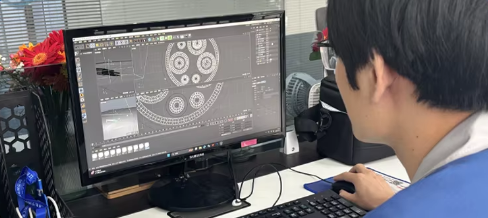
Our process cannot be without mentioning the engineers who make it happen. Our R&D team is fully collaborating with clients at the design-to-manufacturing stage with more than 300 new cable specifications provided annually. It can be a custom impedance number of a military grade drone or a miniaturized bend radius of a neurovascular catheter, but it is our ability to prototype quickly and with great scale that makes a good idea a stable industrial or medical system.
Conclusion: From Our Workshop to the World
In Hotten Electronic we do not think of micro coax cable assemblies as system components, but as essential drivers of innovation. Whether it is high-frequency signals being fed through the interior of an MRI machine or providing crystal-clear video to a VR headset, thousands of hours of engineering perfection goes with them.
On our road to becoming one of the best global suppliers, the same motto discussed, quality and safety will not be discussed; it is our manufacturing DNA.
When you want to find a partner that can produce precision cable assemblies that are specific to your needs, whether it be a prototype or a mass production, then we should begin a discussion. Since at Hotten there is a connection in every way.
1. How are micro coax cable assemblies manufactured?
Micro coax cable assemblies are typically manufactured through several stages, including conductor preparation, wire drawing, insulation extrusion, shielding, jacketing, cutting and stripping, connector termination, and final electrical and mechanical testing.
2. What materials are commonly used in micro coaxial cables?
Common materials include copper or copper-alloy conductors, FEP, PFA or ETFE insulation, metallic shielding materials, and application-specific jacket materials.
3. Why is manufacturing precision important for micro coax cable assemblies?
Small dimensional variations can affect characteristic impedance, capacitance, signal transmission and mechanical performance. Precise control of conductor, insulation and shielding dimensions is therefore important for high-frequency applications.
4. How are micro coax cable assemblies tested?
Depending on the application, testing may include continuity, Hi-Pot, impedance, VSWR, pull-force, flex-life and visual inspection.
5. Can micro coax cable assemblies be customized?
Yes. Customization may include conductor size, cable diameter, impedance, insulation material, shielding structure, connector type, cable length and termination configuration.
6. Can HOTTEN manufacture prototypes as well as production quantities?
Yes. HOTTEN supports customized cable development from engineering samples and prototypes through production-scale manufacturing.
 Hot News
2026-09-17
2026-09-04
2025-12-17
2025-12-11
2025-12-05