 EN
EN
Quick Links

From cinematic aerial filming to high-stakes industrial aerial inspection, drones depend on stable transmission of lossless high-definition real-time video feeds to ground control terminals. Even marginal latency or electromagnetic interference can compromise critical aerial footage and lead to mission failure. RF coaxial cable assemblies serve as the core transmission medium for this vital real-time video data. Hotten Electronic Wire Technology provides a custom RF coaxial assembly that provide a stable, interference-free, crisp drone video feed through use of their own dedicated R&D capability.
Reliable drone video transmission depends on the complete RF signal path, including cable construction, impedance, attenuation, shielding, connectors, cable length and mechanical conditions.
For UAV systems, the cable may also need to operate while exposed to vibration, repeated gimbal movement, limited installation space and electromagnetic interference from onboard electronics.
If → high-frequency video signals travel through a relatively long cable path
Then → control cable attenuation, impedance and connector transitions
Why → transmission loss and impedance discontinuities can reduce the signal available at the receiving interface.
If → the cable is routed close to GPS modules, telemetry radios, ESCs or power electronics
Then → evaluate shielding and shield termination together with cable routing
Why → nearby electrical systems can introduce electromagnetic coupling into sensitive signal paths.
If → the cable passes through a moving gimbal or rotating camera mechanism
Then → define bend radius, flex cycles, torsion and strain relief
Why → repeated mechanical movement can affect both cable durability and RF performance.
If → the drone requires a lightweight and compact cable assembly
Then → balance conductor size, cable OD, shielding, flexibility and transmission requirements
Why → reducing cable size or weight can create electrical or mechanical trade-offs.
If → the cable assembly must support a specific video link
Then → define the frequency range, impedance, cable length, connector and acceptable loss before selecting the construction
Why → “drone video cable” does not define the complete RF requirement.
HOTTEN's current drone RF article identifies low-loss transmission, 50Ω impedance matching, shielding, flexible conductors and mechanical validation as key factors for UAV video applications. It also describes dedicated constructions for racing drones, cinematic drones, industrial inspection drones and gimbal camera systems. (hottencable.com)
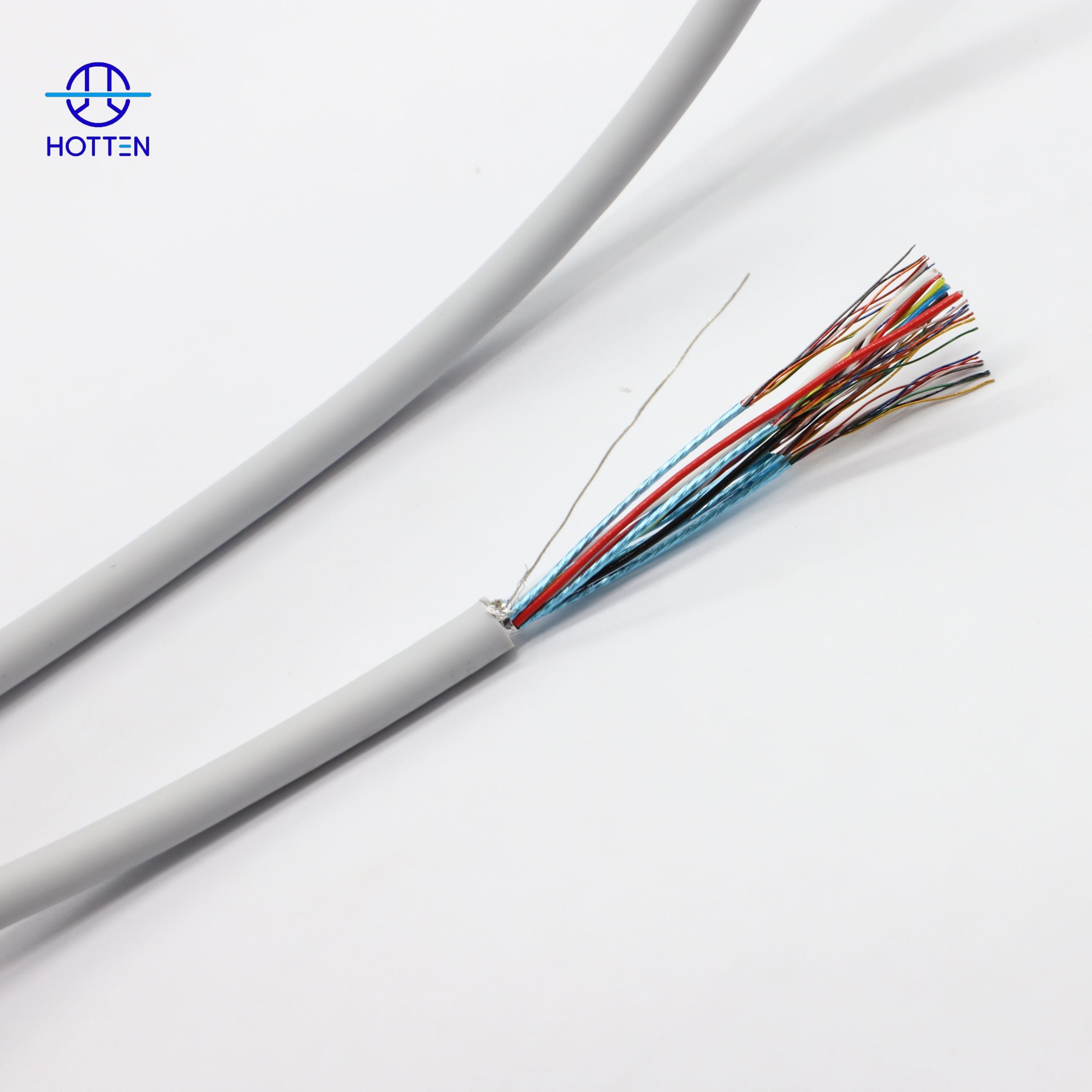
RF coaxial cables carry high-frequency video from the drone's camera, gimbal, transmitter and antenna. They consist of a central conductor, a very accurate dielectric insulator, a conductive metal shield and a flexible external plastic sheath, all manufactured to help achieve two main things. Its core functions are to minimize signal loss (attenuation) and block external electromagnetic interference (EMI). This makes RF coaxial assemblies very desirable when using drones in the proximity of, say, power lines, a 5G mast or even other drone signals; A well-manufactured assembly suppresses unwanted crosstalk and helps maintain stable real-time video transmission from the drone camera.
Challenge 1: Signal Loss Over Distance
Drones frequently operate hundreds of meters away from ground stations, and standard cables will severely degrade video signals before they reach the receiving end.
Hotten's Solution: Low-loss dielectric materials and precise 50Ω impedance matching allow Hotten's RF coaxial assemblies to preserve signal strength for their entire length.
Challenge 2: Constant Flexing and Vibration
Drones are rarely still; their gimbals are always moving, and the drone frame itself vibrates consistently during flight. This wear and tear over time will cause standard coaxial cables to develop micro-cracks or conductor fatigue, ultimately impacting the quality of the video feed.
Hotten's Solution: Featuring fine-stranded, silver-plated copper conductors and a flexible shield, Hotten's coaxial assemblies are built to sustain repeated bending cycles while maintaining stable electrical performance.
Challenge 3: Electromagnetic Interference (EMI)
Drones integrate components such as GPS modules, telemetry radios, ESCs (electronic speed controllers), and power lines into a compact space. Any of these can easily corrupt the video signal.
Hotten's Solution: Multi-layer shielding (a combination of aluminum foil and copper braid) isolates against external electrical interference and provides high shielding effectiveness against electromagnetic interference.
The needs of a drone platform can vary dramatically in terms of size, weight, and performance. With over 300 new specifications for cables drawn up each year by Hotten's R&D team, we offer tailored RF coaxial assemblies for many different types of drones:
Racing Drones: Ultra-light and short length designs with semi-rigid shielding to keep the cable as light and non-impeding as possible.
Cinematic Drones: Longer, flexible cables designed to pass smoothly through slip rings and gimbal rotation axes without causing video jitter.
Industrial Inspection Drones: Rugged designs with an outer jacket suitable for outdoor operation, including extra strain relief for robustness.
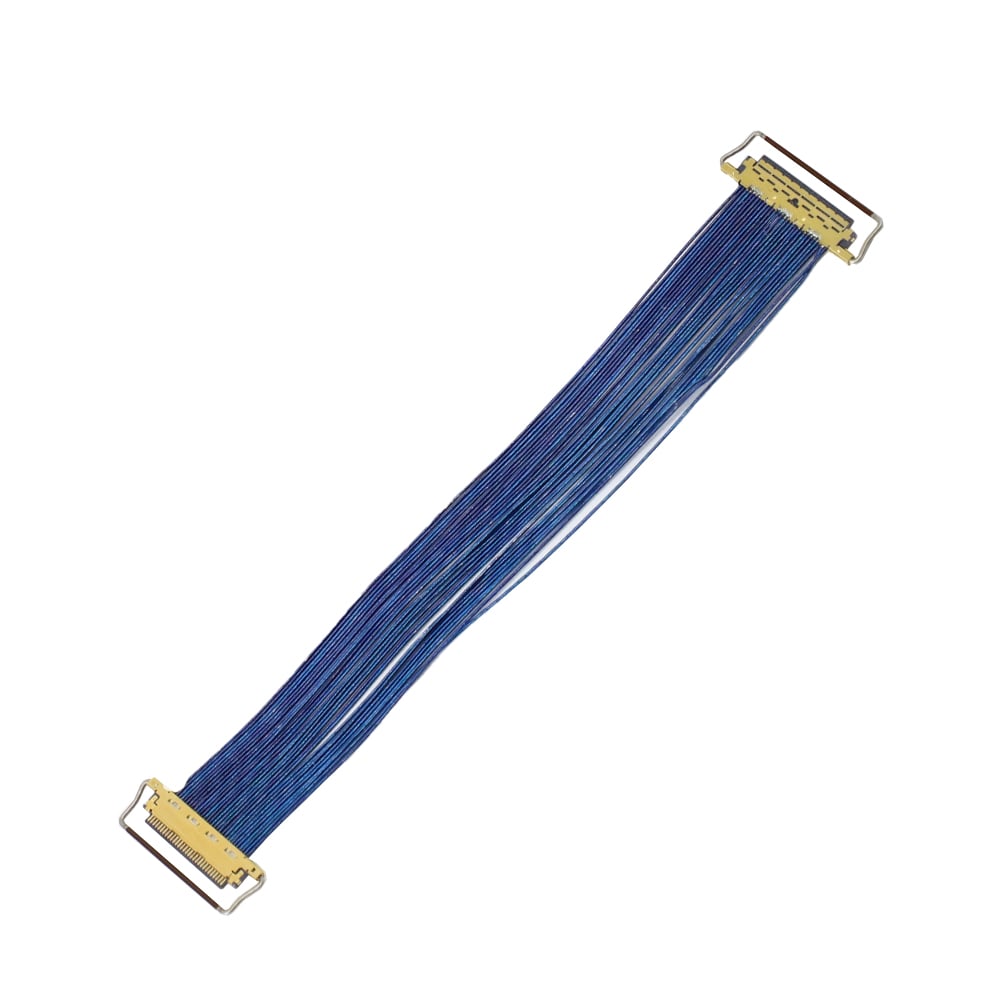
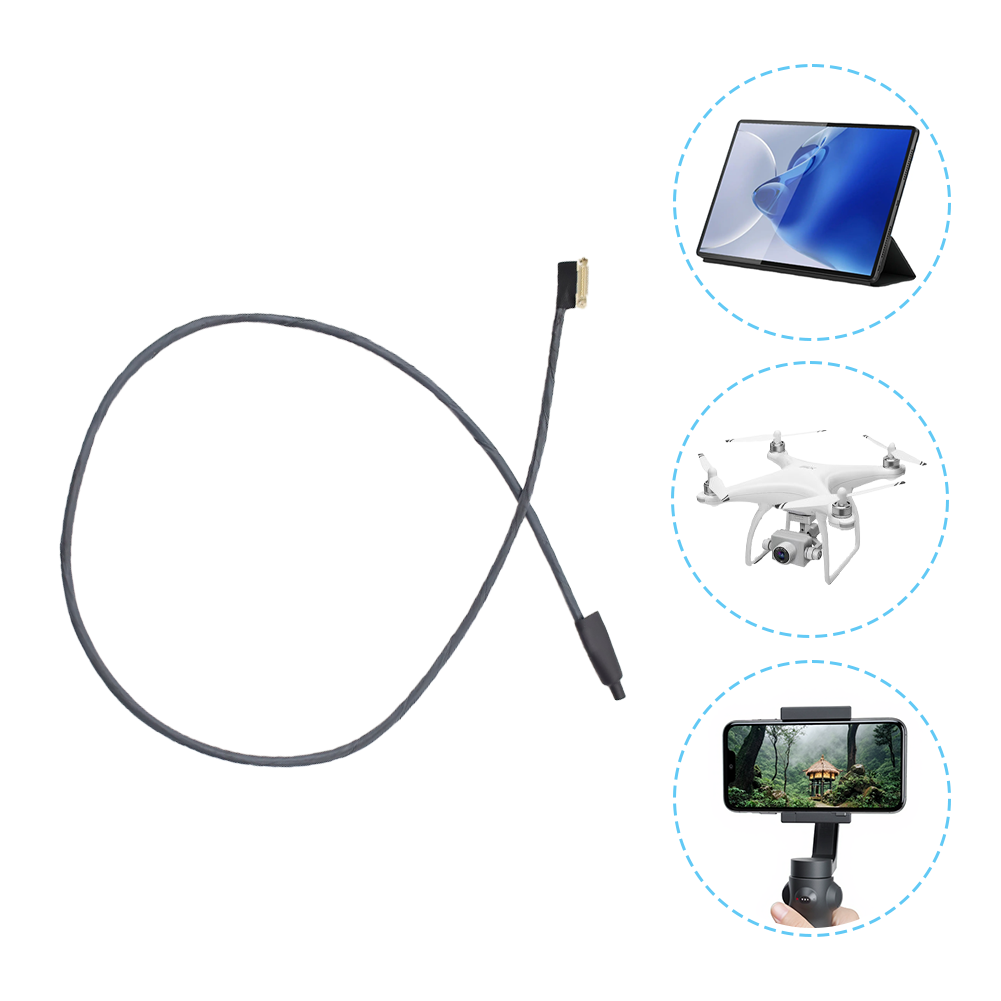
Gimbal Camera Systems: Very fine micro-coaxial cables (as thin as 42 AWG) capable of fitting into small moving joints while still delivering 4K or 1080p video signals.
All designs are put to the test using a vector network analyzer (VNA) to ensure the VSWR and insertion loss meet all specification requirements.
With over 10,000㎡ of workshop space and more than 40 production units available, Hotten is capable of producing over 144 million meters of cable annually, including specialized drone RF coaxial assemblies. Every assembly undergoes:
TDR (Time-Domain Reflectometry) testing to detect any impedance discontinuities that may occur as part of signal reflection.
Shielding effectiveness testing from 30 MHz up to 6 GHz, thus covering all frequency bands used by current drone video transmission technology.
Dynamic flex testing that simulates actual flight conditions; these cover continuous bending, vibration and changes in temperature.
Every production operator takes individual accountability for the quality of their respective manufacturing stage, only assemblies that meet Hotten's high standards make their way onto our customers' drones.
A practical UAV RF cable selection process is:
Video / RF Requirement → Frequency → Impedance → Cable Length → Attenuation → Shielding → Cable OD / Weight → Flexibility → Connector → Termination → Mechanical Validation → RF Testing → Production Validation
The cable may connect:
Camera → Gimbal → Transmitter → Antenna / RF Interface
or another application-specific architecture.
| Parameter | Engineering Question |
|---|---|
| Signal Type | Video / RF / High-Speed / Other |
| Frequency | What frequency range is involved? |
| Impedance | 50Ω / 75Ω / Other |
| Cable Length | What is the finished transmission length? |
| Attenuation | What maximum loss can the system tolerate? |
| Return Loss | Is a return-loss requirement specified? |
| Connector | What exact interface is required? |
| Shielding | What EMI control is required? |
| Mechanical Motion | Is the cable static or dynamic? |
If → the RF interface is already defined by the electronics
Then → preserve the system impedance and interface requirements during cable development
Why → the cable should be designed around the existing transmission architecture.
The transmission path can become significant when a camera or transmitter is physically separated from the receiving electronics.
If → cable length increases
Then → evaluate attenuation across the required frequency range
Why → total RF loss is affected by both cable construction and signal-path length.
If → the assembly is short but operates at a higher frequency
Then → evaluate frequency-dependent attenuation and connector losses
Why → short length does not automatically eliminate high-frequency transmission losses.
A complete loss budget may include:
Cable Loss + Connector Loss + Transition Loss + Other Interface Loss
HOTTEN's current drone RF article identifies 50Ω impedance matching as part of its drone video transmission solution. (hottencable.com)
For an OEM specification:
If → the system requires a 50Ω RF interface
Then → define the nominal impedance together with frequency range and relevant RF acceptance criteria
Why → nominal impedance alone does not describe the complete high-frequency behavior.
Relevant parameters can include:
For additional impedance guidance:
What Is Cable Impedance and Why Does It Matter in High Frequency Cable Assemblies?
A drone can place RF and high-speed signal paths close to:
If → the RF cable runs through a dense electronics area
Then → evaluate foil, braid or multi-layer shielding
Why → external electromagnetic fields can couple into the transmission path.
If → multiple signal paths are routed together
Then → evaluate channel isolation and shield termination
Why → external EMI and channel-to-channel coupling are separate engineering concerns.
HOTTEN's current article describes a combination of aluminum foil and copper braid for its drone RF assemblies and identifies shielding as a major control against electromagnetic interference. (hottencable.com)
A gimbal camera assembly may expose the RF cable to repeated rotation and bending.
If → the cable passes through a rotating gimbal axis
Then → define bend radius, rotation range, cable routing and flex-life requirements
Why → repeated movement creates mechanical loading that a static RF cable specification does not capture.
If → the connector is located close to the gimbal pivot
Then → evaluate strain relief and local cable geometry
Why → the pivot region can become a concentrated stress area.
HOTTEN's current page specifically describes very fine micro-coaxial cables for gimbal camera systems and states that its designs are intended to maintain video transmission while passing through small moving joints. (hottencable.com)
For UAV applications, weight is not determined only by the conductor.
The total assembly includes:
Conductor + Dielectric + Shield + Jacket + Connector + Overmold / Strain Relief
If → the drone has strict payload or flight-time constraints
Then → evaluate complete assembly weight
Why → reducing one cable component does not necessarily produce the lowest finished assembly weight.
If → shielding is increased
Then → evaluate the added mass against the required EMI performance
Why → electrical shielding and aircraft mass can create competing design requirements.
The smallest conductor is not automatically the correct conductor.
Important considerations include:
| Parameter | Engineering Trade-Off |
|---|---|
| Smaller AWG Diameter | Lower size / weight |
| Larger Conductor | Potentially lower resistance |
| Fine-Stranded Construction | Flexibility |
| Shielding | EMI performance / weight |
| Cable OD | Routing |
| Termination | Assembly feasibility |
If → the cable is routed through a small gimbal joint
Then → evaluate fine and flexible conductor constructions
Why → compact moving mechanisms require both small size and dynamic flexibility.
If → the transmission path has stricter attenuation requirements
Then → evaluate conductor size with the complete loss budget
Why → minimizing diameter should not compromise required RF performance.
HOTTEN's current drone article uses 42AWG micro-coaxial cable as an example for gimbal camera systems. (hottencable.com)
The complete path is:
Cable → Termination → Connector → Camera / Transmitter / PCB
If → the connector is already specified
Then → design the cable termination around the exact connector geometry
Why → the connector transition becomes part of the RF path.
If → the connector is not yet fixed
Then → evaluate connector size, locking method, RF characteristics and mechanical retention together
Why → connector selection affects both packaging and signal integrity.
Potential requirements include:
For a drone video cable, a practical validation flow is:
Raw Cable
→ Connector Termination
→ Finished Assembly
→ RF Testing
Potential tests include:
| Test | Purpose |
|---|---|
| TDR | Locate impedance discontinuities |
| VNA | Measure frequency-dependent RF performance |
| VSWR | Evaluate mismatch |
| Insertion Loss | Evaluate transmission loss |
| Shielding Test | Evaluate EMI protection |
| Continuity | Verify electrical connection |
| Connector Inspection | Verify interface |
| Dimensional Inspection | Verify finished geometry |
HOTTEN's current article states that its drone RF assemblies are tested using VNA for VSWR and insertion loss and TDR for impedance discontinuities. (hottencable.com)
The cable can experience:
Vibration + Bending + Rotation + Temperature Changes
If → the cable is installed on a moving drone platform
Then → reproduce representative mechanical conditions during validation
Why → static bench testing cannot demonstrate dynamic reliability.
Potential mechanical tests include:
HOTTEN's current article describes dynamic flex testing intended to simulate flight conditions, including bending, vibration and temperature changes. (hottencable.com)
If → the drone prioritizes low weight and compact installation
Then → evaluate short, lightweight RF assemblies with suitable mechanical support
Why → unnecessary cable mass can affect the overall system design.
The current HOTTEN article describes lightweight, short-length constructions for racing-drone applications. (hottencable.com)
If → the camera assembly uses a moving gimbal and longer cable routing
Then → prioritize flexibility, RF stability and routing through rotating mechanisms
Why → the cable has to maintain signal transmission during repeated gimbal movement.
If → the drone operates outdoors and experiences vibration or mechanical impact
Then → evaluate jacket durability, strain relief, environmental resistance and RF performance
Why → outdoor operation can add mechanical and environmental requirements beyond video transmission.
If → the cable passes through a very small moving joint
Then → evaluate micro-coaxial construction, cable OD, bend radius, connector orientation and flex-life
Why → the mechanical interface can become the primary constraint.
For dynamic UAV applications:
Initial RF Test
→ Flex / Vibration Test
→ Post-Test RF Measurement
→ Connector / Cable Inspection
If → the assembly remains continuous after mechanical testing
Then → recheck impedance, insertion loss and other application-relevant RF parameters
Why → continuity alone does not prove that the RF characteristics remain unchanged.
If → insertion loss or VSWR changes after testing
Then → investigate conductor movement, shielding deformation, connector transition and strain relief
Why → mechanical deformation may change the signal path before complete electrical failure occurs.
| Category | Recommended Information |
|---|---|
| Drone Type | Racing / Cinematic / Inspection / Other |
| Application | Video / RF / Camera / Antenna |
| Frequency | Operating range |
| Impedance | Nominal value |
| Attenuation | Maximum acceptable loss |
| Return Loss / VSWR | Required limit |
| Cable Length | Nominal + tolerance |
| Cable OD | Maximum allowable dimension |
| Weight | Maximum assembly weight if applicable |
| Conductor | AWG / material / construction |
| Dielectric | Material / structure |
| Shielding | Foil / braid / multilayer |
| Connector | Manufacturer / part number |
| Termination | Solder / crimp / other |
| Flexibility | Static / dynamic |
| Bend Radius | Minimum required |
| Torsion | Required rotation if applicable |
| Vibration | Required condition |
| Temperature | Operating range |
| Testing | VNA / TDR / mechanical |
| Prototype | Required quantity |
| Production | Expected volume |
If → the RFQ only says “RF coaxial cable for drone video”
Then → define frequency, impedance, cable length, attenuation, connector, shielding, weight and mechanical conditions
Why → the application label alone does not define the RF and mechanical requirements of the finished assembly.
| Evaluation Area | What to Confirm |
|---|---|
| RF Design | Impedance / attenuation control |
| Fine-Coax Capability | Small OD / fine AWG |
| Shielding | Foil / braid / multilayer |
| Gimbal Cable Capability | Dynamic flex / rotation |
| Connector Assembly | RF termination |
| DFM | Routing and installation review |
| Testing | VNA / TDR / mechanical |
| Prototype | Development capability |
| Production | Process repeatability |
| Quality | Inspection and traceability |
If → the supplier can provide a standard RF cable but cannot customize the connector or routing
Then → evaluate complete cable assembly capability
Why → UAV installations often require the cable to be designed around the mechanical architecture.
If → the supplier shows one successful RF test but no mechanical validation
Then → review dynamic testing relevant to the actual installation
Why → airborne cable assemblies can experience mechanical conditions that are not present during bench testing.
Drone Architecture
→ Camera / Gimbal / Transmitter
→ Frequency
→ Impedance
→ Cable Length
→ Attenuation
→ Shielding
→ Cable OD / Weight
→ Connector
→ Termination
→ Bend / Rotation
→ Vibration
→ Temperature
→ VNA / TDR Testing
→ Mechanical Validation
→ Prototype
→ Production Verification
For a gimbal camera system:
Camera Module
→ define video / RF interface
→ establish frequency
→ define impedance
→ determine cable length
→ calculate loss budget
→ select fine-stranded conductor
→ select dielectric structure
→ define shielding
→ minimize cable OD
→ select connector
→ define termination
→ establish gimbal bend and rotation profile
→ perform VNA testing
→ perform TDR testing
→ perform dynamic flex / vibration testing
→ verify post-test RF performance
→ qualify production.
For an industrial inspection drone:
Outdoor Inspection Platform
→ define RF path
→ determine environmental exposure
→ establish impedance and attenuation
→ define cable OD / weight
→ select rugged jacket
→ select shielding
→ define strain relief
→ select connector
→ perform RF validation
→ perform vibration / temperature testing
→ verify finished assembly.
The key engineering principle is:
A reliable drone video cable is not defined by low loss alone. The complete RF coaxial assembly must balance impedance, attenuation, shielding, weight, cable routing, connector design and dynamic mechanical conditions.
50-Pin Micro-Coaxial Cable Assembly for Humanoid Robot Vision Systems
Why AR/VR Devices Require Micro Coax Cable Assemblies
Why Miniature Micro Coaxial Cable Is Changing Wearable Device Design
How RF Coaxial Cable Assemblies Control Impedance and Loss for Reliable High-Frequency Signals
What Is Cable Impedance and Why Does It Matter in High Frequency Cable Assemblies?
How Flex-Life Testing Helps Medical Cable Assemblies Maintain Performance After Repeated Bending
While this article may be focused on drone video, Hotten's expertise in RF coaxial technology is not limited to the needs of drone manufacturers:
AR/VR Cables: Thin, flexible coaxial assemblies for low-latency video transmission in augmented and virtual reality applications.
Robotics Wire Harnesses: Durable wire harnesses that maintain interference-free signal integrity within busy, motor-dense robotics arms.
Medical Devices: Endoscope and IVUS cables that require high-reliability within the challenging environment of a sterile medical device.
Reliable, steady drone video is not a luxury but an engineered outcome. It is achieved through meticulous R&D, rapid custom solution development, and the stringent quality control that Hotten Electronic Wire Technology offers. Whether you require a standard coaxial cable or a complete, custom-made harness for a unique gimbal or airframe, our dedicated team is on hand to ensure that you have a stable and reliable video transmission throughout drone operation.
 Hot News
2026-09-17
2026-09-04
2025-12-17
2025-12-11
2025-12-05