 EN
EN
Quick Links

Home > News > Company news
Micro-Coaxial Cable Industry Trend Analysis (2026–2030)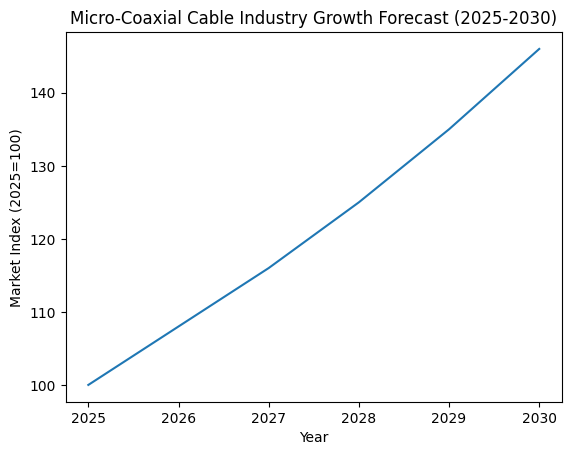
Based on current industry dynamics, technological evolution, and global market developments, the micro-coaxial cable industry is entering a critical transition period, shifting from consumer electronics–driven demand to high-end industrial, medical, AI, and intelligent equipment–driven demand.
| Application Area | Main Requirement | Micro Coaxial Cable Advantage |
|---|---|---|
| Medical Devices | Small size, low noise, high reliability | Supports compact medical equipment design |
| Robotics | Flexibility and long operating life | Handles dynamic movement and limited space |
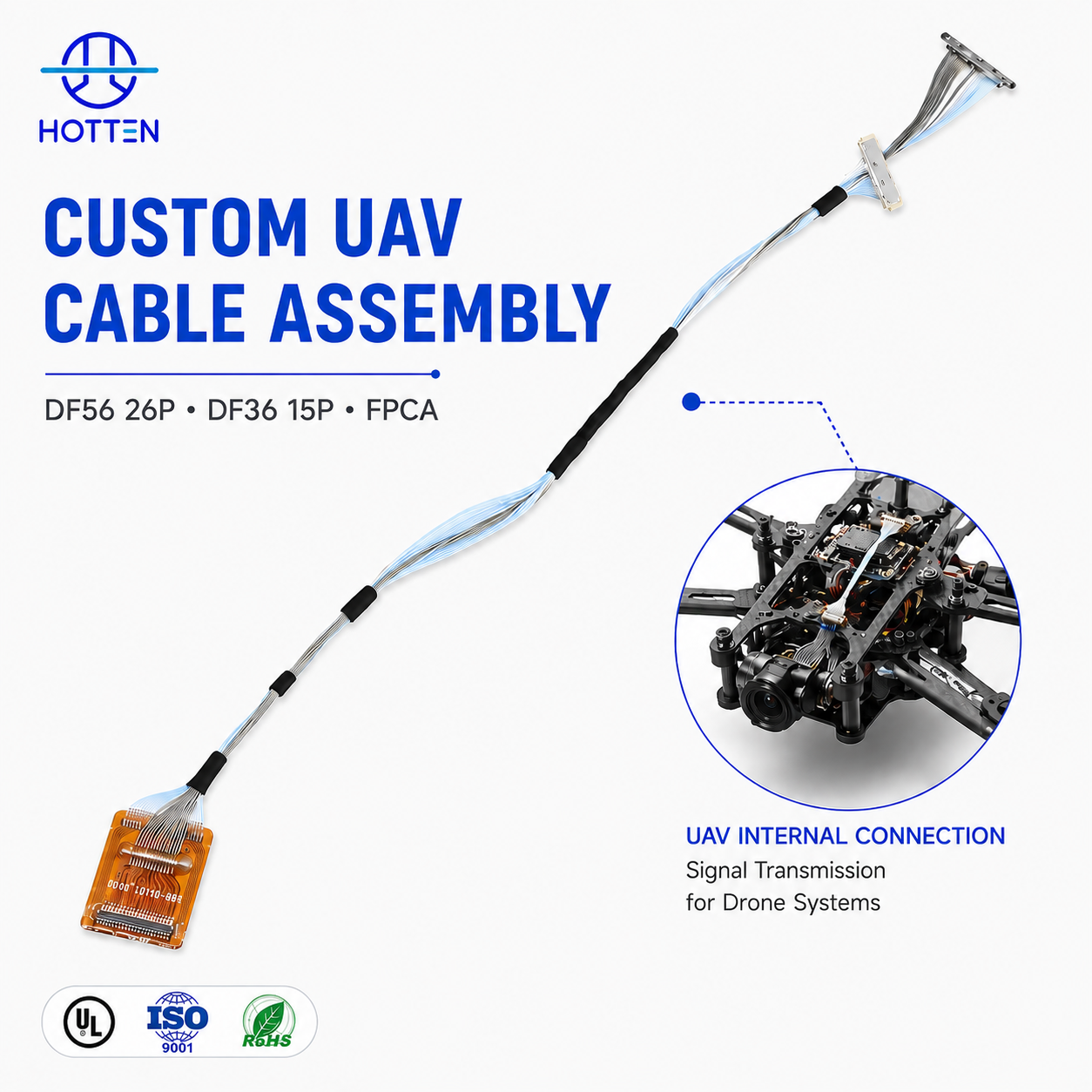
| UAV & Gimbal Cameras | Lightweight and high-speed transmission | Reduces weight while maintaining signal quality |
| AI Equipment | High bandwidth and stable transmission | Supports high-speed data connections |
| Automotive Displays | Reliable high-frequency signals | Enables compact display interconnections |
| AR/VR Devices | Miniaturization and flexibility | Fits wearable and immersive devices |
I. Core Market Growth Forecast
Over the next few years, the global micro-coaxial cable assembly market is expected to maintain a compound annual growth rate (CAGR) of approximately 6.5%–8.0%. New application markets such as medical devices, robotics, automotive electronics, drones, and AR/VR equipment are creating new demand growth.
1. Medical Endoscopy and Minimally Invasive Medical Devices
The global endoscopy market is expected to reach approximately USD 60 billion by 2030. Disposable endoscopes are creating significant demand for ultra-fine coaxial cables. Medical cables typically require ultra-small diameter, high flexibility, high shielding, low noise, and high reliability.
2. Humanoid Robots and Precision Robotics
Humanoid robots require micro-coaxial cables to transmit sensor signals, video signals, and control signals in extremely limited internal space. These cables must have high flexibility, torsion resistance, small bending radius, and long flex life.
3. Medical Aesthetic Equipment
Medical aesthetic devices have compact internal structures, and imaging modules, sensors, and control systems require stable signal transmission. Micro-coaxial cables provide reliable signal transmission in limited space.
4. High-End Automotive Electronic Displays
In smart cockpit and automotive display systems, micro-coaxial cables are used for high-speed signal transmission such as LVDS and eDP connections.
5. Drones / AR / VR / Gimbal Cameras
These devices require lightweight, flexible, and highly shielded cables, making micro-coaxial cables suitable for video and signal transmission.
II. Three Major Technology Trends
1. Ultra-Miniaturization and High Bandwidth Balance
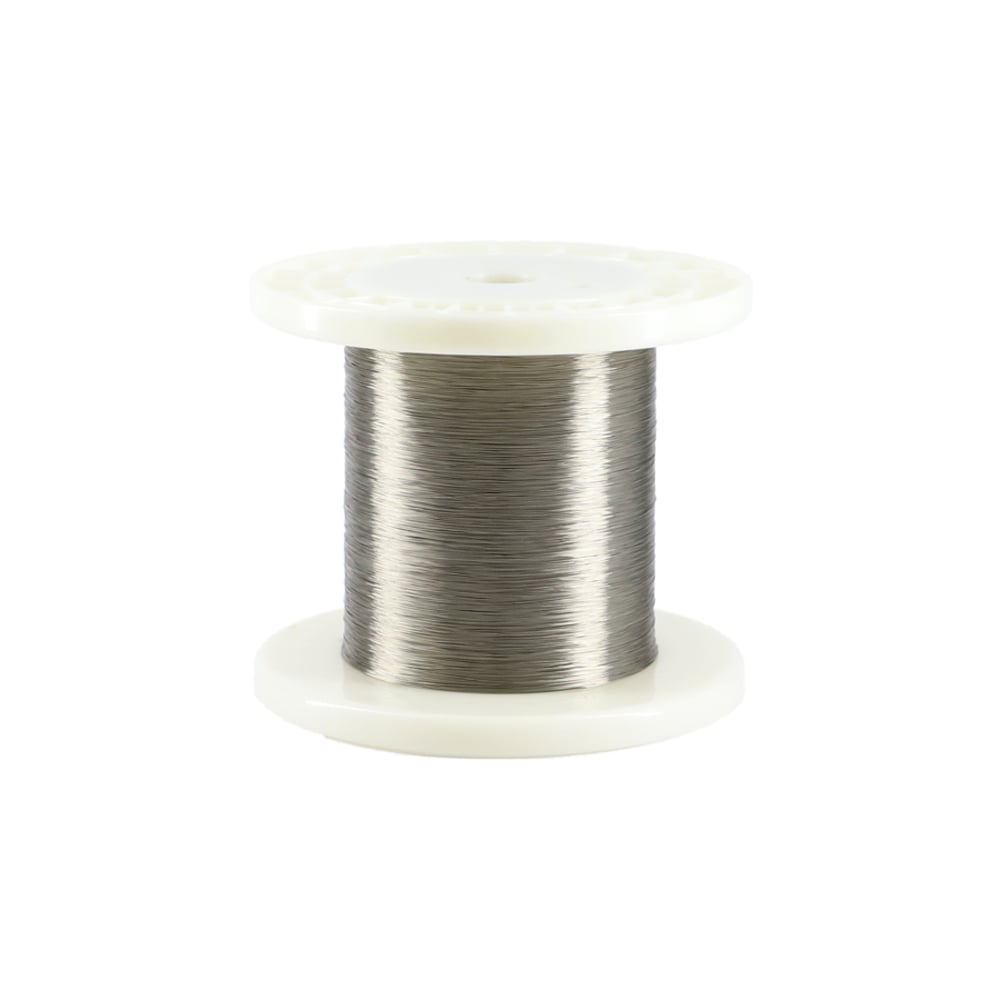
The industry is moving toward 50AWG and even finer cables. Low dielectric materials such as PFA, Foamed PFA, and FEP are used to support high-speed signal transmission like USB4 and PCIe.
2. Robotics Cable Development
Future robotic cables must achieve more than 1 million bending cycles, high flexibility, torsion resistance, and stable impedance performance.
3. New Energy Vehicles and Smart Automotive Systems
As automotive electronic systems increase, high-speed signal transmission cables will become more important in vehicles.
III. Industry Competition Landscape
The high-end micro-coaxial cable market was previously dominated by Japanese companies such as Hitachi and Sumitomo. However, Chinese manufacturers are rapidly developing in ultra-fine conductor processing and cable assembly manufacturing.
IV. Industry Risks
1. Alternative Technology (FPC)
Flexible printed circuits may replace micro-coaxial cables in some short-distance or fixed internal connection applications.
2. Raw Material Price Fluctuation
Copper, silver, and fluoropolymer material price fluctuations may affect profit margins.
Industry Keywords:
Miniaturization, High Flexibility, High-Speed Transmission, High Shielding, High Reliability, Customization, Cable Assembly Solutions, High-End Applications.
Conclusion
The micro-coaxial cable industry is no longer just wire manufacturing, but a precision interconnection engineering industry supporting next-generation electronics, medical devices, robotics, and intelligent systems. In the future, companies will compete not only on cable size, but on signal integrity, flexibility, shielding, and engineering capability.
About Hotten
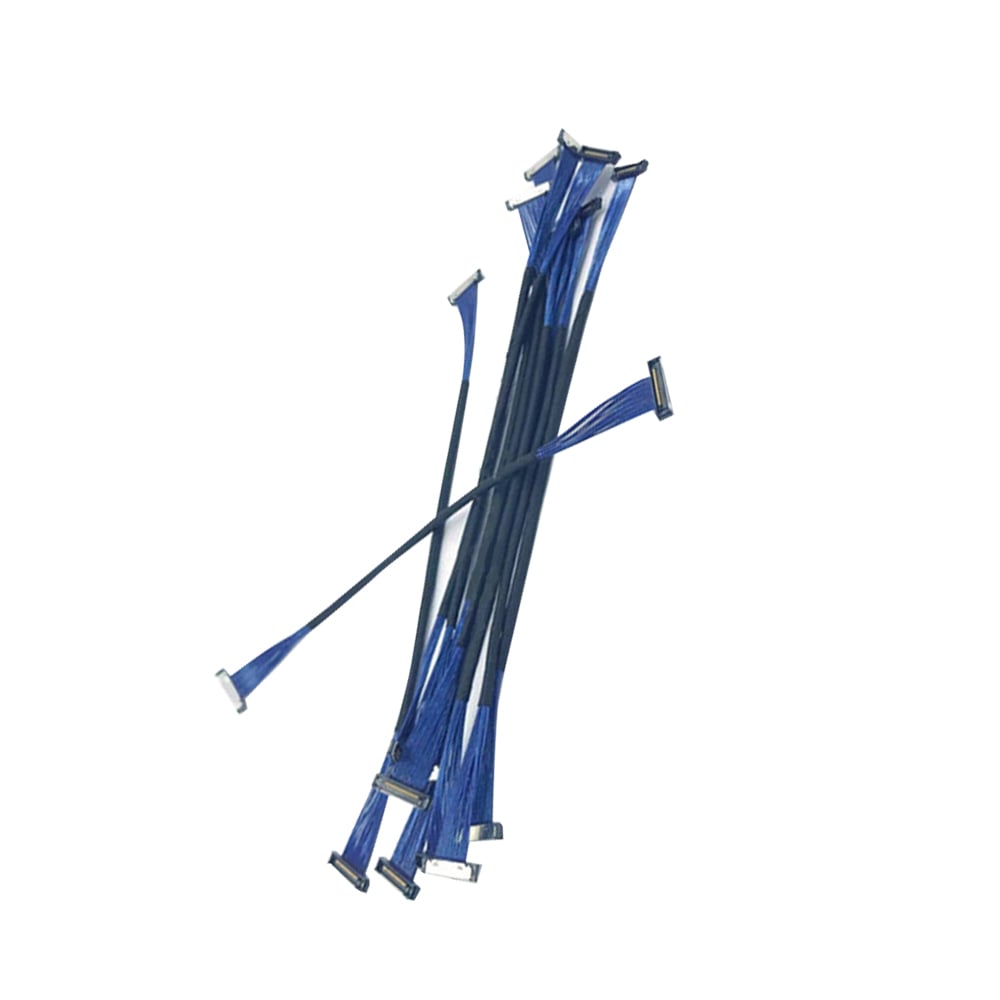
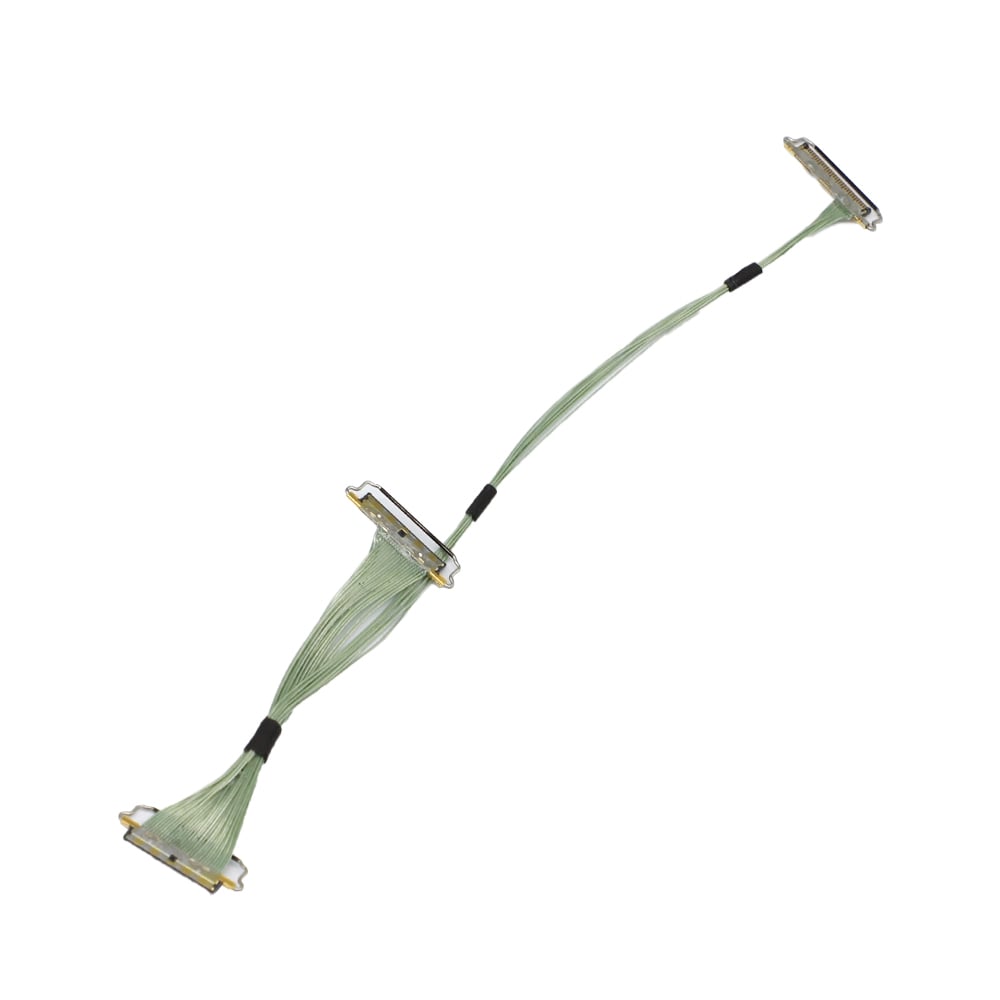
Hotten Electronic Wire Technology focuses on micro-coaxial cable and custom cable assembly solutions. We invest in precision extrusion technology, ultra-fine conductor processing, and advanced alloy materials to support customer projects in miniaturization, high-speed transmission, and high-flex applications.
If you are looking for reliable 42–50AWG micro-coaxial cable or custom cable assembly solutions, please contact our engineering team for technical consultation or sample support.
Demand growth is expected to come from industries requiring compact, high-speed and reliable interconnection solutions, including medical devices, robotics, drones, AI equipment, AR/VR systems and advanced electronics.
As electronic devices become smaller while requiring higher data rates, cable solutions must provide high performance within limited installation space. Micro coaxial cables help achieve compact designs while maintaining signal integrity.
Yes. Advanced robotics requires lightweight, flexible and reliable cables capable of supporting sensors, cameras, control systems and continuous movement.
Major trends include smaller cable diameters, higher bandwidth capability, improved shielding, better flexibility, enhanced reliability and customized cable assembly solutions.
Applications include medical imaging equipment, endoscopic devices, robotic systems, UAV cameras, AR/VR devices, automotive displays and other compact electronic systems.
Yes. Custom solutions can include conductor size, AWG specification, impedance, insulation material, shielding structure, cable diameter, length and connector configuration.
 Hot News
2026-09-17
2026-09-04
2025-12-17
2025-12-11
2025-12-05