 EN
EN
Quick Links

Medical devices are becoming increasingly compact, intelligent, and sophisticated. From ultrasound systems and endoscopic equipment to surgical instruments and wearable healthcare devices, reliable signal transmission has become a critical factor in product performance.
Behind every high-precision medical device is a carefully engineered cable solution.
Unlike standard cables, medical cable assemblies must meet demanding requirements including electrical stability, flexibility, durability, miniaturization, and long-term reliability.
Choosing the right medical cable assembly manufacturer is therefore an important decision for medical equipment companies that require consistent quality and customized solutions.
Medical equipment often operates in environments where signal accuracy and reliability are essential.
A cable failure or signal interruption may affect:
For applications such as ultrasound probes, endoscopes, and catheter-based imaging systems, cables must transmit sensitive signals while maintaining stable performance under repeated movement and operation.
Standard commercial cables are often unable to meet these requirements.
The right medical cable assembly manufacturer should be evaluated on medical-device application knowledge, cable engineering, material selection, precision assembly, testing, quality management, documentation, and production consistency rather than unit price alone.
Advanced medical devices often require cable assemblies that combine small size, high channel density, signal integrity, flexibility, shielding, mechanical durability, and specialized connector termination. The supplier therefore needs to understand both the cable and the device in which it will be installed.
| Evaluation factor | What OEM buyers should verify | Why it matters |
|---|---|---|
| Medical application experience | Ultrasound, endoscopy, imaging, monitoring, RF or other relevant applications | Similar applications often have similar engineering constraints |
| Cable engineering | Fine wire, micro coax, multi-core and custom constructions | Determines whether the required architecture is achievable |
| Material capability | Insulation, jacket, shielding, conductor and overmold options | Materials affect durability and device integration |
| Precision assembly | Fine-pitch termination, crimping, soldering, overmolding | Critical for miniature medical interfaces |
| Electrical testing | Continuity, resistance, insulation and application-specific tests | Confirms finished assembly performance |
| Mechanical testing | Flex, pull, bend and other application-specific tests | Helps verify service durability |
| Quality system | Appropriate quality-management processes and documentation | Supports controlled medical-device production |
| Customization | Cable size, length, connector, shielding and routing | Fits the actual device architecture |
| Traceability | Material, production and inspection records | Helps with qualification and failure analysis |
| Production capability | Prototype → pilot → mass production | Supports long-term OEM supply |
If the cable is part of an advanced medical device, then the supplier should be evaluated as an engineering and manufacturing partner rather than simply as a cable vendor, because cable performance can affect the reliability and validation of the complete device.
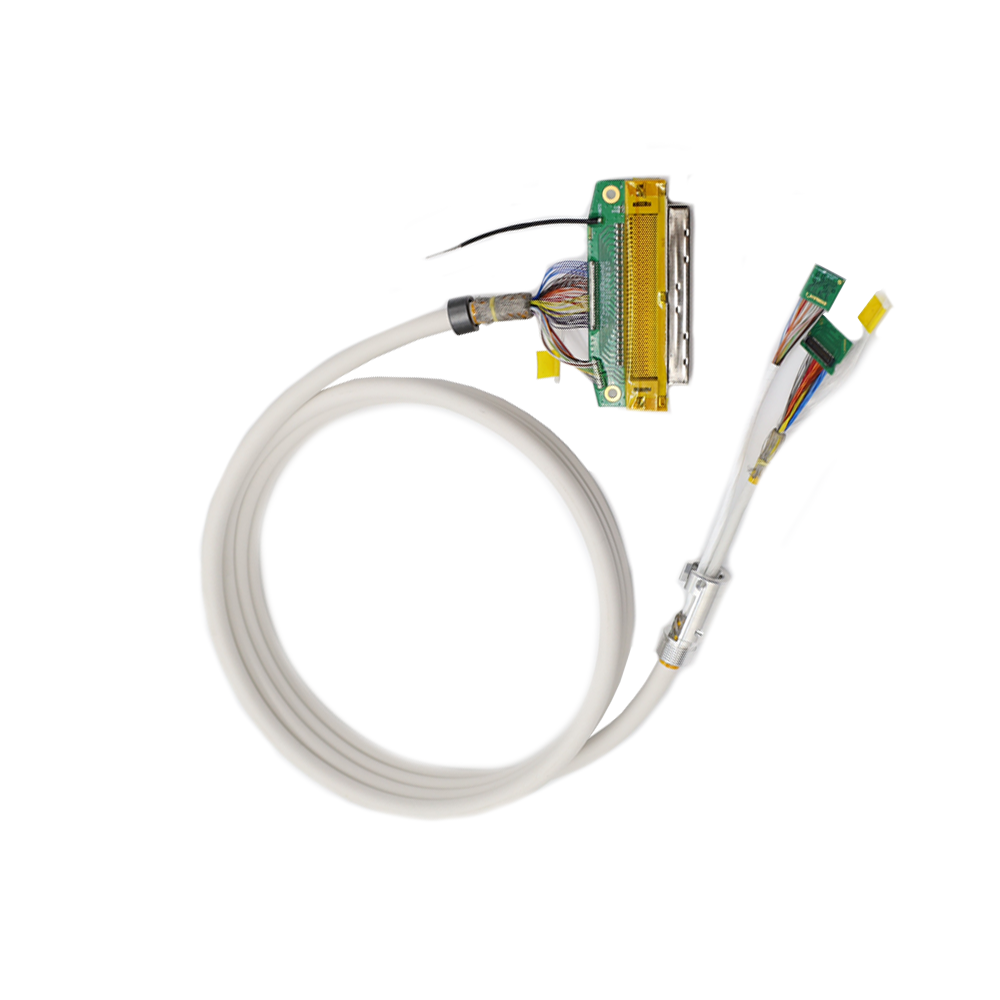
HOTTEN provides Medical Cable Assembly solutions for medical equipment and precision electronic applications.
Modern medical devices process increasingly complex signals.
Medical cable assemblies need to maintain:
For imaging applications, even small signal distortion can affect image resolution and diagnostic results.
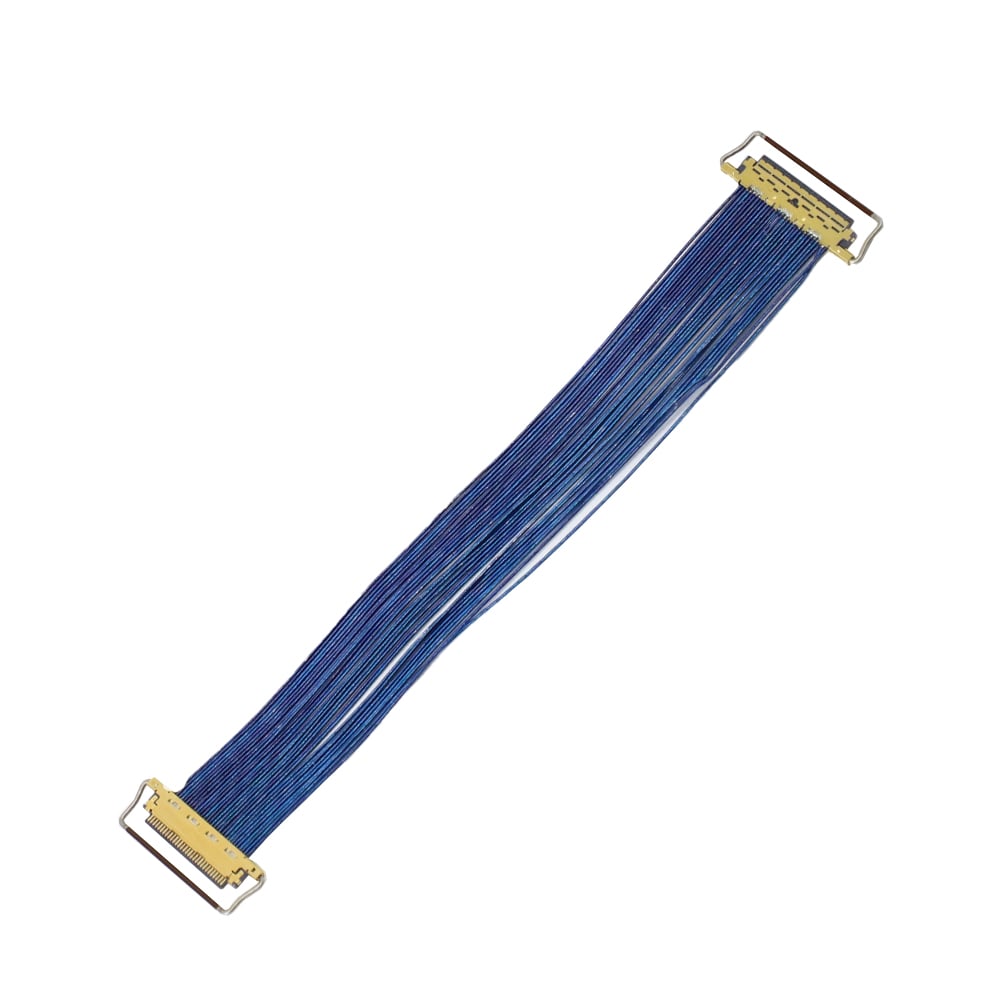
Advanced cable designs, including micro coaxial cable assemblies, help preserve signal integrity throughout the transmission path.
Many medical devices require cables that operate in extremely limited spaces.
Examples include:
These applications require cable assemblies with:
A professional medical cable supplier must understand both electrical requirements and mechanical limitations.
Medical environments often contain multiple sources of electromagnetic interference (EMI).
Potential interference sources include:
High-quality medical cable assemblies use advanced shielding structures to reduce unwanted noise and protect sensitive signals.
Effective shielding helps improve:
Medical devices require consistent performance throughout their service life.
A reliable cable manufacturer should have comprehensive quality control processes, including:
For medical applications, manufacturing consistency is just as important as cable design.
Every medical device has unique design requirements.
A professional custom medical cable assembly manufacturer should provide flexible customization options, including:
Different applications may require different solutions:
Cable assemblies must connect precisely with medical device components.
Customization may include:
Medical equipment companies often require both development support and production capability.
An experienced supplier should support:
This allows customers to move efficiently from product development to commercial production.
Ultrasound devices require reliable signal transmission between probes and imaging systems.
High-performance cable assemblies help provide:
Endoscopic systems require extremely compact and flexible cable solutions.
Medical cable assemblies support:
Advanced surgical and diagnostic devices require cables that can withstand demanding environments while maintaining precise signal transmission.
Customized cable solutions enable manufacturers to optimize device performance.
Before choosing a supplier, manufacturers should evaluate several factors:
Does the supplier understand:
Important considerations include:
A strong supplier should be able to develop solutions based on specific device requirements rather than only providing standard products.
The future of medical devices is moving toward:
These trends will continue increasing demand for advanced cable technologies, including micro coaxial cable assemblies and customized medical cable solutions.
Medical cable assemblies play a critical role in ensuring the reliability and performance of modern healthcare equipment.
From ultrasound systems to endoscopic devices, manufacturers need cable solutions that provide excellent signal integrity, flexibility, shielding, and long-term stability.
Selecting an experienced medical cable assembly manufacturer allows medical device companies to improve product reliability and accelerate innovation.
With advanced engineering capabilities and customized manufacturing solutions, Hotten supports the development of high-performance cable assemblies for next-generation medical applications.
A medical cable assembly is a customized cable solution designed for healthcare equipment, requiring high reliability, electrical performance, and durability.
Medical devices have unique space, signal, and mechanical requirements that standard cables cannot always satisfy.
Medical cable assemblies are widely used in ultrasound, endoscopy, diagnostic equipment, surgical systems, and wearable healthcare devices.
Companies should evaluate technical expertise, customization capability, manufacturing quality, and experience with medical applications.
 Hot News
2026-09-17
2026-09-04
2025-12-17
2025-12-11
2025-12-05