 EN
EN
Quick Links

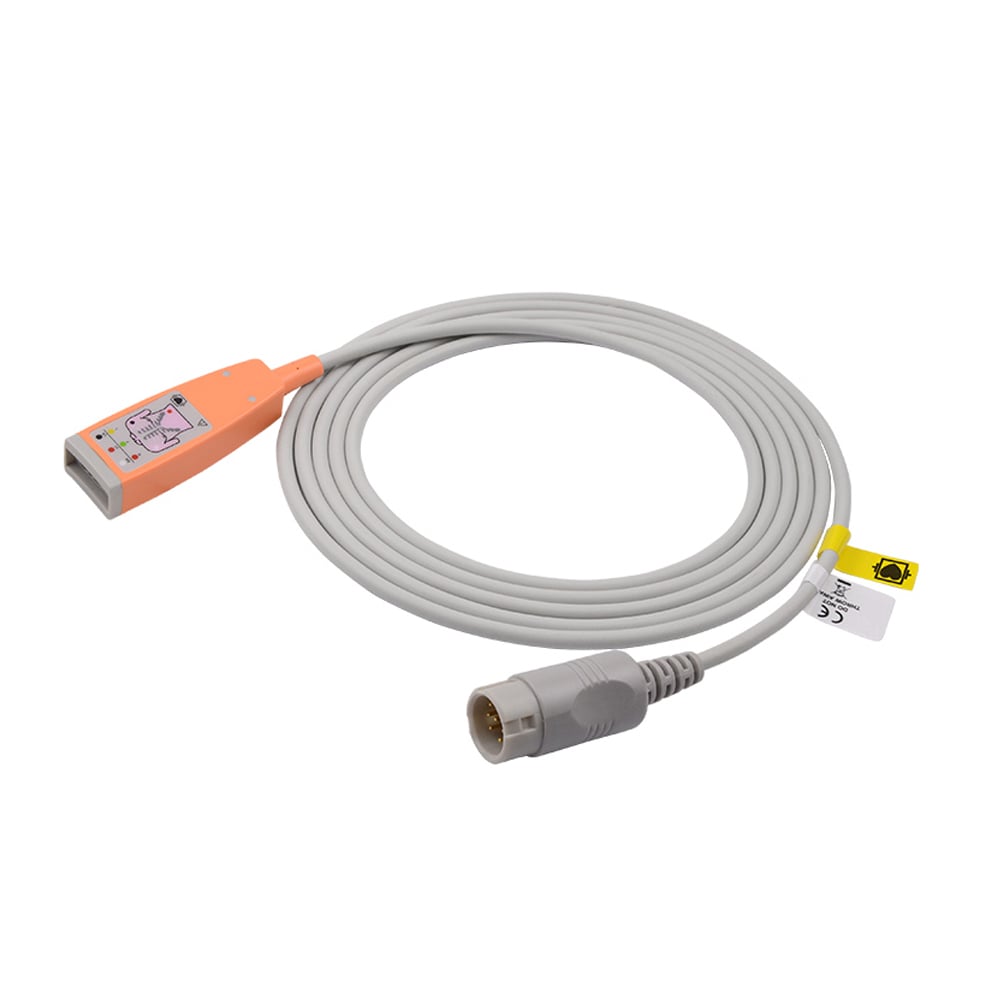
The performance of an ultrasound imaging system depends heavily on its signal transmission quality, and the ultrasound probe cable plays a critical role. Although it is easy to overlook, A probe cable connects the probe to the imaging system and transmits data collected by the probe. For these reasons, at Hotten, we design our probe cables to not only do what most other probe cables do (transmit), but also to protect the integrity of those signals to ensure signal stability. This is especially important because the image produced by the ultrasound machine depends on the quality of those signals — and when a signal becomes degraded due to various forms of interference, resulting in blurred images or artifacts.
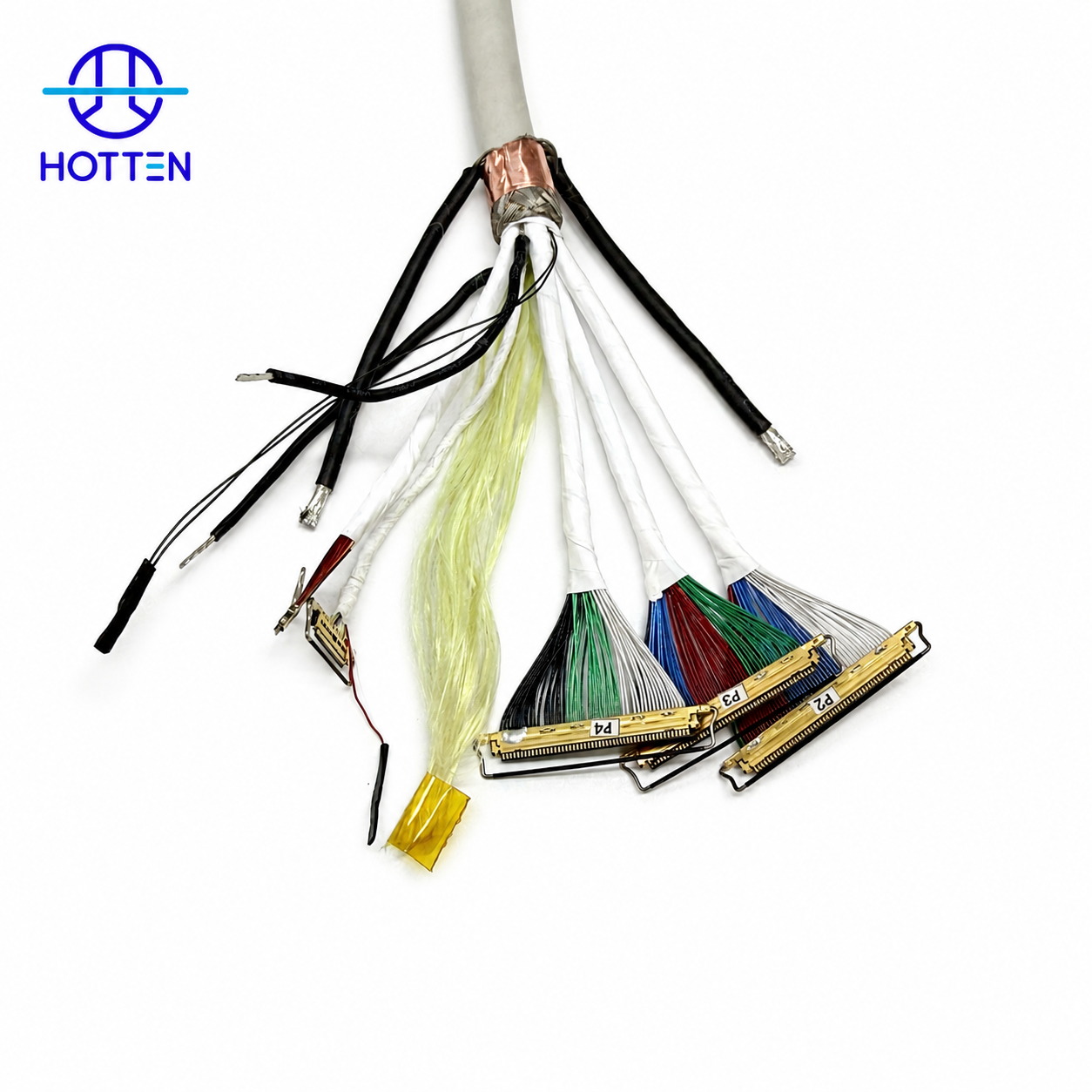
As mentioned above, one of the biggest challenges to producing high-quality ultrasound images is signal degradation. This is because most types of interference (electromagnetic, radio-frequency, etc.) will degrade the quality of a signal. To help reduce these problems, Hotten's ultrasound probe cables are designed using shielding technology that reduces both electromagnetic interference (EMI) and radio frequency interference (RFI) reducing signal distortion before it reaches the ultrasound system. With multi-layer shielding, including tinned copper braiding and aluminum foil, our cables ensure a reliable electrical environment that maintains the quality of high-frequency signals from the probe to the processor.
This type of shielding minimizes signal loss and phase distortion, which are critical factors in producing clear images in real-time. The result is reliable signal transmission, which is essential for accurate diagnostics in various imaging applications.
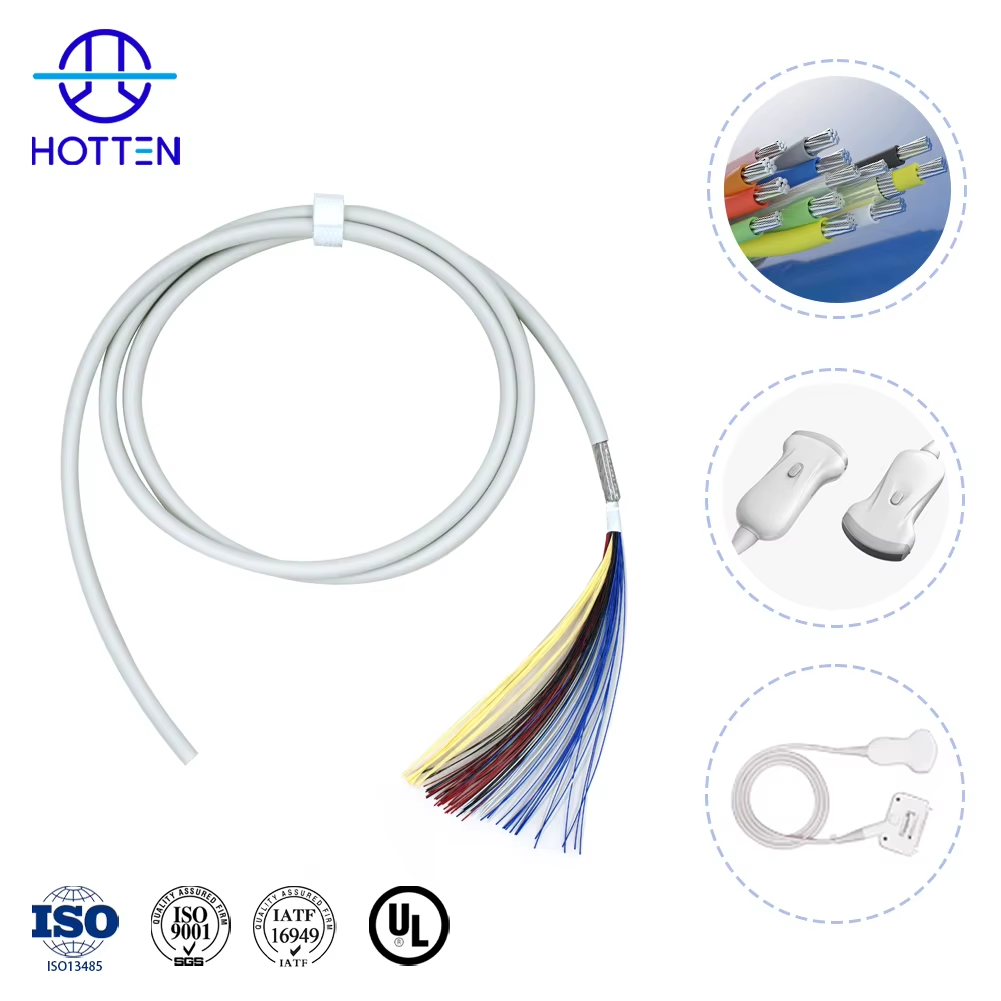
Another factor that contributes to reliable signal transmission is mechanical stability. The ultrasound probe operates continuously during imaging procedures. As a result, the cable is subjected to constant mechanical stress.
Hotten ensures reliable cable performance through the use of high-quality materials and manufacturing techniques. The cables are constructed with high-quality copper alloys that withstand thousands of flex cycles without compromising conductivity. The strain relief design, where the cable connects to the device, has been developed to withstand mechanical stress, ensuring stable signal transmission without signal interruption. As a result, imaging remains stable, regardless of how frequently the probe is utilized.
Impedance mismatch between the cable, probe, and imaging system is a common cause of signal reflection and reduction. Hotten's ultrasound probe cables are designed for high quality and ensure smooth integration with diagnostic equipment. The cable sustains its characteristic impedance by using precise dielectric materials and applied consistent conductor spacing throughout the entire cable length. This impedance control lessens signal echoes which are critical in high-resolution imaging modes such as Doppler and harmonic imaging.
Ultrasound equipment is widely used in high-volume radiology departments and operating rooms. Hotten's ultrasound probe cables are designed for durability, sterilization resistance, and long-term stability.
Our production process involves careful testing to ensure that each cable meets our customers’ needs. Our signal stability enables healthcare organizations to deliver consistent imaging results over long periods of time. This is essential for improving patient outcomes.
| Engineering Factor | Cable Design Consideration | Benefit for Ultrasound Imaging |
|---|---|---|
| EMI / RFI | Multi-layer shielding | Reduces external interference |
| Signal Integrity | Controlled impedance and conductor spacing | Helps reduce signal reflection and distortion |
| Repeated Bending | Flexible conductor and suitable insulation | Supports continuous probe movement |
| Strain Relief | Reinforced connection structure | Reduces mechanical stress at cable ends |
| Clinical Environment | Durable and sterilization-resistant materials | Supports long-term medical equipment use |
1. How does an ultrasound probe cable affect signal stability?
An ultrasound probe cable affects signal stability through its shielding performance, impedance consistency, conductor structure, dielectric materials and mechanical construction. Proper cable design helps reduce interference and signal distortion during transmission.
2. Why is shielding important in ultrasound probe cables?
Shielding helps reduce electromagnetic interference (EMI) and radio-frequency interference (RFI), which can otherwise affect signal quality and contribute to unwanted noise or image artifacts.
3. Why is impedance control important for ultrasound cables?
Consistent characteristic impedance helps reduce signal reflections and transmission losses between the ultrasound probe, cable and imaging system, supporting stable high-frequency signal transmission.
4. Can ultrasound probe cables withstand repeated bending?
Yes. Ultrasound probe cables can be designed with flexible conductors, suitable insulation materials and reinforced strain-relief structures to withstand repeated bending during normal probe operation.
5. Can ultrasound probe cables be customized for different medical devices?
Yes. Customization can include conductor size, core count, cable diameter, shielding structure, impedance, insulation material, cable length, connector configuration and assembly requirements.
6. What should medical equipment manufacturers consider when selecting an ultrasound probe cable?
Key factors include signal integrity, impedance, shielding, flexibility, bending performance, sterilization or environmental requirements, connector compatibility and long-term mechanical reliability.
Signal stability is critical in diagnostic ultrasound, and the cable joining the probe and the system is an important factor in this scenario. Hotten focuses on precision shielding, mechanical strength, impedance, and environmental stability, ensuring that our ultrasound probe cables deliver high-quality and accurate performance. This supports our goal of advancing cable performance and the benefits they can offer to medical professionals.
 Hot News
2026-09-17
2026-09-04
2025-12-17
2025-12-11
2025-12-05