 EN
EN
Quick Links

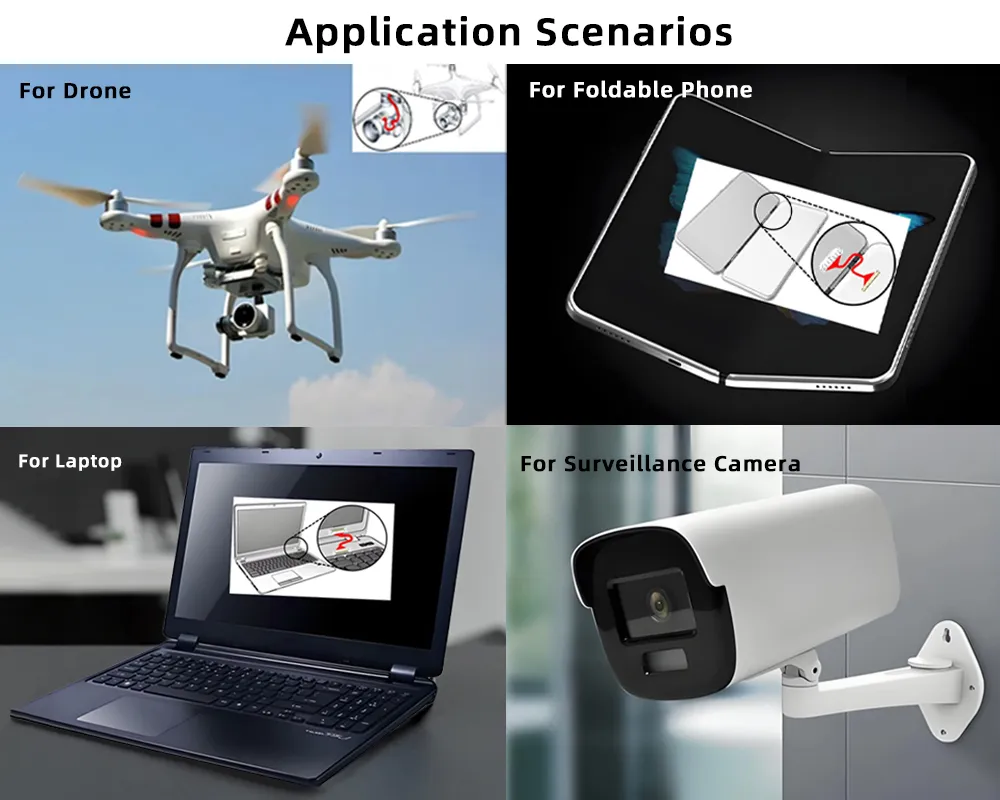
In modern display applications such as medical device monitors, industrial panel PCs, automotive infotainment systems, consumer electronics, etc. The demand for high-speed, real-time and high-resolution video continues to grow. Therefore LVDS (Low Voltage Differential Signaling) Technology has emerged into the display field for many harsh environment applications. The LVDS cable, instead of a passive medium is an integral part that can actually determine whether the high-speed signals reach their destination in perfect condition, or if they degrade into signal noise, jitter, or timing errors. The Hotten LVDS cable has been designed to satisfy the stringent requirements for high-speed data exchange and offer a clean, stable and reliable display output.
Understanding LVDS Technology
LVDS is a type of differential signaling where data is transmitted with two complementary signals through a twisted-pair configuration. Instead of transmitting signals over a single line referred to as the single-ended signaling (in single-ended signaling) where signals are referenced to ground plane and are more vulnerable to noise, LVDS is based on the difference in voltage levels between two conductors. Benefits of LVDS are:
Low Voltage Swing: typically around 350mV, LVDS leads to less power consumption and reduced electromagnetic interference (EMI).
high-speed: it can carry high-speed signals from several hundreds of Megabits per second (Mbps) up to more than 3 Gbps per channel.
Noise Immunity: The same noise on both lines is referred to as common-mode noise and can be filtered out by the receiver.
But these ideal benefits must be maintained by an electrical design in the cable assembly.
Precision Impedance Control
For LVDS cable to perform well, it has to exhibit the characteristic impedance desired by the system, which is typically 100Ω differential impedance. Hotten produces LVDS cable with extremely controlled impedance with tolerances in the order of ±5%. This precision is achieved through:
Consistent Conductor Spacing: uniform separation distance between the two conductors for every twist pair.
Controlled Dielectric Properties: High grade insulating material with constant dielectric values is used throughout.
Consistent Twist Rates: Twisting of the material is adjusted to control the constant capacitance per length and inductance per length.
By precisely controlling the characteristic impedance, reflections are reduced and data signal integrity is preserved as efficiently as possible.
Differential Pair Construction
The fundamental of LVDS cable is the construction of a twisted pair and a well-designed cable will optimize a number of factors:
Matched Conductor Lengths: Equal length of two conductors within each pair is required so that signals arrive at receiver simultaneously. Skew – is difference in timing between two conductors, which is held to minimum (less than 10ps/m).
Optimized Twist Density: The twist density value is optimized for a tradeoff between stiffness of the cable, signal integrity and other mechanical needs. Hotten provides optimized twists that strikes a balance between signal integrity and cable flexibility needs.
Individual Pair Shielding: If the cable bundle consists of many LVDS pairs, each pair is shielded with foil/tape so that signals in one pair will not crosstalk to signals in another pair.
High-Performance Dielectric Materials
The insulation around each conductor of an LVDS cable determines how fast signals will travel down the cable and how much they will be attenuated and dispersed. High performance dielectric materials used by Hotten include:
Foam Polyethylene (Foam-PE): exhibits low dielectric constant and low dissipation factor that contribute to minimal loss of signals. Low capacitance of foam insulation also allows for long runs with minimal signal loss.
Fluoropolymers (FEP/PTFE): are excellent dielectrics for high-frequency performance and are ideal for applications that require excellent thermal and chemical resistance with stable electrical performance. They also maintain stable electrical performance over wide temperature ranges from -40°C to 105°C.
Solid Polyethylene (PE): an all-round excellent choice for standard LVDS cable applications for its stable electrical characteristics and high-speed signal integrity.
These materials minimize attenuation and dispersion, while preserving fast signal rise times and a clear eye diagram opening.
Comprehensive Shielding Architecture
Even though LVDS technology itself offers excellent noise immunity, the transmission environment can still present external EMI that might affect signal quality. The comprehensive shielding implemented by Hotten to prevent EMI comprises:
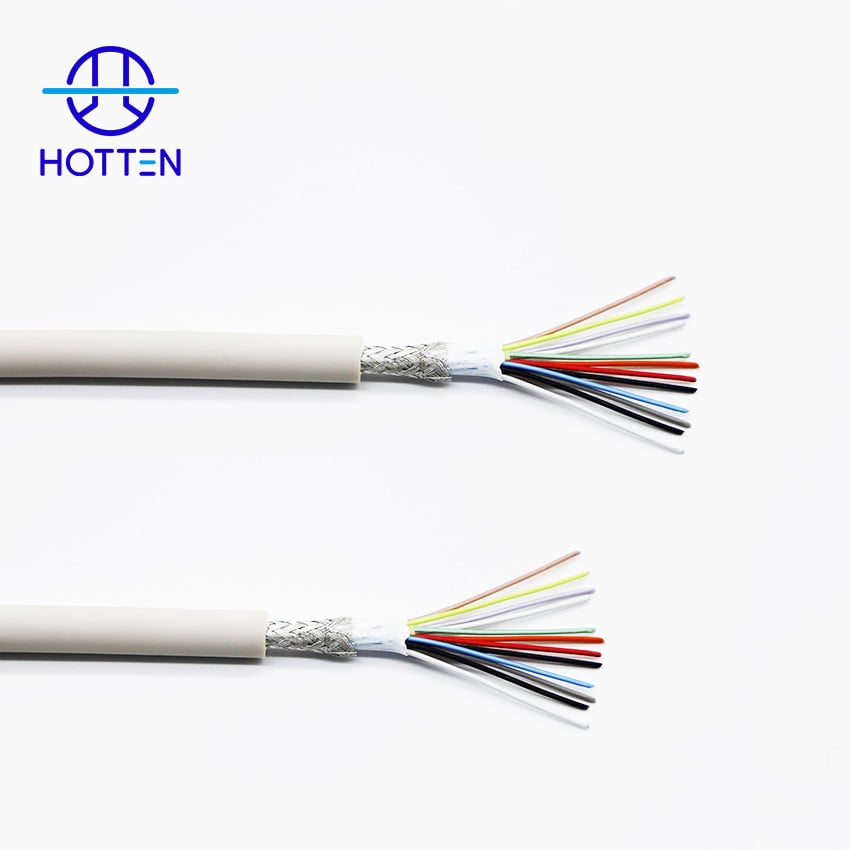
Overall Foil Shield: A 100% shield coverage (e.g., Aluminum/Polyester foil) providing a solid barrier against external electrical fields.
Copper Braid Shield: Tinned copper braid wrapped around the foil shield offers protection against electromagnetic interference at lower frequencies and provides mechanical support.
Drain Wire: A tinned copper drain wire provides continuous grounding and enhances the shielding effect along the entire cable length.
This combination of shield layers offers high shielding effectiveness while maintaining necessary flexibility required for cable routing in display systems.
Construction Types for Different Applications
Hotten offers a variety of construction options for LVDS cables to meet different application requirements:
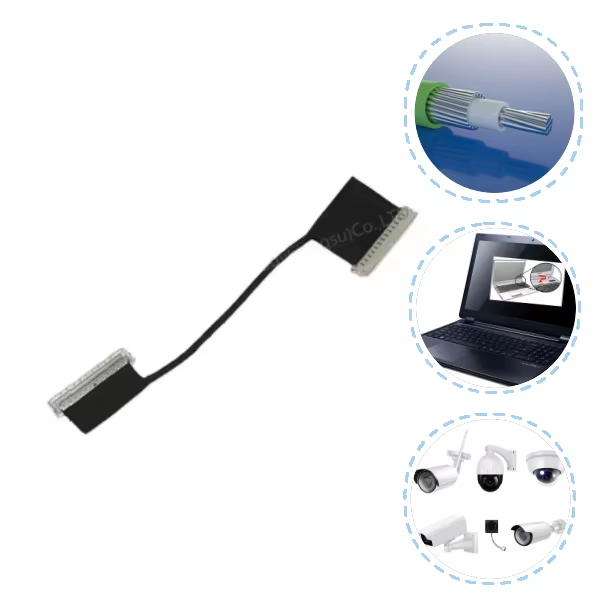
Flat Ribbon LVDS Cables: This cable construction is best for internal display connections where space is limited and parallel routing is required. The flat cable provides high channel density and consistent impedance.
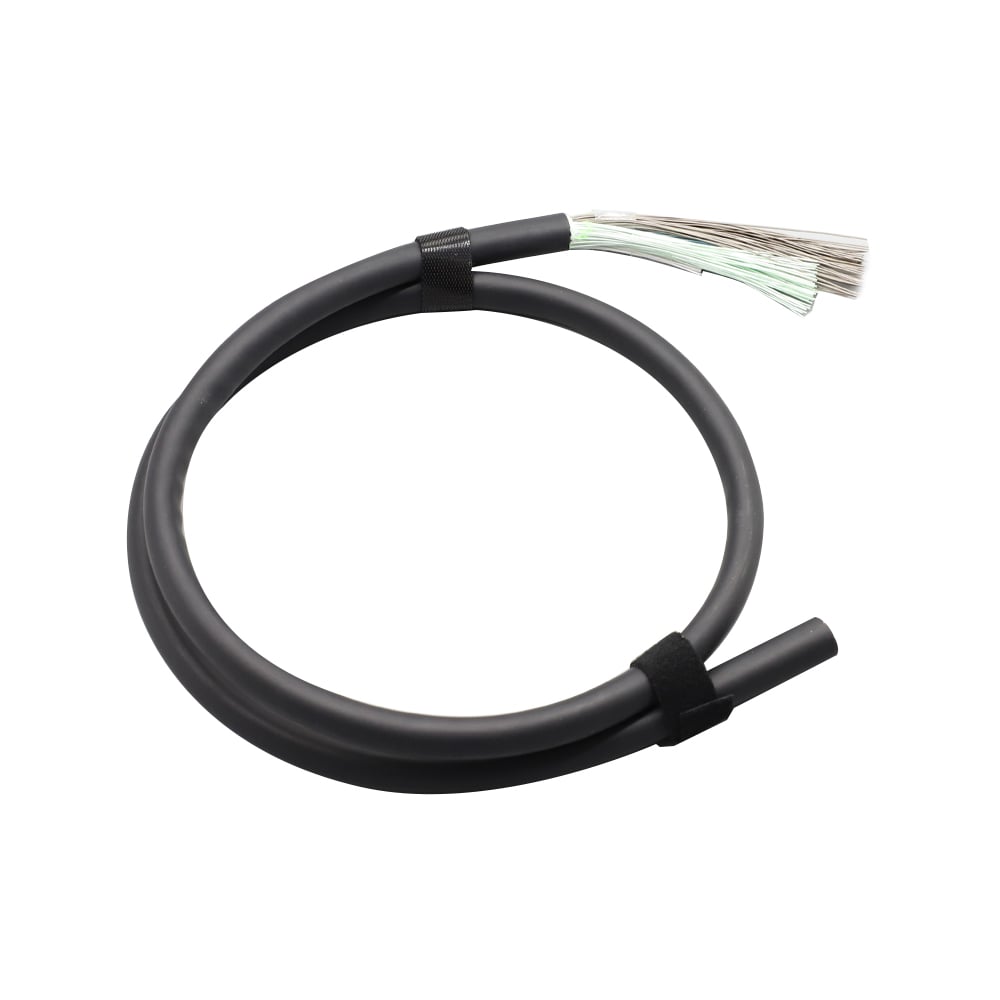
Round Jacketed LVDS Cables: Suitable for external connections or where a durable and mechanically sound connection is needed between two devices. The round design offers more flexibility for routing and smaller bend radii.
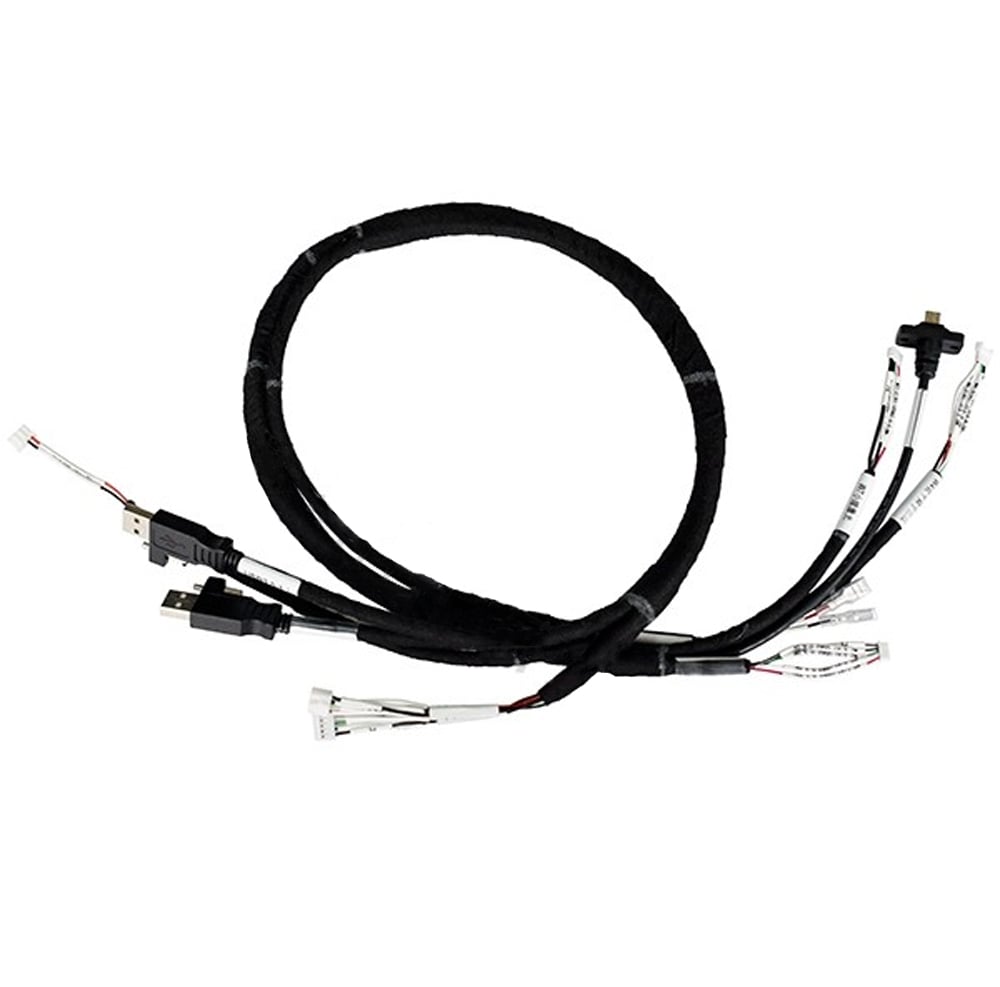
Hybrid LVDS Assemblies: These specialized assemblies integrate LVDSsignal pairs along with power conductors and control signal lines in a single cable, simplifying system design and improving reliability.
| Design Factor | Why It Matters |
|---|---|
| Differential Impedance | Helps minimize signal reflections and maintain signal integrity |
| Conductor Length Matching | Reduces signal skew between differential pairs |
| Pair Twist Rate | Balances signal performance and cable flexibility |
| Shielding | Reduces EMI and crosstalk |
| Dielectric Material | Affects attenuation, capacitance and transmission performance |
| Cable Construction | Determines flexibility, routing and installation suitability |
| Operating Temperature | Ensures stable performance in different environments |
| Connector Configuration | Ensures compatibility with the target display system |
LVDS cables are used to transmit high-speed differential signals between electronic components, particularly in display systems that require stable data transmission, low electromagnetic interference, and reliable signal integrity.
Many LVDS systems use approximately 100Ω differential impedance. Maintaining consistent impedance through conductor spacing, dielectric properties, and cable construction helps reduce signal reflections and preserve signal integrity.
Shielding helps reduce the influence of external electromagnetic interference and limits crosstalk between adjacent signal pairs. This is especially important when multiple high-speed differential pairs are routed together.
Yes. LVDS cable assemblies can be customized according to conductor size, impedance requirements, shielding structure, cable length, connector configuration, flexibility requirements, and installation environment.
Important factors include differential impedance, transmission speed, conductor construction, pair matching, shielding, dielectric material, cable length, flexibility, operating temperature, and connector requirements.
Conclusion
LVDS technology offers a robust and high-speed data transmission method, ideally suited for the complex demands of modern display applications. As the performance of the LVDS cable can make a significant difference between good and excellent display output, Hotten's expertise in cable design with precise impedance control, optimized differential pair structure, advanced dielectric materials and thorough shielding ensures that high-speed LVDS signals reach their destination properly. Whether it is for high-diagnostic display in the medical field, ruggedized display for automotive industry or consumer electronics that demands ultra high-resolution, Hotten LVDS cable will satisfy your signal integrity requirement.
 Hot News
2026-09-17
2026-09-04
2025-12-17
2025-12-11
2025-12-05