
+86-13912615597 [email protected]
All Categories
how micro coaxial cables enhance transmission in high resolution displays-0

Technical Articles

Home >  News >  Technical Articles

How Micro Coaxial Cables Enhance Transmission in High-Resolution Displays

Jan 04, 2026

Introduction: The Challenges of Transmission in High-Resolution Displays

Display technology has come a long way in recent years. We're now seeing ultra-high-definition resolutions (like 4K and 8K), refresh rates above 120Hz, and deeper color depths with HDR becoming standard—even expected—across everything from flagship smartphones and tablets to advanced medical and industrial displays. All of this adds up to richer, more immersive visuals for users.

But there's a catch: all these improvements mean a massive jump in data transmission demands. As resolution climbs, so does the volume of data that needs to move—whether it's from a display driver board (T-Con) to the panel itself, or from cameras and sensors back to the main processor. Traditional wiring solutions, like flat ribbon cables or basic coaxial cables, are struggling to keep up. They simply weren't built for the bandwidth, signal integrity, and compactness that today's high-res displays require.

That's where micro coaxial cables step in. These tiny but powerful components have become essential for moving high-frequency signals cleanly and reliably. And as a leading manufacturer in this space, Hotten Electronic Wire Technology (Jiangsu) Co., Ltd. specializes in producing high-performance micro coaxial cables tailored to the exacting needs of modern display systems.

Why Are Micro Coaxial Cables Used in High-Resolution Display Systems?

Direct Answer

High-resolution display systems require interconnects that can carry high-speed signals while fitting into increasingly compact devices. Micro coaxial cables are useful for these applications because they combine small cable diameter, controlled electrical geometry, shielding, and high-density signal routing.

Compared with larger conventional cable structures, micro coaxial assemblies can help OEM engineers manage the competing requirements of high-speed transmission, limited internal space, EMI control, flexible routing, and miniature connector integration.

Display requirement Micro coaxial cable approach Engineering benefit
High-speed signal transmission Controlled coaxial geometry Supports consistent signal transmission
Limited internal space Small cable OD Enables compact routing
High channel count Fine coaxial conductors Supports dense interconnects
EMI control Individual or overall shielding Helps reduce unwanted coupling
Flexible routing Small and flexible cable construction Fits constrained device layouts
Miniature interface Fine-wire termination Supports compact connectors
OEM integration Custom cable and connector configuration Matches the actual device architecture

If a display system requires high-speed signals and limited routing space, then micro coaxial cable is an interconnect architecture worth evaluating, because it can combine signal isolation and high-density routing within a compact assembly.

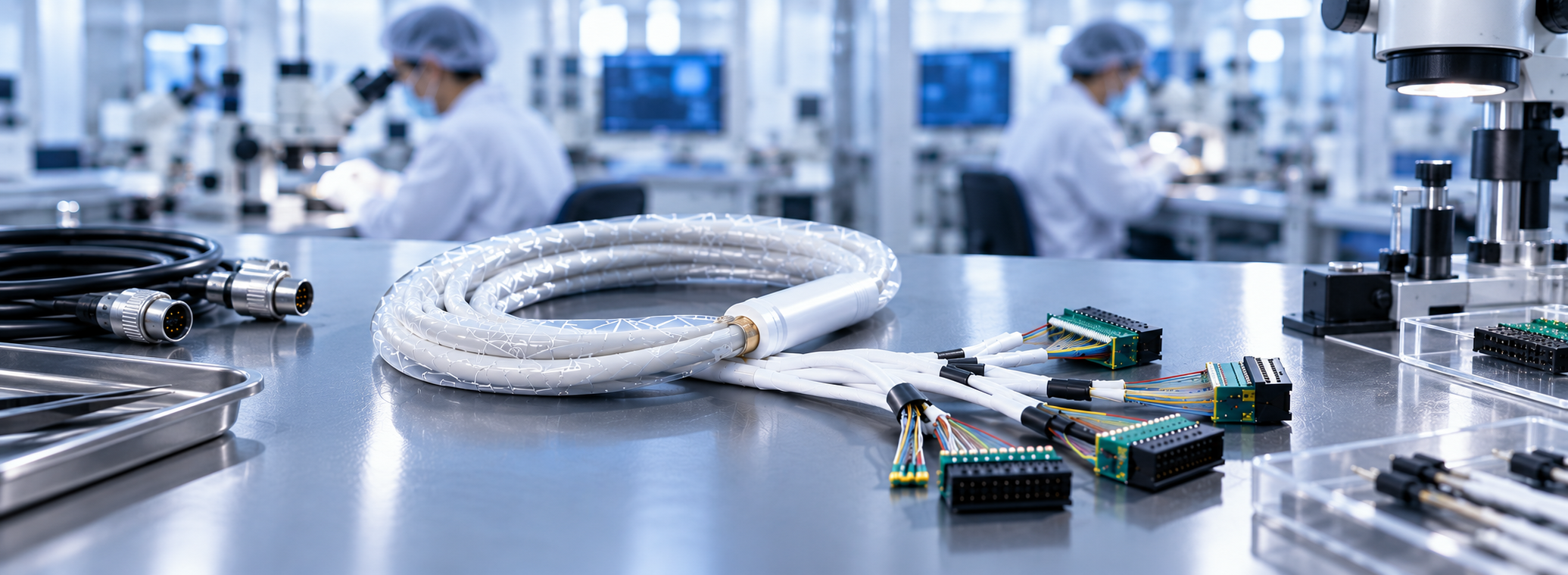
For OEM display applications, see HOTTEN's LVDS Wire Harness and Micro Coaxial Cable Assembly solutions.
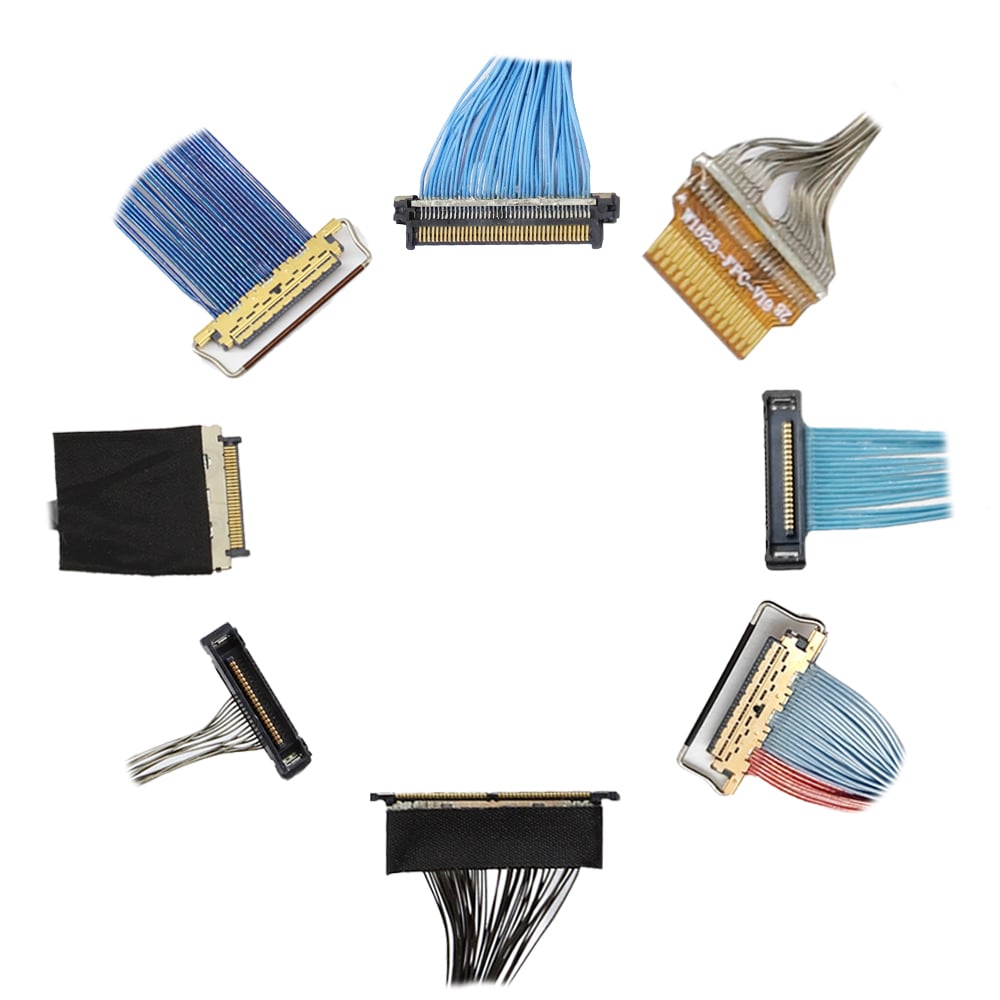
38AWG Micro Coaxial EDP Cable Assembly  2.jpg

High-Resolution Display Cable Solution Comparison

Cable Type Advantages Limitations Typical Applications
Micro Coaxial Cable Excellent high-frequency transmission, strong EMI shielding, compact size and stable impedance control Higher manufacturing complexity and precision requirements 4K/8K displays, laptops, medical displays, automotive screens
FPC (Flexible Printed Circuit) Extremely thin profile and high flexibility for compact devices Signal loss increases in high-speed transmission and long-distance applications Smartphones, foldable devices, compact electronics
Standard Coaxial Cable Good shielding performance and reliable signal transmission Larger diameter and limited space utilization Traditional RF and industrial equipment
Twisted Pair Cable Cost-effective and suitable for differential signal transmission Requires careful EMI control in high-noise environments General communication systems

How Micro Coaxial Cables Enhance Transmission Performance

So, what makes micro coaxial cables such a strong fit for high-resolution displays? Let's take a closer look at the tech—and the real-world benefits they bring.

1. Precision Engineering for Signal Integrity

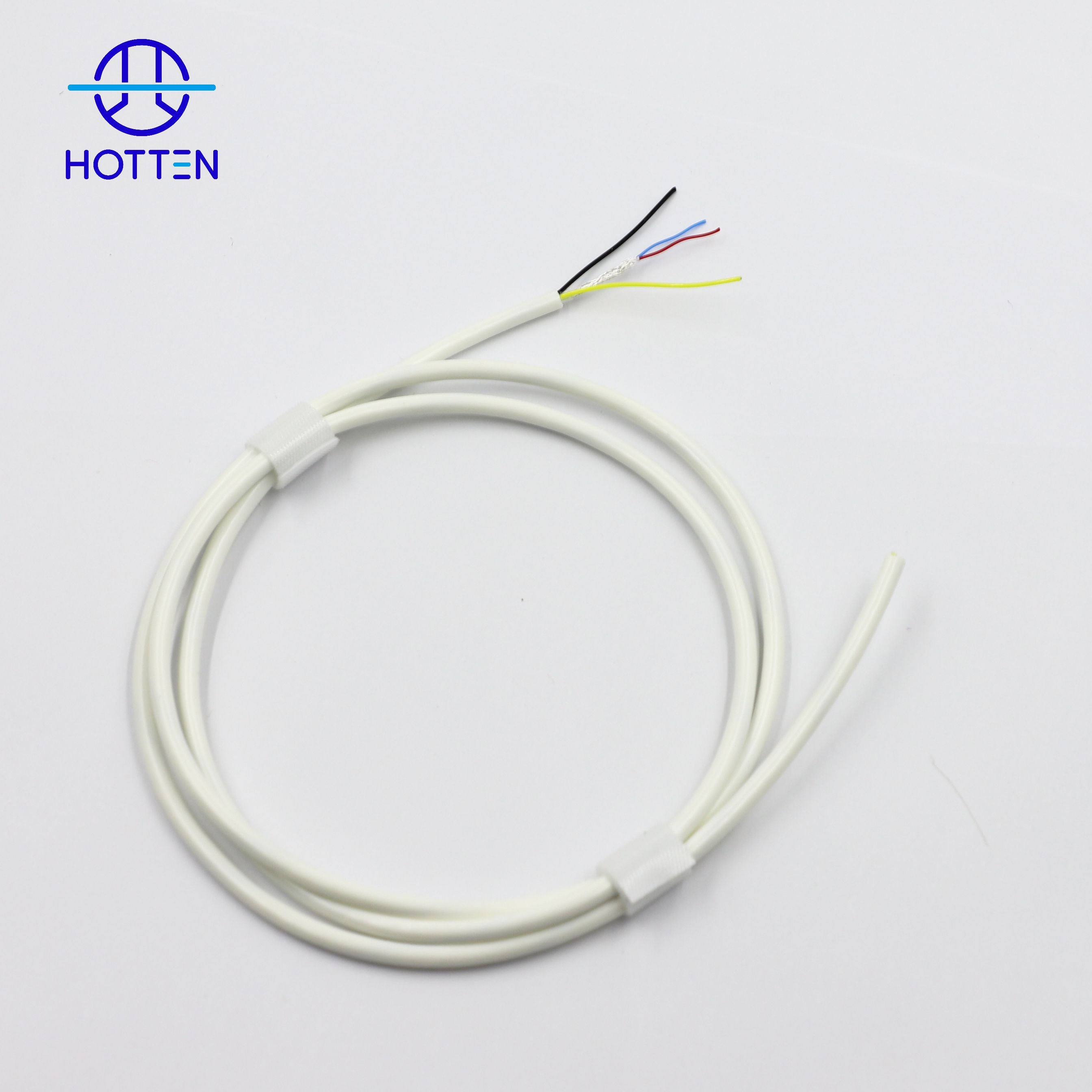
Micro coaxial cables feature a tightly controlled concentric design: a central conductor, surrounded by dielectric insulation, a shielding layer (often braided copper or aluminum foil), and an outer jacket. This setup isn't just for show—it's engineered to maintain consistent impedance (typically 50Ω or 75Ω) and block electromagnetic interference (EMI).

Why does that matter? Because any loss of signal integrity can show up on screen as flickering, ghosting, or even a total dropout. Thanks to their robust shielding, micro coaxial cables keep signals clean, ensuring smooth, artifact-free visuals—even in demanding setups.

2. The Power of "Micro" – Built for Tight Spaces

What really sets these cables apart is their size. With outer diameters often under 0.5mm, they're small enough to fit into ultra-thin smartphones, slim laptops, and cramped automotive dashboards—places where every millimeter counts.

And despite their tiny footprint, they don't sacrifice performance. They still handle high-frequency signals with minimal loss, giving designers the freedom to create sleek, lightweight devices without compromising on image quality.

3. High Bandwidth with Low Signal Loss

As displays push into 4K and 8K territory, the need for fast, reliable data transfer has never been greater. Micro coaxial cables rise to the challenge—they can support data rates well into the tens of gigabits per second (Gbps).

They're also designed to minimize signal attenuation over distance, which is crucial in applications like large video walls, where signals must travel from a central unit to multiple panels. By maintaining a strong signal-to-noise ratio, these cables deliver crisp, lag-free images—every time.

4. Strong EMI Resistance

In high-speed signal environments, even minor electromagnetic interference can distort video output. Micro coaxial cables tackle this head-on with their layered shielding. Whether it's braided wire or foil, the shield acts like a barrier, keeping external noise out.

This is especially valuable in complex settings—like car dashboards, hospital monitors, or factory control rooms—where multiple electronic systems operate side by side. Here, clean signal transmission isn't just nice to have; it's critical.

5. Flexible, Durable, and Built to Last

Beyond electrical performance, these cables are mechanically tough. They can bend, twist, and vibrate repeatedly without degrading—perfect for laptops that open and close daily, or automotive displays subject to constant motion.

They're also resistant to temperature swings, moisture, and chemicals, making them reliable even in harsh conditions. From operating rooms to outdoor kiosks, they keep performing—day in, day out.

Real-World Applications of Micro Coaxial Cables

Thanks to their blend of performance and compactness, micro coaxial cables have become go-to solutions across several high-stakes industries:

1. Consumer Electronics: Ultra-Thin Laptops & Flagship Smartphones

Modern devices pack OLED or Mini-LED screens that demand pixel-perfect data delivery. Micro coaxial cables quietly do the heavy lifting—linking the mainboard to the display with zero lag or distortion.

2. Medical & Professional Displays: Where Every Pixel Counts

In surgery suites or diagnostic imaging, clarity isn't optional. These cables ensure high-res signals arrive intact, preserving true color and fine detail—because in medicine, visual accuracy can be a matter of life and death.

3. Automotive Displays: Smarter, Safer Cockpits

Today’s cars rely on HD dashboards, rearview cameras, and infotainment systems. Micro coaxial cables deliver those video feeds clearly and instantly, even amid the EMI-heavy environment of a moving vehicle—keeping drivers informed and safe.

4. Industrial & Commercial Displays: Reliable Over Distance

From command centers to digital billboards, these cables transmit sharp video signals across longer runs without quality loss. Whether it's a sunlit outdoor sign or a multi-panel control wall, they provide the stability needed for professional-grade performance.

Choosing the Right Micro Coaxial Cable for Your Project

Not all micro coaxial cables are created equal. When selecting one for your high-resolution display system, keep these factors in mind—advice straight from the team at Hotten Electronic Wire Technology (Jiangsu) Co., Ltd.:

  • Electrical Performance: Prioritize low insertion loss, minimal return loss, and high bandwidth.
  • Mechanical Durability: Check flexibility, minimum bend radius, and resistance to heat, moisture, and chemicals.
  • Connector Compatibility: Make sure the cable works seamlessly with your existing connectors and maintains stable contact over time.
  • Customization Options: Partner with a supplier who can tailor length, shielding type, and materials to your specific design.

At Hotten, we don't just sell cables—we engineer solutions. Whether you're building next-gen smartphones, surgical displays, or connected car systems, we're ready to help you get the signal right.

Conclusion: The Unsung Hero Behind Stunning Visuals

You might not see them, but micro coaxial cables are working hard behind the scenes to make today's high-resolution, high-refresh-rate displays possible. They're the quiet enablers of sharp, fluid, immersive visuals—across industries and applications.

If you want your display system to perform at its best, partner with a trusted expert. Hotten Electronic Wire Technology (Jiangsu) Co., Ltd. offers customized micro coaxial cable solutions designed to meet your exact requirements—so your next product delivers a truly standout visual experience.

Get in touch today to learn more. Whether you need technical specs, samples, or a full collaboration, our team is here to support your success—from concept to production.

hotten medical case study.pngEngineering Selection for High-Resolution Display Cable Assemblies

1. Start With the Display Interface

Before selecting a cable, OEM engineers should identify the actual display interface and signal requirements.

Possible interface architectures may include:

  • LVDS
  • eDP
  • High-speed camera or imaging interfaces
  • Other application-specific differential signals

The cable should be selected according to:

signal type + channel count + frequency / data-rate requirement + cable length + connector interface + routing space

If the display interface has already been defined, then the cable assembly should be developed around the existing pinout and connector architecture, because the cable is part of the complete electrical path rather than an independent component.


2. High Resolution Increases the Importance of Signal Integrity

As display systems require more data to be transmitted over the interconnect, the cable design needs to maintain suitable electrical performance throughout the signal path.

Relevant parameters can include:

Parameter Why it matters
Impedance Helps control reflections in controlled differential or high-speed paths
Insertion loss Describes attenuation through the interconnect
Return loss Indicates reflected signal energy
Crosstalk Indicates unwanted coupling between adjacent channels
Capacitance Can affect electrical loading
Cable length Influences total transmission path
Connector transition Can introduce local discontinuities

If the display interface is sensitive to signal reflections or attenuation, then cable and connector performance should be evaluated together, because the complete transmission path includes both the cable and its interfaces.


3. Micro Coaxial Cable Helps Reduce Routing Space

One major advantage of micro coaxial cable is its compact construction.

In high-density display systems, available routing space may be limited around:

  • Display panels
  • Mainboards
  • Camera modules
  • Hinges
  • Foldable mechanisms
  • Compact computing structures

If the cable must pass through a narrow internal path, then a smaller cable OD can simplify routing, because less physical space is required for the interconnect.

However, OEMs should not select a cable based on OD alone. Cable size must still be balanced against conductor resistance, shielding, flexibility, termination, and required signal performance.


4. High Channel Density Changes the Cable Architecture

Modern display and imaging systems may require many signal paths within a small physical space.

A conventional cable architecture may require more total space as channel count increases.

Micro coaxial structures allow multiple fine coaxial channels to be organized into a compact assembly.

If the design requires many high-speed signal paths in a limited space, then high-density micro coaxial construction can be considered, because the individual signal paths can be packaged more efficiently.

This is particularly relevant to high-density display, camera, and embedded vision applications.

For related products, see Micro Coaxial Cable.


5. Shielding Should Be Selected Around the Actual EMI Environment

High-speed display electronics may operate close to:

  • Switching power supplies
  • Processors
  • Motors
  • Wireless circuits
  • RF circuits
  • Other high-speed cables

Micro coaxial construction can provide shielding around individual signal paths or groups of signals depending on the cable architecture.

If sensitive display signals pass close to potential noise sources, then shielding should be evaluated together with routing and grounding, because cable shielding is only one part of the complete EMI control strategy.

Possible approaches include:

Shielding structure Typical purpose
Individual shielding Signal-level isolation
Group shielding Protection around selected signal groups
Overall shielding Protection around the complete cable assembly
Combined shielding Higher isolation where required

6. Micro Coaxial Cable and FPC Should Be Compared by Application

FPC and micro coaxial cable can both be useful in compact electronic designs, but they solve different engineering problems.

Requirement Micro Coaxial Cable FPC
High-density signal routing Strong fit for individual shielded channels Strong fit for compact flat routing
Individual signal shielding Available through coaxial construction Depends on FPC design
Three-dimensional routing Flexible cable architecture More dependent on FPC layout
Very flat profile Usually less flat Strong advantage
Custom connector integration Available Available
Compact display module Suitable Suitable
High-speed signal design Depends on cable construction Depends on stack-up and layout

If the main requirement is an extremely flat interconnect over a short controlled path, then FPC may be appropriate, because its flat structure can simplify packaging.

If the design requires individual shielded signal channels and more flexible three-dimensional routing, then micro coaxial cable may be more suitable, because the coaxial structure provides a separate shielded transmission path around each channel where required.


7. Connector Selection Is Part of the High-Speed Signal Path

The connector is not simply a mechanical attachment.

The complete path is:

PCB → connector → micro coaxial cable → connector → display

A mismatch or poor transition at either end can affect signal integrity.

OEM teams should define:

  • Connector manufacturer
  • Connector series
  • Part number
  • Contact pitch
  • Pin count
  • Mating connector
  • Connector orientation
  • Pinout
  • Termination method

If a miniature high-density connector is already specified, then the cable should be designed around that connector, because conductor preparation, shielding, termination and mechanical routing all depend on the interface geometry.

HOTTEN can integrate customer-specified connectors into the finished cable assembly according to the required drawing, BOM, part number, or sample.


8. Cable Length Should Be Controlled During Design

The cable length contributes to the total transmission path.

OEM engineers should specify:

  • Finished cable length
  • Length tolerance
  • Routing path
  • Minimum bend radius
  • Connector-to-connector distance

If the design allows multiple possible cable routes, then the shortest practical route should be evaluated together with signal-integrity requirements, because unnecessary cable length adds to the transmission path and can increase mechanical routing complexity.


9. Fine Wire Selection Affects the Finished Assembly

Micro coaxial cable depends on fine conductors, but smaller wire size creates additional engineering considerations.

Parameters include:

  • AWG
  • Conductor material
  • Electrical resistance
  • Mechanical strength
  • Flexibility
  • Termination feasibility

If the application requires a smaller cable profile, then conductor size should be reduced only after checking electrical and mechanical requirements, because conductor size affects resistance, handling, termination, and overall cable construction.

For applications using ultra-fine conductors, see HOTTEN's Micro Coaxial Cable.


10. Display Cable Assemblies May Require Different Mechanical Designs

Not every display cable is used in a static installation.

Some assemblies may be routed through:

  • Laptop hinges
  • Foldable devices
  • Adjustable displays
  • Camera mechanisms
  • Moving imaging modules

If the cable moves repeatedly during normal operation, then dynamic flex requirements should be defined, because a cable that is suitable for fixed routing may not maintain performance under repeated movement.

Relevant specifications include:

Mechanical parameter What should be defined
Bend radius Minimum operating radius
Flex cycles Required cycle count
Torsion Whether rotation is present
Cable tension Installation / operating load
Connector transition Required strain relief
Routing Actual movement path

11. Manufacturing Precision Matters for High-Density Micro Coax

High-density display assemblies often combine fine conductors with miniature connectors.

The manufacturing process therefore needs to control:

fine wire → insulation → coaxial construction → shielding → cutting / stripping → termination → connector assembly

If the cable uses ultra-fine conductors and fine-pitch connectors, then cable preparation and termination should be tightly controlled, because small process variations can affect connector mating, continuity, shielding, and production consistency.

This is where the cable manufacturer's fine-wire manufacturing and precision assembly capability becomes important.


12. Customer-Specified Connectors and Interfaces Can Be Integrated

For many OEM display projects, the connector has already been selected by the device manufacturer.

HOTTEN's core capability is the production of fine electronic wire and micro coaxial cable. Connectors, FPCs, PCBs, housings, and other components can be specified by the customer.

Customers can provide:

  • Connector PN
  • Connector drawing
  • Pinout
  • FPC drawing
  • PCB drawing
  • Housing information
  • Cable assembly drawing
  • BOM
  • Sample

HOTTEN can then assemble the specified components into the finished product.

The typical manufacturing chain is:

Fine-wire manufacturing → micro coaxial cable construction → cutting / stripping → precision termination → connector / FPC / PCB integration → inspection → finished cable assembly

If the customer already has an approved connector or PCB design, then HOTTEN can build the cable assembly around that interface, because the connector itself does not need to be an HOTTEN-manufactured standard product.


13. OEM Buyers Should Define the Cable Before Prototype Production

A practical RFQ for a high-resolution display cable assembly should include:

RFQ item Recommended information
Application Display / camera / embedded vision
Interface LVDS / eDP / other
Signal requirement Frequency / data-rate / bandwidth
Channel count Number of signal paths
Conductor AWG and material
Cable structure Micro coaxial / fine-wire / hybrid
Cable OD Maximum allowable diameter
Length Finished length and tolerance
Connector Manufacturer and part number
Pinout Signal assignment
Shielding Individual / grouped / overall
Bend radius Static / dynamic
Flex cycles Required where applicable
Connector orientation Required exit direction
FPC / PCB Drawing and interface data
Housing Drawing if integrated
Testing Electrical / mechanical requirements
Quantity Prototype / pilot / mass production

If the RFQ includes the drawing, connector PN, pinout and mechanical envelope, then the supplier can evaluate the complete assembly more accurately, because cable, termination and routing requirements are defined together.


14. New High-Density Products Can Support the Display Content Cluster

For HOTTEN's current product development, high-density display content can naturally connect to specific finished cable assemblies rather than remaining a purely technical topic.

Relevant product structures include:

40AWG 20454 LVDS Cable Assembly
40AWG DF80 Micro Coaxial Cable Assembly
42AWG DF36 50-Pin Micro Coaxial Cable Assembly
20454-to-Dual 6-Pin Hybrid LVDS Cable Assembly

These products can support different display, imaging, machine-vision, and high-speed electronic interface requirements.

If the customer has a specific connector combination and cable architecture, then the product should be developed as a complete cable assembly, because the commercial requirement is usually for an installable finished assembly rather than standalone micro coaxial wire.


15. A Practical High-Resolution Display Cable Selection Checklist

Before approving a micro coaxial display cable assembly, OEM engineers can confirm:

Checkpoint Key question
Interface Is the signal interface clearly defined?
Signal Are frequency and bandwidth requirements known?
Channel count Are all signal paths accounted for?
Cable size Does the assembly fit the available routing space?
Impedance Is controlled impedance required?
Shielding Is the EMI environment understood?
Length Is the finished cable length defined?
Connector Are exact PNs and mating interfaces known?
Termination Can the specified connector be reliably terminated?
Flexibility Is static or dynamic movement involved?
FPC / PCB Are interface drawings available?
Testing Are electrical and mechanical tests defined?
Production Can the same assembly be reproduced consistently?

The practical objective is not simply to choose the smallest display cable.

It is to develop a high-density finished cable assembly that balances signal transmission, shielding, cable size, flexibility, connector integration, and production consistency within the actual display system.

For OEM display and high-speed electronic applications, see HOTTEN's Micro Coaxial Cable Assembly, LVDS Wire Harness, and Display & High-Speed Cable solutions.

FAQ

Q1: Why are micro coaxial cables used in high-resolution displays?

A: Micro coaxial cables are used in high-resolution displays because they provide high-speed signal transmission, stable impedance control and excellent EMI shielding, helping maintain clear images without signal distortion.


Q2: Can micro coaxial cables support 4K and 8K display transmission?

A: Yes. Micro coaxial cables are designed for high-frequency signal transmission and can support advanced display systems requiring high bandwidth, including 4K, 8K and high refresh rate applications.


Q3: How do micro coaxial cables improve display signal quality?

A: Their individual shielding structure helps reduce electromagnetic interference and crosstalk, while precise impedance control minimizes signal loss and maintains stable image transmission.


Q4: What industries use micro coaxial cables for display systems?

A: Micro coaxial cables are widely used in consumer electronics, medical displays, automotive displays, industrial monitors and professional imaging equipment.


Q5: Why are micro coaxial cables better than traditional display cables?

A: Compared with traditional cables, micro coaxial cables provide better signal integrity, smaller size, improved EMI resistance and greater flexibility for compact high-performance devices.


Q6: Can micro coaxial cables be customized for display applications?

A: Yes. Manufacturers can customize micro coaxial cables according to requirements such as cable diameter, impedance, shielding structure, connector type, length and mechanical durability.

If you have any suggestions, please contact us

CONTACT US

Get a Free Quote

Our representative will contact you soon.
Email
Phone number
Company Name
Message
0/1000
how micro coaxial cables enhance transmission in high resolution displays-1 how micro coaxial cables enhance transmission in high resolution displays-2 how micro coaxial cables enhance transmission in high resolution displays-3 how micro coaxial cables enhance transmission in high resolution displays-4 how micro coaxial cables enhance transmission in high resolution displays-5