
+86-13912615597 [email protected]
All Categories
exploring the application of new material peek-0

Technical Articles

Home >  News >  Technical Articles

Exploring the Application of New Material PEEK

Nov 10, 2025

We want to be the source for all of your cable needs. Many amazing things requiring cables now (from cutting-edge AR/VR and industrial drones to medical endoscopes/ultrasound). A key objective in this pursuit is the ongoing research into new materials that can extend performance and reliability. Today, we are thrilled to announce a crucial step forward for our product development: the adoption of PEEK as an outer jacket material in our kind of ULTRA-FINE CABLE.

Why Is PEEK Used as an Insulation Material for High-Performance Cables?

Direct Answer

PEEK, or polyether ether ketone, is a high-performance engineering thermoplastic used in cable insulation and other demanding electrical applications where conventional insulating materials may not provide the required combination of temperature resistance, chemical resistance, mechanical strength, dimensional stability, and electrical insulation performance.

For fine-wire and cable applications, PEEK can be considered when the cable must maintain its properties under demanding environmental conditions.

Its main advantages include:

PEEK property Relevance to cable insulation
High temperature capability Supports applications exposed to elevated temperatures
Chemical resistance Helps withstand demanding chemical environments
Mechanical strength Provides durable insulation around fine conductors
Dimensional stability Helps maintain insulation geometry
Wear resistance Useful in applications involving mechanical contact
Electrical insulation Supports separation between conductive elements
Long-term stability Useful where consistent material performance is required

However, PEEK is not automatically the best insulation for every cable. It can involve higher material cost, more demanding processing, and different flexibility characteristics compared with materials such as FEP, PTFE, TPU, silicone, or PVC.

If the cable is exposed to high temperature, aggressive chemicals, mechanical stress, or other demanding conditions, then PEEK can be considered as an insulation option, because its material properties can provide advantages beyond those available from standard cable insulation.

For HOTTEN's fine-wire applications, see Micro Coaxial Cable and Medical Cable Assembly.
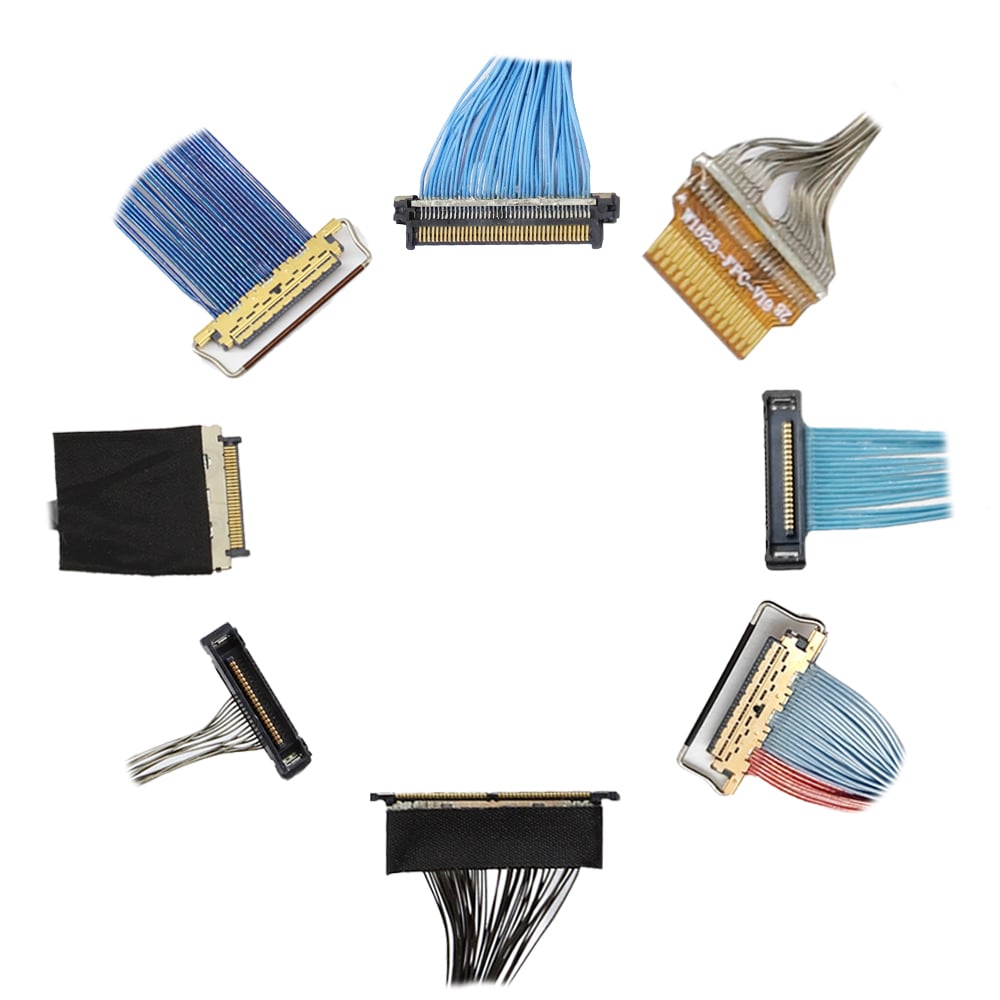
38AWG Micro Coaxial EDP Cable Assembly  2.jpg
Cable Insulation Material Comparison

Insulation Material Advantages Limitations Typical Applications
PEEK Excellent high-temperature resistance, chemical resistance, mechanical strength and dimensional stability Higher material cost and more difficult processing Medical devices, aerospace systems, high-temperature electronics
PTFE Excellent chemical resistance, low friction and wide temperature range Lower mechanical strength and abrasion resistance compared with PEEK RF cables, aerospace wiring, chemical equipment
FEP Good flexibility, chemical resistance and electrical insulation performance Lower temperature capability than PEEK Medical cables, flexible electronics
PVC Low cost, easy processing and widely available Limited temperature resistance and chemical durability General electronic cables

Traditionally, PEEK has long been identified and adopted as an engineering thermoplastic with high performance in the most demanding of industries, such as aerospace (bearings, piston parts), automotive (bearings), medical implants (spinal fusion devices), etc. The extension of the system has not, however, been developed to full maturity or optimization for ultra-fine wire and cable products. And our breakthrough work in incorporating PEEK into cable jacketing is a game-changing development and a significant leap forward for premium cable material.

Why PEEK? Breaking with traditional materials

In the case of ultra-fine wires, fluoropolymers such as PFA and FEP have been frequently used by manufacturers because they offer reasonable flexibility and resistance to chemicals. Although excellent materials, PEEK provides an even higher level of performance, which is necessary for the increasing durability and high-performance needs in small applications.

In addition to being far superior in terms of mechanical properties to materials such as PFA, FEP, and the like, PEEK has:

Superior Mechanical Strength and Abrasion Resistance: PEEK cables are much stronger all around, and they offer superior resistance to wear, compression, and repeated bending. This is especially important for cables in process equipment, robotic arms/robots, or medical devices that are manipulated on a regular basis, and prolongs their working life significantly.

High temperature and chemical performance: PEEK is able to retain its structure at temperatures up to 250 °C continuously, which, throughout, exceeds the majority of commercialized plastics. It also has excellent resistance to various chemicals, solvents, and hydrolysis (resistance against hot water or steam). The hose may be sterilized using open-end steam up to 30 PSI or in a bath containing 10% of the less caustic agents for sterilization.

With better structural integrity remaining flexible, this is the big asset of helical windings. As PEEK has excellent tensile and compressive strength, as well as good stiffness at high temperatures, it can be designed with enough flexibility for wire routing in confined areas. It withstands cut-through and abrasion, protecting signal integrity for high-performance radio frequency (RF) applications in extreme conditions where other materials may not.

From Creativity to Deployment: Mature Process and Various Applications

We are now in mass production of our range of PEEK-jacketed wires in so many different specs, even down to the fragile 37 AWG and others, including 26AWG, 36AWG, etc, that you may require. We provide these 5V power cables in a variety of colors to help you with assembly or other coding and robotics projects.

The whole production process has been improved and highly standardized, so that the product quality can be guaranteed and the supply will not deviate from the standard. “Our ability to make it work so soon and on the first attempt positions us well as we move into more challenging markets.

The outstanding characteristics of PEEK create the potential for:

Medical Technology: Ideal use for reusable medical instruments used in regular sterilization, high-flex-life surgical tools, and mini sensors in endoscopes or ultrasound.

Industrial Automation

A highly durable cable solution for use with cabling in collaborative robots and continuous-flexing cable carriers and connections cables that are exposed to rugged conditions.

Engineering Selection and OEM Considerations

1. Temperature Resistance Is One of the Main Reasons to Consider PEEK

One of the most important advantages of PEEK is its ability to maintain useful mechanical and electrical properties at elevated temperatures.

This can make it suitable for applications where the cable may experience:

  • Elevated operating temperatures
  • Thermal cycling
  • Heat generated by nearby electronics
  • High-temperature processing
  • Long-duration thermal exposure

If the cable is exposed to temperatures beyond the practical range of more conventional insulation materials, then PEEK may be worth evaluating, because its thermal stability can provide greater design margin.

The exact suitability still depends on the actual temperature profile rather than on the material name alone.

OEM engineers should define:

continuous operating temperature + peak temperature + exposure duration + thermal cycling conditions


2. Chemical Resistance Can Be Important in Medical and Industrial Environments

PEEK has strong resistance to many chemicals, which can be valuable in demanding environments.

Potential exposure can include:

  • Cleaning agents
  • Disinfectants
  • Oils
  • Solvents
  • Process chemicals
  • Other application-specific fluids

If the cable is exposed repeatedly to aggressive chemicals, then the insulation material should be evaluated against the actual chemicals and exposure conditions, because general chemical-resistance claims do not guarantee compatibility with every formulation or concentration.

For medical cable applications, this becomes particularly relevant when assemblies are repeatedly cleaned or otherwise exposed to defined processing chemicals.

See HOTTEN's Medical Devices and Medical Cable Assembly solutions.


3. Mechanical Strength Matters for Fine and Ultra-Fine Conductors

PEEK provides relatively high mechanical strength compared with many common thermoplastics.

This can be valuable when insulation must protect a fine conductor from:

  • Abrasion
  • Compression
  • Handling
  • Installation stress
  • Repeated mechanical contact

If a fine conductor needs a robust protective insulation layer without substantially increasing cable dimensions, then PEEK may be considered, because its mechanical properties can provide a strong insulation structure in demanding applications.

However, mechanical strength should not be confused with flexibility.


4. PEEK Is Not Always the Best Choice for Highly Flexible Cables

A material can be mechanically strong while still not being the optimal choice for an application that requires extremely flexible cable behavior.

For highly dynamic applications, OEMs should compare PEEK with alternative insulation materials according to:

Requirement PEEK Other flexible materials
High-temperature capability Strong Depends on material
Chemical resistance Strong Depends on material
Mechanical strength Strong Depends on material
Flexibility Application-dependent Some materials may provide greater flexibility
Processing More demanding in some constructions Depends on material
Material cost Typically higher Often lower, depending on material
Miniature construction Possible Depends on processing capability

If the cable must withstand continuous bending or tight dynamic routing, then flexibility and flex-life performance should be evaluated before selecting PEEK, because a high-performance insulation material still has to match the cable's mechanical duty cycle.


5. PEEK Selection Should Be Based on the Complete Cable Structure

Insulation material cannot be selected independently from the conductor and cable architecture.

The complete construction may include:

conductor → insulation → dielectric → shielding → jacket

Each layer affects the final product.

If PEEK is selected for a fine wire or micro coaxial cable, then its thickness, extrusion behavior, conductor size, and surrounding structure should be evaluated together, because changing the insulation can affect cable OD, flexibility, capacitance, impedance, and termination.

This is especially important for ultra-fine cable where dimensional margins are small.


6. Insulation Thickness Affects Cable Size and Electrical Performance

For fine-wire applications, the insulation layer may represent a significant portion of the finished cable diameter.

Important parameters include:

  • Insulation thickness
  • Concentricity
  • Uniformity
  • Surface quality
  • Extrusion stability

If the cable has a very tight OD requirement, then insulation thickness must be tightly controlled, because a small increase in insulation size can affect the finished cable dimensions and available routing space.

For micro coaxial cable, insulation geometry can also influence electrical characteristics.


7. PEEK Can Be Useful in High-Temperature Electrical Insulation

PEEK can serve as an electrical insulation material where the operating environment demands elevated thermal performance.

Potential applications include:

  • High-temperature electronic assemblies
  • Specialized sensors
  • Aerospace-related electronics
  • Industrial measurement equipment
  • Medical equipment with demanding thermal conditions
  • Other specialized electrical interconnects

If the cable operates near a heat source or must survive repeated elevated-temperature exposure, then insulation should be evaluated for both electrical and mechanical stability at the actual operating temperature, because ambient temperature ratings alone may not describe the complete cable behavior.


8. PEEK Processing Can Be More Demanding Than Standard Cable Materials

PEEK is a high-performance engineering thermoplastic and may require more controlled processing conditions than more common insulation materials.

For cable manufacturing, process control can include:

  • Extrusion temperature
  • Melt behavior
  • Line speed
  • Die design
  • Cooling conditions
  • Insulation thickness
  • Concentricity
  • Surface quality

If PEEK is used for an ultra-fine cable, then extrusion and dimensional control become particularly important, because small variations in insulation geometry can affect the final electrical and mechanical properties.

This is one reason material selection should be linked to the manufacturer's actual processing capability.


9. PEEK Can Influence Cable Flexibility and Bend Performance

The finished cable's bending behavior depends on more than the conductor.

It is affected by:

conductor + insulation + shielding + jacket + cable diameter + construction

If PEEK insulation is used in a flexible cable, then the complete cable construction should be tested at the required bend radius, because the insulation material contributes to the bending stiffness of the finished cable.

This is particularly important for:

  • Medical probes
  • Robotics
  • UAV imaging
  • Camera assemblies
  • Other dynamically routed cables

For flexible applications, see UAV & Robotics.


10. Electrical Properties Should Be Evaluated Together With Thermal Performance

PEEK can provide strong insulation performance, but OEM engineers still need to define the actual electrical requirements.

Depending on the cable architecture, relevant parameters may include:

Electrical parameter Why it matters
Insulation resistance Electrical isolation
Dielectric withstand Insulation integrity
Capacitance Signal loading
Impedance Controlled signal transmission
Leakage Electrical stability
Frequency behavior High-speed / RF performance

If the cable is used in a high-frequency application, then insulation material should be evaluated together with dielectric characteristics and cable geometry, because material selection can influence capacitance and impedance.

For high-frequency applications, see HOTTEN's RF Coaxial Cable Assembly.


11. PEEK Should Be Compared With Alternative Insulation Materials

An OEM should not start with:

“We need PEEK.”

A better starting point is:

“What performance must the insulation provide?”

Possible comparison materials include:

Material Potential advantage Potential trade-off
PEEK Thermal stability, chemical resistance, strength Cost and processing complexity
FEP Strong electrical properties and chemical resistance Different mechanical / thermal requirements
PTFE Low-loss dielectric and chemical resistance Processing and mechanical considerations
Silicone Excellent flexibility Different abrasion and mechanical characteristics
TPU Flexibility and abrasion resistance Different temperature and chemical limits
PVC Cost-effective and widely used Lower performance in demanding environments

If the main requirement is extreme flexibility, then silicone or TPU may be worth comparing with PEEK, because mechanical flexibility may be more important than high-temperature capability.

If the main requirement is chemical and thermal stability, then PEEK, PTFE, or FEP may be considered depending on the exact application, because the required environmental properties become the primary material-selection criteria.


12. PEEK May Be Relevant to Medical Cable Applications, But “Medical Grade” Must Be Defined Carefully

PEEK is used in various demanding medical applications, but simply identifying a cable as “PEEK” does not establish that the finished cable is suitable for every medical device.

For medical OEM projects, buyers should review:

  • Intended patient contact
  • Material composition
  • Manufacturing process
  • Cleaning exposure
  • Sterilization process
  • Biological evaluation requirements
  • Finished-device configuration

If the cable is part of a patient-contacting medical device, then the OEM should evaluate the actual finished-device material configuration within its applicable biological-safety and risk-management process, because material selection alone does not establish universal biocompatibility.

For medical cable applications, see Medical Cable Assembly.


13. PEEK and Sterilization Requirements Should Be Evaluated Together

Some medical devices expose cable assemblies to repeated reprocessing or sterilization.

The relevant engineering question is:

Can the complete cable assembly maintain its required properties after the defined process?

Potential areas to evaluate include:

  • Insulation condition
  • Flexibility
  • Adhesion
  • Jacket / overmold
  • Connector transition
  • Electrical insulation
  • Signal performance

If a cable is repeatedly sterilized, then the finished assembly should be tested under the actual sterilization process and lifecycle conditions, because the complete assembly contains more than the PEEK insulation itself.


14. OEM RFQs Should Define the Material Requirement by Performance

For an OEM custom cable project, a useful RFQ should define the material requirement in measurable terms.

RFQ item Recommended information
Application Medical, RF, sensor, aerospace, etc.
Operating temperature Continuous / peak
Thermal cycling Required profile
Chemical exposure Chemicals and exposure conditions
Flexibility Bend radius and cycle requirements
Conductor AWG and material
Insulation PEEK or approved alternatives
Insulation thickness Nominal / tolerance
Cable OD Maximum allowable
Electrical Impedance, capacitance, insulation resistance
Shielding Required construction
Jacket Material and requirements
Connector Manufacturer / PN
Sterilization Method and cycle conditions where applicable
Testing Electrical / mechanical / environmental
Quantity Prototype / pilot / mass production

If the OEM knows the required operating environment but has not fixed the insulation material, then providing the performance requirements can allow the cable manufacturer to compare PEEK with alternative materials, because the best insulation depends on the application's actual constraints.


15. The Right PEEK Application Depends on the Trade-Off

PEEK becomes most useful when its specific material strengths solve a real engineering problem.

Requirement PEEK suitability
High-temperature exposure Strong candidate
Aggressive chemical exposure Strong candidate
High mechanical strength Strong candidate
Extremely flexible dynamic cable Requires careful evaluation
Lowest-cost cable Usually not the primary reason to choose it
Ultra-fine cable Possible, but processing capability is important
High-frequency cable Requires dielectric and geometry evaluation
Medical application Requires application-specific material and finished-device evaluation

If the project has demanding thermal, chemical, and mechanical requirements, then PEEK may provide useful design margin, because those are areas where its material properties can justify the additional material and processing requirements.

If the application has mild environmental conditions and primarily requires low cost or maximum flexibility, then alternative insulation materials should also be evaluated, because PEEK's higher performance may not provide enough benefit to justify its trade-offs.


16. Supplier Capability Matters When PEEK Is Used in Fine Wire

For HOTTEN's product strategy, PEEK is most relevant when it is part of a fine-wire or micro coaxial cable solution, not as an isolated material product.

A supplier should be able to control:

fine conductor → PEEK insulation → cable geometry → shielding → cutting / stripping → termination → finished cable assembly

Important qualification questions include:

  • Can the supplier process the required fine conductor size?
  • Can insulation thickness be controlled?
  • Can concentricity be maintained?
  • Can the cable be reliably stripped?
  • Can the finished cable be terminated?
  • Can the cable be tested after processing?
  • Can the construction be reproduced during volume production?

If PEEK is specified for an ultra-fine cable, then both material capability and fine-wire manufacturing capability should be evaluated, because the material advantage has little value if the supplier cannot consistently process the complete cable structure.


17. A Practical PEEK Cable Selection Checklist

Before selecting PEEK insulation for an OEM cable, confirm:

Checkpoint Key question
Temperature What continuous and peak temperatures are required?
Chemicals What chemicals and exposure conditions apply?
Mechanical What bend, flex and abrasion conditions exist?
Electrical What insulation and signal requirements apply?
Cable size What is the maximum OD?
Conductor What AWG and material are required?
Insulation What thickness and tolerance are required?
Flexibility Is the application static or dynamic?
Sterilization Is repeated processing required?
Connector What termination interface is required?
Testing What electrical / environmental tests are required?
Production Can the supplier reproduce the construction consistently?
Cost Does PEEK provide enough performance benefit to justify its cost?

PEEK should therefore be treated as an engineering material choice, not simply a premium insulation material.

For demanding cable applications, the correct selection depends on the balance between temperature, chemical exposure, mechanical strength, flexibility, electrical requirements, cable dimensions, processing capability, and total cost.

For OEM projects requiring fine-wire and custom cable assemblies, see HOTTEN's Micro Coaxial Cable, Micro Coaxial Cable Assembly, and Medical Cable Assembly solutions.

FAQ

Q1: What is PEEK material used for in cable manufacturing?

A: PEEK is used as a high-performance cable insulation and jacket material where applications require excellent thermal stability, chemical resistance, mechanical strength and long-term reliability.


Q2: Why is PEEK preferred for high-temperature cables?

A: PEEK can maintain stable mechanical and electrical performance under elevated temperatures, making it suitable for demanding environments where conventional insulation materials may degrade.


Q3: What are the advantages of PEEK compared with PTFE or FEP?

A: PEEK provides higher mechanical strength, better dimensional stability and excellent resistance to wear and harsh environments, while PTFE and FEP are often selected when flexibility or chemical resistance is the primary requirement.


Q4: Is PEEK suitable for medical cable applications?

A: Yes. PEEK is widely considered for medical applications because of its mechanical performance, chemical resistance and biocompatibility characteristics.


Q5: What industries use PEEK insulated cables?

A: PEEK insulated cables are commonly used in medical equipment, aerospace systems, industrial automation, semiconductor equipment and other applications requiring reliable performance under demanding conditions.


Q6: Can PEEK cable structures be customized?

A: Yes. PEEK cable solutions can be customized according to requirements such as conductor size, insulation thickness, shielding structure, temperature range, flexibility and application environment.

If you have any suggestions, please contact us

CONTACT US

Get a Free Quote

Our representative will contact you soon.
Email
Phone number
Company Name
Message
0/1000
exploring the application of new material peek-1 exploring the application of new material peek-2 exploring the application of new material peek-3 exploring the application of new material peek-4 exploring the application of new material peek-5