 EN
EN
Quick Links

RF (Radio Frequency) cables are a core component of wireless systems, imaging devices, and high-speed data transfer. Design engineers creating products—such as a drone, AR/VR headset, gimbal cameras, or medical ultrasound probes—often face the question: should they choose a general purpose, off the shelf RF cable or a custom RF cable assembly? This article will compare the two to help you decide.
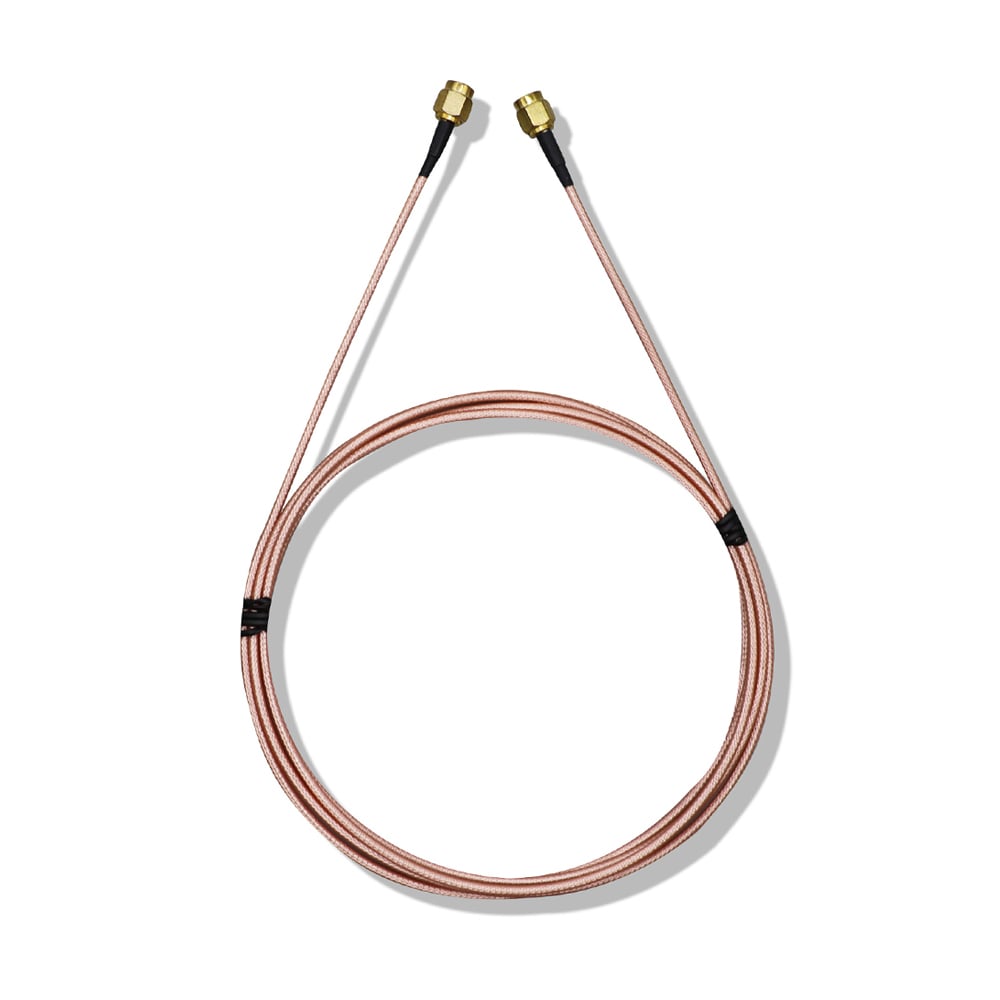
General purpose RF cables are built for versatility. While they fulfill basic impedance (typically 50Ω or 75Ω) and shielding requirements, they often underperform in niche applications.
Standard Cable Limitations: In a small wire harness bundle for a drone or robotics product, a standard cable will likely be too thick, too stiff, or simply have too much loss at the signal frequency and connector. Standard cables often rely on a predetermined, common diameter, a typical construction type, and standard connectors.
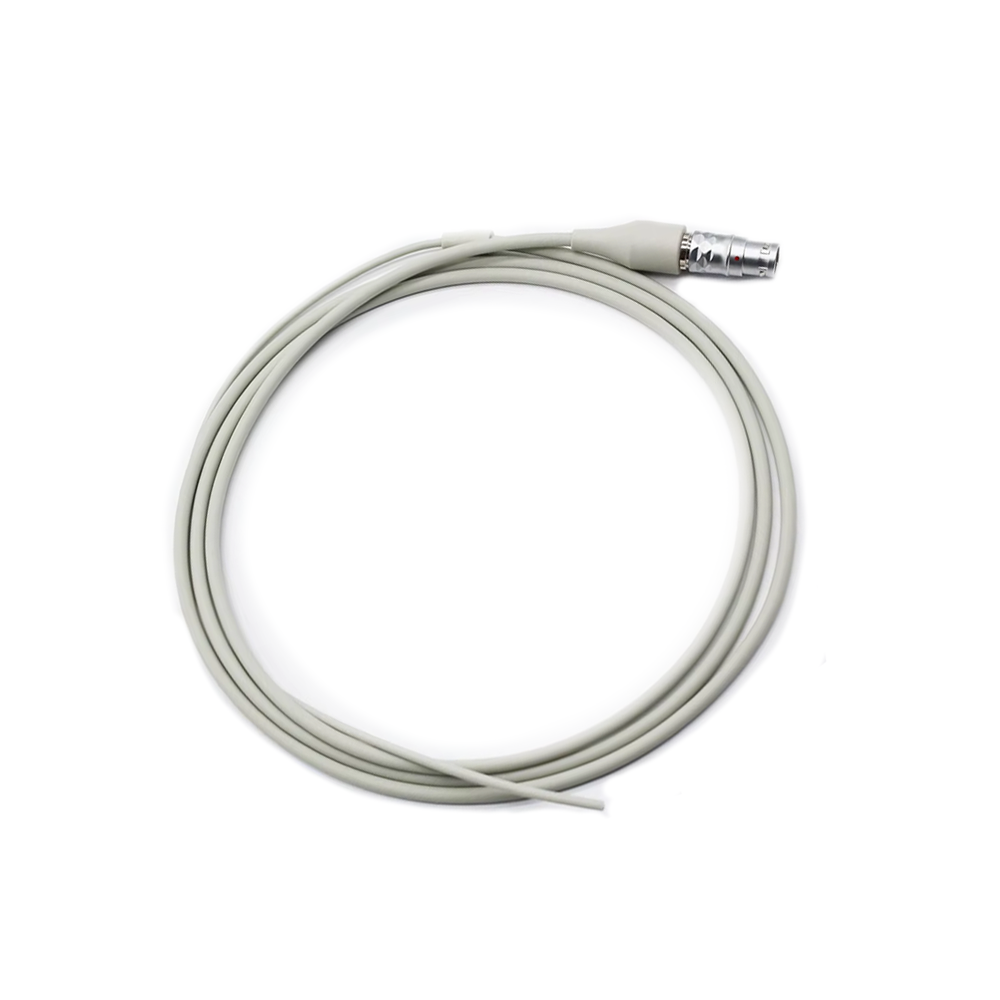
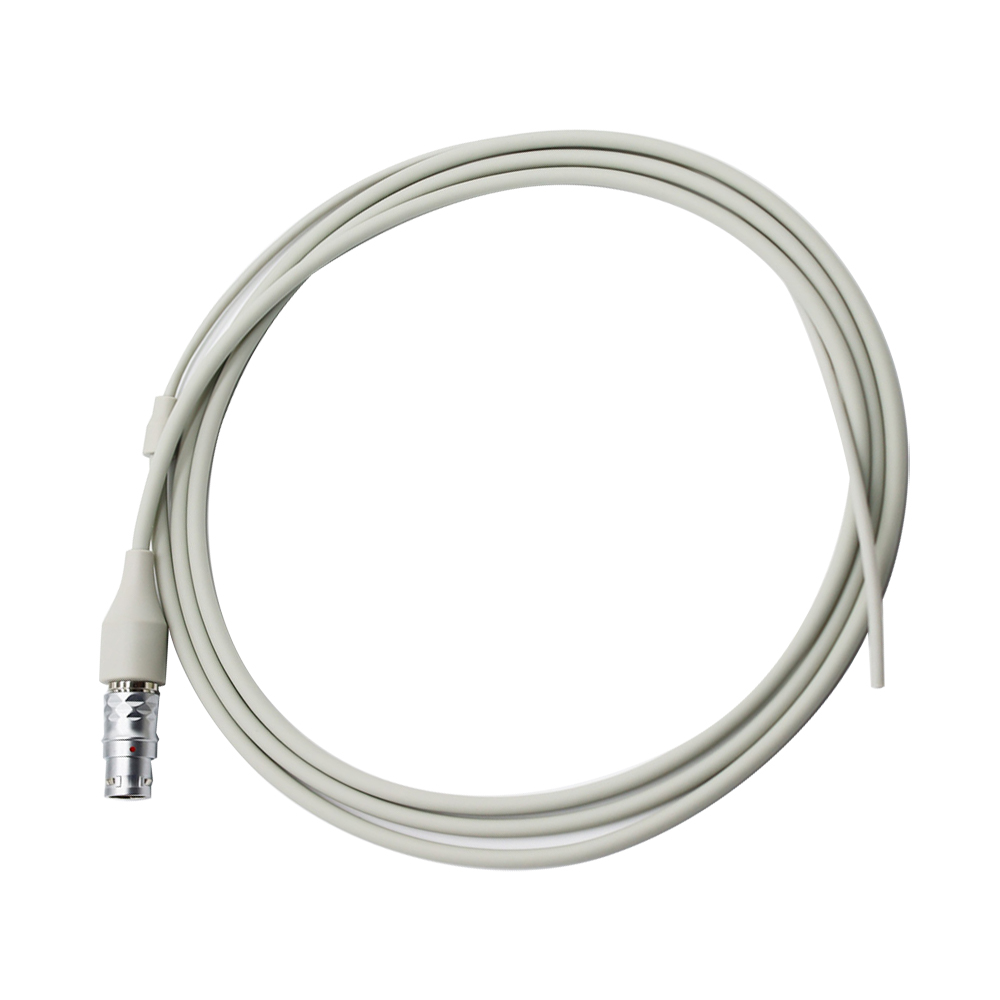
Custom RF Assembly Advantages: The strength of a custom assembly comes in tuning every parameter for the specific application. Hotten builds RF cables for gimbal cameras that are built to rotate 360° without signal degradation using an ultra-flexible dielectric and thin-film shield. For AR/VR cables, custom impedance matching to reduce phase shifts and jitter is critical in producing a good real-time video experience.
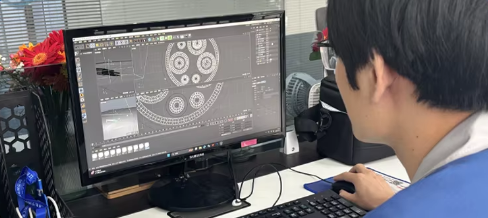
In modern electronics, space is always limited. Standard RF cables typically add unnecessary bulk, and force the designer to increase the footprint of an enclosure or lengthen an already too-long signal path.
The Space Problem: RG178 or RG316 cables are only available in standard diameters of 1.8mm–2.5mm. For an endoscope cable or IVUS catheter, that would simply not work. Custom micro-coaxial cables can be built with diameters as small as 0.5–1.0mm allowing them to fit within the small diameters required for medical devices.
Routing and Bend Radius: All standard RF cables come with minimum bend radius specs, which can be anywhere from 5 to 10 times the cable OD. Going below this number will cause impedance mismatch and permanent damage. Custom assemblies use a stranded center conductor and a flexible fluoropolymer outer jacket. This will allow you to bend the cable tightly, as needed in a surgical scalpel or a robotics joint, without impacting performance.
Medical and industrial applications require an extreme level of durability. Standard RF cables rarely hold up when repeatedly sterilized, exposed to chemicals, or cycled at high/low temperatures.
Sterilization and Chemicals: As seen in Hotten's medical portfolio (ultrasound probe cables, ICE cables and RF ablation cables) standard PVC or polyolefin jacket materials will crack upon EtO sterilization or autoclave heat. Custom assemblies built for the medical field often use medical-grade TPU, silicone or fluoropolymers such as PFA/FEP that will last for hundreds of autoclave cycles.
Temperature Extremes: Standard RF cables can generally withstand a temperature range of -20°C to +80°C. Custom cables for RF ablation devices used to burn off diseased tissue, or for surgical scalpel wires need to be able to handle continuous operation at 125°C and occasional flash exposure at 250°C.
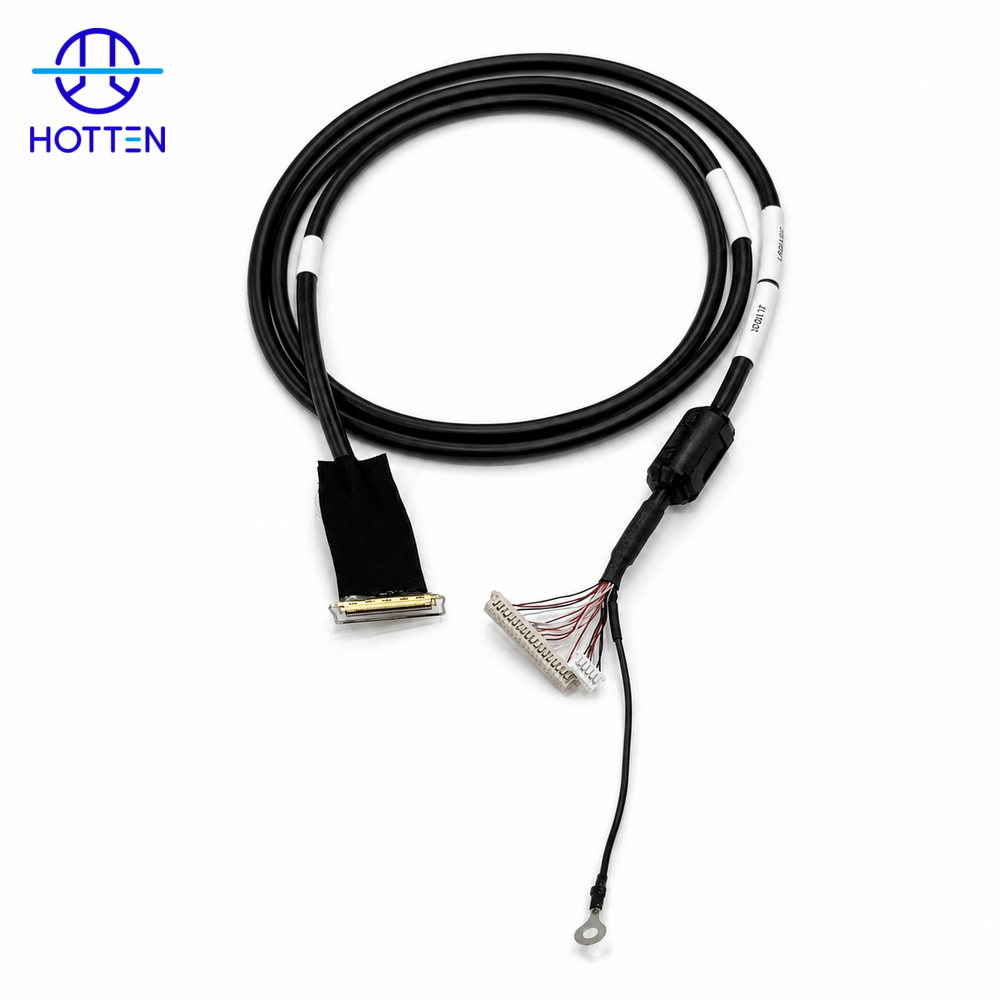
Every electronic device creates its own ambient electrical noise and is susceptible to outside electrical fields. Standard RF cables utilize either a foil shield or a braided shield which is usually around 60-90% coverage. This is generally acceptable for most applications. However, in highly dense wire harness systems such as an LVDS wire harness or a USB4 wire harness, interference, crosstalk, and outside electrical noise become a more significant concern.
Custom Shield Architectures: A Hotten custom RF cable could utilize a combination of foil shield, high-density braid (≥95% coverage), and an internal ferrite loaded core. This level of shielding could make a device such as a dental sensing cable or a micro voltage bio signal wire, such as the cable for EEG electrodes, highly resistant to typical line frequency noise. It removes the low frequency (50/60 Hz) noise from the equation, thus allowing low voltage signals to be clearly identified.
Connector Shielding: Most standard RF cables are terminated with standard SMA, BNC or N-type connectors. While this is fine for benchtop use or low noise applications, in high-sensitivity applications like the sensors on a medical device, any exposed portion of the conductor will create an "antenna effect" that picks up outside electrical noise and transmits it along the conductor to the sensitive measurement circuit. Custom cable assemblies can terminate into sealed, overmolded connectors that ensure 360° shielding continuity between the device and the cable.
Standard cables are typically inexpensive and immediately available (at least for initial prototyping). However, true cost also needs to take into consideration hidden costs of manufacturing and failure.
Standard Cable Hidden Costs: Additional connector components, connector adapter PCBs, additional manual assembly operations to route cables properly, and cable ties used to keep things together all contribute to longer manufacturing time per unit. When a standard cable fails after 10,000 cycles of operation, the associated warranty claims and replacement part costs will likely negate the initial per unit savings.
Custom Assembly ROI: Although custom assemblies require NRE (non-recurring engineering costs) and can take 2-4 weeks for initial sample development, the per-unit cost can decrease in the long run compared to using adapter boards. It also helps avoid the need for manual cable ties and can significantly reduce per-unit assembly time. Hotten alone builds over 300 new cable specifications annually, and the typical time for custom samples for even a complex specification is 2-4 weeks, which is often shorter than a component delivery lead-time for a less critical component.
When to Choose Standard vs Custom
Choose Standard RF Cable If: |
Choose Custom RF Cable Assembly If: |
General testing or bench use |
Space-constrained device (drones, endoscopes) |
Low volume (less than 100 units/year) |
High-volume production (10k units/year) |
No special flex or sterilization needs |
Medical sterilization required (EtO, autoclave) |
Standard connector (SMA, BNC, N-type) |
Unique connector or sealed overmolding needed |
Loose routing, no repeated bending |
Dynamic flexing (robotics, gimbal cameras) |
While there is value to off-the-shelf standard RF cables, they are often the weak link of medical, consumer, and industrial high-performance products. Custom RF cable assemblies—built for ultrasound probes, drone wire harnesses, and surgical probes — offer unmatched impedance matching, mechanical performance, environmental endurance, and EMI shielding. A custom cable assembly is not a luxury—it is a requirement for many mission critical applications where performance and reliability cannot be compromised.
 Hot News
2026-09-17
2026-09-04
2025-12-17
2025-12-11
2025-12-05