 EN
EN
Quick Links

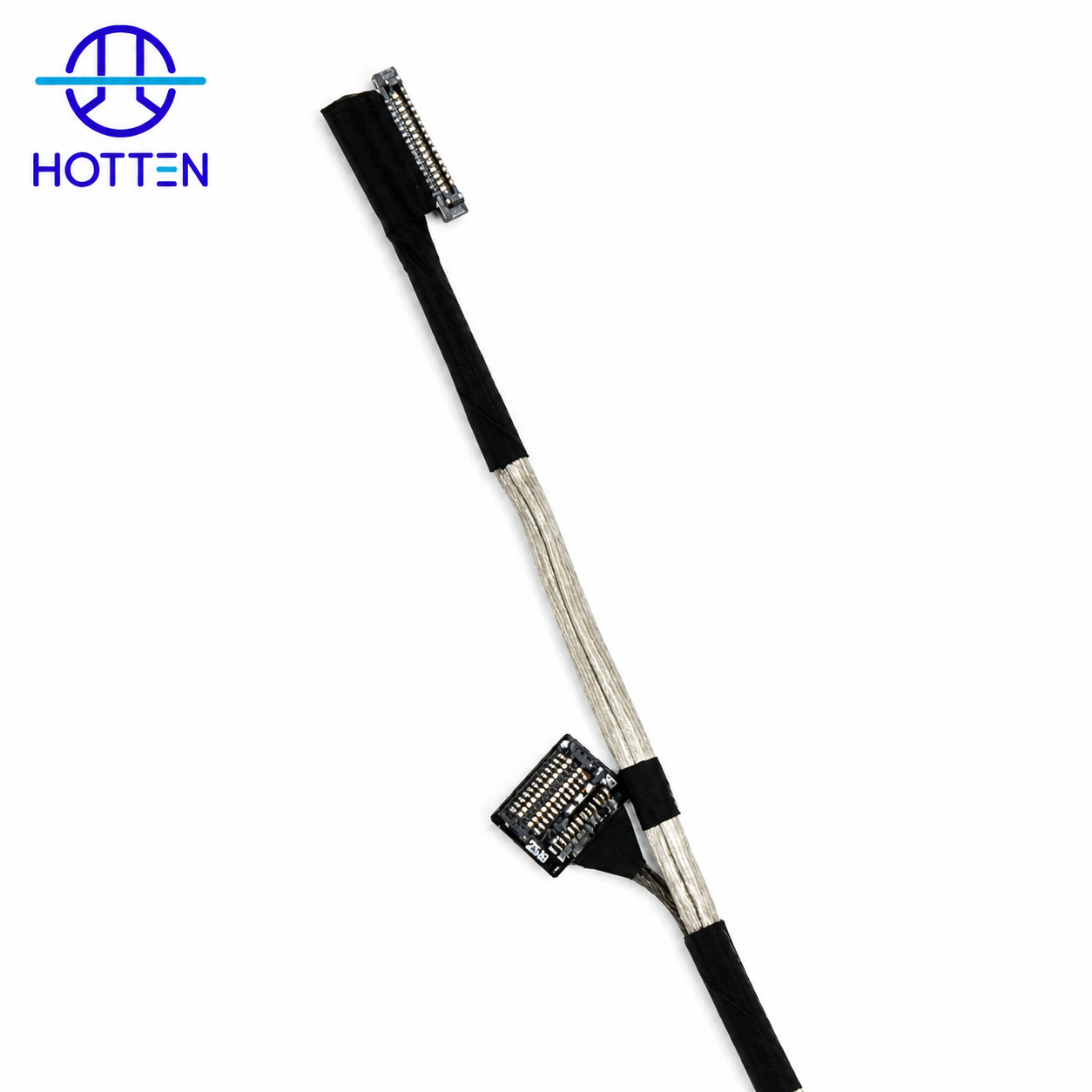
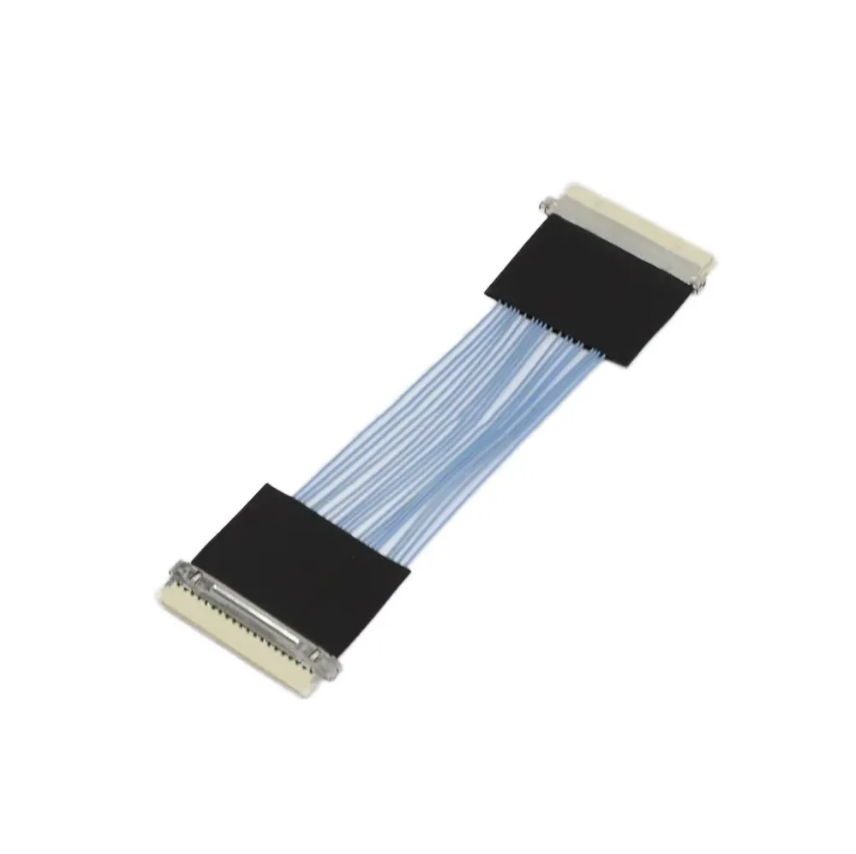
The visual output systems used in manufacturing, industrial workstations, transport, and military applications are engineered specifically to handle the adverse conditions found on production floors. Electrical noise, extreme temperature variations, vibration, and long-term reliability are not features found in consumer electronics displays. This is where LVDS cable technology comes in. LVDS (Low Voltage Differential Signaling) cable provides the interface between a display and its controller and is currently the standard choice for these systems. It carries signals of equal magnitude but opposite polarity. Thus any noise transmitted along the cable with these signals is picked up by both wires simultaneously and cancels out at the receiving end.
The production floor is full of noise from electric motors, variable frequency drives, welding equipment, switching power supplies. A display that flickers or loses color could cause production loss due to operator confusion — or, at worst, an accident.
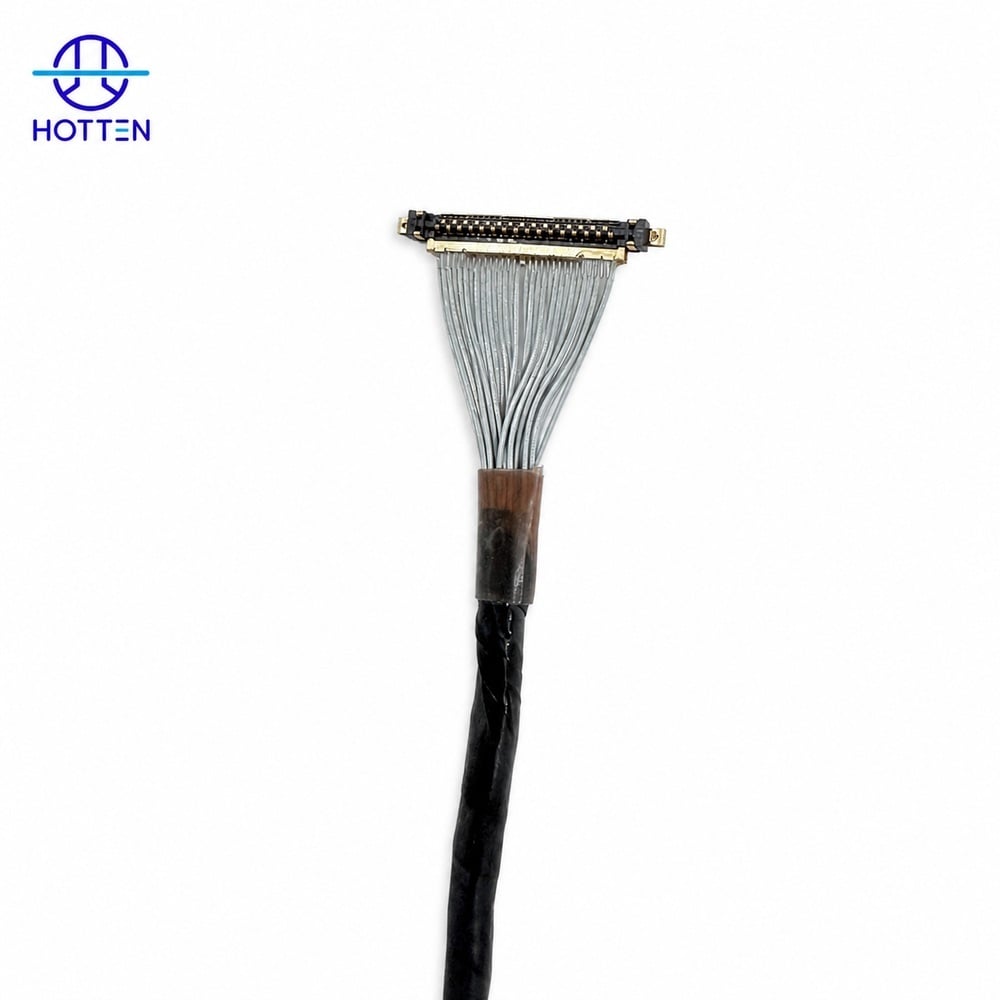
LVDS cables, by their nature, reject a large portion of incoming noise due to the differential signaling they use. Every signal is carried on a pair of wires with opposing voltages. This allows incoming noise on each signal line to be negated at the receiver end. LVDS wires can be ordered with additional shielding, various twisting geometries, and can be precisely matched to specified controlled impedance to maximize the rejection of external interference. Hotten's wire harnesses maintain optimal common mode noise rejection even in very high noise environments and produce a stable, clear image no matter what is happening around them.
As industrial displays increase in resolution from 1080p to 4k and greater, from 60Hz to 120Hz or higher, the bandwidth required to carry these signals increases exponentially. LVDS can transmit vast amounts of data while consuming little power and emitting minimal interference.
Precise control over matched impedances of the wire pair is needed to create a stable signal at high speeds and a controlled dielectric constant within the insulation. Custom cable ordering ensures that all impedance parameters are met and that the cable maintains signal fidelity at high data rates. This enables sharp, responsive images on even the most demanding displays, in medical equipment, factory HMIs, and transportation systems.
There are many instances in industrial settings where the display needs to be placed farther away from its controlling hardware than is typical for consumer products. In a factory setup, the display may be located farther away from its controller than in typical consumer applications, while in medical applications it can be across the operating room. Most standard interfaces cannot handle such distances.
LVDS cables can successfully run much longer distances than other interfacing methods due to carefully controlled impedance. By selecting the proper wire gauge, insulating material and shielding arrangement, the engineer designing a system will always get a stable and clear image. The R&D team at Hotten works with engineers to design cables for any length while ensuring consistent signal integrity. This makes the design of industrial and military display systems much more flexible and robust.
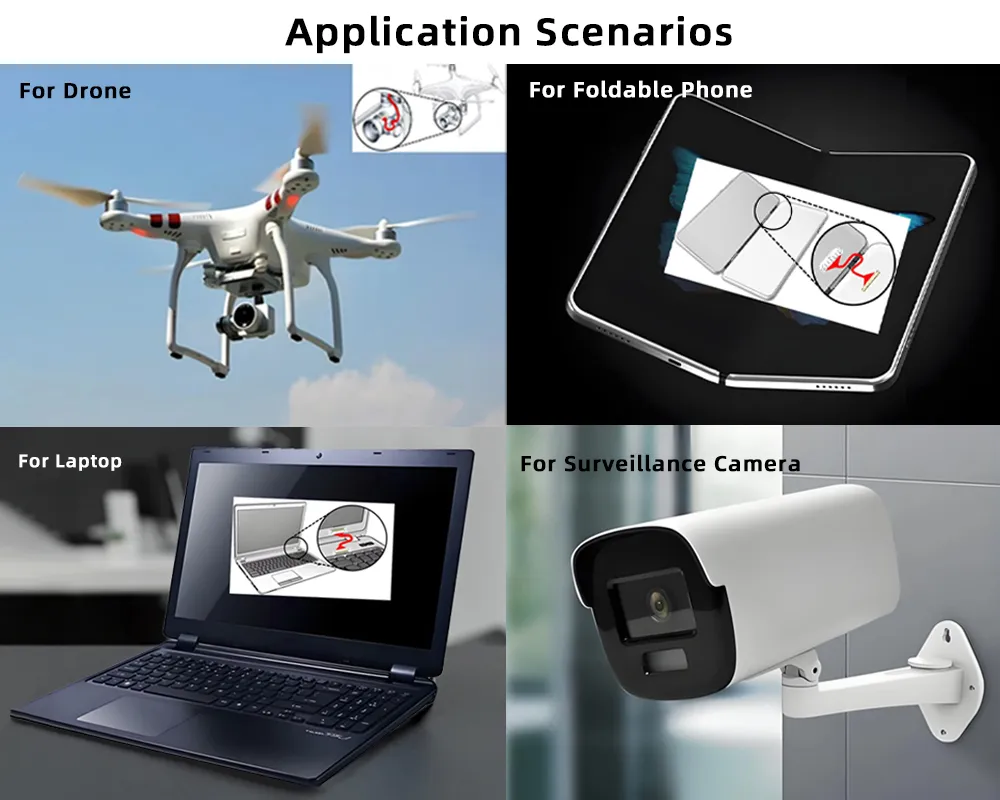
Extreme temperatures from freezing to the intense heat of a foundry, along with vibrations, movement, and constant operator use, demand durability far beyond what standard consumer cable can provide. It is not uncommon for an industrial cable to need protection against oil, chemicals or repeated flexure while mounted on a moving arm.
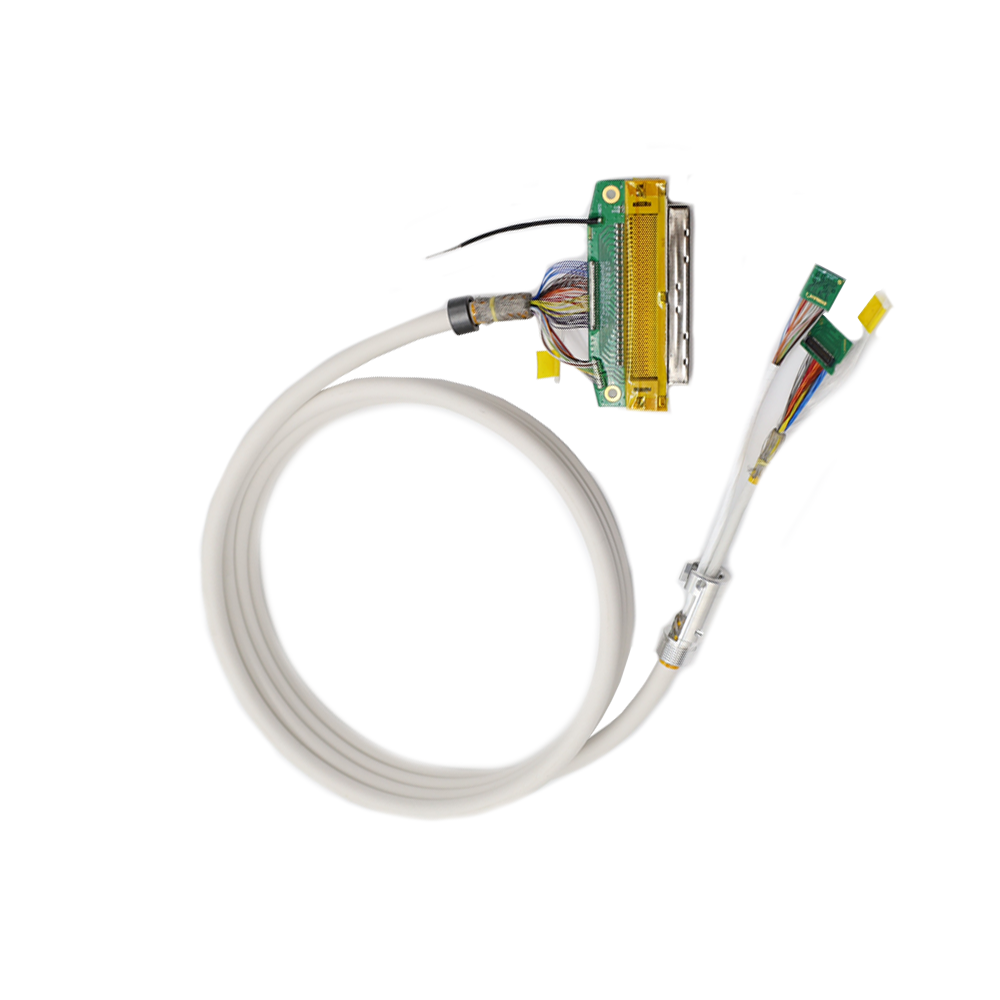
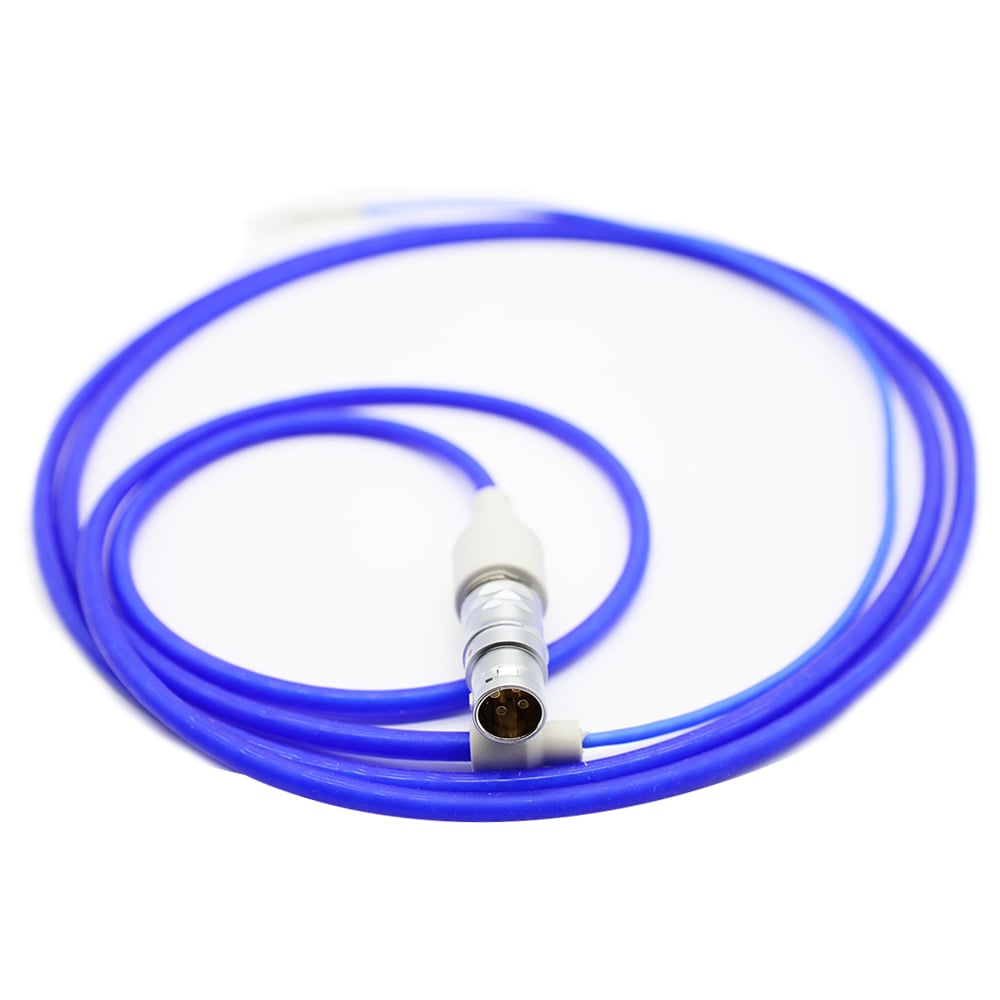
Standard commercial-grade cables may experience premature wear under such conditions. High quality industrial cables use specially formulated polyurethane (TPU) and Polyvinyl chloride (PVC) materials for maximum wear and chemical resistance. Custom wire harnesses also feature superior strain relief at cable termination and are designed with optimized shielding for EMI protection and resistance to damage. Hotten has extensive experience in designing and manufacturing custom LVDS cable assemblies for industrial, medical, and military applications., from automated factories and medical displays to military systems.
LVDS signals require precise impedance matching to maintain a clean signal and ensure minimal reflections. On the production floor, electrical noise can corrupt the display, and improper impedance will lead to signal reflections, causing artifacts and degrading display performance.
When purchasing a custom wire harness from Hotten for industrial use, the impedance is controlled to be extremely close to specification (typically 100Ω ± 10%), and is maintained over the entire length of the cable. Controlling the dielectric properties of the insulation, conductor dimensions, and twist rate ensures that each LVDS wire harness performs exactly to specification and transmits the cleanest possible signal. In medical equipment or sensitive industrial control, this quality is of paramount importance.
Industrial displays are unique and have many different requirements. A display used in a marine environment requires protection from saltwater corrosion and salt fog; a medical display must meet stringent sterilization requirements; and a mining display must resist dust and grit. A stock wire harness is incapable of meeting these needs.
Custom wire harnesses for LVDS displays are available with a range of specialized jacketing and conductor materials, shielding specifications and connector options. Over 300 new wire harness designs are introduced each year by Hotten's R&D team and can meet any need, whether for surgical use, food production plants, or machine tool controllers.
LVDS cable technology can enhance the reliability and speed of industrial displays when designed and manufactured specifically for the end-use environment. Hotten's engineering team has the capabilities to create unique wire harnesses to meet the rigorous demands of factory, transportation, and medical applications. We have the capacity to build your specific cable, using our expertise in high speed interface design to deliver superior display performance.
 Hot News
2026-09-17
2026-09-04
2025-12-17
2025-12-11
2025-12-05