 EN
EN
Quick Links

In the world of high-precision RF modules, getting signal integrity right, keeping interference at bay, and ensuring solid mechanical performance aren't just nice-to-haves—they're essential. As wireless tech keeps advancing at breakneck speed, micro coaxial cables remain a go-to solution for high-frequency applications, from medical imaging gear to 5G infrastructure. At Hotten Electronic Wire Technology (Jiangsu) Co., Ltd., we focus on delivering top-tier micro coaxial cables that meet the tough demands of today's RF systems. In this post, we'll walk through why these cables continue to set the standard in high-precision RF modules—covering their physical strengths, real-world uses, and where things are headed next.
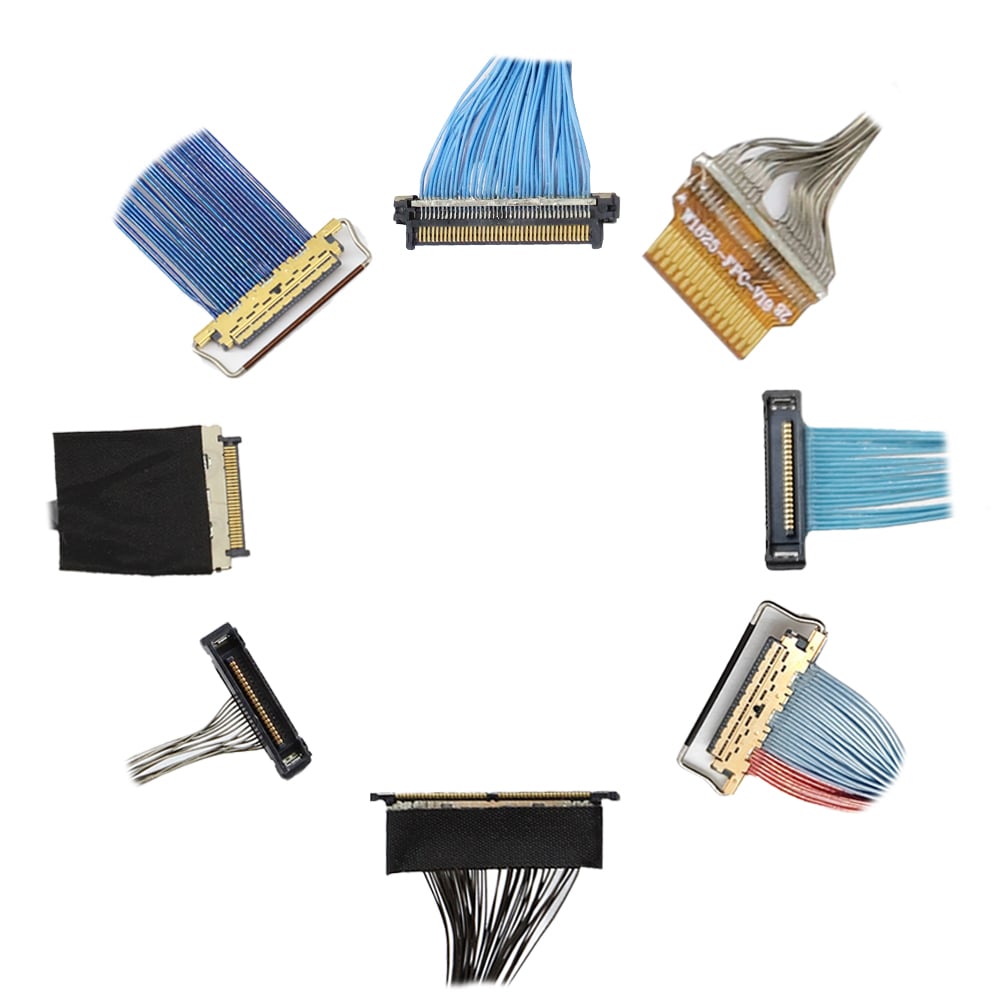
Micro coaxial cables are widely used in compact and high-precision RF modules because their coaxial structure can provide controlled impedance, signal isolation, shielding, and compact routing in a relatively small cable diameter.
For RF module designers, the main advantage is not simply that micro coaxial cable is small. It is that the cable can combine:
high-frequency signal transmission + controlled geometry + shielding + high-density routing + flexible integration
These characteristics are particularly useful when RF modules have limited internal space and the interconnect must maintain predictable electrical behavior.
| RF module requirement | Micro coaxial cable approach | Engineering benefit |
|---|---|---|
| Controlled impedance | Defined conductor / dielectric / shield geometry | Helps reduce reflections |
| High-frequency transmission | Coaxial transmission structure | Supports predictable signal behavior |
| EMI isolation | Surrounding conductive shield | Helps reduce unwanted coupling |
| Compact packaging | Ultra-fine conductor and dielectric structure | Saves routing space |
| High-density interconnect | Multiple micro coaxial channels | Supports compact module layouts |
| Flexible routing | Small cable profile | Fits constrained mechanical paths |
| Connector integration | Fine-wire precision termination | Supports miniature interfaces |
If an RF module requires high-frequency transmission in a compact mechanical envelope, then micro coaxial cable is worth evaluating as part of the interconnect design, because its electrical and mechanical structure can be optimized together with the connector and module layout.
For customized RF interconnects, see HOTTEN's Micro Coaxial Cable, RF Coaxial Cable Assembly, and High Frequency & RF Systems.
1. Why Micro Coaxial Cables Stand Out Physically
Signal Integrity & Shielding That Works
One big reason engineers keep choosing micro coaxial cables for precision RF work is how well they preserve signal quality. Thanks to multi-layer shielding—often combining braided shields with aluminum foil—they offer strong defense against electromagnetic (EMI) and radio-frequency interference (RFI). In high-frequency setups, even minor noise can mess with your signal, so this kind of protection matters a lot. These cables keep signals clean and stable, even in electrically noisy environments.
Compared to alternatives like twisted-pair or ribbon cables, micro coaxials lose far less signal at high frequencies. For instance, at 6 GHz, a typical micro coax might see only about 0.2 dB loss per meter—while a twisted pair could lose as much as 1 dB over the same distance. That difference makes micro coax the clear pick when signal fidelity is non-negotiable, like in medical devices or critical comms systems.
Stable Impedance, Controlled Loss
For high-frequency transmission, consistent impedance isn't optional—it's key. Micro coaxial cables are built to hold a steady characteristic impedance (usually 50Ω or 75Ω), which helps maximize power transfer and minimize signal reflections. Any drift in impedance can cause distortion or loss, so stability here is crucial.
Materials matter too. Many micro coax designs use PTFE (polytetrafluoroethylene) as the dielectric, thanks to its low dielectric loss and excellent phase stability. This means less insertion loss and more efficient power delivery—boosting overall RF module performance without extra effort.
Compact, Tough, and Easy to Route
As RF modules shrink and pack in more complexity, space becomes premium. Micro coaxial cables—some as thin as 1 mm in outer diameter—fit neatly into tight layouts without sacrificing function. They're also highly flexible and durable, so you can route them through cramped spaces without worrying about kinks or performance drops.
And they don't just handle tight bends—they stand up to harsh conditions too. In aerospace or industrial settings, where vibration, moisture, or temperature swings are common, these cables hold their own. Their construction materials resist corrosion and thermal stress, ensuring reliable operation even when the environment gets rough.
| Cable / Interconnect Type | Advantages | Limitations | Typical Applications |
|---|---|---|---|
| Micro Coaxial Cable | Excellent signal integrity, stable impedance control, strong EMI/RFI shielding and compact structure | Higher manufacturing precision and customization requirements | RF modules, 5G systems, medical imaging equipment, precision instruments |
| Twisted Pair Cable | Cost-effective and suitable for many digital communication applications | Higher signal loss and weaker shielding performance at high frequencies | Industrial communication, low-frequency signal transmission |
| Flexible PCB (FPC) | Ultra-thin structure and easy integration with compact electronic designs | More challenging impedance control and repair flexibility in complex RF systems | Smartphones, wearable devices, compact electronics |
| Waveguide | Excellent performance at extremely high frequencies with low transmission loss | Bulky structure, high cost and limited flexibility | Radar systems, microwave communication equipment |
2. Where You'll Find Micro Coaxial Cables in Action
Medical Devices: Endoscopes, Monitors, and Beyond
In healthcare, especially in tools like endoscopes and patient monitors, crystal-clear signal transmission is a must. Medical imaging relies on precise, interference-free data to deliver accurate diagnoses—and micro coaxial cables deliver exactly that. Their low loss and strong shielding prevent noise from muddying critical images.
Take endoscopy, for example: high-frequency signals travel through micro coax cables to generate detailed internal views. On top of performance, these cables also meet strict biocompatibility and safety standards—so they're safe for use near or inside the human body.
Telecom Infrastructure: Powering 5G and Millimeter-Wave Systems
With global demand for faster, more reliable connectivity climbing, micro coaxial cables play a growing role in telecom. In 5G networks—which lean heavily on millimeter-wave frequencies—these cables support the high-speed, low-latency links that users expect.
They're especially vital in Massive MIMO antennas at 5G base stations, where dozens of antenna elements need synchronized, low-loss connections. Micro coax ensures multiple data streams flow smoothly with minimal distortion, thanks to consistent impedance and low insertion loss. Without that reliability, channel coordination would suffer—and so would network performance.
Defense & Precision Instruments: Radar, Test Gear, and More
When failure isn't an option—like in defense or aerospace—micro coaxial cables are trusted for their resilience. High-end radar systems, for instance, depend on cables that maintain signal integrity over distance and through extreme conditions: think wide temperature swings, humidity, or constant vibration. Micro coax delivers the phase stability needed to keep timing accurate under pressure.
Similarly, test and measurement equipment used to calibrate radars or other sensitive instruments relies on these cables for repeatable, trustworthy readings. Even tiny signal variations can throw off results, so the low loss and high shielding of micro coax make all the difference.
3. Why Other Options Haven't Replaced Them (Yet)
Flexible PCBs vs. Waveguides: Trade-offs Everywhere
Flexible printed circuit boards (PCBs) and waveguides sometimes get pitched as alternatives—but each comes with compromises. Flexible PCBs can be cost-effective, but they often struggle with impedance control and tend to lose more signal at higher frequencies. Plus, repairing or modifying them in complex assemblies isn't always straightforward.
Waveguides, meanwhile, excel at very high frequencies but are bulky, pricey, and rigid. They need precise alignment and simply don't fit well in today's compact RF modules. For miniaturized designs—which dominate modern electronics—they're usually impractical.
The Size vs. Performance Challenge
In RF design, shrinking components often means giving up some performance. But micro coaxial cables buck that trend. They manage to stay highly efficient even at tiny sizes—a balance most other cable types can't match without losing ground.
What About New Tech Like Optical Links?
Emerging approaches like photonic or optical transmission show potential in niche areas, but they still face hurdles: electrical compatibility issues, higher power needs, and cost. Most current RF modules require electrically compatible interconnects that work across broad frequency ranges—and for now, micro coaxial cables fill that role better than anything else.
4. Pushing Micro Coax Forward
At Hotten Electronic Wire Technology (Jiangsu) Co., Ltd., we're constantly refining micro coaxial cable tech to keep pace with the RF industry's evolving needs. That means experimenting with low-loss polymers, advanced composite shielding metals, and smarter structural designs that cut weight without cutting corners on durability.
We also specialize in custom solutions—whether you need a cable rated for extreme temperatures, tuned for a specific frequency band, or built to fit a unique form factor. Just tell us your requirements, and we'll help you find (or build) the right fit.
Final Thought: Precision You Can Count On
Micro coaxial cables remain the gold standard in high-precision RF modules because they consistently deliver on three fronts: clean signal transmission, effective shielding, and rugged mechanical design. As innovation accelerates in fields like medical tech, telecom, and defense, that combination of reliability and performance will only grow more valuable.
At Hotten, we're proud to supply these mission-critical components—and we're always working to make them better. If you'd like to learn more about our micro coaxial cable offerings or explore a custom solution for your next project, don't hesitate to get in touch. We're here to help you connect with confidence.
| Requirement | Information to Provide |
|---|---|
| Frequency | Operating frequency range |
| Impedance | Target characteristic impedance |
| Cable length | Required finished length |
| Connector | Connector type / part number |
| Insertion loss | Required or maximum allowable loss |
| Return loss / VSWR | System requirement |
| Shielding | Required construction |
| Flexibility | Bend radius / movement profile |
| Environment | Temperature, moisture, chemicals, etc. |
| Testing | Required electrical and mechanical tests |
A: Micro coaxial cables are used in high-precision RF modules because they provide stable impedance control, low signal loss and strong EMI/RFI shielding, ensuring reliable high-frequency signal transmission.
A: Micro coaxial cables maintain signal integrity through precise conductor design, controlled dielectric materials and optimized shielding structures that reduce signal loss, interference and impedance variation.
A: Many RF micro coaxial cable applications use 50Ω impedance designs, while some communication and video systems may require other impedance specifications depending on system requirements.
A: Compared with twisted pair cables, micro coaxial cables provide better electromagnetic shielding, more stable impedance characteristics and lower signal attenuation in high-frequency environments.
A: Yes. Micro coaxial cables are suitable for high-frequency communication systems such as 5G infrastructure and antenna modules because they support low-loss signal transmission and compact installation requirements.
A: Yes. Micro coaxial cables can be customized with different conductor sizes, impedance values, shielding structures, cable lengths and connector configurations to meet specific RF module requirements.
 Hot News
2026-09-17
2026-09-04
2025-12-17
2025-12-11
2025-12-05





 Engineering Selection for High-Precision RF Micro Coaxial Cables