 EN
EN
Quick Links

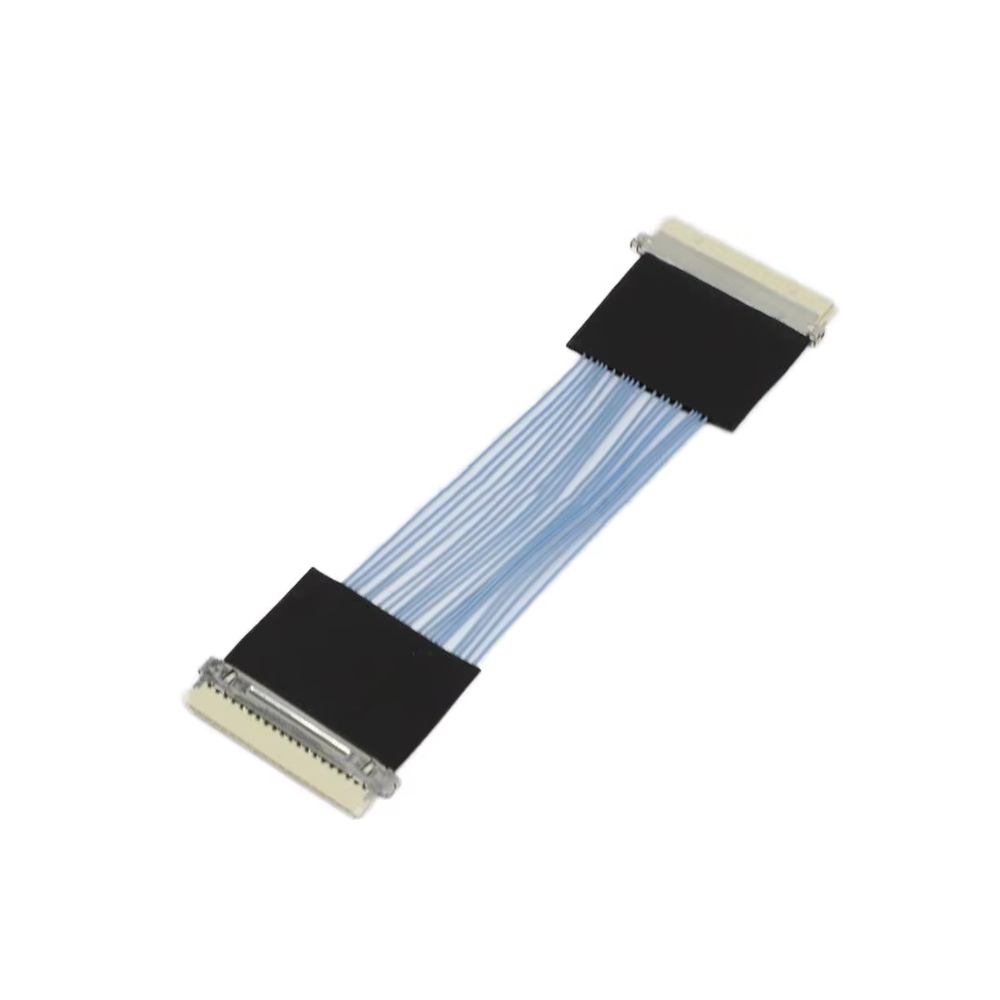
Industrial equipment faces tough environments where reliability and longevity are important. The connector system that you choose will significantly influence uptime and safety of operation. Even with new interface technologies available, LVDS (Low Voltage Differential Signaling) cable technology remains a preferred choice for the connections used with industrial displays. At Hotten, a precision wire technology company, we have recognized the inherent advantages of using LVDS technology in industrial settings for many years. As a result, we provide robust wire harness solutions for ruggedized industrial equipment.
The operating conditions of industrial applications are unlike anywhere else: temperatures swing dramatically, EMI (electromagnetic interference) from heavy machinery is constant, there's continuous vibration throughout the working day and long cycles are expected. Luckily for users, LVDS technology is inherently built for these environments. By using differential signaling, LVDS transmits data on two complementary signals. This allows the signals to effectively cancel common-mode noise, a huge benefit in noisy factories, automation lines, and control rooms where interference is likely to occur.
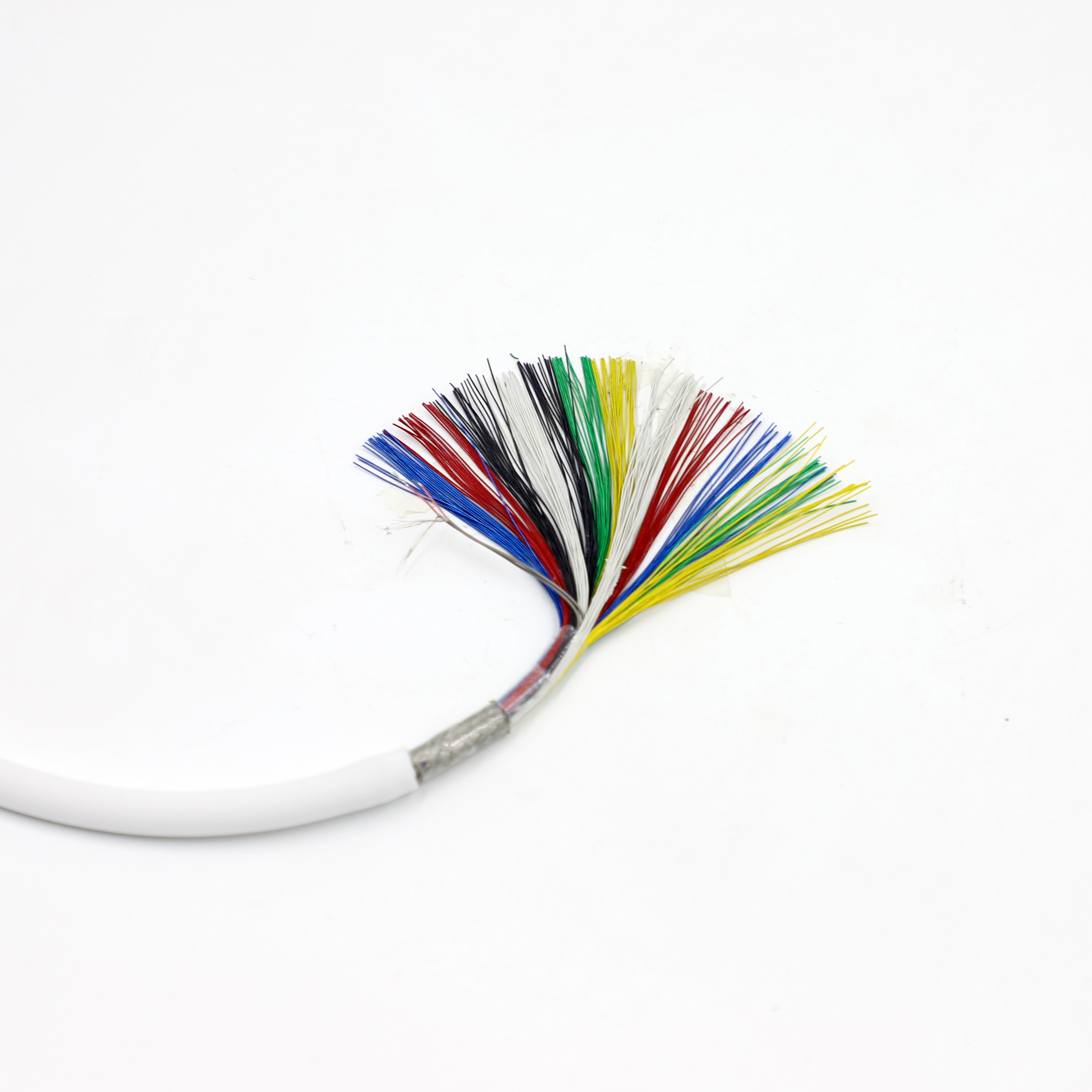
At Hotten, we manufacture our LVDS wire harnesses with high-quality shielding and impedance control components and wrap them with extremely robust outer jackets capable of resisting harsh abrasions and chemicals. With these characteristics, you are assured that, even after many years in the harshest conditions, the connection between industrial displays and control units will continue to be strong, giving you the real-time visual feedback needed.
While many consumer-oriented interfaces begin to degrade over relatively short cable lengths, the LVDS cable technology can extend its signal integrity for many meters without the use of active repeaters. This makes it ideal for industrial environments where a HMI (human machine interface) may not be adjacent to the control cabinet or where many displays need to be run from one display control unit.
LVDS signals exhibit minimal attenuation and skew due to its use of low voltage swing and high common mode rejection. Our stringent manufacturing process, supported by 40+ units of production equipment and a dedicated R&D team, guarantees that every LVDS wire harness meets stringent electrical specifications ensuring industrial users receive clear, jitter-free images on their displays, even if a cable must be routed across many challenging factory floor areas.
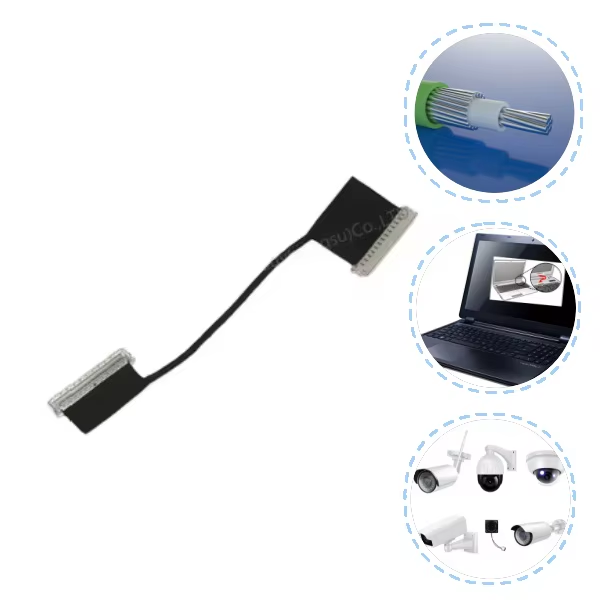
Industrial equipment comes in all shapes and sizes, from tiny, portable HMIs to large operator displays, medical display units and robot controls. In almost every case there are very specific mechanical and electrical requirements for your industrial display wire harnesses. Luckily, LVDS technology offers immense flexibility in cable construction, connector choices and transmission configurations.
Our R&D team develops over 300 new wire harness specifications per year, which include many new and unique LVDS wire harness designs. If you require an ultra-flexible cable for a robotic arm, a reinforced outer jacket for abrasion-rich environments, or specific connector types and configurations for tight enclosure space, we can engineer a perfect solution. The flexibility of LVDS allows it to function as an interconnect solution in many different kinds of industrial applications.
As many new display interface technologies are brought to market, it seems the complexity, and thus the part count, rises, increasing the component cost. LVDS is a sensible choice for industrial equipment because it offers reliability and predictable results at a manageable cost to a manufacturing firm.
The mature LVDS market ensures that components are easy to obtain at an economical price and design parameters are well known and understood. Hotten can leverage this ecosystem to provide a robust LVDS wire harness with competitive lead times. Operating with a 10,000 m² production facility and manufacturing 144+ million meters of various cables per year, we can produce LVDS wire harnesses at an incredible scale and with unparalleled quality.
Many of the LVDS wire harness applications you will see in industry today are for connecting touch screen HMIs to automation control units to give users the information they need on a given production line. The strong noise immunity of LVDS provides a stable connection that you can depend on, even when the cables are being routed along power cables.
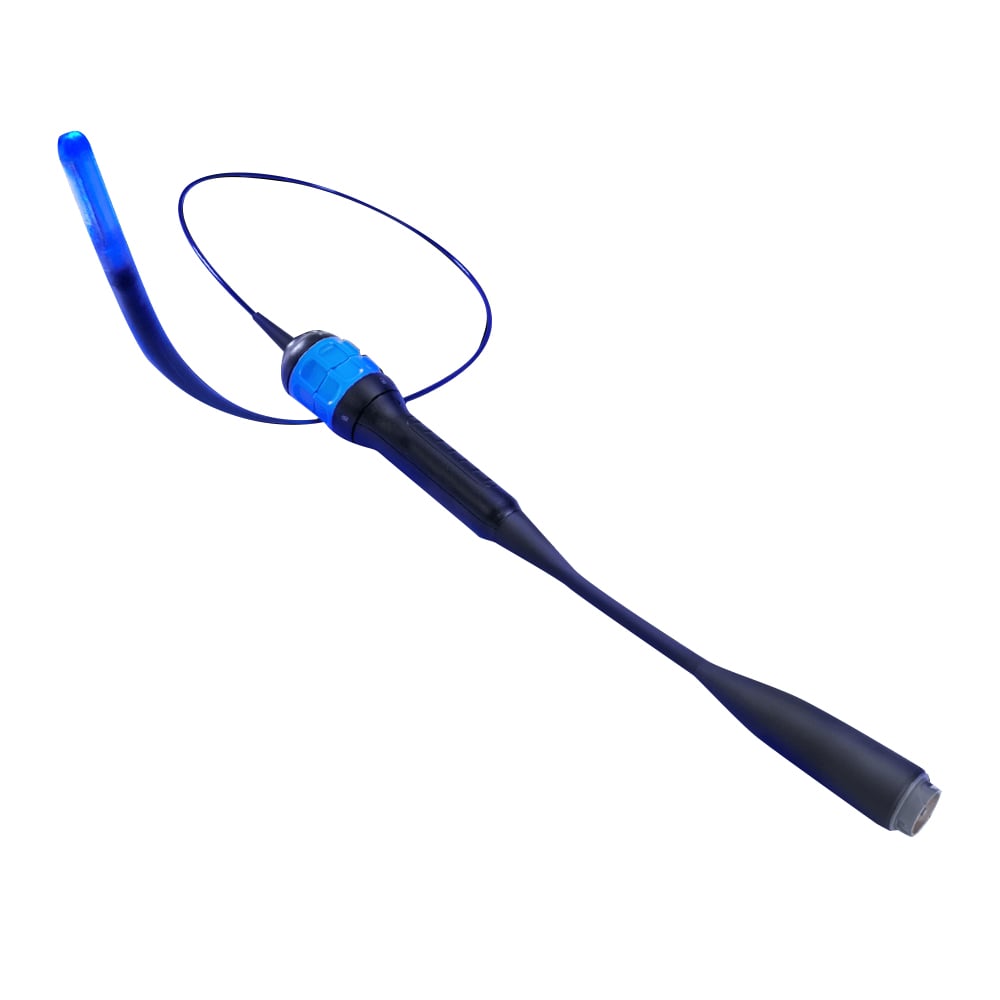
You can also find LVDS in use within many medical systems such as ultrasound consoles, medical display units, and patient monitoring systems. Here reliability is obviously crucial, but the LVDS wire harness is also relied upon for a reliable display connection in life-critical scenarios where display failures could compromise a diagnosis or treatment procedure.
It's easy to see why LVDS remains a dominant technology in industrial display interconnects; it offers many advantageous qualities such as high EMI noise rejection, long distance capability, great flexibility, and cost-effectiveness all necessary for ruggedized industrial use. No matter how much functionality your industrial equipment gains, the need for a solid interconnect solution will never diminish.
Hotten will continue to lead in research and development and manufacturing technology to ensure we remain at the forefront of industrial cable solutions and deliver LVDS wire harnesses that meet your needs. Because at Hotten, we believe that technology is the lifeblood of our organization and will be the lifeblood of your equipment for years to come.
LVDS cables are mainly used for high-speed display signal transmission between display panels and control systems. They are widely applied in industrial displays, medical equipment, automation systems and embedded devices where stable signal transmission is required.
LVDS is preferred because it provides excellent noise immunity, low electromagnetic interference and stable high-speed signal transmission. The differential signaling structure helps maintain image quality in environments with electrical noise and vibration.
Yes. Custom LVDS cable assemblies can be designed according to required cable length, connector type, impedance, shielding structure, flexibility and environmental requirements.
LVDS improves reliability through differential transmission, controlled impedance and shielding design, reducing signal distortion, electromagnetic interference and transmission errors.
LVDS cable assemblies are commonly used in industrial automation, medical equipment, robotics, transportation systems and high-performance electronic devices.
 Hot News
2026-09-17
2026-09-04
2025-12-17
2025-12-11
2025-12-05