 EN
EN
Quick Links

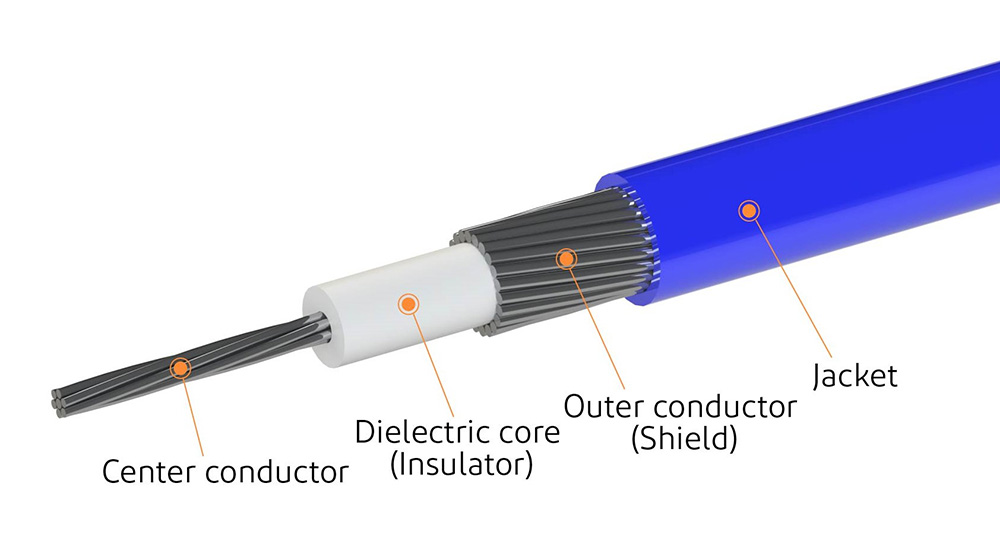
On the surface, every coaxial cable is the same, i.e. it consists of a conductor, dielectric, shield, and jacket in concentric layers. However, engineers, who have tried to push standard coax through a 2mm endoscope tube, or fit it within a foldable drone arm, soon learn that the hard reality is that ultra-fine coax is not just standard coax that has been downsized. It is a totally different field of engineering.
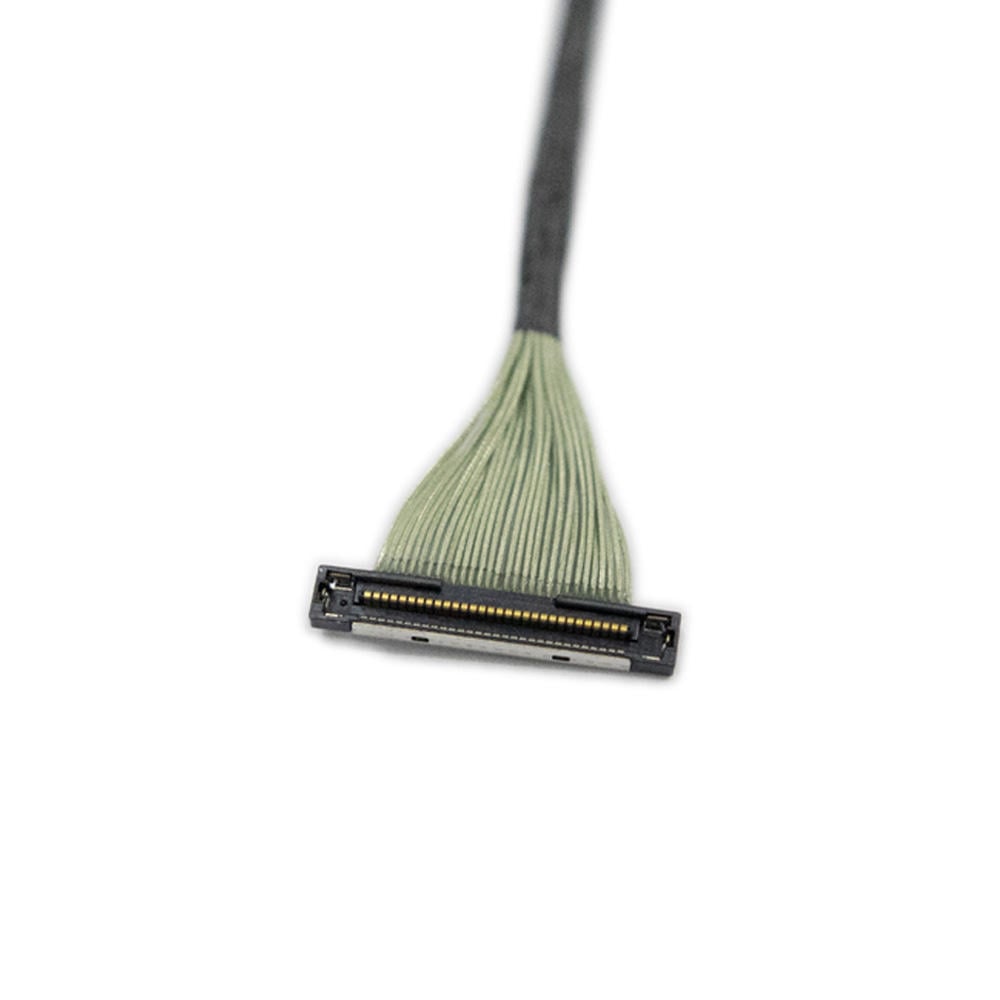
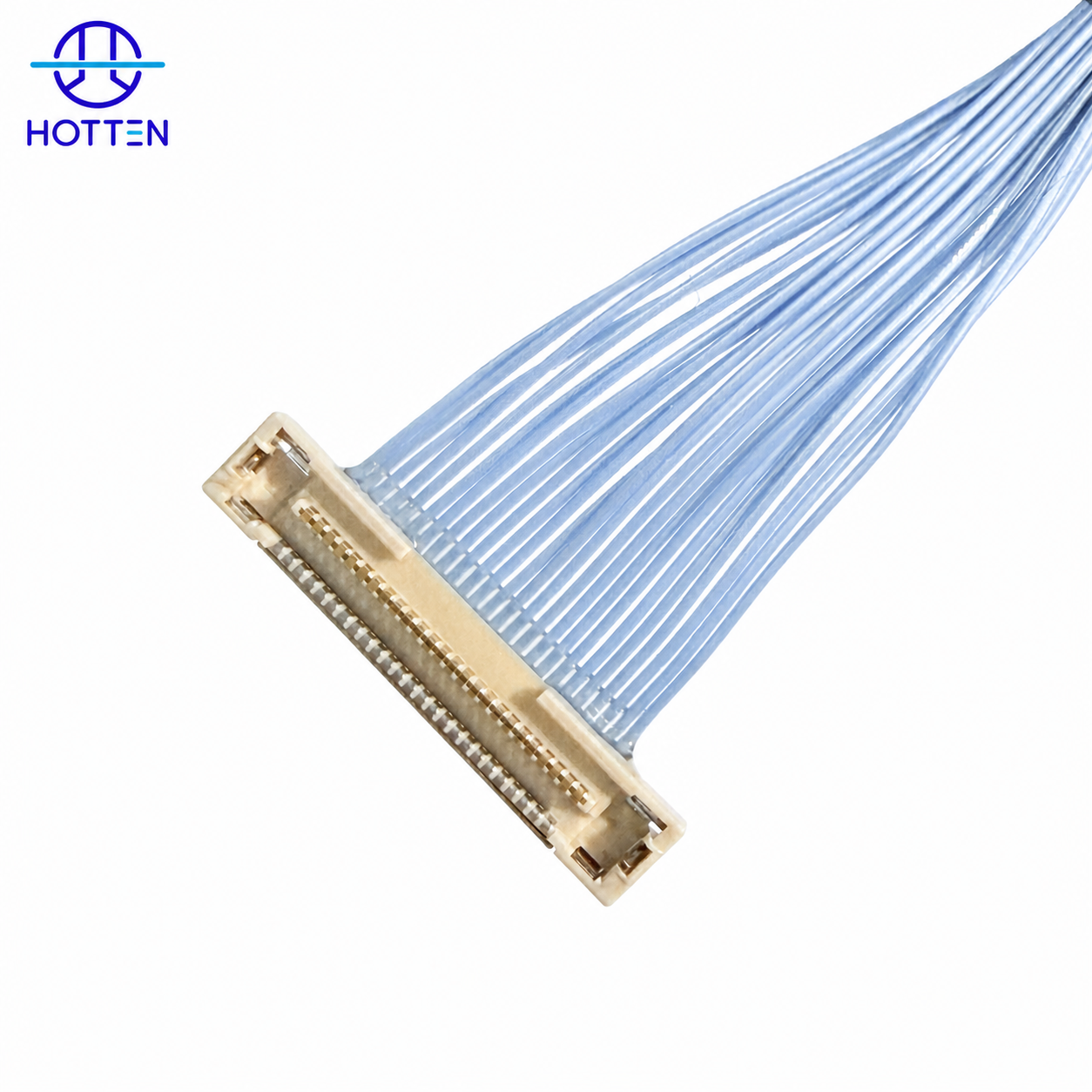
At Hotten Electronic Wire, our production facility serves as the center of our research and development for ultra-fine coaxial cable technology. we produce both normal and micro scale coax. Their variations shape all the aspects of material choice to the principle of production. This is what does make them different.
1. The Dimensional Chasm
Rg178, Rg179, or Rg316 Standard coaxial cables are usually between 1.8mm and 3.5mm in diameter. They are hardy, tolerant and end with readily available tooling.
Ultra-fine coax is used at 0.5mm and less. Hotten also manufactures ultra-fine coaxial cables with outer diameters as small as 0.28 mm. At these sizes the center conductor is commonly 44AWG to 50AWG which is finer than a human hair. These diameters cannot be stripped on any standard wire stripper without damaging conductor. They cannot fit in standard connectors. It is not miniaturization, but reinvention.
2. Conductor Construction: Stranded vs. Solid
Standard coax normally involves the use of solid conductors to ensure uniform RF performance. Medical or industrial use Ultra-fine coax has to survive flexing again and again - endoscope articulation, joint movement in robots, gimbal rotation in drones. Under such circumstances, solid conductors wear out and break.
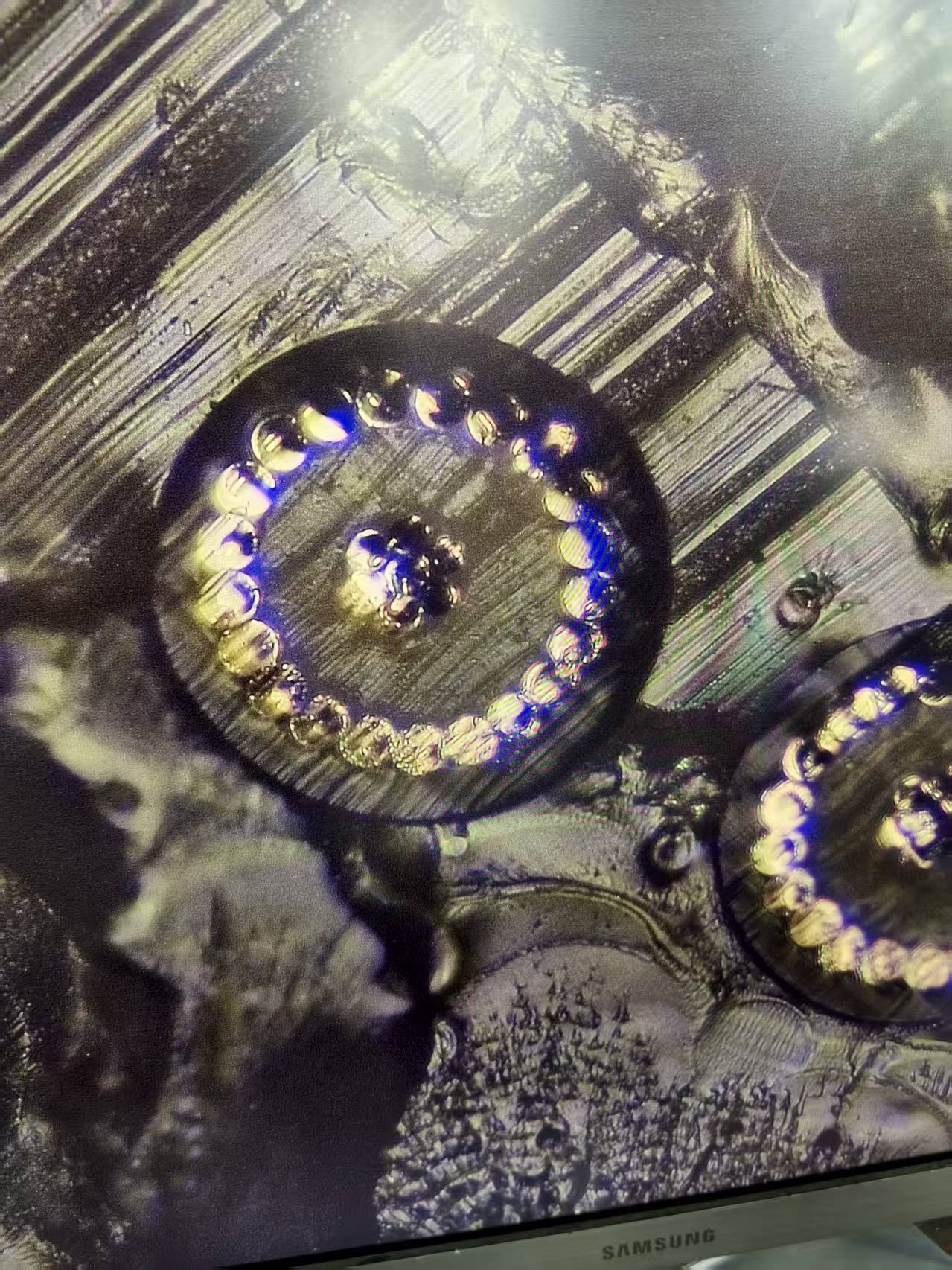
Our ultra-fine coax uses micro-stranded conductors: seven filaments of 48AWG alloy of copper and alloy, Each filament is individually enameled and then twisted together to form the center conductor. This type of construction takes in mechanical strain without degrading the signal in an intricacy that is not needed in traditional coax.
3. Dielectric Innovation
Standard coax dielectrics are extruded at fairly generous thicknesses of solid PTFE, FEP or polyethylene. When you have a clearance of millimeter size, it becomes easy to achieve 50Ohm impedance.
This luxury is denied to ultra -fine coax. The dielectric should contain micro-porous structures - expanded PTFE or foamed polymer structures with microscopic air pores with air pores of a predetermined size - in order to obtain target impedance within a 0.3mm profile. These structures reduce both dielectric constant and required insulation thickness. The proprietary formulations applied in Hotten provide 0.1mm delivery that the traditional coax would have provided 1.0mm delivery.
4. Shielding: Beyond Braids
Standard coax uses the braided shields in flexibility or foil shields in full coverage of EMI. Neither of them works best at micro scale, with braids introducing unacceptable thickness and foil not being durable by itself.
Ultra-fine coax uses non-standard hybrid designs: counter-wound spiral shield with 95%+ coverage with minimal stiffness, or composite foil laminates attached directly to the dielectric. These architectures maintain signal integrity in electrically noisy OR environments without compromising the suppleness required for catheter navigation.
5. Termination Realities
Standard coax assemblies end with crimped BNC, SMA, or N-type connector - processes that have been reported in innumerable application notes, with tooling that is available off the shelf.
Ultra-fine coax must be stripped with laser with no contact with the conductor, micro-resistance welding forming metallurgical bonds in the micron level and vision-controlled placement systems. Hotten uses special micro-termination workstations that are located in a small number of cable assembly plants within the world.
6. Application Environments
Standard coax is installed behind server rack or inside bench top instruments. Ultra-fine coax travels through human coronary arteries, passes 1200 autoclave cycles, and bends 10 million times within the drone gimbals. It has to be sterilizable, bio-compatible and fatigue resistant, which is not standard coax design requirements.
7. The Cost Reality
It is a vile myth: smaller has to be cheaper--less material, less weight. Actually, ultra-fine coax is priced highly. The presence of specialty raw materials, slower production rates, microscopic tolerance criterion, intensive inspection measure, and medical grade compliance documentation all add to the cost structure that reflects the level of sophistication of the technology.
| Feature | Ultra-Fine Coaxial Cable | Standard Coaxial Cable |
|---|---|---|
| Diameter | Usually below 0.5mm | Typically 1.8mm–3.5mm |
| Conductor | Micro stranded conductor | Solid or standard stranded conductor |
| Flexibility | Designed for repeated bending | Limited flex applications |
| Shielding | Micro shielding structure | Traditional braid or foil shielding |
| Termination | Laser stripping and precision assembly | Standard crimp connectors |
| Applications | Medical devices, UAV, robotics, cameras | RF systems, telecom, general electronics |
Ultra-fine coaxial cables are designed for compact applications requiring smaller diameter, higher flexibility and precise signal transmission, while standard coax cables are mainly used for general RF applications.
Ultra-fine coax requires specialized materials, precision manufacturing processes and tighter dimensional control, which increase production complexity.
They are commonly used in medical equipment, robotics, UAV systems, camera modules and other compact electronic devices.
Yes. Manufacturers can customize conductor size, impedance, shielding structure, jacket material and connector assembly based on application requirements.
Neither is universally better. Ultra-fine coax is preferred when space, flexibility and signal integrity are critical, while standard coax is suitable for general applications.
Conclusion: Two Categories, One Philosophy
Standard coax is a commodity. Ultra-fine coax is an engineering science. At Hotten Electronic wire, we have the profound knowledge in both- but the latter is what defines us.
Having 40 dedicated manufacturing plants, an overview of more than 144 million meters of production annually, and a research and development group that issues over 300 new cable specifications each year, we have developed our company to fulfill the special needs of the micro-coax technology. In cases where a medical device OEM contracts with Hotten, they are not buying a smaller cable. They are tapping the expertise of thousands of custom developments under their belt.
Ultra-fine coax is not diminished coax. It is accuracy machined on a smaller scale, on the micron-level with the conductor to the system-level performance standards of present medicine and robotics.
 Hot News
2026-09-17
2026-09-04
2025-12-17
2025-12-11
2025-12-05