 EN
EN
Quick Links

Any display imaging system will only be as good as the signal it's fed, whether it's a high-resolution display in an AR/VR headset, an industrial monitor or a surgical display. High-speed LVDS (Low-Voltage Differential Signaling) is one of the most widely adopted interfaces for high-speed display transmission. With low EMI and high reliability required for modern high-resolution displays, standard LVDS cables may struggle to maintain stable signal integrity in high-bandwidth applications. Instead, custom-designed LVDS wire harnesses—like those produced by Hotten—are necessary to achieve the extreme performance demanded by high-resolution displays.
For any high-resolution display, high-speed video data must be transmitted with stable signal integrity to produce a good quality display. In the event of any tiny noise interference, the display will either exhibit artifacts, flicker or simply not display at all. Benefits inherent in LVDS help minimize this since it possesses noise cancelling abilities inherent in its differential signaling design, meaning it carries the image data in two conductors that each contain a phase-inverted signal. Any noise that may occur is picked up equally by both conductors and thus cancels out.
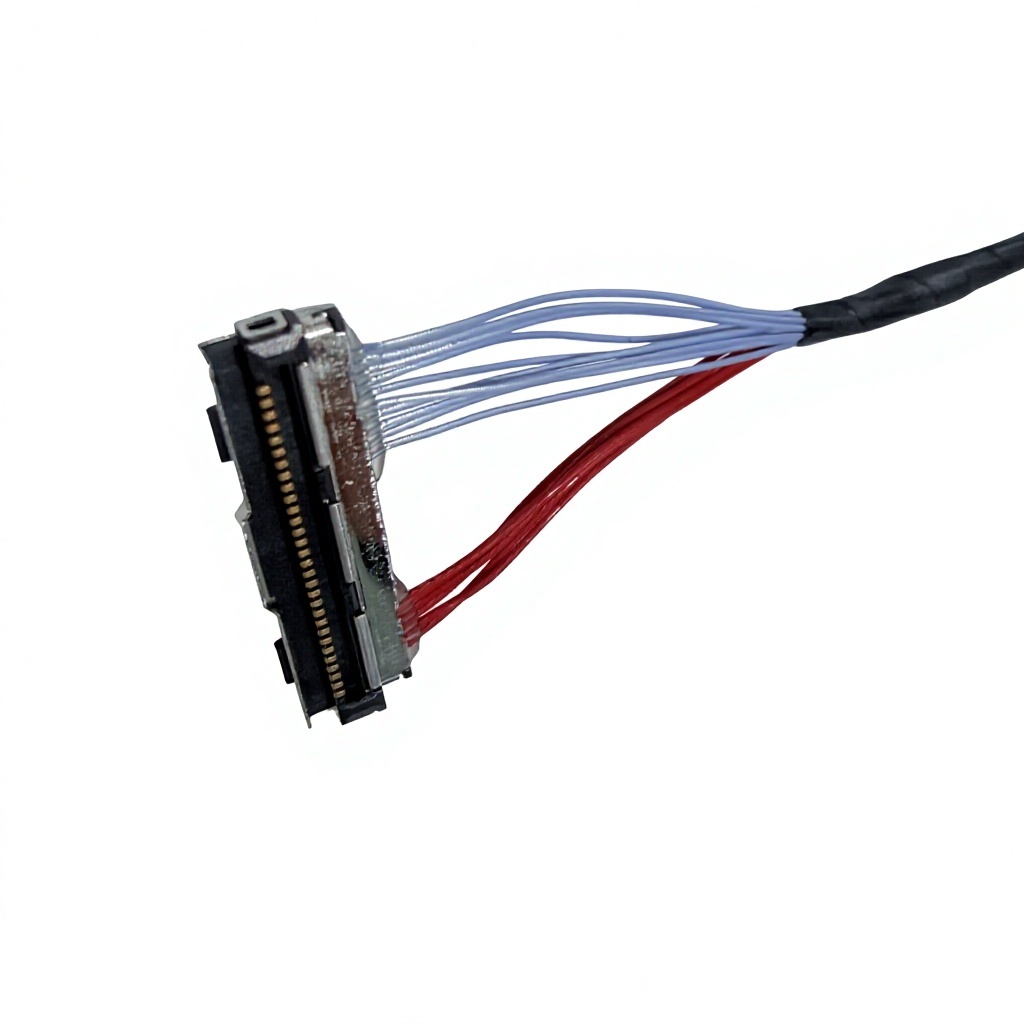
Even better performance in terms of signal clarity can be obtained with custom LVDS cables, through twists, conductor separation and shielding in the design, providing increased common-mode noise rejection for an electrically noisy environment. Regardless of whether you're using it in AR/VR systems where visual fidelity defines immersion or in a surgical display, custom LVDS harnesses will ensure a pristine image.
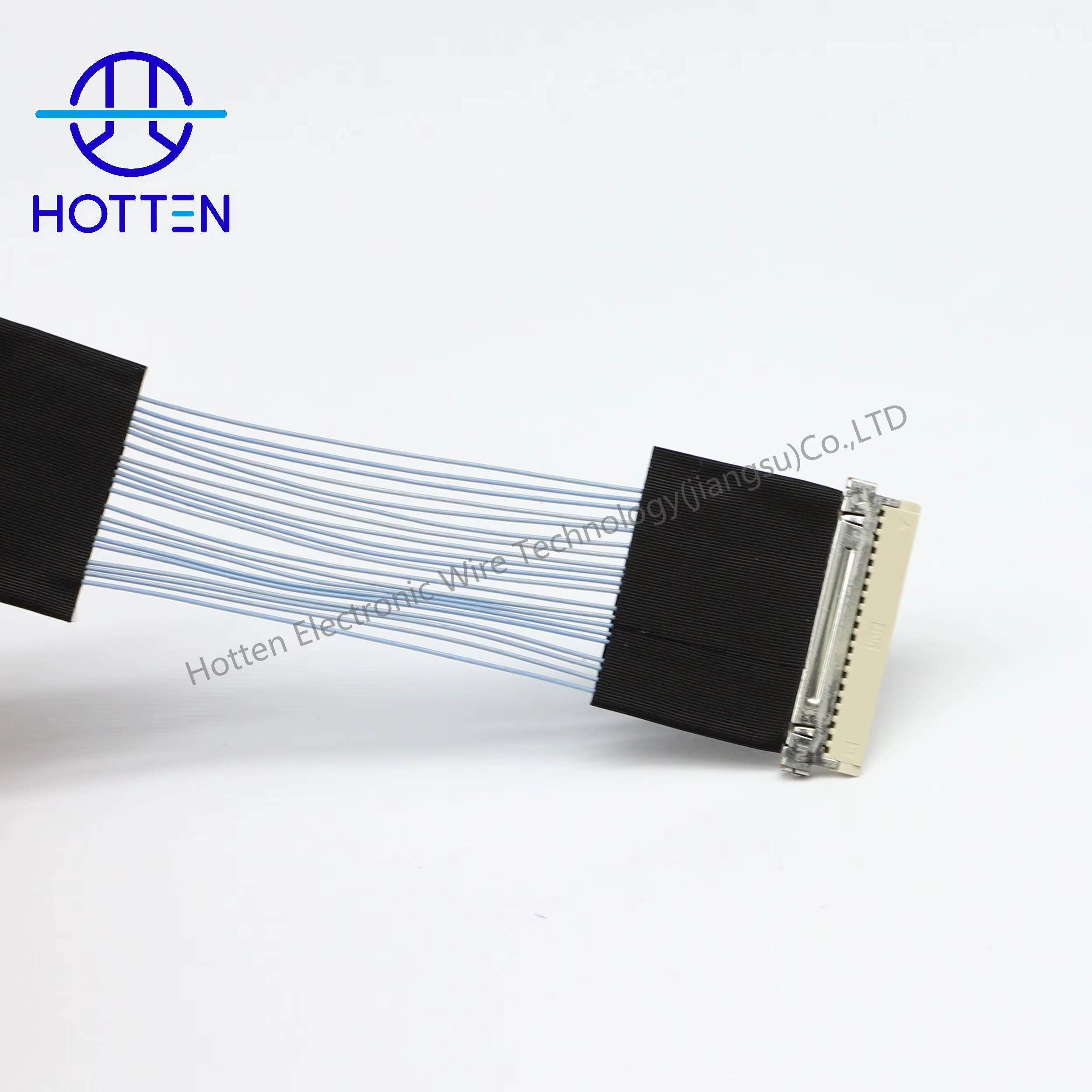
Modern high resolution display devices need very high transmission data rates-and displays supporting 1080p, 4K resolution and more are becoming increasingly common. The speed of LVDS display interface makes these very high data rate resolutions possible.
However, high-speed transmission requires strict impedance control (100Ω differential), optimized dielectric materials, and precise conductor geometry. The flexibility of custom LVDS cable design allows the precise specification of these values, enabling it to fully meet the specifications of the display interface, and support the high data bandwidth. Hotten's expertise in custom LVDS wire harnesses enables designers to integrate high bandwidth into their designs without compromising image quality for a wide range of high resolution display devices- from consumer gadgets to medical displays and beyond.
In many of today's high resolution display applications, there's a need for either compact cables or highly flexible cables. In the case of the AR/VR headset cable it must be both low profile and flexible to not feel noticeable, it must be compact and robust in a medical endoscope display cable or a robust yet small display cable for a remote drone control station.
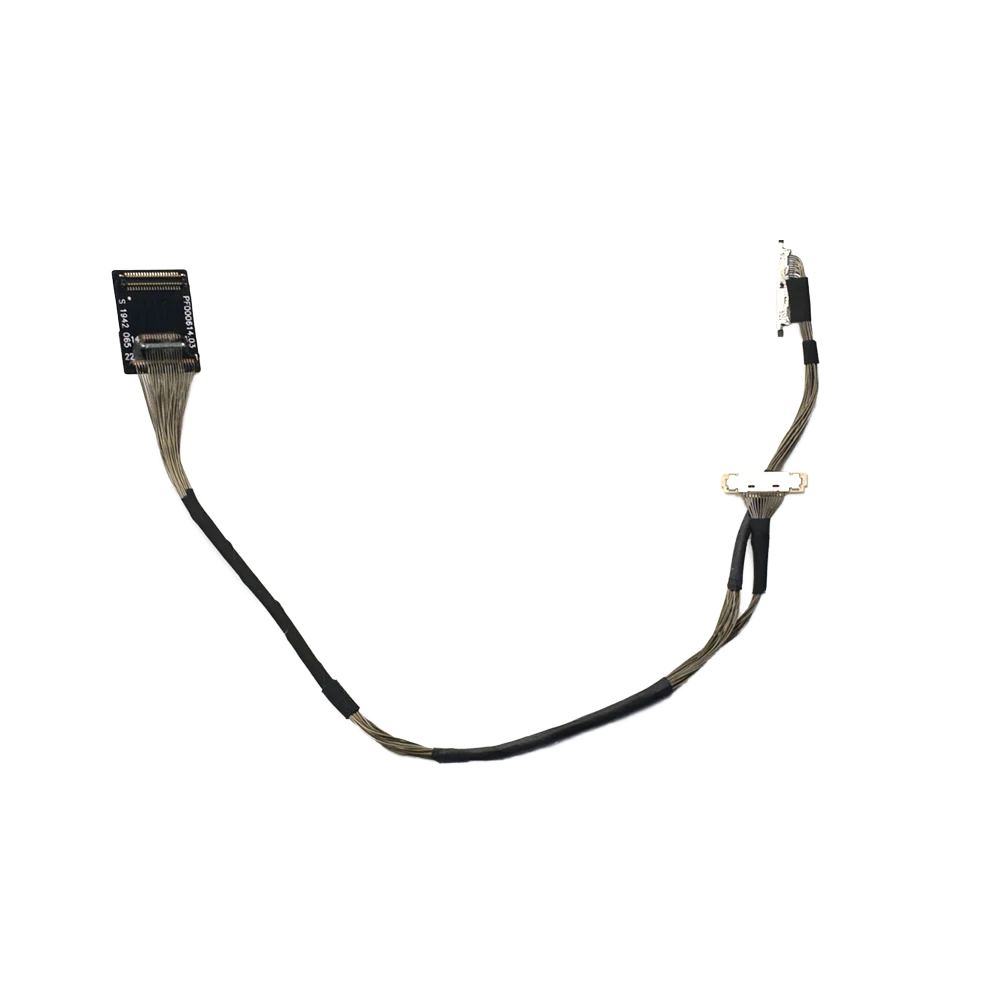
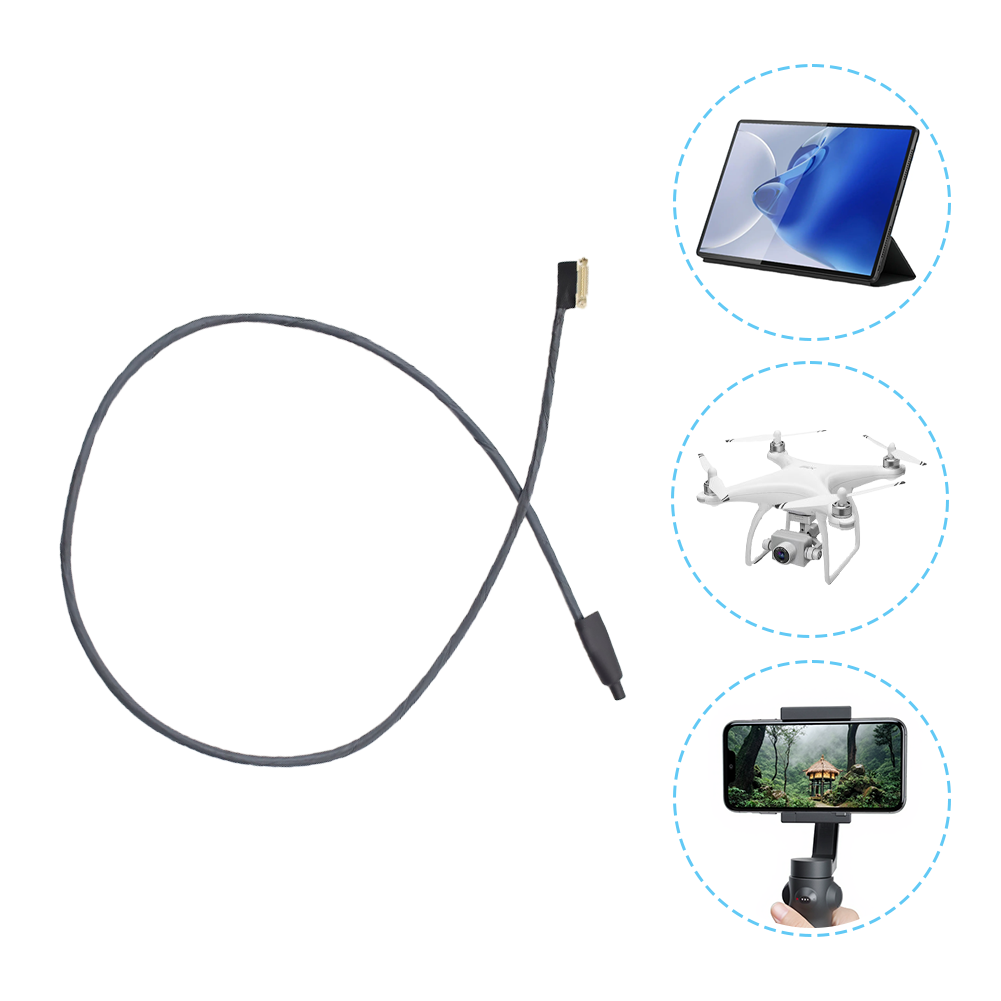
Custom LVDS cable design allows any required cable dimensions to be achieved. The use of ultra-fine conductors such as 42AWG micro coax cable helps achieve ultra-compact and lightweight cable designs, low profile connectors permit compact applications to utilize the full connector capability and specific materials are used for the supple yet robust cable to ensure even substantial movement and bending will retain excellent electrical performance. Hotten's cable assembly products enable engineers to meet these exact cable dimension requirement for any of the multitude of high resolution display applications such as for AR/VR systems or for camera gimbal cable assemblies.
Many applications—such as medical carts, industrial equipment, and digital signage- require much longer distance between the processing component and the display than internal device applications. Standard off-the-shelf LVDS cable longer than 3 feet, for example, will encounter synchronization issues and signal attenuation causing display quality degradation and possibly complete signal loss.
Through custom design of parameters such as conductor sizes, conductor insulation and shielding configuration, LVDS cables can be created to maintain LVDS signals with no loss in signal integrity and quality for extended distances. Hotten's R&D department works with each customer to produce an optimized LVDS solution at the required cable length and performance.
LVDS signals must meet their characteristic impedance for signal integrity and to minimize reflections causing a reduction in image quality. For high-performance displays this requirement cannot be met by the standard commercially available cable. Standard off-the-shelf cables, do not have the exact impedance needed to achieve optimum quality for high resolution displays and require custom designed LVDS cables to have precise impedance (100 ohms differential) with very tight tolerances, reducing EMI so that the display controller receive only the signal needed and high resolution displays are rendered at their best. Hotten's 40+ production lines and team of skilled engineers dedicate their R&D efforts toward creating every custom LVDS wire harness with the highest possible electrical performance criteria.
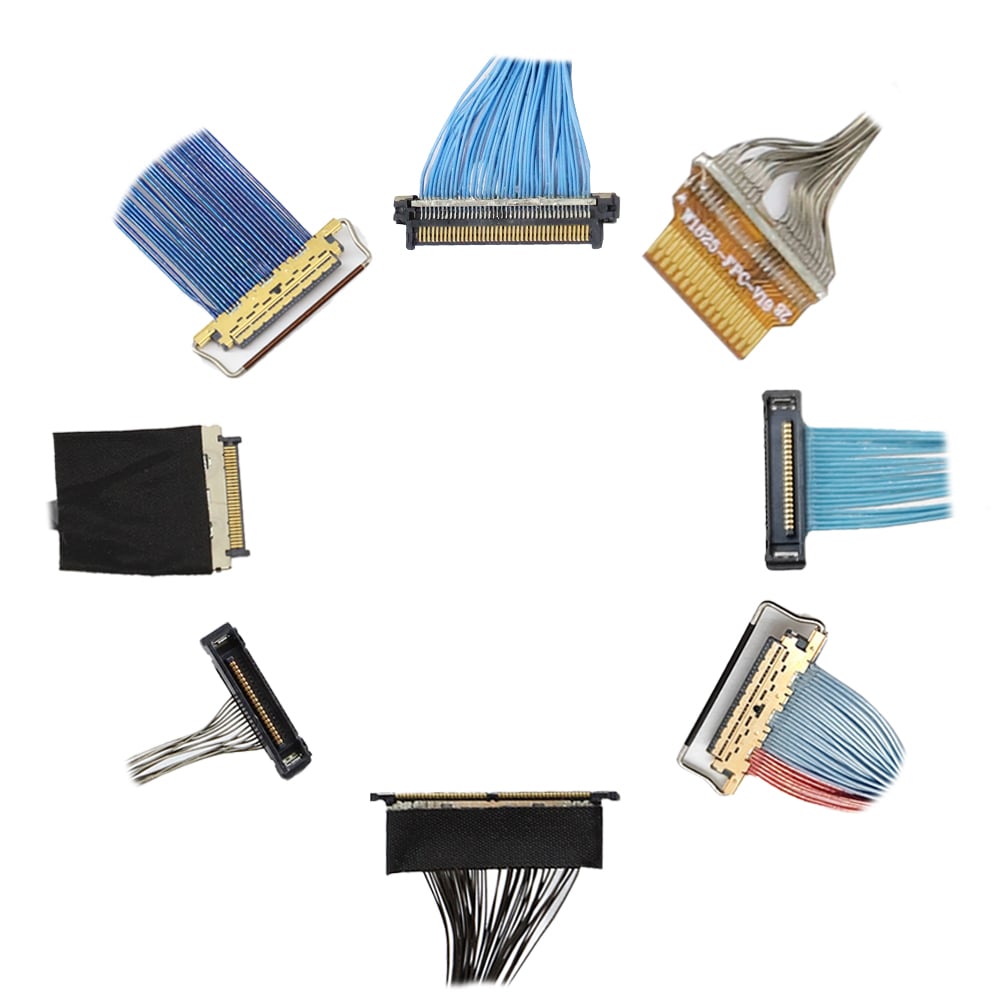
HOTTEN provides customized LVDS cable assemblies for industrial displays, medical equipment, robotics and advanced electronic systems.
Our engineering team supports customers with cable structure design, shielding optimization, connector integration and precision manufacturing.
LVDS cables are used for high-speed differential signal transmission between display panels and control systems. They are widely applied in industrial displays, medical equipment, automation systems and embedded devices.
LVDS supports high-speed data transmission with low electromagnetic interference. Its differential signaling structure helps maintain signal quality and reduce transmission errors in high-resolution display applications.
LVDS cables improve reliability through:
LVDS cable assemblies are commonly used in:
Yes. Custom LVDS cable assemblies can be designed according to:
Standard cables provide general connectivity, while custom LVDS cables are optimized for specific applications requiring reliable signal transmission, compact design and mechanical compatibility.
 Hot News
2026-09-17
2026-09-04
2025-12-17
2025-12-11
2025-12-05