 EN
EN
Quick Links

In contemporary diagnostic medical imaging, ultrasound systems transmit low-amplitude, high-frequency signals between transducer probes and the ultrasound console. These signals are highly susceptible to electromagnetic interference (EMI). Effective cable shielding stands as a core determinant of ultrasound image definition. Inadequate shielding introduces electrical noise, imaging artifacts and signal attenuation, ultimately compromising diagnostic precision. At Hotten, we understand that a custom designed ultrasound probe cable shield is not an option, it is essential.
Ultrasound probes send signals out in megahertz frequency. At this frequency, even low levels of electromagnetic or radio frequency interference can corrupt the returned echo. The shield creates a protective layer that blocks incoming noise from other equipment (medical devices, power lines, etc.) and prevents external interference from affecting the signal.
Well-shielded custom-engineered ultrasound cables deliver uncorrupted echo signals from the probe to the system console. Poorly shielded ultrasound cables, on the other hand, superimpose electrical noise onto diagnostic signals, manifesting as speckle noise, blurring or spurious echoes on the display. At Hotten, our R&D department engineers over 300 cable specifications annually; Every ultrasound cable we produce is custom-engineered with application-specific shielding to capture faint echo signals and deliver anatomically clear images free of electromagnetic interference.
Not all cable shielding is the same; how the shielding is architected affects flexibility and noise rejection in very different ways. The three most common types of shielding used in a medical ultrasound cable are:
Foiled Shielding (Overall or Paired): Foil shielding (overall or paired) adopts ultra-thin aluminum-polyester laminate tape to form full 100% coverage, providing excellent high-frequency noise suppression at the cost of increased cable rigidity.
Braid Shielding (Copper Wire): Utilizes strands of copper wire wrapped around the core to create excellent low frequency coverage and also mechanical strength. This structure achieves a coverage rate of 70% to 95%.
Combination Shields (Foiled + Braid): These are a combination of both foiled and braid shielding to obtain the best attenuation over a wider range of frequencies. This type is generally requested for high channel count probes in the demanding OR environment.
Hotten selectively deploys the above shielding architectures based on application demands. High-density foil-over-braid shielding is deployed for ultra-flexible endocavitary probes, while high-end cart-mounted ultrasound systems integrate composite foil-and-braid shielding to achieve noise attenuation exceeding 100 dB. By designing custom ultrasound cables we achieve a combination of the factors above that provide an optimum balance of flexibility, size and shielding.
An improperly shielded ultrasound cable can easily create an image on an ultrasound monitor that is not accurate. Typical image degradation phenomena caused by insufficient shielding include the following:
Artifacts: Spurious echoes appear in tissue-free regions and may be misidentified as genuine anatomical or pathological structures.
Reduced Contrast Resolution: Background noise obscures minor variations in tissue echogenicity, reducing the detectability of lesions such as tumors and cysts.
Signal Dropout: Repeated bending can damage shielding at flex zones, resulting in intermittent signal dropout during probe manipulation.
This type of signal loss or distortion is completely unacceptable in an interventional application such as ICE (Intracardiac Echocardiography) or IVUS (Intravascular Ultrasound). Signal distortion that generates misleading imaging data poses life-threatening risks by potentially causing misdiagnosis during interventional procedures. At Hotten, our ultrasound probe cables are manufactured so that even after thousands of flex cycles, the shielding maintains a complete, noise rejecting wrap around the conductors.
While a shield may perform well on a test bench, it often fails in the harsh clinical environment due to mechanical forces. An ultrasound probe cable will be continuously bent, flexed and manipulated throughout its entire life. Prolonged cyclic bending loosens braided shielding and fractures foil layers, forming gaps that permit external electromagnetic noise to penetrate the cable core.
Through the use of customized cable designs, the engineer is able to create a more robust and efficient cable:
Optimized Lay Lengths: The twists of the braid are set to distribute mechanical stress so that the individual conductors will not bend at any single point.
Flexible Conductor Alloys: Flexible strands and highly conductive materials such as tinsel or high count fine copper strands are utilized.
Reinforced Inner Jackets: Smooth low-friction intermediate layers are inserted between shielding and core conductors to enable free interlayer sliding under repeated bending.
Our 10,000 m² facility and over 40 production units enable us to build virtually any shield geometry to meet the exacting needs of medical imaging applications with repeatable results.
Every application for an ultrasound cable requires unique levels of shielding:
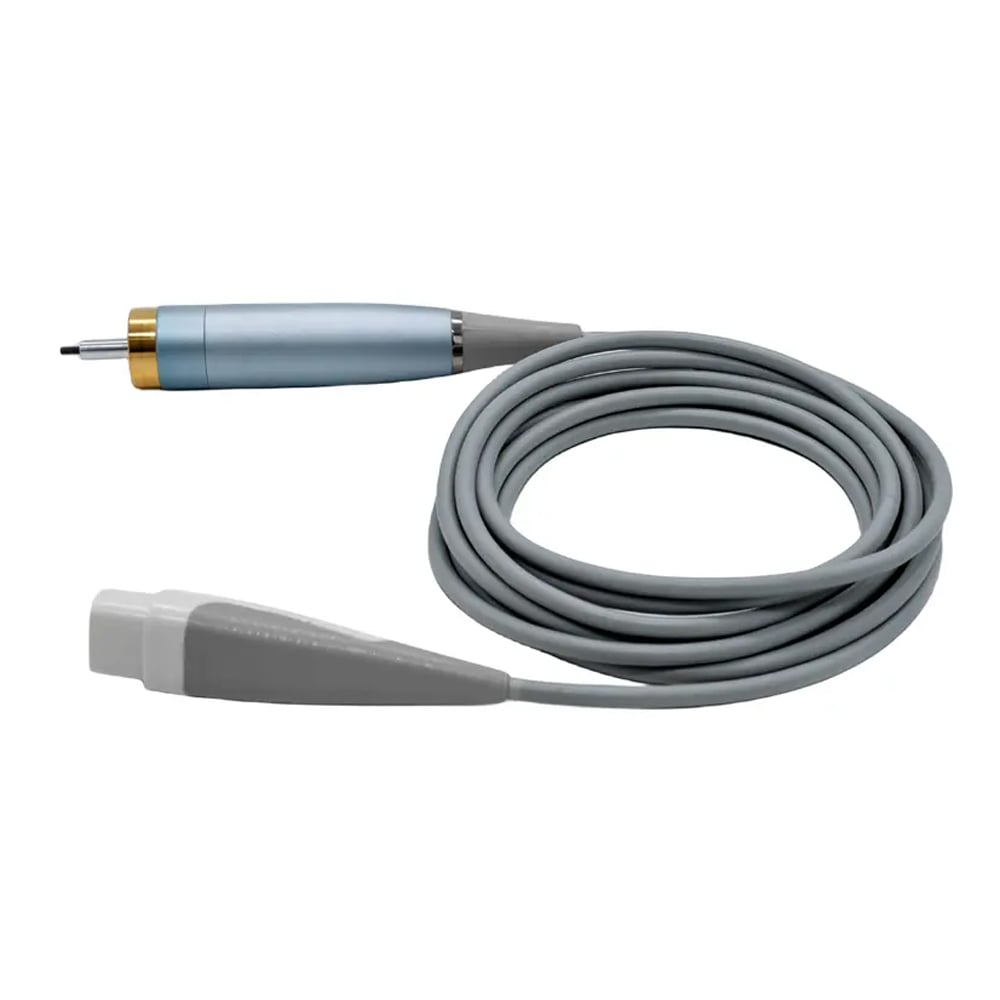
Ultrasound Probe Cable (General Imaging): Requires balanced shielding to reject ambient hospital EMI without being excessively bulky or stiff.
ICE & IVUS Cables (Interventional Cardiology): ICE and IVUS interventional cables feature miniature outer diameters paired with ultra-high-density shielding to suppress common-mode noise and preserve weak intravascular echo signals.
Endoscope Cable: Require a compact shield within a very small diameter and must avoid interference from the cable’s own LEDs or motors.
An application specific design allows for an ultrasound probe cable that provides precisely what is needed. For instance, an RF ablation cables integrating shielded ultrasound imaging cores require dedicated shielding for RF conductors to block high-voltage ablation signals from interfering with imaging data transmission.
The importance of ultrasound cable shielding cannot be understated. The shielding on your ultrasound probe cable is the unseen guardian of the pixel that is viewed on the diagnostic screen, providing rejection to EMI on even the most cluttered operating room floor and ensuring signal fidelity during continuous flex cycles. Our team works with each of these parameters to produce ultrasound probe, ICE, IVUS and endoscope cables—designed to bring you the clearest view into the human body possible.
 Hot News
2026-09-17
2026-09-04
2025-12-17
2025-12-11
2025-12-05