 EN
EN
Quick Links

Home > News > Company news
For standard cables, an RFQ is usually straightforward: confirm the specifications, quantity, price, and lead time.
Custom cable assemblies are different. Cable OD, conductor size, shielding, connector selection, signal requirements, flex life, and installation space often affect one another. A change in one parameter may require changes to the entire cable construction or manufacturing process.
Before moving to quotation and prototyping, it is worth answering a few more fundamental questions: Can the product be manufactured well? Does the supplier understand this type of application? Has the design been properly reviewed? And can a successful prototype eventually become a stable production product?
Many problems that appear during validation or mass production can actually be identified much earlier—during the RFQ stage.
Here are six questions worth discussing with a cable manufacturer before moving forward.
1. Can You Make It—and Can You Make It Well?
The first question after sending a drawing is usually simple:
Can you make it?
For a custom cable assembly, however, manufacturing the product once is only the first step. The more important question is whether it can be manufactured well and consistently.
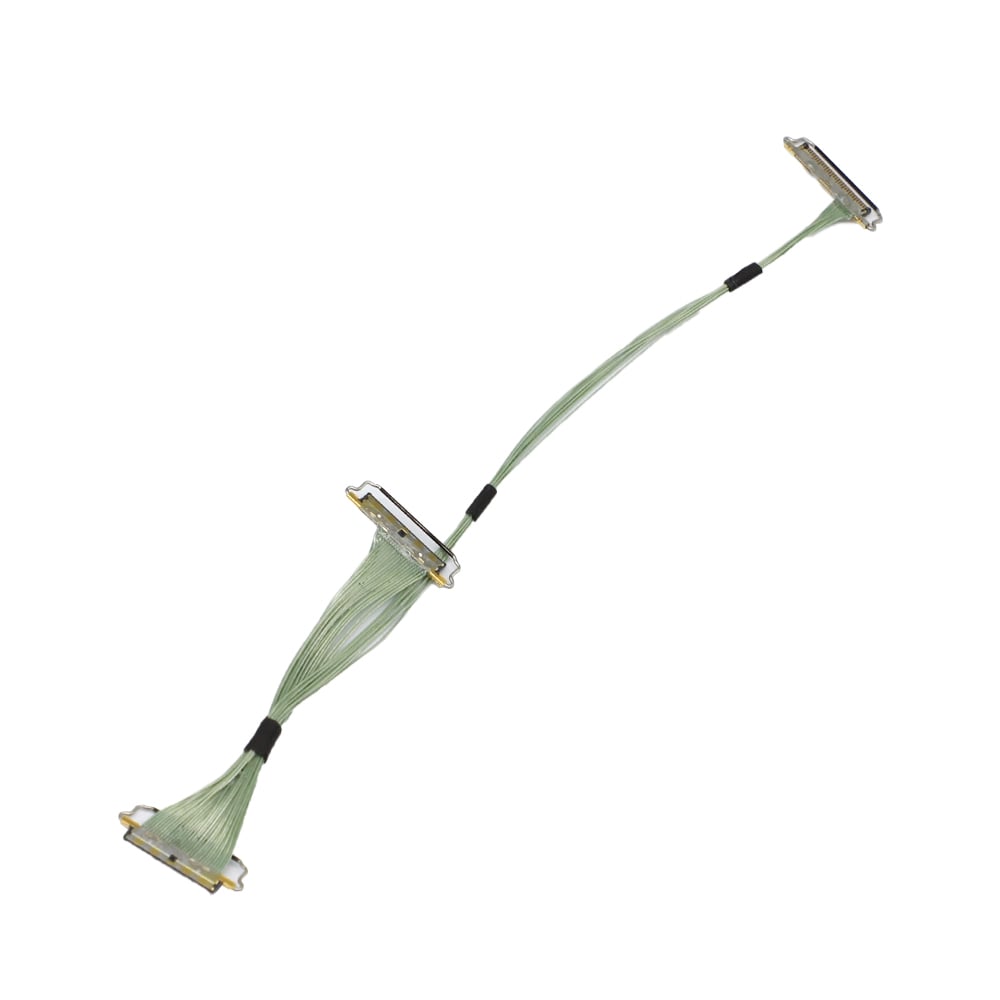
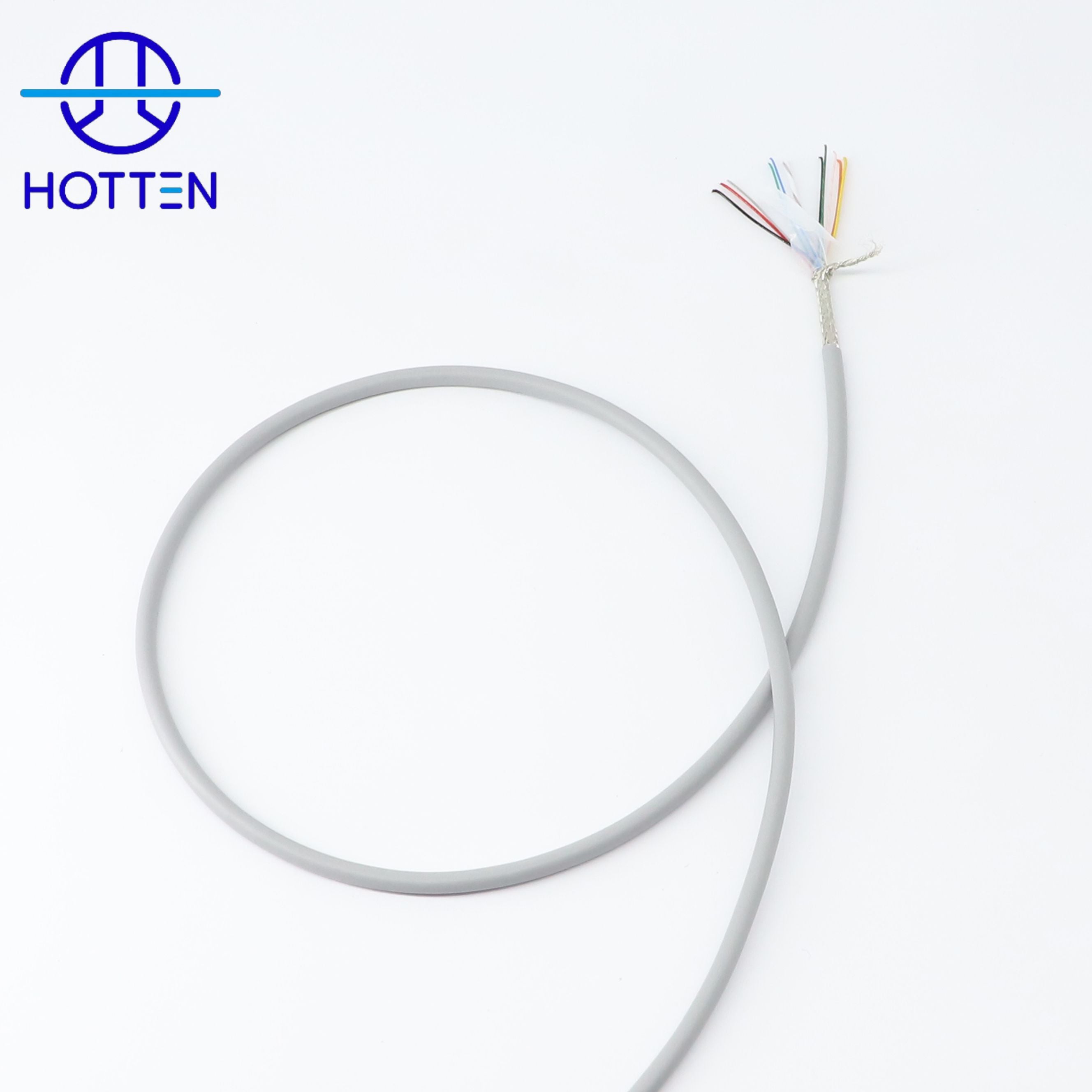
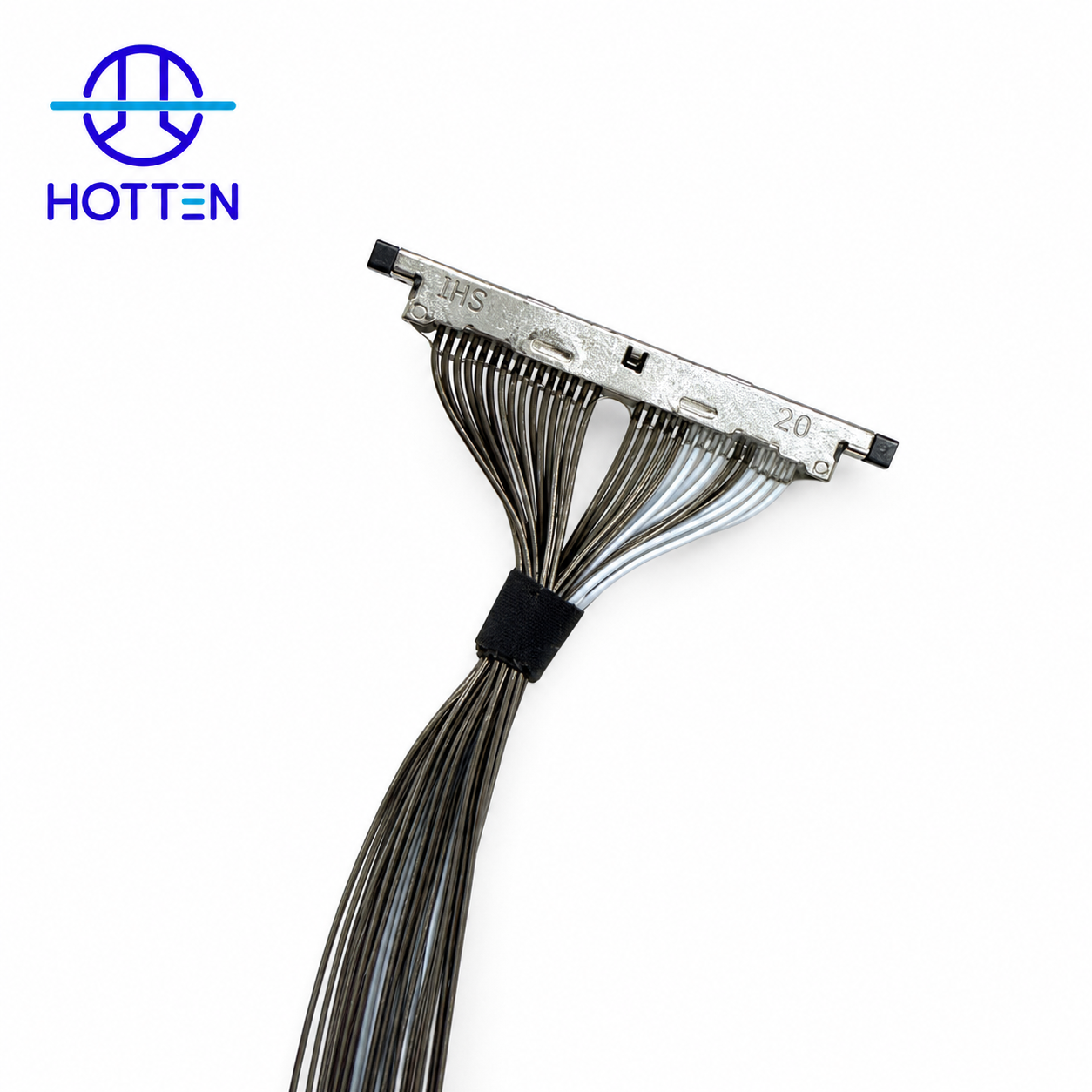
Consider a micro-coaxial cable assembly requiring a smaller OD, finer AWG, high-density connector, specific shielding structure, and defined flex life. Each requirement may be achievable individually, but the real challenge is achieving them together.
Reducing OD limits the space available for insulation and shielding. Finer conductors increase termination and soldering difficulty. Additional shielding may affect flexibility and overall diameter. Smaller connector pitch requires higher termination accuracy. Higher flex-life requirements may require changes to conductor, insulation, or strain-relief design.
Manufacturability therefore involves more than equipment capability. It requires understanding whether the structure is feasible, whether critical processes can be controlled, whether performance targets can be achieved, and whether the process can be repeated.
A useful response should go beyond:
“Yes, we can make it.”
It should explain how it will be made, where the critical manufacturing points are, and what risks should be considered.
That is the difference between making a sample and manufacturing a product well.
2. Have You Worked on Similar Projects?
Once basic feasibility is established, the next question is:
Have you done something similar before?
“Similar” should not be judged only by appearance.
Two assemblies may use micro-coaxial cables, the same pin count, or even the same connector, yet involve very different engineering challenges. What matters more is whether the application, technical requirements, and manufacturing difficulties are comparable.
An endoscope cable, for example, may involve ultra-fine conductors, limited installation space, imaging signal requirements, repeated bending, and long-term reliability. A robotic vision cable may also use micro coax, but its key challenges could involve high-speed transmission, continuous motion, EMI, and complex routing.
Relevant experience reduces the uncertainty associated with solving these problems for the first time.
Useful questions include: What applications has the manufacturer supported? What were the main engineering challenges? How were size, signal integrity, flexibility, or reliability issues addressed? Did the project eventually reach mass production?
A photo of a similar cable shows that something similar was produced. Real project experience should demonstrate something more valuable:
“We have encountered this type of problem before, and we understand how to address it.”
3. Will the Design Be Reviewed Before Quotation?
For a custom cable assembly, a drawing should be the starting point for engineering communication—not simply a document used to calculate price.
A proper engineering review may need to consider:
Cable type and AWG
Cable OD
Connector and pin definition
Length and tolerance
Shielding structure
Impedance or signal requirements
Flexibility and bending requirements
Termination method
Installation space
Operating environment
The individual requirements on a drawing may all appear reasonable, but the combination may not represent the best manufacturing solution.
For example, a specified connector may meet the electrical requirements but have an unusually long lead time. A smaller OD may be achievable but reduce flex performance. A termination method may work for a few prototypes but be difficult to control during volume production.
The later these issues are identified, the more expensive they become to correct.
The purpose of engineering review is therefore not simply to answer:
“Can we quote this drawing?”
It is to determine:
“Is this design ready to be quoted, prototyped, and eventually manufactured at scale?”
When risks are identified early, DFM and alternative solutions can be discussed before significant time and cost are invested in validation.
4. What Actually Determines the Quotation?
Once the technical requirements are reasonably clear, quotations become much more meaningful to compare.
There is rarely a useful “standard price” for a highly customized cable assembly. Cost may be influenced by:
Application and performance requirements
Cable type, AWG, length, and tolerance
Connector and pin count
OD and shielding requirements
Special materials
Termination or molding requirements
Flex-life and testing requirements
Prototype quantity and annual volume
Packaging and labeling
Some of these factors can change the manufacturing approach itself.
For example, producing 100 pieces and 10,000 pieces is not simply a difference in quantity. Material purchasing, tooling, production efficiency, process control, and quality planning may also change.
This is why an accurate quotation normally follows technical clarification.
If important RFQ information is missing, a fast price may only be an initial estimate. The more technical details that are confirmed before quotation, the lower the likelihood of requoting, prototype revisions, or unexpected engineering changes later.
When two prices look different, the important question is not only “Which one is lower?”
It is also:
“What exactly is included behind each price?”
5. Can the Prototype Move into Stable Mass Production?
A successful prototype is an important milestone, but it does not prove that the product is ready for mass production.
A typical OEM project may progress through:
Engineering Review → Prototype → Validation → Pilot Run → Mass Production
Prototype quantities are small. More engineering time and manual attention can be applied, and difficult operations may be handled individually.
Production at scale is different.
When quantities increase from 10 pieces to 1,000 or 10,000 pieces, consistent results depend on:
Stable raw materials
Standardized processes
Defined work instructions
Process control
Production yield
Testing standards
Traceability
Lot-to-lot consistency
This creates an important distinction:
Was the prototype simply made successfully, or was it made using a process that can be repeated at scale?
A design intended for volume production should consider process stability during DFM and prototyping—not after validation has already been completed.
For a long-term OEM program, the real manufacturing capability is not demonstrated only by the first successful batch. It is demonstrated when the 1st, 20th, and future batches continue to meet the same requirements.
6. Is the Company Qualified for Long-Term Cooperation?
After product feasibility, engineering capability, quotation, and production readiness have been evaluated, the manufacturer itself still needs to be considered.
Many custom cable assemblies remain in production for years. The RFQ is therefore not only about selecting a product—it may also mean selecting a long-term manufacturing partner.
Relevant areas may include:
Actual manufacturing capabilities
Production and testing equipment
Engineering support
Quality management systems
Relevant ISO certifications
RoHS / REACH compliance
Product traceability
Volume-production capacity
Capacity scalability
Raw-material supply stability
Root-cause analysis and corrective-action capability
For medical cable assembly programs, these factors can become particularly important.
Certifications provide useful evidence that a management system meets defined standards, but certificates alone do not tell the whole story. What matters is whether quality systems are reflected in everyday manufacturing, inspection, traceability, and engineering change control.
The real question is:
Does this manufacturer have the systems and resources to support the product throughout its lifecycle?
From “Can You Make It?” to Stable Production
A custom cable assembly RFQ can ultimately be viewed as a simple progression:
Can you make it? → Can you make it well? → Have you solved similar problems before? → Has the design been properly reviewed? → Is the quotation based on clear requirements? → Can the prototype scale into stable production? → Is the company capable of supporting the program long term?
Price remains important, but quotations become truly comparable only after the underlying technical and manufacturing conditions are understood.
From RFQ to Mass Production at Hotten
Hotten specializes in custom micro-coaxial cables, medical cable assemblies, and high-density interconnect solutions.
For new custom projects, our process begins with understanding the application, performance requirements, design feasibility, and potential factors that may affect prototyping and future production.
A typical project can progress through:
Requirement & Feasibility Review → Similar Application Evaluation → Drawing & DFM Review → Quotation → Prototype → Testing & Validation → Pilot Run → Mass Production
For micro-coaxial and medical cable assembly projects, Hotten can also support ultra-fine cable constructions, shielding design, miniature termination, FPC and miniature connector integration, strain-relief solutions, and application-specific electrical and mechanical validation.
The goal is not simply to say:
“We made the sample.”
It is to reach a more important point:
“The design can be manufactured repeatedly and transferred into stable production.”
If you are preparing an RFQ for a custom cable assembly, send us your drawing, specifications, application requirements, connector information, and expected volume. Before focusing on price, we can first help evaluate whether the product can be manufactured well—and manufactured consistently as the program scales.
 Hot News
2026-09-17
2026-09-04
2025-12-17
2025-12-11
2025-12-05