
+86-13912615597 [email protected]
All Categories
supply chain tips for bulk ordering ultra fine coaxial cables for oem projects-0

Technical Articles

Home >  News >  Technical Articles

Supply Chain Tips for Bulk Ordering Ultra-Fine Coaxial Cables for OEM Projects

Dec 04, 2025

Little components are as essential, or as simple to underestimate, as ultra-fine coaxial cables, when sourcing components for OEM projects. These small workhorses are the lifelines of modern small electronics, where they can transfer high-frequency signals in gadgets such as AR/VR headsets, medical endoscopes, etc. Your supply chain can make a wrong step in this case, resulting in a delay in production, too much cost, and product failure.
A strategic approach is crucial to OEMs that would like to place bulk orders. These are the main recommendations toward a dependable, efficient, and cost-efficient supply chain.
Consider a Partnership that has solid R&D.

What Should OEMs Consider When Bulk Ordering Ultra-Fine Coaxial Cables?

Direct Answer

Bulk ordering ultra-fine coaxial cables requires more than comparing unit prices. OEM buyers should evaluate the supplier's manufacturing capability, specification control, material management, quality consistency, production lead time, customization capability, testing, and ability to support finished cable assemblies.

For ultra-fine cable projects, the supply chain becomes more sensitive because conductor size, dielectric structure, shielding, cable dimensions, termination, and connector interfaces can all affect the final product.

A practical OEM procurement process should therefore follow:

Specification → Supplier Qualification → Prototype → Validation → Pilot Production → Mass Production → Ongoing Supply Control

Supply chain factor What OEM buyers should verify Why it matters
Manufacturing capability Fine-wire and micro coaxial production capability Supports stable volume supply
Specification control AWG, OD, impedance, capacitance, shielding and construction Prevents specification drift
Material control Conductor, dielectric, shielding and jacket materials Reduces material-related variation
Customization Cable structure, length, shielding and termination Matches the actual device
Finished assembly Connector / FPC / PCB / housing integration Reduces supplier coordination
Testing Electrical, dimensional and mechanical tests Supports product qualification
Lead time Material, tooling and production schedule Reduces production interruption risk
Quality documentation Inspection and traceability records Supports supplier qualification
Production scalability Prototype → pilot → mass production Supports long-term programs
Change control Material and process change management Protects the approved design

If an OEM is planning recurring purchases of ultra-fine coaxial cable, then supplier selection should be based on the entire production and supply process rather than quoted unit price alone, because recurring production requires consistent materials, controlled manufacturing, predictable lead times, and stable quality.

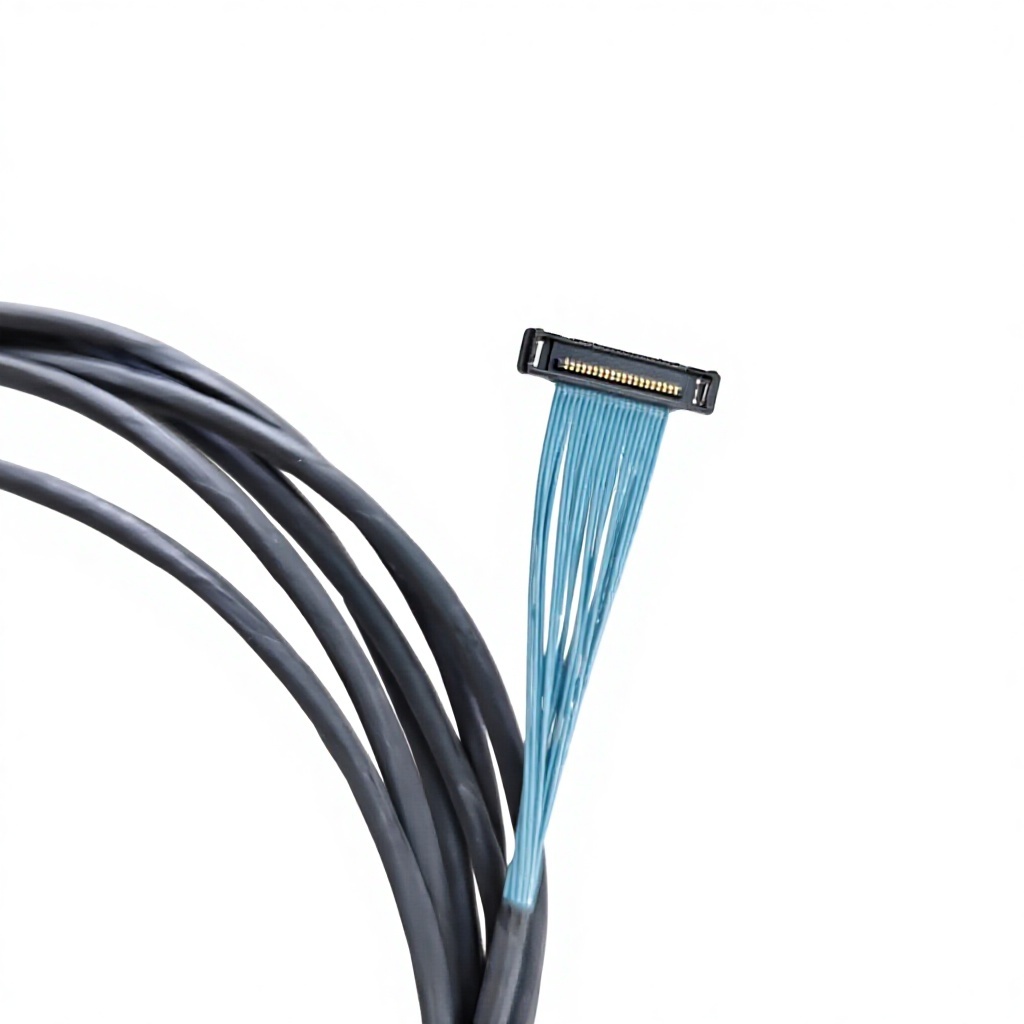
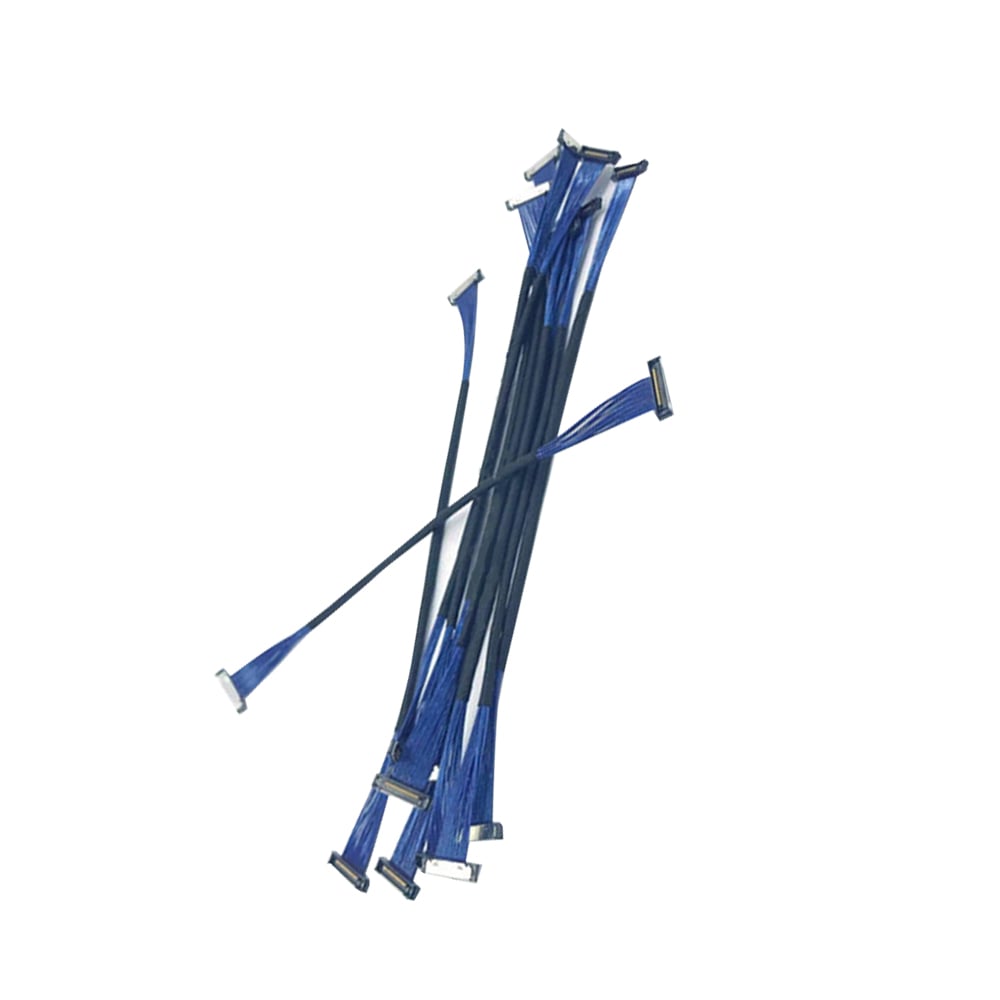
For OEM applications, see HOTTEN's Micro Coaxial Cable, Micro Coaxial Cable Assembly, and Medical Cable Assembly.

Ultra-Fine Coaxial Cable Supplier Evaluation Checklist

Evaluation Factor Why It Matters for OEM Bulk Orders What OEM Buyers Should Check
Manufacturing Capability Ensures stable supply and consistent quality during mass production Production capacity, production lines, process control and delivery capability
R&D and Customization Ability Supports future product upgrades and specification changes New cable development capability, prototype support, engineering communication
Quality Control System Prevents batch variation and production failures Inspection process, electrical testing, traceability and quality documentation
Material Control Affects cable reliability, durability and application performance Conductor material, insulation material, shielding structure and supplier management
Cable Assembly Capability Simplifies procurement and reduces supplier coordination Connector assembly, testing capability and finished cable solutions
Long-Term Supply Stability Reduces risks caused by supplier changes or production interruptions Factory scale, business stability and continuous improvement capability


Not only should your cable provider be a manufacturer, but an innovation partner. The ultra-fine coaxial cable technology is fast-developing. An asset, such as a supplier such as Hotten Electronic Wire that focuses on R&D and implements hundreds of new cable specs every year, is noteworthy.
Why it is important: Your future project might need to have minor changes in impedance, shielding, or flexibility. When combined with a supplier whose R&D is strong, it will be able to develop and prototype new specs in a rapid fashion to suit your changing design requirements, thus this will avoid the bottlenecks, and you will be ahead of your time.
Audit Scale and Consistency- Manufacturing.

In bulk purchase, quality and timely delivery are of utmost importance. Always find out where the sales pitch has taken him or her.Key Questions to Ask:
What is the production capacity of its supplier (e.g., the annual meter output)?
What is the number of production lines devoted to?
How do they perform when large and recurring orders are placed?
A supplier that has a 10,000 m² workshop with an output of high volume annually (such as 144+ million meters in the case of Hotten) illustrates how they have the capacity to accommodate your volume without reducing lead times. Such a scale is frequently transferred into established processes that are designed to be consistent across all batches.
Insists on Strict Quality and Safety Certification.


Failures are forces to be avoided in such industries as medical and industrial automation. The bottom line of your cable supplier must be the same as yours.
Action Point: demand documentation of applicable international standards. In medical use (endoscopes, ultrasound), this could consist of ISO 13485. In the case of general quality management, a general quality management is a baseline used by ISO 9001. This due diligence gets rid of risk and makes sure that the elements of your product are safe and reliable.
Not a Product Seller, but a Solution Provider.


Cable value may not just be limited to a raw cable, but may include the assembly. Find a supplier that is able to offer a complete cable assembly.
The Advantage: This will improve your logistics by sourcing cable and connector assembly as a tested unit from a single supplier and reducing quality variance, and also quickening your production line. It creates the supplier as one point of responsibility for the solution of the whole interconnect.
Long-term Partnership and Global Support Plan.


Your OEM project can take up a lifecycle of several years. You require a supplier who is stable as well as has a global vision to help you through.
Strategic Consideration: Select a supplier that wants to be one of the best global suppliers. This aspiration generally goes hand in hand with a promise of high service levels, constant enhancement, and the capacity to sustain yourself as you expand to new markets. It is concerned with the development of a relationship that will expand with your business.


Conclusion
One of the strategic supply chain decisions is bulk ordering of the ultra-fine coaxial cables. You get not only a component, but also a solution-driven mindset, unwavering quality culture, and a history of effective R&D on your side by partnering with a partner that has proven R&D capabilities, scalable production capabilities, a unified culture based on quality, and a solution-focused mindset. You assure the integrity of your product and occurrence of smooth running of your OEM project prototype to mass production. Select a partner who will invest in innovation today in order to drive your breakthroughs tomorrow.

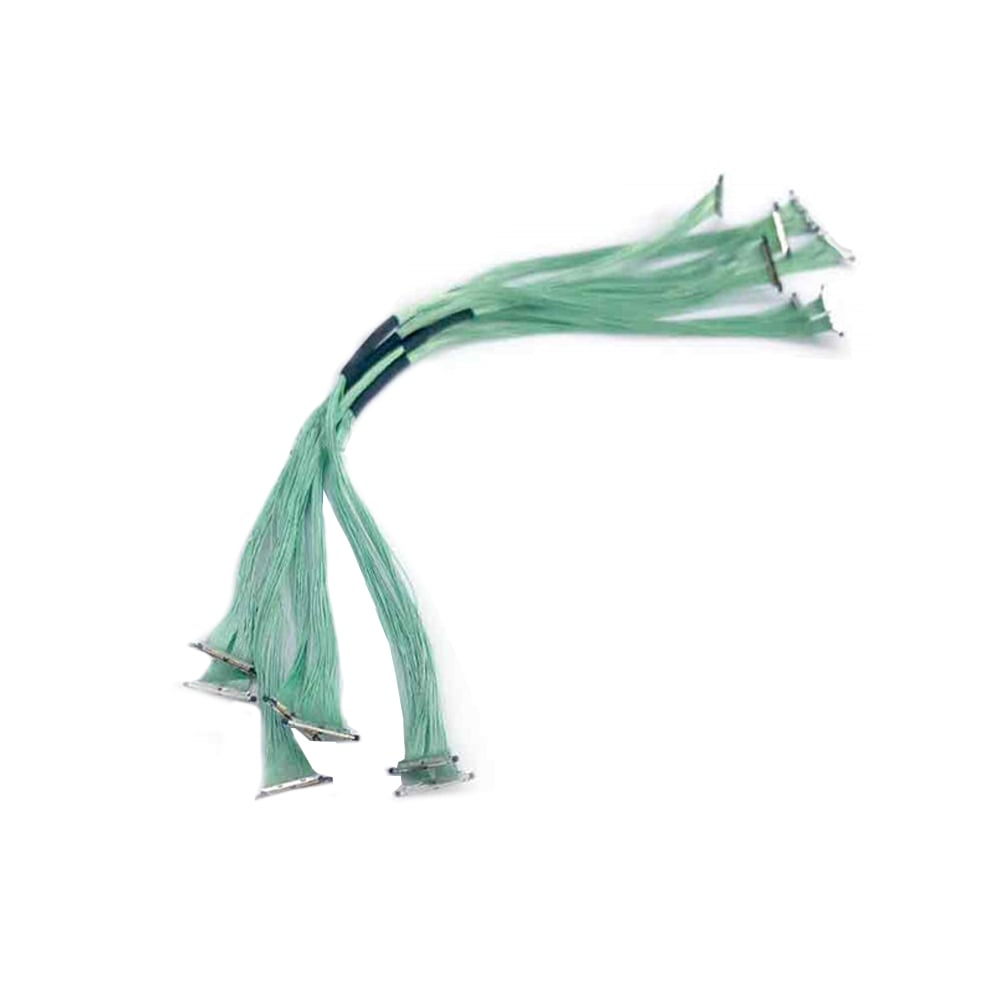
DJI O4 Air Unit Pro FPV Drone Gimbal Camera Video Wire Harness 2.pngEngineering & Procurement Considerations

1. Confirm Whether You Need Raw Cable or a Finished Assembly

Before bulk purchasing, OEM buyers should determine whether the actual procurement requirement is:

raw ultra-fine coaxial cable

or:

finished cable assembly

A finished assembly may include:

  • Ultra-fine micro coaxial cable
  • Specified connector
  • FPC
  • PCB interface
  • Housing
  • Shielding
  • Strain relief
  • Termination
  • Testing

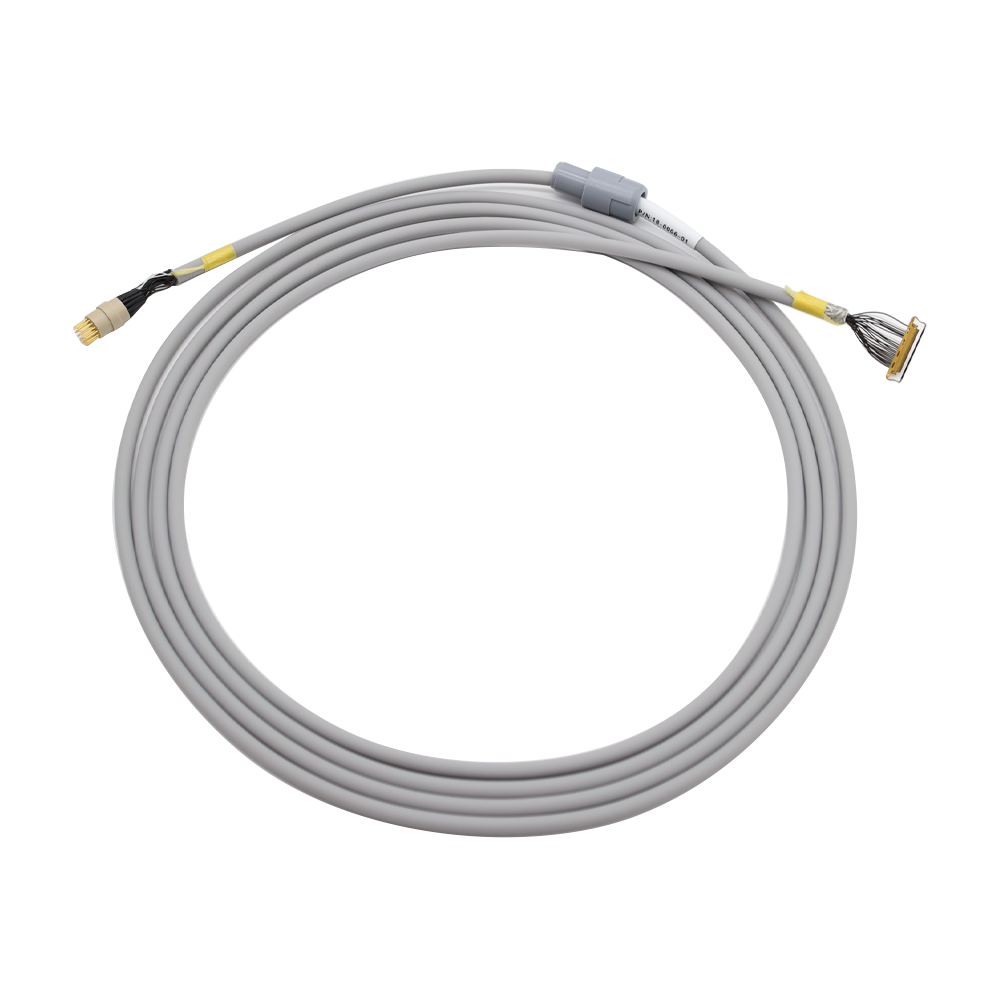
If the customer ultimately needs a connectorized finished product, then sourcing the complete cable assembly can simplify the supply chain, because cable manufacturing, connector integration, termination, and testing can be coordinated as one production process.

For HOTTEN projects, customers can specify the required connector, FPC, PCB, housing, BOM, and drawing while HOTTEN focuses on its fine-wire and micro coaxial cable manufacturing and finished assembly capabilities.

2. Freeze the Critical Cable Specifications Before Bulk Ordering

A bulk purchase should not begin until the critical product parameters are clearly defined.

Key specifications can include:

Specification Recommended RFQ information
Conductor Material and AWG
Cable structure Micro coaxial / fine-wire / hybrid
Cable OD Nominal and maximum
Capacitance Target / maximum where applicable
Impedance Required value where applicable
Frequency Operating range
Shielding Individual / grouped / overall
Insulation Material and requirements
Jacket Material and environmental requirements
Cable length Finished length and tolerance
Connector Manufacturer / series / part number
Pinout Contact assignment
Termination Required termination method
Flexibility Bend radius / dynamic movement
Testing Required electrical and mechanical tests

If these parameters remain open after mass production starts, then supplier quotations and production lots may no longer be directly comparable, because changes to cable construction or components can change material cost, process requirements, and performance.


3. Qualify the Supplier's Fine-Wire and Micro-Coaxial Manufacturing Capability

A supplier that can provide standard coaxial cable is not necessarily able to manufacture ultra-fine coaxial structures consistently.

OEM qualification should examine:

conductor processing → insulation → coaxial construction → shielding → jacketing → cable preparation → termination

Useful questions include:

  • What fine conductor sizes can be produced?
  • How are conductor dimensions controlled?
  • How is insulation thickness monitored?
  • How is coaxial geometry controlled?
  • How is cable OD measured?
  • How are critical process parameters recorded?
  • Can the supplier reproduce the same construction between production lots?

If the project has tight dimensional or electrical requirements, then actual manufacturing-process capability should be reviewed before approving the supplier, because ultra-fine cable performance depends on repeatable physical construction.


4. Evaluate Material Supply Stability

Material availability can become a supply-chain risk when the cable uses specialized constructions or very fine conductors.

The OEM should identify critical materials such as:

  • Fine copper conductor
  • Specialized dielectric
  • Shielding materials
  • Jacket materials
  • Adhesives
  • Connector components where applicable

If a specific material is critical to the approved cable construction, then ask how material substitutions are controlled, because changing material without engineering review can alter electrical, mechanical, or environmental performance.

A mature procurement process should therefore distinguish between:

approved material

and

approved alternative material

rather than treating every technically similar material as interchangeable.


5. Prototype Validation Should Come Before Large-Volume Orders

For a new ultra-fine coaxial cable design, the first bulk order should not be treated as the first engineering validation.

A practical development path is:

RFQ → prototype → engineering validation → pilot production → mass production

During prototype validation, OEMs can confirm:

Validation area What to verify
Electrical Resistance, capacitance, impedance or signal performance
Mechanical OD, bend radius, flexibility and termination strength
Shielding Required shield continuity / isolation
Connector Mating and termination
Dimensions Cable and assembly conformity
Application Fit and performance in the final device

If the prototype does not match the final production configuration, then mass-production purchasing should be delayed until the approved construction is established, because the validated prototype needs to represent the product that will actually enter production.


6. Separate Prototype, Pilot and Mass-Production Requirements

One common procurement problem is treating all quantities as the same product stage.

Instead:

Stage Procurement objective
Prototype Engineering validation
Pilot Process verification
Mass production Stable recurring supply

The commercial requirements can therefore change between stages.

If the product moves from prototype to mass production, then the OEM should re-confirm MOQ, tooling, material planning, production capacity, testing, packaging, and lead time, because the supplier's production process may be organized differently at higher volume.


7. Evaluate Lead Time as a Supply-Chain Parameter

Lead time should be divided into several components rather than treated as one number.

A practical structure is:

Material lead time + tooling / setup + production + inspection + logistics

For customized cable assemblies, additional time may be required for:

  • Connector procurement
  • FPC / PCB preparation
  • Tooling
  • Prototype approval
  • Testing
  • Special packaging

If a production program has a fixed launch date, then material and connector availability should be reviewed before the purchase order is released, because a short assembly production time does not compensate for unavailable critical components.


8. Check MOQ Against the OEM Development Cycle

MOQ can be especially important when buying customized ultra-fine cable.

An OEM may require:

10 prototypes → 100 pilot assemblies → 1,000+ production assemblies

A supplier's MOQ should therefore be evaluated against the actual development plan.

If the OEM is still validating the product, then a smaller prototype quantity can reduce inventory risk, because the final cable construction may change before production approval.

If the design has already been validated, then larger-volume purchasing can improve production efficiency, because setup and material-preparation costs can be distributed over more units.


9. Quality Consistency Matters More Than One Good Sample

A successful sample does not automatically demonstrate stable bulk production.

For recurring orders, OEM buyers should ask how the supplier controls:

incoming materials → cable construction → termination → testing → final inspection → lot traceability

Useful production-quality information may include:

  • Inspection criteria
  • Test frequency
  • Critical dimensions
  • Electrical acceptance criteria
  • Nonconformance handling
  • Lot traceability
  • Engineering change procedures

If the cable is used in a validated product, then batch-to-batch consistency should be part of supplier qualification, because the OEM needs confidence that production assemblies remain equivalent to the approved design.


10. Finished Cable Assembly Can Simplify the Supply Chain

For many OEM projects, the customer does not actually want to purchase a spool of ultra-fine wire.

The practical procurement requirement may be:

micro coaxial cable + connector + PCB/FPC interface + finished termination

A finished assembly can reduce the number of separate suppliers involved in the interconnect.

If HOTTEN manufactures the fine-wire / micro coaxial portion and integrates customer-specified connectors and other components, then the OEM can receive a finished cable assembly, because the cable processing and assembly stages are coordinated before delivery.

This is particularly useful for:

  • Medical equipment
  • Camera modules
  • UAV electronics
  • Robotics
  • High-speed displays
  • Compact electronic devices

See HOTTEN's Micro Coaxial Cable Assembly and UAV & Robotics solutions.


11. Connector Supply Should Be Treated Separately From Cable Manufacturing

For customized cable assemblies, the connector may be specified by the OEM rather than manufactured by the cable supplier.

The RFQ should therefore identify:

  • Connector manufacturer
  • Connector series
  • Exact part number
  • Mating connector
  • Contact pitch
  • Pin count
  • Connector orientation
  • Approved alternatives

If the customer already has an approved connector, then the connector PN and drawing should be controlled as part of the assembly BOM, because substituting another connector with similar dimensions may change termination or electrical behavior.

HOTTEN can integrate customer-specified connectors into the finished cable assembly according to the customer's drawing or BOM.


12. Change Control Is Critical During Long-Term Supply

Long-term OEM programs may continue for several years, during which suppliers may face changes in:

  • Raw materials
  • Connector availability
  • Production equipment
  • Manufacturing processes
  • Packaging
  • Sub-suppliers

Not every change has the same engineering significance.

If a change affects an approved cable construction, material, connector, termination process, or critical manufacturing parameter, then the OEM and supplier should follow an agreed engineering change process, because uncontrolled changes can create differences between the qualified product and the production product.


13. Build Supply Continuity Around Approved Specifications

A strong supply chain does not necessarily mean keeping multiple suppliers for every component.

It means having controlled information about:

what is approved + what can be substituted + what requires requalification

For an ultra-fine cable assembly, the controlled information may include:

Supply-chain item What should be controlled
Cable construction Approved design
Conductor Approved material / AWG
Dielectric Approved material
Shield Approved construction
Jacket Approved material
Connector Approved PN
FPC / PCB Approved revision
Pinout Controlled revision
Testing Approved acceptance criteria
Drawing Current revision
BOM Current revision

If an alternative component becomes necessary, then engineering review should determine whether the change requires additional testing, because component substitutions can affect the finished cable assembly.


14. Procurement Should Consider Total Cost, Not Only Cable Price

For bulk OEM purchasing, the relevant cost can be viewed as:

Unit price × quantity + tooling + engineering + testing + logistics + inventory / qualification cost

A supplier with a lower cable price may not have the lower overall procurement cost if the project requires:

  • More engineering iterations
  • Additional tooling
  • More extensive incoming inspection
  • Separate connector assembly
  • Longer qualification
  • More supplier coordination

If two suppliers offer similar product specifications, then compare the entire procurement package, because total project cost depends on more than the cable's quoted unit price.


15. A Practical Bulk Procurement Checklist

Before releasing a purchase order for an ultra-fine coaxial cable or finished assembly, OEM buyers can confirm:

Checkpoint Question
Specification Is the current cable drawing approved?
BOM Are all components and revisions controlled?
Conductor Is AWG and material defined?
Electrical Are impedance / capacitance / signal requirements defined?
Mechanical Are OD and bend requirements defined?
Shielding Is the required structure clear?
Connector Is the exact PN confirmed?
Assembly Is the required finished configuration defined?
Testing Are acceptance criteria agreed?
Quantity Is MOQ aligned with the project stage?
Lead time Are material and production schedules realistic?
Quality Are inspection and traceability requirements defined?
Change control Is an engineering-change procedure agreed?
Production Has pilot production been approved before mass production?

The goal of bulk procurement is therefore not simply to secure a large quantity of ultra-fine coaxial cable.

It is to establish a repeatable supply chain in which the cable specification, materials, manufacturing process, connector integration, testing, and production configuration remain controlled from prototype through mass production.

For OEM projects requiring ultra-fine wire and finished micro coaxial assemblies, see HOTTEN's Micro Coaxial Cable and Micro Coaxial Cable Assembly.

FAQ

Q1: What should OEMs consider when bulk ordering ultra-fine coaxial cables?

A: OEMs should evaluate supplier manufacturing capability, quality control, customization ability, production consistency, delivery reliability and technical support before placing bulk orders.


Q2: Why is supplier manufacturing capacity important for ultra-fine coaxial cable projects?

A: Ultra-fine coaxial cables require precise manufacturing processes. Stable production capacity helps ensure consistent quality, predictable lead times and reliable supply for mass production.


Q3: How can OEM buyers reduce risks in bulk cable procurement?

A: OEM buyers can reduce risks by confirming cable specifications, reviewing supplier capabilities, validating samples, checking quality systems and establishing long-term supply agreements.


Q4: Why should OEMs choose a cable manufacturer instead of a trading company?

A: Working directly with a manufacturer provides better control over customization, production processes, quality consistency and technical communication.


Q5: Should OEM customers purchase cable assemblies instead of raw cables?

A: In many projects, cable assemblies simplify supply chain management because the supplier can handle cable manufacturing, connector integration and final testing as one solution.


Q6: How does R&D capability affect OEM cable projects?

A: Strong R&D capability allows suppliers to quickly adjust cable specifications, develop prototypes and support product improvements throughout the OEM product lifecycle.

If you have any suggestions, please contact us

CONTACT US

Get a Free Quote

Our representative will contact you soon.
Email
Phone number
Company Name
Message
0/1000
supply chain tips for bulk ordering ultra fine coaxial cables for oem projects-1 supply chain tips for bulk ordering ultra fine coaxial cables for oem projects-2 supply chain tips for bulk ordering ultra fine coaxial cables for oem projects-3 supply chain tips for bulk ordering ultra fine coaxial cables for oem projects-4 supply chain tips for bulk ordering ultra fine coaxial cables for oem projects-5