
+86-13912615597 [email protected]
All Categories
odm services for custom rf coaxial cable assemblies-0

Technical Articles

Home >  News >  Technical Articles

OEM/ODM Services for Custom RF Coaxial Cable Assemblies

Oct 17, 2025

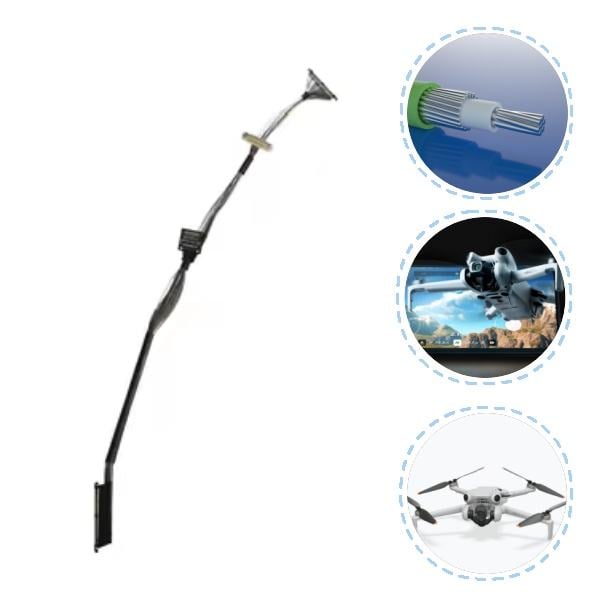
The need for more compact, denser, faster electronic technology has driven the field of opto-electronic devices to smaller and smaller scale devices. For this, the choice of internal wiring is also important. These new solutions that deal with the issues come from HOTTEN, one of the best micro coaxial cable and custom cable assembly manufacturers in China. Our mini stairs coax cables deliver superior miniaturization, signal integrity, and stability during manufacturing — perfect for engineers developing high-performance electronics.

How Does HOTTEN Support OEM/ODM Custom RF Coaxial Cable Assembly Projects?

Direct Answer

OEM/ODM RF coaxial cable assembly projects typically require more than supplying a standard coaxial cable. The finished assembly may need to match a specific RF performance target, cable dimension, connector interface, PCB layout, shielding structure, mechanical routing, and production requirement.

HOTTEN's core manufacturing capability is fine electronic wire and micro coaxial cable, while connectors, PCB boards, housings, FPCs, and other components can be specified by the customer and integrated into the finished assembly according to the required drawing, BOM, part number, pinout, or sample.

A typical OEM development process is:

Customer drawing / RFQ → Engineering review → Cable construction → Customer-specified component integration → Prototype → Electrical / mechanical validation → Pilot production → Mass production

OEM requirement HOTTEN project approach
Fine / ultra-fine conductor Customized conductor and cable construction
RF performance Impedance, attenuation and other defined requirements
Cable size Customized OD, length and routing
Shielding Individual / grouped / overall shielding
Connector Customer-specified connector PN / drawing
PCB / FPC Customer-specified interface integration
Housing Customer-specified component integration
Prototype Engineering sample development
Validation Electrical and mechanical testing
Production Pilot to mass production

If the customer already has a defined connector, PCB or housing, then HOTTEN can build the cable assembly around those specified components, because the connector and other interface components do not need to be HOTTEN standard products.

For related capabilities, see RF Coaxial Cable Assembly, Micro Coaxial Cable, and High Frequency & RF Systems.

Custom RF Coaxial Cable Assembly Options Comparison

Customization Item Available Options Importance for OEM/ODM Projects Typical Applications
Cable Type Selection Micro coaxial cable, RF coaxial cable, low-loss coaxial cable, flexible coaxial cable Determines frequency performance, flexibility and signal quality RF modules, communication devices, medical equipment
Connector Configuration SMA, MMCX, MCX, SMP, custom connectors Ensures compatibility with customer equipment and PCB interfaces Wireless devices, testing equipment, RF systems
Shielding Structure Foil shield, braid shield, foil + braid composite shielding Controls EMI/RFI protection and signal integrity Medical electronics, high-frequency systems
Electrical Performance Impedance, frequency range, insertion loss, VSWR Ensures reliable high-frequency signal transmission RF modules, antennas, precision electronics
Mechanical Design Cable length, bend radius, jacket material, assembly structure Improves installation flexibility and product reliability Compact devices, industrial equipment
Testing & Validation Electrical testing, continuity testing, signal performance verification Reduces production risk and ensures consistency OEM mass production projects

Conquering Space Constraints
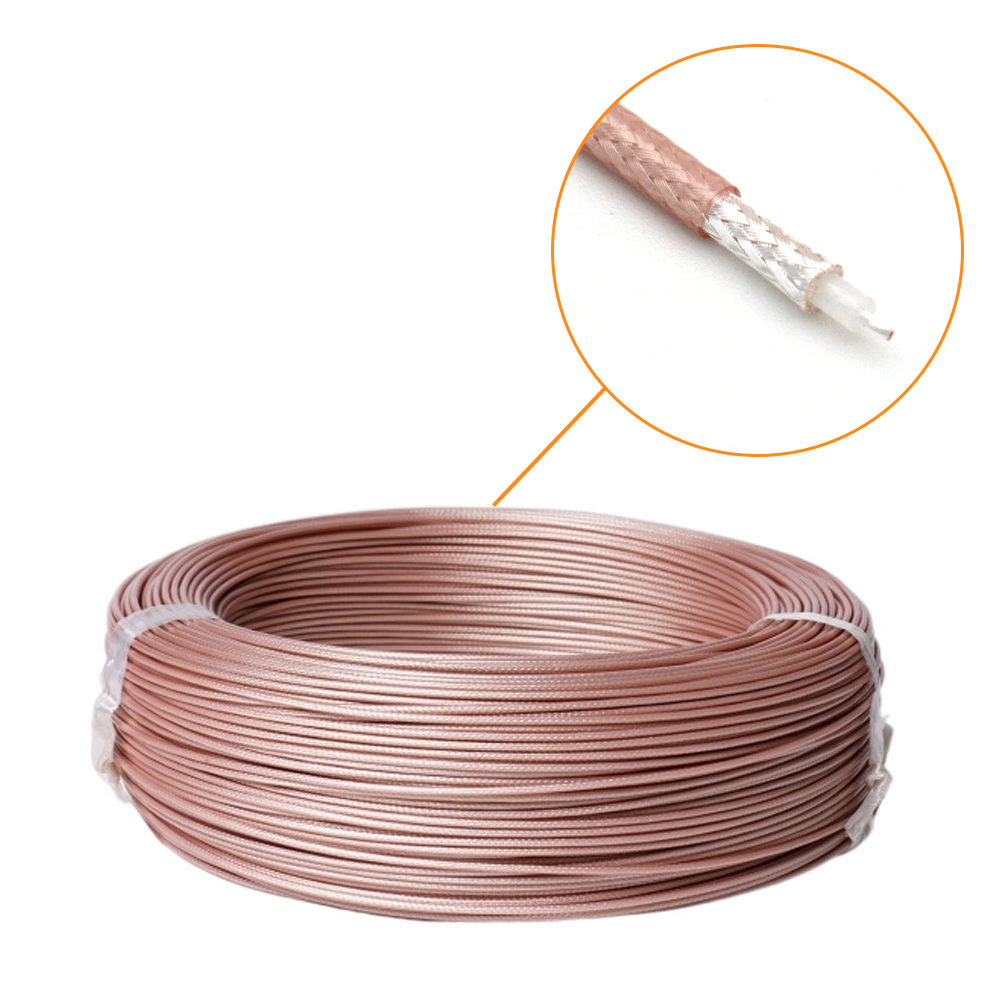
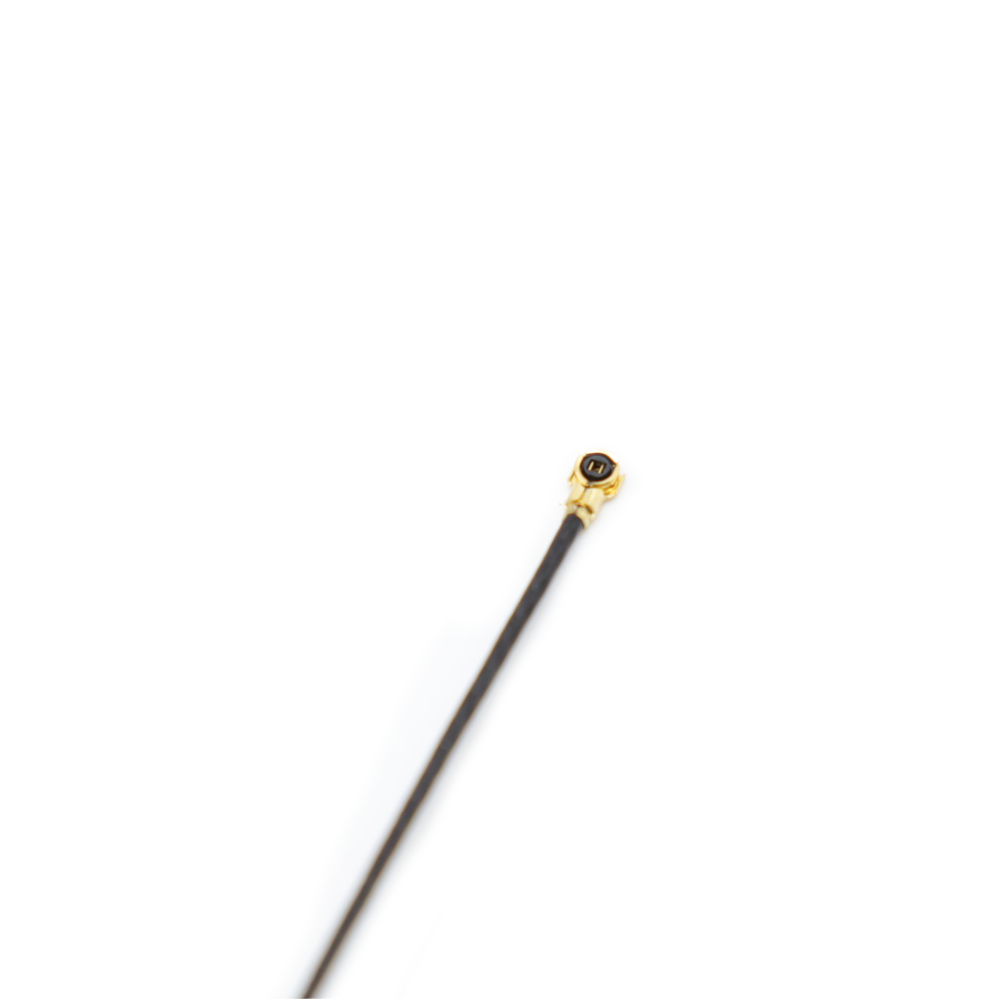
One of the biggest features of HOTTEN ultra-thin micro coaxial cable, as opposed to common coaxial cables, is its small size. These are small enough to work through the smallest nooks and crannies in today's tight portable designs – everything from super-slim notebooks, to hand-held medical or imaging systems, where traditional connectors such as HDMI or LVDS just won’t fit – but still feature monster bandwidth. The level of miniaturization allows engineers to move density into their own product, allowing for designs that are far smaller and state-of-the-art, sizes that were previously impossible.

Maintaining data in a limited space
With the ever-increasing trend for faster, smaller devices, it is getting more critical to maintain the signal integrity in an environment that experiences electrical noise. HOTTEN's micro coax cables EMI protection Multi shielded layer realized by having multiple EMI layers, completely preventing electromagnetic interference. Again, this maintains fast data flow (e.g., to HD display interconnects, cameras, and the like), by keeping communication links clean and free of the noise/lossiness over time experienced in other scenarios.

Built for Real-World Reliability
Reliability extends beyond electrical performance. Hotten cables are designed to withstand high mechanical stresses: they can be subjected to cyclic bending, flexure at extreme positions, and a large number of mating cycles. This mechanical robustness makes them suitable for both portable consumer electronics and industrial UAVs and automatons operating outdoors in harsh environments. This translates to peace of mind for an engineer in relying upon our products not only for robust field stability but also for lower maintenance and fewer field failures.

Tailored for Specific Application Needs
There's no one "thing" that can be done to solve every use case. HOTTEN can be tailored to cater to the particular engineering requirements. Our engineers will work with you to custom-cable a cable requested for a desired electrical characteristic, special insulation or jacket materials (for temperature/environmental concerns), and custom geometry to fit your product's unique single-ended PCB layout. Which means engineers can design a cable solution that perfectly matches how the end product needs to perform and the look-and-feel it requires.

What Information Should OEMs Provide for a Custom RF Cable Assembly?

A complete RFQ helps the manufacturer evaluate the cable construction, component integration, testing and production requirements before quotation.

RFQ item Recommended information
Application RF module, communication equipment, sensor, imaging, UAV, etc.
Frequency Operating frequency and bandwidth
Impedance Required characteristic impedance
Cable construction Coaxial / micro coaxial / hybrid
Conductor AWG and conductor material
Cable length Finished length and tolerance
Cable OD Maximum allowable diameter
Shielding Required shielding structure
Connector Manufacturer, series and part number
Pinout Signal assignment
PCB / FPC Drawing and interface information
Housing Drawing / dimensions where applicable
Routing Bend radius and exit direction
Mechanical Flex, vibration, pull or torsion requirements
Testing RF, electrical, dimensional and mechanical tests
Quantity Prototype, pilot and annual production
Documentation BOM, drawings, inspection and test requirements

If the customer provides the connector PN, BOM, pinout and assembly drawing, then engineering review and quotation can be more precise, because fewer assumptions are required during cable and termination design.


How Is a Custom RF Coaxial Cable Assembly Developed From Prototype to Production?

1. Engineering Review

The first step is to review the customer's:

drawing + RF requirements + connector information + mechanical constraints + quantity

The supplier should determine whether the requested cable structure can meet the electrical and mechanical requirements.

If the initial design has conflicting requirements, such as very small OD combined with a demanding RF performance target and tight bend radius, then the cable construction should be reviewed before prototyping, because solving these constraints after the connectorized assembly is built can increase development iterations.

2. Cable Construction

The cable construction can be developed around:

  • Conductor size
  • Dielectric structure
  • Shielding
  • Cable OD
  • Required impedance
  • Flexibility
  • Operating environment

If the RF application requires a miniature cable, then fine-wire and micro coaxial construction can be considered, because smaller conductors and compact structures can help reduce the routing envelope.

See Micro Coaxial Cable.

3. Customer-Specified Connector Integration

The connector may already be defined by the OEM.

Customers can provide:

  • Connector manufacturer
  • Exact part number
  • Connector drawing
  • Mating connector
  • Pinout
  • Orientation
  • Cable exit requirements

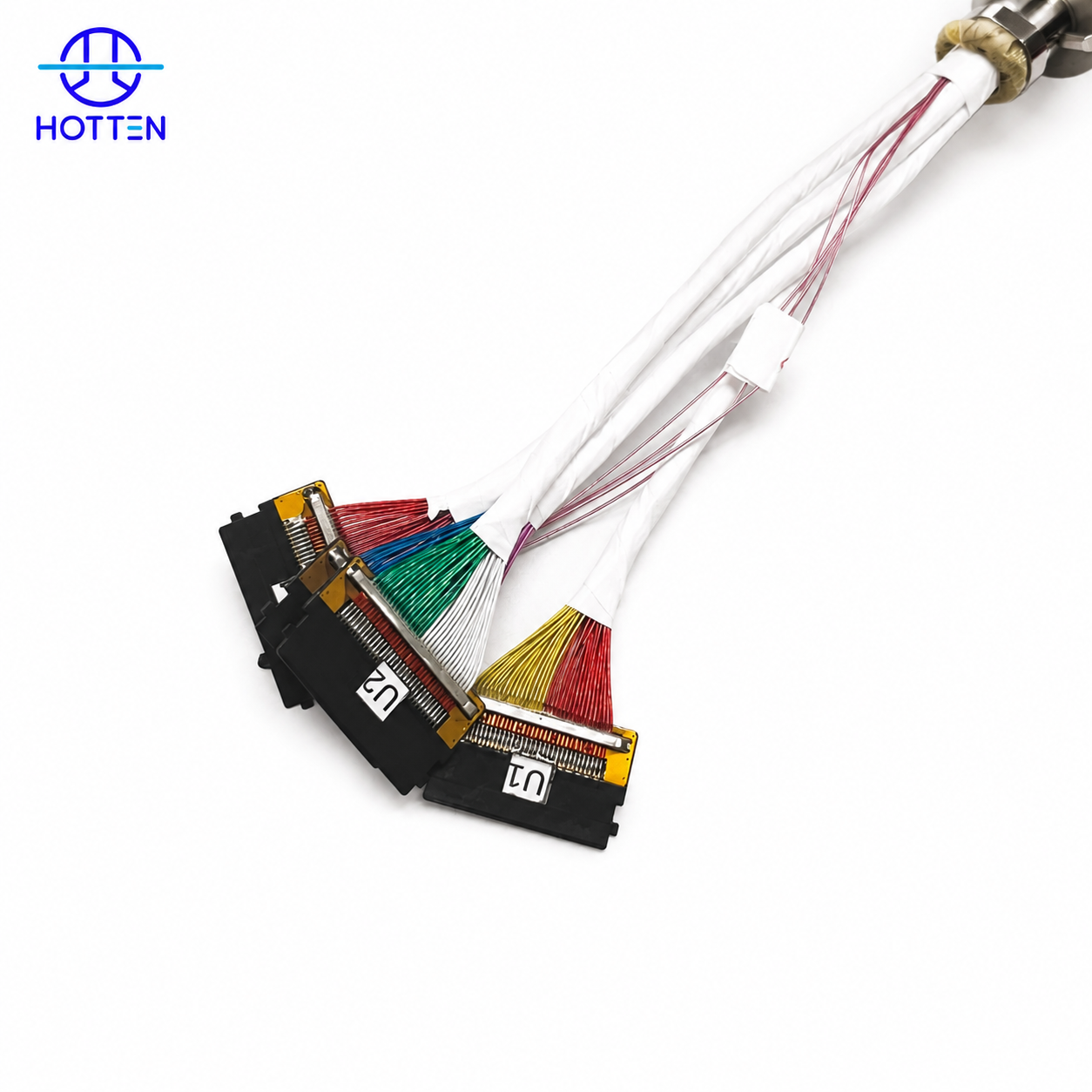
HOTTEN can then integrate the specified connector with the manufactured fine-wire or micro coaxial cable.

If the customer uses a specific RF connector or miniature connector already approved for its system, then the cable assembly should be developed around that interface, because connector geometry and termination affect the complete transmission path.

4. PCB, FPC and Housing Integration

Some OEM cable assemblies connect directly between cable and connector, while others require integration with:

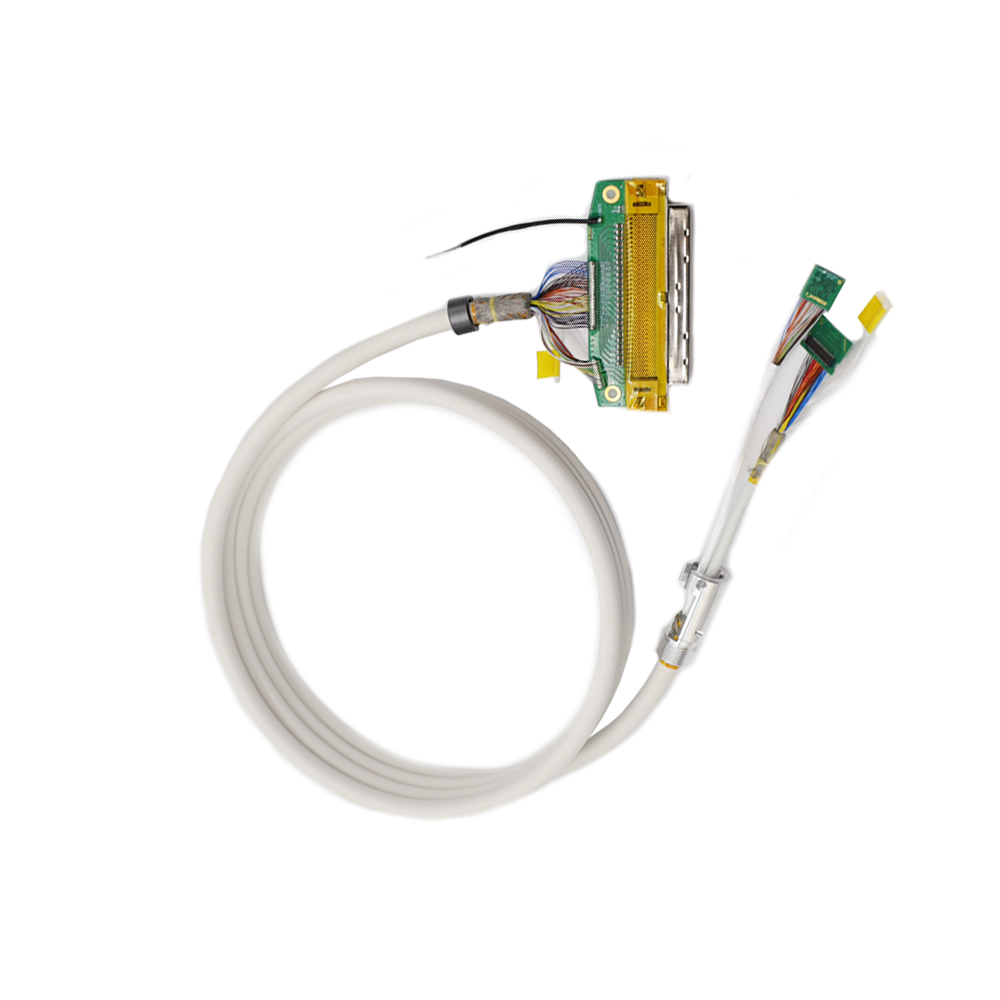
FPC + PCB + housing + strain relief + connector

The customer's drawings and BOM should define the complete assembly where applicable.

If the finished component must be installed directly into the device, then the cable assembly should be validated in its complete configuration, because the final mechanical interface may affect routing, connector alignment and cable stress.

5. Prototype Development

Prototype samples are used to verify:

  • Mechanical fit
  • Cable length
  • Connector compatibility
  • Pinout
  • Cable routing
  • Electrical performance
  • Termination quality

If the prototype requires a change to cable OD, connector orientation, shielding or routing, then the revision should be documented before pilot production, because the production configuration should correspond to the approved design.

6. Validation

Depending on the application, validation may include:

Validation Purpose
Continuity Verify signal paths
Resistance Check conductor / contact condition
Impedance Evaluate controlled transmission characteristics
Insertion loss Evaluate attenuation
Return loss / VSWR Evaluate matching
Shield continuity Verify shielding path
Pull test Evaluate termination strength
Flex test Evaluate mechanical durability
Dimensional inspection Verify assembly conformity

If the RF cable is a critical part of the system signal path, then the complete connectorized assembly should be tested, because cable, termination and connector transitions all contribute to final performance.


What Makes OEM/ODM RF Cable Assembly Different From a Standard Cable?

A standard cable typically provides a predefined construction and interface.

An OEM/ODM assembly instead can be developed around:

customer signal requirements + customer connector + customer PCB/FPC + customer mechanical envelope + customer testing requirements

Standard cable OEM/ODM cable assembly
Fixed construction Customized construction
Standard length Custom finished length
Standard connector Customer-specified connector
Standard routing Application-specific routing
Limited integration Connector / FPC / PCB / housing integration
Catalog specification Drawing / BOM-based specification
Standard testing Application-specific validation

If the device has a unique interface or constrained mechanical layout, then an OEM assembly is generally more practical than adapting a standard cable, because the finished assembly can be designed around the actual system architecture.


How Does HOTTEN Handle Customer-Specified Components?

HOTTEN focuses on fine electronic wire, ultra-fine micro coaxial cable, precision processing, and finished cable assembly manufacturing.

The production model can be:

HOTTEN-manufactured fine wire / micro coaxial cable + customer-specified connector + customer-specified PCB / FPC / housing → finished cable assembly

Customers can provide:

  • Drawing
  • BOM
  • Connector PN
  • PCB PN
  • FPC PN
  • Pinout
  • Cable length
  • Assembly sample
  • Mechanical requirements

HOTTEN can then perform the required cable processing, termination, welding / connection and assembly according to the specified configuration.

If the customer already has approved components, then those components can be integrated into the finished cable assembly rather than requiring the customer to replace them with a standard HOTTEN component.


How Should OEMs Evaluate an RF Cable Assembly Supplier?

Supplier qualification should cover the complete manufacturing chain:

Fine-wire manufacturing → Micro coaxial construction → Cable processing → Connector termination → Assembly → Inspection → Testing → Production

Supplier capability What to evaluate
Fine-wire manufacturing Required AWG and dimensional control
Micro coaxial manufacturing Cable geometry and consistency
RF capability Impedance / attenuation / matching requirements
Connector integration Customer-specified connector support
PCB / FPC integration Ability to build the complete assembly
Prototyping Engineering sample capability
Testing Required RF and mechanical validation
Production Pilot and mass-production capability
Quality Inspection and traceability
Engineering support Drawing and BOM review

If the OEM needs a complete customized RF assembly, then the supplier should be evaluated on both cable manufacturing and assembly capability, because a cable supplier that cannot control the final termination may not be able to control the complete product.


OEM/ODM RF Cable Assembly Development Checklist

Stage Key question
RFQ Are electrical and mechanical requirements defined?
Drawing Is the current revision controlled?
BOM Are connector and other component PNs confirmed?
Cable Are conductor, dielectric, shielding and OD defined?
Connector Is the exact mating interface known?
Prototype Does the sample represent the production configuration?
Validation Are required electrical and mechanical tests defined?
Pilot Has production repeatability been verified?
Mass production Are materials and processes controlled?
Change control Are later substitutions reviewed and documented?

The objective of an OEM/ODM RF cable program is to move from a customer-defined electrical and mechanical requirement to a repeatable finished cable assembly.

For HOTTEN, that process is centered on its fine-wire and micro coaxial cable manufacturing capability, combined with the integration of customer-specified connectors, PCB/FPC interfaces, housings and other components into the finished assembly.

Related solutions: RF Coaxial Cable Assembly | Micro Coaxial Cable Assembly | High Frequency & RF Systems.

FAQ

Q1: What are OEM/ODM RF coaxial cable assembly services?

A: OEM/ODM RF coaxial cable assembly services provide customized cable solutions designed according to customer specifications, including cable selection, connector integration, mechanical design and performance testing.


Q2: Why do companies choose custom RF coaxial cable assemblies?

A: Custom RF coaxial cable assemblies allow manufacturers to optimize signal performance, mechanical integration, space utilization and reliability according to specific product requirements.


Q3: What specifications should customers provide for custom RF cable assemblies?

A: Customers should provide requirements such as cable type, impedance, operating frequency, insertion loss, connector type, cable length, environmental conditions and mechanical constraints.


Q4: How does shielding affect RF coaxial cable performance?

A: Shielding helps reduce electromagnetic interference and radio frequency interference, improving signal stability and preventing external noise from affecting high-frequency transmission.


Q5: Can RF coaxial cable assemblies be customized for small and compact devices?

A: Yes. Custom RF cable assemblies can be designed with miniature coaxial cables, compact connectors and flexible structures for applications where installation space is limited.


Q6: What testing is required for custom RF cable assemblies?

A: RF cable assemblies may require testing such as continuity testing, impedance verification, insertion loss measurement, VSWR testing and mechanical reliability testing depending on application requirements.

Conclusion
Reliability cannot be sacrificed in the effort to miniaturize. HOTTON'S micro coax enables engineers to design next-generation products with quality, space optimization, and reliability in mind. And by bringing miniaturisation, high-speed signal integrity and durability together in one connector package, HOTTEN provides a complete interconnect solution to meet your need for smarter, smaller and more reliable electronic systems – both today and tomorrow.

If you have any suggestions, please contact us

CONTACT US

Get a Free Quote

Our representative will contact you soon.
Email
Phone number
Company Name
Message
0/1000
odm services for custom rf coaxial cable assemblies-1 odm services for custom rf coaxial cable assemblies-2 odm services for custom rf coaxial cable assemblies-3 odm services for custom rf coaxial cable assemblies-4 odm services for custom rf coaxial cable assemblies-5