 EN
EN
Quick Links

Home > News > Company news
In the design of medical cable assemblies, the selection of insulation and jacket materials is often the primary factor determining device lifespan, signal integrity, and clinical safety. While commodity-grade materials such as PVC and polyethylene (PE) offer significant cost advantages, the demanding environments of surgical robotics, ultrasound imaging, and repeated sterilization cycles typically require a transition to high-performance fluoropolymers (PFA, FEP) or medical-grade silicone.
This technical analysis explores the trade-offs between low-cost bulk materials and high-performance polymers in terms of thermodynamic, mechanical, and electrical performance within medical interconnect systems.
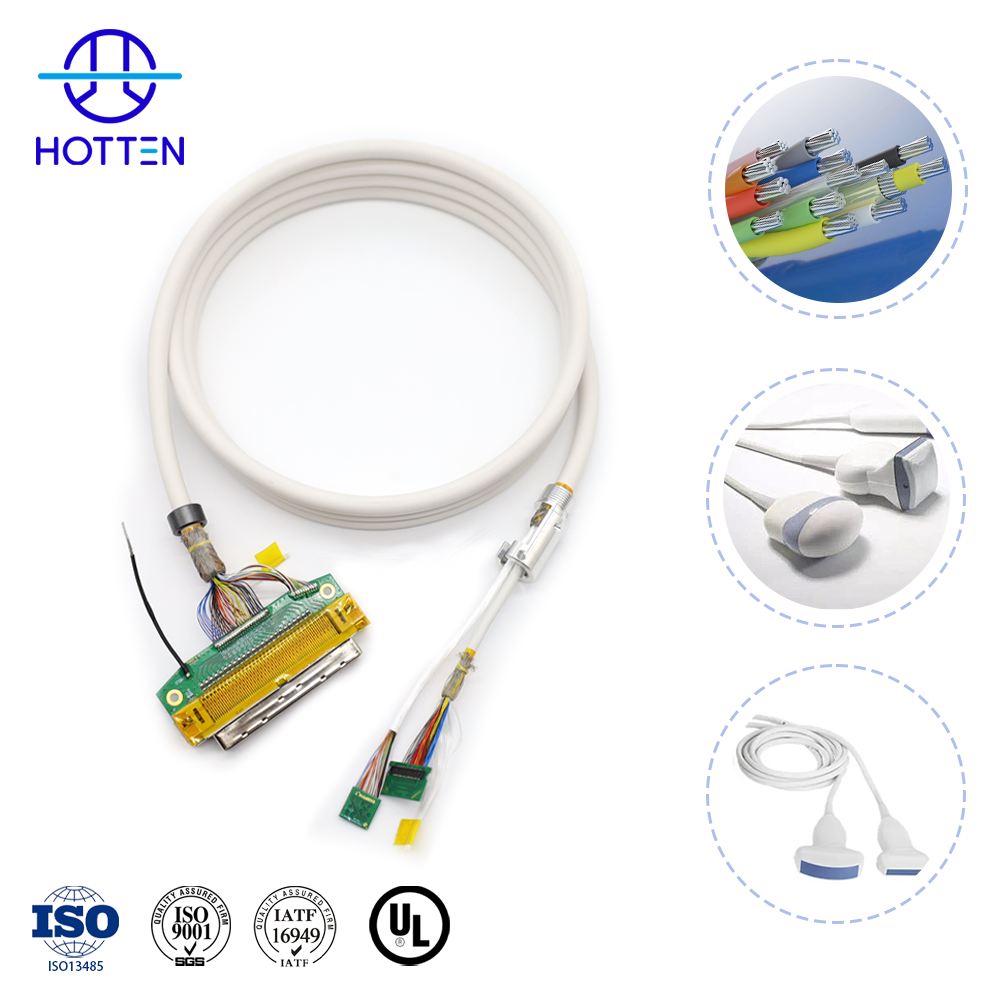
The appropriate insulation material for a medical cable assembly depends on the device's sterilization method, flexibility requirements, electrical performance, mechanical environment, service life, and production requirements. PFA, FEP, silicone, PVC, and PE each provide different combinations of thermal, chemical, mechanical, and electrical properties, so no single material is suitable for every medical application.
If the cable must withstand repeated high-temperature sterilization while maintaining electrical stability → evaluate fluoropolymer insulation such as PFA or FEP → then verify flexibility, termination compatibility, and the actual sterilization process required by the device.
If repeated bending, soft handling, and operator comfort are the dominant requirements → evaluate medical-grade silicone → then verify its compatibility with the intended sterilization and environmental conditions.
If the cable is intended for a disposable or cost-sensitive medical application → evaluate medical-grade PVC or other application-appropriate materials → then confirm the required safety, environmental, and performance specifications.
For high-density ultrasound applications, insulation selection should also be evaluated together with capacitance, impedance, cable dimensions, and signal integrity. See How to Select Micro Coaxial Cable for Ultrasound Probe Applications and Why Low Capacitance Is Critical in Ultrasound Probe Cable Design.
For additional information about material selection in high-end medical imaging cables, see Material Selection Logic: Why High-End 4K Medical Imaging Systems Prefer Medical-Grade Silicone Over TPU or PVC.
For customized medical cable assemblies, see HOTTEN's Medical Cable Assembly and Ultra Fine Medical Cable solutions.
The fundamental distinction between PVC and fluoropolymers such as FEP and PFA lies in atomic bond energy. The carbon-fluorine (C-F) bond is among the strongest chemical bonds in organic chemistry, providing chemical inertness and thermal stability that hydrocarbon-based polymers cannot match.
Perfluoroalkoxy alkane (PFA) and fluorinated ethylene propylene (FEP) are considered the gold standard for sterilizable medical cables.
PFA can withstand continuous operating temperatures up to 260°C, while FEP is typically rated to 200°C. This allows both materials to survive repeated autoclave sterilization cycles, commonly ranging from 121°C to 134°C, without thermal degradation.
These fluoropolymers resist aggressive hospital disinfectants, including glutaraldehyde and peracetic acid, which commonly induce environmental stress cracking in lower-grade plastics.
Polyvinyl chloride (PVC) remains one of the most widely used jacket materials for disposable or short-life medical cables.
PVC begins softening at approximately 60°C–85°C and cannot tolerate steam sterilization.
PVC relies on phthalates or other plasticizers to achieve flexibility. Over time, these additives migrate out of the material, leading to embrittlement and potential biocompatibility concerns.
Although PE exhibits excellent dielectric properties, its relatively low melting point and susceptibility to oxidation-induced degradation make it unsuitable for high-temperature or high-flex surgical applications.
For ultrasound cable assemblies and high-speed mapping catheters, dielectric constant and dissipation factor are critical parameters. Signal attenuation and phase stability depend heavily on the insulation material’s ability to minimize energy loss.
Fluoropolymers offer some of the lowest dielectric constants among extrudable polymers:
Typical dielectric constant (Dk) ≈ 2.1.
This low value enables thinner insulation walls while maintaining controlled impedance, a critical advantage for miniaturized invasive cables.
Depending on fillers and formulation, dielectric constant ranges from 3.0 to 8.0.
Higher dielectric values increase capacitive coupling and signal distortion in high-frequency applications.
In ultrasound transducers, cables must transmit low-voltage signals from piezoelectric elements to the processing unit. High-capacitance cables — typically PVC or silicone-based constructions — can introduce signal leakage, reducing signal-to-noise ratio (SNR) and degrading image resolution.
For this reason, engineers frequently specify PFA-insulated medical cables due to their stable capacitance characteristics across wide frequency ranges.
The mechanical requirements of surgical robotic cables differ dramatically from those of stationary patient monitoring leads. Critical considerations include tensile strength, flexural modulus, abrasion resistance, and material memory.
Silicone remains unmatched in softness and tactile flexibility. Unlike fluoropolymers, silicone exhibits minimal “plastic memory,” making it ideal for handheld surgical tools where surgeons require near-zero cable resistance.
Silicone has relatively poor tear resistance and a high coefficient of friction. In robotic arm applications, it often requires a parylene coating to improve surface lubricity and wear resistance.
Dynamic applications such as C-arm imaging systems and robotic joints place significant demands on flex fatigue life.
Offers exceptional flex life and stress-crack resistance. While stiffer than silicone, it provides substantially superior abrasion resistance.
Initially flexible, but prone to fatigue cracking under repeated stress, particularly after plasticizer migration occurs.
Medical device engineers must design interconnect systems according to the intended sterilization method. The table below summarizes material survivability under common sterilization processes.
Material |
Autoclave |
Ethylene Oxide (ETO) |
Gamma Radiation |
Plasma (STERRAD) |
PVC |
Fails (softens/melts) |
Excellent |
Fair (yellowing) |
Poor |
PE |
Fails |
Excellent |
Excellent |
Good |
Silicone |
Excellent |
Excellent |
Poor (embrittlement) |
Good |
FEP |
Excellent |
Excellent |
Poor (degradation) |
Excellent |
PFA |
Excellent |
Excellent |
Poor (degradation) |
Excellent |
Fluoropolymers are highly sensitive to long-term exposure to ionizing radiation, particularly high-dose gamma sterilization. Molecular chain scission may occur, resulting in material degradation.
If a device is intended for disposable gamma sterilization, PE or specially formulated radiation-stabilized PVC grades are often preferred.
Insulation material selection should begin with the actual operating conditions of the medical device. The material should be evaluated as part of the complete cable assembly because insulation affects not only temperature and chemical resistance, but also flexibility, capacitance, cable dimensions, mechanical handling, and long-term reliability.
If the cable is designed for repeated sterilization → identify the actual sterilization process first → then evaluate the thermal, chemical, and aging behavior of the insulation material under that process.
Autoclave, ethylene oxide (ETO), plasma-based sterilization, and radiation-based processes impose different material requirements. The selected material should therefore be validated against the actual sterilization cycle rather than judged only from a general material datasheet.
For a broader discussion of medical cable sterilization requirements, see How Custom Cable Assemblies Withstand Medical Sterilization.
If the cable carries high-frequency or sensitive signals → evaluate dielectric characteristics, capacitance, impedance, and attenuation together with the insulation structure → then validate the finished cable assembly.
If the cable is repeatedly bent or manipulated by the operator → evaluate insulation stiffness, jacket construction, bend radius, flex life, and strain relief together → then verify signal performance after mechanical testing.
For ultrasound applications, low capacitance and controlled electrical characteristics are especially relevant. See Why Low Capacitance Is Critical in Ultrasound Probe Cable Design.
For ultra-fine cable construction and dielectric-related design trade-offs, see Comparison of Three High-Frequency Cable Foaming Technologies.
Different medical products can require different material priorities.
If the application is a high-channel-count ultrasound probe → prioritize electrical stability, low capacitance, compact construction, flexibility, and long-term handling performance → then evaluate PFA, FEP, or other application-appropriate insulation structures.
See HOTTEN's Ultrasound Probe Cable solutions.
If the application is a surgical robotic or highly mobile cable assembly → prioritize flex life, abrasion resistance, sterilization compatibility, mechanical protection, and operator handling → then select the insulation and outer-jacket combination according to the actual movement profile.
If the application is a disposable patient-monitoring cable → prioritize application-appropriate biocompatibility, cost, manufacturability, and required electrical performance → then validate the selected medical-grade material for the intended use.
For broader medical applications, see HOTTEN's Medical Equipment solutions.
The insulation layer and outer jacket can have different functions.
If the inner insulation is optimized for electrical performance → evaluate the outer jacket separately for flexibility, abrasion resistance, handling, and environmental protection → then confirm that the combined structure meets the complete cable requirements.
For example, an inner fluoropolymer structure may be selected for electrical or thermal performance while a different outer-jacket material is considered for flexibility and handling.
HOTTEN currently supports medical cable constructions using materials including FEP, PFA, PVC, TPU, TPE, and silicone depending on the application requirements. See the Medical Cable Assembly product range for examples of customized medical cable structures.
The engineering decision should consider the following trade-offs:
| Requirement | PFA / FEP | Silicone | PVC / PE |
|---|---|---|---|
| High-Temperature Performance | Strong | Strong | Application-dependent |
| Flexibility / Soft Handling | Application-dependent | Strong | Application-dependent |
| Chemical Resistance | Strong | Strong | Application-dependent |
| Electrical Performance | Strong | Application-dependent | Application-dependent |
| Repeated Sterilization | Application-dependent | Application-dependent | Application-dependent |
| Material Cost | Higher | Medium / Higher | Lower |
| Typical Use Direction | High-performance signal / medical systems | Flexible medical assemblies | Disposable / cost-sensitive applications |
This table should be treated as an engineering comparison framework rather than a universal ranking. The final material choice depends on the device architecture, sterilization method, mechanical requirements, electrical targets, applicable material grade, and validation requirements.
Before approving an insulation material for a custom medical cable assembly, the engineering and procurement teams should confirm:
| Requirement | Parameters to Confirm |
|---|---|
| Application | Ultrasound, endoscope, surgical robot, ECG, etc. |
| Sterilization | Autoclave, ETO, plasma, radiation, chemical disinfection |
| Electrical | Capacitance, impedance, attenuation, dielectric requirements |
| Mechanical | Bend radius, flex cycles, torsion, abrasion |
| Dimensions | Insulation thickness, cable OD, routing space |
| Temperature | Operating and sterilization temperature |
| Chemicals | Cleaning and disinfection exposure |
| Material | Grade, compliance, biocompatibility requirements |
| Interface | Connector, termination, stripping requirements |
| Validation | Electrical, mechanical, environmental testing |
| Production | Prototype quantity, annual volume, process consistency |
The overall process can be summarized as:
Medical application → sterilization method → electrical requirements → mechanical requirements → insulation / jacket material → cable construction → prototype → validation → production
If the primary constraint is sterilization → select the material according to the actual sterilization process → then verify electrical and mechanical performance.
If the primary constraint is flexibility → select the insulation and jacket structure for the required movement profile → then verify electrical stability and long-term durability.
If the primary constraint is signal integrity → select the dielectric and cable structure according to capacitance, impedance, attenuation, and frequency requirements → then validate the complete cable assembly.
If cost is the primary constraint → first confirm the minimum technical and regulatory requirements → then evaluate whether a lower-cost material can meet the actual application specification.
For customized medical interconnects, see HOTTEN's Medical Cable Assembly.
For high-density ultrasound applications, see Ultrasound Probe Cable.
For ultra-fine medical cable construction, see Ultra Fine Medical Cable.
Ultra-low capacitance, high-density signal paths, high flexibility.
PFA-insulated coaxial cables. The low dielectric constant allows the use of 40–42 AWG center conductors required in high-channel-count probes without significant signal loss.
High current capacity, abrasion resistance, autoclave compatibility.
PFA-insulated conductors combined with silicone outer jackets. PFA provides thermal protection for power lines, while silicone delivers the flexibility and handling characteristics required by surgical staff.
Low cost, biocompatibility, single-use design.
PVC remains the logical choice in this scenario. Its low cost and ease of coloration make it suitable for disposable patient monitoring systems.
Engineering is fundamentally the art of compromise. No insulation material is universally ideal.
FEP and PFA are significantly more expensive than PVC. Their high melt temperatures also require specialized extrusion equipment, including corrosion-resistant alloy-lined barrels, increasing manufacturing overhead.
Silicone is typically a thermoset material requiring vulcanization, making production slower than thermoplastic extrusion processes used for PVC or fluoropolymers.
Although PFA enables smaller outer diameters due to superior electrical properties, it is inherently stiffer. In large-channel-count ultrasound cables, cumulative stiffness can negatively affect cable maneuverability.
For all patient-contacting materials, compliance with ISO 10993 is mandatory.
Naturally biocompatible due to their chemical inertness and commonly compliant with USP Class VI requirements.
Platinum-cured silicone remains the gold standard for long-term implantation and skin-contact applications.
Requires strict screening for DEHP and other restricted phthalates under REACH and RoHS regulations.
When specifying insulation materials for medical interconnect systems, engineers should adopt a “design-for-worst-case-environment” approach.
Prioritize low-dielectric materials such as PFA to preserve signal integrity and optimize SNR performance.
Eliminate PVC and PE from consideration. Use PFA for internal insulation and silicone or specialty TPU for external jackets.
Utilize high-strand-count copper conductors with PFA insulation to balance outer diameter constraints and flex life requirements.
Use medical-grade, phthalate-free PVC to minimize cost while maintaining essential biocompatibility standards.
Answer:
PFA and FEP are widely used in medical cable assemblies because they provide excellent thermal stability, chemical resistance, low dielectric properties and compatibility with sterilization processes. These characteristics make them suitable for applications such as ultrasound probes, surgical devices and high-frequency medical systems.
Answer:
Silicone and PFA serve different purposes. Silicone provides superior flexibility, softness and handling comfort, making it suitable for handheld surgical devices. PFA provides better electrical stability, chemical resistance and high-temperature performance for demanding signal transmission applications.
Answer:
PVC is cost-effective but has limitations in high-temperature sterilization, long-term flexibility and chemical resistance. For reusable medical devices requiring repeated sterilization cycles, fluoropolymers or medical-grade silicone are usually preferred.
Answer:
Insulation materials influence capacitance, dielectric loss and signal transmission quality. Low dielectric materials such as PFA help reduce capacitive effects and maintain signal integrity in high-channel ultrasound probe cables.
Answer:
For repeated autoclave sterilization, materials such as PFA, FEP and medical-grade silicone are commonly selected due to their thermal stability and chemical resistance.
The transition from low-cost commodity materials such as PVC and PE toward high-performance fluoropolymers and silicone is rarely driven by preference alone. Instead, it is a technical necessity dictated by the physical demands of modern medical devices.
As medical systems become smaller, more complex, and subject to increasingly aggressive sterilization requirements, the tolerance for material failure continues to shrink. By understanding the nuanced dielectric, thermal, and mechanical characteristics of FEP, PFA, and medical-grade silicone, engineers can design cable assemblies capable of delivering the reliability demanded by today’s surgical and diagnostic environments.
For R&D teams, the higher initial BOM cost associated with fluoropolymer cable systems is often offset by lower field failure rates, extended product lifecycle performance, and superior signal integrity in critical clinical applications.
 Hot News
2026-09-17
2026-09-04
2025-12-17
2025-12-11
2025-12-05