 EN
EN
Quick Links

Home > News > Company news
In the development of medical devices and advanced robotics, off-the-shelf “standard cables” often mean compromise. Engineering teams frequently find themselves forced to balance signal integrity, mechanical durability, and limited installation space—as if choosing between mutually exclusive options.
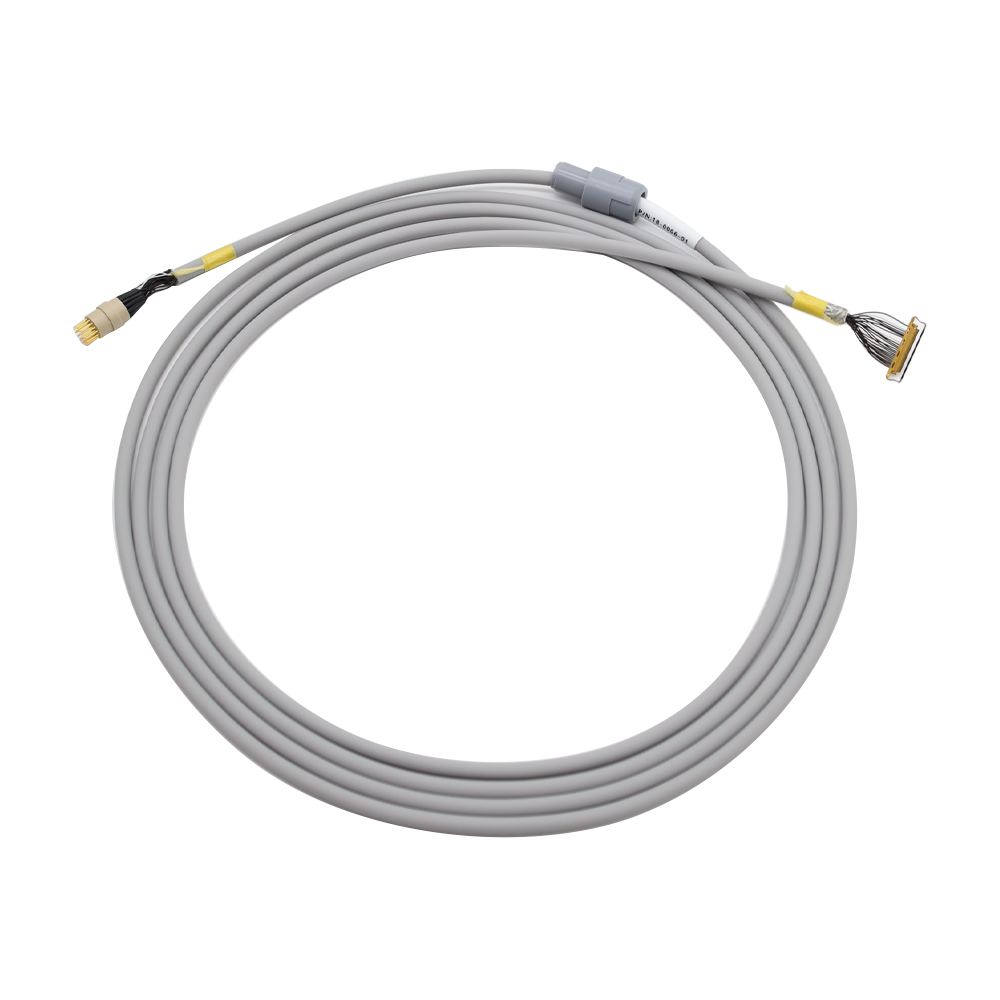
At Hotten, we believe cable assemblies should never be a bottleneck to innovation. Instead, they should act as an invisible enabler. That’s why our core value has evolved beyond manufacturing—we focus on delivering application-driven customized solutions.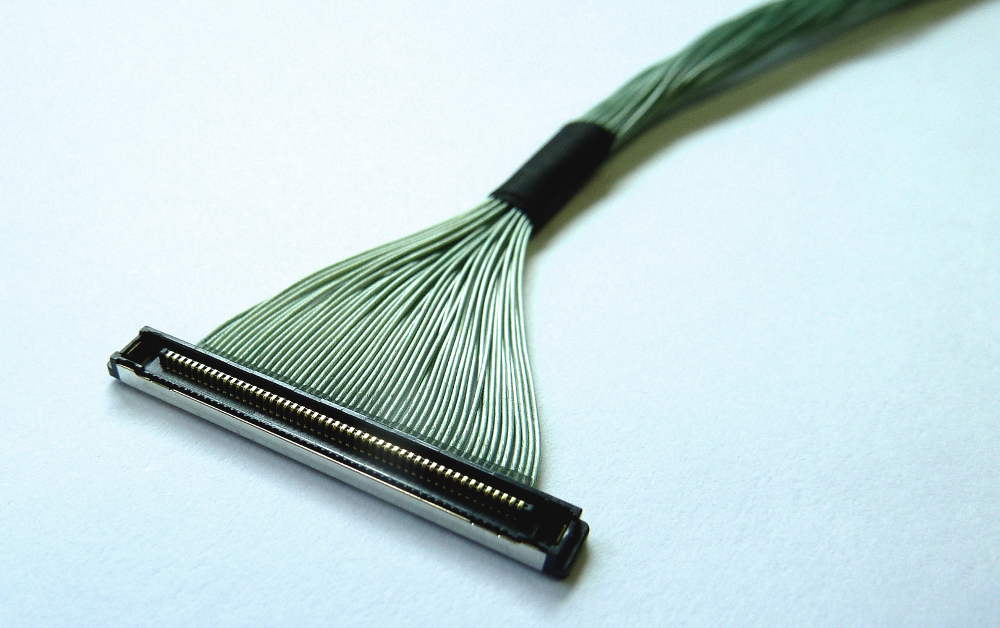
In the field of micro-coaxial cables, there is a common misconception: pursuing ultra-fine wire gauges (such as 46AWG or 48AWG) is often seen as a sign of advanced technology.
However, true engineering excellence lies in optimal selection, not extreme specifications.
Every application has its own “sweet spot”.
For example, in a recent EEG (electroencephalogram) system project, the customer initially preferred an ultra-fine cable solution. However, after analyzing the real clinical environment—considering frequent handling by medical staff, required pull strength, and long-term durability in hospital settings—we recommended a 32AWG micro-coaxial solution.
Choosing 32AWG allowed us to maintain excellent signal clarity while ensuring sufficient mechanical strength and soldering reliability.
This decision was not limited by manufacturing capability—it was driven by a deep understanding of how the system performs in real-world hospital conditions.
When customers approach Hotten with a new project, we don’t just ask for a specification sheet—we explore the actual usage scenario.
Is the cable fixed inside a housing, or subjected to constant movement in joints?
Does it need to withstand chemical disinfection or millions of bending cycles?
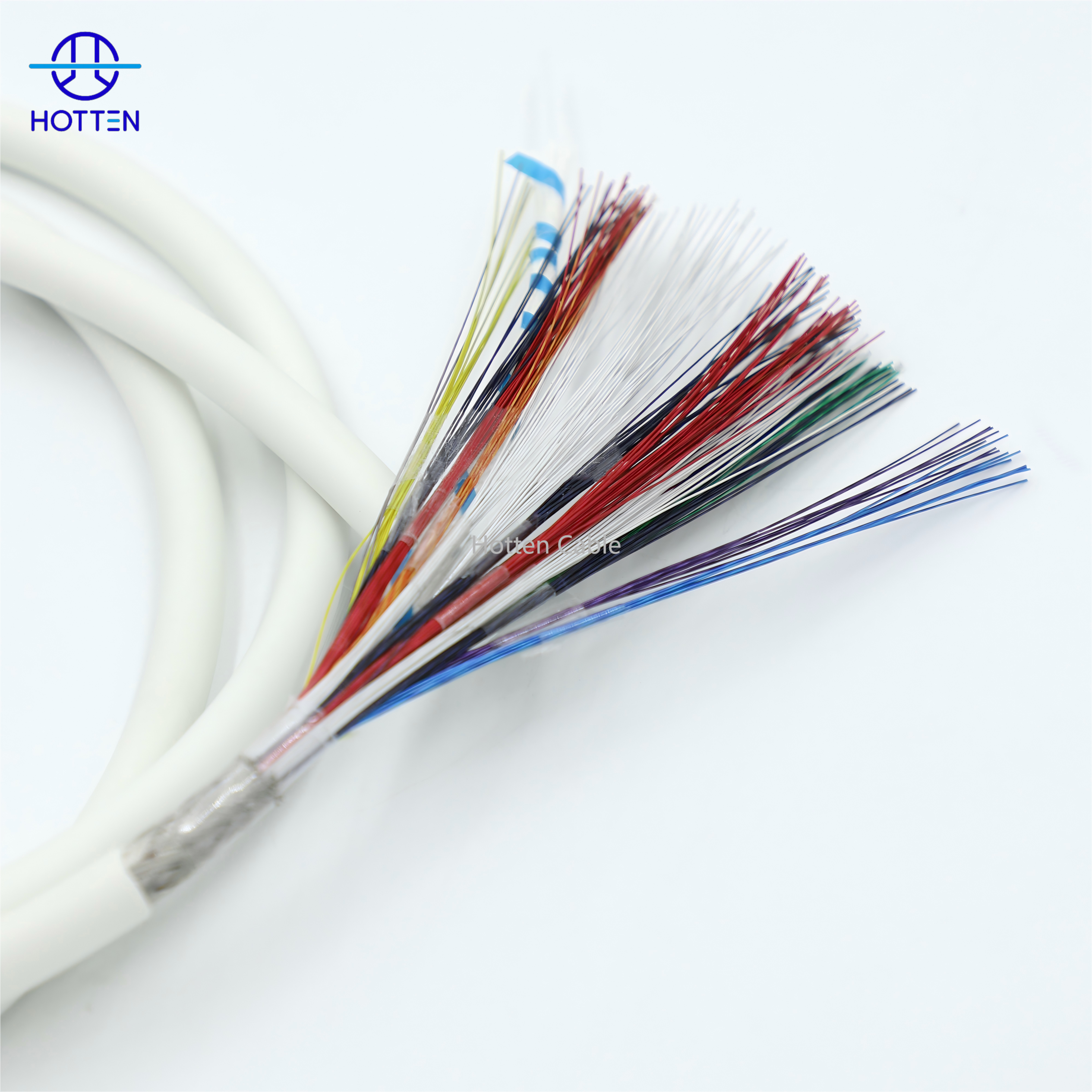
We evaluate the sensitivity and type of signals being transmitted—whether it’s microvolt-level neural signals or high-bandwidth 4K video data—and accordingly define shielding density and dielectric performance.
Our engineers act as technical consultants. If a requested material increases cost unnecessarily or reduces fatigue life, we proactively recommend alternatives that better align with the product’s lifecycle and real-world use.
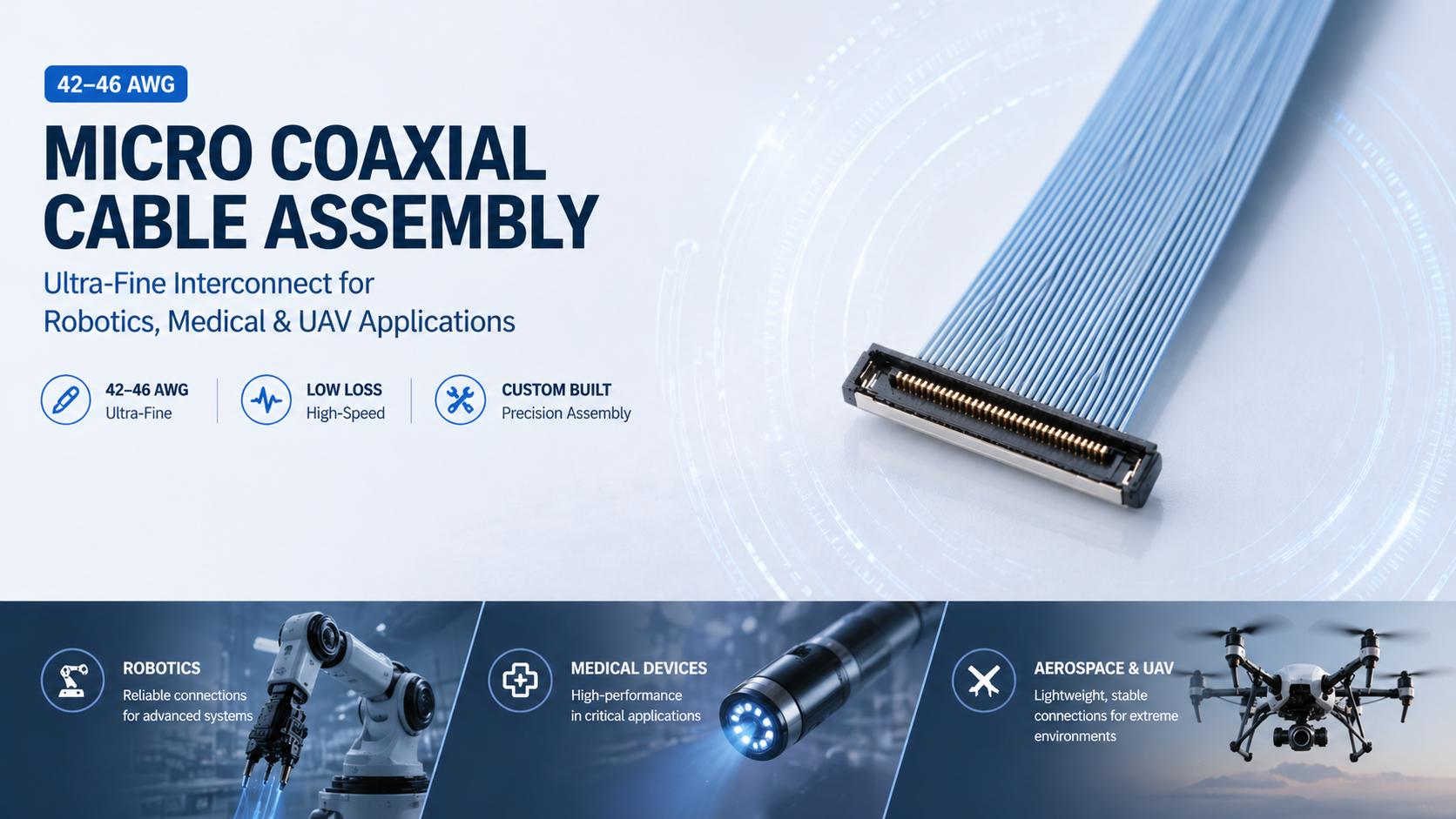
Hotten’s customization extends across the entire cable assembly structure:
Precisely selected based on electrical load and physical constraints
Customized braiding density or wrapping structure to address specific EMI/RFI challenges
Medical-grade TPU, FEP, or silicone chosen based on biocompatibility, durability, and tactile requirements
Solving the “last mile” challenge—ensuring seamless compatibility with micro connectors or PCB pads
What we deliver is not just cable—it’s confidence, validated.
From impedance consistency testing to millions of dynamic bending cycles in laboratory conditions, every customized solution undergoes rigorous validation before entering your production line.
In cutting-edge fields such as:
· Brain-computer interfaces (BCI)
· Medical endoscopy
· Humanoid robotics
standard products are often insufficient to meet real-world challenges.
You define the application scenario.
We define the cable solution.
| Aspect | Standard Cable | Custom Cable Assembly |
|---|---|---|
| Design approach | General purpose | Application specific |
| Size optimization | Limited | Fully optimized |
| Signal performance | Standard | Tuned for requirements |
| Flexibility | Fixed structure | Customized |
| Connector integration | Standard options | OEM specific |
| Lifecycle reliability | General | Application validated |
Application-driven cable design becomes more effective when the OEM provides the supplier with the actual operating conditions rather than only requesting a cable size or connector. The engineering team can then evaluate the cable as a complete assembly and identify the necessary trade-offs before prototype development.
If the cable is installed inside a fixed device → define available routing space, temperature, environmental exposure, connector interface, and service life → then determine the required cable structure.
If the cable moves continuously → define bend radius, movement range, flex frequency, torsion, expected cycle count, and strain-relief conditions → then evaluate the mechanical construction together with the electrical requirements.
For dynamic applications such as robotic systems, see HOTTEN's Robotics Wire Harness solutions.
If the cable carries high-speed video, RF, sensor, or other sensitive signals → provide operating frequency or data-rate requirements, impedance, attenuation, cable length, crosstalk, and shielding requirements → then select the conductor, dielectric, and shielding structure.
For high-frequency and impedance-related design considerations, see The Importance of Impedance Consistency in Ultra-Fine AWG Micro Coaxial Cables.
For compact high-speed signal connections, see HOTTEN's Micro Coaxial Cable Assembly solutions.
If the cable must fit through a confined routing path → specify maximum cable OD, minimum bend radius, available space, connector dimensions, and branch locations → then optimize conductor, insulation, shielding, and jacket structure around these constraints.
Choosing the smallest possible cable is not necessarily the correct approach. The complete assembly must remain manufacturable, routable, and mechanically reliable.
For a real example of ultra-fine cable structural optimization, see How We Optimized 46AWG Micro Coaxial Cable for Superior Flexibility.
If the cable connects to a miniature connector, PCB, sensor, camera module, or other precision interface → provide the connector manufacturer, part number, pitch, pinout, termination method, and available interface space before finalizing the cable construction → then develop the cable and termination as one assembly.
The connector should not be treated as a final-stage detail because connector geometry can influence cable OD, conductor spacing, shielding termination, strain relief, and the practical assembly process.
For high-density robot vision connections, see 50-Pin Micro-Coaxial Cable Assembly for Humanoid Robot Vision Systems.
If the cable is used in a medical environment → define sterilization, cleaning, temperature, chemical exposure, flexibility, and applicable material requirements → then select the insulation and jacket structure.
For medical material-selection considerations, see Engineering Analysis: Insulation Material Selection for High-Reliability Medical Interconnect Systems.
For broader medical applications, see HOTTEN's Medical Equipment solutions.
Before starting a prototype, the engineering or procurement team should provide as much of the following information as available:
| Requirement | Information to Provide |
|---|---|
| Application | Device, subsystem, operating environment |
| Signal | Signal type, frequency, data rate |
| Electrical | Impedance, attenuation, capacitance, crosstalk |
| Conductor | AWG, material, core count |
| Dimensions | Maximum OD, routing space, cable length |
| Mechanical | Bend radius, flex cycles, torsion, movement |
| Shielding | Individual / overall shielding, grounding |
| Materials | Insulation, jacket, environmental requirements |
| Connector | Manufacturer, part number, pitch, pinout |
| Termination | Soldering, crimping, PCB or sensor interface |
| Branching | Branch count, branch length, branch locations |
| Testing | Electrical, mechanical, dimensional, environmental |
| Production | Prototype quantity, annual volume, lead-time expectations |
Providing drawings, samples, connector part numbers, pinouts, existing cable specifications, and routing information can reduce unnecessary iterations during prototype development.
The appropriate cable architecture changes according to the final product.
If the application is medical imaging → prioritize signal integrity, compact dimensions, flexibility, shielding, sterilization compatibility, and termination reliability → then select the appropriate medical cable construction.
See Medical Cable Assembly and HOTTEN's Medical Equipment solutions.
If the application is UAV, gimbal, or robotics → prioritize weight, compact routing, dynamic flex performance, shielding, and high-speed signal requirements → then select the cable structure according to the routing zone.
See Gimbal Camera Wire Harness and UAV & Robotics.
If the application is AI equipment or humanoid robotics → prioritize high-density signal routing, compact dimensions, connector integration, shielding, and mechanical reliability → then evaluate a customized micro-coaxial or wire-harness architecture.
See AI & Smart Electronics and Robotics Wire Harness.
If the application is a high-frequency or RF system → prioritize impedance, attenuation, shielding, connector performance, cable length, and routing conditions → then validate the complete transmission path.
See High Frequency & RF Systems.
A practical application-driven cable development process can be summarized as:
Application scenario → operating environment → signal requirements → mechanical constraints → dimensional constraints → material → shielding → connector → cable architecture → prototype → validation → mass production
The key principle is:
Do not start with “What standard cable do we have?” Start with “What must the cable do inside the final product?”
The cable architecture should then be selected and validated according to those real-world requirements.
For customized cable and harness development from prototype to production, see HOTTEN's Cable Assembly & Wire Harness solutions.
Standard cables are designed for general applications. Custom cable assemblies are optimized for specific requirements such as space limitations, signal performance, mechanical movement, environmental conditions and product lifecycle.
Important design factors include:
Every application has different operating conditions. Understanding how a cable is installed, moved and used helps engineers select the right materials, structure and specifications instead of simply choosing the smallest or cheapest cable.
No. A thinner cable may improve space utilization but can reduce mechanical strength, durability or manufacturing reliability. The optimal design balances size, electrical performance and lifecycle requirements.
Application-driven cable solutions are widely used in:
Yes. HOTTEN supports OEM customers from early design analysis and prototype development to testing and mass production.
 Hot News
2026-09-17
2026-09-04
2025-12-17
2025-12-11
2025-12-05