 EN
EN
Quick Links

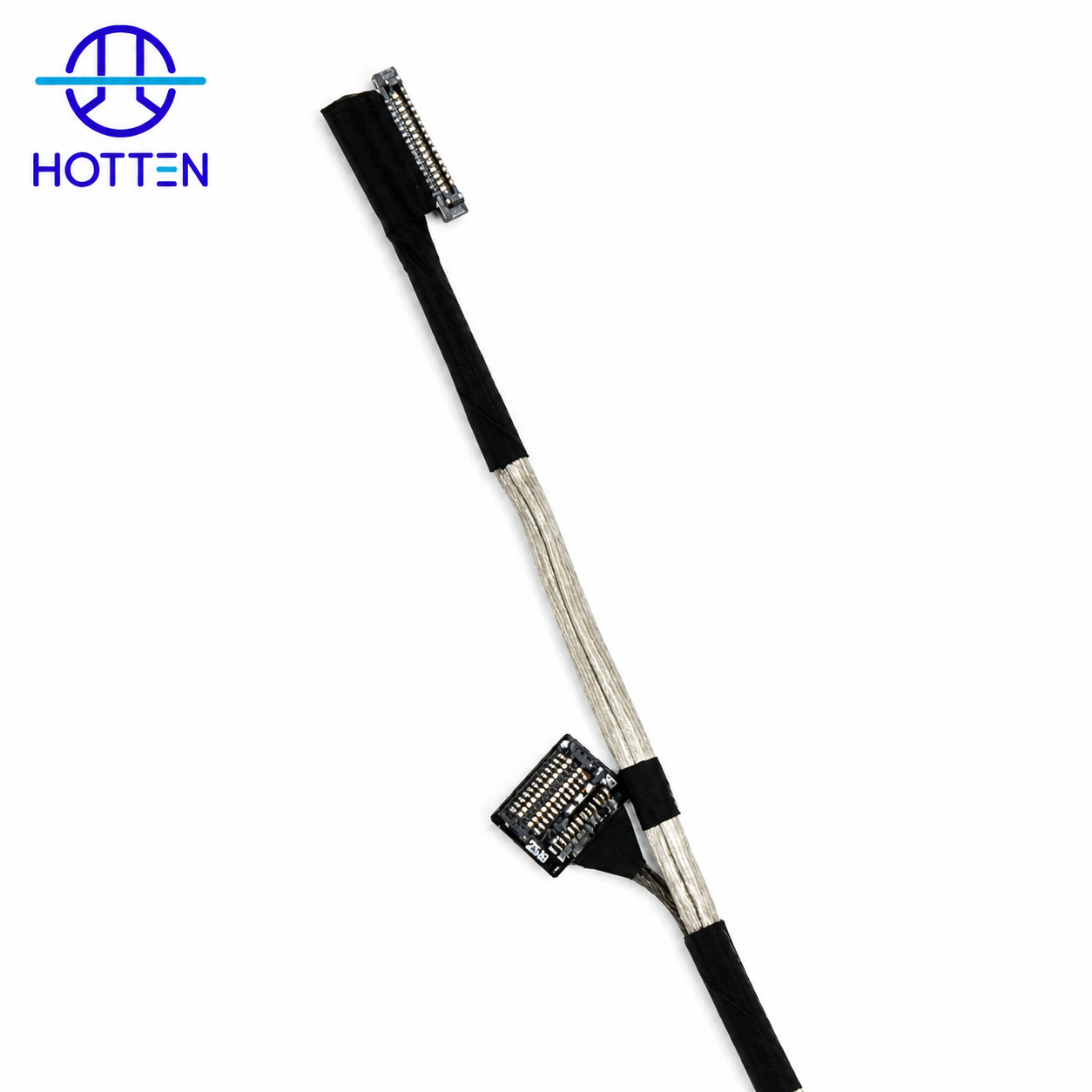
The performance of an electronic device relies significantly on the signal integrity of its components. Whether it is medical imaging, industrial automation or consumer electronics, maintaining a clear and stable signal transmission is crucial for its function and user experience. LVDS cables are known for their excellent signal integrity due to its precision manufacturing. LVDS cable harnesses are found in a plethora of modern displays and data solutions and Hotten, an innovation and manufacturing enterprise, produces LVDS wire harnesses that preserve signal integrity even under harsh conditions.
LVDS signal integrity rests on the technology of differential signaling. Single-ended transmission, where signals are referenced to system ground, is more prone to noise like ground bounce or electromagnetic interference than differential pair transmission. This cable technology works by having one signal transmitted at normal voltage level and the complementary at opposite voltage level through two conductors in the cable harness. Noise applied to both wires induces identical signals in each conductor. Therefore, the signal is recovered by looking at the difference between the voltages on the two wires. This characteristic makes LVDS suitable for high noise environments found in industrial floor space, medical imaging and consumer electronics. With our precision constructed differential pairs, Hotten LVDS wire harnesses ensure impedance is consistent along the entire cable length.
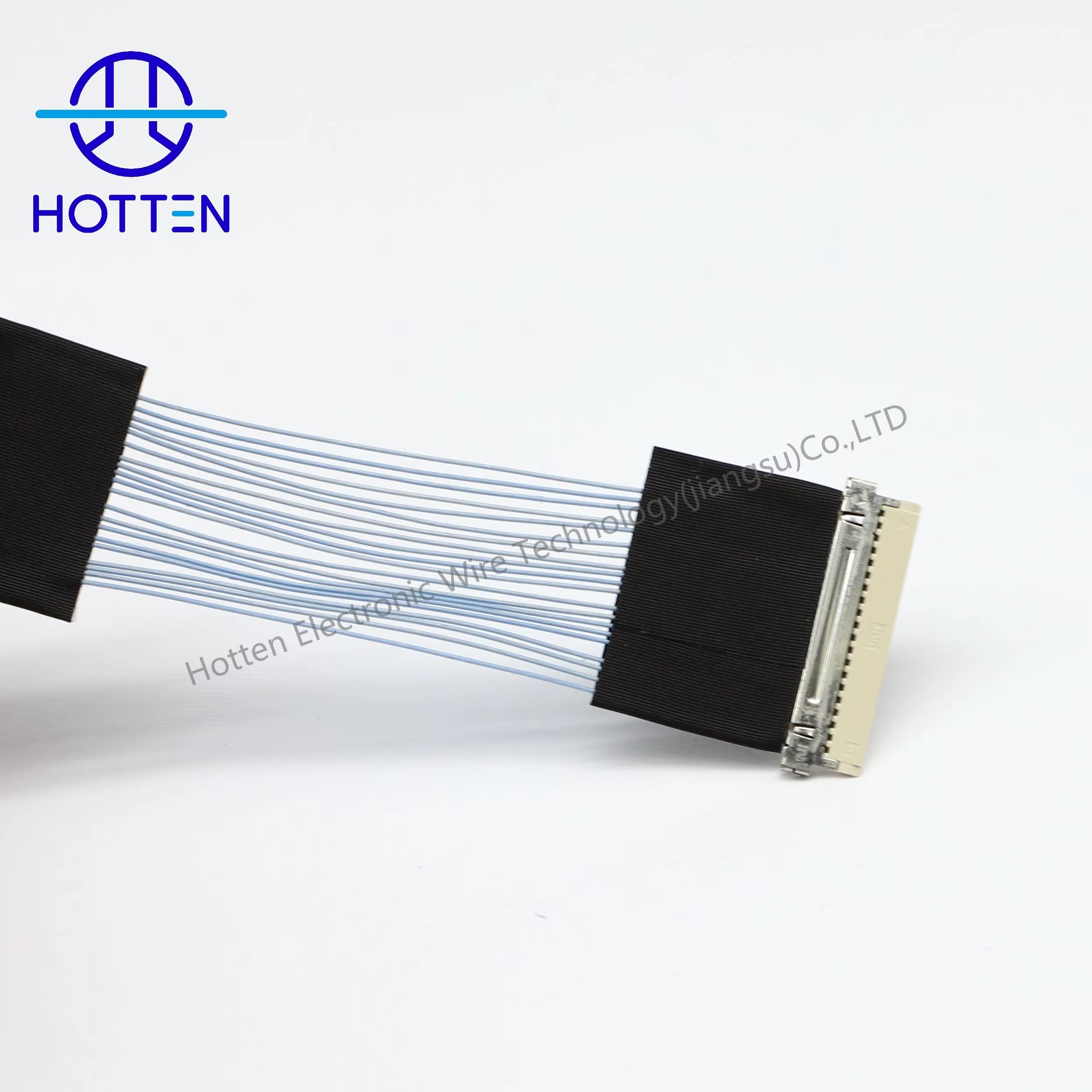
Signal integrity in high-speed systems is often limited by mismatched impedances between the cable and transmission equipment. Whenever the characteristic impedance of the cable differs from the impedance of transmitter and receiver, signal reflections occur and signal integrity is compromised. Precision construction based on materials, twist rate, dielectric thickness, and the manufacturing process is essential to impedance control and this is what Hotten R&D specializes in. Hotten engineers design every cable precisely, with adequate dielectric material and closely controlled conductor placement to achieve the specified characteristic impedance, which is typically 100 ohms for LVDS. Our 10,000 sq. ft. facility is equipped with over 40 units of production machinery, allowing us to deliver consistently high quality, automatically manufactured LVDS wire harnesses that conform to all electrical specifications.
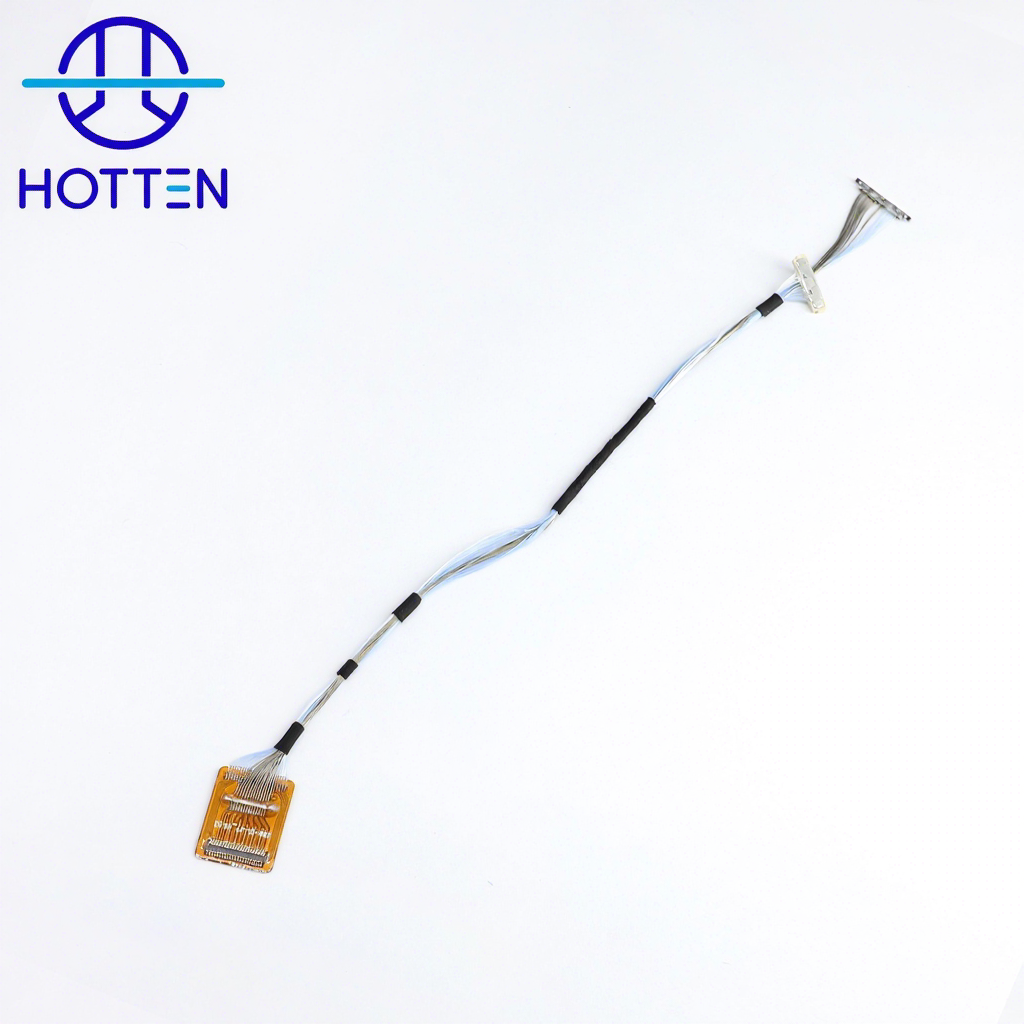
Differential signaling inherently exhibits high noise rejection capability. However, where the noise is exceptionally severe (e.g. on an industrial floor or within medical device settings) additional shielding will be beneficial. Generally power supplies and motors are primary sources of EMI in consumer products. Hotten offers various constructions for LVDS cable harnesses: they are available with a variety of shield styles to best suit the application including foil shields (excellent broadband EMI rejection), braided shields (superior protection from mechanical stress), and a combination of foil and braid shields (optimal signal protection). For applications demanding flexible connections such as robotics or gimbal cameras, Hotten engineers are adept at developing shield designs that provide both high flexibility and exceptional electrical performance.
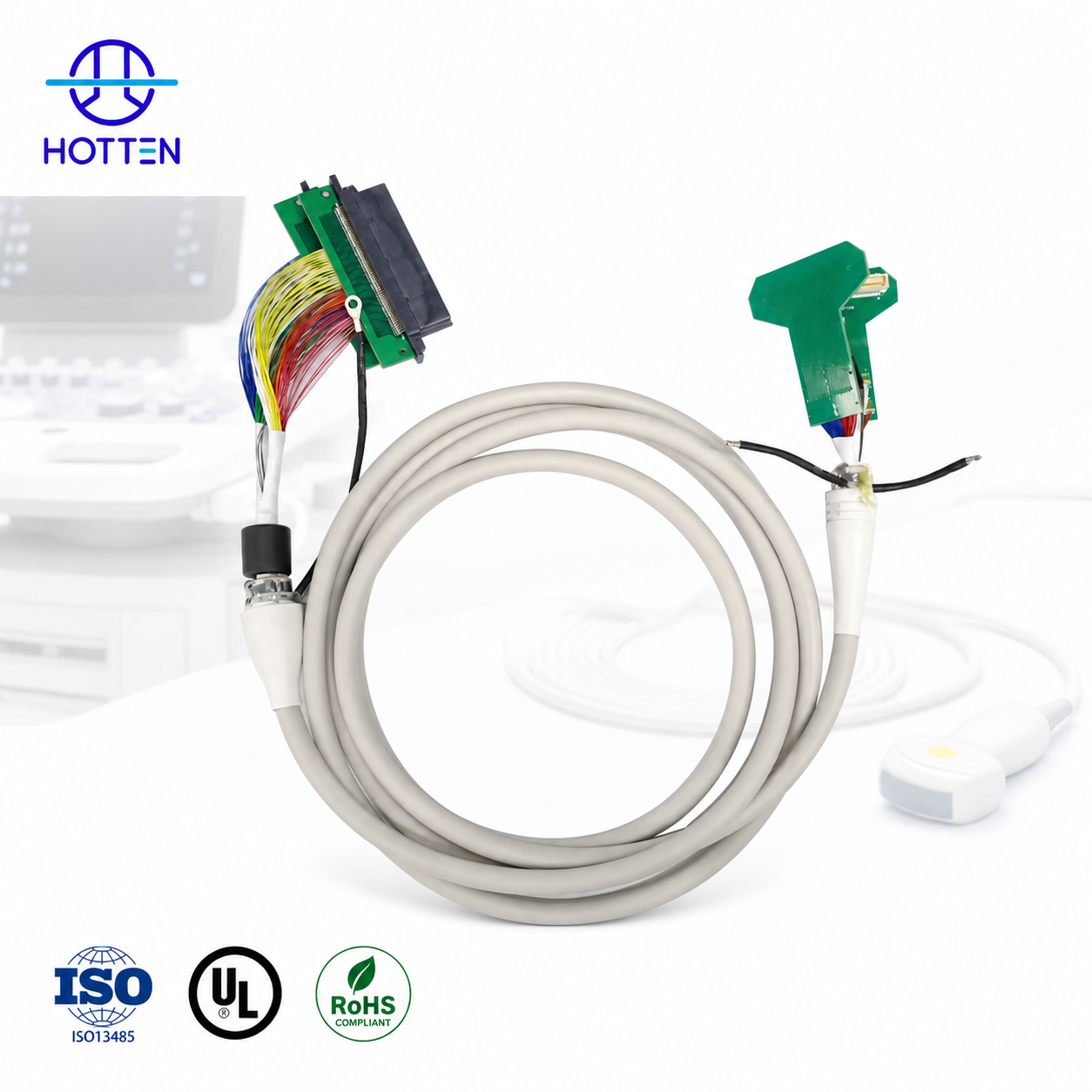
Another issue that degrades signal integrity is signal attenuation at different cable lengths. LVDS cables offer extended reach compared to other interfaces. However, specific design efforts are needed to ensure that signal integrity does not suffer with cable length. Signal attenuation at high frequencies depends heavily on conductor size, material, and twist rate. Hotten ensures each LVDS cable it produces is designed specifically for the application needs to achieve the desired balance of range and flexibility with data rate. Our 10,000 sq. ft. facility, which is capable of producing over 144 million meters of all types of wire and cable annually, can provide for the specific requirements of a wide range of clients from tightly integrated VR headsets, to the complex probe needed for a medical ultrasound machine and any cart or peripherals.
Signal integrity is irrelevant if it cannot be maintained throughout the lifespan of the product. Connection strength, fatigue on the conductors and the slow degrading nature of insulation, all contribute to poor signal integrity in applications where failure can be critical. Hotten implements rigorous quality procedures during our entire manufacturing process, from materials selection to connector termination to testing, so that each unit delivered performs flawlessly. Every employee at Hotten is committed to responsible manufacturing, and every LVDS wire harness we manufacture is built for critical application needs. In medical devices, such as ultrasound probe cables, endoscopes or ICE catheters, performance directly impacts patient care and outcomes. In consumer or industrial products, reliable performance directly correlates with user satisfaction and product life.
| Factor | Impact on Performance |
|---|---|
| Impedance Control | Reduces signal reflection |
| Shielding Design | Minimizes EMI interference |
| Differential Pair Structure | Improves noise immunity |
| Cable Material | Reduces transmission loss |
| Connector Compatibility | Maintains stable connection |
Signal integrity determines whether high-speed data can be transmitted accurately without distortion, jitter or signal loss. Poor cable design may reduce display performance and system reliability.
A reliable LVDS cable maintains signal integrity through:
Common causes include:
LVDS systems require stable differential impedance to minimize signal reflection and maintain accurate high-speed transmission.
Yes. Customized LVDS cables can be optimized for cable length, connector configuration, shielding structure and mechanical requirements to improve overall system reliability.
LVDS cables are widely used in:
The difference between a properly working display and one that flickers, shows erroneous images, or fails entirely lies in the ability of the data cable to carry a stable signal-a function of signal integrity. LVDS cables manufactured with high quality and engineering precision can provide the required control over impedance, immunity to electrical noise and the mechanical robustness needed for all high performance systems. Hotten’s unique integration of R&D with precision manufacturing allows us to excel at producing LVDS cable harnesses for applications with demanding specifications. We continue to invest heavily in R&D to push our capabilities and help our clients reach the performance potential of their systems.
 Hot News
2026-09-17
2026-09-04
2025-12-17
2025-12-11
2025-12-05