 EN
EN
Quick Links

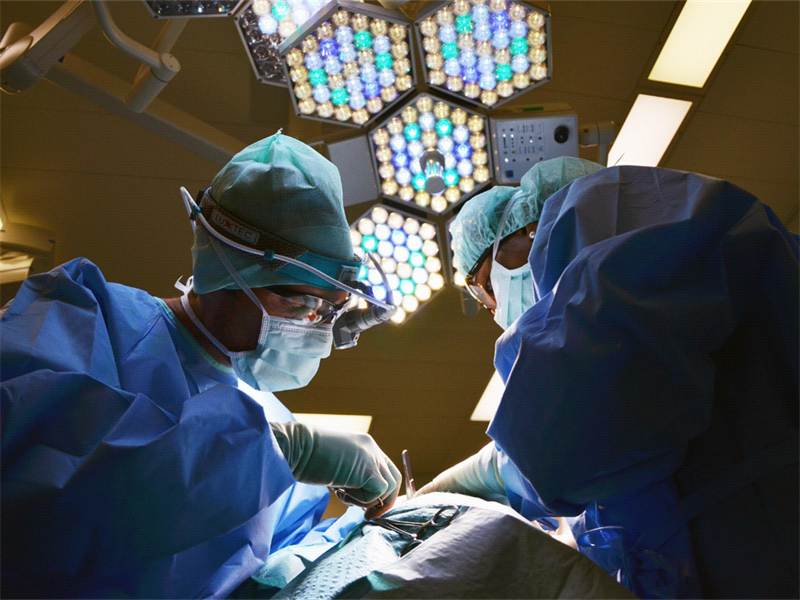
Modern ultrasound imaging equipment requires a cable assembly capable of carrying a large number of sensitive signals within a compact and flexible structure.
For an ultrasound probe, the cable is not simply a connection between the probe and the imaging system.
It is part of the signal transmission path and must simultaneously address:
◆ High-Density Signal Transmission
◆ Electrical Performance
◆ Shielding
◆ Compact Cable Construction
◆ Flexibility
◆ Mechanical Reliability
◆ Connector Integration
In this project, HOTTEN worked with a medical device manufacturer that required a customized cable solution for ultrasound imaging equipment.
The project focused on developing a high-density medical ultrasound cable assembly with micro coaxial cable technology, customized dimensions, connector configuration, and optimized shielding.
The customer required a high-performance cable solution for an ultrasound imaging system.
The cable needed to support stable high-frequency signal transmission while fitting within the limited internal space of the medical equipment.
The project therefore required a balance between:
Signal Integrity → Cable Density → Compact Structure → Flexibility → Long-Term Reliability
Medical Ultrasound · Diagnostic Imaging Equipment
Custom Medical Ultrasound Cable Assembly
The customer's ultrasound equipment required a cable assembly that could maintain reliable signal transmission while fitting within a compact medical device.
The main requirements were:
Ultrasound imaging systems depend on reliable transmission of sensitive signals between the probe and the imaging electronics.
The cable therefore needs to be designed with appropriate electrical characteristics and signal protection.
Ultrasound probes can require a large number of signal connections within a relatively small cable diameter.
This creates a direct engineering trade-off:
More Signal Channels → Higher Cable Density → Less Available Space
Micro coaxial cable structures provide one approach to achieving high-density signal transmission within a compact cable assembly.
The cable needs to fit within the physical constraints of the ultrasound system while maintaining the required electrical and mechanical performance.
Medical equipment cables can experience repeated movement and bending during normal use.
The cable assembly therefore needs to maintain reliable electrical and mechanical performance throughout its intended service life.
One of the primary challenges was integrating multiple signal paths into a compact cable assembly.
Traditional larger-diameter cable structures can quickly become impractical when the number of signal channels increases.
A micro coaxial structure provides a way to integrate individual signal paths while maintaining controlled electrical characteristics and shielding.
Reducing cable size can improve handling and installation, but smaller conductors and tighter cable structures also create additional engineering challenges.
The design therefore needs to balance:
Cable Diameter ↔ Signal Integrity ↔ Shielding ↔ Flexibility ↔ Mechanical Reliability
A successful ultrasound cable cannot optimize only one of these parameters.
Medical imaging equipment can be sensitive to unwanted electromagnetic interference.
The cable assembly therefore needs an appropriate shielding structure to help protect sensitive signals from interference and reduce unwanted coupling between signal paths.
HOTTEN optimized the shielding structure according to the application requirements.
Ultrasound probes are handled repeatedly during examination.
The cable must therefore provide sufficient flexibility for practical operation while maintaining the integrity of the internal conductors and shielding structure.
This makes mechanical design just as important as electrical design.
The cable assembly is not complete until the cable, termination, and connector work as one system.
Connector configuration, cable dimensions, pin assignment, termination, and assembly quality therefore need to be considered together.
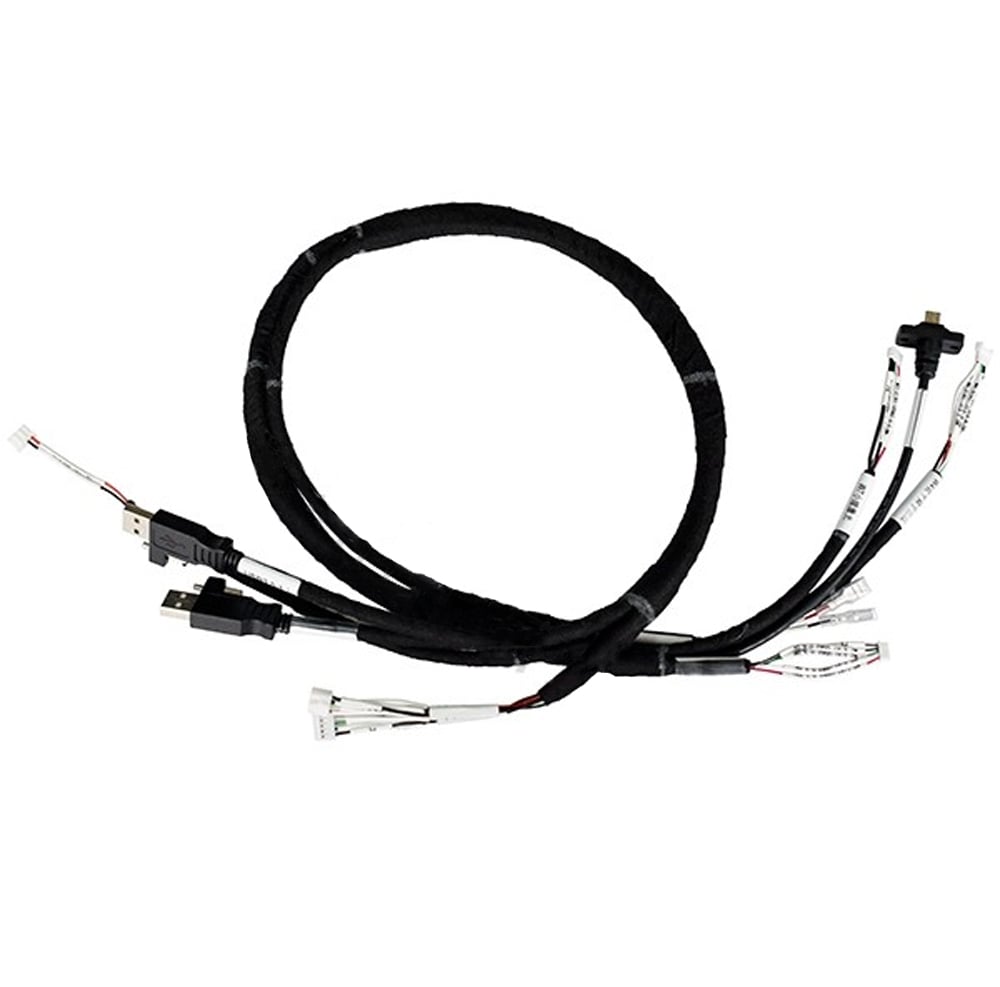
HOTTEN developed a customized ultrasound cable assembly according to the customer's application requirements.
The solution focused on four key areas.
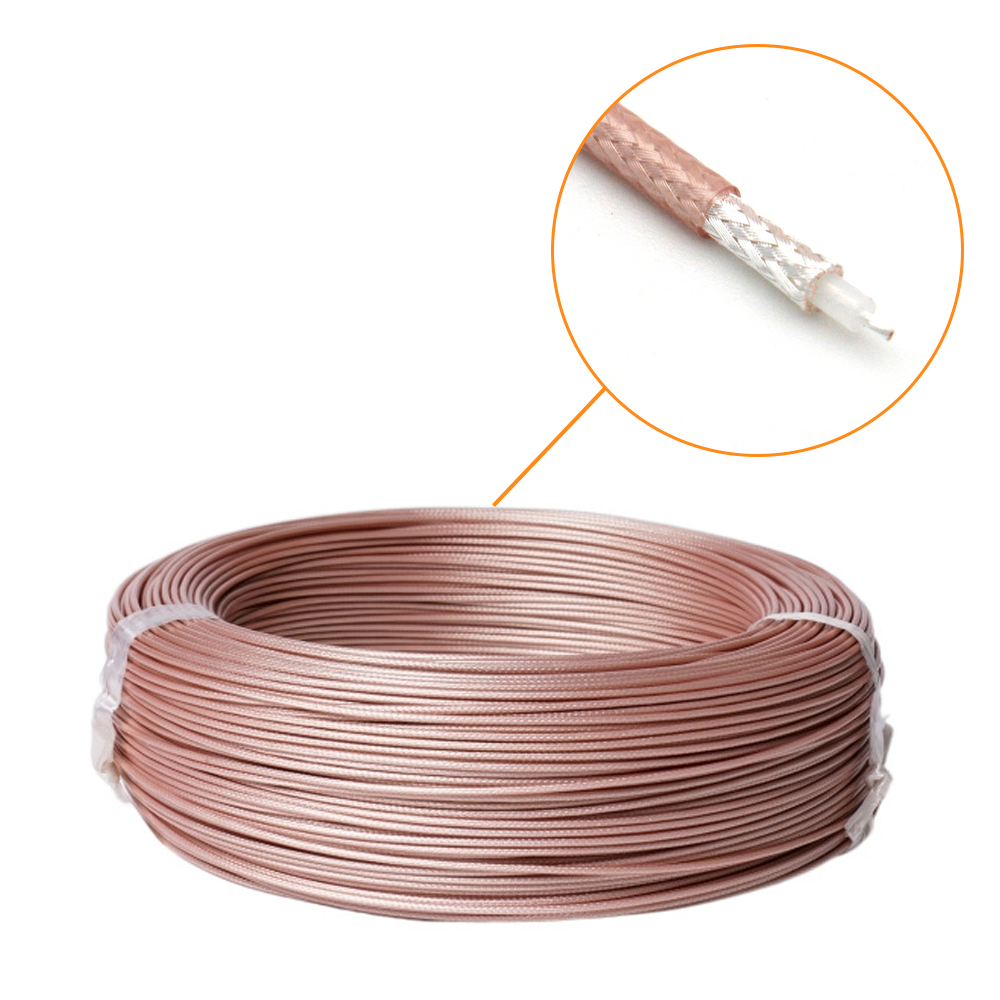
A micro coaxial cable structure was selected to support high-density signal transmission within a compact cable configuration.
Each coaxial signal path can provide controlled electrical characteristics and shielding around the signal conductor.
This makes micro coaxial technology particularly suitable for compact medical imaging applications where many signal channels need to be integrated into limited space.
High Density + Compact Structure + Shielded Signal Paths
are therefore central advantages of the architecture.
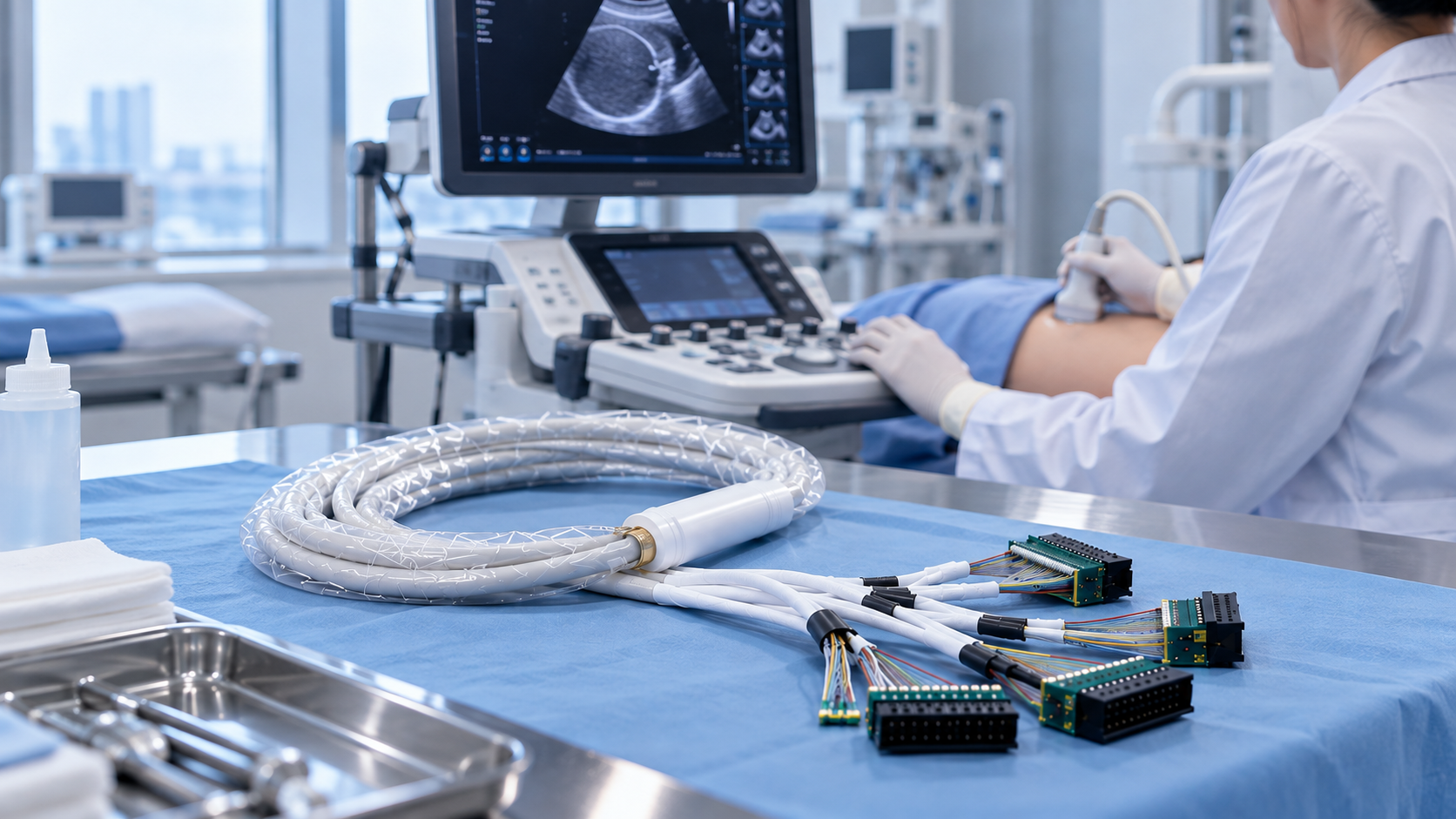
HOTTEN currently provides customized ultrasound probe cable assemblies using micro coaxial and multi-core structures.
Shielding was optimized to address electromagnetic interference and signal integrity requirements.
Depending on the application, medical ultrasound cable assemblies can use:
Individual Signal Shielding + Overall Shielding
to protect sensitive signal paths and improve overall cable performance.
The final shielding configuration should be determined according to the signal type, channel structure, cable geometry, and system requirements.
The cable dimensions and configuration were customized according to the customer's equipment requirements.
This allows the cable assembly to be integrated into the available installation space rather than requiring the equipment design to accommodate a standard cable.
Customization can include:
◆ Cable Diameter
◆ Cable Length
◆ Number of Conductors
◆ Micro Coaxial Configuration
◆ Jacket Material
◆ Connector Configuration
◆ Pin Assignment
The cable assembly was developed with a customized connector configuration to match the customer's ultrasound equipment.
The connector and cable were treated as one integrated assembly:
Cable Structure → Termination → Connector → Finished Assembly
This approach helps simplify installation and provides the customer with a finished cable assembly rather than separate cable and connector components.
For medical cable applications, prototype development is an important stage between cable design and production.
HOTTEN supports the development process from engineering samples through production.
The prototype can be evaluated for:
Cable dimensions
Cable construction
Conductor configuration
Shielding structure
Connector configuration
The relevant electrical characteristics are evaluated according to the customer's ultrasound system requirements.
Depending on the application, this can include:
Continuity · Resistance · Capacitance · Impedance · Insulation Performance · Signal Transmission
Only the tests specified by the project should be treated as actual project validation data.
The cable assembly can also be evaluated for:
Flexibility
Cable routing
Connector stability
Mechanical handling
Repeated movement requirements
The final objective is not simply to produce a functional prototype.
The cable structure and assembly process must also be suitable for consistent production.
The customized cable assembly helped address the customer's primary engineering requirements.
The micro coaxial structure and optimized shielding design supported reliable signal transmission for the ultrasound imaging application.
The customized cable dimensions allowed the assembly to be integrated into the available equipment space.
The shielding structure was optimized to reduce the impact of electromagnetic interference on sensitive signal paths.
The cable and connector configuration were customized according to the customer's equipment requirements.
HOTTEN supported the development process from customized engineering development toward mass production.
 Project Result Summary
| Item | Result |
|---|---|
| Application | Medical Ultrasound / Diagnostic Imaging |
| Cable Type | Custom Ultrasound Cable Assembly |
| Cable Structure | Micro Coaxial / High-Density Structure |
| Signal Requirement | High-Frequency Signal Transmission |
| Shielding | Optimized Shielding Structure |
| Cable Dimensions | Customized |
| Connector | Customized |
| Development | Prototype to Mass Production |
| Primary Objective | Signal Integrity + Compact Integration |
| Result | Stable Transmission + Reliable Device Integration |
When selecting a medical ultrasound cable supplier, engineers and procurement teams should evaluate more than the cable's conductor count or unit price.
The cable assembly is part of the imaging signal path, so electrical performance, mechanical construction, shielding, connector integration, and manufacturing consistency all matter.
Micro coaxial cables allow many individually shielded signal paths to be integrated into a compact cable structure.
This makes them useful for ultrasound probes where high signal density and compact dimensions are required.
Ultrasound imaging systems transmit and receive sensitive signals.
An appropriate shielding structure can help reduce electromagnetic interference and unwanted coupling between signal paths.
The exact shielding architecture should be selected according to the system's electrical requirements.
Ultrasound probes are manually positioned during examinations.
The cable may therefore experience repeated bending, twisting, and routing.
A suitable cable structure needs to balance:
Flexibility + Signal Integrity + Mechanical Reliability
rather than maximizing flexibility alone.
An ultrasound cable generally refers to the cable itself.
A cable assembly normally includes:
Cable + Termination + Connector + Assembly + Testing
A complete cable assembly can be supplied as an installation-ready component for the medical equipment manufacturer.
Yes.
Customization can include:
Cable Structure · Conductor Size · Number of Channels · Shielding · Cable Diameter · Jacket Material · Cable Length · Connector · Pin Assignment
HOTTEN provides customized ultrasound cable solutions based on customer drawings, samples, and equipment requirements.
The most useful information includes:
◆ Cable Drawing
◆ Number of Signal Channels
◆ Conductor / AWG Requirements
◆ Impedance or Capacitance Requirements
◆ Cable Diameter
◆ Cable Length
◆ Flexibility Requirements
◆ Connector Model
◆ Pin Assignment
◆ Shielding Requirements
◆ Application Environment
If a complete specification is not available, an existing sample or preliminary drawing can also be used as a starting point for engineering evaluation.
HOTTEN's medical cable development process combines fine-wire manufacturing, micro coaxial cable technology, shielding, connector integration, and cable assembly.
Medical Device Requirements
↓
Signal & Electrical Requirements
↓
Conductor / Micro Coaxial Selection
↓
Cable Structure Design
↓
Shielding Design
↓
Connector Integration
↓
Prototype Development
↓
Electrical & Mechanical Validation
↓
Production Optimization
↓
Medical Cable Assembly
This integrated approach allows HOTTEN to develop cable assemblies around the actual requirements of the medical device rather than relying only on standard cable constructions.
HOTTEN's customized ultrasound cable assemblies can support applications including:
◆ Ultrasound Probe Systems
◆ B-Ultrasound Equipment
◆ Diagnostic Imaging Equipment
◆ Portable Ultrasound Systems
◆ Medical Imaging Systems
◆ Ultrasound Transducers
◆ Medical Monitoring Equipment
◆ OEM Diagnostic Equipment
For high-density applications, HOTTEN supports micro coaxial and multi-core cable configurations according to the required signal architecture.
HOTTEN develops high-density medical cable assemblies using micro coaxial and multi-core structures.
Fine-gauge conductors can be incorporated into compact medical cable designs according to the electrical and mechanical requirements.
Individual and overall shielding structures can be configured according to signal integrity requirements.
HOTTEN can integrate customized medical connectors and PCB termination configurations into complete cable assemblies.
The development process supports engineering samples, validation, customized production, and volume manufacturing.
Ultrasound probes commonly use high-density multi-core and micro coaxial cable structures to transmit multiple sensitive signals between the probe and imaging system.
A micro coaxial ultrasound cable is a compact coaxial cable structure designed to provide individual signal transmission and shielding within a high-density ultrasound cable assembly.
The required channel count depends on the ultrasound probe and imaging architecture. HOTTEN supports customized multi-conductor and micro coaxial configurations according to customer requirements.
Yes. HOTTEN supports customization of cable structure, conductor size, channel configuration, shielding, cable diameter, jacket material, cable length, connector, and pin assignment.
Yes. HOTTEN can support the process from cable manufacturing and cable preparation through connector termination, electrical testing, and final cable assembly.
If your ultrasound system requires a high-density, flexible, micro coaxial, or customized medical cable assembly, HOTTEN can work with your engineering and procurement teams to develop a suitable cable solution.
You can provide:
Drawing · Existing Cable Sample · Connector Specification · Channel Count · Cable Dimensions · Electrical Requirements · Application Requirements
HOTTEN supports medical cable projects from:
Prototype → Engineering Validation → Customized Production → Mass Production
Contact HOTTEN to discuss your ultrasound cable assembly requirements.