 EN
EN
Quick Links

Home > News > Company news
As medical endoscopic equipment continues to evolve toward higher resolution, smaller size, and greater reliability, cables are no longer simple connecting components. Instead, they have become critical elements that directly affect image quality, operational experience, and overall device lifespan. Unlike conventional medical cables, endoscope cables must complete multi-channel signal transmission within extremely limited space while maintaining stable performance under long-term dynamic use, presenting far more complex engineering challenges.
Essential Requirements of Cables in Endoscopic Applications
Endoscopic systems typically need to transmit high-definition video signals, control signals, and necessary power lines simultaneously. In addition to meeting electrical performance requirements, cables must also withstand long-duration and continuous dynamic operations such as insertion and rotation during clinical use.
In real-world applications, endoscope cables often operate under small bending radii and repeated dynamic bending conditions. If the cable structure is not properly designed, long-term use can easily lead to conductor breakage, solder joint failure, or performance degradation. Therefore, the design goal of endoscope cables is not merely whether signals can be transmitted, but whether mechanical reliability can be ensured over repeated use while maintaining image quality.
| Requirement | Why It Matters | Typical Considerations |
|---|---|---|
| Biocompatibility | Ensures patient safety during medical use | ISO 10993 material evaluation, skin/contact requirements |
| Sterilization Compatibility | Maintains cable performance after repeated sterilization | Autoclave, EtO, gamma sterilization compatibility |
| Chemical Resistance | Prevents material degradation | Resistance to disinfectants and cleaning agents |
| Mechanical Flexibility | Supports complex medical procedures | Small bending radius and repeated bending cycles |
| Signal Integrity | Maintains accurate medical imaging signals | Low attenuation, controlled impedance, EMI shielding |
| Reliability | Ensures stable device operation | Long-term durability and quality consistency |
Why Ultra-Fine Structures Are Inevitable for Endoscope Cables
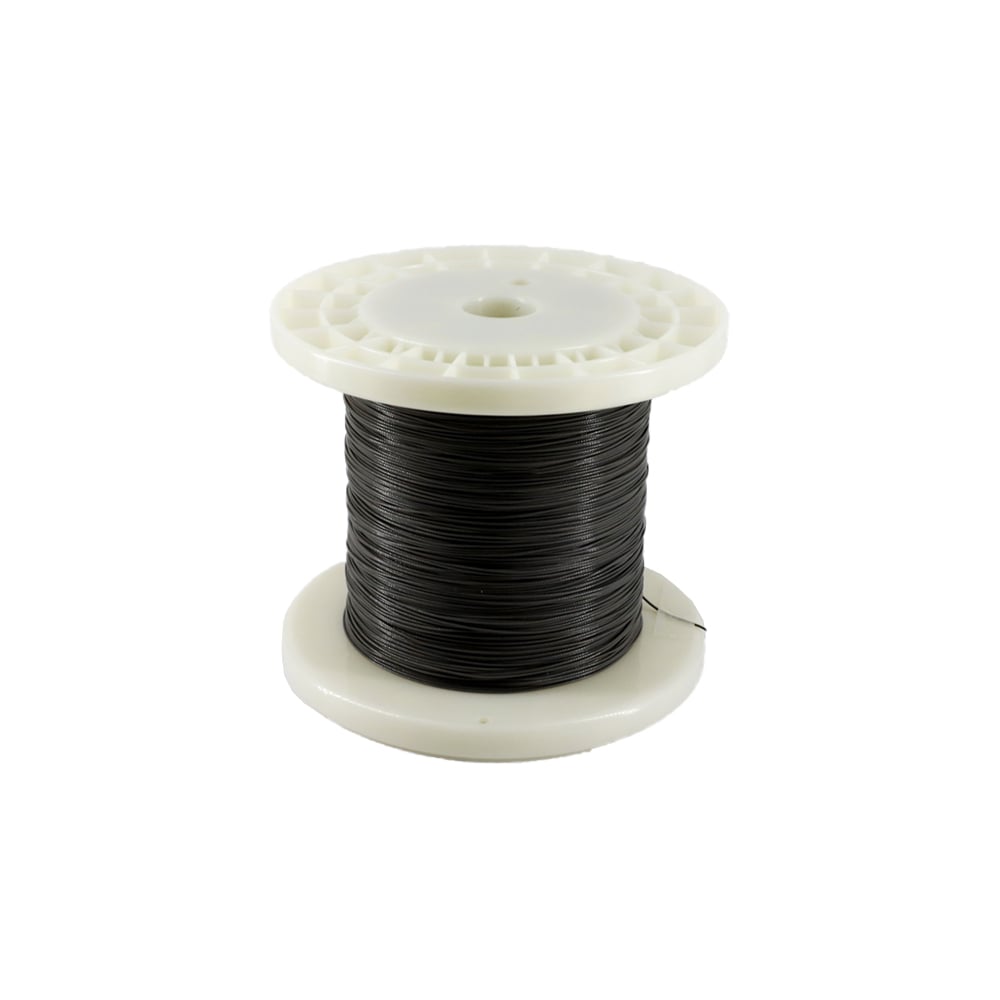
Due to the strict diameter limitations of the endoscope insertion section, cables must adopt ultra-fine, multi-core structures. In engineering practice, endoscope cables typically use fine-gauge conductors in the range of 40–50 AWG, combined into multi-core assemblies to enable multi-channel signal transmission.
However, as wire diameter decreases and core count increases, design difficulty rises accordingly. Reduced tensile strength of conductors, complex stress distribution after multi-core twisting, and increased difficulty in controlling electrical parameter consistency make it impractical to directly apply conventional medical cable design approaches to endoscope cables.
Module Cables and Handle Cables: Endoscope Cables Are Not "One Single Cable"
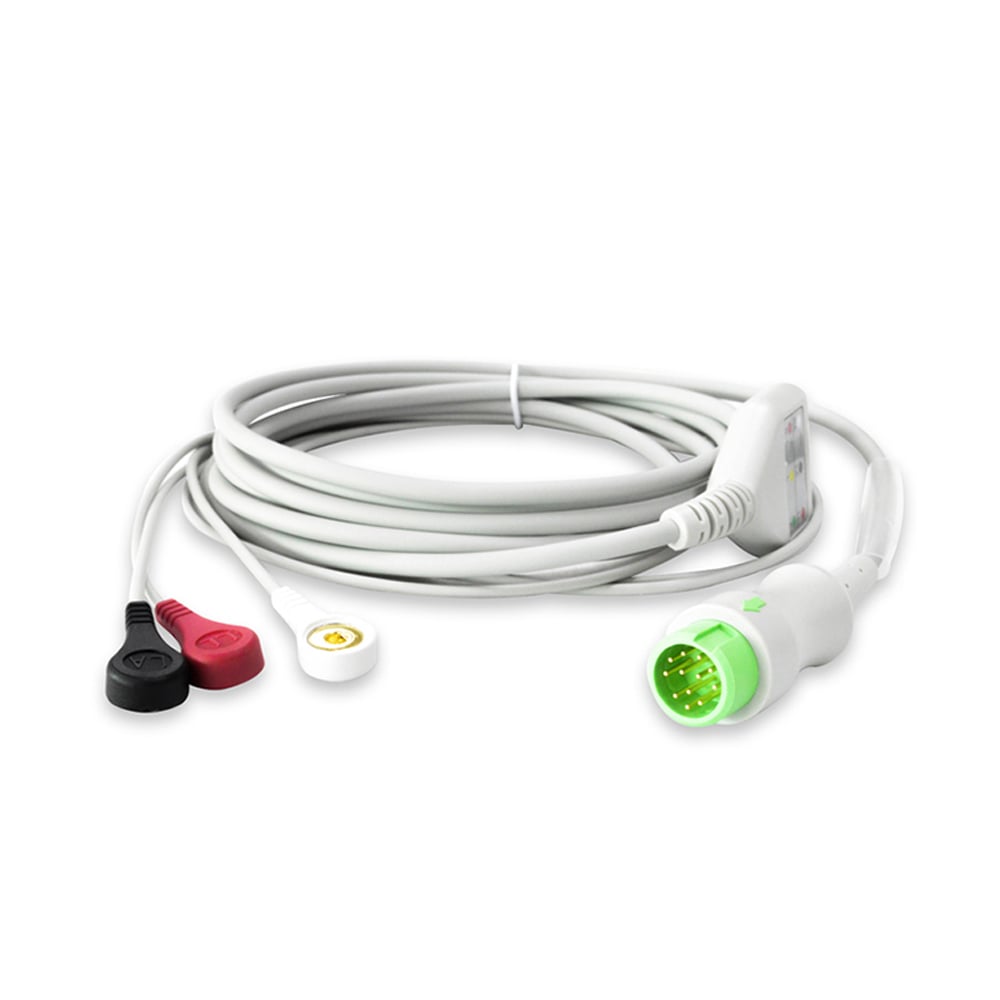
In actual endoscope systems, cables are not a single continuous structure. Instead, based on installation location and functional role, they are typically divided into module cables near the imaging module and handle cables connecting the handle to the main unit. Although both belong to the endoscope cable system, their engineering design priorities differ significantly.
Module cables located near the distal imaging section primarily handle high-definition video or image signal transmission. Their design emphasizes electrical stability and consistency to ensure complete, low-noise signal transmission over short distances.
In contrast, handle cables are subjected to the highest mechanical stress during endoscope operation. They must endure frequent and large-amplitude dynamic bending, making flexibility, bending life, and long-term mechanical reliability the primary design focus.
Due to these functional and environmental differences, endoscope cables must be optimized with region-specific structures and materials rather than using a uniform design approach.
Cable Factors Behind Image Quality
Endoscopic imaging relies on continuous and stable video signal transmission and is highly sensitive to noise, crosstalk, and attenuation. Conductor resistance, capacitance, impedance stability, and shielding consistency all directly influence final image performance.
In ultra-fine multi-core structures, significant variations in electrical parameters between channels can be amplified at the system level, resulting in uneven image brightness, increased noise, flickering, or visible striping artifacts.
Where Does Bending Life Come From? Real Mechanical Conditions of Endoscopes
During insertion, rotation, and withdrawal, endoscope cables undergo repeated deformation under small bending radii. If structural design is inadequate, common failure modes include conductor fatigue fracture, shield damage, and insulation aging, ultimately causing signal instability.
Therefore, endoscope cables are typically required to achieve high dynamic bending life, maintaining both structural integrity and electrical performance after tens of thousands or even hundreds of thousands of bending cycles.
Engineering Trade-Off Between Image Quality and Bending Life
In practical engineering, improving image quality and enhancing bending life often impose conflicting requirements. Increasing shielding coverage or structural rigidity helps stabilize signal transmission but reduces flexibility, while excessive pursuit of softness may compromise electrical consistency.
As a result, the core of endoscope cable design lies in finding a long-term stable balance among material selection, layered structural design, and manufacturing consistency.
Hotten's Engineering Practice in Endoscope Cables
Hotten has long focused on the development and manufacturing of ultra-fine multi-core cable structures and has applied this expertise to endoscope cable solutions. With a deep understanding of the different working conditions of module cables and handle cables, Hotten is able to achieve system-level optimization between image signal stability and mechanical reliability.
Through continuous optimization of material selection, structural design, and manufacturing consistency control, Hotten is committed to providing endoscope cable solutions that balance image quality and long-term durability, helping medical devices transition smoothly from prototype validation to stable mass production.
A: Medical-grade ultra-fine coaxial cables combine small diameter, high flexibility, signal integrity and reliable shielding performance, making them suitable for compact medical devices requiring precise signal transmission.
A: Biocompatibility helps ensure that cable materials are safe for intended medical applications and minimizes potential risks when devices are used in contact with patients.
A: Yes. Medical cable assemblies can be designed with materials and jacket structures that support sterilization methods such as EtO, autoclave or other application-specific requirements.
A: The suitable sterilization method depends on the medical device design. Common methods include ethylene oxide (EtO), steam sterilization and gamma sterilization.
A: Repeated sterilization exposure may affect cable materials, flexibility and electrical performance. Proper material selection and validation help maintain long-term reliability.
 Hot News
2026-09-17
2026-09-04
2025-12-17
2025-12-11
2025-12-05