
 EN
EN
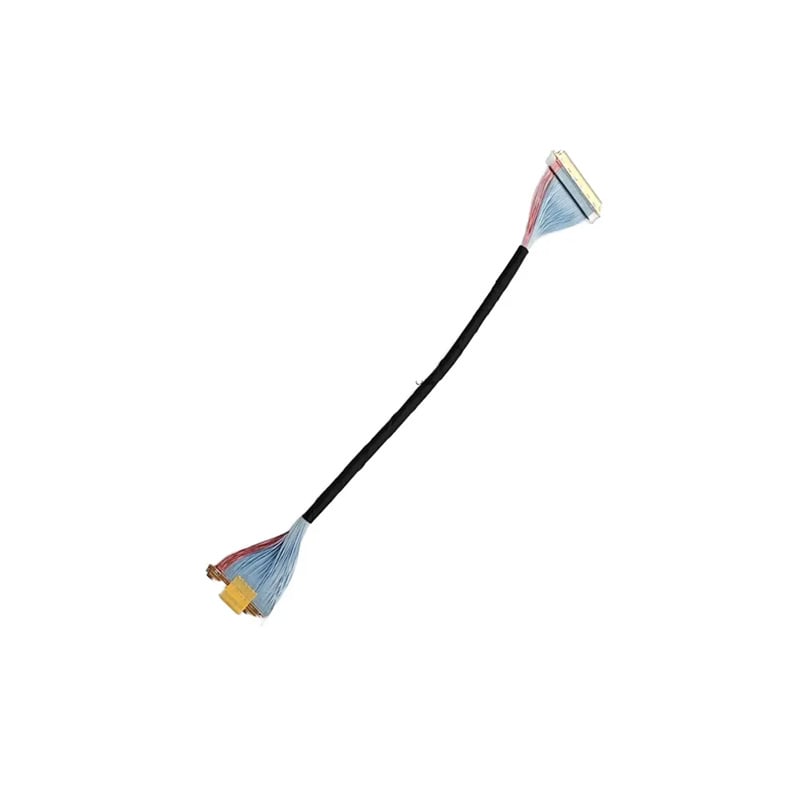
Choosing a micro coaxial cable manufacturer is not simply about finding the lowest quotation. For applications such as medical imaging, AR/VR devices, UAV systems, cameras and high-speed electronics, the cable can directly affect signal integrity, mechanical reliability and product integration.
For OEM buyers, the right manufacturer should be evaluated based on engineering capability, manufacturing precision, testing, customization and long-term supply capability.
1. Check Micro Coaxial Cable Manufacturing Capability
Micro coaxial cables are typically used where space is limited and signal performance is important.
Before selecting a supplier, check whether the manufacturer has experience with:
- Micro coaxial cable
- Ultra-thin coaxial cable
- High-frequency cable
- High-speed signal cable
- Multi-coax cable assemblies
- Custom cable assemblies
A manufacturer experienced in standard cables may not necessarily have the equipment and process capability required for miniature cable construction.
For OEM projects, it is also useful to ask whether the supplier can support both cable manufacturing and cable assembly.
2. Evaluate Engineering and Customization Capability
Many OEM projects do not use an off-the-shelf cable.
The manufacturer may need to work from:
- Engineering drawings
- BOM
- Connector part numbers
- Pinout
- Cable dimensions
- Cable length
- Shielding requirements
- Electrical specifications
- Samples or prototypes
A capable micro coaxial cable manufacturer should be able to review these requirements and determine whether the proposed construction is suitable.
For example, the supplier may need to optimize:
Conductor → Dielectric → Shielding → Outer Diameter → Connector Assembly
This is particularly important when the available installation space is very limited.
3. Ask About Impedance Control
For high-frequency and high-speed applications, impedance consistency is an important part of cable design.
Common coaxial cable impedance requirements include 50 Ω and 75 Ω, depending on the application.
Manufacturing factors that can influence impedance include:
- Conductor dimensions
- Dielectric thickness
- Dielectric material
- Shielding structure
- Dimensional consistency
Ask the manufacturer how impedance is controlled during production and how it is verified.
TDR (Time-Domain Reflectometry) can be used to evaluate characteristic impedance and identify impedance variations along the cable.
4. Check Mechanical Reliability
A micro coaxial cable may be very small, but it can still experience significant mechanical stress.
Depending on the application, the cable may need to withstand:
- Repeated bending
- Twisting
- Tensile loading
- Tight routing
- Repeated movement
- Limited installation space
This is particularly important for medical probes, endoscopic systems, robotic equipment and UAV applications.
Instead of simply asking:
“How flexible is the cable?”
OEM buyers should ask:
What flex-life or mechanical testing can the manufacturer perform for our application?
The testing method should be matched to the actual movement profile and application requirements.
5. Evaluate Connector Assembly Capability
A good cable is only part of the final assembly.
The manufacturer should also have experience with:
- Micro connectors
- RF connectors
- Board-to-board connectors
- Custom terminals
- Crimping
- Soldering
- Overmolding
- Strain relief
Connector selection and assembly accuracy can affect both electrical performance and mechanical reliability.
For customized projects, it is preferable to work with a manufacturer that can manage the complete cable assembly rather than only supplying bulk cable.
6. Review Quality Control and Testing
Before placing an order, ask what testing is included in production.
Depending on the application, this may include:
| Test | Purpose |
| Continuity Test | Verify electrical connection |
| Hi-Pot Test | Verify insulation and electrical safety |
| Resistance Test | Check conductor resistance |
| TDR Test | Evaluate characteristic impedance |
| Pull Test | Verify mechanical connection strength |
| Flex Test | Evaluate bending durability |
| Dimensional Inspection | Verify critical dimensions |
For medical and high-frequency applications, testing requirements should be defined according to the product specification and customer requirements.
7. Check Prototype and Mass Production Capability
A supplier may be able to produce samples but struggle with consistent mass production.
For OEM projects, ask whether the manufacturer can support:
Prototype → Engineering Validation → Pilot Production → Mass Production
Also consider:
- Sample lead time
- MOQ
- Production lead time
- Material availability
- Production capacity
- Quality consistency
- Engineering change management
A supplier capable of supporting the complete development cycle can reduce the risk of changing suppliers after product validation.
8. Consider the Manufacturer's Application Experience
A micro coaxial cable manufacturer may have experience in one industry but limited experience in another.
For example:
Medical
Ultrasound, endoscopy and medical imaging.
AR/VR, cameras and compact electronic devices.
Lightweight harnesses, high-speed signal transmission and moving cable applications.
Ask whether the supplier has developed cable assemblies for applications with similar electrical and mechanical requirements.
What Should You Ask a Micro Coaxial Cable Manufacturer?
Before requesting a quotation, OEM buyers can ask:
✓ Can you manufacture according to our drawing?
✓ Can you provide customized cable construction?
✓ What impedance tolerances can you achieve?
✓ Can you assemble our specified connectors?
✓ What electrical and mechanical tests are available?
✓ What is the prototype lead time?
✓ What is the MOQ for mass production?
✓ Can you support engineering changes?
✓ Can you support prototype to mass production?
These questions can help separate a simple cable supplier from a manufacturer capable of supporting complex OEM projects.
HOTTEN Custom Micro Coaxial Cable Solutions
For OEM customers requiring customized micro coaxial cable assemblies, HOTTEN provides cable development and manufacturing support based on customer drawings, samples and application requirements.
Our capabilities include:
- Custom Micro Coaxial Cable
- Micro Coaxial Cable Assembly
- Medical Cable Assembly
- Ultrasound Cable Assembly
- RF Cable Assembly
- UAV Cable Assembly
- High-Speed Cable Assembly
From prototype development to production, HOTTEN works with customers to develop cable solutions that meet their electrical, mechanical and integration requirements.
Need a customized micro coaxial cable? Contact HOTTEN with your drawing, specifications or sample for evaluation.
FAQ
What should I look for in a micro coaxial cable manufacturer?
Look for experience in miniature cable manufacturing, engineering customization, impedance control, connector assembly, quality testing and mass production.
What is the difference between a micro coaxial cable supplier and manufacturer?
A supplier may primarily source and distribute cables, while a manufacturer can provide greater control over cable construction, manufacturing processes and customization.
Can micro coaxial cables be customized?
Yes. Cable diameter, conductor construction, dielectric, shielding, length, connectors and assembly configurations can be customized according to application requirements.
What industries use micro coaxial cable assemblies?
Common applications include medical imaging, ultrasound, endoscopy, AR/VR, cameras, UAV systems, robotics and other compact electronic devices.
Table of Contents
- 1. Check Micro Coaxial Cable Manufacturing Capability
- 2. Evaluate Engineering and Customization Capability
- 3. Ask About Impedance Control
- 4. Check Mechanical Reliability
- 6. Review Quality Control and Testing
- 7. Check Prototype and Mass Production Capability
- 8. Consider the Manufacturer's Application Experience
- What Should You Ask a Micro Coaxial Cable Manufacturer?
- HOTTEN Custom Micro Coaxial Cable Solutions
- FAQ