
 EN
EN
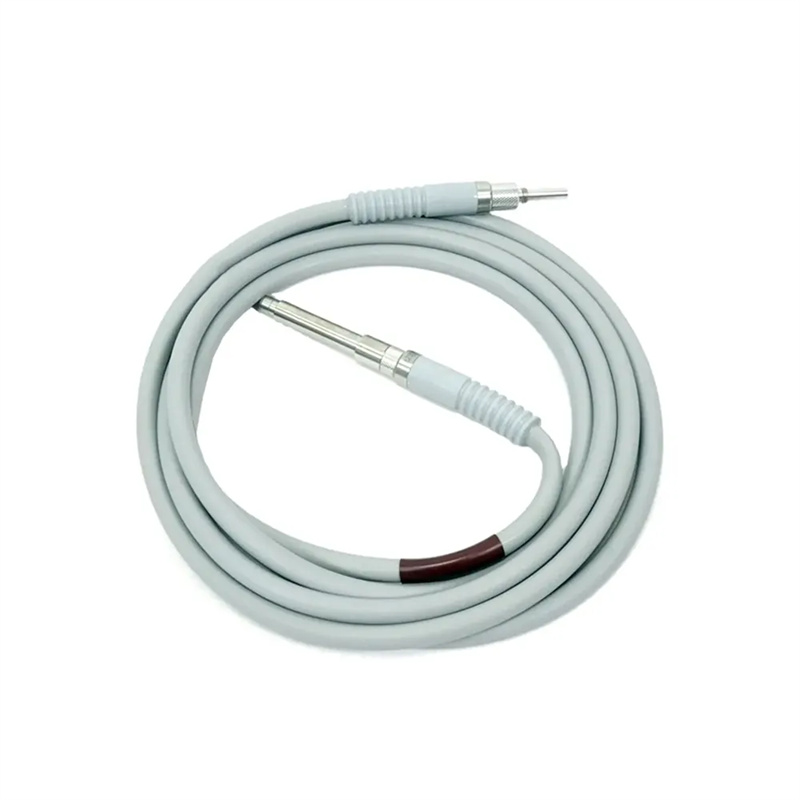
When sourcing a custom cable assembly, receiving several quotations may seem like a straightforward price comparison.
However, the lowest unit price does not always represent the lowest overall cost.
Different cable assembly suppliers may quote different materials, connectors, testing requirements, tooling costs, production quantities, and lead times. For OEM buyers, comparing these factors together is essential before selecting a supplier.
1. Compare the Same Cable Specifications
Before comparing prices, make sure every supplier is quoting the same specifications.
Important items include:
- Cable type and construction
- Cable length
- Wire gauge
- Connector part number
- Pin configuration
- Shielding structure
- Jacket material
- Terminal type
- Overmolding requirements
- Electrical performance
- Required tolerances
A supplier offering a lower price may simply be quoting a different cable construction or lower-cost connector.
The first step is therefore to confirm that all suppliers are quoting the same technical requirements.
2. Look Beyond the Unit Price
A cable assembly quotation may include more than the unit price.
| Cost Item | What to Check |
| Unit Price | Price at different order quantities |
| Tooling Cost | Connector, mold or assembly tooling |
| Sample Cost | Prototype or first-article cost |
| MOQ | Minimum production quantity |
| Testing Cost | Electrical or reliability testing |
| Packaging | Standard or customized packaging |
| Shipping | Included or excluded |
| Engineering Cost | NRE or development charges |
For example, Supplier A may offer a lower unit price but require a high MOQ and expensive tooling.
Supplier B may have a slightly higher unit price but offer lower MOQ, lower tooling cost and more flexible production support.
For OEM projects, the total project cost is often more important than the initial unit price.
3. Check Connector and Material Details
Connectors can represent a significant portion of the total cable assembly cost.
When comparing quotations, check whether suppliers are using:
- The same connector manufacturer
- The same connector part number
- Original or alternative components
- The same terminal
- The same plating specification
- The same cable material
The same-looking connector does not necessarily have the same electrical, mechanical or reliability performance.
For critical applications, the exact connector part number should be included in the RFQ and quotation.
4. Compare Testing and Quality Requirements
A quotation should also be evaluated based on what is included in quality control.
Depending on the application, testing may include:
- Continuity testing
- Hi-Pot testing
- Insulation resistance testing
- Resistance testing
- TDR / impedance testing
- Pull-force testing
- Flex-life testing
- Dimensional inspection
- Visual inspection
For medical, high-frequency, UAV and other demanding applications, testing requirements can significantly affect the final cost.
A quotation with fewer testing requirements may appear cheaper but may not provide the same level of quality assurance.
5. Compare MOQ and Lead Time
MOQ is particularly important when developing a new product.
Ask each supplier:
- What is the prototype MOQ?
- What is the mass-production MOQ?
- How long does sample production take?
- What is the normal mass-production lead time?
- Can production quantities be adjusted according to demand?
For an OEM project, the supplier should ideally support the transition from:
Prototype → Validation → Pilot Production → Mass Production
This can reduce the need to change suppliers as the project develops.
6. Evaluate Engineering Support
A cable assembly supplier should provide more than a price.
During the quotation process, pay attention to whether the supplier asks about:
- Drawing requirements
- Connector compatibility
- Cable routing
- Bending radius
- Shielding
- Electrical performance
- Installation space
- Operating environment
- Expected production volume
Good questions during the RFQ process can indicate whether the supplier understands the engineering requirements behind the cable.
For OEM buyers, engineering support can be just as important as the quoted unit price.
7. Consider Long-Term Supply Capability
The supplier that offers the lowest prototype price may not necessarily be the best long-term manufacturing partner.
Before placing a larger order, consider:
Engineering Capability
Can the supplier modify the cable design when requirements change?
Quality Control
Can the supplier maintain consistent quality during mass production?
Production Capacity
Can the supplier support increasing order volumes?
Material Supply
Can key connectors and materials remain available?
Change Management
Can the supplier control drawing, BOM and production revisions?
These factors directly affect supply-chain risk.
A Simple Cable Assembly Quote Comparison
| Factor | Supplier A | Supplier B |
| Unit Price | Low | Medium |
| MOQ | High | Low |
| Tooling | High | Medium |
| Sample Lead Time | 20 days | 10 days |
| Testing | Basic | Customized |
| Engineering Support | Limited | Strong |
| Mass Production | Available | Available |
In this example, Supplier A may have the lower unit price, but Supplier B could provide better overall value for an OEM project.
The right supplier should therefore be selected based on total cost, technical capability, quality and supply reliability—not price alone.
What OEM Buyers Should Ask Before Accepting a Quote
Before selecting a cable assembly supplier, ask for confirmation of:
✓ Exact cable and connector specifications
✓ Unit price by order quantity
✓ MOQ
✓ Tooling / NRE cost
✓ Sample lead time
✓ Mass-production lead time
✓ Testing requirements
✓ Material specifications
✓ Quality documentation
✓ Production and engineering capabilities
A detailed quotation makes it much easier to compare suppliers on an equal basis.
Custom Cable Assembly Solutions from HOTTEN
For OEMs requiring customized cable assemblies, HOTTEN provides engineering and manufacturing support from prototype development to mass production.
Our capabilities include customized:
- Micro Coaxial Cable Assemblies
- Medical Cable Assemblies
- UAV Cable Assemblies
- High-Speed Cable Assemblies
- RF Cable Assemblies
- Custom Wire Harnesses
Customers can provide drawings, BOMs, connector part numbers, samples or other technical requirements for evaluation.
Need help comparing a cable assembly quotation or developing a custom cable? Contact HOTTEN with your specifications and RFQ requirements.
FAQ
What should I compare when evaluating cable assembly suppliers?
Compare technical specifications, unit price, MOQ, tooling cost, testing requirements, lead time, engineering support and long-term production capability.
Why is the cheapest cable assembly quote not always the best option?
A lower quotation may exclude tooling, testing, premium connectors or other requirements. The total project cost and supply risk should be considered.
What information should I provide when requesting a cable assembly quote?
Useful information includes drawings, BOM, connector part numbers, cable length, wire gauge, pinout, shielding requirements, quantity and application requirements.
Can cable assembly suppliers support prototype and mass production?
Many OEM projects require suppliers to support the complete process from prototype and validation to pilot production and mass production. Supplier capability should be confirmed before development begins.
Table of Contents
- 1. Compare the Same Cable Specifications
- 2. Look Beyond the Unit Price
- 3. Check Connector and Material Details
- 4. Compare Testing and Quality Requirements
- 5. Compare MOQ and Lead Time
- 6. Evaluate Engineering Support
- 7. Consider Long-Term Supply Capability
- A Simple Cable Assembly Quote Comparison
- What OEM Buyers Should Ask Before Accepting a Quote
- Custom Cable Assembly Solutions from HOTTEN
- FAQ