
 EN
EN
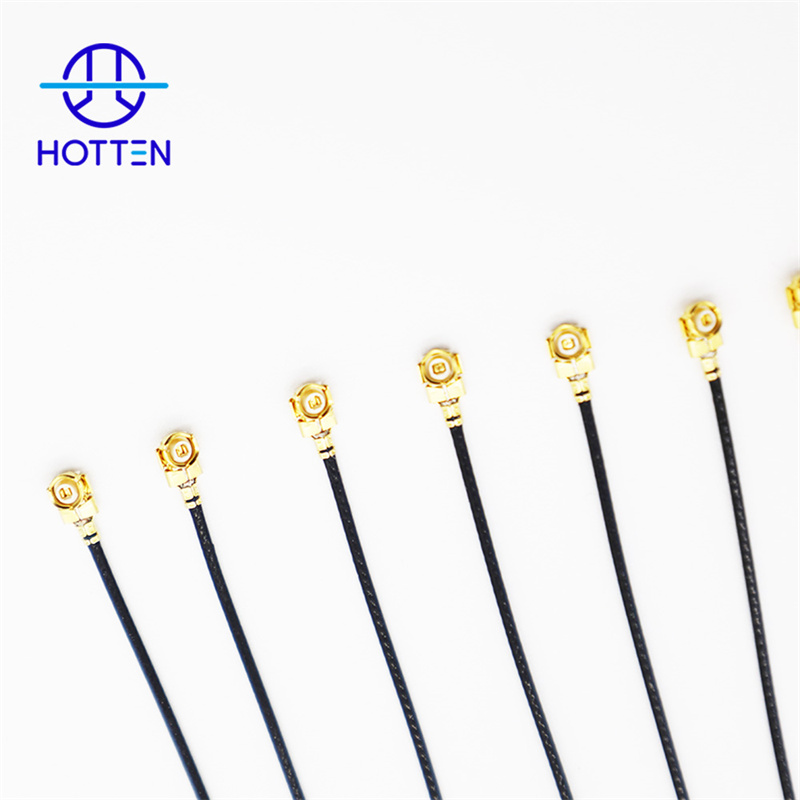
The ideal RF coaxial cable assembly for a medical device depends on the specific application, as different devices require different levels of performance and functionality. Key considerations include application sensitivity, precision requirements, expected service life, and operating conditions, all of which influence an engineer’s cable selection. In many cases this would have priorities completely at odds with an industrial device where robustness, and brute strength were of most important, but with an in-device application the cable must meet stringent patient safety requirements, support sterilization processes, minimize EMI susceptibility, and maintain reliable signal transmission.
Hotten helps medical OEMs manage these challenges with purpose-built medical cable assemblies and custom RF coaxial assemblies designed for demanding clinical environments.
Electrical Performance: Impedance, Attenuation, and Return Loss
At the core of a coaxial assembly’s functionality is its electrical capabilities. Medical diagnostic equipment (including ultrasound, intravascular, and intracardiac systems), as well as electrotherapy and ablation devices, require precise 50 Ω impedance control, enabling efficient energy delivery to the treatment area or accurate signal acquisition from the imaging target and where reflections will be minimized. During a patient scan or procedure, a cable's attenuated (or insertion) loss at the operating frequency must stay well within your device design parameters to maintain sufficient signal quality and image clarity during diagnosis. An ultrasound probe cable, for instance operating at 20 MHz needs a maximum insertion loss of 0.5 dB/m at 20 MHz, for optimal signal transfer to the processor. This return loss (or VSWR) measurement should also be evaluated carefully as reflected signals from cable, and especially connectors, can generate noise and imaging artifacts. Hotten offers swept frequency tests of insertion loss, TDR measurements to guarantee impedance throughout the cable and can measure return loss for the assembly up to 6 GHz.
Mechanical Durability: Flex-Life, Bend Radius, and Tensile Strength
In medical applications, cables are subject to continuous mechanical stress as they move with probes, navigate confined spaces, and support robotic movements. A stiff coaxial cable can quickly develop electrical shorts or attenuation drift, which inevitably means expensive service downtime for your product. When selecting a coaxial cable, consider the maximum bend radius, expected flex cycles (typically 10,000 to over 100,000 cycles for clinical products), and tensile load requirements. For example, our endoscope cables and wire harnesses incorporate silver-plated stranded copper strands, along with specific lay-ups that are intended to tolerate excessive torsional and bend movements; semi-rigid coaxial construction may also be used when shape memory is desirable. Hotten is able to produce reports that verify the expected flex life for your specified conditions.
Environmental Compatibility: Sterilization, Chemicals, and Temperature
All medical cable assemblies, including medical RF cable assemblies, are designed to withstand repeated steam autoclave cycles (134°C), E-beam and gamma sterilization, as well as exposure to various hospital disinfectants such as quaternary ammonium compounds and isopropyl alcohol. Jacket and insulation material choice can play a key role in durability under these conditions; thus, Hotten may recommend fluoropolymer materials like FEP or PFA for their excellent thermal resistance to steam sterilization or, alternatively, TPU for its high degree of resistance to most disinfectants during cold sterilization. Cables used in MRI environments or near electrosurgical equipment require non-magnetic components and enhanced shielding performance. Our assemblies are fully tested to ensure biocompatibility , dielectrics have documented integrity following repeated sterilization, and material compositions conform to medical grade standards.
Supplier Quality Management & Risk Control
Medical RF coaxial cable assemblies play an important role in ensuring reliable signal transmission and stable performance in medical devices. For medical OEMs, selecting the right cable supplier requires careful evaluation of engineering expertise, quality control capabilities, and long-term technical support.
Hotten provides comprehensive technical support through material traceability, process documentation, product testing, and engineering collaboration. Our team works closely with medical device manufacturers to optimize cable designs and address key challenges, including shielding effectiveness, signal integrity, and mechanical reliability.
With robust manufacturing capabilities and quality-focused processes, Hotten helps medical OEMs develop reliable cable assemblies that support consistent performance throughout the product lifecycle.
FAQ
What factors should be considered when selecting an RF coaxial cable assembly for medical devices?
Key factors include impedance, insertion loss, return loss, shielding effectiveness, flex life, bend radius, sterilization compatibility, temperature resistance, and the specific requirements of the medical device.
What impedance is typically used for medical RF coaxial cable assemblies?
50 Ω coaxial cable is commonly used in RF medical applications, but the required impedance depends on the device architecture and signal path. The cable assembly should match the impedance requirements of the complete system.
How do you choose an RF coaxial cable for ultrasound equipment?
Selection should consider operating frequency, insertion loss, impedance control, shielding performance, flex life, bend radius, connector configuration, and sterilization requirements. For ultrasound probes, flexibility and long-term signal stability are particularly important.
How does sterilization affect medical coaxial cable assemblies?
Repeated exposure to autoclave steam, E-beam, gamma radiation, or chemical disinfectants can affect cable insulation, shielding, connectors, and mechanical properties. Cable materials and construction should therefore be selected according to the required sterilization method and cycle conditions.
Can RF coaxial cable assemblies for medical devices be customized?
Yes. Medical RF coaxial cable assemblies can be customized for cable dimensions, impedance, shielding, jacket materials, connector configurations, bend radius, flex requirements, and sterilization conditions according to the requirements of the medical device.
Conclusion
In order to make the right selection of RF coaxial cable for a medical device application, a combination of electrical, mechanical, environmental, and regulatory factors needs to be evaluated when selecting the right RF coaxial cable for a medical device application. Hotten's engineers work collaboratively with you to design and manufacture dependable medical cable assemblies and RF coaxial cable assemblies for use in your specific medical device such as medical imaging equipment like an ultrasound probe, ablation and medical robots like surgical instrumentation or even advanced and expensive medical system implementations. Our manufacturing floor space, which measures over 10,000 square meters, is equipped to create more than 144 million meters of cable; this means we’re perfectly equipped to produce high fidelity signal transfer between your medical probe and processors.
Table of Contents
- Electrical Performance: Impedance, Attenuation, and Return Loss
- Mechanical Durability: Flex-Life, Bend Radius, and Tensile Strength
- Environmental Compatibility: Sterilization, Chemicals, and Temperature
- Supplier Quality Management & Risk Control
-
FAQ
- What factors should be considered when selecting an RF coaxial cable assembly for medical devices?
- What impedance is typically used for medical RF coaxial cable assemblies?
- How do you choose an RF coaxial cable for ultrasound equipment?
- How does sterilization affect medical coaxial cable assemblies?
- Can RF coaxial cable assemblies for medical devices be customized?
- Conclusion