 EN
EN
Quick Links

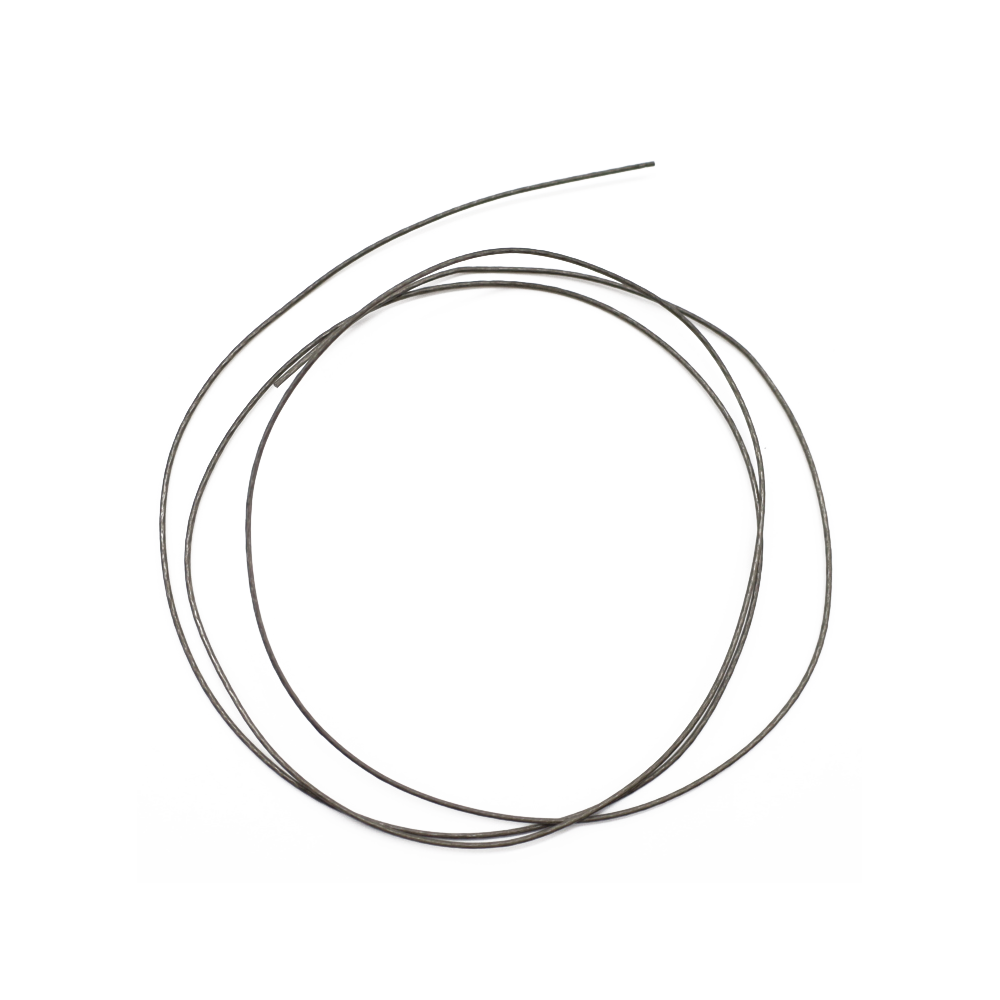
Application: Ultra-Fine Electronic Wire
Wire Size: 42AWG
Customer Location: Europe
Key Challenge: Cutting, stripping, and processing ultra-fine fluoropolymer-insulated wire
Solution: Wire Optimization + Cut-to-Length + Stripping + End Tinning + Material Evaluation
A European manufacturer of realistic die-cast toys was using 42AWG non-fluoropolymer-insulated cable wire in its production process.
However, the customer's existing automatic wire-processing equipment could not consistently handle the extremely small wire.
The customer experienced:
→ Conductor damage
→ Incomplete stripping
→ Inconsistent cutting
→ Length variation
→ Increased manual handling
→ Material waste
→ Longer processing time
The customer therefore needed more than a replacement 42AWG wire.
The real engineering requirement was to develop a 42AWG ultra-fine wire solution that could be processed reliably and integrated into the customer's production workflow.
The customer needed an ultra-fine electronic wire suitable for automated and downstream assembly processes.
The main requirements were:
The wire needed to maintain consistent cutting and stripping performance despite its extremely small conductor size.
Repeated processing had caused conductor damage with the previous wire configuration.
The new solution needed to improve processing stability while protecting the fine conductor.
For ultra-fine wire, finished OD, insulation thickness, and conductor position can directly affect processing performance.
The customer therefore required better dimensional consistency.
Rather than requiring the customer to solve every front-end processing problem internally, HOTTEN evaluated whether critical operations could be transferred to the supplier.
This included:
Cut to Length → Strip → Tin → Inspect
At 42AWG, the conductor is extremely fine.
Processing performance is therefore sensitive to:
→ Conductor construction
→ Insulation properties
→ Finished OD
→ Insulation thickness
→ Concentricity
→ Feeding accuracy
→ Blade clearance
→ Machine settings
A wire can meet the nominal electrical specification while still being difficult to process consistently on a particular machine.
After reviewing the customer's samples and processing conditions, HOTTEN found that the problem could not be attributed to the wire alone.
The customer's existing cutting equipment and blade configuration also had difficulty handling 42AWG fluoropolymer-insulated wire consistently.
Therefore:
Changing the wire alone was not sufficient.
The solution had to consider the interaction between:
Wire Construction + Processing Equipment + Processing Method
For ultra-fine wire, the lowest material price does not necessarily represent the lowest overall production cost.
The actual production cost can also include:
Manual processing
Equipment adjustment
Material loss
Conductor damage
Scrap
Processing time
Additional inspection
This made the customer's project a total processing optimization problem, rather than simply a wire purchasing problem.
HOTTEN developed the project through three complementary approaches.
HOTTEN first evaluated and optimized the customer's existing wire construction.
The solution included:
✓ Upgrading the conductor from tinned copper to silver-plated copper
✓ Selecting a more consistent fluoropolymer insulation material
✓ Tightening control of finished OD
✓ Improving control of insulation thickness
✓ Evaluating conductor concentricity
✓ Evaluating the wire for subsequent cutting and soldering processes
The objective was not simply to manufacture a nominally compliant 42AWG wire, but to produce a wire that was more suitable for the customer's actual processing conditions.
Testing confirmed that equipment compatibility remained an important factor.
Instead of requiring the customer to purchase or extensively modify equipment for a single ultra-fine wire specification, HOTTEN changed the delivery format.
The critical front-end processes were transferred to HOTTEN:
The processed wire was then supplied as a ready-to-assemble semi-finished component.
This allowed the customer to reduce the difficulty of processing 42AWG wire internally and move the material more efficiently into downstream assembly.
After addressing the immediate processing problem, HOTTEN also introduced TPX-insulated wire as an alternative for long-term material evaluation.
This was considered in the context of evolving European requirements and customer concerns regarding fluorinated materials.
TPX had a higher initial material cost than the original fluoropolymer-insulated wire.
However, the customer could evaluate the alternative based on the broader production equation:
Material Cost + Processing Cost + Equipment Compatibility + Labor + Material Loss + Long-Term Material Considerations
This allowed the customer to evaluate the material based on total production requirements rather than wire price alone.
The project went through multiple rounds of sample testing and process evaluation.
HOTTEN evaluated:
✓ Conductor structure
✓ Insulation consistency
✓ Finished OD
✓ Concentricity
✓ Cutting performance
✓ Stripping performance
✓ Soldering / tinning compatibility
✓ Automatic feeding
✓ Cutting stability
✓ Stripping consistency
✓ Conductor protection
✓ End-tinning consistency
✓ Customer equipment compatibility
✓ Processing configuration
✓ Semi-finished component delivery
✓ Repeatability during production
The testing showed that wire construction and processing equipment needed to be evaluated together.
After multiple rounds of testing, root-cause analysis, and process optimization, the final solution passed customer validation.
The customer subsequently moved to stable recurring purchases.
By shifting critical processing operations to HOTTEN, the customer was able to:
✓ Reduce in-house processing steps
✓ Avoid purchasing or extensively modifying equipment for one 42AWG specification
✓ Reduce conductor damage and cutting defects caused by repeated machine adjustments
✓ Improve consistency of cut length
✓ Improve stripping consistency
✓ Improve the consistency of tinned wire ends
✓ Evaluate an alternative insulation material for future requirements
The project demonstrated that successful production with ultra-fine wire depends on more than the nominal wire specification.
Equipment compatibility, wire construction, processing method, material selection, and delivery format can all affect production stability.
When purchasing 42AWG or other ultra-fine electronic wire, procurement teams should evaluate more than conductor size and material price.
→ Conductor material
→ Conductor structure
→ Required electrical characteristics
→ Application environment
→ Finished OD
→ Insulation thickness
→ Flexibility
→ Bend requirements
→ Dimensional consistency
→ Automatic cutting
→ Automatic stripping
→ Blade compatibility
→ Soldering / tinning
→ Feeding stability
Customers do not necessarily need to purchase bare wire only.
Depending on the application, the supplier may provide:
Raw Wire
or
Cut-to-Length Wire
or
Stripped Wire
or
Tinned Wire
or
Semi-Finished Wire Component
The appropriate supply format should be selected according to the customer's actual production process.
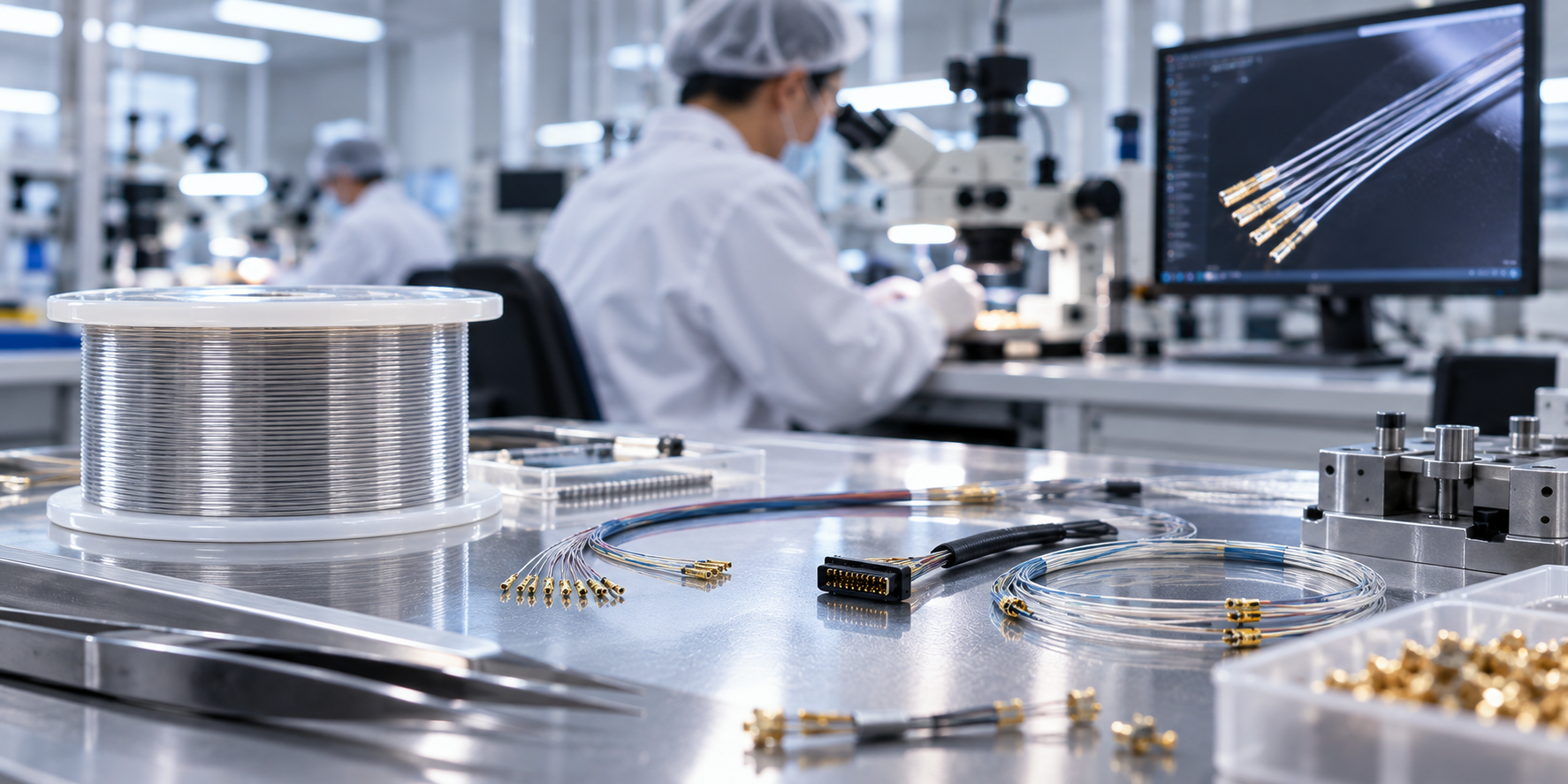 HOTTEN Ultra-Fine Wire Engineering Capability
HOTTEN supports customized fine and ultra-fine electronic wire projects based on customer drawings, samples, specifications, and processing requirements.
→ Tinned Copper
→ Silver-Plated Copper
→ Other application-specific conductor options
→ FEP
→ PFA
→ TPX
→ Other customized insulation solutions according to application requirements
→ Cut to Length
→ Stripping
→ End Tinning
→ Inspection
→ Semi-Finished Component Processing
→ Wire construction evaluation
→ Material alternative evaluation
→ Processing compatibility evaluation
→ Prototype sampling
→ Small-batch validation
→ Production support
HOTTEN's capability extends beyond supplying ultra-fine wire.
The engineering approach is:
Wire Design → Material Selection → Processing Evaluation → Prototype → Validation → Production
One of the key lessons from this project is that the best solution is not always to provide a different wire.
For difficult ultra-fine wire applications, the supplier can potentially solve the problem at several levels:
Optimize conductor and insulation construction.
Evaluate alternative insulation or conductor materials.
Provide cut-to-length, stripping, and tinning.
Provide the wire as a ready-to-assemble semi-finished component.
This gives procurement and engineering teams more options when dealing with difficult ultra-fine wire applications.
Yes. HOTTEN supports 42AWG and other ultra-fine wire sizes with customized conductor, insulation, OD, and processing requirements.
Yes, but processing stability depends on the wire construction and equipment. Conductor size, insulation construction, finished OD, blade configuration, feeding accuracy, and machine settings can all affect the result.
Yes. HOTTEN can provide customized cut-to-length, stripping, and end-tinning services for ultra-fine wire applications.
Depending on the application, HOTTEN can evaluate options such as tinned copper and silver-plated copper.
HOTTEN can evaluate alternative insulation materials such as TPX based on the customer's electrical, mechanical, processing, and regulatory requirements.
Yes. Customers can provide wire samples, drawings, specifications, or processing requirements for engineering evaluation.
The existing Recommended Products section should be removed.
The current products shown there are mainly medical cables and dental cables, which have little semantic relationship with this 42AWG ultra-fine wire case.
Instead, this page should link to products directly related to:
42AWG → Ultra-Fine Wire → Fine Electronic Wire → Micro Coaxial / Fine Cable
Recommended order:
Primary related product
This should be the strongest internal link if you have a dedicated 42AWG product page.
For customers searching broadly for fine-gauge electronic wire.
Useful for customers whose requirement is moving from individual ultra-fine conductors toward high-density signal cable structures.
Only use this if the actual product is relevant; otherwise do not force the medical relationship.
If your application involves:
42AWG / Ultra-Fine Wire / Difficult Stripping / Automatic Processing / Cut-to-Length / End Tinning / Fluoropolymer Alternatives
HOTTEN can evaluate the complete requirement rather than simply quoting a standard wire.
Send us your:
Wire Drawing · Sample · Conductor Specification · Insulation Requirement · OD Requirement · Processing Requirement
and our engineering team can evaluate the appropriate wire construction and processing solution.