 EN
EN
Quick Links

Home > News > Company news
AWG affects the conductor size of a micro coaxial cable, which in turn influences conductor resistance, cable diameter, flexibility, mechanical strength and the available space for the complete cable structure. However, AWG alone does not determine micro coaxial cable performance.
A smaller AWG number means a larger conductor. For example, a 40AWG conductor is larger than a 42AWG conductor, while a 46AWG conductor is smaller than both.
For micro coaxial cable selection, engineers should therefore evaluate AWG together with conductor material, insulation thickness, cable OD, shielding structure, characteristic impedance, operating frequency, flex requirements and connector design.
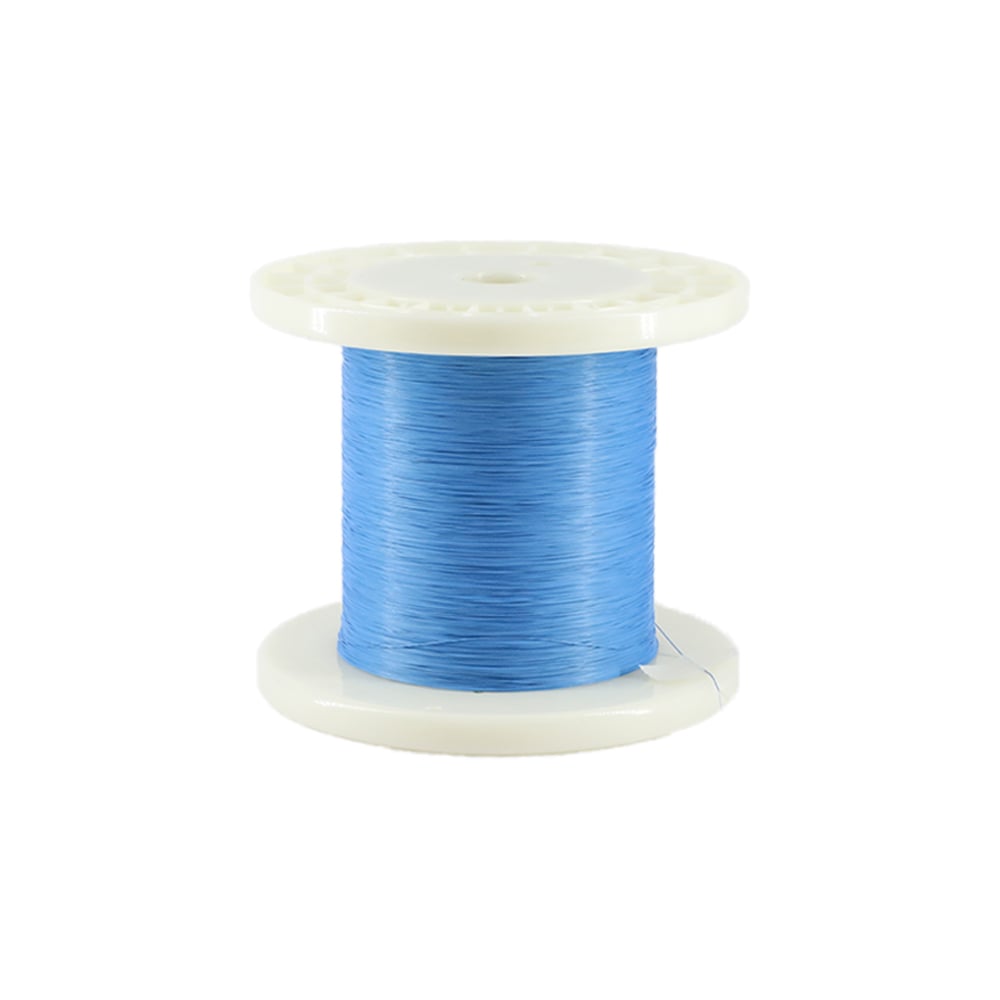
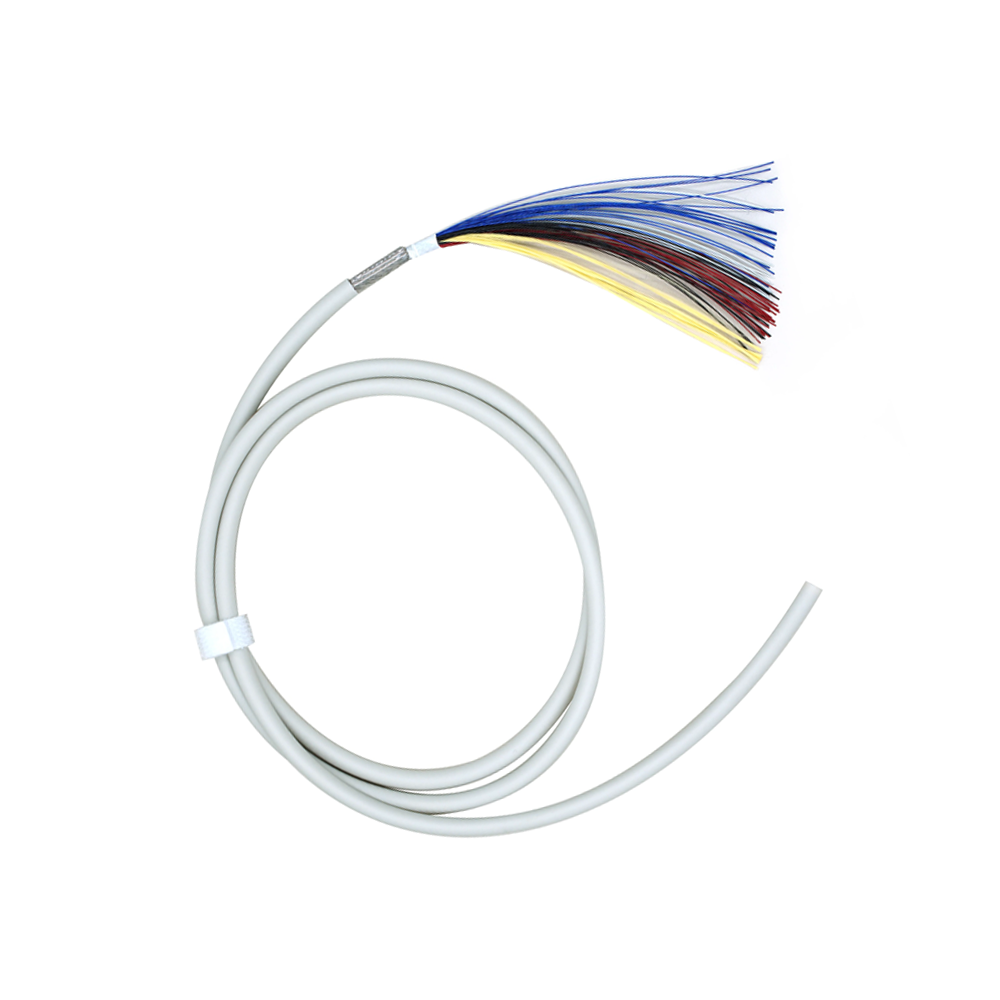
HOTTEN's current micro coaxial cable products cover fine-wire constructions including 40AWG, 42AWG, 44AWG and 46AWG, with customized cable structures and assemblies available for applications such as cameras, drones, medical endoscopy and ultrasound equipment.
AWG stands for American Wire Gauge. It is a standardized wire-sizing system used to describe conductor diameter.
One important point is that AWG works in the opposite direction from what many people initially expect:
The smaller the AWG number, the larger the conductor.
For example:
| AWG | Relative Conductor Size | Typical Engineering Consideration |
|---|---|---|
| 40AWG | Larger | Lower conductor resistance than smaller-gauge conductors, but requires more space |
| 42AWG | Smaller than 40AWG | Good balance between size and electrical/mechanical requirements |
| 44AWG | Smaller than 42AWG | Useful where space and routing are important |
| 46AWG | Smaller | Suitable for highly space-constrained cable constructions, subject to electrical and mechanical requirements |
The exact performance of a micro coaxial cable still depends on the complete construction rather than AWG alone.
Not necessarily.
A larger conductor can provide lower conductor resistance, while a smaller conductor can help reduce the physical size of the cable.
This creates a basic engineering trade-off:
Larger conductor → potentially lower conductor resistance but more space required
Smaller conductor → smaller cable structure but potentially higher conductor resistance and greater mechanical constraints
Therefore, there is no universal rule that 40AWG is better than 42AWG, or that 46AWG is better because it is smaller.
The correct AWG depends on what the application is trying to optimize.
For a compact camera module, for example, minimum OD and routing space may be major constraints.
For another application, electrical resistance, mechanical robustness or current requirements may have greater importance.
This is why AWG should be selected as part of the complete cable design, not as an isolated specification.
One of the most direct effects of AWG is conductor resistance.
When the conductor becomes smaller, its cross-sectional area decreases. For the same conductor material and length, a smaller cross-sectional area generally results in higher electrical resistance.
The basic relationship is:
where:
R = conductor resistance
ρ = resistivity of the conductor material
L = conductor length
A = conductor cross-sectional area
This means engineers should not evaluate AWG without also considering:
conductor material
cable length
conductor construction
operating temperature
required electrical performance
For example, a 46AWG conductor and a 40AWG conductor should not be compared solely by AWG if they use different conductor materials or different cable constructions.
No. AWG affects conductor size, but it does not directly define the final outer diameter of the micro coaxial cable.
A coaxial cable contains more than the center conductor.
A simplified structure includes:
Center conductor
Dielectric insulation
Shield
Outer jacket or protective layer
Therefore:
Cable OD = function of the complete cable construction, not AWG alone.
Two micro coaxial cables with the same conductor AWG can have different outer diameters because their insulation thickness, dielectric material, shielding structure and jacket construction may differ.
This is especially important for miniature assemblies.
HOTTEN product specifications currently show micro coaxial constructions with customizable OD ranges and different insulation, shielding and jacket materials, demonstrating why AWG should be considered together with the rest of the cable structure.
AWG can influence flexibility, but it is not the only factor.
A smaller conductor can contribute to a smaller and potentially more flexible cable construction. However, the actual bending behavior of a micro coaxial cable also depends on:
conductor construction
insulation material
shielding structure
jacket material
cable OD
bending radius
assembly configuration
strain relief
For applications with repeated movement, engineers should therefore avoid specifying only:
“Use 46AWG.”
Instead, the requirement should describe the actual mechanical condition.
For example:
The cable must fit within a limited routing space and withstand repeated bending during normal operation.
The supplier can then evaluate conductor size, insulation, shielding and jacket construction together.
This approach is more useful than selecting the smallest possible AWG first.
No.
A smaller conductor generally occupies less conductor area, but the final cable OD depends on the complete coaxial structure.
Consider two cables:
| Design | Conductor | Insulation | Shield | Result |
|---|---|---|---|---|
| A | 40AWG | Thicker | Standard | May have larger overall OD |
| B | 42AWG | Thin | Compact | May achieve smaller OD |
| C | 46AWG | Application-specific | Compact | May support highly constrained routing |
The important point is that the conductor is only one part of the cable.
For miniature applications, reducing conductor size without reviewing insulation, shielding and mechanical requirements can create a different set of engineering problems.
Yes, but indirectly and as part of the complete cable design.
For high-frequency micro coaxial cables, engineers need to consider much more than conductor gauge.
Important parameters can include:
characteristic impedance
conductor geometry
dielectric material
dielectric geometry
shielding structure
cable length
operating frequency
connector transition
termination structure
manufacturing consistency
A smaller conductor does not automatically mean better or worse high-frequency performance.
For example, if an application requires a controlled 50Ω structure, the conductor, dielectric and shield geometry need to work together to achieve the required electrical characteristics.
HOTTEN's current micro coaxial cable products list characteristic impedance options including 42.5Ω, 45Ω and 50Ω for certain constructions, illustrating that impedance is a separate design parameter from AWG.
For more on impedance and signal integrity, engineers can also refer to HOTTEN's existing technical content on impedance control in high-frequency coaxial cable and RF coaxial cable assembly impedance and loss.
There is no single “best” gauge for every micro coaxial cable application.
Instead, engineers can use the following as an initial selection framework:
| AWG | Main Advantage to Evaluate | Potential Trade-Off | Typical Design Question |
|---|---|---|---|
| 40AWG | Larger conductor size | More space may be required | Is electrical performance more important than minimum size? |
| 42AWG | Balance between size and conductor area | Requires application-specific optimization | Can the cable meet both routing and electrical requirements? |
| 44AWG | Smaller conductor structure | Higher resistance and mechanical constraints may need evaluation | Is reduced size important for the assembly? |
| 46AWG | Very small conductor size | Electrical and mechanical requirements become more critical | Is minimum size required by the device architecture? |
These are engineering starting points rather than universal performance rankings.
The correct choice depends on the complete cable structure and the device requirements.
HOTTEN currently lists constructions using 40AWG through 46AWG in several micro coaxial and medical cable products, showing that different AWG sizes can be used within different cable architectures and applications.
40AWG can be considered when the design needs a relatively larger fine-wire conductor while still requiring a compact cable construction.
The engineer should evaluate:
available routing space
conductor resistance
required cable length
current requirements
flex requirements
total cable OD
connector termination
40AWG can be particularly relevant where the design does not require the smallest possible conductor but still benefits from a fine-wire construction.
The final decision should be based on the complete cable assembly rather than AWG alone.
42AWG can be considered when the application requires a smaller conductor while maintaining a practical balance between electrical, mechanical and dimensional requirements.
This gauge is particularly relevant to miniature cable assemblies where space is limited but the design still needs controlled electrical characteristics and reliable assembly processing.
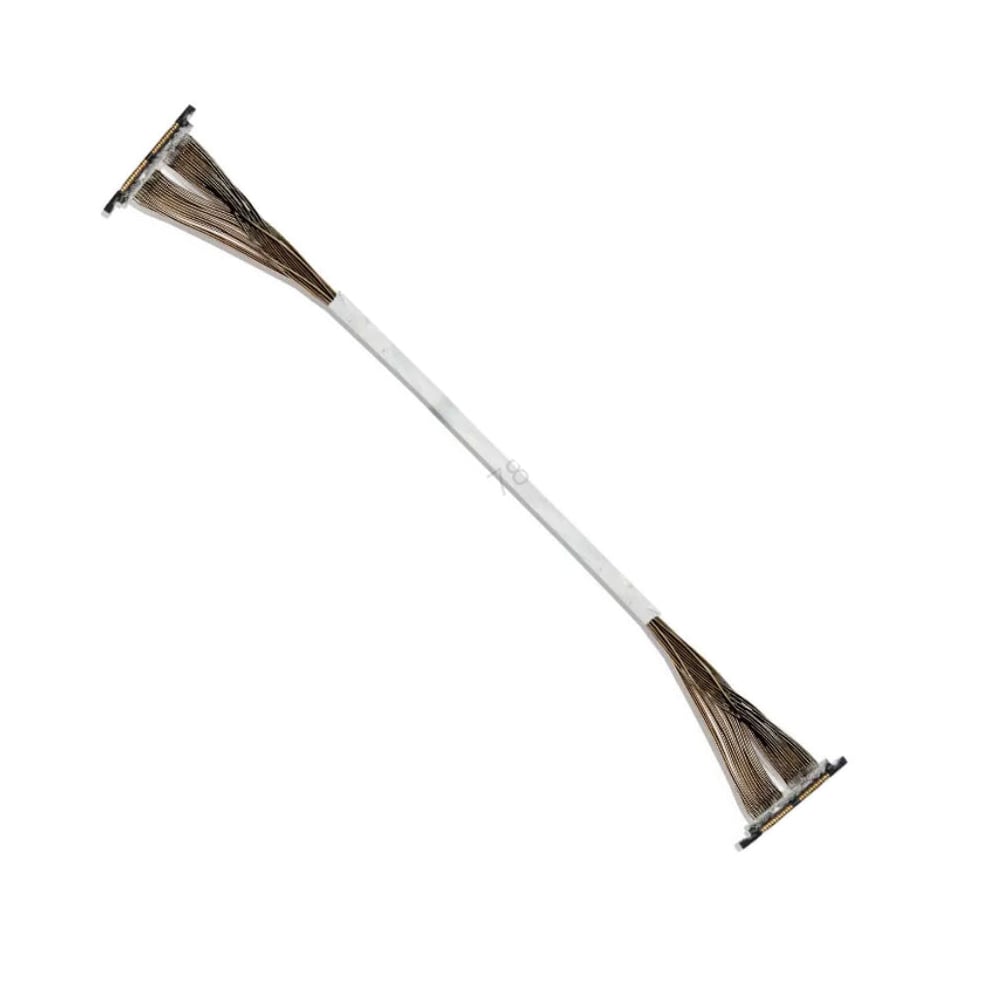
HOTTEN currently offers 42AWG micro coaxial cable assemblies for applications including UAV and other compact electronic systems.
For example, an assembly may combine 42AWG coaxial cables with other fine electronic wires rather than using the same AWG for every circuit.
That is an important point:
A complex cable assembly does not necessarily need one AWG size for every conductor.
44AWG can be evaluated when reducing conductor size and cable density is important.
However, the smaller conductor also means that engineers need to pay closer attention to:
conductor resistance
mechanical handling
stripping and termination
cable length
flex requirements
manufacturing tolerances
For an OEM project, it is therefore useful to test the actual cable construction rather than selecting 44AWG solely because it has a smaller diameter.
46AWG can be useful for highly space-constrained cable designs where very small conductors are required.
However:
The smallest possible AWG is not automatically the best solution.
As conductor size decreases, the engineering team may need to pay more attention to electrical resistance, mechanical handling, termination, insulation processing and the overall cable structure.
HOTTEN currently uses 46AWG constructions in micro coaxial cable assemblies for compact applications such as UAV and imaging-related systems.
If the main objective is minimum cable OD, engineers should not simply select the smallest available conductor.
Instead, evaluate the complete structure:
AWG → insulation thickness → dielectric structure → shielding → jacket → connector
A smaller conductor may reduce conductor size, but a thicker dielectric or shielding structure can still determine the final OD.
The better question is:
What is the minimum cable OD that still satisfies the required electrical and mechanical specifications?
This changes the engineering discussion from “Which AWG is smallest?” to “Which complete cable construction meets the space constraint?”
If the cable must move repeatedly, AWG is only one design variable.
Engineers should also specify:
bending radius
bending frequency
movement direction
cable length
conductor construction
shielding construction
jacket material
strain relief
connector configuration
For example:
If repeated bending is the main requirement, evaluate AWG together with conductor construction, shielding and jacket design rather than selecting the smallest conductor available.
This is especially important in applications such as camera modules, gimbals, endoscopes and other moving assemblies.
If signal integrity is the primary requirement, engineers should start with the electrical requirements rather than AWG.
The specification should identify, where applicable:
Operating frequency
Characteristic impedance
Cable length
Allowed attenuation or loss
Connector type
Shielding requirements
Routing constraints
Electrical test requirements
Only after these requirements are defined should AWG be selected as part of the cable construction.
For high-frequency applications, the complete cable and connector transition should be evaluated together.
This is why a 46AWG cable is not automatically a better high-frequency cable than a 40AWG cable.
For an OEM custom micro coaxial cable project, AWG is only one line in the RFQ.
A more complete specification should include:
| Parameter | Example Requirement |
|---|---|
| Conductor AWG | 40AWG / 42AWG / 44AWG / 46AWG |
| Conductor material | Specify required material or performance |
| Insulation | PFA / FEP / other application-specific material |
| Cable OD | Maximum allowable OD |
| Impedance | e.g. 50Ω, when applicable |
| Operating frequency | Application-specific |
| Cable length | Required assembly length |
| Shielding | Required shield construction |
| Connector | Manufacturer / part number |
| Pinout | Required connection arrangement |
| Bending requirement | Minimum radius / flex condition |
| Temperature | Operating environment |
| Quantity | Prototype and mass-production volume |
| Testing | Electrical / dimensional / application-specific testing |
HOTTEN's current micro coaxial product information includes customizable connector configurations, conductor materials, insulation, shielding, jacket materials, OD, impedance and application-specific constructions.
The cable does not operate independently from its connector.
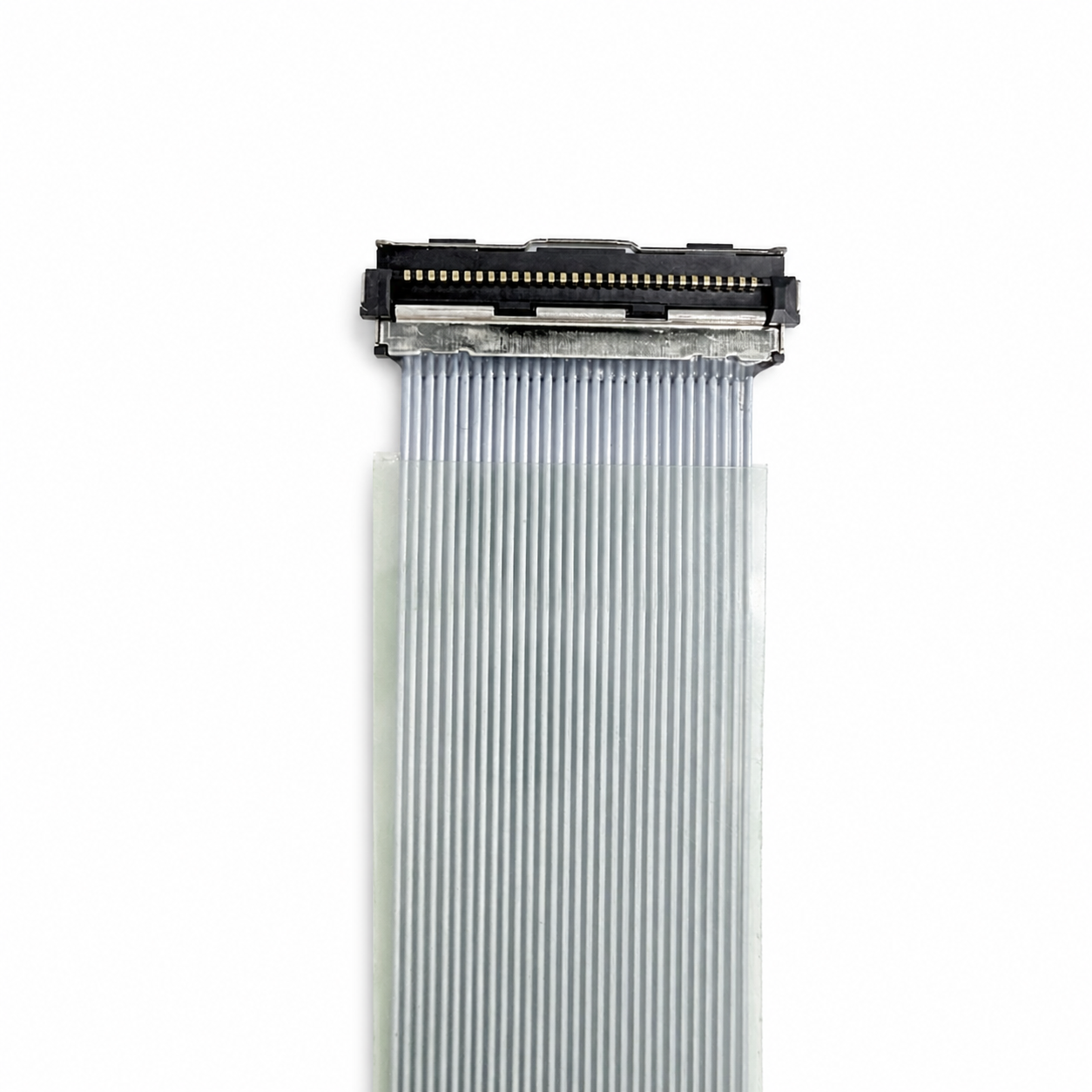
A micro coaxial cable assembly normally includes:
Cable + termination + connector + routing
If the cable is extremely small but the connector transition introduces a significant geometric discontinuity, the overall assembly may not achieve the intended electrical performance.
Therefore, when specifying a custom micro coaxial cable assembly, engineers should provide:
connector manufacturer
connector part number
pin count
mating interface
cable AWG
cable OD
impedance
cable length
pinout
routing constraints
HOTTEN's current product configurations include connectors for FPC, FPCA, JAE, KEL, HONDA and other coaxial cable interfaces, depending on the assembly.
 What Is the Best AWG for a Micro Coaxial Cable?
There is no universal best AWG.
The appropriate gauge depends on the design priorities.
A practical decision process is:
conductor resistance is an important constraint
space is available
mechanical robustness is important
the application does not require the smallest possible cable
routing space is highly limited
cable OD is a major constraint
high-density routing is required
the complete electrical and mechanical requirements can still be satisfied
high-frequency transmission is involved
repeated bending is required
a miniature connector is used
the cable has multiple coaxial channels
the cable must fit a tightly controlled mechanical path
In these situations, AWG should be optimized together with the complete cable assembly.
A practical selection sequence is:
Step 1 — Define the mechanical envelope
Determine the maximum allowable cable OD, routing space and bending radius.
↓
Step 2 — Define the electrical requirements
Specify impedance, frequency, cable length and required signal performance.
↓
Step 3 — Define the conductor requirement
Evaluate 40AWG, 42AWG, 44AWG, 46AWG or another suitable construction based on resistance and space requirements.
↓
Step 4 — Define insulation and shielding
Select the materials and structure needed for electrical, mechanical and environmental requirements.
↓
Step 5 — Define the connector
Provide the connector manufacturer and part number when available.
↓
Step 6 — Review the complete assembly
Check cable OD, routing, termination, pinout, bending and assembly tolerances.
↓
Step 7 — Prototype and validate
Build samples and evaluate the actual assembly against the project requirements before moving to mass production.
This process is generally more reliable than starting with:
“We need the smallest AWG available.”
For OEM projects, HOTTEN can develop customized micro coaxial cable and cable assemblies around the application's dimensional, electrical and assembly requirements.
Current HOTTEN product constructions include fine AWG options such as 40AWG, 42AWG, 44AWG and 46AWG, as well as different insulation, shielding, jacket, OD and connector configurations. Applications shown in current product information include drones, cameras, medical endoscopy and ultrasound equipment.
For a custom RFQ, engineers can provide:
Target AWG or conductor size
Cable OD
Impedance
Cable length
Connector part number
Pinout
Number of coaxial channels
Shielding requirements
Flex/bending requirements
Operating environment
Prototype quantity
Expected mass-production volume
When the exact cable structure is not yet finalized, the supplier can evaluate the conductor, insulation, shielding and assembly configuration together.
For more information, see HOTTEN's custom micro coaxial cable solutions.
No. A higher AWG number means a smaller conductor. For example, 46AWG is smaller than 40AWG.
Not necessarily. 46AWG can help with compact cable construction, while 40AWG provides a larger conductor. The appropriate choice depends on electrical, mechanical and dimensional requirements.
No. AWG describes the conductor size. Final cable OD also depends on insulation, dielectric, shielding and jacket construction.
Not automatically. Smaller conductors generally have higher resistance for the same material and length. High-frequency cable loss also depends on the complete cable construction, operating frequency, dielectric and other factors.
Micro coaxial constructions can use very fine gauges including 40AWG, 42AWG, 44AWG and 46AWG, depending on the application and cable design. HOTTEN currently lists these gauges across several micro coaxial and medical cable constructions.
Yes. A custom assembly may combine different conductor sizes or coaxial structures depending on the electrical and mechanical requirements of individual circuits.
At minimum, provide the required AWG or conductor size, cable OD, impedance, length, connector, pinout and application. If available, also provide drawings, BOM, routing requirements, frequency, flex conditions and prototype/mass-production quantities.
AWG is an important micro coaxial cable parameter, but it should not be treated as a standalone performance indicator.
A practical selection approach is to evaluate:
AWG → resistance → OD → flexibility → impedance → shielding → connector → application requirements
The goal is not to choose the smallest or largest conductor.
The goal is to select a complete cable construction that satisfies the electrical, mechanical and dimensional requirements of the device.
For OEM applications involving high-density routing, miniature cameras, UAV systems, medical devices or other compact electronics, AWG selection should therefore be part of the overall micro coaxial cable design process rather than an isolated purchasing decision.
 Hot News
2026-09-17
2026-09-04
2025-12-17
2025-12-11
2025-12-05