
 EN
EN
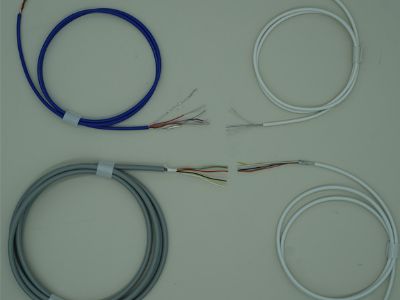
How Micro Coaxial Cables Enable Smaller Electronic Devices
As electronic products become smaller and more integrated, engineers face increasing challenges when routing signal cables inside limited spaces. Smartphones, tablets, satellite communication equipment, cameras, medical devices, and other compact electronics may require multiple high-speed signal connections without significantly increasing the size of the overall product.
Micro coaxial cables provide a practical solution for these applications. Their small diameter allows signal connections to be routed through narrow spaces while maintaining controlled electrical performance and shielding.
For device designers, micro coaxial technology can therefore support both miniaturization and reliable signal transmission.
Why Miniaturization Is Becoming More Important
Modern electronic products increasingly combine more functions within smaller housings. Additional sensors, cameras, communication modules, processors, and displays all require electrical connections, while the available internal space continues to decrease.
Traditional cables can occupy too much space or limit the routing options available to engineers. Micro coaxial cables provide a smaller alternative that can help connect densely packed electronic components.
This is particularly useful when several independent signal channels need to be routed through a compact device.
How Micro Coaxial Cables Support Compact Device Design
The primary advantage of micro coaxial cables is their compact construction.
A typical micro coaxial cable incorporates a small center conductor, dielectric insulation, shielding, and protective outer layer. This structure allows engineers to transmit signals while maintaining electromagnetic shielding within a relatively small cable diameter.
By using smaller cables, designers can:
- Reduce cable routing space
- Increase component density
- Improve internal layout flexibility
- Support smaller product dimensions
- Route signals through narrow mechanical structures
For applications where space is extremely limited, cable diameter can become an important part of the overall mechanical design.
Maintaining Signal Integrity in Small Devices
Miniaturization cannot come at the expense of signal performance.
Compact electronic devices may transmit high-frequency, RF, video, or other sensitive signals between internal components. Poor cable construction or insufficient shielding can introduce attenuation, crosstalk, or electromagnetic interference.
Micro coaxial cables combine compact dimensions with a coaxial structure designed to control signal transmission and provide shielding.
Depending on the application, engineers may need to evaluate parameters such as:
- Characteristic impedance
- Insertion loss
- Return loss
- Shielding effectiveness
- Crosstalk
- Operating frequency
- Cable capacitance
The correct cable construction allows device manufacturers to reduce physical size without unnecessarily compromising signal integrity.
Micro Coaxial Cables for High-Density Applications
Micro coaxial cables are used in applications where multiple signal connections must fit into a restricted space.
Potential applications include:
- Consumer electronics
- Cameras and imaging systems
- Satellite communication equipment
- Medical devices
- Display systems
- Compact RF equipment
- High-density electronic modules
In medical equipment, for example, micro coaxial cable assemblies can help connect miniature imaging components and sensors inside endoscopes and other compact instruments.
In consumer electronics and communication equipment, they can support connections between antennas, RF modules, cameras, displays, and processing components.
Custom Micro Coaxial Cable Assemblies for Device Integration
Miniaturization requirements vary significantly between products, so standard cable assemblies may not always provide the required mechanical or electrical configuration.
A custom micro coaxial cable assembly can be developed according to requirements such as:
- Cable diameter
- Cable length
- Number of coaxial channels
- Impedance
- Connector type
- Shielding structure
- Bend radius
- Termination configuration
Working with the cable manufacturer during the product design stage can also help engineers optimize cable routing and connector placement before moving into mass production.
Conclusion
Micro coaxial cables are an important enabling technology for modern electronic miniaturization. Their compact construction allows engineers to route high-frequency and sensitive signals through increasingly limited spaces while maintaining controlled electrical performance.
As electronic devices continue to become smaller and more integrated, customized micro coaxial cable assemblies can help manufacturers balance size, signal integrity, flexibility, and reliable device integration.
FAQ
How do micro coaxial cables help make electronic devices smaller?
Their small diameter allows signal connections to be routed through limited internal spaces, helping engineers increase component density and reduce overall cable-routing space.
Are micro coaxial cables suitable for high-frequency signals?
Yes. Micro coaxial cables can be designed for high-frequency applications with controlled impedance, shielding, attenuation, and other electrical characteristics matched to the system requirements.
Where are micro coaxial cables commonly used?
They are used in compact electronic applications including consumer electronics, cameras, RF equipment, satellite communication systems, medical devices, and high-density electronic modules.
Can micro coaxial cable assemblies be customized?
Yes. Manufacturers can customize cable diameter, length, impedance, channel count, connectors, shielding, termination, and mechanical configuration according to the device requirements.
What should engineers consider when selecting a micro coaxial cable?
Important considerations include cable diameter, operating frequency, impedance, attenuation, shielding, bend radius, connector configuration, flex requirements, and available installation space.
How to Harness the Power of Miniaturization with Micro Coax Cables
These are specialized global med cables used to transmit signal and designed in the compact which is also called micro coax cables. They are typically found in electronic products such as smartphones, tablets, and other electronics designed to maintain communication between different parts of the whole.
Compact Devices and Micro Coax Cables
The image above shows that the micro coax is a perfect choice for miniature devices. These sends signals faster and more efficient making sure that your devices function properly without any lag. Imagine how difficult it would be to design such small, lightweight devices without the need for all these cables.
The Effect of Micro Coax Cables on Modern Electronics
It is inconceivable that a new era in electronics has been ushered without mentioning the indispensable micro coax medical cables and sensors. That is a was which has changed the design and construction of our portable electronic devices, resulting in smaller, faster, more efficient builds than we have ever known.
Revolutionizing Design Micro Coax Cable
Designers and engineers, of course, are always busy trying to figure out how they can bring new technologies past their previous limits into play by making them more cutting-edge while also user-friendly. Micro-coax cabling has allowed designers to communicate between components in tight quarters.
Conclusion
To summarize it easily, most of the data and video signals pass through micro coax form to show this miniaturization liability in the electronics industry. While these cardiac monitor cables are usually hidden from sight, they shape the overall design of modern gadgets.
Table of Contents
- How Micro Coaxial Cables Enable Smaller Electronic Devices
- Why Miniaturization Is Becoming More Important
- How Micro Coaxial Cables Support Compact Device Design
- Maintaining Signal Integrity in Small Devices
- Micro Coaxial Cables for High-Density Applications
- Custom Micro Coaxial Cable Assemblies for Device Integration
- Conclusion
- FAQ
- How to Harness the Power of Miniaturization with Micro Coax Cables
- Compact Devices and Micro Coax Cables
- The Effect of Micro Coax Cables on Modern Electronics
- Revolutionizing Design Micro Coax Cable
- Conclusion