 EN
EN
Quick Links


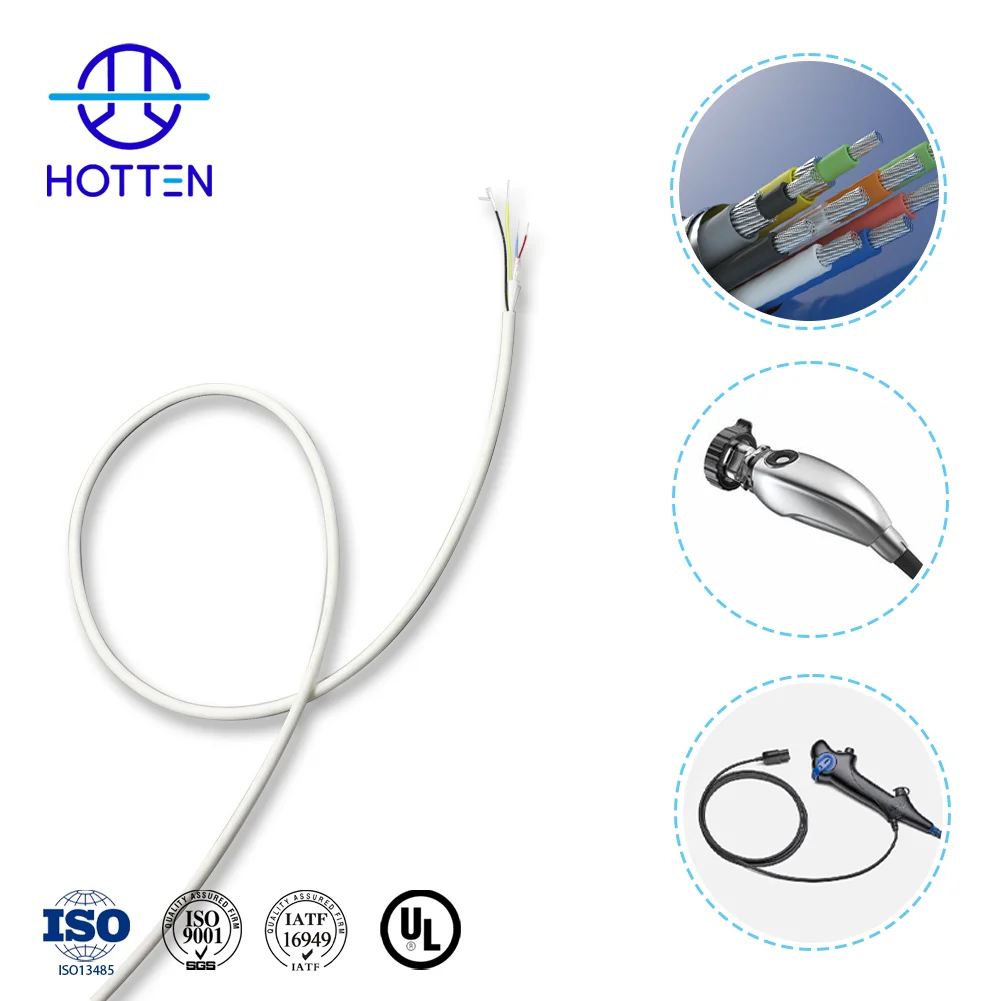
Industrial endoscopes are widely used for inspection and maintenance in applications where direct visual access is difficult, including industrial equipment inspection, structural inspection and aerospace-related maintenance.
As inspection systems become longer and more compact, the cable connecting the imaging probe to the processing system must maintain reliable signal transmission over extended distances.
For this project, the target application required an industrial endoscope cable capable of supporting signal transmission over 10 meters while maintaining the electrical characteristics required by the imaging system.
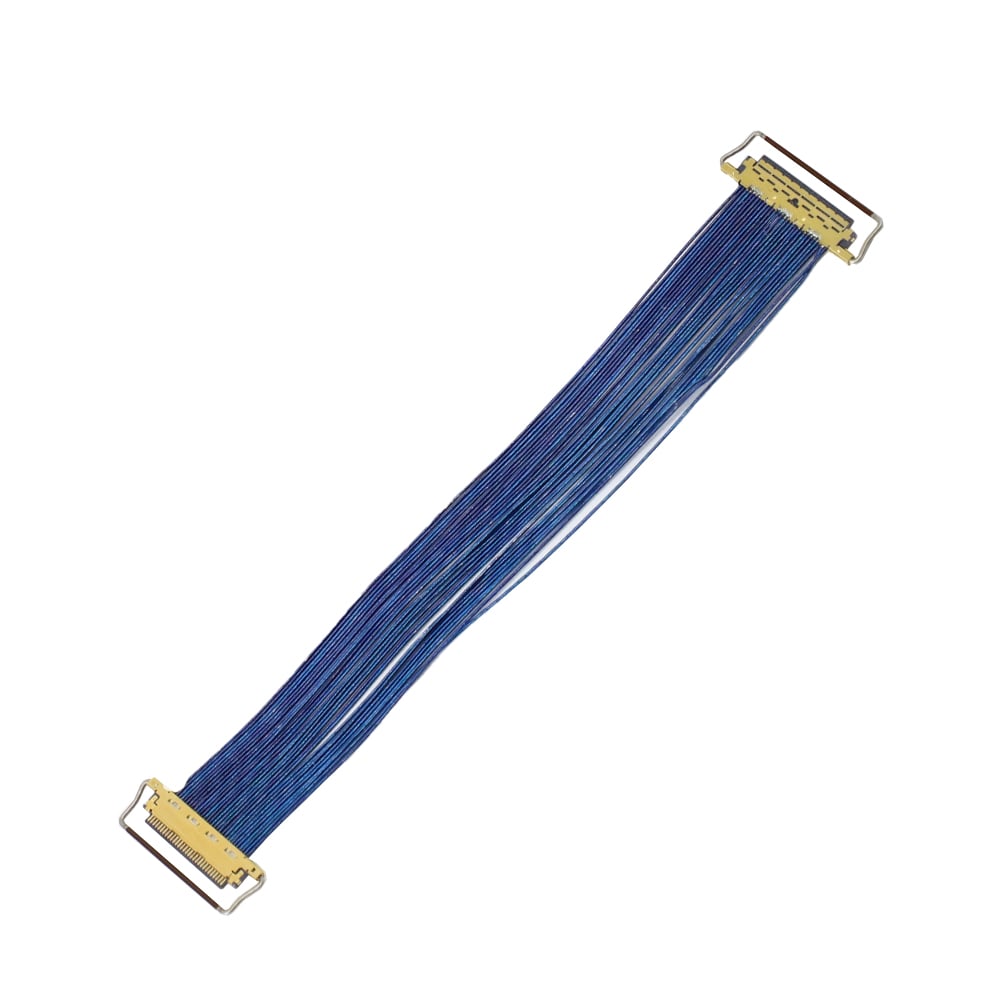
HOTTEN developed a customized low-capacitance, high-impedance micro coaxial cable structure based on the electrical and mechanical requirements of the endoscope system.
| Item | Specification |
|---|---|
| Application | Industrial Endoscope |
| Cable Type | Micro Coaxial / Endoscope Cable |
| Transmission Distance | ≥10 m |
| Key Requirement | Long-distance signal transmission |
| Electrical Focus | Low Capacitance / High Impedance |
| Dielectric Material | Fluorine Resin |
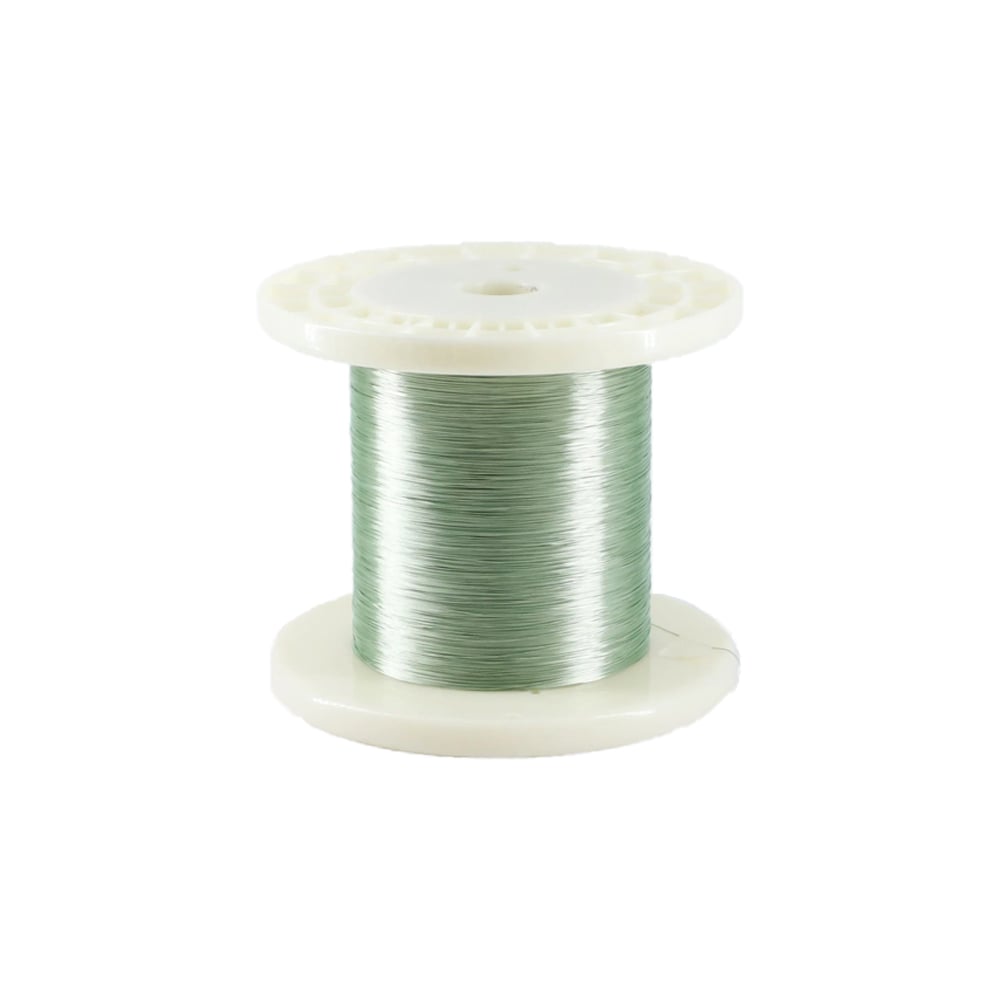
| Conductor | Silver-Plated Conductor |
| Cable Structure | Low-Capacitance Micro Coaxial Structure |
| Customization | Application-specific cable structure |
The project focused on the cable's ability to support reliable image signal transmission over a long endoscope assembly.
The main engineering requirements included:
The cable needed to support an effective transmission distance of 10 meters or more without unacceptable degradation of the transmitted signal.
The cable structure needed to provide suitable capacitance and characteristic impedance characteristics for the endoscope's signal transmission requirements.
Because industrial endoscopes are often inserted into narrow or difficult-to-access areas, the cable needed to maintain a compact structure while meeting the required electrical performance.
The dielectric and conductor materials needed to provide suitable electrical characteristics for long-distance signal transmission.
These requirements meant that simply increasing cable size was not an appropriate solution. The electrical characteristics and internal cable structure had to be considered together.
As cable length increases, transmission loss and signal degradation become increasingly important.
For an industrial endoscope, deterioration of the transmitted signal can directly affect the quality of the image received by the processing system.
Therefore, the cable design needed to optimize its electrical characteristics rather than simply focusing on mechanical dimensions.
A smaller cable is advantageous for endoscope applications, but reducing the physical dimensions of a cable can make it more difficult to maintain the required electrical characteristics.
The engineering challenge was therefore to achieve an appropriate balance between:
Miniaturization → Capacitance → Impedance → Transmission Loss → Signal Performance
The dielectric material and its physical structure directly influence the electrical characteristics of a coaxial cable.
HOTTEN therefore investigated the use of a fluorine-resin dielectric structure and methods for introducing gas-filled or foam-type structures within the dielectric.
The objective was to optimize the electrical characteristics while maintaining a practical micro coaxial cable structure.
Long-distance signal transmission also requires careful consideration of conductor and shielding materials.
The project therefore evaluated conductor and shielding structures suitable for improving the electrical performance of the cable.
HOTTEN selected fluorine resin as the dielectric material for the customized cable structure.
Fluorine-based insulating materials can provide suitable electrical properties for high-performance micro coaxial cable applications.
The dielectric structure was then further optimized according to the required electrical characteristics.
A key part of the engineering development was the use of a low-capacitance dielectric structure.
HOTTEN investigated a structure in which gas-filled cavities were introduced into the fluorine-resin dielectric.
The lower effective dielectric constant of the gas-filled structure can be used to adjust the cable's electrical characteristics.
This approach allowed the engineering team to work toward the required combination of:
Low Capacitance + Controlled Impedance + Long-Distance Signal Performance
The exact internal structure was customized according to the cable's electrical and dimensional requirements.
The cable was developed around a micro coaxial structure rather than simply increasing conductor size or overall cable diameter.
This allowed electrical performance and miniaturization requirements to be considered simultaneously.
For fine-diameter and micro coaxial applications, HOTTEN can develop different dielectric structures, including regular and irregular foam-type structures, according to the required cable geometry and electrical characteristics.
Silver-plated conductor materials were selected for the cable structure to provide suitable electrical performance for the long-distance transmission application.
The conductor and shielding structure were considered together with the dielectric design rather than treated as independent components.
This helped create an integrated electrical design:
Conductor → Dielectric → Shielding → Impedance → Transmission Performance
The final development focused on optimizing the cable's electrical characteristics rather than pursuing a single parameter in isolation.
In particular, the relationship between:
Capacitance
Characteristic impedance
Conductor structure
Dielectric structure
Shielding
Cable geometry
Transmission loss
was considered during the development process.
The objective was to achieve improved signal transmission performance over the required long-distance application.
Before finalizing the cable structure, prototype samples were developed for engineering evaluation.
The prototype development process included evaluation of:
Cable structure
Dielectric configuration
Conductor structure
Shielding structure
Dimensional characteristics
Electrical characteristics
Different structural approaches could then be compared against the application's transmission requirements.
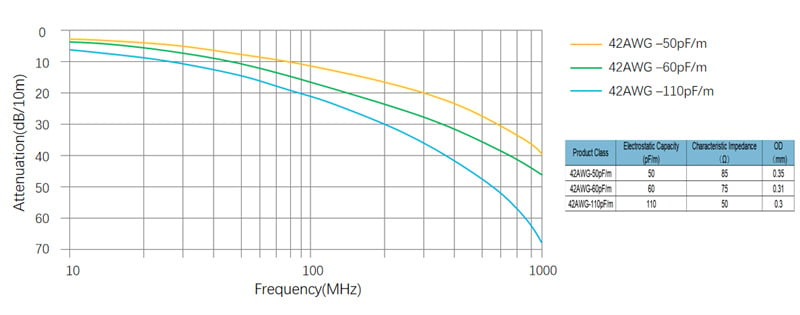
The cable was evaluated with particular attention to its transmission characteristics.
The attenuation comparison was used to evaluate the performance difference between the developed low-capacitance cable structure and higher-capacitance cable structures.
Figure 1. Attenuation comparison between low-capacitance and higher-capacitance endoscope cable structures.
Because the cable is designed for industrial endoscope applications, electrical performance alone is not sufficient.
The prototype also needs to satisfy the required physical structure and dimensional constraints of the endoscope system.
The developed cable structure achieved the project's objective of supporting 10m+ long-distance industrial endoscope transmission.
The low-capacitance cable design provided improved transmission characteristics compared with the higher-capacitance structure evaluated during development.
| Item | Result |
|---|---|
| Target Application | Industrial Endoscope |
| Transmission Distance | ≥10 m |
| Cable Structure | Micro Coaxial |
| Dielectric | Fluorine Resin |
| Dielectric Structure | Low-Capacitance / Foam-Type Structure |
| Conductor Structure | Silver-Plated |
| Electrical Focus | Capacitance / Impedance / Attenuation |
| Development Objective | Long-Distance Signal Transmission |
| Result | Optimized transmission performance for 10m+ application |
The key engineering outcome was not simply a reduction in capacitance.
Instead, the project demonstrated how dielectric structure, cable geometry and conductor/shielding selection can be combined to optimize electrical characteristics and transmission performance for long-distance endoscope applications.
When selecting an industrial endoscope cable for long-distance transmission, engineers and procurement teams should consider more than cable diameter and conductor size.
Cable capacitance is one of the electrical parameters that can influence signal behavior, especially in longer cable assemblies.
The appropriate capacitance target depends on the signal type, frequency, cable structure and system requirements.
The dielectric material and its effective dielectric characteristics influence the relationship between cable geometry, capacitance and characteristic impedance.
For micro coaxial cables, modifying the dielectric structure can therefore be an important method for optimizing electrical performance.
Introducing gas-filled regions into the dielectric can reduce the effective dielectric constant and provide another design variable for controlling electrical characteristics.
The structure must still maintain sufficient mechanical integrity and manufacturing consistency.
Not necessarily.
The appropriate cable depends on the imaging signal, operating frequency, required impedance, allowable attenuation, cable diameter, flexibility and connector configuration.
For demanding long-distance applications, a customized micro coaxial structure may be more appropriate than a standard cable.
Important factors include:
Micro coaxial cable design capability
Fine-wire manufacturing capability
Electrical performance testing
Custom dielectric structures
Shielding and conductor options
Cable miniaturization capability
Prototype development capability
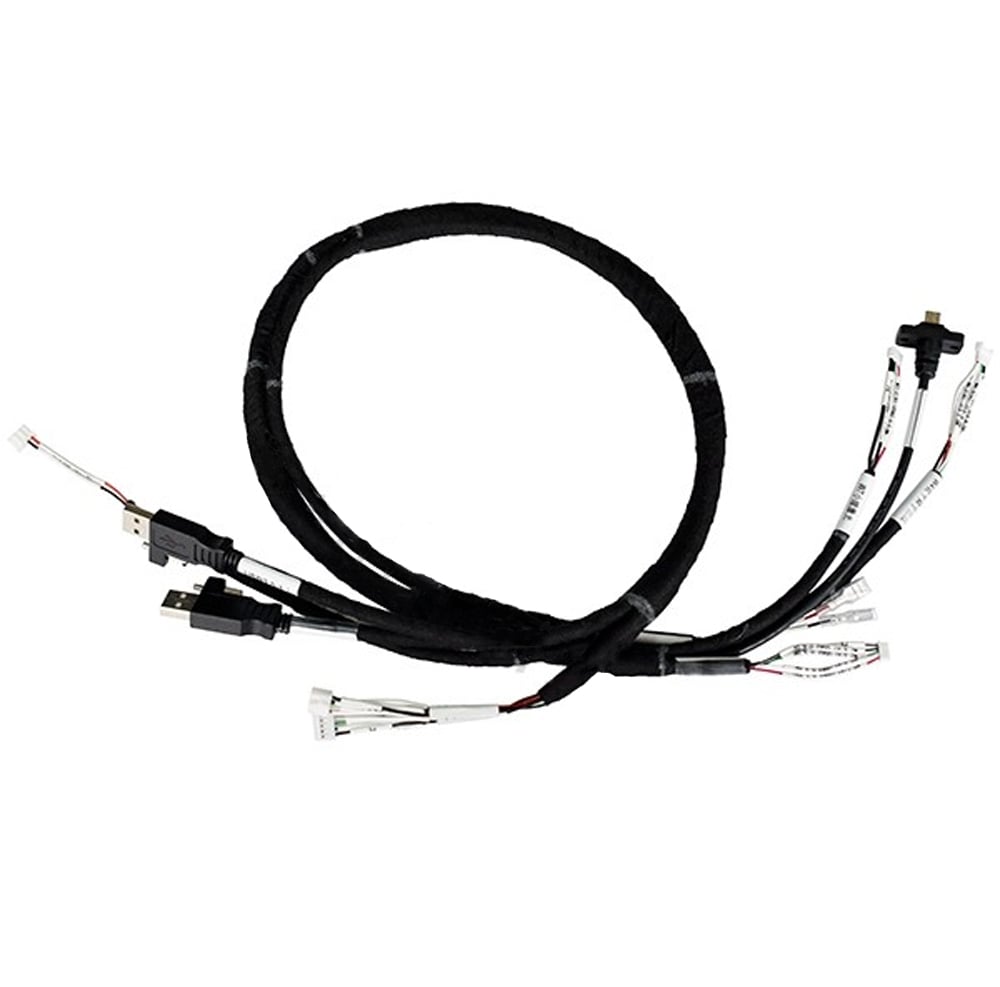
Cable assembly capability
Quality consistency during mass production
A custom cable should be considered when standard products cannot simultaneously satisfy requirements for:
Transmission Distance + Electrical Performance + Cable Diameter + Flexibility + Connector Configuration
In these situations, optimizing the internal cable structure can provide more engineering flexibility than simply selecting a different standard cable.
HOTTEN's cable development approach combines material selection, cable structure design, electrical optimization and manufacturing capability.
Conductor
↓
Dielectric Material
↓
Dielectric Structure
↓
Cable Geometry
↓
Shielding Structure
↓
Electrical Characteristics
↓
Prototype Development
↓
Performance Validation
↓
Cable Assembly
This integrated approach allows HOTTEN to develop customized micro coaxial and fine-wire cable solutions for applications where standard cable structures cannot meet the required electrical or dimensional performance.
HOTTEN develops customized micro coaxial cables for applications requiring compact dimensions, controlled electrical characteristics and high-density signal transmission.
Recommended internal link: Micro Coaxial Cable product page
For industrial inspection systems, HOTTEN provides customized cable structures for imaging, signal transmission and compact inspection equipment.
Recommended internal link: Industrial Inspection / Imaging Solution page
Explore other HOTTEN cable development projects involving medical imaging, micro coaxial cables and high-density signal transmission.
Recommended internal link: Related Medical Imaging / Micro Coaxial Case Study
If your industrial endoscope requires 10m+ transmission, micro coaxial construction, controlled capacitance, high impedance or a customized cable structure, HOTTEN can work with your engineering team to evaluate the cable requirements and develop a suitable prototype.
Share your target cable diameter, transmission distance, impedance, capacitance, conductor structure or existing cable specification with our engineering team.
HOTTEN can support the development process from cable structure design and prototype manufacturing to cable assembly and performance validation.